Fifty doesn’t soften the pattern. Don’t wait for it to.
If the person in your life shows this pattern, you may see it everywhere. A parent who needs your help but never lets you forget it. A partner still touchy, needy and impossible to please.
Still demanding special treatment. Still furious without it.
That’s what makes it a pattern. It lasts.
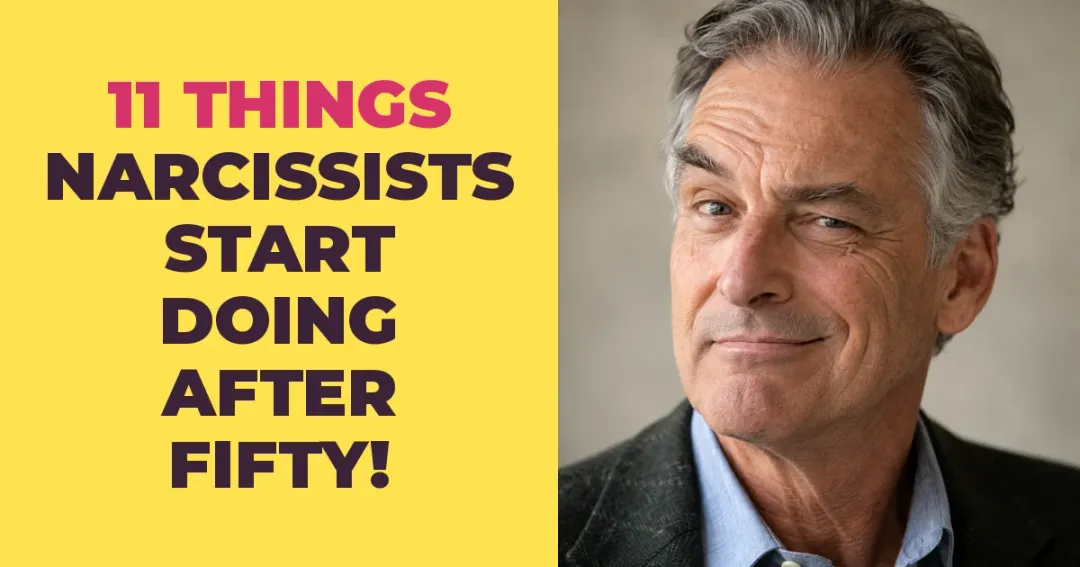
Here are 11 things to watch for in narcissists after fifty, why they do it, and what each one does to you.
Same need, new props
Underneath it all, a narcissist’s sense of worth depends on other people confirming it.
That need doesn’t retire. As life changes, the same need can simply show up in new ways.
Fewer colleagues to impress. Grown children busy with their own lives.
So judge by the pattern over months, not single moments. And expect it to stay rather than fade.
#1 The self-pity stays loud

The quiet, wounded act protects a narcissist’s ego just as well as the loud one.
Many narcissists switch between both.
So you may hear a lot of sighing. “Nobody bothers with me now I’m old.” Said the day after you cancelled one visit because you had the flu.
This quieter style keeps score of every slight and feels secretly wronged. So you walk on eggshells, and somehow their disappointment is often your fault.
One way to tell: do their apologies ever come without conditions?
#2 You become their mirror

A narcissist often treats the people closest to them as a mirror for their own worth.
They retire, and the colleagues who used to nod along are gone. Now every story, every opinion, every decision lands on you. “Don’t you think I handled that well?”
Their sense of worth depends on outside confirmation. You’re simply the nearest place to get it.
Disagree gently and you go from source to threat.
Slowly, you start to feel you exist only to reflect them back to themselves. When did you last say what you really think?
See also THIS is How Narcissistic Abuse Affects Your Body
#3 Your needs come last
Your needs often get treated as an inconvenience in a narcissist’s world.
You mention your knee surgery next month. Within a minute, the talk is back on their blood pressure, their neighbour, their week.
“Can’t someone else drive you? You know Tuesday is my bridge day.”
A narcissist often shows little interest in how you feel unless it affects them. Your problem only matters once it becomes theirs.
So who’s looking after you?
#4 Rules are for everyone else
Entitlement means a narcissist may believe the rules apply to everyone but them.
“At my age, I shouldn’t have to wait.” They expect you to drop your plans for their appointment, their errand, their birthday dinner on your only night off.
Ordinary limits feel like insults to them. So your “I can’t do Thursday” lands like an attack.
You’ve driven them to every check-up this year. They forgot your birthday.
Asking for fairness feels like starting a war.
Keep track of what you give. That’s information, not pettiness.
#5 Every old story stars them

Exaggerating achievements is a classic part of the narcissistic pattern.
The promotion they nearly got becomes the company they practically ran. The college team was nearly professional. Every story at Sunday lunch ends with them as the star, and you hear the same ones at every birthday.
Each retelling is a fresh chance at admiration, so the stories get told again and again, a little bigger each time.
And your part in those years? Somehow it shrinks.
You were there. You know what really happened.
#6 Control doesn’t ease

Control can mean deciding who you see, what you spend and where you go.
Why were you twenty minutes late from the shop? They check your phone and call it love: “I just like knowing you’re safe.”
This is called coercive control. Lots of small rules and punishments pile up, so there’s rarely one big moment to point to.
See also Why Narcissists Spoil Special Days Before They Even Start
Your world shrinks. You start asking permission for coffee.
If this sounds like home, keep some money and contacts of your own. A domestic abuse service can help you plan for safety.
#7 Reputation becomes everything

A narcissist often puts more care into their public image than into the people closest to them.
What the neighbours think. How the family looks on Facebook with the grandkids. Charm at the party, then cold silence in the car home.
Admiration feeds their self-worth, so the public version gets all the care. The private version gets whatever’s left.
That’s why friends tell you how lucky you are. And why you start doubting what happens behind your own front door.
Trust what you see at home.
#8 Guilt becomes their favourite tool
Fear, obligation and guilt can turn every request into one you can’t refuse.
A new ache shows up the weekend you planned to go away. “Go, enjoy yourself. I’ll manage on my own somehow.”
“After everything I’ve done for you” follows close behind.
This is often called FOG. It’s a popular term, not a diagnosis, and it’s closely tied to the pattern known as coercive control. The aim is to make no feel costlier than giving in.
Pause before you answer. Their feelings aren’t your responsibility.
#9 History gets rewritten in their favour
A narcissist may retell the past so often that their version starts to sound like fact.
“That never happened. You’re making things up again.” The screaming match you still feel in your stomach becomes, in their telling, a little chat you blew out of proportion.
This is called gaslighting. It works best where power is unequal and one person controls the story.
So you apologise for being hurt.
Write things down when they happen. Check them with someone outside the relationship. Your notes don’t age.
#10 Your weak spots become ammunition
A narcissist often understands exactly what hurts you, and uses it anyway.
See also What Narcissists Do to You Just Before They Cut You Out for Good
The thing you confided at 2am, years ago, comes out at the dinner table in front of everyone. Your weight, your divorce, your mother. Then: “God, you’re so sensitive.”
Research on narcissism and empathy found their empathy rises when they’re prompted to take the other person’s view. So it’s less can’t, more won’t.
No wonder you’ve stopped sharing your feelings.
Stop explaining your pain to someone who uses it. Take it to people who actually respond.
#11 Other people’s wins sting them

To a narcissist, someone else’s rise can feel like their own fall.
Your promotion gets a shrug and “Well, it’s all handed to your generation.” The new neighbour is “a know-it-all.” Your friend’s engagement? Suddenly they’ve got a headache.
Envy is common in narcissism. Other people’s success threatens their need to feel superior, so they shrink it, steal it or spoil it.
Over time, you start hiding good news.
Notice who goes quiet when you win. Then go and tell someone who’ll cheer!
None of this happened because you missed something or did something wrong.
You can stop waiting for the years to make them gentler. That frees up energy for the people who are glad when you win, and for you.
Write down what happens. Check it with someone who has seen both sides. Then believe your own notes.