Narcissists work very hard to look fearless.
The big talk. The cool shrug. The way nothing seems to touch them, while you tiptoe around every mood in the house.
Not in front of anyone, anyway.
But that armour is there for a reason.
Underneath sits a self-image that can crack, and the bravado exists to protect it.
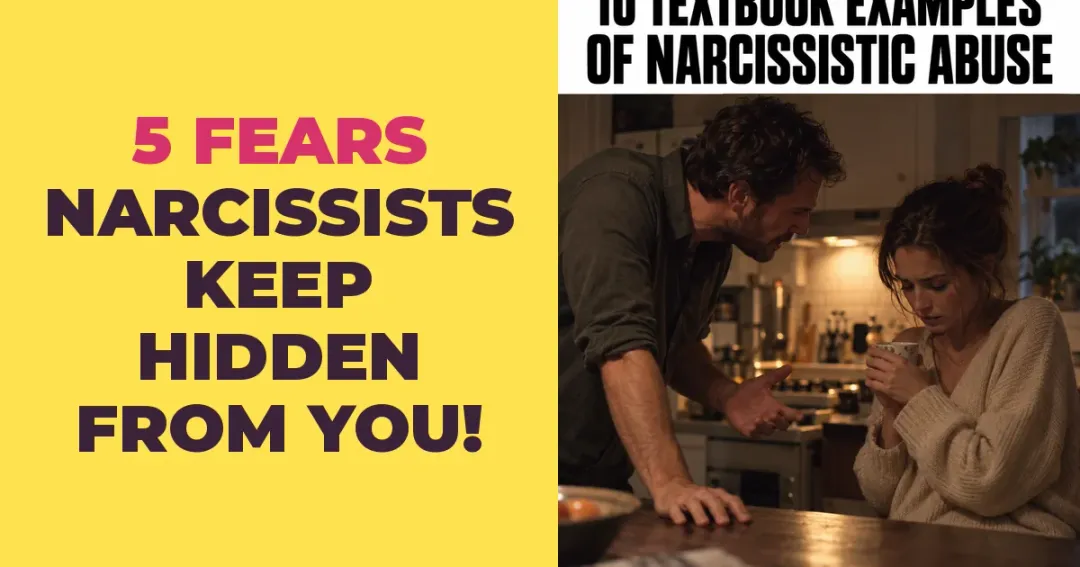
Here are 5 fears narcissists keep hidden, and what each one does to you.
What the armour is protecting
For a narcissist, feeling worthwhile usually needs a steady supply of outside approval.
Admiration props it up. Anything that questions it, from a raised eyebrow to a closed door, feels like a threat.
That’s why the bravado matters so much. It protects a self-image that’s far more fragile than it looks.
Every fear below comes back to that.
#1 Someone seeing the real them
Their public image is a full-time project, and you’ve seen backstage.
At the party they’re the funniest person in the room. They top up drinks, know everyone’s name, and hug your mum like she’s their own. Everyone leaves charmed!
Then the car door shuts.
Silence. Or a cold, quiet list of everything you did wrong tonight, delivered while they stare at the road. You spend the rest of the drive hunting for the moment it went wrong.
Why the effort? Looking good to others matters enormously to a narcissist, since being admired is what keeps their self-worth afloat. At home, with no audience to win over, you get the other version.
So when friends say “You’re so lucky,” you smile and nod. Then you lie awake wondering if you imagined the car ride, and whether anyone would believe you if you said it out loud.
You didn’t imagine it. That gap between kind in public and cruel in private is real. Trust what happens behind your own front door, and lean on a friend who has watched both versions up close.
See also 8 Unsettling Bedtime Habits Only a Narcissist Would Have
The car ride home counts more than the party.
#2 Criticism lands like a punch
To a narcissist, even gentle criticism can feel like an attack on who they are.
You mention the electric bill is late. Ten minutes later you’re hearing about every bill you’ve ever forgotten, in a voice that sends the dog out of the room. And the bill? Still late.
Or you correct a date in front of friends. They laugh it off. Three days later, over something tiny, they punish you for it, and you can’t even trace why.
Sound familiar?
Psychologists who studied this found that when narcissists feel insulted, they hit back harder, and they aim it squarely at whoever they hold responsible. Being wrong isn’t a fact to them. It’s an injury, and someone has to pay.
So you start pre-editing. You rehearse sentences in the shower. You end up apologising for things that were never yours, just to keep the evening calm. The house gets quieter, and so do you.
If something has to be said, stick to plain facts and few words, or let it go when speaking up feels risky. And if the shouting tips into threats, walk out of that room.
A late bill is just a late bill.
#3 Your wins feel like their losses
When you shine, a narcissist often feels like they’re losing.
You get the promotion. You tell them over dinner, buzzing. They say “Good for you,” glance at their phone, and ask if you’ve seen the car keys. Your big news lasts about four seconds.
Maybe they pick a fight the night before your birthday. Maybe they mock the friends who threw you the party, or find a flaw in the thing you’re proudest of.
Why?
Research on narcissistic admiration and rivalry describes two sides. At first, the charming, self-selling side does the work. Later the competitive side moves in, and anything you gain counts as something they lost.
See also 7 Strange, Disturbing Hobbies Narcissists Secretly Love
Envy adds fuel. Your good fortune pokes at their need to feel above you, so they make it smaller, take credit for it, or ruin it. Everyone feels a pang of jealousy now and then. Using it to knock you down is something else.
Bit by bit, you start hiding good news. You downplay the raise. You skip posting the photo. Happy moments feel risky, so you keep them small.
Watch whose face falls when things go your way. Then take your next win to someone who’s glad for you. You’re allowed to be proud out loud.
#4 Being overlooked hits them hard
Being overlooked can feel unbearable to a narcissist, even for a few minutes.
Your sister calls with big news and you’re on the phone for twenty minutes. You laugh, you ask questions, you’re happy for her. When you hang up, the kitchen has gone cold.
“Don’t mind me. I’m only the one who cooked.”
Research on the two faces of narcissism describes a loud form and a quiet one. The loud type grabs the spotlight back with a bigger story. The quiet type sulks, keeps score, and pretends not to care.
Both are guarding the same bruised self-image. Many switch between the two.
And somehow it all lands on you. You tread carefully through every sulk, and their letdowns somehow become your fault. You start keeping calls short. You check their face before you check your messages.
One way to tell: see what happens to their mood the moment attention drifts elsewhere. And ask yourself if a sorry from them has ever arrived with no strings.
A sorry with conditions attached was never really a sorry.
#5 When you pull away, they reel you in
When you pull away, the tone often flips fast.
Maybe you go quiet for a week, or start packing a bag. Suddenly it’s “I miss you.” “I’ve been thinking about us.” “I’ll change, this time for real.”
See also 9 Dark Secrets a Narcissist Will Carry to the Grave Without Telling Anyone
The popular name for this is hoovering. It has no formal definition. It’s the word for their efforts to reel you back in once there’s space between you.
It tends to show up when they need something or feel replaced. Birthdays and anniversaries are favourite moments for it.
Why does it work so well? Because of the hot and cold that came before. Psychologists call this intermittent reinforcement: warmth you can’t predict grips you tighter than warmth you can count on. It’s the same pull a slot machine has.
So one warm message, and the old hope comes rushing back. Weeks of progress feel undone. That pull is how unpredictable warmth works.
Weigh what they’ve actually done over the years, not what they’re promising tonight, and choose your answer before the next message lands.
Judge the years, not the text.
Fear explains a lot about the narcissist. It doesn’t excuse any of it, and managing it was never your job.
What you saw happened. What you felt made sense. If you’re ready, pick one person you trust and let them hear all of it, from the car ride to the cold kitchen.
And if any of this feels unsafe, people at a domestic abuse service are there to help you work out next steps, at your pace.