Your stomach drops the moment their key turns in the lock.
Anger that can flare at any moment keeps you on edge, even when nobody is shouting.
You feel wired and drained at once. You ache for the person who hurts you, and one sweet text can wipe out a whole awful week.
You stay quiet to keep the peace, then lie awake replaying every word.
Your head says none of it adds up.
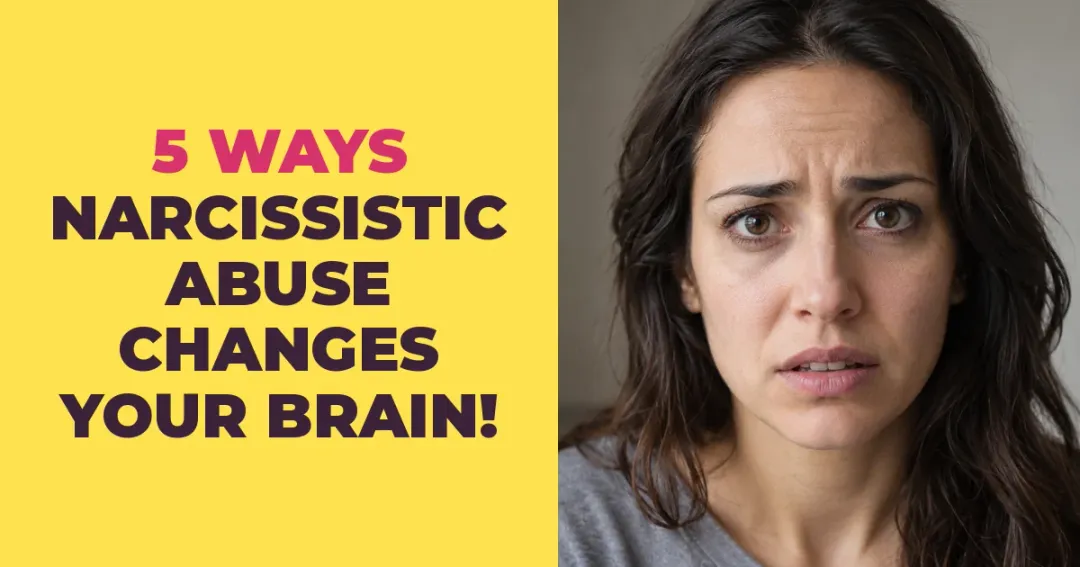
Here are 5 ways narcissistic abuse changes how your brain and body react, and what’s really going on underneath.
Why it feels so physical
Your brain and body learn from whatever keeps happening to them.
Research on fawning and hypervigilance explains the first part. When anger can flare at any moment, the body learns to stay switched on, and to soothe the threat by agreeing and appeasing.
Research on rewards adds another piece. Warmth handed out unpredictably, mixed with coldness, grips tighter than warmth you can count on.
I won’t throw hormone names at you that I can’t back up. What I can show you is how this training feels from the inside. None of it is a flaw in you.
#1 Your body is always braced for them

Your body has learned to read their mood like a weather report.
You can tell how the night will go from the way the keys hit the counter. A sigh in the kitchen. The car door shut a bit too hard. The TV switched on louder than usual.
Then the scan starts.
Is dinner okay? Did you answer the group chat fast enough? What’s that look on their face, and what did you do?
Psychologists call this hypervigilance. Living with anger you can’t predict trains the body to stay on alert, watching for danger before it arrives and trying to calm it by agreeing, smoothing and saying yes before you’ve even thought about it.
Even quiet nights rarely bring the all-clear.
See also 8 Ways A Narcissistic Mother Pits Her Family Against Each Other
So a slammed drawer makes you flinch. You apologise before you know what’s wrong. Then they ask, “Why are you so jumpy?”
Being on guard all day is exhausting, and it can leave you losing track of what you even want. When the alarm goes off, notice it and slow down. Give yourself one beat before you answer. That beat is yours.
#2 Their silence hurts like real pain
Being shut out by the person you live with can hurt like a physical wound.
It can start over something tiny. You disagreed about the weekend, or asked where they’d been. Now they’re chatting to everyone at the table except you, laughing at your brother’s jokes while your plate goes cold.
Your “good morning” just hangs there.
Then nothing. For a day. Sometimes three.
Research on being shut out explains why it cuts this deep. Being ignored threatens two basic needs: the need to belong and the need to matter. So it lands like an injury, and it pushes people to cave.
So you apologise for something you can’t even name, just to end it. Then they stroll back. “What? I was busy.”
After a few rounds, you steer around any topic that might set it off.
One thing helps. Say once, calmly, that you’re open to talking, then go and live your day. Don’t chase and don’t beg. Take the walk. Eat your dinner while it’s hot.
#3 Their kindness hits like a jackpot

Affection you can’t predict grips you tighter than affection you can count on.
One evening they won’t meet your eyes. The next, they’re short with you over nothing. Then on day three they bring your favourite coffee and kiss your forehead, as if the last two days were a bad dream.
And the relief floods in.
This has a name: intermittent reinforcement. When a reward arrives on a schedule you can’t guess, the behaviour it rewards becomes the hardest one to stop. Slot machines run on the very same principle.
See also 12 Reasons The Narcissist Will Never Turn Into The Person You Need
That hook says nothing about how smart you are.
A rare “I’m sorry, babe, I don’t know what got into me” lands like a jackpot. So you keep hoping for the next one.
You work harder and get less. The good days make the bad ones feel bearable.
Try this. Each night, quietly mark the day good or bad, somewhere only you can get to. After a month, look at the average, not the best day. What does it tell you?
#4 Love and fear get tangled in your head

Believing they love you while knowing they hurt you wears your mind out.
Psychologists call this cognitive dissonance: the discomfort of holding two beliefs that clash. Your mind wants that discomfort gone, so it gets busy explaining away the bad parts.
That’s where the excuses come from.
Work’s been rough. They had a hard childhood. They didn’t mean it like that.
Then there’s everything you’ve put in. The years, the flat, the shared friends. Leaving can feel like wasting all of it, so you stay and give more. Research on sunk cost describes that exact pull.
Small decisions stall. The holiday, the lease, the text.
You argue with yourself in the shower and at 3am. Loving and fearing one person can make you feel crazy. You aren’t.
Write down what happened, not what it meant: “They called me stupid in front of their mum.” Just the fact. Then ask what staying would cost you from here on, not what you’ve already spent.
#5 Missing them can feel like withdrawal

Missing someone who hurt you can feel like an ache in your body.
You know what they did. You could list it. And still, at 11pm, your thumb hovers over their name.
Your friends don’t get it. “Why do you keep defending them?”
When missing them follows a cycle of harm and kindness, the research name is trauma bonding. A power imbalance plus those swings can build an attachment stronger than a calm relationship does. That’s why leaving can feel physically painful.
See also 9 Honest Questions To Ask If You Suspect You’re The Narcissist
And then comes the shame of still wanting them.
When contact drops, the first weeks can bring cravings that feel a lot like withdrawal. Checking their profile. Typing a text and deleting it. Replaying the good days on a loop.
It’s a known reaction to the cycle you lived through. It says nothing about your strength.
If you decide to step back, plan for those first weeks ahead of time, and if they might react dangerously, talk to a domestic violence service first. Calm tends to grow over time with less contact, though the first weeks can be rough.
Your body didn’t betray you. It learned, fast, how to survive days with someone who kept changing the rules.
Talk to yourself the way you’d talk to a friend who’d been through this. Self-compassion eases the shame and self-blame that manipulation tends to leave behind.
Isolation is part of how this works, so reconnection is part of how it eases. Start with one person you trust. Tell them the whole story.