A narcissist will almost never let you see them hurting.
Instead you get the cold shoulder.
The rumours. The new partner posted online two weeks after you left. The shrug when your name comes up.
And you’re left wondering if you ever mattered at all.
Here’s what often sits underneath. When their ego gets bruised, the pain tends to leak out sideways, at the person they hold responsible.
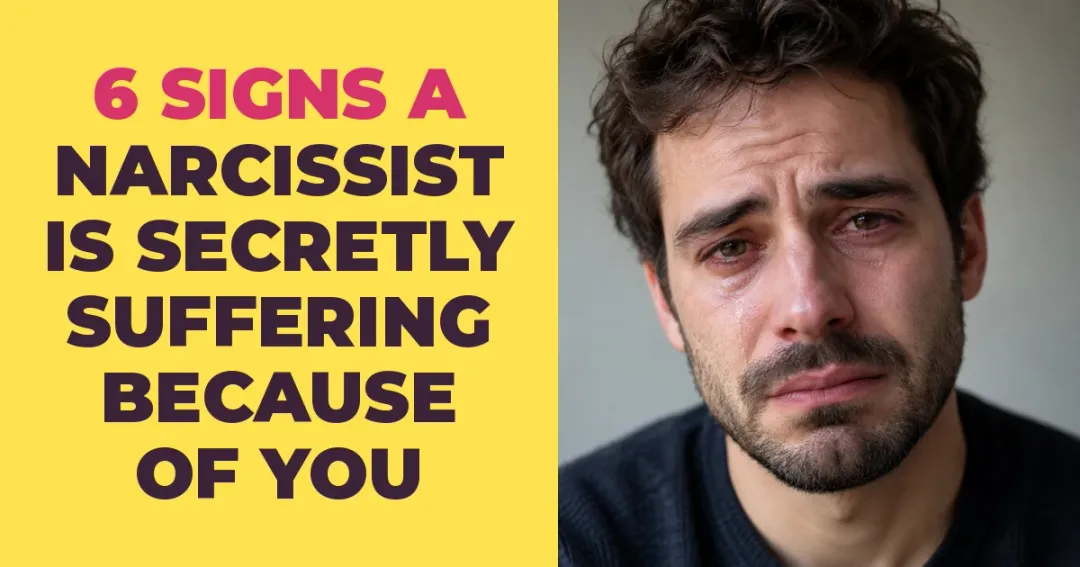
These are 6 signs a narcissist is secretly suffering because of you, and what each one really means.
Why their pain looks like an attack
Underneath the swagger, a narcissist needs other people to keep telling them they matter.
You were one of those mirrors. When you pull away, push back or stop clapping, the mirror cracks.
Narcissism has a showy, bold face and a quieter one that’s prickly and self-pitying. Many switch between the two. Either way, they’re shielding a self-image that bruises easily.
So their hurt rarely looks like hurt.
#1 They tell everyone their version first
A smear campaign is often how a narcissist shows you got under their skin.
Your cousin goes quiet in the group chat. A mutual friend asks, gently, if you’re “doing okay”. Someone has been talking.
The story is usually the same. You’re unstable. You’re bitter. “I tried everything, but she’s not well.”
Why? Admiration keeps them afloat, so their public image gets enormous effort. If you walk away or tell the real story, the polish cracks. Telling their side first patches it.
Psychologists call this relational aggression. It goes after your name and your friendships instead of your body, which leaves no bruise anyone can see.
It’s exhausting. Suddenly every room seems to need your explanation, just when you could use people on your side.
No need to argue your case in every kitchen. Keep showing up as the same person, and let the weeks do the talking.
If it starts touching your job or custody, keep records.
See also 9 Morning Red Flags That Give a Narcissist Away
#2 Their indifference is a costume
Acting like they don’t care is often the loudest sign that they do.
They walk past you at a friend’s party like you’re a stranger. They tell people the relationship was “nothing serious”. They make sure you hear about it.
It stings. Look closer, though.
Psychologists who study the quieter, vulnerable form of narcissism describe this combination. Thin-skinned about criticism, yet acting as if nothing touches them. Keeping a ledger of slights. Sulking when ignored. Secretly sure they’re better than everyone, just never understood.
So the shrug is armour. What it protects is fragile.
Meanwhile you’re the one tiptoeing. Even now, you might catch yourself managing a mood that isn’t yours, or taking the blame for their disappointment.
One way to tell: watch how they act when they’re not the centre of attention.
Who exactly is that performance for?
#3 Someone new appears very quickly

A brand-new partner within weeks says more about their needs than your worth.
You see the photos before you’ve even changed the sheets. The restaurant you loved. The same “never been this happy” caption.
It feels like a slap.
Researchers have linked narcissism with a game-playing style of love. Keep the options open. Skip the deep closeness. Lose interest after the win. A speedy rebound fits right in.
Add a self-worth that runs on other people’s approval, and losing you leaves a hole in it. That hole feels urgent. Someone has to fill the mirror, fast.
None of that means you were replaceable. It means admiration is something they find very hard to go without.
You may feel replaceable anyway. That feeling is common, and it says nothing true about you.
Watch what they do over months, not what they post. A highlight reel isn’t a life.
#4 Your good news ruins their day
Your happiness can quietly threaten a narcissist’s need to feel superior.
You get the promotion. They say “Good for you,” then spend dinner scrolling their phone. Your birthday? Somehow that’s the night they pick a fight.
See also The 8 Stages Everyone Goes Through With a Narcissist
Not a coincidence.
Research finds envy runs strong in narcissism, most of all in the quieter type. When you shine, their need to be the best gets poked. That threat feels real to them, so your win gets shrunk, borrowed or spoiled.
Psychologists also describe a rivalry streak: if you go up, they feel they’ve gone down. Wanting to do well is normal. Needing you to do worse isn’t.
Over time, you learn to keep good news to yourself. Celebrating starts to feel like a risk, something you’ll pay for later.
Share your news where it’s met with real delight.
And notice who goes quiet when you win.
#5 They suddenly miss you

The “I miss you” text often lands right when they feel replaced or need something.
It’s been months. Then at 11pm: “Hey. Saw something today that reminded me of you.” Or a sudden emergency only you can fix. Or a promise that this time, they’ve really changed.
Your stomach flips.
“Hoovering” is a nickname people use for this, not a clinical label. It describes tugging you back after a breakup or a spell of distance. It works on the bond you had, and on hoping the good stretch returns.
Psychologists call the hook underneath intermittent reinforcement. Kindness you can’t predict holds on tighter than kindness you can. Slot machines run on the same trick.
One text, and the hope floods back. Weeks of progress can feel wiped out.
Decide now how you’ll answer the next one. Then measure it against years of the same pattern, not the latest promise.
What has actually changed, apart from the message?
#6 Your calm can bruise their ego
Being ignored, rejected or calmly corrected can feel like a wound to a narcissist.
You answer a long, angry text with “Okay.” Or you ask one simple question about the bills. Suddenly it’s a fight about everything you’ve ever done wrong.
That reaction tells you something.
See also 7 Things a Narcissist Never Gets Over
Research on threatened egotism points to a clear pattern. When their self-image takes a hit, a narcissist turns more aggressive. And that fury goes looking for whoever bruised them. Often, that’s you.
Everybody gets mad sometimes. The giveaway is the size of it. A blow-up over one small remark. Payback days later for a sentence you’ve long forgotten.
Over time, you rehearse every sentence in your head first. You say sorry for things that were never yours.
Short and factual works best, if you speak up at all. Staying quiet is fine when speaking feels unsafe. And if the anger turns into threats, leave the room and call for help.
Their rage was never proof you did something wrong.
None of this means their pain is yours to fix.
Seeing it clearly can still help. The rumours, the shrug and the late-night text often say more about their fragile image than about who you are.
So the next time a story about you drifts back, or that 11pm message lights up your phone, you’ll know what you’re looking at.