Narcissists can turn the smallest need into proof that you’re impossible to please.
A heads-up when plans change. A hand with the laundry. Five minutes of real attention after work.
Over time, those began to sound like big demands, even to you. So you cut the list down. You softened your voice. You said sorry before you’d even finished asking.
It still wasn’t enough.
Here are 8 reasons your expectations were never the issue, and why you’ve been taking them to the wrong person.
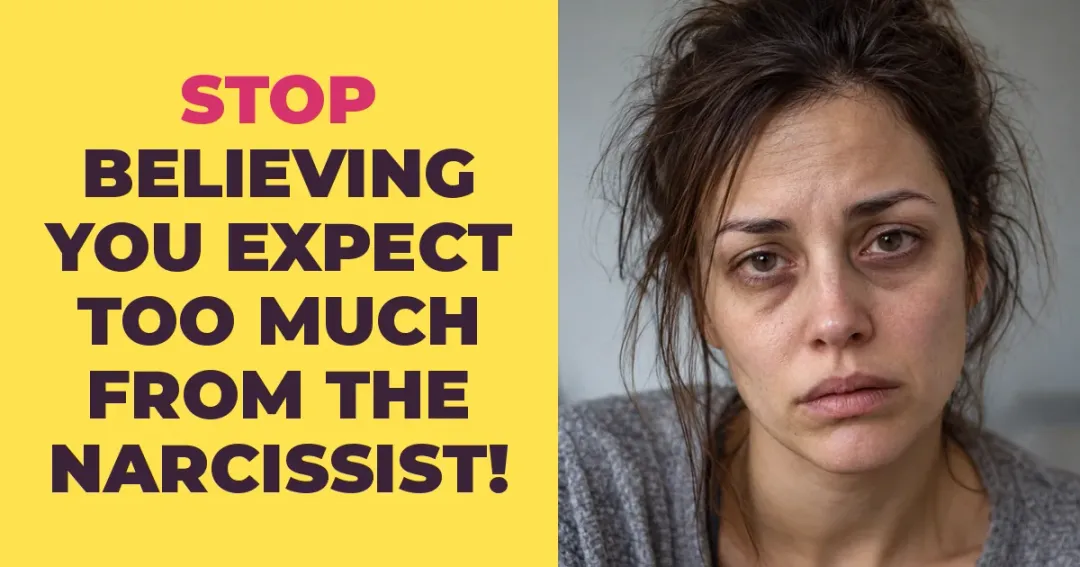
Why ordinary asks land like insults
Psychologists who study entitlement describe a fixed sense of being owed more than everyone around them. Rules? Those are for other people.
Now picture your request arriving in that head. A normal limit gets heard as a slight.
Which is why a fair question can feel, to them, like you threw the first punch.
Your tone was never the problem.
#1 Your basic needs aren’t a big ask
Needing the basics from a partner doesn’t make you high-maintenance.
You’d like a quick message when the evening plans change. You’d like one Saturday a month that’s built around you. That’s it. That’s the whole wishlist.
Their face reacts like you asked for a kidney.
Entitlement is about brushing off what the other person needs. Saying what you need is something else entirely. It’s just how two people share a life.
Around a narcissist, though, your needs can get handled like a nuisance blocking their way.
Their reaction measures them, not your request.
Be honest. Would your closest friend call this too much?
#2 Fairness comes with a price tag
Asking a narcissist to even things out can cost you more than the thing itself.
You paid for the car repair in March. And the birthday dinner. The money you lent them in spring? Still waiting. So you mention it, gently, over dinner.
“Seriously? You’re keeping score now?”
Research on entitlement describes a steady belief that they deserve more than others. Paying back money or favours doesn’t fit that picture. Neither does sharing credit for work you did together.
See also Most Parents Would Be Shocked If They Found Out Narcissists Do This To Their Children
So the scales tip, quietly. You give more and get less, and bringing it up feels like starting a war.
Two habits help: keep track of what you give, and stop pre-paying, pre-forgiving and pre-agreeing.
What would you stop covering first?
#3 They see your pain and change the subject

Plenty of narcissists understand exactly how you feel. They just don’t do anything with it.
You’re in tears at the kitchen table after a horrible week. They look up, scroll their phone, and ask if there’s any pasta left.
Or they go with: “Here we go again. You’re so sensitive.”
Studies on narcissism and empathy suggest it stays low on its own, then rises when they’re asked to imagine your side. That looks less like can’t and more like won’t.
So finding better words for your pain was never the fix. Many women go quiet about their feelings, then begin wondering if those feelings even counted.
They counted. Bring them to people who answer back.
#4 Bringing it up becomes your crime
Point out one problem to a narcissist and you can walk away as the bad guy.
You bring up the joke they made at your expense in front of your friends. Seconds later: “That didn’t happen, and I can’t believe you’d say that.”
Next, a run-down of everything wrong with you. Then wounded silence, until you’re the one patting their shoulder.
Psychologists have a name for it: DARVO, for deny, attack, reverse victim and offender. In research, it left the one doing the confronting blaming herself more. No wonder the talk just dies.
So you say sorry for raising it. Later, you quit raising anything.
What helps is going back, calmly, to the thing you first said, and leaving their counter-charges unanswered.
Your original point still stands. Their list of your faults doesn’t cancel it.
#5 Their promises keep you on hold

A narcissist’s big plans can keep you hooked on a life that never shows up.
See also Nothing Hurts Like Watching A Narcissist Harm Your Child
The beach holiday. The engagement. The flat with the balcony. “Once things calm down at work, babe, I swear.”
Things never calm down.
Lots of women online call this future faking. It’s a popular label, not a clinical term. The logic behind it: after you’ve poured yourself into a shared plan, leaving feels like throwing the plan away.
Research ties narcissism to treating love like a game, with weaker commitment, which fits the pattern.
And all the while, asking “when?” starts making you feel pushy.
It shouldn’t. Look at what’s really happened so far, and pick your own deadline. How long have you been on hold?
#6 Crumbs start to look like a feast
Kindness you can’t predict grips you tighter than kindness you can count on.
On Monday they barely speak. By Wednesday your texts sit unanswered. Then Friday brings takeaway, a hug, and “I don’t know what I’d do without you.”
The relief is so big it almost hurts.
When rewards turn up at random, chasing them becomes a very hard habit to break. Slot machines run on the very same trick.
A rare sorry lands like winning big. A single sweet evening makes a rotten week seem fine. You give more and get back less.
No wonder the bare minimum now feels like asking a lot. You learned to live on so little.
Try scoring your typical week instead of your best night. What does an ordinary week actually feel like?
#7 Guilt taught you to shrink the ask
Guilt is often the thing that stops a fair request before it leaves your mouth.
You’d love two nights at your sister’s. They go silent, then mutter: “Nice. After all I do around here.”
So you cancel. Again.
Some call this FOG: fear, obligation and guilt. That’s a popular label, not a diagnosis. It means pressure that makes refusing feel pricier than caving, and it can sit alongside the wider pattern called coercive control.
See also 12 Reasons Narcissists Make The Most Frightening Parents
Repeat that enough and yes comes out on its own. Their mood starts to feel like your shift to cover.
Next time, wait a beat before replying. Their feelings are theirs to carry. Your weekend is yours.
Love shouldn’t send an invoice.
#8 The charming early version has gone
Often, asking for too much really means asking for the person you met at the start.
Back then they wanted to hear about your day. They laughed at your stories, sent good-morning messages, turned up before you did.
These days a reply takes all afternoon.
Research on narcissistic admiration and rivalry describes this shift. Early on, charm and showing off win you over. Later the rivalry side grows: cooler, sharper, more competitive with you.
So the first months shine and the later ones sour. And you keep reaching for that early version, hoping the right tone will bring it back.
Watch the pattern across months, not the odd sweet moment. Plan as if things stay the same, not as if change is coming.
You weren’t greedy. You were missing someone who’s gone.
Your needs were never the trouble. Wanting to be listened to, helped and thought about is an ordinary thing to want.
Begin with one person who actually responds. A friend, your sister, a support group. Being cut off is part of how manipulation works, so reaching back out is part of how you get free.
Take your list to the right person, and see how modest it always was.