A narcissistic woman hides what rattles her. Mostly.
But you’ve caught the flashes. The sulk when the room stopped looking at her. The sharp little comment on the day you looked happy.
Maybe it’s your mother. Your sister-in-law. The friend who somehow always ends up the victim.
And you’ve spent years trying to keep her calm.
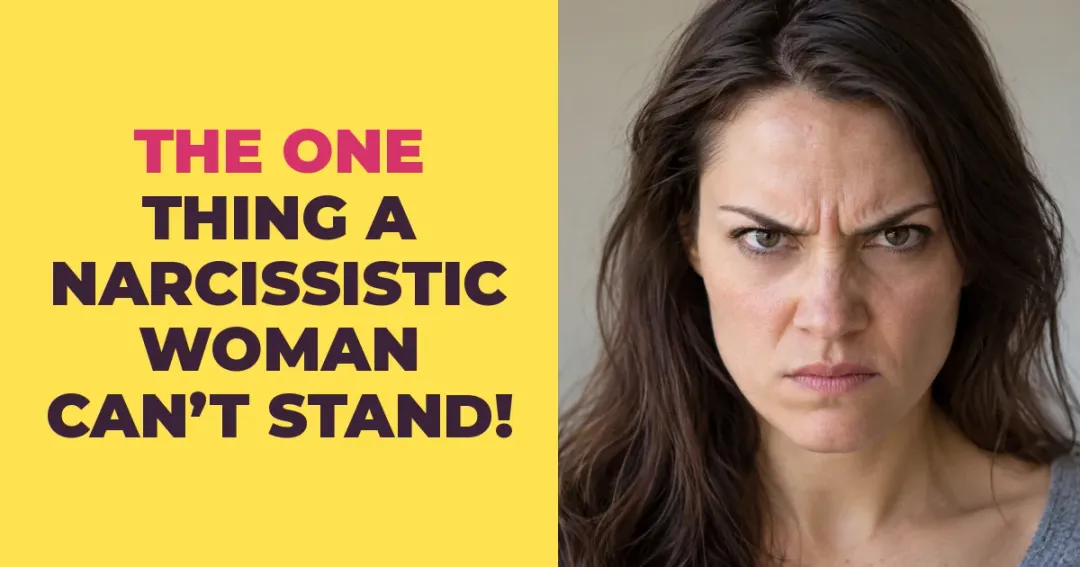
Here’s what sits underneath, and 6 ways it shows up. Because the one thing she can’t stand is you, steady, no longer chasing her approval.
Why approval is her oxygen
Under all that confidence, she needs other people to keep confirming she matters.
So everyone near her gets a job. Reflect her glow back to her, or count as a danger to it.
Researchers talk about a loud version of narcissism that hogs attention, and a quiet version that sulks, tallies slights and feels hard done by. Plenty of narcissists flip from one to the other.
Either way, the goal is guarding a self-image that cracks easily.
#1 Small things become big drama
One tiny comment can set off a full-blown crisis with a narcissistic woman.
You mention she’s twenty minutes late. By dessert she’s teary, telling the whole table, “I can’t believe you’d humiliate me like that.”
Why so big?
When narcissists feel insulted, research on threatened egotism links them to more aggression, and it lands on the person they hold responsible. A passing remark can count as that insult.
If shouting doesn’t work, she goes quiet instead. The pout. The chilly shoulder. A punishment on Thursday for something you said on Monday and forgot.
So every sentence gets checked twice before you say it. You end up saying sorry for things that weren’t yours.
One way to tell: her reaction keeps dwarfing whatever started it. And if her anger tips into threats, you’re allowed to walk out of the room.
Your comment was small. Her reaction wasn’t.
#2 Your good news ruins her day
Your happiness can feel like a personal insult to a narcissistic woman.
See also 7 Unsettling Things Narcissists Do When You’re Happy
You tell her about the promotion. She says, “Must be nice,” then asks if you’ve seen her new kitchen tiles.
Or your birthday comes round and she’s started an argument before lunch.
Envy shows up a lot in narcissism, most of all in the touchy, quiet type. Your win dents her need to feel above you, so she makes it smaller, sours it or takes it.
She might sneer at your friends. She might borrow your idea and announce it as hers.
Slowly, good news stays in your pocket. Joy starts to feel like a bill that’ll arrive later.
A simple tell? Watch whose face goes blank when something goes right for you.
Then take your next win to someone who cheers. Loudly!
#3 She charms everyone but you

A narcissistic woman can be warm and funny with everyone else, then cold with you.
At the party she’s the one everyone wants beside them. On the drive home, silence. Or a rundown of what you did wrong tonight.
Research on narcissistic admiration and rivalry explains the flip. Early on, charm and bragging pull people in. Once you’re close, the rivalry side wins: colder, sharper, competing with you.
Her public image gets so much effort because applause is what holds her up.
Then your friends say, “You’re so lucky to have her.”
And you start questioning what you lived through. When no one buys your version, you go quiet.
Believe what happens in private. Find someone who has watched both of her faces.
The drive home counts. Maybe more.
#4 She thinks she’s a step ahead
A narcissistic woman’s cruelest moves can be planned long before you notice them.
That thing you told her in confidence last spring? It comes back at a family lunch, perfectly timed, in front of everyone.
Psychologists call this streak Machiavellianism: flattery, lies and patient scheming to come out on top. It often sits alongside narcissism, and plenty of difficult people rate high on more than one trait.
See also 10 Ways Narcissists Try to Keep The Kids Away From You
Everyone hears the version they like. Allies line up behind her without a fuss. In public, she almost never snaps.
So when you speak up, people picture someone calm and sensible. And they doubt you.
The plan only shows itself when it’s done.
What helps is dull. Tell her less about your private life. Get agreements down in a text or email, even tiny ones.
She can’t use what she never gets.
#5 Your no feels like an attack to her

To an entitled narcissist, an ordinary limit can feel like a slap.
You say you can’t drive her to the airport at 5am. Suddenly you’re selfish, cold, “not the friend I thought you were.”
Psychologists describe entitlement as a fixed belief that she’s owed more, and that rules are for other people. So a normal request from you hits her like an attack.
Your plans are supposed to bend around hers. Favours travel in one direction.
No wonder asking for fair treatment feels like declaring war.
A boundary helps here. It’s a popular term for a simple idea: it’s about your own actions, so her agreement isn’t needed. “If you shout, I’ll go.” Then you go.
She’ll probably push hard at first. Say it one time, follow through each time.
Her anger at your no doesn’t make the no wrong.
#6 Unbothered is the one thing she can’t stand
A calm, flat, unbothered reply gives her almost nothing to grab.
She sends the bait in the family group chat: “I guess some of us actually care about this family.” You answer, “Sunday at two works.” Nothing more.
Online this is called grey rock. It’s a popular name, not a clinical one, for being boring and unreactive when you can’t avoid contact.
The logic is simple. The less emotion she gets back, the less she has to play with, and the hook loosens over time. Some women go further and cut contact completely.
See also How Narcissists Gradually Drain the Joy From the Things You Love
Brief, factual replies. Plans and times only. Written down where possible.
This isn’t about beating her. It’s about not handing her more fuel.
Grey rock isn’t safe for everyone, though, and cutting contact can raise the risk too. If she might escalate, a domestic violence service can help you plan either one safely.
She wanted a reaction. You gave her a rock.
Having feelings never made you the problem. You just learned to hand them to someone who used them.
Start small. One shorter reply. One piece of good news shared with someone kind. One evening that’s only yours.
She may never change. You don’t have to wait for her to.