The narcissist can sit right next to you and still not see you.
You talk, and they look past you. You cry, and they check their phone. You give, and somehow it’s never quite enough.
It’s a lonely feeling. And it’s hard to explain to anyone who hasn’t lived it.
You’re not imagining it. You’re not asking for too much, either.
Here are 10 examples that show the narcissist doesn’t see you as a person.
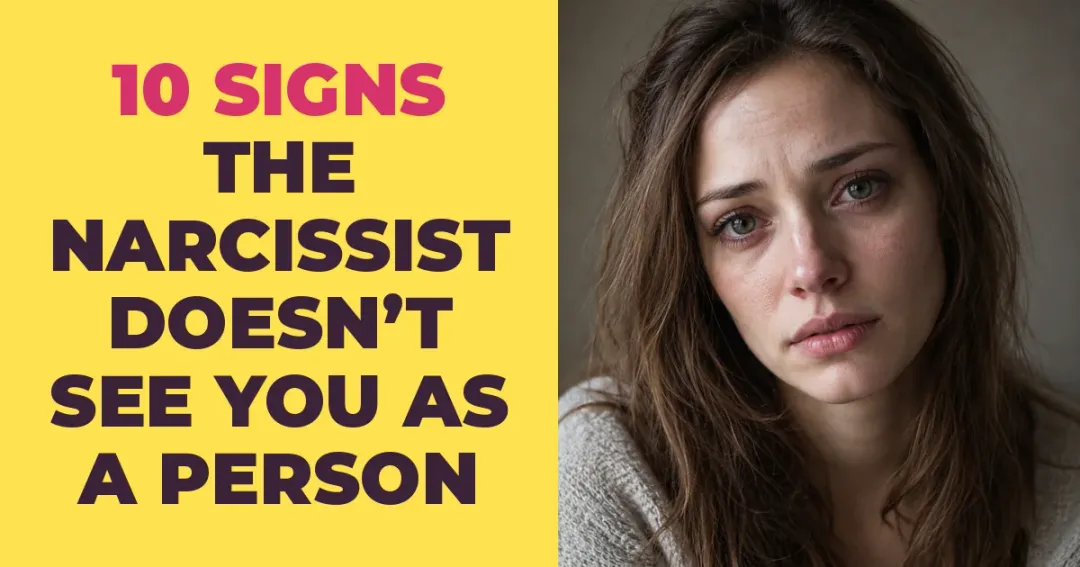
Why you’re a function to them
In a narcissistic pattern, feeling worthy isn’t something they can do on their own. It has to be topped up from outside, again and again.
So everyone around them lands in one of two boxes. You either feed their image, or you put it at risk.
Praise them, and you’re useful. Question them, and suddenly you’re the problem.
Your hopes, your tired days, your quiet needs? They don’t fit either box. So they barely register.
#1 Your feelings are an interruption
Your feelings get handled like an annoying delay in their day.
You start telling them about the awful meeting, and halfway through they ask what’s for dinner. You cry in the car, and they turn the radio up.
Push back, and you get the classic: “You’re too sensitive.”
Here’s what stings. Research on narcissism and empathy suggests many can read your hurt just fine. It looks more like a choice than an inability, and their empathy rises when it serves them.
So you stop sharing. Then you start doubting whether you should feel anything at all.
Your feelings are fine. Take them to people who actually answer.
#2 Sweet in public, cold at home
The kindest version of them is saved for people who aren’t you.
At the party they’re charming. They refill drinks, laugh at your mum’s jokes, and tell everyone how proud they are of you.
Then the car door shuts. Silence the whole way home.
See also THIS is the Simplest Way to Annoy a Narcissist
Your friends say you’re so lucky. You smile and say nothing.
Why the act? Their image matters enormously to them, since being admired is what props up their sense of worth. Everyone gets the polished version. You get what’s left.
That’s why your friends don’t believe you. And why some days, you don’t quite believe yourself.
Believe what you see at home. That’s the real them.
#3 They call when they need something
You hear from them right on time, whenever there’s something they need.
Three days of nothing. Then a sweet message: “Hey babe, can you pick up my suit on your way?”
Or the warm phone call that ends in a favour. Again.
Using others for what they want is a common part of the narcissistic pattern. Your feelings only get their attention when they touch their own plans.
Which leaves you feeling like a tool they keep in a drawer.
Look at months, not one nice evening. When does the warmth show up?
And what does it ask for right after?
#4 A simple no feels like an attack
To someone with a strong sense of entitlement, your limits feel like a personal insult.
You say you can’t drive them to the airport at 5am. Suddenly it’s a betrayal.
“After everything I do for you, you can’t do this one thing?”
Psychologists call this entitlement. Deep down, they believe they’re owed more than anyone, and that rules are for other people. So your normal limit hits them like a slap.
You give more. You get less.
Even asking for a fair split starts to feel dangerous. Needing things doesn’t make you the selfish one.
Keep track of what you give. And stop agreeing before they’ve even asked.
#5 Your soft spots become their punchline

Some people get a little hit of pleasure from your discomfort.
They mention your weight at dinner with your friends. They do an impression of your nervous laugh. When you flinch, they grin.
See also The One Thing a Narcissistic Woman Can’t Stand
“God, it’s a joke. Lighten up.”
Researchers have a name for this: everyday sadism. It means taking small, daily pleasure in watching someone squirm. Being cruel feels good on its own, no other payoff needed.
Over time you learn to hide every reaction. Love starts to feel like being hunted.
One way to tell: real teasing ends the moment you say it hurts.
Does theirs?
#6 Even your memory is up for debate

When your memory gets in the way of their story, your memory has to go.
“That never happened.” “I never said that.” “You’re imagining things again.”
You were there. You heard it. An hour later, you’re not sure.
This is gaslighting. The aim is to get you trusting their account over what you saw with your own eyes. It thrives when they have the upper hand and get to tell the story.
Soon you’re keeping notes on your phone just to prove the obvious.
Keep them. Jot down what happened the same day, and run it past a friend who isn’t involved.
Your memory was never the problem.
#7 Somehow, they’re always the victim
Bring up something they did, and somehow you end up apologising.
You mention the comment they made at your sister’s. Two minutes later: “How dare you accuse me? You’re the one always attacking me!”
Then the tears, or a long sulk, until you’re patting their back.
There’s a research term for this: DARVO. They deny it, go on the attack, then swap roles so they’re the wounded one. Studies show it leaves you feeling guilty for raising it at all.
No wonder you stop bringing things up.
Next time, say the first issue again, calmly. Skip the bait. You don’t have to answer every accusation they throw back.
What did you actually come to talk about?
#8 Good news makes them go sour
Your good news seems to make the whole room colder.
See also 7 Unsettling Things Narcissists Do When You’re Happy
You got the promotion. They say “Huh, nice,” and go back to their phone. Later they wonder aloud if your boss just felt sorry for you.
Your birthday? That’s when the fight starts.
Envy shows up a lot in narcissism, and even more in its touchy, quiet version. Your win feels like their loss. So they make it smaller, take credit for it, or ruin the moment.
So you start hiding the good stuff.
Watch who falls silent when things go well for you. Then celebrate with people who light up.
You were allowed to be happy that day.
#9 They act like you’re not there
Sometimes they punish you by acting like you simply don’t exist.
They chat to everyone at the table but you. Days pass. Then they stroll back in as if nothing happened.
Why does it work so well? Studies on being shut out show it threatens our need to belong and to count. The hurt can feel almost physical, so giving in looks like relief.
So you apologise just to end it. Even when you did nothing wrong.
A partner who says “I need an hour to calm down” is fine. Going quiet to make you pay is different.
Let them know once that you’re ready to talk. Then get on with your day.
No chasing. No begging.
#10 To them, you were replaceable
To them, you were often one option among several, even while they swore otherwise.
The ex still texts. The coworker gets flirty jokes right in front of you. And when it ends, someone new shows up in their photos almost overnight.
Researchers have tied narcissism to treating love like a game. Options stay open. Real closeness gets dodged. Once they feel they’ve won you, the interest fades.
Online, this arc gets called idealise, devalue, discard. That’s a popular phrase, not a diagnosis, but the game-playing research fits it well.
You feel replaceable because they treated you that way.
Not because you were.
Now you can name it when your no turns into a betrayal, or your good news makes the room go cold.
Their blind spot was never a measure of you. Start with one person who does see you, and tell them one true thing.