A narcissist often acts like nothing you do could ever reach them.
Bored. Superior. Untouchable.
Yet research on the two faces of narcissism describes something else underneath: a touchy, easily bruised self-image behind the cool act.
Maybe you’ve caught it. The tight jaw when your news gets applause. The sulk when you won’t take the bait. The cold edge when someone else gets the attention.
Those flickers fit a pattern.
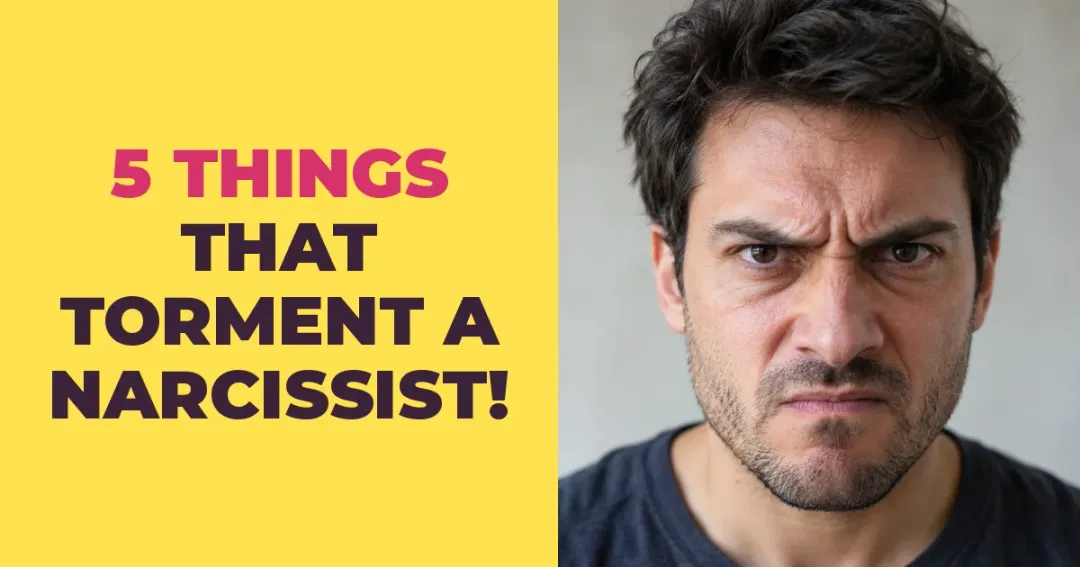
Here are 5 things that torment a narcissist, and why each one hits so hard.
Why small things hit so hard
For many narcissists, feeling worthwhile isn’t an inside job. It runs on praise, attention and being looked up to.
So the people around them often land in one of two boxes: a fan who feeds that need, or a threat to it.
Each thing on this list quietly moves you from the first box to the second.
That’s the torment.
#1 Your good news ruins their day

Your happiness can feel like a personal insult to a narcissist.
You get the promotion. You finally finish the course. You walk in glowing, and the room goes cold. “Good for you,” they say, eyes on their phone. Not one question. Ten minutes later, there’s a fight about the dishes.
Your birthday? It keeps ending with you crying in the bathroom while they sulk.
Why does this keep happening? Research on envy in narcissism points to their need to feel above everyone else. Your win threatens that, so they belittle it, wreck it, or tell the story as if it were theirs.
Research on narcissistic rivalry adds a colder twist. Ambition is normal. Rivalry means your gain gets counted as their loss, and every compliment you get feels like a point taken from them.
So you start hiding good news. Wins feel risky to share, and joy starts to feel like something you’ll pay for later.
Notice who goes quiet when you win. Then take the next win to people who are glad for you.
See also 4 Things You Have to Stop Giving a Narcissist
So who’s the first person you’ll tell next time?
#2 A shrug hurts them more than a fight
A reaction they can’t get leaves a narcissist with little to work with.
They make the cutting comment at dinner, then glance over to check. You say, “Hm, maybe,” and pass the salad.
They wait for the flinch. It doesn’t come.
Sometimes the bait is blunter. “So you don’t care, then?” It’s an open invitation to explain, defend, cry. You don’t have to accept it.
Why does that matter? Many narcissists need outside confirmation to feel like they matter, and your reactions supply it. Your tears, your anger, your long explanations all hand them fuel. Stay flat, and there’s simply less for them to grab.
There’s a popular name for this: grey rock. It isn’t a clinical term. It just means staying boring and calm when you can’t avoid them. Short, factual replies about logistics. No rising to bait, however tempting.
Over time, it can help the old bond loosen. Treat it as a way to stop feeding the fight, not a way to win. Expect it to feel strange at first. And it may not be safe in every situation.
Next jab? “Hm, maybe.” Pass the salad.
#3 Being seen without the mask
A narcissist often polishes a public image that falls apart behind closed doors.
At the party, they’re the funny one. They top up drinks, ask about everyone’s kids, hug your mother. In the car home, silence. Then, eyes on the road: “Why did you embarrass me like that?”
Meanwhile, your friends say you’re lucky.
That gap is no accident. Everyone tidies themselves up for company. But research on impression management suggests narcissists pour extra effort into their image, since being admired is what props up their sense of worth. Applause is the fuel.
So when the image slips in front of others, it can sting, because that image is what props them up. A neighbour hears the shouting. A friend catches the sneer.
See also How Narcissists Teach You To Stop Asking For Anything
For you, the gap does its own damage. After enough “But they’re so lovely!” you start doubting what you lived through.
One way to tell what’s real: trust what happens behind closed doors over what happens at the barbecue. And talk to someone who has seen both sides, if you have one.
The real one drives you home.
#4 Your plans, your money, your no
Your independence can feel like a slap in the face to a narcissist.
You make Saturday plans with a friend. Now they need you that day. “So I’m supposed to sit here alone? Fine. Go.”
Or you gently ask for the money you lent them in spring. Suddenly you’re petty, cold, keeping score. And somehow they’re the one who’s hurt.
Research on entitlement describes people who feel owed more than everyone around them, as if rules are for other people. Waiting, sharing, paying back: all of it can feel beneath them. So your normal request lands like an attack.
No wonder asking for fairness feels like starting a war.
A boundary, in the popular sense, is about what you will do. “If you shout, I’ll leave the room.” Nobody has to agree.
State it once. Act on it every time. Keep track of what you give, and stop pre-paying, pre-agreeing and pre-forgiving. Expect pushback and guilt at first. Self-respect tends to grow from there. Small, boring consistency does the work.
Your Saturday belongs to you.
#5 You walking away for good
When you walk away for good, the pull to win you back often gets louder.
You’ve pulled away before. They waited, sent something sweet, and it all reset. This time feels different. They seem to sense it.
Then it starts. The “I miss you” text after months of nothing. The sudden emergency only you can fix. The birthday message, right on cue. Contact on your anniversary. The promise to change, this time for real.
See also 7 Money Mistakes That Keep You Stuck With a Narcissist
Many call this hoovering, a popular label with no formal definition for trying to reel you back in.
It works on the bond you shared and your wish for the old days to come back. And it often appears right when they need something from you, or feel replaced by someone new.
One message can bring old hope flooding back and make your progress feel undone.
What helps: decide in advance how you’ll respond, and trust the past pattern over the new promise. If they might escalate, a domestic violence service can help you plan for safety, quietly and on your terms.
Meaning it can’t be charmed away.
Notice something? Every item on this list is about you living your own life. None of it requires winning a single argument.
If one of these fits, start small. Tonight, write down what actually happened, plainly, before anyone gets the chance to rewrite it.
Then pick one person you trust and tell them the full story.