You replay one conversation for the fifth time today. You flinch when your phone buzzes. You say sorry to people who bumped into you.
The narcissist may not even be in the room.
What they leave behind doesn’t show on a scan. Friends can’t see it. Some days, you can’t even name it.
None of this is a diagnosis, and only a professional can give one. These are patterns, and each one makes sense once you see where it came from.
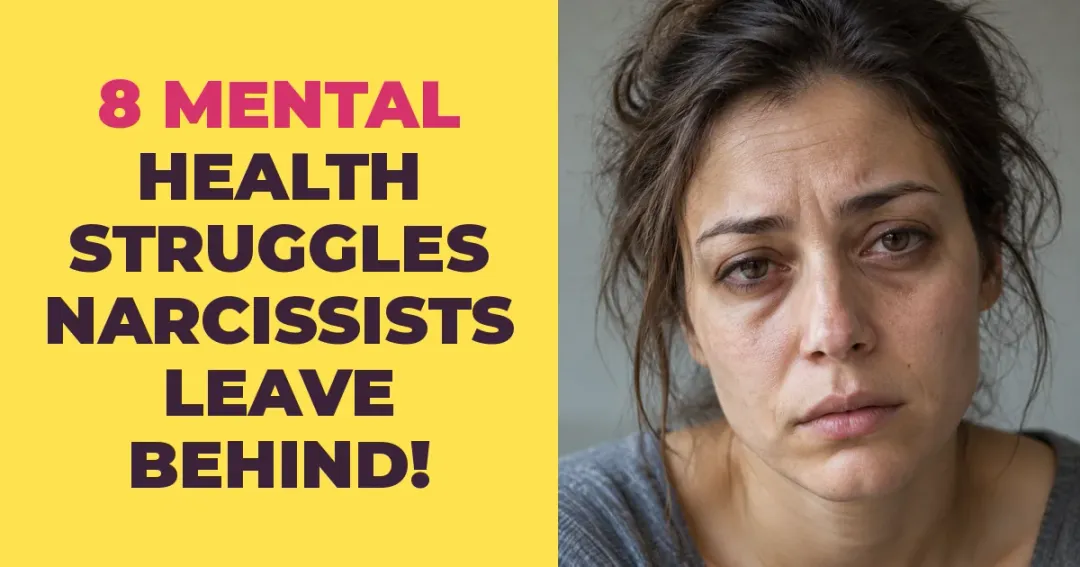
Here are 8 mental health struggles narcissists leave behind, and why each one happens.
#1 You stop trusting your own memory
Gaslighting makes you doubt the one witness who was actually there: you.
You remember the fight clearly. It happened in the car, on the way home from your sister’s birthday.
Then comes the flat reply: “That never happened.” Or the classic: “You’re too sensitive.”
Psychologists use the word gaslighting for this: chipping away at what you saw and heard until their story is the only one left standing. It lands hardest when they hold more power and you’ve trusted them for years.
So you start keeping notes. Screenshots. A private file on your phone, just to prove to yourself you’re not losing it.
One thing helps: jot the moment down the same day, then run it past a friend who isn’t part of the relationship and has no reason to twist it.
Your memory isn’t the problem.
#2 Your body never stands down
When their anger could erupt any minute, your body learns to keep watch around the clock.
You can read the whole evening from the sound of keys in the door. Heavy footsteps? Too quiet? You already know.
Psychologists call this hypervigilance: a nonstop sweep of the room for the next sign of trouble. Its partner is fawning, keeping the peace by smoothing things over, agreeing and giving in.
So you say yes before you’ve thought about it. You apologise to the chair you bumped. You jump when someone drops a spoon.
See also 5 Fears Narcissists Keep Hidden
No wonder you’re exhausted.
Your body has been working the night shift for months, maybe years. Somewhere in all that scanning, what you actually want gets lost.
Next time your chest tightens, catch that jolt and let your breathing go slower. Is there danger in this exact moment?
#3 Every word gets edited first

When a small comment can start a war, you learn to edit everything.
You rehearse “Did you call the plumber?” three times in your head. Then you don’t ask at all, and fix the sink yourself.
Why?
Last time, a basic question turned into a two-hour fight about your tone. Research on threatened egotism found that when a narcissist’s image takes a hit, they’re more likely to strike back at the person they hold responsible.
Their reaction dwarfs what you said. So you trim every sentence before it leaves your mouth, and apologise for things you never did.
If criticism isn’t safe, you don’t owe it. And if anger turns into threats, getting out of the room comes first.
The size of their anger was never about your question.
#4 Nobody seems to believe you
The person who hurts you at home may be the most charming one at the party.
They tell jokes, refill everyone’s drinks, hug your mother goodbye. Then the car ride home is silent, or worse.
Friends say, “You’re so lucky.” Your stomach drops.
Psychologists call this impression management. Many narcissists pour energy into how they look from the outside, since being admired is what props up their self-worth.
So nobody believes you. Slowly, your own experience starts to feel shaky too. And manipulation thrives when you’re cut off.
That’s why reaching out matters. Pick one person, maybe someone who’s seen them both at home and in public, and give them the unedited version.
What happens behind closed doors counts. You saw it.
#5 Simple decisions feel impossible

Believing “they love me” and “they hurt me” at the same time is exhausting.
See also 8 Unsettling Bedtime Habits Only a Narcissist Would Have
Psychologists call that clash cognitive dissonance. It feels awful, so your mind hunts for a way to make it stop.
Often that means excuses. “They had a hard childhood.” “They’re just stressed at work.”
Then the sunk cost pull kicks in.
Walking away can feel like tossing all those years in the bin. So you argue with yourself all day, and even a text feels impossible to answer.
One thing that helps: list the plain facts of what happened, minus the excuses. Then ask what staying would cost from here on, not what you’ve already put in.
Of course you feel torn. Both feelings are real.
#6 Their needs swallow yours whole
Over time, your whole day can start to orbit around their moods.
“Can you just deal with it?” So you fix their problem before your own. You cover when they bail on your friend’s dinner. You feel guilty sitting down.
Many call this codependency. It’s a popular term, not a diagnosis, and it overlaps with fawning: keeping things calm by putting the other person first.
Caretaking can feel like safety.
And a partner focused on themselves is happy to keep it coming. The cost? Burnout, plus a quiet resentment you’re not allowed to say out loud.
Try one small switch. Before working out what they need, check in with yourself first. Then let their mess stay theirs to clean up.
When did someone last ask what you want?
#7 You miss the one who hurt you
A bond built on hurt and kindness can grip harder than a calm one.
They said something cruel on Friday. On Sunday they brought you coffee and said, “You know I’m crazy about you.” And you felt relief.
Psychologists call this trauma bonding. When one person holds more power and cruelty keeps trading places with tenderness, the attachment can grow stronger than in a peaceful relationship.
It explains the parts that make you feel ashamed. Defending them to friends. Going back more than once. Missing them right after they hurt you.
See also 7 Strange, Disturbing Hobbies Narcissists Secretly Love
Leaving can feel physically painful. Your logic says one thing, your heart says another.
This is a known reaction. Not a weakness.
Leaning on people outside the relationship makes a difference. Who could you tell this week?
#8 Shame moves in and stays
Of everything manipulation leaves behind, shame is often the heaviest to carry.
You look back at the lies and wince. “How did I miss it? Everyone else saw it.”
Research on betrayal blindness offers a kinder answer. If you rely on someone, your mind may quietly screen out proof that they’re betraying you, to keep the attachment safe.
That’s protection, not stupidity.
Then the grief arrives, once it’s all clear.
Self-compassion helps here: being as gentle with yourself as you’d be with a close friend. Research links it with less shame and less blaming yourself. Small daily routines that are only yours, like a walk or a song, count too.
So talk to yourself the way you’d talk to her. You’d never call her a fool.
If one of these sections read like a page from your own diary, take that seriously. Seeing the pattern clearly is where things start to shift.
Start small. One note, one honest conversation, one kind sentence to yourself.
And if you ever feel unsafe, a domestic abuse service can help you think things through, whatever you decide to do next.