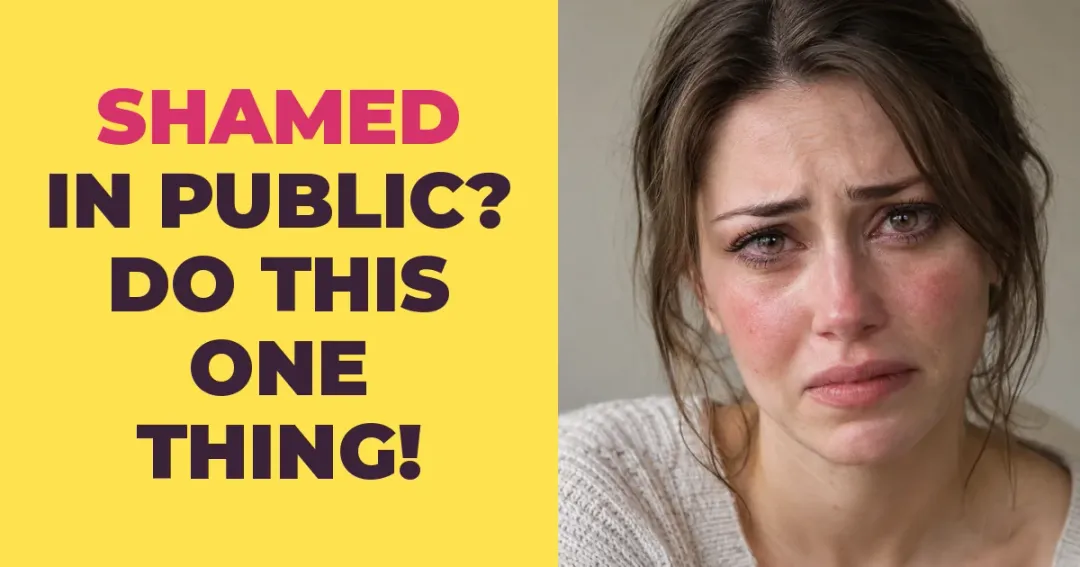
Everyone’s laughing. Your face is burning, and you’re laughing too, because what else can you do?
The narcissist just told the whole table something you said in private. Something you were ashamed of.
Your insecurity, out loud, in front of everyone.
And later, somehow, you overreacted.
Here’s what’s really going on, why your reaction matters so much to them, and the one thing that takes the fun right out of it.
Why they need witnesses
For many narcissists, self-worth leans hard on what other people think. Everyone around them becomes either an audience to impress or a threat to manage.
So a room full of friends works like a stage. Charm wins the crowd. Putting you down keeps them on top, and makes you look like the lesser one.
Nothing you did earned this.
#1 Their jokes aim straight at your weak spots
Sarcastic “jokes” about you can be a quiet form of contempt.
Dinner with friends, a second bottle of wine, everyone relaxed. Then they lean back and grin: “Tell them about your driving test. All three of them!”
They don’t pick a random story. They pick the one that still makes you wince, the one you told them late at night.
That’s no accident. A narcissist may understand exactly how you feel and simply choose not to act on it.
Psychologists who study couples call the eye-rolls, the mocking voice and the sarcastic “jokes” contempt. In long-term research, it was one of the strongest signs a relationship would break down.
And contempt does one thing very well. It makes you feel small.
Even at a table full of friends.
#2 Then you’re the one who’s too sensitive
The hurt happens at the table, but the rewrite happens in the car.
You finally say it hurt. They sigh, eyes on the road: “God, you’re so sensitive. Everyone was laughing, including you.”
Or the old favourite: “That’s not what I said. You’re making things up again.”
See also Ask a Narcissist to Pay Back a Loan and Watch Them Use This Exact Line to Make You Feel Greedy
This is gaslighting. It makes you doubt your own memory so their version of the evening wins, and it works best where they hold more of the power.
So you end up apologising. For being hurt.
One thing that helps: write down what was said, word for word, while it’s fresh. That’s for you, so you can trust yourself again. Then check it with a friend outside the relationship.
On paper, the drive home can’t be rewritten.
#3 Your good news makes them twitchy
When you shine in front of others, a narcissist often feels it as a loss.
Your sister raises a glass to your new job. Before anyone drinks, they cut in: “Let’s not get carried away. It’s basically a sideways move.”
Funny how the digs get sharper on your birthday, your big day, any moment the spotlight lands on you instead of them.
Why? Your success threatens their need to feel superior. So they shrink it right there, in front of everyone, before it can grow.
Research on narcissistic rivalry describes the same move: putting others down to protect their own status.
You start hiding good news. Joy feels risky.
Notice who goes quiet when you win. Then save your toasts for the people who actually clap.
#4 In public, they get to be the good one
The same person who mocks you at the party is often everyone’s favourite guest.
They refill drinks, ask about everyone’s kids and laugh at your dad’s terrible jokes. Warm, generous, fun.
Then they turn to you with a wink: “Relax, I’m only teasing.” And the room believes them.
Many narcissists invest heavily in their public image, because admiration feeds how they feel about themselves. The mask is a project, and they work hard on it.
That’s why friends tell you how lucky you are. That’s why nobody pictures the silent car ride home. Slowly, you start doubting your own experience.
See also How a Super Empath Turns Into the One Person a Narcissist Can’t Break
Trust what happens behind closed doors. If one person has seen both sides of them, talk to that person.
The car ride home is the real show.
#5 Your hurt face is what they’re after
Sometimes the flinch on your face is the whole point of the joke.
Watch their face right after a dig lands.
Researchers have a name for this: everyday sadism. Some partners get a real kick out of small, daily cruelty, like making you wait, worry or squirm.
For them, the cruelty is rewarding in itself.
So they tease right where it hurts, “Careful, she might cry!”, then smirk when your eyes go glassy and your voice goes thin.
Living with that, you learn to hide every reaction. You smooth your face, swallow it and laugh along. Love starts to feel like being hunted.
One way to tell: does your distress seem to cheer them up? Do they get chattier, lighter, more pleased with themselves? If it keeps happening, that’s worth noticing, and worth telling someone you trust.
#6 Give them a calm, boring nothing
The one thing that takes the fun out of public shaming is a calm, boring nothing.
They make the crack. You don’t gasp, argue or explain. You say “Hm,” sip your water and ask your friend about her trip.
That’s it. No speech.
Many call this going grey rock: staying dull and unreactive when you can’t avoid them. It’s a popular idea, not a proven method.
The thinking behind it is simple. Fewer reactions give them less to work with and can help the bond fade.
And if your hurt is the reward, a blank face pays out nothing.
One honest warning: this isn’t a trick for winning, and it may not be safe in every situation. Think of it as stepping off their stage.
#7 When the flinch never comes, the act cracks

A joke with no flinch has nowhere to land.
See also Why Narcissists Quietly Undermine the Things That Bring You Joy
Someone changes the subject. The punchline just dies there. A narcissist may not take that well, and you watch their jaw tighten.
That’s the falling apart. It isn’t always pretty.
Research on threatened egotism describes it: when their self-image is bruised by criticism, rejection or being ignored, narcissists are more likely to lash out at the person they blame.
So expect pushback. Cold fury in the car. A sharp “You embarrassed me in there.” Maybe punishment days later over a comment you’ve long forgotten.
Your boundary lives in your own actions: “If this turns into insults, I’m going home.” And if anger ever turns into threats, leave the room and get help.
Your coat is by the door for a reason.
That hot face at the table was never proof that you’re too sensitive. You were hurt, in public, by someone who knew exactly where to aim.
And if the car ride home ever starts to feel frightening, reach out. One trusted person or a domestic abuse service is a good place to start.