You finally got out. Then the guilt moved in.
It follows you around the supermarket. It wakes you at 3am. It tells you that you were cruel, that you gave up, that a better woman would have stayed.
A lot of that guilt was planted. Making you feel bad is a way to keep you agreeing.
That guilt is real. It isn’t proof.
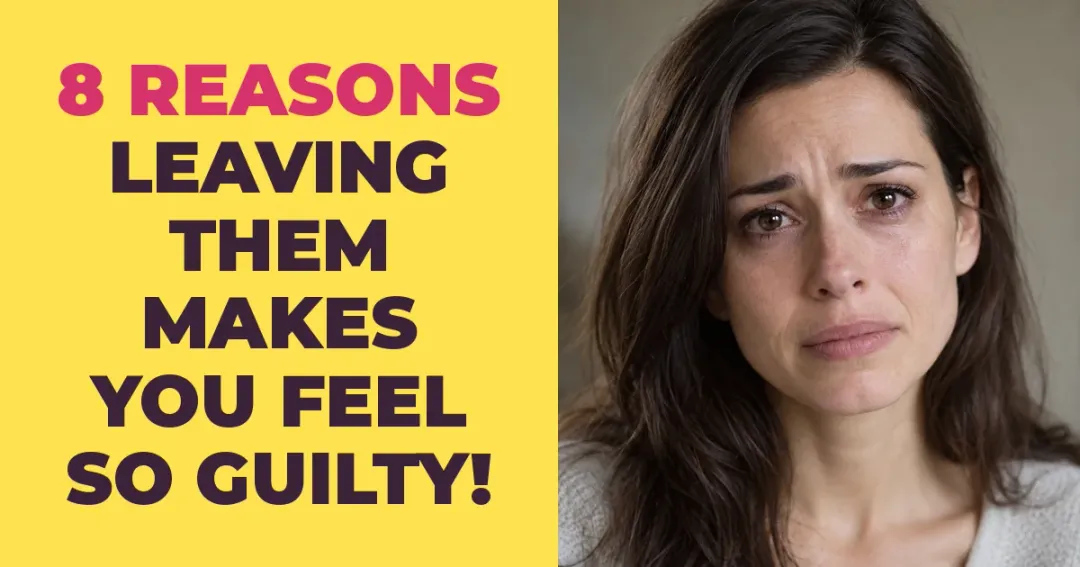
Here are 8 reasons you feel so guilty leaving the one who hurt you the most.
Why guilt shows up when you leave
When their temper could flip at any moment, your body learned to stay switched on.
You guessed the whole evening from how the front door closed. You smoothed things over with yeses and sorries before your brain caught up.
Psychologists call this fawning and hypervigilance. It got you through, but it wore you down and blurred what you wanted for yourself.
So the moment you stop keeping the peace, those old habits of saying yes and saying sorry can kick in.
#1 Guilt was how they kept you in line
Guilt wasn’t a side effect of your relationship. It was the steering wheel.
“Do you know what I gave up for you?” A long sigh when you booked a weekend with your sister. That loan from two years back, dusted off every time you said no.
Online, this gets called FOG. The letters stand for fear, obligation and guilt, a kind of emotional blackmail where refusing costs more than caving.
Researchers describe a close cousin, coercive control: lots of small rules and penalties that pile up until agreeing is a reflex and their mood feels like your chore.
Healthy guilt arrives after you’ve hurt someone. This kind arrives after you’ve said no.
Which one is sitting on your chest?
#2 You were made to believe it’s your fault
Every time you raised a problem, it somehow became your problem.
You mentioned the snide remark about your cooking at dinner. Ten minutes later you were saying sorry for being “so dramatic” while they sulked on the sofa.
See also 9 Wild Behaviors Narcissistic Partners Treat as Normal — That Would Make Anyone Else Run
There’s a research name for that move. DARVO stands for three steps: they Deny, they Attack, then they flip who’s the Victim and who’s the Offender. “That’s not what happened. And frankly, I’m hurt you’d even think it.” Then come the tears.
Studies on DARVO found it pushes the one who spoke up into more self-blame. No wonder the talk ends so fast.
So leaving feels like a crime. Fight after fight, you were cast as the villain.
One way to tell: go back to the thing you first raised and name it again, even just to yourself. Did it ever get an answer?
It still counts.
#3 You’re grieving a future that never came

Part of what you’re mourning is a life they only ever described.
The house with the garden. The trip to Lisbon. The wedding that was always coming “after this busy stretch at work,” which somehow never ended.
The internet calls this future faking. Rich, detailed promises that keep you hooked in, with nothing ever on the calendar.
Research ties narcissism to a game-playing approach to love and weaker commitment. Big talk, thin follow-through.
Shared plans bind you. Once a whole life exists in your head, leaving feels like smashing it yourself.
So the guilt says you threw it away.
Look at what actually happened, not what was promised. Was any of it ever booked?
#4 Other people are carrying their guilt trip
Sometimes the guilt reaches you through other people’s phone calls. Not theirs. Everyone else’s.
Your aunt calls to say you should apologise. A mutual friend texts, “They’re really struggling, you know.” Someone tells you you’re “tearing the family apart.”
People online call these messengers flying monkeys. Often they’re kind, loyal folks who heard only one version, the one where the other person was wronged. The tell is that they repeat that script.
Family systems research has a word for the wider tactic: triangulation. Instead of sorting things out between the two of you, they drag in extra players.
See also How to Leave a Narcissist Jealous, Powerless, and Irrelevant Overnight
Suddenly it feels like you’ve let the whole family down, one phone call at a time.
Don’t defend yourself to the messengers. Keep the details private.
They weren’t there. You were.
#5 Everyone else got the charming version
It’s hard to trust your decision when everyone keeps telling you how lucky you were.
At the party they topped up drinks and remembered everyone’s kids’ names. In the car home, they didn’t say a single word to you.
For many narcissists, image is everything. Praise from outsiders props up how they feel about themselves, so the mask gets polished daily.
Your friends saw the volunteer, the joker, the great host. You saw the rest.
That gap makes you doubt your own memory. Maybe it wasn’t that bad? Maybe you’re the cold one for leaving?
Trust what happened behind closed doors. If you can, talk to someone who has seen both sides.
The car ride home counts more than the party.
#6 Leaving feels like throwing years away
The more years you gave, the more walking away feels like wasting them.
“Seven years. You’re really going to throw that away?” Maybe they said it. Maybe it’s your own voice at 2am.
Psychologists call this the sunk cost pull. Walking out feels like wasting all you’ve poured in, so you keep pouring.
Then there’s cognitive dissonance, the strain of believing “they love me” and “they hurt me” in the same breath. To ease it, you make excuses. “Their dad was awful to them.”
Seven years becomes eight that way.
Try weighing what staying would cost from here, not what you’ve already spent. What would the next seven years take from you?
Those years are spent. The next ones aren’t.
#7 Their crisis keeps landing on your phone

Just when the guilt starts to fade, they find a reason to need you.
A text after months of silence: “I miss you.” A sudden emergency only you can fix. “I’ve changed, I swear. This time is different.”
See also 9 Cruel Games Narcissists Start Playing the Moment You Let Them Back In
Online, people call this hoovering, as in sucking you back in after you’ve gone. It tends to appear when they’re short on something or sense they’ve been replaced.
It leans on what researchers call intermittent reinforcement. Affection that turns up at random grips harder than affection you can count on.
One warm message can land like a jackpot. Old hope rushes back, and with it, guilt for not answering.
Pick your response before the next message arrives. Then weigh the old pattern, not the shiny promise.
Has “this time” ever been different?
#8 Missing them doesn’t mean you were wrong
If hurt and tenderness kept taking turns, that cycle can build a bond that’s hard to break.
You miss them after everything. You defend them when friends roll their eyes. Leaving feels almost physical, like something is being torn out.
Researchers call the cycle underneath it trauma bonding. Harm and affection take turns while one person holds more power, and the attachment can grow stronger than in a calm relationship.
Plain missing someone isn’t the same thing.
Then you lie awake asking how you could do this to someone you love.
That pull is a known reaction, not weakness. The pull alone doesn’t tell you what’s true about the relationship. Support from people outside the relationship helps.
Miss them at 3am. Still know why you left.
When the guilt flares, ask one question. Did it come after you hurt someone, or after you said no?
Speak to yourself the way you’d speak to your best friend if she’d just walked out. Studies on self-compassion connect it to lower shame and less self-blame, and manipulation leaves plenty of both.
You can feel guilty and still be free.