The pattern doesn’t retire with them.
Maybe it’s a parent who’s getting older. Maybe it’s a partner you once pictured growing old beside. Either way, you keep hoping the years will soften them.
Some days, you think they finally have.
Then the phone rings, and it’s the same old script in a slower voice.
This article won’t predict how anyone ages. It shows how the same lasting pattern can look with an older parent or partner: the demands, the guilt, the charm for strangers, and the story where you’re the villain.
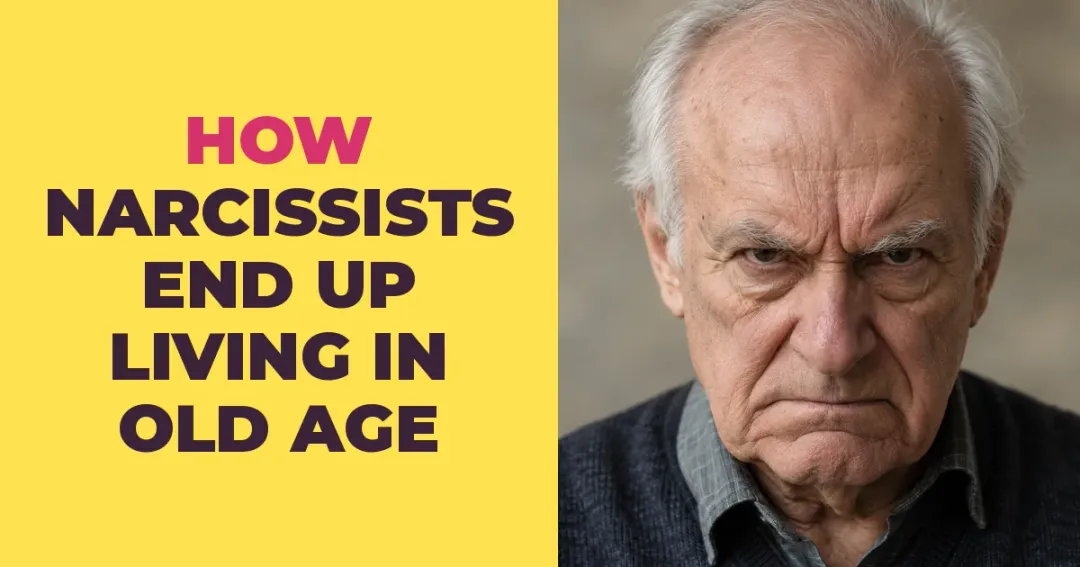
Here are 7 ways the old pattern can keep showing up in later life, and what helps with each.
Why the pattern doesn’t retire
A narcissist’s sense of worth leans on outside confirmation. Other people get sorted into two boxes: sources of admiration, or threats to it.
That need is a lasting pattern, not a phase.
Research on narcissistic admiration and rivalry describes a shift. Early on, charm wins people over. Over time, putting others down takes over. That’s why first impressions shine and later ones sour.
So the people who’ve stuck around longest, often you, get the cold side most.
#1 They still expect you to come running
To a narcissist, your time often looks like theirs to spend.
Saturday, 9 a.m. You’re halfway through your own errands when the call comes. “The light in the hall is out. When are you coming?”
Not if. When.
Entitlement is a steady belief that they deserve more and the rules are for everyone else. It makes ordinary limits feel like insults. So “I can come Tuesday” doesn’t land as a plan. It lands as an attack.
And that’s how it adds up: you give more, they give less, and asking for fairness feels like starting a war.
One small thing helps. Stop pre-agreeing. Let “I’ll check my week” be a full answer, and keep quiet track of what you give.
See also The Moment You Stop Doing This, the Narcissist Loses All Interest
Write down this month’s favours. The list may surprise you.
#2 Every no costs you a guilt trip
Guilt is the lever that turns your no into a yes.
You mention a trip with friends. Your mother sighs down the phone. Then: “Go, enjoy yourself. After everything I’ve done for you, I’ll manage on my own.”
You cancel the trip. Again.
There’s a popular name for this: FOG, short for fear, obligation and guilt. It isn’t a diagnosis. It’s a plain way to describe emotional blackmail.
Reminders of old favours, hints about consequences, silent disappointment that lasts until you give in. Each one makes saying no feel more costly than saying yes.
Over years, yes becomes automatic, and their moods start to feel like your job.
Try a pause before answering. Their feelings are real. They’re still not your responsibility.
#3 Strangers get the charming version
The nicest version of a narcissist is often saved for people who barely know them.
The neighbour gets jokes and compliments. The new doctor hears what a wonderful family they have. Then you walk in, and the temperature drops.
“Why do you always look so miserable?”
Narcissists invest heavily in their public image, because admiration feeds their self-worth. The charm works best on new people. Once someone knows them well, the cold, cutting side tends to show.
So friends tell you how lucky you are. Nobody quite believes you. Some days, neither do you.
Trust what happens behind closed doors. Find one person who has seen both sides, and talk to them.
You’re not imagining the gap.
#4 Contempt slowly empties the room
Contempt wears down a relationship one eye-roll at a time.
In long-term studies of couples, contempt and stonewalling were among the strongest predictors of a relationship breaking down.
Now picture it at the anniversary dinner.
The eye-roll when you talk. The mocking voice when you share good news. The sarcastic “joke” over dessert, then walking out mid-sentence when you object.
See also Is Your Partner a Narcissist? 12 Questions That Give It Away
“Oh, here we go. Miss Sensitive.”
Each moment is small. Together, they make you feel small in your own home, and slowly you stop bringing things up at all.
Name it calmly once, then watch whether respect ever comes back. That answer tells you a lot.
#5 The bully can become the martyr
Loud or quiet, narcissism protects the same fragile self-image.
Researchers describe two forms. The loud one is bold, dominant and hungry for the spotlight. The quiet one is touchy, resentful and full of self-pity. Many people switch between both.
So the one who ran every room can turn up as the wounded one.
“Nobody calls me. I could be lying on the floor and no one would know.” Never mind that you called yesterday. They keep score of slights, and you’re often the one who’s behind.
Challenge it, and they often play the victim.
It works because you walk on eggshells around their moods, and their disappointment somehow becomes your fault.
Watch what happens when they’re not the centre of attention. The sulk says more than the speech.
#6 Suddenly you’re the bad guy
Set one limit, and a narcissist may recruit others to push it back.
Your aunt texts first. Then your cousin. “Your dad is heartbroken. Just apologise.” Nobody asks what actually happened.
Flying monkeys is a popular term for these messengers, with no formal definition. It links to what family systems research calls triangulation: pulling a third person into a two-person problem instead of solving it directly.
Often these relatives are kind people acting on one version of the story. The one where he’s wronged and you’re cruel.
Then comes the comparison. “Your sister would never treat me like this.” Now you’re competing, and outnumbered.
You don’t owe messengers a defence. Keep details private, and speak only to the person directly involved.
A short reply is enough: “That’s between Dad and me.”
#7 That apology may never come
The apology you’re waiting for may never come without strings.
See also 10 Vacation Habits That Reveal a Narcissist
You’ve rehearsed it. Maybe in a hospital room, maybe at the kitchen table where it all started. They finally say they’re sorry, and they mean it.
What arrives instead: “I’m sorry you feel that way. I did my best, which is more than I ever got.”
Notice whether an apology from them ever comes without a condition attached.
This is a pattern that lasts across years and situations. So the steadiest bet is to expect the behaviour to stay the same, rather than wait for change.
That sounds bleak. It can also be a relief.
Plan your next visit around who they are, not who you hoped they’d become.
Whatever their later years look like, they’re built from a pattern you didn’t create.
You can care about them, keep your distance, or do some of both. Their old age is theirs to live. Your years are still yours to shape.
When a good day comes, enjoy it. Then judge by the months, not the moment.