A tiny, ordinary moment can be enough to set a narcissist off.
You’ve probably seen it. You do something small and normal, and they react like you’ve set the kitchen on fire.
A shrug. A plain no. A good day they weren’t part of.
For you, it’s a Tuesday. For them, it’s a threat.
You’re not imagining that gap. A narcissist often needs other people to keep confirming their worth, so everyday moments that don’t do that can sting.
Here are 8 ordinary things that make a narcissist miserable, and why each one hits so hard.
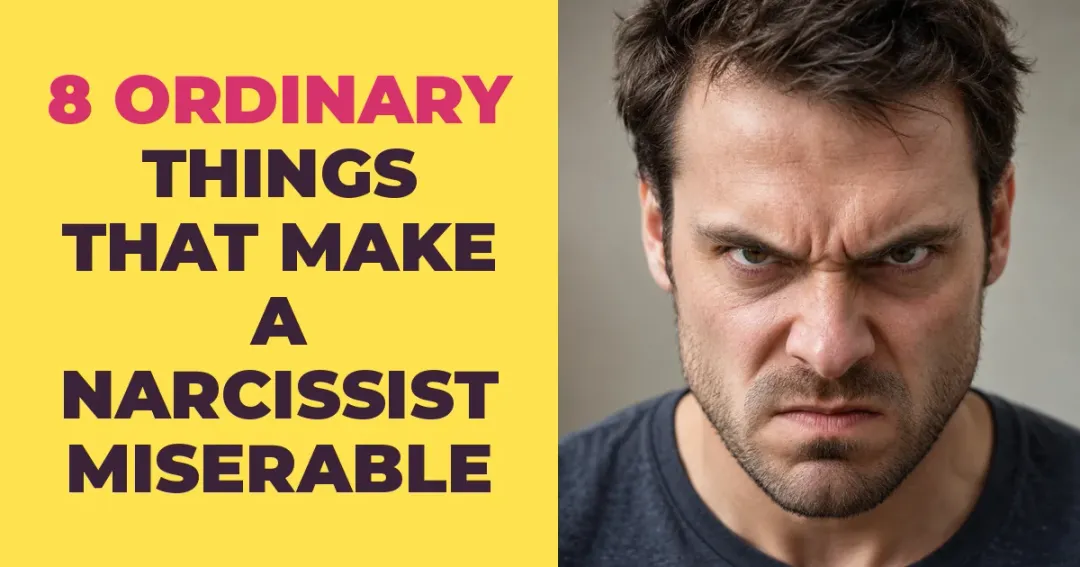
Why small things feel huge to them
Underneath, a narcissist’s self-worth runs on what other people reflect back. Everyone around them is either feeding that or getting in the way.
That’s why they may demand to be treated as special, and turn sour when they aren’t.
So nothing on this list is dramatic.
It just doesn’t feed them.
#1 Your blank face gives them nothing to work with
A calm, blank face gives a manipulator much less to work with.
They make the dig about your cooking at dinner. They wait for the flinch. And you just pass the salad.
For a few, your discomfort is the point. Researchers call this everyday sadism: small cruelties that feel good to them in themselves.
Grey rock is a popular, informal name for going boring and flat when you can’t avoid contact. The aim is to starve the conflict of fuel.
It’s no trick to beat them, and it isn’t safe with everyone.
Does your hurt seem to cheer them up?
If it does, that’s a good reason to show them less of it.
#2 A tiny correction feels like an attack
To a narcissist, being corrected over something small can feel like a full attack.
You mention they forgot the milk. Ten minutes later you’re hearing about every mistake you’ve made since your wedding.
“I never said I’d get it, and how dare you keep score?”
See also Why Narcissists Ruin Every Holiday You Try to Enjoy
Psychologists studying threatened egotism found narcissists hit back harder after an insult, and they aim it at the person who caused it. A tiny comment can do it.
Then DARVO kicks in: they deny it, go on the attack, and cast themselves as the one wronged. Research links it to more self-blame in the person who spoke up.
Which is why you end up apologising. About milk.
If it’s safe, bring it back to the milk in one calm sentence. Don’t chase every counter-accusation.
If it isn’t safe, drop it. And if the anger turns to threats, get out of the room.
It was always about the milk.
#3 Nobody is looking at them
A room where they aren’t the centre of attention can ruin their whole night.
Your sister announces her engagement at the family barbecue. Everyone hugs her. They go quiet, scroll their phone, and suddenly need to leave.
Psychologists describe two faces of narcissism. The bold one snatches the spotlight back. The quieter one sulks and tallies every slight.
Either way, it’s guarding a self-image that bruises easily.
Guess who gets the silent car ride home?
Watch how they react when the room turns elsewhere.
Then watch it happen again next month. The pattern tells you more than any single night.
#4 A plain, polite no stings

A calm, polite no can feel like an insult to an entitled person.
You can’t mind their friend’s dog this weekend. You have plans. Simple, right?
“Wow. I guess I just can’t count on you for anything.”
Psychologists call this entitlement: the quiet conviction that they’re owed more, and that the rules are for other people. Your plans are supposed to bend around theirs.
So the scales tip. You hand over more, they hand back less, and asking for even a little balance feels like picking a fight.
Try quietly noting what goes out from your side. And let yourself wait before saying yes.
See also 10 Strange Little Things Only Narcissists Do
Your no was never rude.
#5 Your wins feel like their losses

Your success can feel like a personal loss to a narcissist.
They laughed when you signed up for the course. “Back to school at your age?” Now you’ve passed, and suddenly they’re tired, distracted, picking at dinner.
Research on narcissistic rivalry puts it simply: in their head, anything you gain comes out of their pocket.
Envy runs strong in narcissism, more so in the quieter type. Your success makes it harder for them to feel above you, so they may play it down, take credit, or sour it.
That’s why your good news gets a sour “Mm.” And why your birthday somehow ends in a fight.
Slowly, you start hiding your wins.
Take your good news to the friends who light up. And notice who falls silent when things go well for you.
#6 Being held to account gets under their skin
Being asked to own a mistake, plainly and calmly, tends to make a narcissist miserable.
They forgot to pick you up from the station. You don’t yell. You just say, “I waited an hour. I’d like an apology.”
“Okay, sorry, but you know how busy I am.” “Sorry if you’re upset.” “Fine, I’m a monster, happy now?”
Notice what’s missing? The part where they own it.
Psychologists describe narcissists as often hypersensitive to criticism while acting like it rolls right off. A clean apology would mean admitting a crack in the image they protect.
So the sorry bends back toward them, and suddenly you’re the one blamed for their disappointment.
Does a sorry from them ever come with no “but” attached? One messy apology is human. A long line of sorry-buts is a pattern.
#7 You keep your word to yourself
A boundary is about your own actions, so it never needs their sign-off.
They start shouting about the bills again. You say, “I’ll talk when you stop yelling,” and go to the bedroom. No speech. No tears.
See also What Happens to Narcissists After 65
Boundary is an everyday word, not a clinical one. It simply means what you’ll do to look after yourself, like leaving the room or not answering a 2am text.
Compare that with coercive control, which researchers describe as one person laying down rules for another and punishing any slip. A boundary is only a rule for you.
And that’s what gets under their skin. A boundary works whether they agree or not, so the yelling has nowhere to land.
One clear sentence. Then follow through, again and again. They’ll likely push hard early on.
The guilt comes first. The self-respect catches up.
#8 You stop waiting for them

Once your life stops orbiting them, a narcissist may come looking.
Months of nothing. Then, on your birthday: “Hey stranger. I’ve been thinking about you a lot lately.”
People online call this hoovering, as in sucking you back in. It isn’t a clinical term. It leans on what research calls intermittent reinforcement: warmth that shows up when you least expect it.
It tends to turn up when they want something or sense they’ve been replaced. Funny timing, isn’t it?
Hope can flood back fast. That’s normal.
Pick your response now, before the message comes.
Then judge it by what they’ve done before, not what they’re promising this time.
If you saw your own life in this list, you weren’t imagining it.
None of this asks you to be clever, cold or brave every single day. It just asks you to keep living your ordinary life.
Speak to yourself the way a good friend would. It takes some of the weight off the shame and self-blame.