You stopped checking your phone for their reply. You made dinner plans without asking first. You fixed the leaking tap yourself.
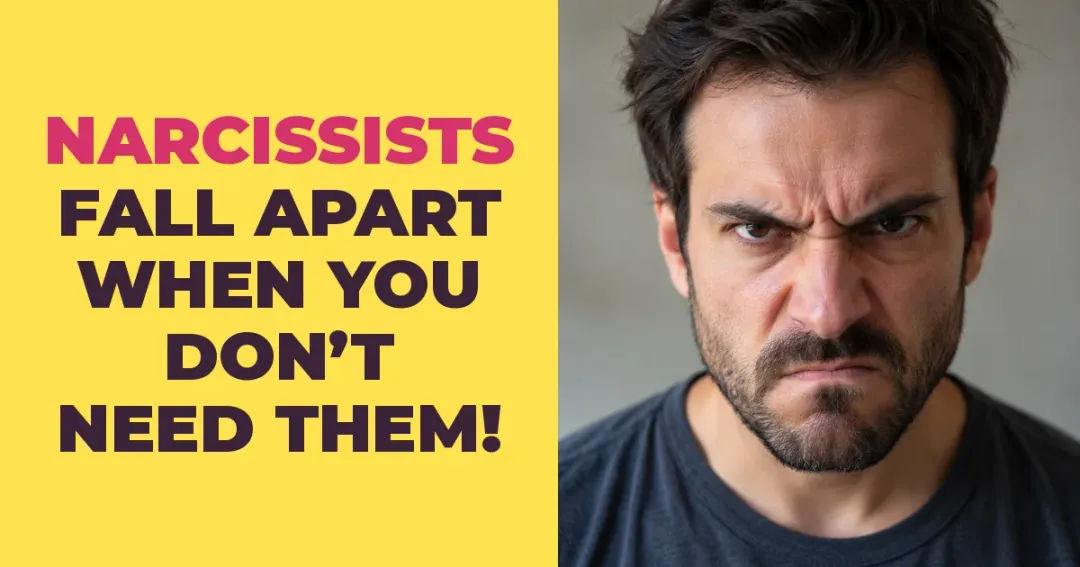
And the person who always seemed so sure of themselves started to come apart.
The door-slamming. The long, heavy sighs. The 3am texts.
You’re not imagining any of it. A narcissistic pattern leans on being needed, and you just took that away.
Here’s what happens, step by step, when a narcissist realises you don’t need them anymore.
Why your need mattered so much
A narcissistic pattern rests on one shaky thing. How they feel about themselves hangs on what other people reflect back.
Your attention, your worry, your fixing. All of it told them they mattered.
Looking after them felt safe to you, and someone this focused on themselves happily soaked it up. So when you step back, they don’t just lose help. They lose a mirror.
That’s why the change can hit them so hard.
#1 Your calm makes them furious
When you stop needing them, a narcissist may take it as an insult.
You say, ‘Don’t worry, I’ll sort it myself,’ instead of asking for help with the car. Ten minutes later they’re slamming cupboards over a mug left in the sink.
Strange, isn’t it? You got more independent and somehow became the problem.
Why? Psychologists who studied what they call threatened egotism saw that narcissists who feel insulted get more aggressive, and they aim it at the person they hold responsible.
Being brushed aside can feel like exactly that kind of insult.
So the anger lands on you. Way out of proportion to the mug.
You start pre-editing every sentence in your head. You say sorry for stuff that was never yours to own.
Watch where the anger points. Rarely at the mug. Usually at you. And if it ever tips into threats, walking out of the room is allowed.
#2 The guilt trips get heavier
When pressure stops working, guilt is often the next tool they reach for.
See also 10 Things Narcissists Say About You When They’re Sure Nobody Is Listening
You mention you’re going to your sister’s for the weekend. They sigh, stare at the floor and say, ‘After everything I’ve done for you?’
Then come the old favours. The lift to the airport three years ago. The money they lent once and never let you forget.
People call this FOG: fear, obligation and guilt. It’s a popular label, not a diagnosis. It describes emotional blackmail where refusing starts to feel more expensive than just going along.
Researchers have a related name, coercive control: a pile of small rules and pressures that slowly shrinks your freedom.
And it works because you care. Yes starts coming out before you’ve even thought, and their whole week feels like your fault.
One small thing helps. Pause before you answer. ‘Let me think about it’ is a full sentence.
Their feelings are real. They’re just not your job.
#3 Their silence stops working
The silent treatment is a punishment, and it’s built to make you give in.
You know the routine. Two days of nothing. They chat to the kids, laugh with the dog and look straight through you. Then they stroll back in like it never happened.
It hurts for a reason. Being shut out hits two deep needs at once: feeling that you belong and feeling that you count. That’s why it can ache almost like a physical injury.
So for years, you did what anyone would. You said sorry just to make it stop.
But when you don’t need them, something shifts. You say once, ‘I’m happy to talk when you’re ready.’ Then you get on with your day.
No chasing. No begging at the bedroom door.
The silence was supposed to make you cave. Without the chasing, it has nothing to grab onto.
Who’s waiting for whom now?
#4 Suddenly they’re the wounded one
Some narcissists don’t explode when you pull away. They crumble, loudly.
Psychologists separate a showy, bold kind of narcissism from a quieter, touchier kind. Plenty of narcissists flip between the two, and both guard a fragile self-image.
See also What Happens When The Narcissist Picks On The Wrong Person?
The quiet side pouts when it’s overlooked and quietly tallies every slight.
So you go to yoga on Thursdays now, and it becomes a tragedy. ‘I guess I’m not a priority anymore. Must be nice.’
The smallest criticism stings them, though they’ll act like nothing touches them. Everyone gets hurt feelings. The sign is when your life keeps turning into their injury.
And somehow their disappointment becomes your fault. You came home happy. Now you’re comforting them.
One way to tell: check whether a sorry from them ever arrives with no strings. ‘I’m sorry, but you…’ doesn’t count.
Your Thursday is allowed to be yours.
#5 They start telling a story about you
When they can’t control you, a narcissist may try to control what others think of you.
Your cousin texts out of the blue: ‘Just checking you’re okay? I heard you’ve been really up and down lately.’
Then a friend tells you to apologise. For what, exactly?
Researchers call this relational aggression. Instead of hurting your body, it goes after your good name and your friendships, and it leaves no bruise anyone can point to.
The messengers sometimes get called ‘flying monkeys’. That’s a popular label, not a clinical one. It means kind, loyal people who were handed a story where the narcissist is the injured party, and believed it.
You end up explaining yourself to everyone. Just when you could use backup, it thins out.
It helps to stop defending yourself to messengers. Keep the details private and keep behaving the way you always do.
Let time do the talking.
#6 The sweet version comes back
Often the hardest moment is when the person you fell for shows up again.
Three weeks of distance, then a message at 11pm: ‘I miss you. I’ve been doing a lot of thinking. I’ll be different this time.’
Your heart does a flip. Of course it does.
Hoovering is a popular name for these pull-back attempts. It tends to show up when they want something, or when they sense they’ve been replaced.
See also 9 Things Narcissistic Abuse Survivors Do once They’ve Left Their Narcissist
It hooks you through what psychologists call intermittent reinforcement. Warmth handed out at random, between stretches of coldness, grips harder than warmth you can count on. It’s the same pull that keeps a hand on a slot machine.
One sweet text can make months of hurt seem worth it. The old hope floods back, and it can feel like you’re back at square one.
You don’t have to decide in the moment. Pick your response ahead of time, while you’re calm. Then weigh what they’ve actually done, not what they’re promising now.
Has ‘this time’ ever actually been different?
Their falling apart was never your job to fix.
A boundary is about your own actions, so it works whether they sign off on it or not. They’ll likely push back at first. You might feel guilty too. Over time, respect for yourself tends to grow.
Go gently with yourself. Every quiet ‘I’ll sort it myself’ is a piece of your life coming back.