Narcissists rarely look like villains from the outside.
In public they’re often the charming one, the generous friend, the partner everyone says you’re lucky to have.
Then you get home. The warmth switches off, and you can’t explain why you feel smaller every month.
A single bad mood doesn’t make anyone a narcissist. The pattern over months is what counts.
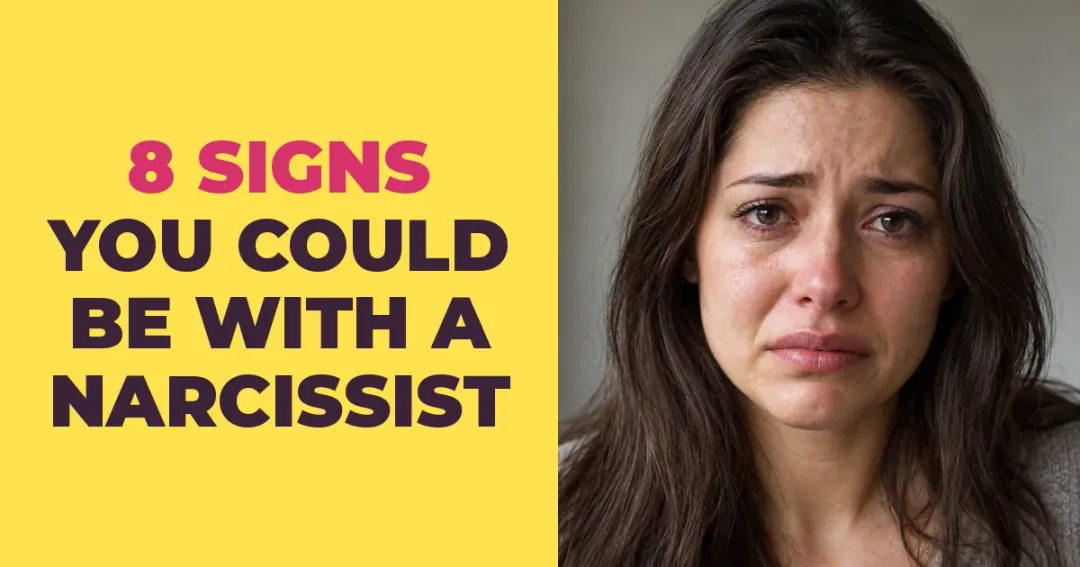
Below are 8 habits of a narcissistic partner, why they happen, and how each one wears you down.
#1 They go cold when you’re hurting
When you’re upset, a narcissist often notices and simply chooses not to help.
You had a horrible day. Your voice cracks halfway through telling them. They glance at the TV and ask if there’s any milk left.
Say it hurt, and back comes: “God, you’re so sensitive.”
This part stings. Research on narcissism and empathy suggests many narcissists can pick up on your feelings when there’s something in it for them. So it’s often a won’t, not a can’t. Warm with strangers. Cold with you.
Slowly, you stop telling them things. You begin to wonder whether your reactions are the problem.
They aren’t. Take your feelings to the people who actually respond to them, and stop explaining your pain to a partner who uses it.
Sensitive was never the issue. Being ignored was.
#2 The little digs never stop

Contempt rarely shouts, it rolls its eyes and calls it a joke.
You mention a course you’d love to take. They smirk. Out with friends, they mimic the way you talk and the table laughs.
“Oh, lighten up. It was a joke.”
Long-term studies of couples found that contempt and stonewalling, things like mocking, eye-rolling and walking off mid-sentence, sit among the strongest predictors of a breakup.
Some partners even seem to enjoy it. Researchers call small, everyday cruelty that feels good to the person doing it everyday sadism.
Playful teasing stops when you ask. This kind often carries on, and they may even seem to enjoy your flinch, so you learn to keep a straight face.
See also 11 Reasons Why Empaths Grow Stronger With Age While Narcissists Fall Apart
Of course you feel small at home.
#3 Your money somehow becomes theirs
Control over money can keep you stuck without anyone noticing.
It begins innocently. They’ll “sort the bills” since numbers “aren’t your thing.” A few months later, your bank card lives in their wallet.
Need cash for a haircut? Expect questions.
Perhaps a loan to them was never repaid. Perhaps a debt you never took out now carries your name.
Research calls this economic abuse. With no money of your own, walking away becomes far harder, and that dependence is the point.
So you start hiding the small stuff. A coffee. A lipstick. Planning a budget as a couple is normal. One person owning all the access isn’t, and a domestic abuse service can talk money and safety through with you privately.
Who holds the purse strings in your home?
#4 You stop trusting your own memory
A narcissist may retell events until you can’t trust your own memory.
The words came out of their mouth. You were two feet away when they said them.
“I never said that. You always twist things.”
Research describes this as gaslighting. It works best where one partner has more power and owns the story, so your trust in them becomes the tool.
Maybe your phone is full of quiet evidence now. Screenshots. Dates. Notes typed at midnight.
Trust that instinct. Write things down as they happen, and check them with a friend outside the relationship who doesn’t take sides.
Your mind is working just fine.
#5 Silence is how they punish you
The silent treatment is punishment wearing the mask of calm.
A small disagreement over weekend plans. Then nothing. Three days of it.
They chat to their mum on speaker, thank the delivery driver, laugh at the neighbour’s dog. Not a word for you. Then, out of nowhere, they’re asking what’s for tea like it never happened.
Research on being ignored shows why it cuts so deep. It attacks your need to belong and to matter, and it can hurt like physical pain.
See also 11 Ways Narcissistic Abuse Makes You Incredibly Sharp
So you say sorry to end it. Even when there was nothing to be sorry for. Then you start steering clear of anything that might set it off again.
Taking time to cool down, and saying so, is healthy. Silence used to punish is not. Let them know one time that the door’s open for a conversation. After that, carry on with your plans.
No chasing. No pleading.
#6 Seeing your friends comes with a price
A narcissist may never forbid your friends, they just make seeing them expensive.
You mention dinner with your oldest friend. Their face falls. “Sure. Have fun. I’ll just be here alone.”
You come back to a frosty house. The next invite is easier to turn down.
They scroll through your phone. Text to check where you are. Comment on what you’re wearing out.
Researchers call this coercive control. Many little rules and little punishments pile up, which is why there’s no single big moment to point at.
Bit by bit, your life shrinks. Ordinary things start to need their okay. Hold on to some contacts that are yours alone, and a domestic abuse service can help you build a safety plan.
When did you last see a friend without paying for it later?
#7 Your good news ruins their mood

Your happiness can land like a personal insult to a narcissist.
You got the job. You’re beaming. They barely look up: “Nice. Bit of a long drive, though.”
Your birthday? Somehow it turns into a row.
Research links narcissism with envy, especially the quieter, touchier type. Your success threatens their need to feel above you. So it gets shrunk, borrowed or spoiled.
Before long, you keep good news to yourself. You wait for the right mood, or say nothing at all. Even happy days feel risky.
Watch who goes quiet when things go well for you. Then take your news to the people whose faces light up.
See also 9 Tactics Narcissists Use To Make You Feel Foolish
Whose face fell at your last bit of news?
#8 Somehow you end up apologising
Raise one problem with a narcissist and you may leave apologising for three.
You bring up what they said in front of your sister. Gently. You’d practised it in the shower.
“That’s a lie. How could you, when I’m this stressed?” Next comes a rundown of your every mistake. Possibly tears.
Researchers have a name for this pattern, DARVO. They deny it, attack you, then flip who’s the victim and who’s the offender. Research found it makes the person who raised the issue blame themselves more.
Which is how you end up comforting them.
Next time, don’t defend yourself against each counter-attack. Bring it back to your original point. If raising it feels unsafe, you don’t have to.
So what did you come to talk about?
If more than one of these sounded like home, that’s a lot to sit with. Judge by the pattern over months, not by single moments, good or bad.
Your memory works. Your feelings make sense. Pick one person you trust and tell them everything.