The narcissist doesn’t need to ask where you’ve been.
They already know. Or they act like they do, with one long look across the kitchen.
Nobody shouted. No rule was ever said out loud. And still, you feel watched in your own home.
That feeling isn’t paranoia. Quiet watching is one of the ways control works, one small check at a time.
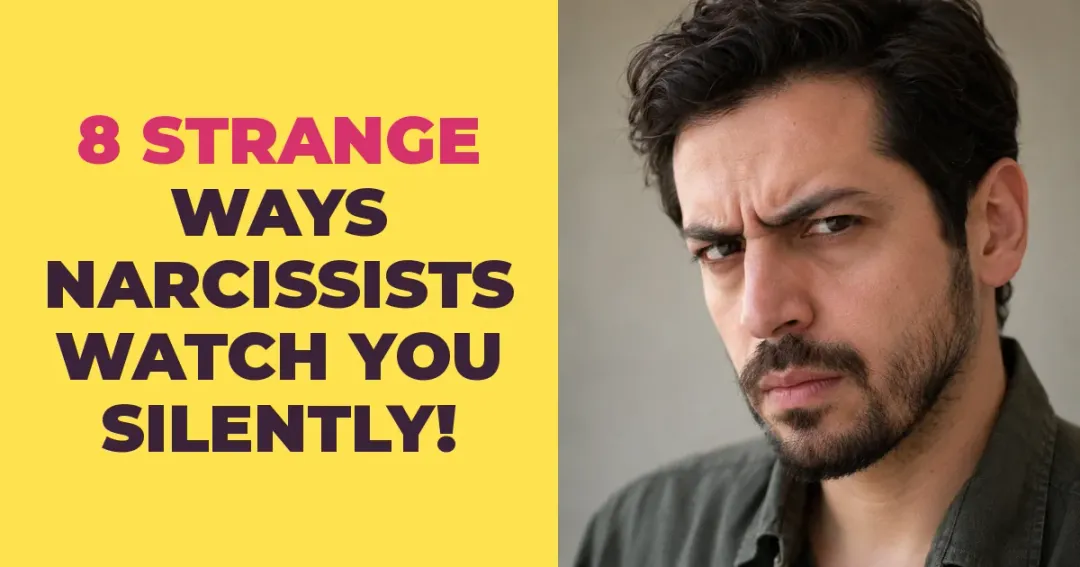
Here are 8 strange ways narcissists watch you without saying a word.
#1 Your phone is never really private
A narcissist may treat your phone like shared property and your location like their business.
It starts small.
They glance at the screen every time it buzzes. They ask, all casual, who’s texting you this late.
Then comes location sharing. “If you’ve got nothing to hide, why would you mind?”
Researchers who study coercive control describe exactly this: checks on your phone and your whereabouts, stacked up rule by quiet rule. No single moment looks big enough to complain about.
But it adds up. The places you go shrink. Soon you’re running a coffee with a friend past them first, like a teenager asking to stay out. Holding on to a few contacts and a bit of cash that’s only yours keeps a door open.
Whose phone is it, really?
#2 They memorise where it hurts
The narcissist often notices exactly what hurts you, then chooses to use it.
You told them once about your weight, or your dad, or the job you lost.
They didn’t comfort you. They changed the subject.
Months later, mid-argument, it comes back word for word.
Research on empathy in narcissism found something chilling. Asked to imagine your side, many narcissists can feel for you just fine. Left to themselves, they mostly don’t bother. That makes the cruelty look less like a blind spot and more like a decision.
So you go quiet about how you feel. You second-guess every reaction, and “You’re too sensitive” lands like a verdict.
See also Strange Things Narcissists Do When They Believe You’re Asleep
Your pain belongs with people who answer it. Not with someone collecting it.
#3 Every secret gets filed away
Some manipulators play the long game, quietly saving what you tell them for the right moment.
They’re great listeners. Suspiciously great.
They remember the friend you fell out with, the thing your sister said, the time you cried at work. They nod. They store it.
Psychologists call this style Machiavellianism. Think charm on the surface, patient scheming underneath, and a spotless reputation the whole time.
Then one day it comes out. To your mum. To your boss. In front of friends who have only ever met the calm, reasonable version.
That’s what makes it so disorienting. By the time the scheme shows, it’s already done, and the people around you take their side.
Sharing less personal detail can feel cold at first. It’s also protection.
#4 Other people do the watching
Sometimes the watching gets handed to friends and family who report back.
Your aunt texts out of nowhere. “Just checking you’re okay.” A mutual friend asks where you were on Saturday night.
Then the narcissist knows things you never told them.
Online, these messengers get called “flying monkeys.” It’s a popular term, not a clinical one. It describes people who end up doing a manipulator’s pushing for them, usually with only half the story.
It overlaps with what family researchers call triangulation, where a third person gets dragged into a problem between two.
Usually the messengers have been told a tale where the narcissist is the injured party, and good-hearted relatives believe it. Suddenly the people closest to you feel like strangers.
You don’t owe messengers a defence. Keep the details private.
#5 Your spending gets studied
Your bank statement can become a report card the narcissist grades in silence.
They don’t yell about the coffee. They just leave the statement open on the counter, that one line circled.
Message received.
See also Loving a Narcissist Comes at a Cost You Never Signed Up For
Keeping a tight grip on money is a classic part of coercive control. Research on financial abuse explains why it matters: when every penny runs through them, walking away gets much harder.
So you start sneaking little things. Paying cash. Binning receipts before you get home.
“I’m just trying to keep us on budget.” Planning money together is normal. One person holding every key is different.
Your own account and your own records are allowed. Does buying a coffee feel like a crime?
#6 They watch for you to flinch
For some manipulators, your discomfort is the entertainment.
They tease you about your laugh in front of friends. Then they watch. When your face drops, there’s that smirk.
“God, it was a joke.”
Researchers call this everyday sadism. They added it to the Dark Triad, turning three dark traits into four. Hurting you is the payoff, all by itself.
Living with that, you can feel more like prey than a partner, braced for the next jab. You learn to keep your face blank.
One way to tell: real teasing ends the moment you say stop. This doesn’t.
Fewer reactions give them less to enjoy. Watch whether your hurt seems to please them. That tells you plenty.
#7 Good news gets a cold stare
Your good news gets watched closely, and the narcissist’s reaction often tells you everything.
You got the promotion and blurt it out at dinner, buzzing. They keep scrolling their phone.
“Good for you. Shame about the commute.”
Research links narcissism, especially the quieter, more fragile kind, with envy. Your win makes them feel smaller, so they cut it down to size, take credit for it, or ruin the moment.
A flash of envy is human. Starting a row on your birthday to drag you down is something else.
Over time, joy starts to feel dangerous. You keep good news to yourself before you’ve even enjoyed it.
Pay attention to who falls silent when things go your way. Then take your wins to people who cheer.
See also This Is How Narcissists Wipe Out the Life You Had Before Them
#8 You end up watching yourself
The strangest part is how quickly you start watching yourself on their behalf.
You hear the keys in the door and already know the mood. You check your face in the hallway mirror. You tidy the thing they might mention.
Nobody asked you to.
Research on trauma describes this. When anger can blow up at any moment, your body learns to stay switched on, scanning for trouble, and to settle things by giving in.
That’s why yes comes out before you’ve thought. Why you apologise for things that weren’t wrong. Why you’re exhausted by noon.
Being considerate comes from care. This comes from fear.
Next time the alarm goes off, slow down for one breath. Practise one tiny no with someone harmless. What would you say if nobody was watching?
Being watched this closely says a lot about their need for control. It says nothing bad about you.
You noticed it. That counts for more than you think.
Start with one trusted person and tell them what you’ve seen. Someone outside the house can help you trust your own eyes again.