Narcissists rarely take anything you could photograph.
The losses in this list leave no marks. Just a slow leak you feel every day and still can’t describe, even in your own head.
You used to be someone else. Lighter. Faster to laugh. More sure of your own mind.
Ask yourself what changed, though, and you come up blank.
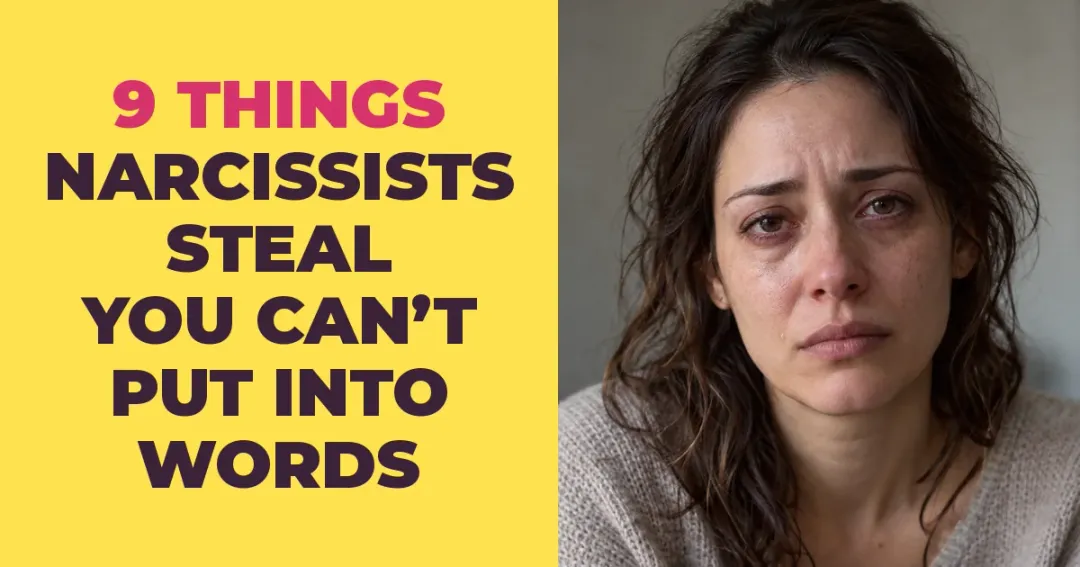
Here are 9 things narcissists steal from you that you can’t put into words, plus a first step to reclaim each one.
#1 Certainty about what you saw

The first thing to slip is your faith in your own memory.
The argument is still sharp in your head. Every word, the room, the heat in your cheeks.
Then they answer, calm and flat: “That never happened. You’re too sensitive.”
Psychologists call this gaslighting. It works best where one person has more power and controls the version everyone hears. The trust you place in them does the rest.
Soon you’re saving notes. Screenshots. Dates. Evidence, just to reassure yourself.
What helps: write it down while it’s fresh, then check it with someone outside the relationship.
Your memory works fine. It’s just being overruled.
#2 Your joy over your own good news
Narcissists can make your best news feel like a mistake to mention.
The promotion came through. You burst into the kitchen to tell them.
“Huh. Was nobody else applying?”
Or silence. A shrug, then a question about dinner.
Research ties envy closely to narcissism, especially the quiet, touchy form.
Your success threatens their need to feel above you. So the win gets shrunk, spoiled, or drowned in a fight on the exact day you meant to celebrate.
Eventually you swallow good news before you’ve said it. Happiness starts to feel dangerous.
Notice who goes quiet whenever you’re winning.
Your next big moment belongs with people who’ll throw confetti!
#3 Permission to be upset

Your feelings gradually become something you owe an apology for.
See also What Loving a Narcissist Ends Up Costing You
A rough day ends in tears, and they switch topics. Or sigh. Or mutter, “Not this again.”
This part hurts. Studies suggest many narcissists understand what you’re feeling. They simply don’t act on it, and their kindness often appears when it suits them.
Less can’t. More won’t.
So you go quiet. You wonder whether your reactions are excessive, too big, too frequent.
They aren’t.
Give your feelings to people who respond with care. And quit offering your hurt to the person who keeps using it as a weapon.
Crying was never your flaw.
#4 Saying what you think without rehearsing
Around a narcissist, every sentence gets a practice run first.
Ask “Did you ring the bank?” and the whole evening goes up in smoke.
Why? Research on threatened egotism found narcissists react to insults with more aggression, aimed at whoever they blame. An ordinary question can feel like an insult to them.
Sometimes the payback arrives days later, for a comment that had slipped your mind entirely.
So you edit in advance. Soften it, trim it, apologise for things that were never your fault.
If the yelling turns into threats, leaving the room is a perfectly reasonable choice.
How long since you just said what you meant?
#5 A simple, guilt-free no
Refusing a narcissist can start to cost more than giving in.
“After everything I’ve done for you?” And just like that, your weekend plans are gone.
People online call this FOG: fear, obligation and guilt that keep you saying yes. It’s a popular label rather than a diagnosis, and it overlaps with what researchers call coercive control.
Old favours dragged up. Sulky disappointment until you fold.
Soon yes comes out automatically. Their moods start to feel like your responsibility.
Build in a pause. “I’ll get back to you” gives you space to check what you really want.
Their feelings matter. Managing them isn’t on you.
#6 Freedom to live your own life
Your world can get smaller so gradually that the change barely registers.
See also 11 Things Narcissists Begin Doing After Fifty
It begins with a remark about your friend. Then a sulk when you head out. Then “Who’s that?” whenever a message pings.
Researchers call it coercive control. Many small rules and small punishments, until your independence has quietly drained away.
It’s hard to describe for that reason. No single dramatic moment stands out.
Just an afternoon you find yourself asking whether you’re allowed to buy shampoo.
Keep a bit of cash and a few contacts that belong only to you. A domestic abuse service can talk safety planning through with you.
There was a time you simply went. When did it end?
#7 Being able to fully relax
Living with a narcissist can keep your body braced even on quiet days.
You can tell their mood by how the front door closes. A hard slam? Your mind is already scripting the conversation.
Unpredictable anger teaches your body to stay alert, and to calm things by agreeing quickly. Psychologists call that appeasing habit fawning.
It wears you out. Small noises make you jump.
You say sorry before anything has happened.
And in all that watching, your own wants get lost.
When the alarm goes off inside, notice it and slow down. Try a small no somewhere low-stakes, like sending back a cold coffee.
Next time the door slams, see if the sorry can wait.
#8 Good days that make the bad ones bearable
Unpredictable kindness can make the bad days feel bearable, and that’s the trap.
Monday brings cruelty. Wednesday brings your favourite pastry and “Sorry, work’s been crazy.”
That pastry feels like a jackpot.
Psychologists call this intermittent reinforcement. Unpredictable kindness hooks you harder than kindness you can rely on. It’s the same pull that keeps gamblers at slot machines.
So you work harder for less, always chasing the next sweet moment.
For a month, tally the good days and the bad ones. Judge by the average week, not the best one.
See also THIS is How Narcissistic Abuse Affects Your Body
What does your tally look like?
#9 The person you thought you met

The hardest loss to name is the hope that the original version comes back.
In the beginning they were dazzling. Curious, funny, hanging on your every word.
Then the little digs started.
Then the competing. Your plans got topped instead of supported.
Research on narcissistic admiration and rivalry describes this shift. Charm wins people over first. Over time, rivalry takes over, and that means putting you down.
That’s why the start felt like a film and now feels like a slow puncture.
So you chase the early days, convinced the right move will bring them back.
Notice the gap between who they are in public and who they are at home.
That first version was a preview. You don’t have to keep waiting for it to return.
If much of this matched your own home, your mind is fine. You were noticing the whole time. These losses were real before they had names. Now they do.
Write one moment down while it’s fresh. Try one “I’ll get back to you.” Share one win with someone who cheers.
Begin with the smallest one.