Loving a narcissist rarely ends with one big bill.
You pay in small amounts instead. The friend you stopped calling. The plan you let slide. The late nights replaying a fight, hunting for what you did wrong.
Since it’s taken in pieces, it’s easy to miss how much is already gone.
You might still be in it. You might have just left and feel more drained than you ever expected.
Here are 8 costs of loving a narcissist, and why each one happens.
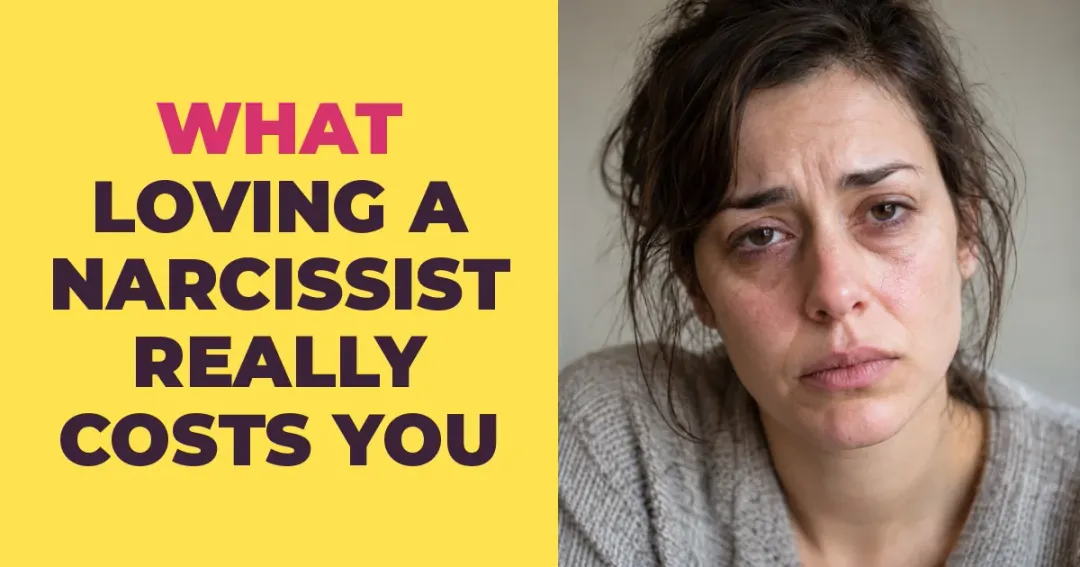
#1 You chase the person you first met

Part of you is still waiting for the version of them you met first.
Those first weeks were dizzying. Texts at breakfast, texts at midnight. Big talk about holidays and being meant for each other, before you’d even met their friends.
Somewhere along the way, the sweetness drained out. The teasing got a sharper edge. A quiet dinner can now end with “Why does everything have to be about you?”
Researchers who study narcissistic admiration and rivalry see this pattern. Charm does the early work. Later, coldness and digs move in.
That rush at the beginning ties you to them before you’ve watched them handle a bad week. So the early version turns into a memory you keep trying to earn back.
What happened the first time you said “not yet”?
#2 Your memory stops feeling like yours
Gaslighting chips away at your trust in what you saw and heard.
At the kitchen table, you mention the dig they made in front of your sister. They look puzzled. “That never happened. You’re way too sensitive.”
Twenty minutes later, you’re saying sorry for being hurt.
Psychologists say it thrives where power is lopsided. Your trust in them, plus their grip on the story, gives them room to edit the past.
Maybe your phone now holds notes about arguments, so you can check later that they really happened.
Keep doing that, but keep them somewhere only you can open, or with a friend you trust. Jot things down on the day, and run them past someone outside the relationship.
See also 11 Things Narcissists Begin Doing After Fifty
Doubting yourself doesn’t mean your memory can’t be trusted.
#3 Your body never gets to rest
When anger can arrive any minute, your body learns to stand guard.
The sound of keys on the counter tells you what kind of evening it’ll be. A door shut slightly too hard, and you flinch.
You agree before they’ve finished asking.
Psychologists call the constant scanning hypervigilance. The pleasing that goes with it is often called fawning. Keeping the peace starts to feel like the only safe move.
It gets you through. It also drains you. Watching for danger all day is exhausting, and slowly your own wants go blurry.
Try this: when the alarm goes off inside, pause and let yourself slow down. Then practise small no’s in safe places, like skipping an extra task at work.
Each small no brings your own wants back into focus.
#4 Good news starts to feel risky
In a narcissist’s world, your good news can feel like a threat.
You land the promotion and ring them first. “Nice,” they say, then ask what’s for dinner.
Your birthday comes, and so does a fight from nowhere.
Research ties envy to narcissism, more so in its quieter form. Seeing you do well can poke at their need to feel above you. So they might shrink your win, spoil it or take the credit.
Before long, you’re editing yourself. Your mum hears first. The raise becomes “just a small bump.”
One way to tell: watch who goes silent when things go well for you.
Then take your wins to the friends who cheer.
#5 Little by little, your world shrinks
Control rarely shows up as one big scene. It builds through tiny rules.
First, a sigh when you mention your friends. Then “Out again? Really?” Then comments about what you buy, what you wear, who’s texting you.
Psychologists call this coercive control. Each rule looks minor on its own. Together they eat away at your freedom, so there’s rarely one moment you can point to.
See also THIS is How Narcissistic Abuse Affects Your Body
Your world narrows. Coffee with a friend starts to need a yes from them.
Holding on to a few contacts of your own matters. If you’d like support, a domestic abuse service can help you plan for safety.
When did you last make a plan without checking first?
#6 The life they promise never arrives
Talk of a shared future can keep you hooked on a present that hurts.
The cottage by the sea. The wedding. That trip to Italy, hotels already saved on your phone. “Once work settles down, it’s our turn.”
Work never settles down.
This is often called future faking. It’s a popular label, not a clinical term, and it lines up with research tying narcissism to weaker commitment in love.
Plans pull you in. When you’ve pictured a whole life together, leaving can feel like giving it up.
So go by what’s actually happened. Scroll back through the last year. Which promises came true? Then pick a timeline that’s yours.
How long have you waited for “soon”?
#7 Walking away hurts, and there’s a reason
What keeps you there can feel like love and work like a hook.
Monday, they ignore you. Wednesday, flowers and “I’d be lost without you.” You never know who’ll walk through the door.
Psychologists call this intermittent reinforcement. Warmth that shows up at random, between cold spells, grips harder than steady warmth. Slot machines run on the same pull.
Repeated rounds of hurt and kindness can also build what’s called a trauma bond. You miss them right after they’ve hurt you. You stick up for them with friends. Walking away feels like physical pain.
That isn’t weakness. It’s a well-known human response.
Count the good days against the bad ones for a month. Look at the average, not the best day.
What does your average say?
#8 The shame of not seeing it sooner
Not seeing it sooner wasn’t stupidity, it was your mind guarding a bond you needed.
See also Why Narcissists Spoil Special Days Before They Even Start
Once it’s over, everything can come into focus at once. The lies. The late nights. What your friend hinted at over coffee.
Then the shame shows up. “How did I miss this?”
Psychologists call this betrayal blindness. Relying on a person can lead the mind to filter out signs they’re betraying you, so the attachment stays intact.
Shame and blaming yourself weigh heavily after manipulation. Research on self-compassion suggests that treating yourself as kindly as you’d treat a friend can lighten both.
So try it. Speak to yourself the way you’d speak to a friend.
Trusting them was never your mistake.
If more than one of these sounded like your life, be gentle with yourself. The costs pile up quietly, and you’re only now seeing the full receipt.
Pick one person you trust and tell them everything. Or jot down what you’d like help with. Choices tend to feel clearer when you’re not carrying them alone.
What happens next is your call.