Narcissists rarely show you when they’re hurting.
They show you something else. The slammed cupboard. The three-day silence. The sudden list of everything wrong with you.
And you’re left replaying the conversation, trying to work out what you did.
Often, you didn’t do anything. You just brushed against something that threatens their self-image.
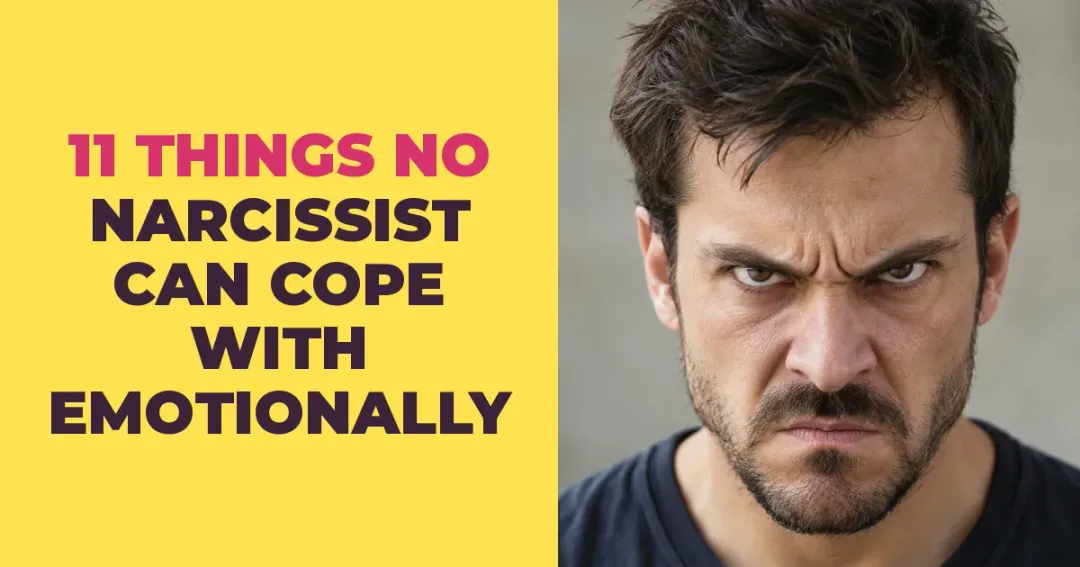
Here are 11 things no narcissist can cope with emotionally, and why each one hits so hard.
Why so little knocks them over
Underneath the swagger, many narcissists lean on a shaky picture of themselves that only holds up while others keep propping it up.
Some guard it loudly, by showing off. Others guard it quietly, by sulking and nursing grudges. Plenty flip between the two.
Either way, anything that dents the picture feels like danger.
That’s what this list is really about.
#1 Even gentle criticism feels like an attack
To a narcissist, one small comment can land like a personal attack.
You say, “I think we missed the turning.” Ten minutes later you’re hearing that you never support them and you’re always looking for faults.
Psychologists studying threatened egotism saw narcissists answer insults with more aggression, pointed straight at the person they blamed.
That’s usually you.
So you rehearse sentences in your head before saying them. You say sorry for things that were never yours.
Watch the size of the reaction against the size of the comment. When it’s wildly bigger, the problem isn’t your wording.
#2 Being asked to own what they did
Ask a narcissist to own a mistake and you’ll often end up on trial instead.
You mention the message you saw on their phone. Suddenly it’s “So now you’re snooping? Unbelievable. I can’t do anything right in this house.”
Next comes the wounded silence. Or tears. By Sunday, their mum has heard you’ve been having a go at them.
There’s a research name for this: DARVO. They deny it, turn on you for asking, and swap places so they’re the injured one. Studies suggest it leaves the person who spoke up carrying more of the blame in her own head.
See also 12 Clear Signs The Narcissist is Scared to Death of Losing You
No wonder it ends with you saying sorry.
What helps? Steer back to the first issue, quietly, and let the side jabs go. Not every one of them needs an answer.
#3 Control slipping out of their hands
Control rarely shows up as one big moment. It arrives as a hundred small rules.
Who you text. What you spend. How long that coffee with your friend took. “I just like to know where you are.”
Psychologists call it coercive control. Many small rules and punishments add up, and no single one looks big.
So the day you break one, skip the check-in, buy the shoes without asking, the punishment often comes fast. The icy look. The row. The blocked card.
Your world shrinks. Ordinary things start needing a yes from them.
If you feel unsafe, a domestic abuse service can help you make a plan.
And keep a little money and a few phone numbers that are only yours.
#4 Someone else getting the spotlight
A narcissist may treat any spotlight that isn’t on them as a personal slight.
At your friend’s engagement dinner, the loud version talks over the toasts. The quiet version sits there sulking: “Nobody asked me a single question all night.”
Two styles, one goal: protecting a shaky self-image. One grabs the mic. The other tallies every slight.
And you spend the evening managing their mood instead of enjoying your own.
Want a quick tell? Watch what happens when the attention moves on.
Do they interrupt, sulk or start keeping score?
#5 Rules that apply to them too
Being treated like everyone else feels like an insult to a narcissist.
The restaurant says twenty minutes. Your partner acts like the waiter spat in their soup. “Do they know who they’re dealing with?”
Psychologists describe entitlement as a steady sense that they’re owed more, and that rules were written for other people. So everyday limits register as insults.
See also 10 Really Strange Things Narcissists Do With Their Mother
That’s why a fair request, splitting bills, taking turns choosing the film, gets treated like a declaration of war.
It isn’t. Wanting your needs met is not entitlement.
Keep a quiet tally of what you give. Numbers don’t gaslight.
#6 Your wins, when they feel like their loss
Your good news can feel like bad news to a narcissist.
You get the promotion. You rush home. They say “Oh. Good for you,” then spend the night picking at how messy the kitchen is.
In research terms, this is the rivalry side of narcissism, where your win counts as their loss. Envy then nudges them to shrink it, sour it, or take some of the credit.
Before long, you keep good news to yourself. Joy starts to feel risky.
Pay attention to who goes flat when you win.
Then take your news to people who celebrate you.
#7 An audience that stops clapping
Admiration isn’t a nice extra for many narcissists. It’s what their sense of worth runs on.
Their worth leans on other people’s approval, so everyone around them gets sorted into fans or threats.
At first you laughed at the stories and praised the big plans. Then you got tired. You stopped saying “That’s amazing” about every small thing.
And suddenly you’re the problem. “You used to be so supportive.”
It can leave you feeling like a mirror held up for their benefit, while your own needs get treated as a nuisance.
You’re a person, not a mirror.
#8 You trusting your own memory
Gaslighting needs one thing from you: trusting their version over yours.
“That never happened.” “You’re too sensitive.” “You always twist things.” Said calmly, over and over, it starts to stick.
The aim is to make you doubt what you saw so their story wins. It tends to work where the power is lopsided and they get to tell the story.
So their version only wins while you doubt yours. Hold on to your own memory, and the tactic loses its grip.
See also 8 Cruel Things Narcissists Do Just Because They’re Bored
That’s why a record of your own matters. Jot things down on the day, and check in with someone outside the relationship.
Your memory was fine all along.
#9 A boundary that doesn’t need their agreement
A real boundary is about what you’ll do, not what they have to do.
“Stop shouting at me” is a request they can ignore. “If the shouting starts, I’ll go to the other room” is a decision only you control.
They may push back, but it doesn’t depend on their yes. No permission required.
Expect guilt trips at first. “So now you’re punishing me?”
Say it once. Follow through, every single time.
Self-respect tends to grow from there.
#10 Getting nothing back from you
For some people, your hurt is the prize, and your reaction is how they collect it.
They poke at the thing you’re insecure about, at dinner, with friends watching. Then smirk when your face falls. “Relax, it was a joke.”
Researchers who study everyday sadism describe a streak where small cruelty feels good for its own sake. Not every narcissist is like this. So notice whether your distress seems to please them.
If it does, reactions are fuel. A flat “Okay.” Short, factual replies.
If they get angrier when you go quiet, put your safety first.
The fewer reactions you give, the less they have to work with.
#11 Watching you build a life without them

Your new, happy life is often exactly when the “I miss you” texts start.
Months of nothing. Then you post one photo from a weekend away, and your phone lights up. “Been thinking about you. I’ve changed, I swear.”
It has a popular name: hoovering. It’s a label, not a diagnosis, for the pull-back attempt that tends to show up when they feel replaced or want something.
It tugs on the bond built from rounds of hurt followed by kindness, which psychologists call trauma bonding. That’s why hope floods back so fast, and your progress can feel wiped out.
Judge them on the old pattern, not the shiny new promise.
And decide how you’ll answer that text before it lands.
If more than one of these sounded like your home, take that seriously. Patterns over months tell you more than any single moment.
Their reactions belong to them. If you want a first step, pick one person you trust and tell them the full story.
You’re allowed to take up space again.