The narcissist never hands you a rulebook.
You learn the rules the hard way. One cold silence, one blow-up, one heavy sigh at a time.
Somewhere along the line, you started living by laws you never agreed to. You check their face before you speak. You shrink your news. You say yes before you’ve even thought.
And when you try to explain it to a friend, it sounds like nothing.
It isn’t nothing.
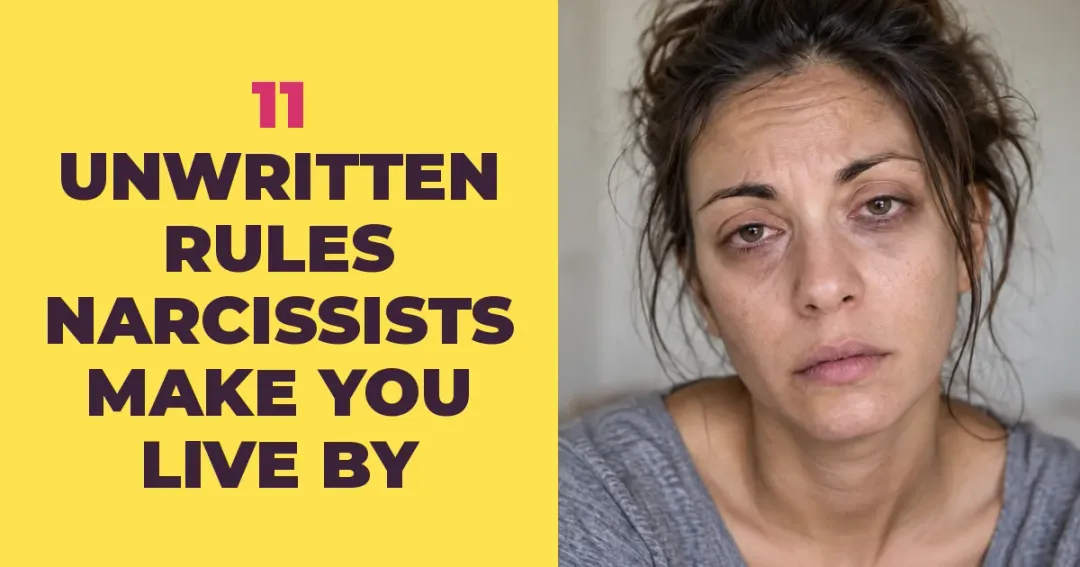
Here are the 11 unwritten rules narcissists make you live by, where each one comes from, and the price you’ve been paying.
Why nobody says the rules out loud
Control rarely shows up as one dramatic moment. Researchers who study coercive control describe a slow pile-up of little rules and little penalties, until your freedom has quietly shrunk.
That’s why it’s so hard to point at one day and say, ‘There. That’s when it started.’
Underneath it all is a self-image that needs constant feeding from outside. You become either a supply of praise or a danger to it.
Many of the rules below protect that, and others keep you from leaving.
#1 Your needs are an inconvenience to them
Your needs get treated like an interruption to theirs.
You mention you’re sick. They ask what’s for dinner. You need a lift to the doctor, and suddenly their day is ‘way too busy’.
Entitlement turns everyday limits into personal slights. To them, a fair request from you can feel like being attacked.
So the giving flows one way. Asking for your fair share starts to feel like picking a fight.
Keep a quiet tally. Numbers don’t gaslight.
#2 Their version of events has to win
When your memory clashes with theirs, yours loses.
You heard them say it. You were standing right there in the kitchen. And now: ‘That never happened. You’re making things up again.’
Psychologists call this gaslighting. It thrives when one person holds more power, because the trust you place in them hands them the pen to redo the story.
See also 8 Signs He Has a Second Life (Hidden Right in Front of You)
So you end up saying sorry for being hurt. Maybe there’s a notes app full of dated conversations, just so you know they were real.
Jot down what happened the same day. Run it past a friend outside the relationship. What you saw counts.
#3 A simple question starts a war
Asking a basic question can feel like pulling the pin on a grenade.
‘Who were you texting?’ ‘Did the electric bill get paid?’ Ordinary stuff. Yet the answer comes back as a slammed door, or a cold fury that lasts all evening.
Why? Research on threatened egotism showed narcissists hit back harder when their image gets bruised, and they aim it at the person they blame. Your harmless question can register as an insult.
So you rehearse every sentence first.
If the anger turns into threats, walking out of the room is allowed. Safety first, talking later.
#4 Hurt feelings make you ‘too sensitive’
Showing hurt gets treated as a flaw, never as information.
You cry after a cutting remark. They sigh, check their phone and say, ‘Here we go. You’re too sensitive.’ Then they change the subject.
Here’s the uncomfortable part. Studies found narcissists tend to keep empathy switched off, yet it rises when they’re nudged to see your side. Often they can understand. They just don’t act on it.
No wonder you’ve gone quiet. Over time you question your own feelings instead of their behaviour.
Give your tears to friends who actually show up for them.
#5 They aim for your soft spots
The things you confided in private can turn into jokes in public.
Dinner with friends. They bring up your weight, your failed exam, your mum, all with a grin. ‘Relax, I’m joking!’ Then they laugh when you flinch.
Researchers describe a trait called everyday sadism: some people get a kick out of someone else’s discomfort in small, ordinary ways. For them, the cruelty can be a reward in itself, not just a means to an end.
See also When You Stop Chasing A Narcissist After The Breakup, This Is What Happens
Living with that can feel less like love and more like being prey.
Real teasing ends the moment you say stop. Does theirs?
#6 Silence is how they punish you
Disagree with a narcissist, and you may stop existing in your own home for days.
They chat to your sister, the dog, their mother on speakerphone. Not you. Then one morning they’re talking about the weather as if nothing happened.
Research on being ignored explains the sting. Silence strikes at the deep human need to belong and count for something, so it can ache like a real injury. Many give in fast.
So you say sorry just to make the quiet stop.
Try this instead. Tell them once that you’re ready to talk whenever they are. Then get on with your day. No chasing.
#7 Good news has to stay small
Your happiest moments seem to trigger their worst moods.
You got the promotion. They say, ‘Huh. Must be easy there.’ Your birthday dinner somehow ends in a fight on the car ride home.
Envy is common in narcissism. Your win pokes at their need to sit above you, so they belittle it, sabotage it or take credit for it.
Soon your good news gets whispered, if it’s shared at all. Even a nice day feels like a gamble.
Watch whose face falls when you win. Then take your news to the people who cheer.
#8 Kindness is a prize, never a given
Warmth from them comes like a lottery win, rare and impossible to predict.
Monday they’re cruel. Tuesday they bring flowers and call you gorgeous. Wednesday you’re holding your breath, waiting to see which version walks in.
Psychologists call this intermittent reinforcement. Rewards you can’t predict grip harder than reliable ones, the same pull that keeps a gambler feeding coins into a machine.
So you try harder for crumbs.
One sweet evening makes a cruel week seem survivable. Track a month honestly. What does your average day look like?
See also 7 Lies Narcissists Tell When They Are Cheating On You
#9 Keeping the peace is your job
You became the household’s mood manager without ever applying for the job.
You can read the whole evening from the way the car door shuts. You laugh on cue, steer guests away from touchy topics, and agree before you’ve thought.
When anger can strike out of nowhere, your nervous system learns to stay switched on, and to smooth things over by going along. That’s your body protecting you.
No wonder you can’t say what you’d even like for dinner.
Try tiny no’s where it’s safe. A coffee order counts.
#10 Money rules only apply to you
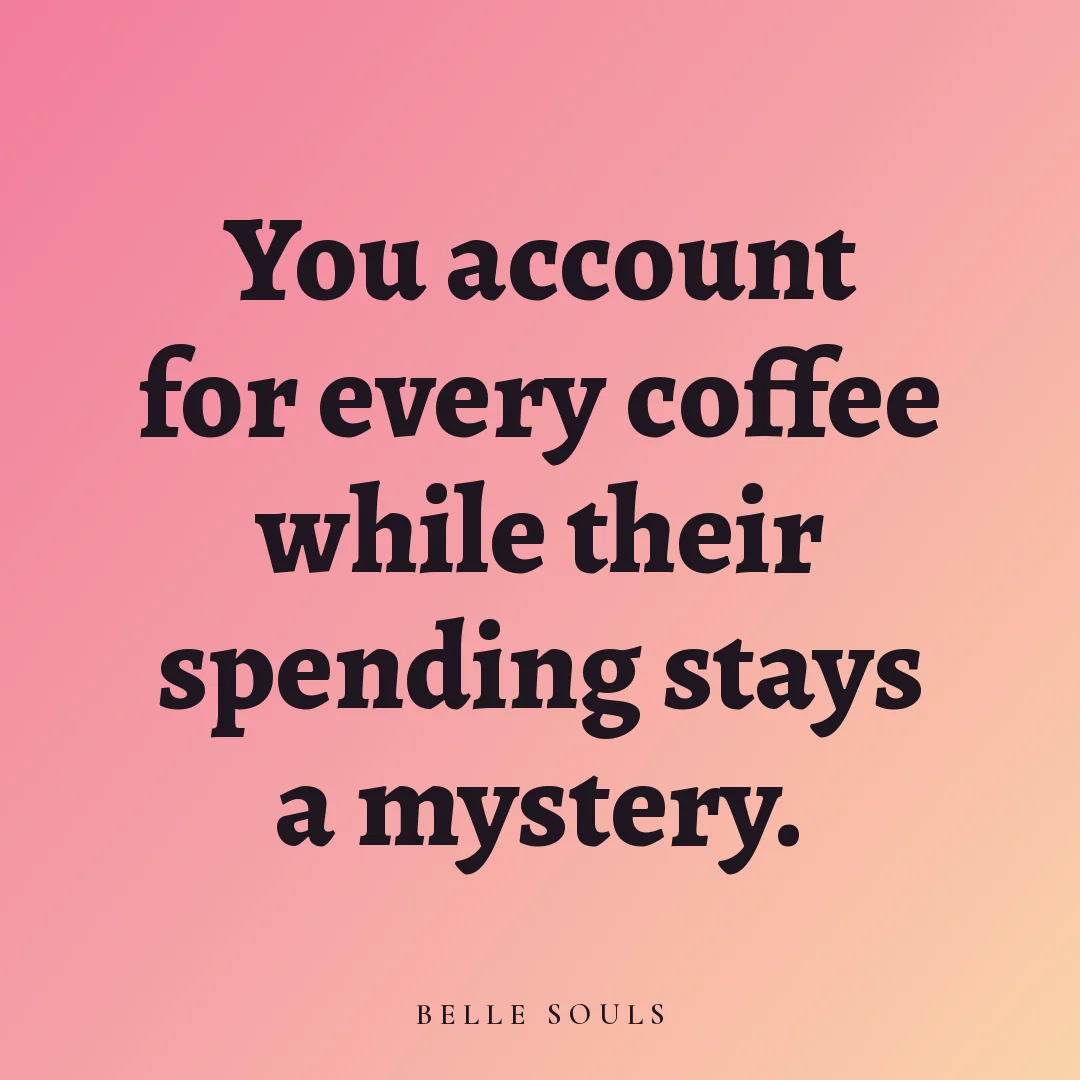
You account for every coffee while their spending stays a mystery.
They want to know why the shopping cost so much. Meanwhile the card statements go to their email, and ‘Don’t worry about it’ ends every question.
Researchers call this financial or economic abuse. When no money is truly yours, walking away gets much harder, and staying stuck is what it’s for.
Maybe you tuck receipts away now.
Where it’s safe, an account in your own name and your own records can help. A domestic abuse service can talk through money and safety with you. Wanting to know where the money goes is not a crime.
#11 Saying no is treated as betrayal
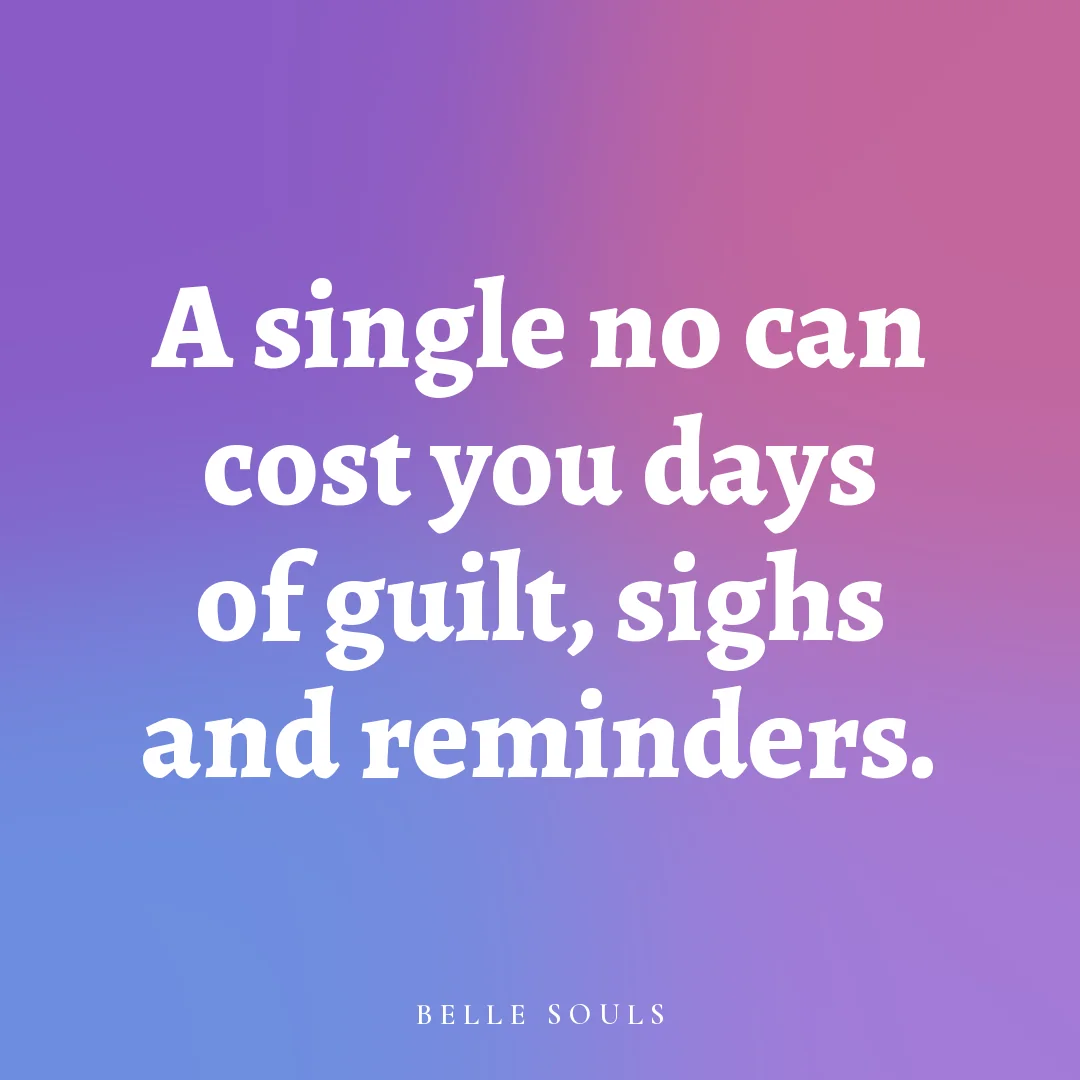
A single no can cost you days of guilt, sighs and reminders.
‘After everything I’ve done for you?’ Or the heavier one: ‘If you leave, I don’t know what I’ll do.’
Many survivors use the shorthand FOG, from the first letters of fear, obligation and guilt. It’s a popular label, not a diagnosis. It describes emotional blackmail that makes refusing feel pricier than caving, and it overlaps with coercive control.
Bit by bit, agreeing runs on autopilot.
You start carrying their feelings as if that were your job. It isn’t. What would happen if you said, ‘Let me think about it’?
If you saw your own kitchen, car rides and group chats in these rules, you weren’t imagining it.
Manipulation works best when you’re cut off, so getting reconnected matters. Pick one person you trust and tell them everything.
You never agreed to these rules. You don’t have to keep them in silence.
If you feel unsafe: in the US, call the National Domestic Violence Hotline at 1-800-799-7233 (thehotline.org). In the UK, call the National Domestic Abuse Helpline on 0808 2000 247. If you are in immediate danger, call your local emergency number.
Sources
- Herman, J. L. (1992). Trauma and Recovery. Basic Books.
- Bancroft, L. (2002). Why Does He Do That? Inside the Minds of Angry and Controlling Men. Berkley.
- Stark, E. (2007). Coercive Control: How Men Entrap Women in Personal Life. Oxford University Press.
- American Psychiatric Association. (2022). Diagnostic and Statistical Manual of Mental Disorders (5th ed., text rev.).
- Pincus, A. L., & Lukowitsky, M. R. (2010). Pathological narcissism and narcissistic personality disorder. Annual Review of Clinical Psychology, 6, 421-446.
- Campbell, W. K., Bonacci, A. M., Shelton, J., Exline, J. J., & Bushman, B. J. (2004). Psychological entitlement: Interpersonal consequences and validation of a self-report measure. Journal of Personality Assessment, 83(1), 29-45.
- Sweet, P. L. (2019). The sociology of gaslighting. American Sociological Review, 84(5), 851-875.
- Stern, R. (2007). The Gaslight Effect. Morgan Road Books.
- Bushman, B. J., & Baumeister, R. F. (1998). Threatened egotism, narcissism, self-esteem, and direct and displaced aggression. Journal of Personality and Social Psychology, 75(1), 219-229.
- Hepper, E. G., Hart, C. M., & Sedikides, C. (2014). Moving Narcissus: Can narcissists be empathic? Personality and Social Psychology Bulletin, 40(9), 1079-1091.
- Buckels, E. E., Jones, D. N., & Paulhus, D. L. (2013). Behavioral confirmation of everyday sadism. Psychological Science, 24(11), 2201-2209.
- Williams, K. D. (2009). Ostracism: A temporal need-threat model. Advances in Experimental Social Psychology, 41, 275-314.
- Krizan, Z., & Johar, O. (2012). Envy divides the two faces of narcissism. Journal of Personality, 80(5), 1415-1451.
- Ferster, C. B., & Skinner, B. F. (1957). Schedules of Reinforcement. Appleton-Century-Crofts.
- Dutton, D. G., & Painter, S. (1993). Emotional attachments in abusive relationships: A test of traumatic bonding theory. Violence and Victims, 8(2), 105-120.
- Walker, P. (2013). Complex PTSD: From Surviving to Thriving. Azure Coyote.
- Postmus, J. L., Plummer, S.-B., McMahon, S., Murshid, N. S., & Kim, M. S. (2012). Understanding economic abuse in the lives of survivors. Journal of Interpersonal Violence, 27(3), 411-430.
- Forward, S., & Frazier, D. (1997). Emotional Blackmail. HarperCollins.
Belle Souls articles explain patterns described in psychology research and recovery writing. They are not a diagnosis and not a substitute for help from a qualified professional.