A narcissist’s hobby can be a performance.
You’ve seen the marathon medal go up online, the charity selfie, the perfect sourdough. Then you’ve seen what happens at home when nobody’s clapping.
The hobby looks harmless. Healthy, even. So when it leaves you feeling lonely or used, you start wondering if the problem is you.
It isn’t.
Here are 6 harmless hobbies narcissists take up just for show, and what each one is really for.
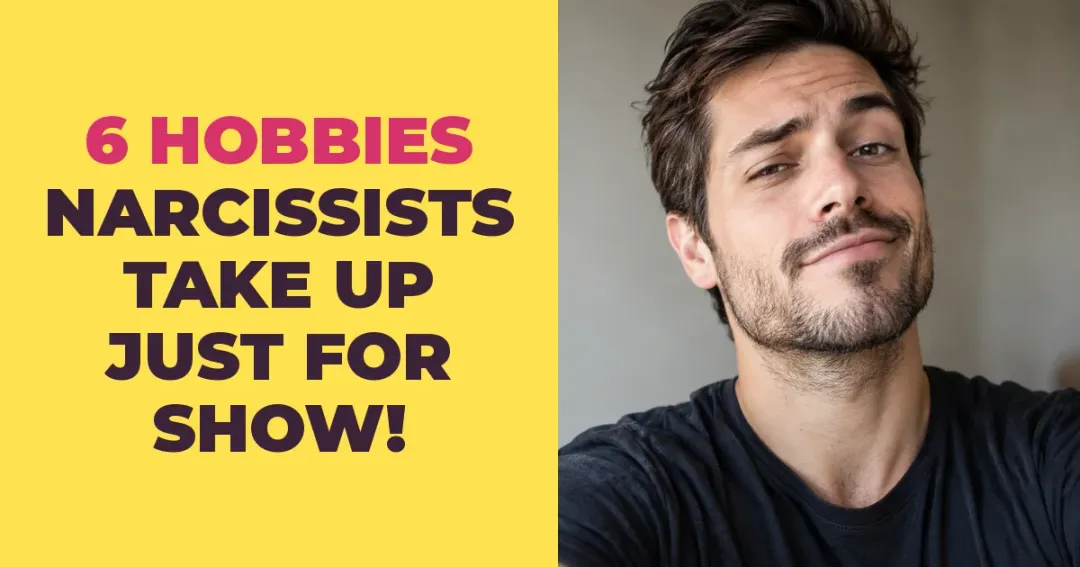
Why the audience matters most
Psychologists use the term impression management for the way all of us shape the picture others see. A narcissist may pour far more into it, because their sense of worth depends on outside admiration.
So the hobby is a stage.
The likes, the praise, the ‘you’re amazing’ are the real prize. You just happen to live backstage.
#1 Charity that only counts with an audience
A narcissist can be generous to strangers and stingy with the person they live with.
They’re at the food bank every Saturday. There are photos. The post gets two hundred likes and comments like ‘such a good soul,’ and they bring it up at every party.
Then they come home and won’t drive you to your appointment.
Same person. Same Saturday.
With narcissism, the gap between the public mask and the private person can get extreme: kind in front of others, cruel behind closed doors. The public side gets all the effort, because admiration feeds their self-worth.
Friends tell you how lucky you are. You smile. Who would believe it?
That’s the cost. When nobody believes you, you start doubting your own experience. So trust what happens at home, not what happens on the feed.
The audience gets the volunteer. You get the rest.
#2 The gym selfie matters more than the gym
For a narcissist, the workout only counts once someone has watched it.
They post every run, every lift, every mirror shot. Over dinner, a 10K turns into ‘basically a half marathon, honestly.’
See also 10 Everyday Struggles Narcissistic Abuse Survivors Feel Too Ashamed to Share With Anyone
You ask how training’s going and get twenty minutes on split times, protein and the new shoes.
Your day? Never comes up.
That’s the loud side of narcissism. Research describes it as dominant and hungry for the spotlight, often steering the conversation back to them. Puffing up achievements fits the same pattern.
Live with it long enough and you feel like a mirror they check their reflection in. Their sore knee is a crisis. Your bad week is an inconvenience.
Getting fit isn’t the problem, and confidence isn’t a disorder. The tell is the pattern over months. Does it ever stop being about them?
And who’s cheering for you?
#3 Dinner parties where you do the dishes
The dinner party is their show, and you’re the unpaid crew.
They announce a five-course meal for eight. You shop, chop, set the table and scrub pans until midnight while they pour the wine.
At the table, they take the bow. ‘Oh, it was nothing. I just threw it together.’
You made half of it.
Psychologists call this entitlement: a steady belief that they deserve more than others. Taking credit for shared work is one of its classic signs.
And if you’ve ever asked for a simple thank-you, you know how that went. Ordinary limits feel like insults to them, so a fair request lands like an attack.
So you stop asking. You give more and get less, and the next party is already on the calendar.
One thing that helps: keep track of what you give, just for yourself. Your hands made that meal too.
#4 Calm on the mat, cold in the kitchen
Inner peace on Instagram doesn’t mean kindness at home.
They talk about mindfulness, gratitude and good energy. The retreat photos are gorgeous, all soft light and quiet smiles.
Then you cry after a brutal day, and they change the subject. Or sigh. ‘You’re too sensitive. Work on your energy.’
See also The Unexpected Way a Narcissist Reacts When You Stop Caring
Kind to the retreat crowd. Cold to you.
Research on low empathy found narcissists often show less of it by default, but more when they’re prompted to take the other person’s view. That looks like a choice, not an inability.
So the calm is for the audience. The empathy they show others doesn’t come home.
Before long, you stop sharing feelings. You start doubting your own reactions. Maybe you really are too much?
Someone awkward with emotions who still tries is different. This is seeing your pain and stepping over it. Take your feelings to people who actually respond to them. You’re not too much.
#5 The trip is ruined if nobody likes it
Some narcissists don’t travel to see the world. They travel to be seen in it.
The whole trip is built around the shot: the right sunset, the right outfit, you behind the camera for forty minutes.
Then the post goes up.
If it gets enough attention, the day is perfect. If it doesn’t, the mood drops like a stone, and they sulk through dinner.
‘You took it at a terrible angle. You ruined it.’
That’s the quiet side of narcissism. Research describes it as touchy and resentful, sulking when not noticed. Many switch between loud and quiet, and both forms protect a fragile self-image.
So you walk on eggshells on your own holiday, blamed for a disappointment that was never yours. One way to tell: watch how they act when they’re not the centre of attention.
You came for a holiday. You got a photo shoot.
#6 Suddenly your hobby becomes theirs
When you love something, a narcissist may decide to love it louder.
You’ve painted for years, quietly, just for you. Then they buy a better easel, take a class and post a canvas before you’ve shown anyone yours.
Now it’s their thing. At your friend’s party they announce, ‘I’m the creative one in this house.’
See also 9 Tactics Female Narcissists Use to Manipulate Men
Each copy shrinks your thing a little more.
Research on envy describes the pattern. Your good fortune threatens their need to feel superior, so they shrink it, steal it or spoil it. Copying you and claiming it first is a classic move.
Studies of narcissistic rivalry add the rest: your gain gets treated as their loss.
So the thing that was yours starts to feel risky. You hide the sketchbook. You stop sharing wins.
Notice who goes quiet when you win, and show your work to people who are glad for you. Your easel. Your joy. Still yours.
None of these hobbies are bad. Running, cooking, painting, helping out: they’re good things in good hands.
What hurts is being the only one who sees what happens after the audience goes home. What you saw was real.
Trust the version of them that shows up at home. And keep the hobbies that feel like yours.