You’ve stopped explaining. Stopped arguing. Stopped waiting up.
And instead of peace, things got strange.
Narcissists rarely take your indifference quietly.
One day they’re furious. The next they’re bringing you coffee like nothing happened, and you start wondering if you imagined the last two years.
You didn’t.
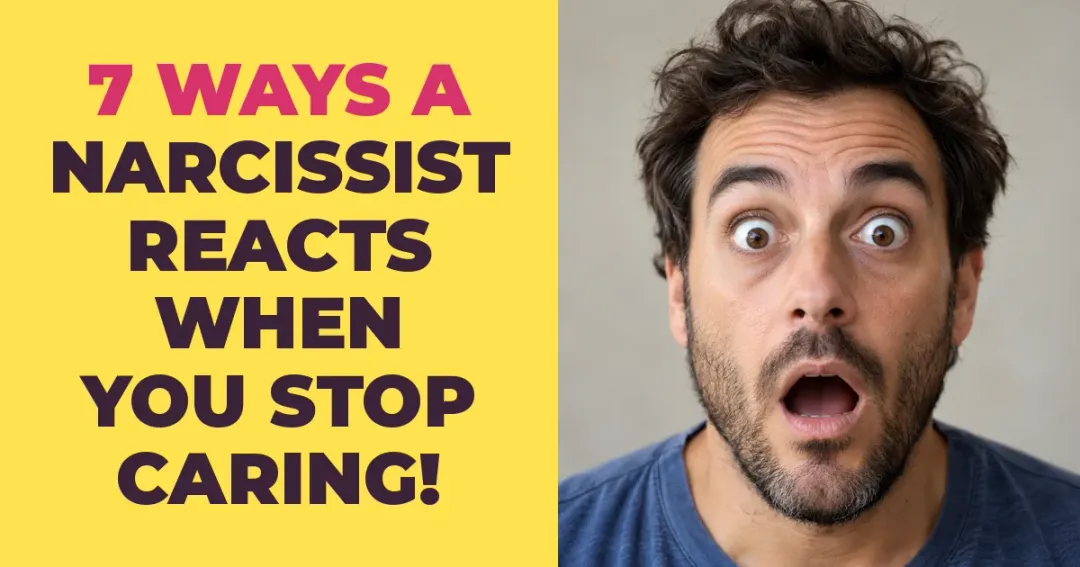
Here are 7 ways a narcissist may react when you stop caring, and why each one happens.
Why caring less hits them so hard
Caring less is something you do for yourself. It isn’t a rule you set for them.
That difference matters. Not reacting gives a manipulator less to work with.
Some call this going grey rock: staying dull and unreactive when contact can’t be avoided. It’s a popular nickname, not a formal term.
It won’t win you anything, and it isn’t safe in every situation. It just stops feeding the conflict.
#1 Your calm makes them furious

Being ignored can bruise a narcissist’s self-image just like criticism or rejection.
You answer with a shrug instead of tears. Suddenly a question about the dishes turns into a war: “Oh, so now you don’t care about anything?”
Why? Research on threatened egotism describes the pattern. A bruised self-image, from criticism, rejection or being ignored, makes many narcissists more likely to strike out at the person they hold responsible.
Your calm is the bruise. You’re the one they hold responsible.
And the anger can be out of all proportion. A cold fury that lasts for days. A punishment for a remark you’ve long forgotten.
Before long, you’re pre-editing every sentence again.
If you must say something critical, keep it brief and factual. If it doesn’t feel safe, don’t say it at all. If anger turns into threats, leave the room. Your safety outranks any argument.
#2 Suddenly they’re sweet again
Just when you’ve gone quiet, the warm version of them may walk back in.
Flowers on the counter. A text every hour. “I’ve been thinking about us, babe. That trip we always talked about? Let’s book it.”
See also 9 Tactics Female Narcissists Use to Manipulate Men
It looks a lot like the beginning. Back then, love bombing, that rush of attention, gifts and promises, bonded you fast, before you’d seen how they act under stress.
That early high became the memory you kept chasing. Now it’s being handed back.
And it lands hard because warmth has been so rare. Warmth you can’t predict, mixed in with coldness, grips harder than warmth you can count on. Slot machines run on that very same trick.
One sweet week feels like a jackpot.
So weigh the ordinary weeks, not the one golden one. And notice how they react when you say “not yet.” Does the sweetness survive it?
#3 The guilt trips get louder

A guilt trip is a lever, built to make no feel more costly than yes.
“After everything I’ve done for you?” Old favours come out of storage, like the airport run from three years ago. Then the sigh, and the wounded look across the kitchen table until you give in.
Some people call this FOG, short for fear, obligation and guilt. It’s a popular label rather than a clinical one, and it sits close to what researchers call coercive control: lots of small pressures that slowly shrink your freedom.
Every reminder is a small push toward yes.
For years, it worked. Yes became automatic. Their moods became your job.
Try a pause before you answer any request. Even ten seconds.
Their feelings are real to them. They’re still not your responsibility. What would change if you let that pause stretch?
#4 They go quiet to make you chase
Silence used as punishment often has one job: to send you running back.
Days of nothing. They chat to your sister at dinner and look straight through you. Then they stroll in on Sunday like nothing happened.
Being shut out hits two deep needs at once: the need to belong, and the need to count. So the pain can feel almost physical, and giving in starts to look like the only cure.
See also 8 Strange Ways Narcissists Wish You a Happy Birthday
Before, you’d have said sorry just to end it. Any topic that might set it off, you’d quietly avoid.
Now you don’t. That’s the part they didn’t plan for.
Someone who says “I need an hour to calm down” is doing something healthy. Days of silence meant to punish you are a different thing. Tell them one time that you’re ready to talk whenever they are. Then get on with your day.
No chasing. No begging. Let the silence be theirs.
#5 They tell everyone you’ve changed

If a narcissist can’t move you directly, they may try moving the people around you.
Your aunt texts out of nowhere: “You’re tearing the family apart. Just apologise.” A mutual friend passes on a message you never asked for.
Researchers have a name for this: relational aggression. It goes after your reputation and your friendships with gossip and whispers, not your body. So there’s no visible bruise.
Online, the messengers have a nickname: flying monkeys. It’s slang, not a formal term, for kind or loyal people who believe the version where the manipulator is the wronged one, and act on it.
Suddenly you feel alone inside your own circle.
A friend who’s truly worried sounds different. They ask about you, instead of repeating someone else’s script.
You don’t owe the messengers a defence. Keep details private. Stay consistent, and let time do the talking.
#6 You were the mirror they needed

To a narcissist, your attention can be more than a bonus. It can be what holds their self-worth up.
Think about it. The hurt, the pleading, the late-night explanations. Every reaction told them they mattered.
With narcissistic patterns, self-worth often leans on outside approval. So the people around them get sorted into two piles: fans, or threats.
When you stop caring, you move from one pile to the other.
Some react loudly and take over every room. Others go quiet, sulky and wounded: “Fine. I guess I’m just the bad guy now.” Research sees both styles as guarding the same fragile self-image.
See also 8 Ways to Take Your Power Back From a Narcissist Without a Fight
Look for the pattern over months, not one bad night.
If you’ve ever felt like you existed only to reflect them back, that’s why. The mirror just went dark.
#7 The ‘I miss you’ text arrives
Months of quiet can end with one short message that undoes your whole week.
“Hey. I miss you.” Or an emergency only you can fix. Or a promise that this time it’s different, landing right on your birthday.
The internet calls this hoovering. It’s slang rather than a clinical term, for efforts to reel you back in after time apart. It leans on the bond you had, and on hope that the old good days are coming back.
It often turns up when they need something, or feel replaced.
Old hope rushes in. Progress feels undone.
So decide how you’ll respond while you’re calm, before any message lands. Every reaction you hold back is one less thing for them to use. Weigh what they’ve done before, not what they’re promising now.
You already know how the last promise ended.
When you stop giving so much, guilt often shows up first. The self-respect tends to arrive later.
So when the rage, the sweet week or the ‘I miss you’ text shows up, you’ll know what you’re looking at.
If any of this has you scared, talk to someone you trust or a support service. One person is enough to start.