You kept waiting for the years to soften them.
Maybe it was retirement, a health scare, or the grandkids that were supposed to take the edge off. Instead the same digs keep landing at the same dinner table, just in an older voice.
Narcissism is a lasting pattern of needing admiration and showing little empathy, and it shows up everywhere, not just on a bad day.
The pattern tends to stay. And the longer anyone knows them, the more of their cold side tends to show.
Here are 6 things that happen as narcissists age, and what each one is doing to you.
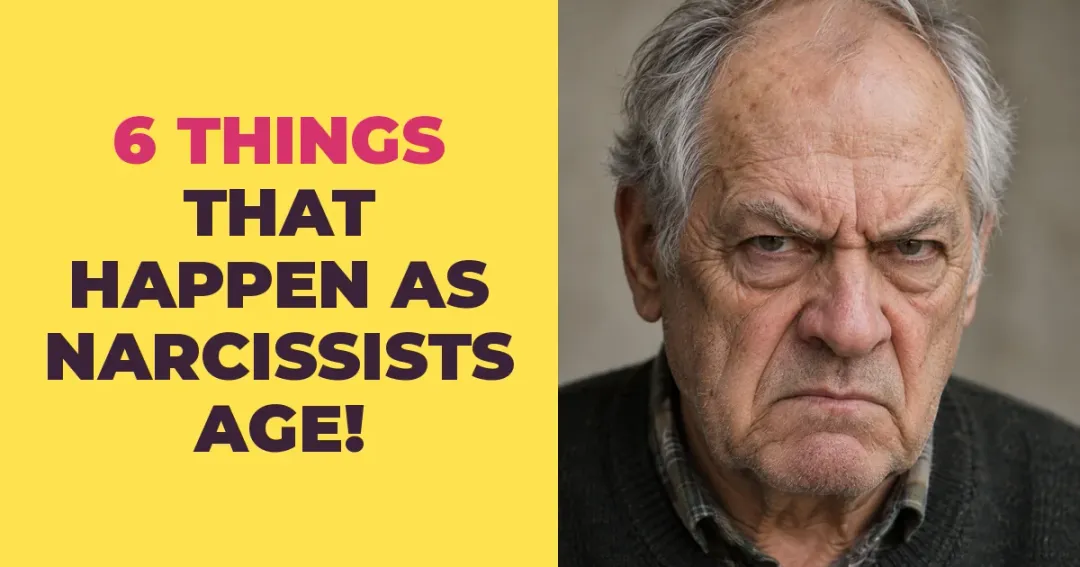
#1 The old pattern tends to stay

A narcissist’s sense of worth still hangs on other people, at 40 or at 75.
So the hunger for special treatment often stays. The waiter, the receptionist, the neighbour with the loud dog: someone is always failing them, and they want you to agree.
“Do they know who they’re talking to?”
And when the special treatment doesn’t come, they get angry. Loudly, or with a long cold stare across the table until someone apologises.
You hoped age would bring perspective. But this is a lasting pattern of needing admiration and caring little how others feel, unless it touches them.
Your needs are still treated as an inconvenience. Your bad knee. Your busy week. Your grief. In every visit, you’re there to reflect them back to themselves.
What helps is expecting the behaviour to stay the same, and judging by the pattern over months, not by one sweet afternoon that makes you think they’ve finally changed.
Enjoy the sweet afternoon. Just don’t build your next year on it.
#2 The charm wears off and the edge shows
First impressions are a narcissist’s best work, and later ones are rarely as kind.
Psychologists describe two sides to it: admiration, where they win people over with charm, and rivalry, where they protect their status by putting others down.
See also 7 Reasons You’ll Never Get an Honest Answer From a Narcissist
Early on, admiration wins. Over time, rivalry takes over.
So the longer anyone knows them, the more of the cold, cutting side comes out. And you’ve known them longest.
At the family lunch, they’re telling the new neighbour funny stories and refilling everyone’s glass. In the car home, it’s “Did you see what your sister was wearing?” and a list of everyone’s failures, yours included.
You keep chasing the person you met at the start, the one who made you feel chosen. New people still get to meet that person.
You get the leftovers.
Notice the gap between their public and private behaviour. It’s real, even if nobody else at that lunch would believe it. The car ride home tells you more than any party.
#3 Your good news still stings them

To a narcissist, your success can feel like a threat, even decades into knowing you.
You call with news. The promotion. The trip.
“Must be nice.”
Then the subject changes. Or they find the flaw: the commute, the cost, the cousin who did it better and younger.
Research describes envy as common in narcissism, especially the quieter, more vulnerable form. Your good fortune threatens their need to feel superior, so they shrink it, steal it or spoil it.
That’s why your birthday goes sour. Why your big day somehow ends in a row about them. Why your idea turns up at dinner as their idea.
Bit by bit, you start hiding good news. Happy moments begin to feel risky, like something you’ll pay for later. You call your sister first now, or nobody at all.
Notice who goes quiet when you win, and who asks questions. Your news belongs with the people who light up when they hear it.
#4 When the spotlight goes, the sulking starts

The bragging narcissist and the sulking, wronged one are often the same person.
Research describes a loud form of narcissism, bold and charming, and a quiet form: touchy, resentful, full of self-pity. Many switch between both.
See also 10 Reasons Your Entire Life With The Narcissist is a Lie
Both protect a fragile self-image. One shows off. The other withdraws and feels wronged, keeping score of every slight.
So when the spotlight is gone, you may hear a different song. “Nobody calls me anymore. Nobody cares what I think.”
Every missed call goes in the ledger.
Mention that they skipped your daughter’s recital, and within a minute they’re the one who’s hurt, and you’re the one being unkind.
You walk on eggshells around their moods, and somehow their disappointment is your fault. Sunday calls feel like defusing something.
One way to tell: does an apology ever come without a “but” on the end? If not, that’s a sign the self-pity is protecting something, not softening.
#5 Guilt is the lever they reach for
Guilt can keep you saying yes long after you’ve stopped wanting to.
“After everything I’ve done for you.” You’ve heard it so often you could say it along with them.
Then the receipts come out. The car they helped with years ago. The one weekend they babysat. The long sigh when you say you can’t do Sunday.
There’s a popular name for this: FOG, short for fear, obligation and guilt. It’s a label rather than a diagnosis, describing emotional blackmail that makes no feel more costly than yes.
It overlaps with what researchers call coercive control. Many small pressures add up until your independence quietly shrinks, one cancelled plan at a time.
Yes becomes automatic.
You start feeling responsible for their moods, their loneliness, their whole weekend.
Try a pause: “Let me check and get back to you.” It gives you room to separate their feelings from your responsibility. Their disappointment is real. It still isn’t your job.
#6 Your history gets rewritten

A narcissist may hand you a whole new version of things you both lived through.
You bring up the Christmas they didn’t speak to you for three days. “That never happened.” Or, “You were always too sensitive.”
See also Strange Ways Narcissists Watch You Without Saying a Word
Your childhood was happy. Your marriage was their sacrifice.
Psychologists call this gaslighting: making you doubt your memory so their version wins. It works best where power is unequal, and your trust plus their grip on the story lets them rewrite what happened.
So you apologise when you were the one who got hurt. You start keeping notes, just to prove you’re not losing it. Some days you wonder anyway.
Two people recalling things differently is normal. Denying what you saw, again and again, is something else.
Write things down when they happen, with dates. Then check your memory with a friend outside it all who saw it too.
Your memory isn’t the broken thing here.
After all those car rides home, Sunday calls and receipts from years ago, it makes sense that you’re tired of hoping.
You can stop waiting for the softer version. Keep your notes, save your good news for kind people, and keep one corner of your life that’s only yours.
You know what you heard at that table. Write it down, and trust it.