To a narcissistic partner, none of this is strange.
The sighs. The checking. The way your fever somehow turns into their rough week. They call it normal, and after a while part of you agrees.
It isn’t.
Describe any of it to a friend and watch her jaw drop.
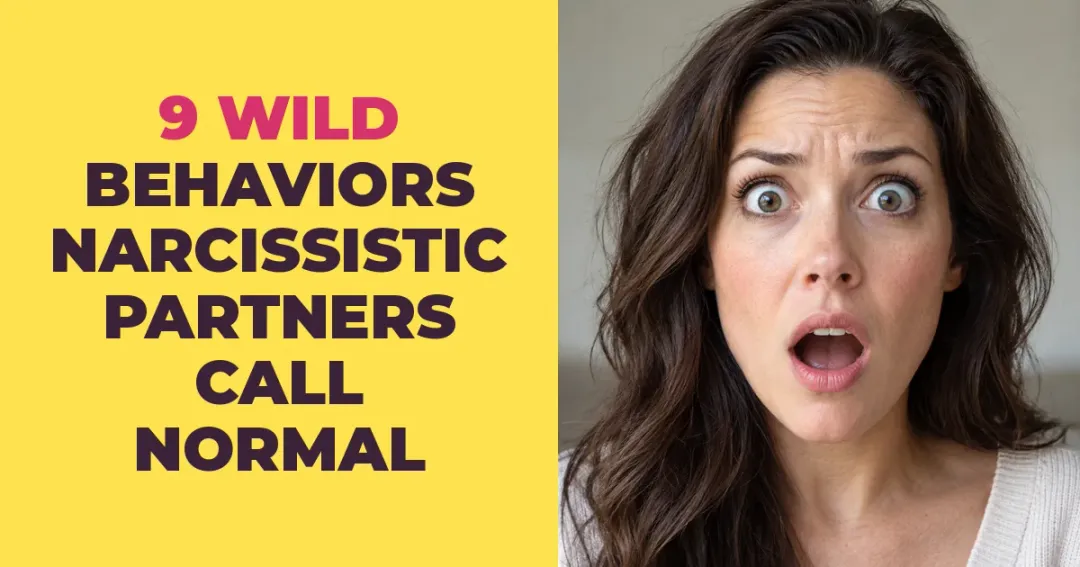
Here are 9 wild behaviors narcissistic partners treat as normal, and why they would make anyone else run.
#1 Their mood decides your whole day

The nicest version of them shows up just often enough to keep you hoping.
Monday they bring you coffee in bed and call you their whole world. Tuesday they walk past you in the hallway like you’re a lamp.
Nothing happened in between. You check anyway.
Psychologists call this intermittent reinforcement. Kindness that arrives on no schedule hooks harder than kindness that’s steady. Gamblers keep feeding slot machines on the very same principle.
So you work harder and get less back. One sweet evening feels like a jackpot.
Keep a private count this month. Good days in one column, rough days in the other.
Judge the average week, not the best Sunday.
#2 Guilt does the arguing for them
Guilt is the leash, and they hold it with a smile.
You mention a weekend away with your sister. They go quiet, then say, “So I just sit here alone? After all I’ve given up for you?”
Suddenly the trip feels selfish.
Online, people call this FOG: fear, obligation and guilt. It’s a popular label, not a diagnosis.
Old favors get pulled out like receipts. The disappointed face hangs around until you cave. Soon, saying no costs more than saying yes.
Next time they ask for something, let a few seconds pass before you answer. Their feelings matter. They’re still not yours to carry.
Those few seconds belong to you.
#3 Eye-rolls are their second language

Eye-rolls and sneers at home are a bigger red flag than they look.
See also How to Leave a Narcissist Jealous, Powerless, and Irrelevant Overnight
You explain why the bill was late. They roll their eyes, mimic your voice in a whiny tone, and leave the room halfway through your sentence.
Then it’s “just a joke.”
In long-term studies of couples, contempt and stonewalling ranked among the strongest signs a relationship was heading for a breakup. Hardly a harmless quirk.
You start to feel tiny in your own kitchen. Bringing anything up seems pointless, so you stop.
Name it once, calmly: “You’re rolling your eyes while I talk.” Then watch whether respect ever finds its way back.
Eye-rolls that outlast a calm request aren’t jokes.
#4 Your soft spots become their punchline

Some partners seem to enjoy the exact moment your face falls.
At dinner with friends, they bring up the weight you’ve been trying to lose. Everyone laughs a little. They look straight at you.
And they smirk.
Psychologists use the term everyday sadism for finding small cruelties rewarding in themselves. It was added to the Dark Triad of narcissism, Machiavellianism and psychopathy, making a “Dark Tetrad.”
You start to feel hunted instead of loved. So you train your face to stay blank.
Here’s one way to tell. Notice whether your distress seems to brighten their evening.
If the laughing stops when you ask, it was teasing. If it doesn’t, believe what you watched.
#5 Your good news makes them sour

Your good news should never feel like something you have to hide.
You get the promotion. You call them from the parking lot, buzzing. They say, “Huh. Did they give it to everyone?”
Then they start a fight on your celebration night.
Envy shows up a lot in narcissism, especially the quiet, touchy kind. Your success threatens their need to feel above you, so they shrink it, spoil it or take it.
Before long you keep wins to yourself. Happiness starts to feel risky.
Notice whose voice goes flat at your news.
Then take the promotion story to friends who scream right along with you.
See also 9 Cruel Games Narcissists Start Playing the Moment You Let Them Back In
#6 They need to know where you are
Love doesn’t need your live location every hour of the day.
You’re ten minutes late from the store. Your phone lights up: “Where are you? Who’s with you? Send a picture.”
At home, they scroll through your messages “just to check.” You’re quizzed on who you saw, what you spent, why you wore that.
Researchers have a name for this pattern: coercive control. Each rule looks small on its own. Piled up, they chip away your independence, which is why no single moment seems big enough to point at.
Your world shrinks. Even buying shampoo starts to feel like it needs approval.
If this sounds like home, it may help to quietly keep a little money and a few contacts of your own. Domestic abuse services can talk safety planning through with you.
That isn’t paranoid. It’s careful.
#7 You get sick, they get offended
When you’re the one who needs care, they suddenly have somewhere else to be.
You’ve got a fever and can barely lift your head. They lean in the doorway and sigh: “So who’s making dinner?”
Your flu becomes their problem.
Studies on narcissism found something telling. Many narcissists can tell how you feel, they just don’t act on it by default. Prompted to take your view, they show more empathy. That points to choice.
Add entitlement, a steady belief that they deserve more than anyone else, and your illness lands like a personal insult.
So you drag yourself up in a blanket, apologizing for being sick.
Save your sick days for the friend who brings soup and no lecture.
#8 Silence is their go-to punishment
The silent treatment is punishment dressed up as needing space.
After a tiny disagreement, the house goes cold. Doors close a little too hard. Long sighs drift in from the next room.
They chat with the neighbor and talk to the dog. Not one word for you.
See also The One Truth a Narcissist Can’t Stand to Hear
Then, days later, they act like nothing happened.
Research on ostracism explains the sting. Being ignored threatens your need to belong and your need to matter, so it can hurt like physical pain. Many people cave just to end it.
Say one time that the door’s open whenever they want to talk. After that, carry on with your plans. No chasing, no begging.
Their silence isn’t your job to fix.
#9 Somehow you end up saying sorry
You bring up one thing they did, and somehow you end up apologizing.
You mention the text you saw from their ex.
Ten minutes later it’s about your tone, your trust issues, your mother. “Wow. So now I’m a liar? You always do this to me.” Then tears, and you’re the one comforting them.
Researchers call this DARVO: Deny, Attack, Reverse Victim and Offender. It didn’t happen, you’re the problem, they’re the wounded one. Research found it makes the person speaking up blame herself more.
So you stop raising problems at all.
Next time, steer back to the one thing you raised. Leave the new accusations sitting there. You don’t owe a defense of your tone, your trust or your mother.
The text is still the text.
None of this becomes normal just because it happens every week.
If you spotted yourself in more than one of these, go gently. Speaking to yourself the way you’d speak to a good friend eases the shame and the self-blame.
If you can, start with one trusted person and the full story. Isolation is part of how this works, and telling someone you trust can start to loosen it.