You earn money. You work hard. And somehow there’s never any left.
The narcissist, meanwhile, somehow has enough for the gym, the new phone and the nights out with friends.
You’re the one counting coins at the self-checkout, cheeks burning, praying the card goes through.
That isn’t bad luck.
Here are 6 reasons the narcissist keeps you broke on purpose, and what your empty account really buys them.
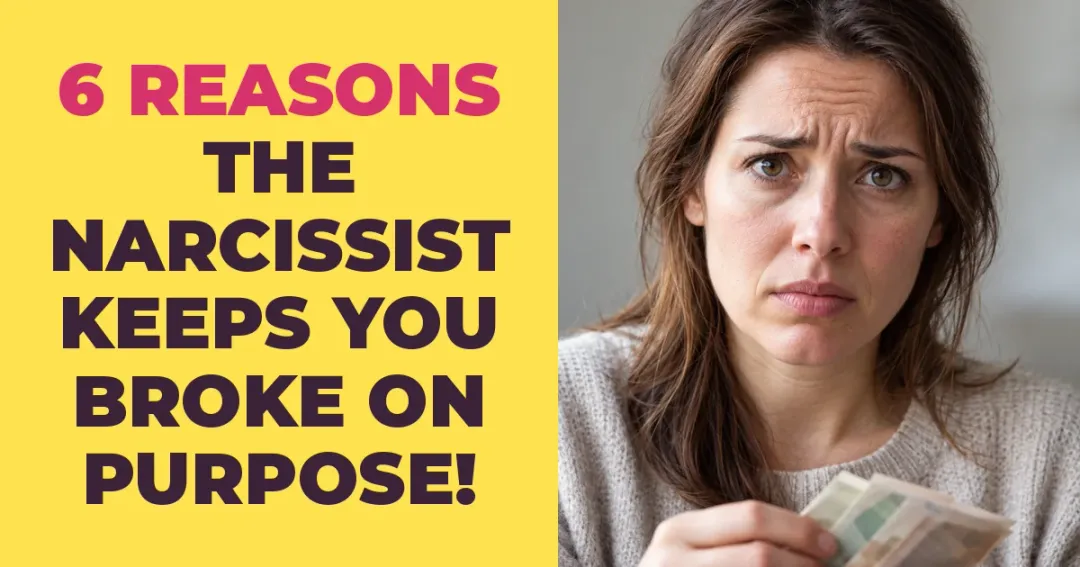
Why broke works for them
Money is freedom. A bus ticket, a deposit on a flat, a week somewhere quiet to think.
When one partner takes over, drains or wrecks the other’s finances, researchers call it economic abuse. And an empty purse makes walking out far harder.
Which is the point.
For a narcissist, self-worth has to be fed from outside. People around them are either supply or danger. A partner with no cash is supply that’s stuck.
#1 Your money quietly becomes their money
Your salary lands in your account, and somehow it never stays there.
Maybe they offered to handle the bills because you were so busy. Maybe your card ended up in their wallet, just to make things easier.
‘Let me deal with it. You’ve got enough on your plate.’ It sounded so kind. Then you check the account and the numbers don’t add up.
There’s a loan you don’t recognise. A bill with your name on it.
Research on economic abuse lists these moves: taking your pay, holding your cards, running up debts in your name. Without money of your own, leaving gets harder. That keeps you dependent.
And the effect is quieter than a slammed door.
You begin tucking receipts away. A coffee. Shampoo. A birthday card for your sister. Money stops feeling like yours, even under your own roof.
A plain notebook can help: dates, amounts, whose name sits on which account. You’re being drained, one ‘small favour’ at a time.
#2 Your success is a threat to them
A narcissist may treat your career as a competition they can’t afford to lose.
See also 9 Signs You Feel Lonelier with a Narcissist Than on Your Own
You mention a promotion over dinner. They go quiet, push the food around, then say, ‘Must be nice to have so much time for work.’
The night before your big interview, a fight comes out of nowhere. You arrive red-eyed, running on three hours of sleep.
Coincidence? Maybe once.
Research on envy in narcissism explains it: your win makes them feel smaller, so they shrink your good news, take credit for it or wreck it. Studies of economic abuse also mention jobs and courses being sabotaged.
So you start trimming your good news before you share it. Sometimes you skip it entirely. Your best days begin to feel dangerous.
Bring your wins to friends who cheer. Then ask yourself one quiet question.
Who goes quiet when you win?
#3 Every purchase needs their approval
When socks need a justification, something has gone very wrong.
They check the banking app before you do. ‘What’s this charge from Tuesday?’ They sigh at the receipt in the shopping bag, loud enough for you to hear.
None of it looks huge on its own. That’s how it works.
Psychologists call this coercive control. Many small rules and punishments add up to a loss of independence. Your world gets smaller, and they decide what fits inside it.
Push back, and the guilt shows up with a list of every sacrifice they’ve made. ‘After everything I’ve done for you?’ Giving in starts to look cheaper than a no.
Soon you’re asking permission for shampoo.
A little cash and a few phone numbers that are only yours can make a real difference. Specialist abuse services can talk through staying safe with you, quietly and on your terms.
Socks shouldn’t need a hearing!
#4 They take and never pay back
To an entitled partner, your money and their money follow very different rules.
They borrow for the car repair, swearing it’s the last time. Then the phone bill. Then ‘just till Friday.’ Friday never comes.
See also 6 Reasons Why Narcissists Marry You So Their Lives Are Easier
Mention it and watch the temperature drop. ‘Seriously? You’re keeping score now? I thought we were a team.’
Research on entitlement describes people who feel they’re owed more than anyone else, as if rules were made for other people. To them, a normal limit lands like an insult. Your polite request feels like an assault.
So the money flows their way because, in their mind, they deserve it more. Asking for it back, even once, can feel like declaring war.
Meanwhile the giving all flows one way. Every month.
One thing that helps: jot down what you hand over. Not to win a fight. Just so your memory has backup.
Asking to be paid back isn’t greedy. It’s fair.
#5 In public, they’re the generous one
The narcissist who argues over your grocery money may pay for the whole table’s drinks.
Friends watch them tip big, grab the bill and offer to help with everybody’s move. ‘You’re so lucky,’ a friend tells you, squeezing your arm.
Then the car ride home is silent. Or worse, it’s about what you spent on that dress.
Everyone polishes how they come across, but research on impression management notes that narcissists pour extra effort into their public image, because admiration feeds their self-worth.
So the generous version gets shown off. The other one comes home with you.
That gap is the cruel part. When you finally admit money is tight, friends don’t buy it. And you start second-guessing what you’ve lived through.
Believe the person who shows up when the door closes. That’s the version who lives with you.
#6 You matter only while you’re useful
Some days it feels like you’re only there to hold up a mirror for them.
You fund their plans. You cover their gaps.
Then you need something. A dentist. New work shoes. One afternoon off.
‘Can we not do this right now?’ Suddenly your needs are an inconvenience.
See also 8 Things You Should do Right Away if You’re Finished With The Narcissist
The pattern behind narcissistic personality disorder includes treating people as tools and caring little about their feelings unless it touches their own life. Only a clinician can diagnose, but you can still notice the pattern.
If your empty account makes their life easier, why would they change it? Expect the pattern to stay the same rather than waiting for it to shift.
Look at months, not moments. One good week is just a week. What does the pattern say?
Being broke in a relationship like this says nothing about your worth, your brains or your work ethic. It says plenty about what keeping you short does for them.
Start small. Share the whole story, money included, with one person you trust. Jot down the help you’d want, even if it’s just one line.
You don’t have to decide anything today.