A narcissist rarely mellows with age, no matter how many candles are on the cake.
Maybe you’re waiting for age to soften your father. Or your mother. Or the ex you still see at every family birthday.
You keep thinking the next health scare, the next quiet year, the next lonely Christmas will finally make them see what they did.
It usually doesn’t.
Here’s what really happens to narcissists after 65, and why the change you’re waiting for keeps not coming.
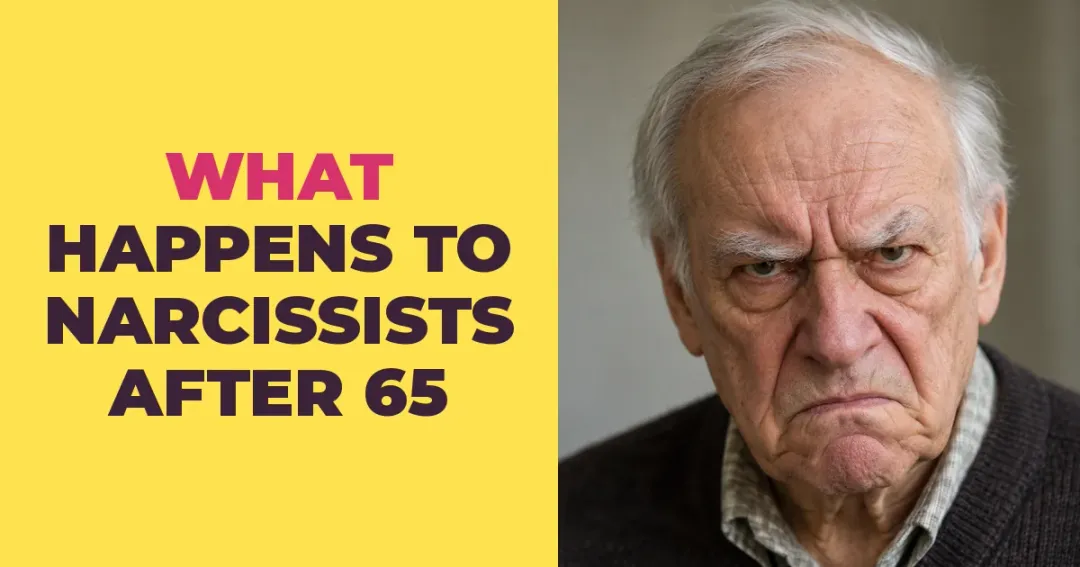
Why the years change so little
Narcissism is a lasting pattern, not a mood. It means a need to feel special, a constant hunger for admiration, and very little room for how anyone else feels.
Underneath, their sense of worth depends on outside confirmation. Other people are either a source of it or a threat to it.
A birthday doesn’t rewrite that.
It changes the setting. The script stays.
#1 Getting older doesn’t soften them
Expecting special treatment is a habit that can outlive almost everything else.
Sunday lunch with your father. He’s 78, walks with a stick, and still expects the best chair, the first plate and the last word.
When he doesn’t get it, the mood in the room drops. “I suppose I’ll just sit here, then,” he says, staring at the corner chair.
The stories get taller too. The promotion he nearly got decades ago is now the company he practically ran.
Ask about your week and watch his eyes drift. Your news only matters if it touches his.
And your needs? Still an inconvenience.
Judge by the pattern over months, not by one gentle afternoon. Expect the behaviour to stay the same, rather than waiting for the grey hair to change it.
His chair was never yours to guard.
#2 The need for an audience rarely retires
The hunger for admiration rarely retires when the job, the title or the crowd does.
Picture your mother’s retirement party. Speeches, laughter, a toast. Everyone calls her a legend.
See also 7 Hidden Weaknesses That Bring Every Narcissist Down
Then the next morning she phones you three times with the same story about how lost they’ll all be without her.
Narcissists often invest heavily in a polished public image, because admiration feeds how they see themselves. That image always needed an audience to work.
A lasting pattern like this can simply find a new stage in later life. When the crowd shrinks, a narcissist may turn to whoever’s still close. Often that’s you.
You end up reflecting her back to herself, one retold story at a time.
Trust what happens behind closed doors over what the crowd saw. Are you her daughter, or her audience?
#3 Their health turns into your job
Entitlement often doesn’t fade when the body slows down. It can just find a new excuse.
The text lands at 7am: “Appointment at 10. You’re driving.” Not a question.
So you move your meeting and sit two hours in a waiting room, then get told you parked too far away.
Needing help is human. Expecting yours, every time, without asking, is entitlement.
It makes ordinary limits feel like insults. So “I can’t do Thursday” lands as an attack, and asking for fairness feels like starting a war.
You give more and get less, so start keeping track of what you give. Stop pre-agreeing before you’ve checked your own week.
Your Thursday counts too.
#4 The wounded act gets louder
The loud narcissist and the sulking one are often the same person on different days.
Psychologists describe two faces of narcissism: a bold, charming one and a quiet, touchy, self-pitying one. Many people switch between both.
The quiet face sounds like this: “Nobody visits me. Not that anyone cares.”
Then comes the list. The Christmas you left early. The call you missed in March. Every slight, filed and dated.
Both faces guard one fragile self-image.
Either way, their disappointment becomes your fault, and you walk in already apologising.
See also 10 Weird Habits Only Narcissists Have
Watch how they act when they’re not the centre of attention. That’s often where the sulk begins.
And notice whether a sorry ever comes without a “but” attached.
#5 Don’t hold your breath for an apology
Bringing up the past rarely earns you an apology. More often, it puts you on trial.
You finally say it, quietly, at the kitchen table: “It really hurt when you missed my graduation.”
“That never happened. And how dare you? I’m an old woman and you come here to attack me?”
Deny. Attack. Flip the roles.
Psychologists call this DARVO. Research found it makes the person raising the issue blame themselves more. That’s why you drive home feeling like the bad guy.
If the past ever comes up again, you don’t have to argue each counter-attack. The original point still stands.
Their missing regret isn’t proof you were wrong.
#6 Relatives start delivering their messages
When you step back, the pressure often starts arriving through other people’s mouths.
Your aunt texts: “Your mum’s not getting any younger. Just call her.” Then your brother. Then a cousin you haven’t heard from in years.
Some people call these relatives flying monkeys. It’s a popular term, not a clinical one, for those who carry someone’s pressure on their behalf.
It links to what family researchers call triangulation: pulling a third person into a two-person problem instead of facing it directly.
Many of them aren’t cruel. They’ve heard a version where the narcissist is the wronged one, and they’re being loyal.
Still, you end up outnumbered in your own family.
You don’t owe a messenger your side, so keep the details private. One way to tell: are they asking how you are, or repeating a script?
#7 Guilt is the hook they still have
Fear, obligation and guilt can keep you saying yes long after you’ve stopped wanting to.
“After everything I’ve done for you.” Then the sigh down the phone, the one that means you’ve failed again.
See also What Really Turns Someone Into a Narcissist
Some people call this FOG. It’s a popular name for emotional blackmail.
Reminders of old sacrifices make saying no feel more costly than giving in. So yes becomes automatic, and their loneliness starts to feel like your job.
Guilt after you’ve hurt someone is healthy. Guilt used as a lever is different.
A boundary is something you do, so it doesn’t need their agreement. “If the call turns to insults, I’ll hang up.” Then you do.
Pause before you answer. The yes can wait.
No birthday was ever going to hand you the parent, or the partner, you needed. That was never yours to fix.
What you can do is stop putting your life on hold for a change that keeps not coming.
Start with one person who’s on your side. Tell them the real version.