You left, or you finally stopped bending. Now the angry texts, the rumours and the sudden sweetness make no sense.
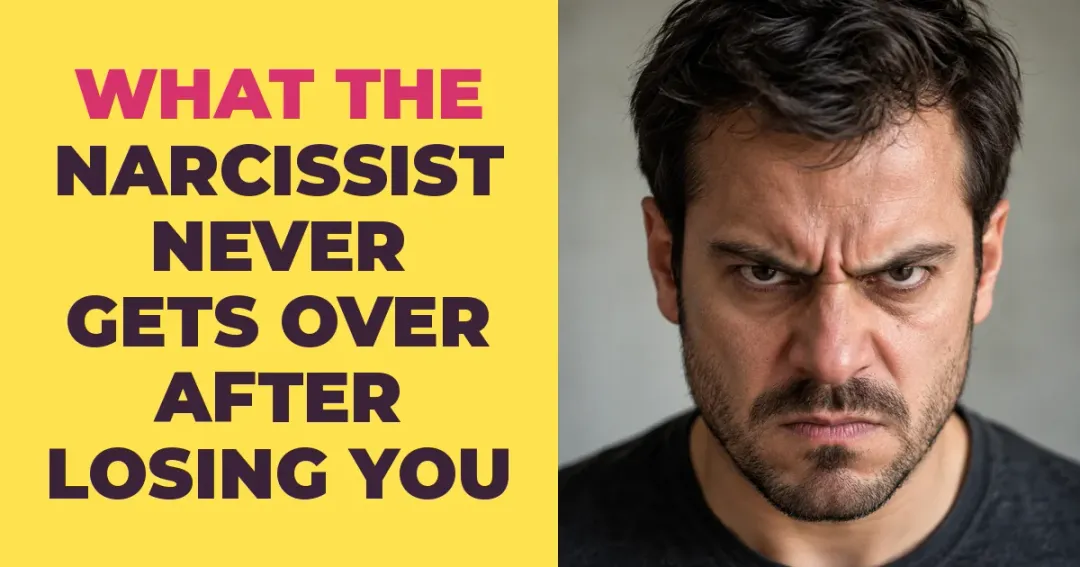
The narcissist doesn’t get over losing you.
Not in the way you hoped, though.
They rarely miss you, the real person. What stays with them is what your leaving did to their picture of themselves.
Here are 9 things the narcissist never gets over after losing you.
Why losing you hits so hard
With a narcissistic pattern, feeling good about themselves usually depends on other people keeping the praise coming.
You were a big part of that praise.
Psychologists who studied threatened egotism saw something telling. Reject or insult a narcissist, and the anger tends to go straight at whoever they hold responsible.
Guess who that is now?
#1 You left before they could discard you

In their story, they were always supposed to be the one who leaves.
Many women describe the same arc: the pedestal, the criticism, then the cold drop. It’s a popular description, not a diagnosis, and research on charm turning into rivalry backs its shape.
Except this time you stepped off first.
Being rejected is the kind of hit that sparks anger far bigger than the moment. So your calm goodbye text gets back three furious paragraphs. “You’ll regret this. Nobody else would put up with you.”
That reaction is about the bruise to their image. It was never proof you got it wrong.
If the anger turns into threats, your safety comes first.
Every time.
#2 They lost their favourite mirror

You were the mirror that told them they were brilliant, every single day.
Think about how it went. You laughed at stories you’d heard ten times. You praised a promotion they’d inflated. You said “You’re right” just to keep dinner calm.
Every bit of that fed them.
Their sense of who they are leans on applause from outside. People around them end up as either fans or threats.
See also 13 Reasons Trusting The Narcissist Always Backfires
So when you go, they lose a reflection more than a partner.
No wonder it felt like your job was to reflect them, while anything you needed got treated as a nuisance.
You were a whole person the entire time.
#3 The mask doesn’t work on you
You’re the one person who has seen what happens after the guests leave.
Charming at the party. Silent and icy in the car home. Friends kept telling you how lucky you were.
Many narcissists pour a lot of effort into how they look in public, because being admired props up how they feel inside.
Your leaving cracks that image. You know the private version.
That’s why their story often gets out before yours does. “She’s unstable.” “I did everything for her.” Mutual friends go oddly quiet.
You don’t have to defend your name to everyone. Act the way you always do and let time show who’s who. If it touches work or custody, keep records.
The mask is for the audience. You saw the face.
#4 Now they have to do it all themselves
The life that ran so smoothly was running on your unpaid work.
You booked the dentist. You sent the card on their mother’s birthday. You covered the bills they “forgot” and smoothed things over with their boss.
Entitlement is a quiet certainty that they’re owed extra and the rules are for other people. So your effort felt like rent you owed them.
Now the fridge is empty. The excuses have nowhere to land.
That’s why asking for fairness used to feel like starting a war.
You gave more and got less.
You can stop forgiving before they’ve even said sorry. Their mess is theirs now. Overdue, isn’t it?
#5 Watching you do well eats at them
Your good news was never safe with them, and it still isn’t.
Think back. The new job got a shrug and a “Must be nice!” Your birthday somehow turned into a row about them.
See also The One Thing Narcissists Do So You’ll Never Find Closure
Envy turns up often in narcissism, research suggests, and more in the quiet, fragile form. Your shine threatens their need to feel on top. So your win gets shrunk, stolen or spoiled.
Research on rivalry adds a twist: your gain gets counted as their loss.
So a new job, a trip, a laugh in a photo can land on them like a defeat.
You learned to hide good news. Tell it to the friends who cheer.
Who goes quiet when you win?
#6 They keep checking if the door is open
A narcissist often comes back around right when you’ve started to feel free.
“I miss you.” “I’ve changed, for real this time.” A sudden emergency only you can fix. A message on your anniversary.
Lots of women know this as hoovering. It’s an internet word, not a clinical one, for pulling you back after a breakup.
It runs on hope. Psychologists who study intermittent reinforcement describe how kindness you can’t predict, mixed in with coldness, hooks harder than kindness that stays steady.
It also tends to turn up when they want something or sense they’ve been replaced.
If old hope rushes back, that’s a known pull, not a flaw in you. Decide now how you’ll answer, and go by what they’ve done, not what they promise.
What did the last promise turn into?
#7 In their version, they’re the victim

Being left doesn’t fit their self-image, so they rewrite who hurt whom.
Suddenly they’re the wounded one. Sad posts. Long sighs to anyone who’ll listen. “I gave her everything and she just walked out.”
Researchers describe a loud, showy narcissism and a quiet, touchy one, and many slide between the two. The quiet side sulks, tallies every slight and goes straight to victim mode when challenged.
Both guard a self-image that cracks easily.
One shows off. The other feels wronged.
So you get blamed for their disappointment, and you end up replaying old fights, wondering if you were the cruel one.
See also Why Narcissists Pick Fights for No Reason at All
Here’s one way to tell. Did an apology from them ever come without conditions?
#8 Guilt doesn’t work on you anymore
Their strongest lever was your guilt, and it has stopped working.
“After everything I’ve done for you.” “If you leave, I don’t know what I’ll do.” For years, those lines turned your no into a yes.
There’s a popular nickname for this: FOG. The letters stand for fear, obligation and guilt. It isn’t a formal term, but it sits next to something researchers do study, coercive control, where a pile of tiny rules and punishments slowly eats your independence.
Threats. Reminders of old favours. Guilt trips. Each one raised the price of a no until giving in looked cheaper.
Now there’s a pause before you answer. That pause is new.
Their feelings are real. They also belong to them.
Not your job anymore.
#9 You stopped giving them a reaction
What they can’t stand most is a version of you who doesn’t react.
The bait still comes. A dig about your weight. A jab at your new friend. A text built to start round forty.
You answer “Okay.” Or only about pickup times. Or not at all.
The internet name for this is grey rock. When contact can’t be avoided, you go dull and flat, like a stone on a path. The stricter option is cutting contact completely.
Each flat reply hands them less material. It may also help the trauma bond fade, that pull researchers have studied, built from cycles of hurt and kindness.
The first weeks can feel like withdrawal. Calmer days come later. If they might escalate, a safety plan matters more than any strategy.
Their show needs an audience. You walked out.
If you’re waiting for them to admit what they lost, you could wait a very long time.
What they can’t get over is theirs to carry.
Yours is quieter and better: your evenings back, a phone that stays silent, and your own version of what happened.