A narcissist doesn’t need to raise a hand to change how you think.
You replay a conversation and can’t tell which version is true. You rehearse a simple question three times before you ask it. You jump when a door closes.
Then you wonder what’s wrong with you.
Nothing is.
Living with this pattern reshapes how you recall, decide and react. Slowly. Quietly. Usually without you noticing until you feel like a stranger in your own head.
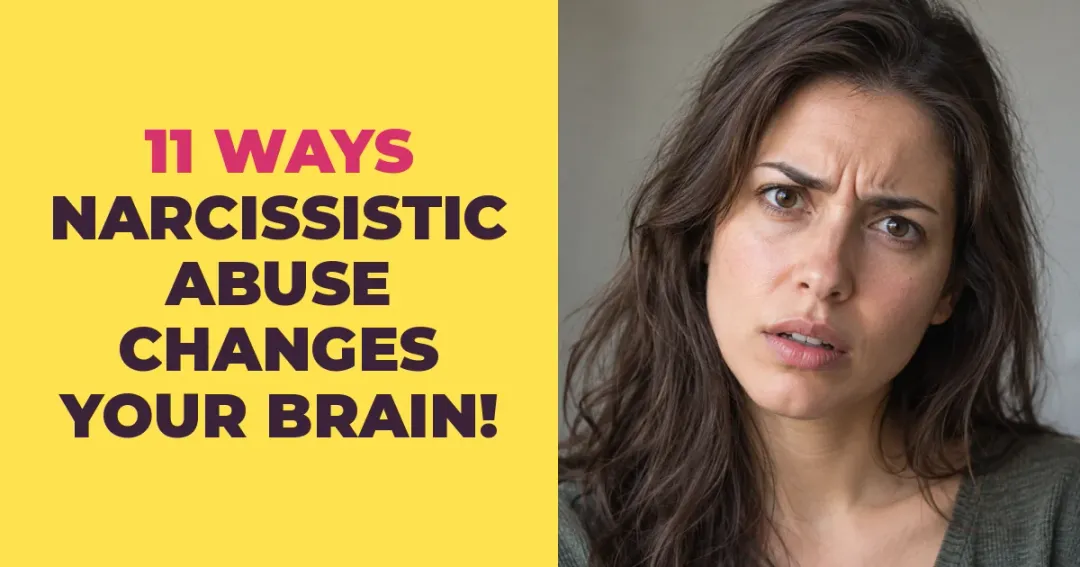
Here are 11 ways narcissistic abuse changes how your brain works, and why each one makes sense.
Why your mind adapts
Think about what your days have asked of you. Watch their mood. Guess the right answer. Doubt what you saw.
Someone keeps rewriting the story, and their anger arrives without warning. Your body learns to stay braced. Your mind learns to second-guess itself.
Every change below started as a way to cope.
#1 Your memory stops feeling like yours

When someone keeps rewriting what happened, your memory starts losing every argument.
You know they said it. Saturday, in the kitchen, while you loaded the dishwasher. Then comes the flat stare: ‘That never happened. You’re too sensitive.’
Psychologists call this gaslighting. It thrives where one person holds more power: you trust them, and they own the official version of events.
So you start keeping notes, just to be sure you’re not imagining it. Write it down the same day, somewhere they can’t see, then run it past a friend who isn’t involved.
Your notes don’t argue back.
#2 You edit every sentence before it leaves your mouth
When one wrong word can start a fight, you edit every sentence before it’s out.
You ask a simple question about the electricity bill. Somehow it turns into an hour of ‘So now I’m useless?’
Research on threatened egotism points the same way. Bruise a narcissist’s image, even by accident, and the anger tends to land on whoever they hold responsible.
See also The Creepy Things Narcissists Do When Nobody Is Watching
You rehearse. You trim. Then you go quiet.
Soon you’re saying sorry for things that were never yours to own. Short and factual is enough. When it isn’t safe, silence is allowed.
#3 Tiny choices start to feel huge

If someone else makes all the rules, even choosing lunch can feel like a test.
Coercive control is rarely one dramatic scene. It’s a pile of little rules: what you spend, what you wear, what you eat, who gets your time. ‘Why did you buy that?’ ‘Who said you could go?’
Before long you’re checking in before ordinary things, and freezing in the supermarket aisle over which bread to buy.
A small stash of your own money and a few numbers they don’t control can help. A domestic abuse service can talk through safety with you.
You’re not indecisive. You’re out of practice.
#4 Your body hears the keys first
When anger can come from nowhere, your body learns to never fully switch off.
You can read their mood from the sound of keys in the door. The way the bag hits the floor. How long the car sits in the drive before they come in.
A cupboard slams. You flinch. Nobody else does.
Psychologists call this hypervigilance, a constant watch for the next storm. It kept you ready. It’s also exhausting.
When the jolt comes, notice the alarm in your body and slow down. Your body was doing its job.
#5 Yes leaves your mouth too fast
Guilt, fear and obligation can make yes come out before you’ve even thought.
‘After everything I’ve done for you?’ One line, and your plans for Saturday quietly disappear.
People online call it FOG: fear, obligation and guilt. There’s no official definition. It’s a nickname for emotional blackmail, where refusing feels more expensive than caving, and it sits close to what researchers call coercive control.
Soon their moods feel like your job.
Try a pause. ‘Let me get back to you.’ Six words that give your own mind a vote.
See also Do These 3 Things and a Narcissist Will Start to Respect and Fear You
#6 Good news starts to feel dangerous

Your wins can feel like a threat to a narcissist, so you learn to keep them small.
You got the promotion. You tell them over dinner. They shrug, check their phone, then pick a fight about the dishes.
Envy shows up often in narcissism, more so in the quiet, touchy version. When you shine, they feel smaller, so your moment gets shrunk or spoiled.
So you hide good news. Birthdays feel tense.
Watch who falls silent when something goes right for you. Then take your next win to someone who actually cheers.
#7 Two truths fight inside your head

Loving someone who hurts you forces your mind to hold two clashing truths.
‘They love me.’ ‘They hurt me.’ Both feel true.
Psychologists call this cognitive dissonance. The clash is so uncomfortable that your mind hunts for excuses: ‘They had a hard childhood.’ ‘Work’s been stressful.’ Then there’s the time you’ve put in. Walking away can feel like throwing those years in the bin.
No wonder you argue with yourself all day and feel like you’re going crazy.
Try listing the facts of a fight, with no explanations attached. That feeling of madness? It’s the clash talking.
#8 The good days hook you deeper
Kindness you can’t predict grips tighter than kindness you can count on.
Monday they’re cold. Wednesday they bring your favourite coffee and kiss your forehead. You never know which version is coming home.
Psychologists call this intermittent reinforcement. Rewards that turn up at random are the toughest habit to break. Slot machines run on the same trick.
One rare sorry lands like a big win.
The sweet days cover for the cruel ones. So tally both this month and look at the average, not the highlight. What would it say?
#9 What you want goes quiet
When your whole day revolves around their needs, your own wants go silent.
You fix their problems first. You cover for them when they let others down. Then you sit for ten minutes and feel guilty for resting.
See also 12 Things About You That Narcissists Resent
Lots of people use the word codependency here. It’s an everyday label, not a medical one. It means your life bends around their moods while yours wait.
It ties in with what psychologists call fawning, keeping the peace by keeping them happy. Looking after them feels safer, and someone this self-focused is glad to let you.
Each morning, put one question first: what do I want today? And this week, let them handle one mess of their own.
#10 Their public charm makes you doubt yourself

The partner everyone admires in public can be someone else entirely at home.
At the party they’re funny and attentive, topping up your glass. In the car home, silence. Or worse.
Your friends say, ‘You’re so lucky.’ Nobody believes you, and slowly you stop believing yourself.
A narcissist may pour a lot into how they look to others, since being admired props up how they feel about themselves. Kind out there, cruel in here: that gap is the tell. Find one person who has seen both versions.
Believe what happens when the door shuts.
#11 Not seeing it was protection

Your mind can hide a betrayal when seeing it would cost you too much.
Then one day it ends, and suddenly it’s all so clear. The lies. The late nights. The things everyone else noticed.
And the shame hits: ‘How did I miss it?’
Psychologists call this betrayal blindness. If you rely on someone, your mind may quietly look away from proof they’re betraying you, because seeing it would put the bond at risk.
Your mind was guarding you. Talk to yourself about what you missed the way you’d talk to a friend who missed it too.
Every change on this list made sense where it started. Staying alert. Saying yes fast. Doubting yourself before they could. Those were ways to get through.
When your memory feels shaky, check it with someone outside the relationship. Talk to one person you trust about what’s been happening, in a way that feels safe for you.
Your memory deserves a second witness.