A narcissist often competes with you instead of cheering you on.
So you get the sigh when you share good news. The joke about your friends. The cold car ride home after you said something true.
Your wins can threaten their need to feel superior. So the best parts of you get shrunk, copied or spoiled.
None of that is your fault.
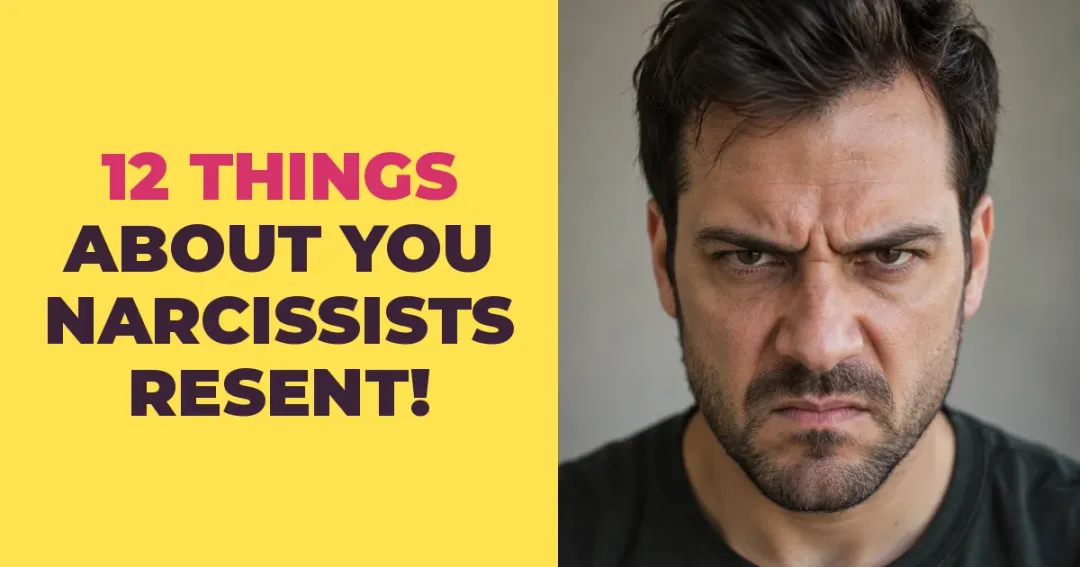
Here are 12 things about you that narcissists resent, what each looks like in real life, and what helps.
Why the good in you feels like a threat
Psychologists who study narcissistic admiration and rivalry see two sides. At first, charm pulls people in. Later, rivalry wins out, and protecting status means cutting others down.
That’s the switch you felt.
Envy adds fuel. When you do well, a narcissist’s need to feel above you takes a hit, so your win may get shrunk, stolen or spoiled.
So nothing below is a flaw. Each one is a strength they’d rather you didn’t have.
#1 Your happy days get spoiled
Your happiest days are often the ones a narcissist manages to sour.
You share the promotion news in the kitchen. A flat “Good for you,” then a question about dinner. Your birthday ends in a fight about nothing.
Envy is common in narcissism. Your good fortune pokes at their need to feel superior, and a sour reaction cuts it down to size.
Soon you hide good news. Happy moments feel risky.
Notice who goes quiet when you win. Then celebrate with someone who claps.
#2 Talent turns you into a rival
Being good at something can turn you from partner into competition.
You bake, paint, run a team or fix anything with a screwdriver. Instead of help, you get a contest. They pick at the one flaw. “It’s fine. Shame you’ll never make money from it.”
Psychologists who study narcissistic rivalry describe this. A partner competes with you instead of supporting you.
See also 7 Odd Things Narcissists Do After Dark
Early on, they were your biggest fan. So you keep chasing the person you met at the start.
Who in your life is actually glad when you’re good at things?
#3 Friends look like competition to them
Your friendships often get picked apart, one cutting remark at a time.
Before girls’ night, the sighing starts. “Your friends don’t even like me.” Afterwards comes a dig about one friend’s laugh or another’s divorce.
Belittling your friends is a common face of envy. For some, it goes further: tracking who you see and deciding who’s allowed. Research calls that pattern coercive control.
Each rule is small. Together, your world gets smaller.
Keep a few people and contacts that are just yours. Who have you stopped texting back lately?
#4 Caring for others makes them sulk
Your care for other people can leave a narcissist sulking in the corner.
Your mum is in hospital, so you’re on the phone all evening. They go silent. Later: “Nice to know where I rank.”
Researchers describe a quiet face of narcissism: touchy, resentful, self-pitying. It sulks when it isn’t noticed and keeps score of slights. An evening of your attention going elsewhere can end up on that scoreboard.
So you tiptoe. And somehow their disappointment becomes your fault.
Watch how they act when they aren’t the centre of attention. Then keep caring anyway.
#5 Your ideas end up as theirs
Your best ideas have a funny way of turning into theirs.
You mention starting a podcast, or a new layout for the garden. Two weeks later, they announce it to friends as their plan. “I’ve been thinking about this for ages.”
Envy often shows up as resentment of someone else’s good fortune. When your success threatens their need to feel superior, it can get stolen, copied and claimed first.
So you start keeping plans to yourself.
Try the next one on someone who’s on your side. How does that feel?
See also 6 Things That Happen as Narcissists Age
#6 Being right is what they punish
Being right in front of others can cost you for days.
At dinner with friends, you gently correct a date they got wrong. They laugh it off. Then silence in the car. Then, on Tuesday, a fight about the dishwasher that’s really about dinner.
Studies of what’s called threatened egotism found that insulted narcissists hit back harder, aiming at the person they blame. To them, a correction can feel like an insult.
So you start editing every sentence before you say it. If you correct them at all, make it brief and plain, or skip it when it feels unsafe.
When anger tips into threats, get out of the room and reach out for help.
Being right was never your mistake.
#7 Saying no feels like an attack
Your “no” can feel like a personal attack to a narcissist.
“You can’t skip my work thing. You know how important it is.” Your plans were made weeks ago. Somehow theirs still win.
That’s entitlement at work. To them, everyday limits feel like a slap, so a perfectly normal ask from you sounds like aggression.
So you start agreeing before they even finish asking. Pre-agreeing feels safer.
Notice how often your yes comes out on autopilot. Your plans count too.
#8 Shining in a crowd makes them cold

When people warm to you, a narcissist may cool on you.
At the barbecue, everyone laughs at your story. On the drive home: “You were a bit much tonight, weren’t you?”
Narcissists chase admiration, and many envy others who get it. Research on narcissistic rivalry describes them belittling whoever outshines them.
So you shrink at parties. Quieter jokes, shorter stories.
You weren’t too much. You were liked!
#9 Asking to be paid back starts a war

Asking for what you’re owed can feel like declaring war.
You lent them money in spring. You mention it in October. “Seriously? After everything I pay for?”
See also 7 Reasons You’ll Never Get an Honest Answer From a Narcissist
Psychologists call this entitlement: a steady belief that they deserve more and that rules are for everyone else. Money and favours often flow one way.
You give more and get back less.
Keep a quiet record of what you give. Stop pre-paying and pre-forgiving. Wanting fair isn’t greedy.
#10 A life of your own bothers them
A life that isn’t about them is hard for a narcissist to accept.
You lose an afternoon in the garden, the choir, a good novel. They hover. “Must be nice to have so much free time.”
At the heart of the narcissistic pattern is self-worth that needs constant topping up from outside. So the people around them become either fans or threats.
An hour spent happily on yourself is an hour nobody spends reflecting them back. And your needs start to look like a nuisance to them.
They aren’t. Keep the hobby.
#11 Speaking up gets flipped on you
When you speak up, a narcissist often flips it until you’re the one apologising.
You mention the hurtful comment from last weekend. Ten minutes later, you’re hearing about the time you forgot their mum’s birthday three years ago.
There’s a name for this move: DARVO. It stands for deny, attack, reverse victim and offender. Studies show it leaves whoever spoke up feeling more to blame.
That’s why it shuts the talk down so fast.
Bring it back to what you first raised. The counter-attacks don’t each need a reply. What changes when you let them go?
#12 Calm leaves them nothing to grab
Your calm leaves a narcissist with nothing to grab onto.
They poke the old sore spot. “Crying again?” Once, you’d have argued for an hour. This time you say “Okay” and keep folding laundry.
Some people get a kick out of your discomfort. Researchers have a name for it: everyday sadism. Your flinch is the prize.
Grey rock is a popular term for going flat and boring when you can’t get away from contact. It won’t win you anything, but it stops feeding the fight, and it isn’t safe in every situation.
Notice if your upset seems to please them.
Your good qualities were never the problem.
They’re the parts of you that a narcissist’s need to feel superior often can’t tolerate, so they get cut down.
Start small. Pick one person you trust and tell them everything. And be gentle with yourself about how long it took to see.