The narcissist can say “I love you” and mean almost nothing by it.
You’ve felt that gap. The words are warm. The way you’re treated is cold.
One week you’re adored.
The next, what you need gets brushed off like a nuisance, and somehow the shift is your fault. So you replay conversations at 2 a.m., trying to work out which version is real.
You’re not imagining it.
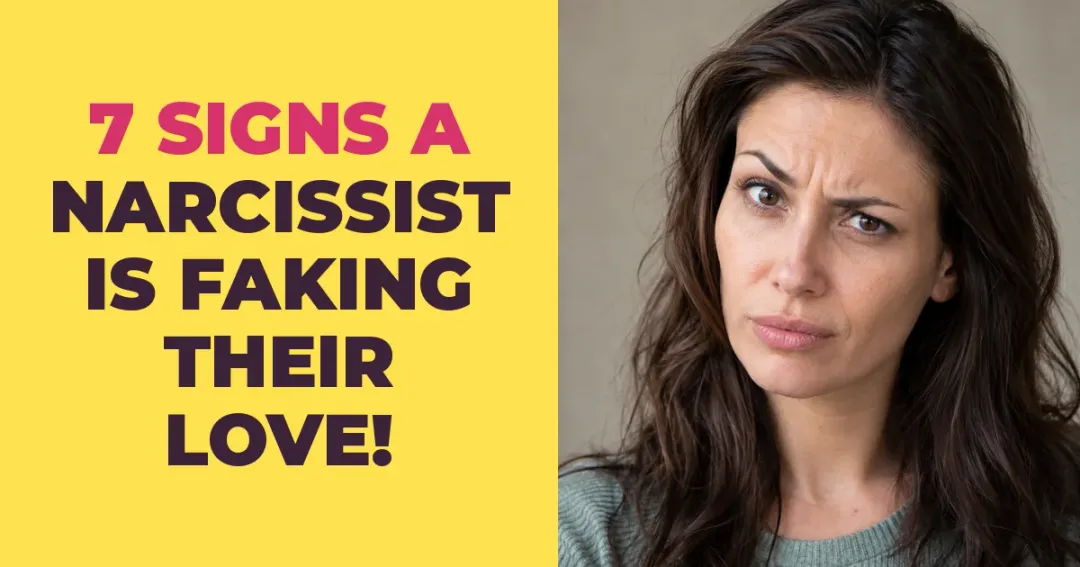
Here are 7 signs a narcissist is faking their love for you, and what each one looks like up close.
#1 They loved you fast, then went cold

The first month gave you everything, and it was built to make you stay.
Good-morning texts before you’d opened your eyes. Flowers at work. Talk of a trip to Italy, a shared flat, maybe a dog, all in the first month.
“I’ve never felt like this about anyone.”
Psychologists call this love bombing. All that speed glues you to them early, long before a bad day shows you who they are under pressure.
Then the temperature drops. Research on narcissistic admiration and rivalry maps this switch. At first they win you with charm. Later, putting you down starts to matter more to them than impressing you.
Now a joke about your cooking stings. A flat “Whatever” replaces the long messages they used to send.
And you’re left hunting for the version who showed up in month one. Was that person ever real?
#2 Their promises keep getting pushed back
Their promises sound like love and rarely turn into anything real.
The holiday you’d “definitely book after this busy patch.” The wedding date that keeps sliding. The visit to your mum that gets moved and never rescheduled.
Ask about it and you get a sigh.
“Why are you always pushing me?”
There’s a popular name for it: future faking. It isn’t a formal term. Research on game-playing love points the same way, linking narcissism with lower commitment and keeping you at arm’s length.
See also 5 Things You Should Do Right Away After Leaving a Narcissistic Relationship
Plans hook you. The more of yourself you pour into that imagined house or trip, the more leaving starts to feel like throwing it all away. So you keep waiting. And somehow you’re the difficult one for asking when.
A simple check: count what’s actually happened. Not what was said. What’s on that list?
#3 They’re sweetest when someone is watching
A narcissist often saves their best love for an audience.
At your sister’s barbecue, they refill your drink, rub your shoulders and laugh at your stories. Your friends text later: “You’re so lucky.”
Then the car door shuts. Silence.
Research on impression management explains the gap. We all tidy ourselves up in public. A narcissist puts far more into the show, because being admired is what keeps their self-worth topped up.
The warmth was for the room. Not for you.
That’s why your hints land on blank faces, and why you start second-guessing your own memories. They saw someone lovely. You saw the car ride.
Believe the version you get at home. That’s the one living with you.
#4 Affection arrives only as a reward
Their affection comes like a prize you never know how to win.
Tuesday they’re cuddling you on the sofa and planning Sunday brunch. Wednesday they barely look up from their phone, and you can’t find a reason.
So you try harder.
Psychologists call this intermittent reinforcement. Warmth that shows up at random, between cold spells, hooks you harder than steady warmth. Slot machines run on the same trick.
The rare sweet night after a cruel week feels like a jackpot. That’s the trap.
You pour in more effort and get back less. And one lovely evening makes a rotten week feel survivable.
Try a quiet tally for a month: good days on one side, bad on the other. Then look at the typical day, not the best one. What does yours look like?
#5 Your tears make them change the subject
When you’re hurting, a narcissist often finds something more interesting to talk about.
See also 5 Phrases Narcissists Use to Control You
You finally cry about your dad being in hospital. They nod, glance at the TV, then ask if you’ve seen their charger.
Or worse: “You’re too sensitive. It’s not that deep.”
Here’s what stings. Studies on narcissism and empathy hint that many of them do get how you feel. Left alone, they show little concern. Asked to picture your side, they show more. So it looks less like can’t and more like won’t.
Someone who’s awkward with feelings still tries to help. This is different. They see your pain and look away.
So you go quiet about what hurts. You begin to suspect your reactions are the problem.
They aren’t. Bring your hard days to those who lean in when you speak.
#6 Raise a problem and you end up apologising
Bring up something they did, and you may end up being the one who says sorry.
You bring up the cruel thing they said at dinner. Calmly. You even practised it in the shower.
“I never said that. And how dare you bring this up now, when I’m already stressed?”
Ten minutes later, you’re hearing a list of your faults. Then they’re sulking, and you’re the one comforting them.
Researchers have a name for it, DARVO, short for deny, attack, reverse victim and offender. Studies show it leaves the one who complained feeling more to blame. No wonder the talk ends there.
So you stop raising problems. Who wants that fight?
What helps: say the first issue again, plainly, and keep steering back to it. Skip the bait of their counter-charges. You weren’t wrong to ask.
#7 You may not have been their only option

To a narcissist, love can be a game, and you’re rarely the only player.
The ex they still “just chat” with. The coworker they flirt with across the table while you sit right there. The admirer who likes every photo.
“Relax, she’s just a friend.”
See also 5 Ways Narcissists Quietly Isolate You
Research ties narcissism to treating love like a game. Keep a few doors open. Stay a little distant. Lose interest the moment the chase is won.
Pop psychology calls the ending a discard. It’s not a formal term, but it fits the research: a new person can turn up very quickly.
When it ends like that, the blame tends to land on you, in your own head. It doesn’t belong there. A replacement that arrives very quickly can say how little commitment there was on their side.
Their actions didn’t match what they promised.
If this list felt like reading your own diary, that says something good about you. You were paying attention the whole time, even when you were told you weren’t.
Fake love leaves clues. You saw them.
You don’t have to decide anything tonight. Just start watching what they do across months, not one good or bad night, and weigh their actions over their words. Your memory has been right more often than you’ve been told.