You pulled away, or you finally said no, and something in them switched.
The charm has drained out. What’s left feels cold, busy and pointed straight at you.
A bruised narcissist rarely lets it go.
Maybe your phone keeps buzzing with things they’ve told people. Maybe it’s gone eerily quiet. Either way, the pattern you’re sensing is real.
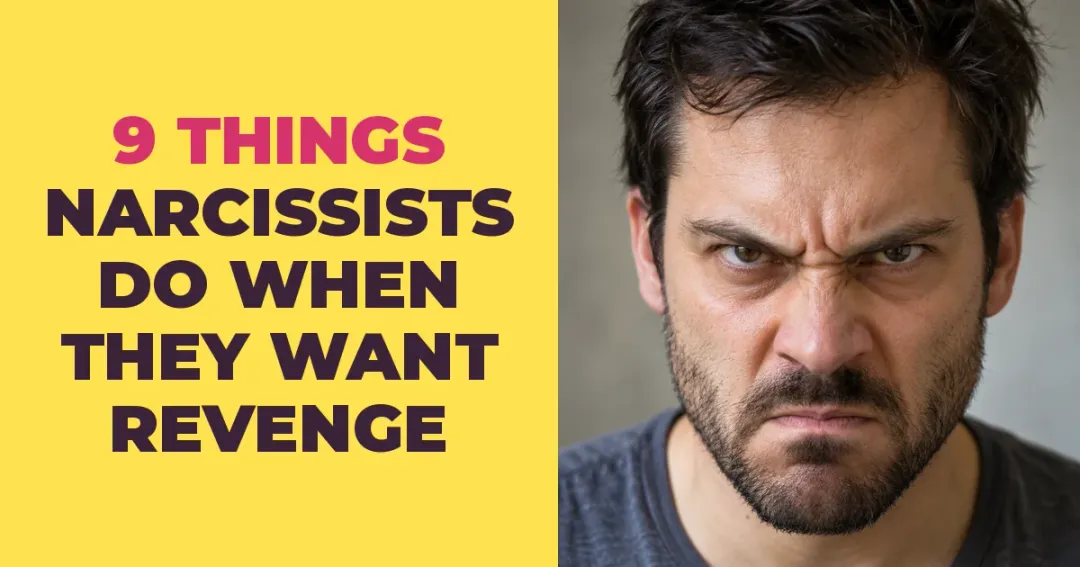
Here are 9 things narcissists do when revenge is all they can think about, and how to spot each one before it knocks you off your feet.
Why your no feels like war to them
There’s a reason the backlash feels so out of scale.
Psychologists studying threatened egotism looked at what happens when a narcissist’s image gets dented by criticism, rejection or being overlooked. The answer: more aggression, pointed at whoever they hold responsible.
Usually, that’s you. Even when your only crime was asking a simple question.
Then there’s entitlement. To someone who believes they deserve more than everyone else, an everyday limit lands as an insult. Your no turns into their motive.
#1 Everyone hears you’re the unstable one
Your good name is often the first target when a narcissist wants payback.
A mutual friend goes oddly quiet in the group chat. Your sister checks on you in that careful voice. Word is you’ve been “really unstable lately.”
Often that story was in motion before you’d even walked out.
The research name for this is relational aggression. It goes after your standing with others, not your body, so it leaves no mark anyone can see.
Suddenly your name needs guarding everywhere, just when support matters most.
You can’t outrun every rumour. Being consistent, week after week, lets time do the arguing. If it touches your work or custody, keep records.
The friends worth keeping will notice.
#2 Silence becomes the punishment
Going silent is one of the coldest ways a narcissist can punish you.
They take their brother’s call, joke with the neighbour, chat to the cashier. You get nothing. For three days.
See also 8 Things Every Narcissist Lies About Without Thinking
Then they wander back in like it never happened.
Why does it cut this deep? Studies on ostracism show that being ignored threatens two basic needs: belonging and mattering. The ache can feel almost physical. No wonder caving looks like relief.
So the apology slips out just to end the quiet. Then whole topics become off limits.
One calm sentence is enough: “I’m here when you want to talk.” After that, carry on with your plans. You don’t follow them from room to room.
Their silence isn’t yours to fix.
#3 Every word is aimed to sting

Contempt is how a narcissist shrinks you inside your own home.
You’re halfway through a sentence about the bills and their eyes roll. Or they parrot your voice back, high and whiny. “Oh, here we go again.”
Then the “joke” at dinner. Everyone laughs. You don’t.
Long-term studies of couples put contempt and stonewalling near the top of the list of things that predict a breakup.
Slowly, you feel smaller under your own roof. Which suits them fine.
When it’s safe, say what’s happening one time, in a level voice: “That’s mockery.” Then watch whether any respect comes back.
You already know how that’s gone.
#4 They know exactly where you bruise
A narcissist often knows exactly how you feel and goes there anyway.
You told them about your dad walking out. About the weight thing. About the dread before work meetings.
Now it gets thrown back mid-fight. “No wonder your dad left.”
Research on narcissism and empathy turned up something chilling. Left alone, they show little of it. Asked to picture your side, they show more. That looks a lot like choosing.
They saw your hurt. They saved it for later.
So you’ve stopped sharing what you feel. You even wonder if your reactions make sense.
Keep your soft spots for those who treat them gently.
#5 Your pain seems to please them
Some narcissists seem to enjoy your discomfort, and you can see it on their face.
See also 7 Creepy Everyday Habits of a Narcissist
They drag up your oldest insecurity in front of friends. “She’s always been a bit paranoid, haven’t you, babe?” Then the smirk as you flinch.
They make you wait. They make you worry. They seem to like it.
Researchers call this everyday sadism and added it to the Dark Triad, turning it into a “Dark Tetrad”. For these people, being cruel is a reward all by itself.
Small wonder home starts to feel like being hunted.
One way to tell: does your upset seem to cheer them up? Teasing that ends when you ask is play. This never ends.
The fewer reactions you hand over, the less they get to enjoy.
#6 Payback arrives days later
Payback from a narcissist can land days after a moment you’ve forgotten.
On Tuesday you corrected their story at a friend’s barbecue. Tiny thing. They smiled.
On Friday they blow up over the dishes, then go ice cold all weekend.
The threatened-egotism studies showed a narcissist hit with an insult tends to turn more aggressive, aimed at whoever delivered the blow. A public correction feels like exactly that blow.
Soon you’re editing every sentence before it leaves your mouth. Apologising for things that weren’t your fault.
Criticism, if you give it at all, works best short and factual. When speaking up feels unsafe, skipping it is a valid choice. And if their anger turns to threats, leave the room.
Your safety comes first. Always!
#7 Suddenly there’s someone new around
Few things rattle you faster than a third person suddenly in the picture.
The ex is “just a friend” again. The new coworker comes up four times at dinner. Or, after a breakup, someone new appears on their feed within weeks.
“At least she appreciates me.”
Psychologists call this triangulation: dragging an outsider into something between the two of you to stir jealousy and rivalry. Research also ties narcissism to a game-playing style of love that keeps the doors open.
See also A Dark Empath Is Something No Narcissist Sees Coming, and It Turns Into Their Worst Nightmare
It’s designed to make you feel easy to swap out.
Suddenly you’re fighting for attention that used to come for free.
Refuse the contest. You never signed up for it.
#8 Threats come dressed as guilt
When revenge is the goal, threats often show up disguised as guilt.
“I gave up my whole life for you.” “Go on then, and see what happens to me.” Then the long, heavy sulk until you cave.
Online, this gets called FOG, which stands for fear, obligation and guilt. It’s a loose label for emotional blackmail, not a diagnosis.
Every line raises the price of saying no until going along feels cheaper. Researchers describe a related pattern called coercive control, where lots of small rules and punishments quietly chip away at your freedom.
Yes starts coming out on autopilot. Their moods become your job.
Let a pause sit between their request and your answer. Their feelings are real, and they’re theirs to manage.
If the threats scare you, that fear matters. Specialist abuse services can talk through safety with you.
#9 Your own people turn on you
Some of the worst payback arrives through the mouths of those you love.
Your aunt rings to say you owe an apology. A friend “just thought you should know” how hurt they are. Someone says you’re “breaking this family.”
Same words. Same script.
There’s a nickname for these messengers: flying monkeys. It’s an internet term, not a clinical one, but research on triangulation describes the same move of drawing outsiders into a fight between two.
Many of them only heard the version where the narcissist was wronged. That’s what makes it so lonely.
Messengers aren’t owed your side. Hold the details close. Your story belongs to you.
The ones who ask what you saw? Those are your people.
If this list sounded like your week, your eyes are working fine.
Revenge like this speaks to their dented ego, not to your worth.
Jot down what happens on the day it happens. Tell one trusted person everything. Let the noise stay theirs.