A narcissist’s sense of worth often leans on outside confirmation: your attention, your admiration, your reflection back to them.
You’ve felt it. The sigh when you make plans. The sneer when you get something right. The way your world keeps shrinking, one small rule at a time.
You don’t have to shout to hit back.
The moves that matter most are quiet ones. They look a lot like getting your own life back.
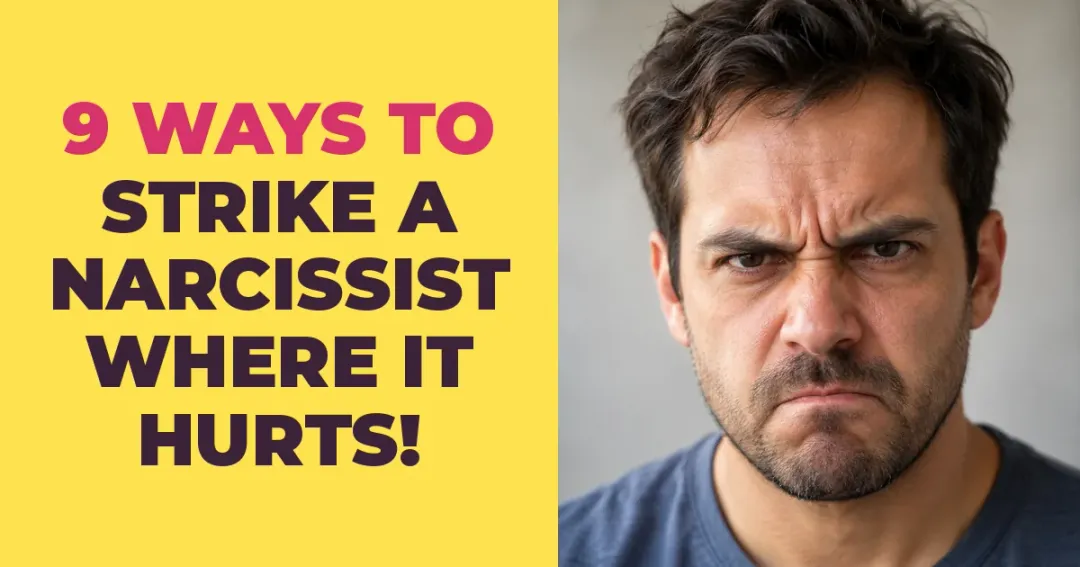
Here are 9 ways to strike a narcissist where it hurts most, without a single fight.
Why quiet moves hit hardest
A narcissist’s sense of worth often depends on outside confirmation. You get treated as a mirror, a fan or a threat.
Control can work on you in its own way. Many small rules about money, friends and time add up until you’re asking permission for ordinary things.
So each piece of life you take back is one less thing under their rules.
A bank card. A Saturday. A friend’s number.
#1 Your memory is yours to trust
Gaslighting only works while you trust their version more than your own.
You know what was said in the car. Then you hear it: “That never happened. You’re too sensitive.” By bedtime, you’re the one apologising.
Gaslighting means making you doubt your own memory so their story wins. Research on it says it works best where power is unequal and they get to control the story.
So take the story back.
Write things down when they happen. The date, the words, how you felt. Keep the notes somewhere they can’t see or check.
Then check reality with someone outside the relationship.
Notes don’t argue. They just sit there, being true.
#2 The plans still happen without them
The silent treatment punishes you until you give in.
Saturday morning. The coffee is made, your bag is packed, and they’ve stopped talking. They answer their mum, the dog, the phone. Not you.
See also The Coldest Responses To Gaslighting That Leave No Space For Manipulation
Being ignored threatens two basic needs: to belong and to matter. Research on ostracism says that’s why it can hurt like physical pain, and why so many give in.
You apologise just to end the quiet. You stay home in case it lifts.
Try this instead. Say once that you’re open to talking. Then go to the market, the class, the lunch.
Don’t chase. Don’t beg.
Your day is still your day.
#3 Friends stay in your life
Isolation is part of how manipulation works, so your friends are a real threat to it.
It starts small. A sigh when your sister calls. “Why do you need them when you’ve got me?” A row after each night out with Jess.
Soon it’s easier to just stay in. The group chat goes quiet. Your world gets smaller and theirs gets louder.
Reconnection is part of how recovery works.
Start with one person. Send one message. Tell one friend a little more of the story than you usually would.
They don’t have to know everything. They just have to be there.
That quiet group chat only needs one message from you.
#4 Your yes stops being automatic
A favour from a narcissist can turn into a debt they collect for years.
They fixed the boiler once. They drove you to the airport once. Now it comes up in half your arguments.
“After everything I’ve done for you?”
FOG is a popular name for this: fear, obligation and guilt. It isn’t a clinical term, and it overlaps with what researchers call coercive control.
Reminders of old favours make saying no feel more costly than giving in. Yes becomes automatic.
So pause before you answer. “Let me think about it” is a full sentence.
Their disappointment belongs to them. Fixing it isn’t your job.
Their mood is theirs to carry.
#5 Some money stays yours
When you have no money of your own, leaving gets harder, and that keeps you dependent.
See also How Narcissists Fall Apart the Moment They Realize You Don’t Need Them
Maybe your pay goes straight into their account. Maybe a new top hides at the back of the wardrobe. “Who said you could buy that?”
Researchers call this financial or economic abuse. Taking your cards, running up debt in your name, never paying back loans, messing with your job.
You feel trapped. By money, of all things.
Couples who budget together aren’t doing this. The sign is one person controlling all the access.
Where you safely can, keep an account of your own and your own records. Check your credit report too.
A domestic abuse service can help you think through money and safety, quietly and on your terms.
Your money isn’t a privilege they hand out.
#6 Hobbies they mocked come back
The things you loved before this relationship are still yours to pick back up.
The guitar in the cupboard. The running shoes. The sketchbook you dropped after “Bit old for colouring in, aren’t you?”
Maybe you didn’t lose interest. Maybe the room to be yourself got smaller.
Research on self-compassion says treating yourself as kindly as you’d treat a friend lowers shame and self-blame, two of the heaviest after-effects of manipulation.
Reconnecting with old interests is one way that kindness shows up.
Start tiny. Ten minutes. Something that’s just yours, done for nobody’s approval.
Let them roll their eyes. You’re busy.
#7 You keep chasing what you want

Your good news can feel like a threat to someone who needs to feel superior.
You got the job. They go quiet, then pick a fight about the dishes. Or your birthday dinner somehow ends in tears.
“Don’t get too big for your boots.”
Research links narcissism with envy. Your success threatens their need to feel above you, so they shrink it or spoil it. To them, your gain is their loss.
So you start hiding the wins. Happy moments feel risky.
Do it anyway. Take the course, go for the promotion, and share the news with people who are glad for you.
See also 10 Things Narcissists Say About You When They’re Sure Nobody Is Listening
Notice who goes quiet when you win.
#8 Their labels say more about them
The names a narcissist calls you are often a description of themselves.
They shout, then tell you you’re angry. They take and take, then call you selfish. They lie, then call you a liar.
Psychologists call this projection. Seeing an unwanted trait in you lets them avoid seeing it in themselves.
Meanwhile you’re at the kitchen table at midnight, defending yourself against things you never did. Nobody can say what the fight was even about.
Try a different reading. Treat repeated accusations as information about them.
State the facts once. Don’t over-defend.
“You’re so selfish” might just be a confession.
#9 Calm gives them nothing to feed on

Your reaction can be the reward, so a flat face takes it away.
They bring up your weight at dinner with friends. They smirk when your eyes fill. “God, I’m only joking.”
Researchers describe everyday sadism: some people find others’ discomfort rewarding in itself. Notice if your distress seems to please them.
Grey rock is a popular name, not a clinical one, for staying dull and unreactive when contact can’t be avoided. Fewer reactions give them less to work with and can help the bond fade.
Short answers. Facts only. A shrug.
It won’t win you anything. It just stops feeding the fight, and it may not be safe with someone who escalates.
What would they have left to play with?
None of this needs a confrontation. It happens in your bag, your bank, your group chat, your Saturday.
If any of it feels unsafe to try, that’s real information, and a domestic abuse service can help you plan around it.
Pick one. The notebook, the coffee with a friend, the pause before yes. Start there.