Some days you barely recognise yourself.
You used to laugh louder. Make plans. Say what you thought without rehearsing it first.
Nobody took any of it in one go. It went a little at a time, while you were busy keeping the peace.
That’s how control often works. The pieces are small enough to explain away, every single time.
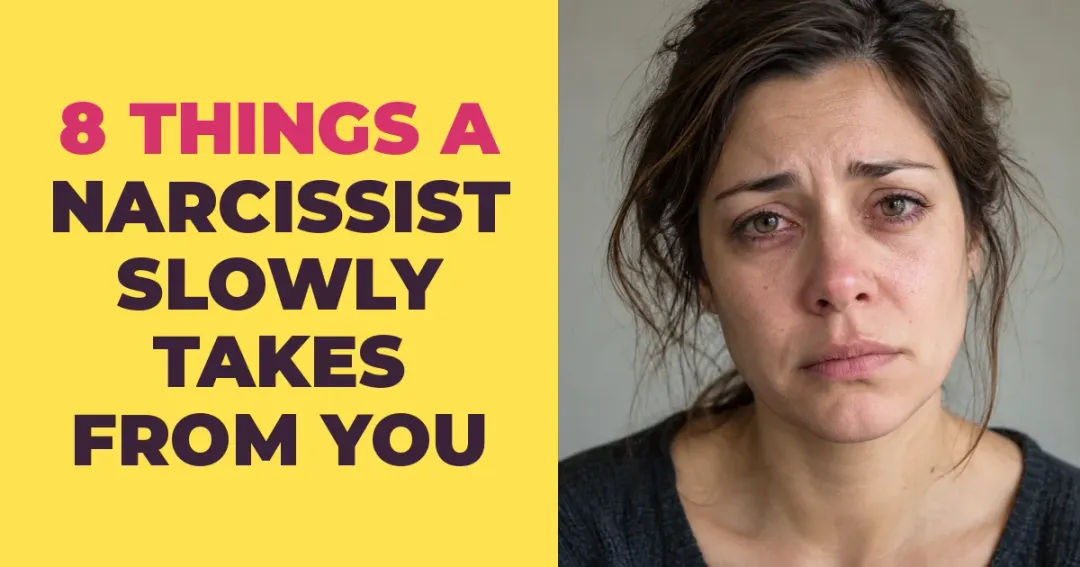
Here are 8 things a narcissist takes from you so slowly you only notice once they’re gone.
Why it never feels like theft
Nothing big goes missing on a single day. That’s the trick.
Control often works through many small rules and small punishments. That’s why it’s so hard to point to one big incident.
The good days muddy things as well. When warmth turns up at random, between cold spells, it grips tighter than warmth you can count on. One sweet evening can make a rotten week seem survivable.
So the losses pile up quietly. Here’s what tends to go.
#1 You stop trusting your own memory
A narcissist can wear down your trust in your own memory one argument at a time.
You know what they said. You heard it in the car on the way home. Then comes the calm, flat answer: “That never happened.”
Then the follow-up. “You’re too sensitive.”
By the third time, you’re not so sure anymore.
Psychologists call this gaslighting. It works best when the power is unequal, because your trust in them gives them room to rewrite what happened.
So you start keeping notes on your phone. You apologise when you were the one who got hurt. Writing things down as they happen helps, and so does checking with one person outside the relationship.
Those notes are you holding on to what’s real.
#2 Bringing things up gets too expensive
Every time you raise a problem, it somehow ends with you apologising.
You mention the money they said they’d pay back. Within a minute it’s “I never did that, and how dare you accuse me.” Then comes the list of everything wrong with you.
See also Victims of Narcissistic Abuse Feel The Most Stress When The Narcissist Does These 8 Things
Then the sulking, until you’re the one comforting them.
Research has a name for this: DARVO. Deny, attack, reverse victim and offender. It makes the person who spoke up blame themselves more, which is exactly why it shuts the conversation down.
Add an eye-roll, or a walk-out mid-sentence, and you learn fast.
So you stop bringing things up. Not because they’re fixed.
One way back is to name the original issue and keep returning to it, without arguing the counter-attack point by point. What was the thing you actually came to say?
#3 Good news starts to feel risky
A narcissist can treat your good news as their bad news.
You get the promotion. You text them first. The reply is “Cool.” Later that night, a fight about the dishes comes out of nowhere.
Or your birthday ends in tears. Again.
Research links narcissism with envy. Your success threatens their need to feel superior, so they shrink it, steal it or spoil it. In their eyes, your gain is their loss.
So you start hiding things. The raise. The compliment. The idea you were excited about.
Happy moments begin to feel like something to get through.
Notice who goes quiet when you win, and take your wins to people who are glad for you. Your good news deserves a better audience.
#4 Your world gets quietly smaller
Control rarely arrives as one big rule. It arrives as a hundred small ones.
“Do you really need to see her again?” “Why did you spend that?” “Text me the second you get there.”
Each one sounds almost reasonable on its own.
Researchers call this pattern coercive control. Rules about money, friends, clothes, food or time, plus little punishments for breaking them, add up to a slow loss of independence.
Your Saturdays shrink. Your group chat goes quiet.
Then one day you catch yourself asking permission to buy shampoo. Keeping some money and contacts of your own helps, and a domestic abuse service can talk you through safety planning.
See also 10 Ways Survivors of Narcissistic Abuse Let Go of Stress
Your life was never theirs to run.
#5 Your feelings go back in the drawer

Many narcissists can read your hurt perfectly well. They just don’t do anything with it.
You finally say how much that comment at dinner stung. They start talking about their own day.
Push it, and you hear the line: “You’re being dramatic.”
Research on empathy in narcissism found something telling. Left to themselves, they showed less of it. Asked to imagine the other person’s side, they showed more. So the gap looks less like a missing ability and more like a choice.
Notice how warm they can be with the neighbours.
So you go quiet about what hurts. Then you begin second-guessing whether it should hurt at all.
Bring your hurt to the friends who lean in when you talk. They exist.
#6 The alarm in your body never switches off
Living with unpredictable anger trains your body to stay on alert.
You hear keys in the door and you already know the mood. Your shoulders are up before they’ve said a word.
You say yes before you’ve thought. You say sorry for the weather.
This is what’s described as hypervigilance and fawning. Your body learns to scan for danger, then calm it down by agreeing and appeasing.
It kept you safe. It also wears you out.
That exhaustion isn’t laziness. It’s the cost of being on guard all day.
When you feel the alarm go off, slow down, and practise small no’s in safe places. Start with “no thanks” to the waiter.
#7 That future they promised keeps moving
A narcissist can keep you holding your breath for a life that keeps getting postponed.
The holiday in spring. The move. The ring. “Once work calms down, babe.”
The date slides. Nothing gets rebooked. Mention it months later and you get, “When did I ever say that?”
Online, people call this future faking. It’s a community label rather than a clinical one, and it lines up with research tying narcissism to treating love as a game, with commitment kept low.
See also What a Narcissist Does the Second You Fall Apart That a Loving Partner Never Would
Why does it hold you so well? Every plan is something you’ve invested in. Walking away starts to feel like throwing that imagined life in the bin.
So the waiting stretches on. Asking starts to feel like nagging.
Look at what has really happened, not what was promised, and pick your own dates. Which plan could you book for yourself this month?
#8 You forget what you actually want
After enough time orbiting their needs, your own wants go silent.
A friend asks where you’d like to eat and your mind goes blank. Without thinking, you’re picturing their face first.
Over-giving, or codependency, is a popular name for organising your life around someone else’s moods. It’s not a diagnosis. It overlaps with what researchers call fawning: pleasing others to stay safe.
A self-focused partner rewards it. You fix their problems first and feel guilty when you rest.
Losing track of what you want is one of fawning’s quietest costs.
Try asking what you want before what they need. Keep it small: the film, the radio station, your side of the bed.
Your answer is still in there.
Nothing on this list went missing because you were weak. It went in pieces small enough to miss.
And things taken in pieces can come back in pieces. One honest note. One friend who gets it. One small no.