Narcissists rarely hurt you in one big blow.
It’s the small things. The broken plan. The silence. The story about yourself that you hear secondhand.
You end up tense all the time, and you can’t always explain why to anyone, including yourself.
That isn’t you being dramatic.
Here are 8 things a narcissist does that stress you most, what’s behind each one, and something that helps.
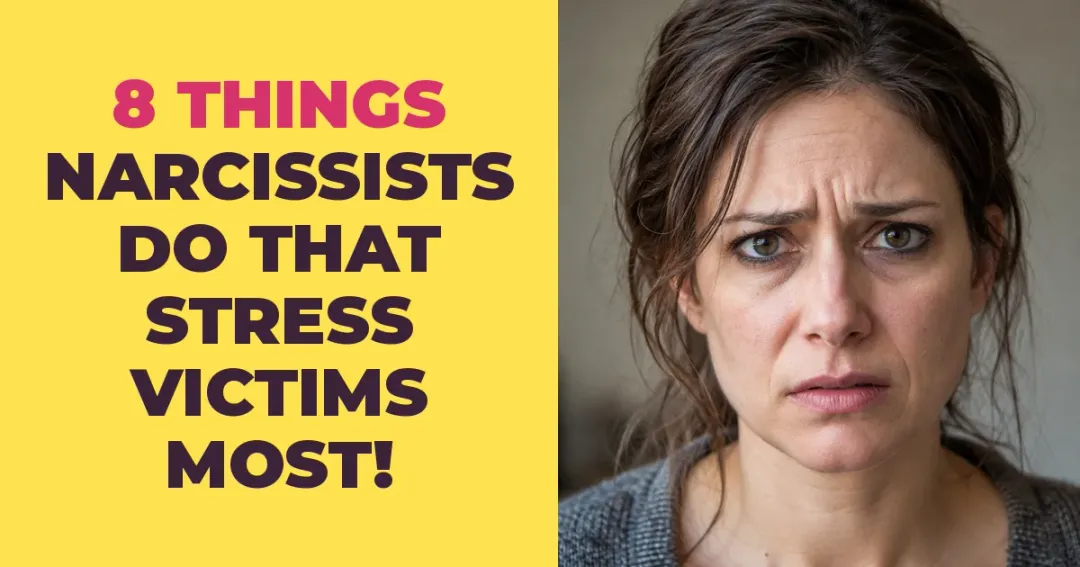
Why your body never relaxes
Research on fawning and hypervigilance points to something simple. When anger can show up at any moment, your body learns to stay switched on. You read their face, their tone, the way the keys hit the counter.
You say yes before the thought is even finished, just to keep the peace.
It works, sort of. It also leaves you exhausted.
Every item below sets off that alarm. Some do it loudly. Most do it quietly.
#1 Your feelings get called wrong
Few things wear you down faster than being told your feelings are wrong.
You say the comment at dinner hurt. They sigh and say, “You’re too sensitive.” Or worse, “That never happened.”
Conversation over.
What stings most? Studies on narcissism and empathy suggest the understanding is often there. Acting on it is the part they skip, unless your feelings happen to be useful to them.
Then gaslighting piles on. If they deny what you saw often enough, you begin to distrust your memory, and their story becomes the official one.
Slowly, you go quiet about how you feel. Before trusting a reaction, you check it against theirs.
Jot it down the day it happens. A notebook won’t argue back.
#2 Bringing up a problem backfires

One fair complaint can somehow end with you saying sorry.
You mention they skipped your sister’s dinner again. Within a minute it’s “How dare you accuse me?” Then comes a list of your failings going back years.
Then the sulk. Now you’re the one comforting them.
See also 10 Ways Survivors of Narcissistic Abuse Let Go of Stress
The name for this is DARVO. They deny it, go on the attack, then swap places so they’re the injured one. Studies show it leaves the woman who spoke up blaming herself more.
No wonder it’s so effective. The talk shuts down, and over months you quit bringing anything up.
What helps? Say the original issue again and stay on it. Let the counter-attack details slide past.
Your sister’s dinner still got missed.
#3 Their promises go nowhere

Some promises exist only to keep you hanging on.
The trip to Italy. The new kitchen. The wedding date. It’s all coming “after this busy patch at work.” The busy patch never ends.
There’s a popular label for it, future faking. It isn’t a diagnosis, just a name for big, detailed plans dangled so you stay put.
It fits with studies tying narcissism to treating love like a game, with weaker commitment. Talking about a shared future makes you feel bound to it, even if they aren’t.
So bringing it up feels unfair. Are you nagging?
Look at what’s actually happened so far, not what’s been described. Then pick a date that’s yours.
How many “next years” has it been?
#4 Big days turn into fights

Your best news can be the hardest thing for a narcissist to hear.
You get the promotion. They say “Good for you” in a flat voice and change the subject. On your birthday, a fight starts over nothing in the car.
Coincidence? Probably not.
Envy shows up a lot in narcissism, studies suggest, and most of all in its quieter, touchier form. When you rise, they feel smaller. So your moment gets cut down or wrecked.
Before long, joy feels dangerous. You sit on your news instead of sharing it.
Watch who goes silent when things go well for you. Then take your news to the ones who light up.
Your news is still good news.
See also What a Narcissist Does the Second You Fall Apart That a Loving Partner Never Would
#5 Warm today, ice cold tomorrow
Never knowing who’ll come through the door is exhausting.
Monday, they bring flowers and call you their whole world. Wednesday, they barely look up from their phone. Nothing happened in between. Nothing you can find, anyway.
So you keep searching.
The research term is intermittent reinforcement. Affection handed out at random, between cold spells, grips harder than kindness you can count on. Slot machines run on the same idea.
A good day lands like a win. It makes the rough ones easier to swallow, and you keep putting in more for less back.
Keep a quick tally: good days, bad days. Then look at the whole month, not the one lovely Sunday.
Which way does your month lean?
#6 They vanish without a word

Being frozen out by someone you love can feel like a physical blow.
After a small disagreement, they go quiet. For days. They chat with everyone in the room but you, as if your chair is empty.
Sometimes they just leave, phone off, no word on where they’ve gone. Then they come back as if nothing happened.
Studies on being shut out explain the sting. It hits your need to belong and to count, and that’s why so many end up caving.
Maybe you say sorry only to make the quiet stop. Maybe you steer clear of anything that could start it again.
Tell them once that you’re happy to talk when they are. Then go live your day. Don’t chase.
Your day still belongs to you.
#7 Your secrets become their ammo

What you share in private can turn up later as a weapon in public.
Late one night, you told them how anxious you get about your weight. Months later at a barbecue, they joke about it in front of everyone. “Relax, it’s just a joke.”
Everyone laughs. You flinch.
Studies of Machiavellian traits describe quietly storing up details for later, while looking calm and reasonable in public. That’s why others see someone harmless.
See also 10 Ways Narcissists Talk Themselves Into Being The Good Guy
And some, research on everyday sadism suggests, simply enjoy your discomfort. Poking at insecurities in company. A smirk when you’re upset.
You learn to hide your face. You learn to say less.
That second one helps. Keep the tender stuff for people who’ve earned it. And if your hurt seems to cheer them up, take note. That tells you plenty.
#8 They rewrite you behind your back

Hearing what they’ve told people about you can rattle you more than any fight.
A friend goes oddly cold. Your cousin asks if you’re “okay, mentally.” Then you hear it: they’ve been telling people you’re unstable.
And people believe it.
Why? Narcissists often pour a lot into how they look in public. Charming at the party. Silent on the drive home. Friends tell you you’re lucky.
The gossip has a research name: relational aggression. It goes after your place in the group rather than your body, so there’s nothing anyone can see.
Suddenly you’re explaining yourself to everyone, right when people are drifting off.
You don’t have to. Stay steady and let time do the talking. If it reaches your job or custody, keep records. Trust what you saw at home. You know what you lived.
If your shoulders crept up near your ears while reading this, there’s a reason. None of these are small things, and your stress makes sense.
You don’t have to fix anything tonight. Pick the one that rang truest and just notice it this week.
Seeing it clearly is where steady ground starts.