Narcissists hate a day that isn’t about them.
You’ve seen it happen. The tree is up, the table is set, and by dinner the mood has turned into something nobody can name.
Christmas. Your birthday. The trip you saved for all year.
Somehow the best days become the worst ones, and you’re left wondering what you did wrong.
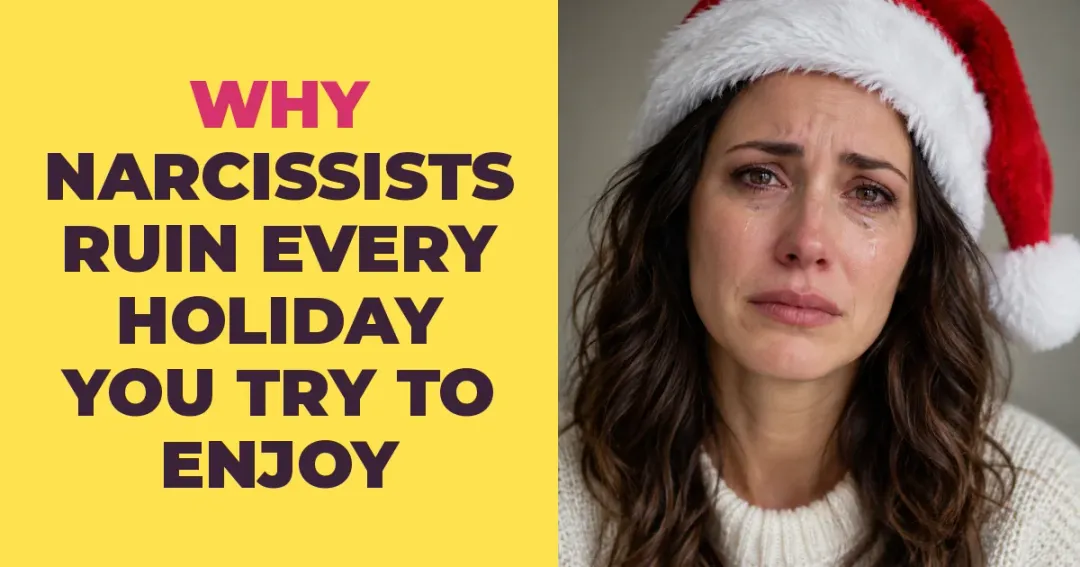
You did nothing. Here are 7 reasons narcissists ruin the holidays you try to enjoy, and why it keeps happening.
Why special days set them off
A narcissist’s sense of worth leans on outside attention. Admiration keeps them steady.
Holidays move that attention. Toward the birthday girl, the kids, the food, the guests.
Studies tie narcissism to resentment when good things happen to others. So a day full of joy that isn’t theirs can feel like a threat.
Not to you. To them. Think about it.
#1 They can’t stand seeing you happy

Your good day can feel like bad news to a narcissist.
You wake up on your birthday feeling light. By noon there’s a fight about the dishwasher, the plans, the tone of your text.
“Why do you always make such a big deal of your birthday?”
Coincidence? Often it isn’t.
Envy is common in narcissism. Your joy pokes at their need to feel superior, so they cut it down to size or wreck it outright.
Over time, happy moments start to feel risky. You hide good news. You keep your birthday quiet so there’s less to lose.
One way to tell: notice who goes quiet when you win. Then notice who lights up. That’s who your day belongs with.
#2 You start bracing days before
Living around unpredictable anger teaches your body to stay on alert.
So the dread arrives early. Days before the holiday, you’re planning the menu around their moods and the seating around their grudges.
You listen to the keys in the door. You read the mood before the coat comes off.
See also 10 Strange Little Things Only Narcissists Do
There’s a word for this: hypervigilance. If you can’t tell when the next blow-up is coming, your body keeps watch and tries to smooth things over by giving in.
Saying yes before you’ve thought. Apologising for the weather.
No wonder you’re wiped out by the time the guests leave. Your body worked a double shift.
Next time the alarm goes off, pause and slow down. Ask what you want from this day. When did anyone last ask you that?
#3 The day has to revolve around them

A narcissist may need the spotlight, even on a day meant for someone else.
Some do it loudly. They take over the toast, tell the long story, turn your mother’s birthday lunch into their show.
Others do it quietly.
They sulk in the corner while the gifts get opened. They keep score of who thanked whom. “Nobody even asked how my week was.”
Researchers describe a loud version of narcissism and a quiet one, and plenty of narcissists flip between the two. Both are guarding the same shaky self-image.
So you end up managing their mood instead of enjoying yours. And somehow their disappointment becomes your fault.
See how they behave the minute everyone’s looking at somebody else. It tells you everything.
#4 Perfect guest, cold car ride home

The narcissist your family sees and the one you live with can be different people.
At dinner they’re charming. They praise the gravy, laugh at your uncle’s jokes, help clear the table.
Then the car door shuts. Silence, or a cold “You were so embarrassing tonight.”
Researchers have a term for this: impression management. Being admired props up how a narcissist feels about themselves, so the public image gets enormous effort.
In the car, there’s no audience left to impress.
Your aunt squeezes your arm and says you’re so lucky. You smile, and you start to doubt what you know.
Believe the version you get at home. That’s the real person.
See also What Happens to Narcissists After 65
#5 One small comment sets off a storm

To a narcissist, a tiny correction can feel like a public insult.
You mention the turkey needs ten more minutes. Or you laugh when your sister teases them. The room goes cold.
Then comes the explosion, or a slow fury that can surface days later. “You humiliated me in front of your whole family.”
Studies on what’s called threatened egotism show that a narcissist who feels slighted tends to hit back harder, straight at the person they hold responsible. Not at the turkey. At you.
So you start checking every sentence before it leaves your mouth. You say sorry for things you never did.
If you need to point something out, make it brief and stick to facts. When it feels unsafe, let it go. And if the anger tips into threats, get yourself out of there.
Your safety outranks the dessert course.
#6 Silence becomes their holiday gift
The silent treatment can turn a whole holiday into a punishment.
A small disagreement on Christmas Eve. Then nothing. They chat with everyone at the table and pass the potatoes to everyone but you.
The cold shoulder lasts through New Year.
Being shut out strikes at something deep: the need to feel you belong and that you count. Studies describe the sting as close to physical pain. That’s why it works.
You apologise just to end it. Next year, you avoid anything that might set it off.
Try this instead: tell them one time that the door’s open when they want to talk. Then get on with your Christmas. Don’t chase. Don’t plead.
The fairy lights still work without their permission!
#7 Somehow the ruined day is your fault

When you name what happened, the narcissist often turns into the victim.
You say, gently, that the shouting at dinner hurt. Within minutes you’re hearing a list of your faults.
“I never shouted. How dare you. I worked so hard on this day and you ruined it.”
See also 7 Hidden Weaknesses That Bring Every Narcissist Down
Then the tears, or the sulking, until you’re the one handing over tissues.
This move has a name, DARVO. Short for deny, attack, reverse victim and offender. Studies show it leaves the woman who spoke up blaming herself even more.
That’s why you end up apologising for bringing it up. Then you stop bringing anything up.
If you do raise something, keep coming back to what actually happened and let the counter-attack go. The shouting happened. You were there.
The holidays aren’t cursed. You aren’t too much. The pattern is theirs, and patterns like this often stay the same year after year.
So put your hope where it can land: with people who are glad when you’re glad.
Celebrate with them. Even if it’s one friend and a slice of cake.