
Author: Christoph
8 Strange Ways Narcissists Wish You a Happy Birthday

Your birthday should be the one day nobody can spoil.
With a narcissist, it rarely works that way.
Maybe you spend the week before it braced for something. A fight, a sulk, a gift that feels like a dig. Then you wonder if you’re being dramatic.
You’re not. Birthdays put you in the spotlight, and many narcissists struggle when someone else’s good fortune gets the attention.
Here are 8 strange ways narcissists wish you a happy birthday, and what each one is really about.
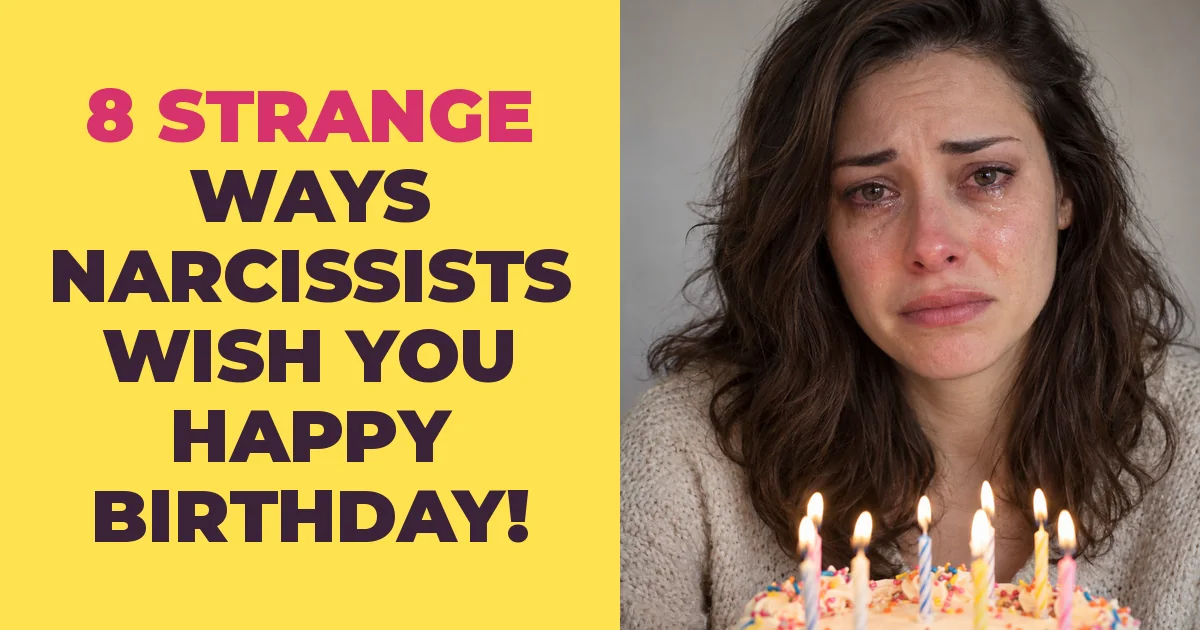
#1 Your big day becomes a fight
Some narcissists can’t stand a day that’s officially about you.
You wake up ready for a nice day. By lunch, you’re arguing about the dishwasher, or the tone you used on the phone.
“Why does everything always have to be about you?”
On your birthday. Think about it.
Envy often runs deep in narcissism. Your good day pokes at their need to be the one on top, so they cut it down to size.
Before long, celebrating anything starts to feel like a risk. You might even dread your own birthday.
One way to tell: watch who turns sulky, or starts a row, the moment the attention lands on you.
That says nothing about you.
#2 The flowers are for the audience
Over-the-top birthday gestures are often aimed at everyone watching, not at you.
A giant bouquet arrives at your work. A long, glowing post goes up on Facebook: “To the most amazing woman in the world.”
Your colleagues sigh. Your friends tell you you’re so lucky.
Then you get in the car with them, and the warmth is gone.
Their public image matters enormously to many narcissists. Applause from others props up how they see themselves, and a big show in front of a crowd brings plenty.
The hard part? The people around you can’t see the other side. Then you start wondering if you imagined that car ride.
What happens when nobody’s watching is the real birthday card.
#3 A day out that’s all about them
A narcissist may plan your birthday around the things they enjoy.
You mentioned a quiet lunch by the sea. Instead, you spend six hours at a car show, or a match, or their favourite steakhouse that you’ve never liked.
“I organised a whole day for you. You could at least look happy.”
Entitlement means believing their wants simply count for more than yours. To them, an ordinary request feels like an insult.
So when you say what you’d actually like, they hear criticism.
Year after year, the giving runs one way. Even on the day that’s supposed to be yours.
Keep a quiet tally of what you give. Then ask yourself: when did they last plan a day around you?
#4 A bare text at 11:58pm
Sometimes the coldest birthday wish is the one that barely arrives at all.
All day, nothing. They’re chatting in the family group and liking other people’s posts.
Then, at 11:58pm: “hbd.”
Or it comes the next morning, with no apology. Or the day before, so the real day passes in silence.
Being ignored strikes at something deep in you: feeling that you belong and that you count. It can sting like a real injury, which is exactly why silence gets results.
You check your phone all evening. You might even say sorry for nothing, just so the quiet ends.
You don’t have to chase that text.
#5 An expensive gift you never wanted
An expensive gift you hate can come with a very expensive guilt trip.
It’s the designer bag in a colour you’d never wear. The gadget you said you didn’t need. And the price gets mentioned more than once.
You try to smile. They notice anyway.
“Do you know what that cost me? After everything I’ve done for you?”
Many narcissists can read how you feel perfectly well. Whether they bother to act on it is another matter. Your taste was never really the point.
Guilt becomes a lever. Admitting you don’t love it starts to cost more than faking a smile.
Pause before you answer. Their disappointment isn’t yours to fix.
#6 They post your worst photo

Some cruelty comes dressed up as a sweet birthday post.
Out of hundreds of photos, they pick the one where you’re mid-blink, mid-chew, or at the angle you’ve told them you hate. Then they tag you, so everyone sees it.
“Happy birthday to this one! Lol.”
When you ask them to take it down: “Relax, it’s a joke.”
Psychologists call this everyday sadism: a small, ordinary kind of cruelty that feels rewarding to the person doing it. Teasing that’s playful stops the moment you ask.
If theirs keeps going, watch whether your upset seems to cheer them up. Smaller reactions mean less reward.
You’re not vain for minding.
#7 The party comes with a bill

The bigger the party they throw you, the bigger the bill can be later.
They book the venue, invite everyone and make a speech. For one night, you’re the centre of attention.
And that’s the problem.
A day later, the sulking starts. They’re cold, hurt and keeping score: you talked to your friends too long, you didn’t thank them properly.
Research describes two faces of narcissism: a bold, showy one and a quieter, prickly one. Plenty of narcissists flip between them. The showy side throws the party. The prickly side resents sharing the spotlight.
For weeks you tiptoe around their mood, and somehow their letdown is your fault.
One way to tell: do their apologies ever arrive without a “but”?
#8 They come back for your birthday
Months of silence can end the moment your birthday comes round.
The number’s been quiet for ages. You’ve been doing better. Then your phone lights up.
“Happy birthday. I still think about you every day.”
Hoovering is a popular nickname, not a formal term, for a try at reeling you back in after time apart. It leans on the bond you had, and on your hope the old days might come back.
Birthdays and anniversaries are classic timing.
Suddenly the hope is back. All those weeks of feeling stronger seem to vanish.
Choose your response before the day arrives. Judge them by years of history, not one sweet line.
That message is about their need, not your day.
Your birthday is still yours.
Spend the next one, if you can, with people who are glad you were born. They’re easy to spot. They’re the ones who never make you pay for it.
8 Ways to Take Your Power Back From a Narcissist Without a Fight

A narcissist knows exactly what to do with your anger.
Your calm is another story.
You’ve tried explaining. You’ve tried yelling. You’ve tried the long text at 2am that you rewrote eleven times.
And somehow every fight ends with you apologising.
You’re not bad at arguing. The fight was never fair to begin with.
Here are 8 quiet ways to take your power back, no shouting match required.
Why fighting keeps you stuck
Studies on what psychologists call threatened egotism point one way. When a narcissist feels insulted, hostility climbs, and it lands on the person they hold responsible.
So even a fair, gentle point can set off a reaction way bigger than the moment. You end up managing the explosion instead of the problem.
Every idea below runs on what you choose.
None of them needs their permission.
#1 Their counter-attack isn’t the real issue
When you raise a problem, a narcissist will often turn you into the problem.
You mention the money missing from the joint account. Ten seconds later you’re hearing about the shoes you bought in March, your mother, your tone.
“Me? Unbelievable that you’d even say that.” Then the sulking starts, and you’re the one comforting them.
Psychologists have a name for this move: DARVO. Deny. Attack. Flip who’s the victim and who did the harm.
Studies suggest the pattern leaves the woman who raised the issue feeling more at fault. That’s why you walk away saying sorry for something they did.
Skip the side arguments. Say the facts one time, then steer back. “We were talking about the account.”
Again and again, if you have to.
#2 Answer on your own schedule
A boundary is about your next move, never about their behaviour.
The phone buzzes at 11:40pm. Then again. Then three times in a row. “Why are you ignoring me?”
Your stomach drops before you’ve even read it.
Here’s why this matters. Because a boundary runs on your choices, it never needs their agreement to work.
Leaving late-night texts until morning counts. So does hanging up the second a call turns nasty.
Expect pushback at first, and expect to feel guilty. Both are normal. Decide once, then follow through each time.
It’ll keep till morning. So will you.
#3 No doesn’t need a speech
Guilt is the lever a narcissist pulls when no isn’t the answer they want.
You say you can’t drive them to the airport on Saturday. Silence. Then: “Wow. I’d do it for you in a heartbeat.”
And just like that, you’re rescheduling your weekend.
Many call this FOG, short for fear, obligation and guilt. It’s a popular label for emotional blackmail, not a diagnosis, and it’s related to what research calls coercive control.
Hints of consequences, a list of past favours, that heavy sigh. Each one makes refusing feel pricier than caving, until yes comes out on autopilot.
Try a pause. “Let me check and get back to you.” Then ask yourself: is this my job, or just their mood?
“I can’t do Saturday.” That’s a full answer.
#4 Boring is your best defence
The less you react, the less a narcissist has to play with.
At dinner with friends, they poke at the one thing you’re most insecure about. Then they watch your face.
With some people, your flinch is the whole point. Researchers call it everyday sadism, where small cruelty is its own reward.
Grey rock is a popular name for going flat and dull when you can’t avoid contact. Short, plain answers leave nothing to grab, and over time the hook loosens.
“Pick-up is at five.” “Okay.” That’s it.
It won’t win you anything. It just stops topping up the drama, and with some people it isn’t safe to try.
Does your upset please them? That tells you plenty.
#5 Save your wins for people who cheer

Your good news can land like bad news with a narcissist.
You got the promotion. You tell them in the kitchen, still in your coat. They say “Huh” and ask what’s for dinner.
Or they pick a fight on your big night.
Envy shows up a lot in narcissism. Your good fortune pokes at their need to sit above you, so it gets shrunk or spoiled. Research also describes rivalry: in their head, any gain of yours costs them.
No wonder you’ve started hiding the good stuff.
Take your wins to the people who light up for you. The friend who screams down the phone. The sister who turns up with cake!
Notice who goes quiet when you win. That’s your answer.
#6 Judge them by what actually happens
Promises are easy to make, so judge by what has actually happened.
The trip to Lisbon. The house with the garden. The ring. “After this busy stretch, I promise.”
That stretch has lasted three years.
Future faking is a popular term for big, detailed promises that keep you hanging on, with no real plan behind them. The more you’ve built your hopes around those plans, the harder they are to drop.
Throw in one kept promise now and then and the hook sinks deeper. Psychologists call this intermittent reinforcement. Rewards you can’t predict keep you hoping longer than reliable ones.
So look at the usual week, not the rare great one. What has really happened? Then set your own timeline.
Your life gets to start now.
#7 Let the silence be theirs
Silence used as punishment is built to make you give in, and you don’t have to chase it.
Three days. They chat to the dog, the delivery guy, their brother on speakerphone. Not you.
Then they stroll back in like the last three days never existed.
Research on being shut out says it strikes somewhere deep: the need to fit in and to count. The sting can register a lot like bodily pain. Small wonder you give in.
You apologise for something you can’t even name.
Try this instead. Say once, calmly, that you’re open to talking. Then get on with your day. Don’t chase. Don’t beg.
Make the coffee. Call your friend. Go for the walk. Let the silence be the only thing they’ve got.
#8 You don’t need to win the story
You can’t stop a smear campaign by shouting louder than the narcissist does.
Your aunt texts out of nowhere: “You need to apologise. You’re tearing this family apart.” She’s never once asked your side.
Researchers file this under relational aggression. Instead of hurting your body, it goes after your name and your circle, and it leaves no bruise anyone can point to.
Flying monkeys is a popular label for relatives and friends who carry the narcissist’s message, often without knowing the full story. Usually they’ve heard a version where the narcissist is the wounded one.
Don’t explain yourself to messengers. Keep details private.
Stay steady and give the truth time to surface. If work or custody comes into it, keep notes.
Your aunt heard one side. Let time show her the other.
None of this needs a fight. It needs you to keep showing up for your own life, one quiet choice at a time.
Pick one thing. Just one. Try it this week.
Maybe it’s one text left until morning. Maybe it’s one “Let me get back to you.” Start there.
8 Mental Health Struggles Narcissists Leave

You replay one conversation for the fifth time today. You flinch when your phone buzzes. You say sorry to people who bumped into you.
The narcissist may not even be in the room.
What they leave behind doesn’t show on a scan. Friends can’t see it. Some days, you can’t even name it.
None of this is a diagnosis, and only a professional can give one. These are patterns, and each one makes sense once you see where it came from.
Here are 8 mental health struggles narcissists leave behind, and why each one happens.
#1 You stop trusting your own memory
Gaslighting makes you doubt the one witness who was actually there: you.
You remember the fight clearly. It happened in the car, on the way home from your sister’s birthday.
Then comes the flat reply: “That never happened.” Or the classic: “You’re too sensitive.”
Psychologists use the word gaslighting for this: chipping away at what you saw and heard until their story is the only one left standing. It lands hardest when they hold more power and you’ve trusted them for years.
So you start keeping notes. Screenshots. A private file on your phone, just to prove to yourself you’re not losing it.
One thing helps: jot the moment down the same day, then run it past a friend who isn’t part of the relationship and has no reason to twist it.
Your memory isn’t the problem.
#2 Your body never stands down
When their anger could erupt any minute, your body learns to keep watch around the clock.
You can read the whole evening from the sound of keys in the door. Heavy footsteps? Too quiet? You already know.
Psychologists call this hypervigilance: a nonstop sweep of the room for the next sign of trouble. Its partner is fawning, keeping the peace by smoothing things over, agreeing and giving in.
So you say yes before you’ve thought about it. You apologise to the chair you bumped. You jump when someone drops a spoon.
No wonder you’re exhausted.
Your body has been working the night shift for months, maybe years. Somewhere in all that scanning, what you actually want gets lost.
Next time your chest tightens, catch that jolt and let your breathing go slower. Is there danger in this exact moment?
#3 Every word gets edited first
When a small comment can start a war, you learn to edit everything.
You rehearse “Did you call the plumber?” three times in your head. Then you don’t ask at all, and fix the sink yourself.
Why?
Last time, a basic question turned into a two-hour fight about your tone. Research on threatened egotism found that when a narcissist’s image takes a hit, they’re more likely to strike back at the person they hold responsible.
Their reaction dwarfs what you said. So you trim every sentence before it leaves your mouth, and apologise for things you never did.
If criticism isn’t safe, you don’t owe it. And if anger turns into threats, getting out of the room comes first.
The size of their anger was never about your question.
#4 Nobody seems to believe you
The person who hurts you at home may be the most charming one at the party.
They tell jokes, refill everyone’s drinks, hug your mother goodbye. Then the car ride home is silent, or worse.
Friends say, “You’re so lucky.” Your stomach drops.
Psychologists call this impression management. Many narcissists pour energy into how they look from the outside, since being admired is what props up their self-worth.
So nobody believes you. Slowly, your own experience starts to feel shaky too. And manipulation thrives when you’re cut off.
That’s why reaching out matters. Pick one person, maybe someone who’s seen them both at home and in public, and give them the unedited version.
What happens behind closed doors counts. You saw it.
#5 Simple decisions feel impossible

Believing “they love me” and “they hurt me” at the same time is exhausting.
Psychologists call that clash cognitive dissonance. It feels awful, so your mind hunts for a way to make it stop.
Often that means excuses. “They had a hard childhood.” “They’re just stressed at work.”
Then the sunk cost pull kicks in.
Walking away can feel like tossing all those years in the bin. So you argue with yourself all day, and even a text feels impossible to answer.
One thing that helps: list the plain facts of what happened, minus the excuses. Then ask what staying would cost from here on, not what you’ve already put in.
Of course you feel torn. Both feelings are real.
#6 Their needs swallow yours whole
Over time, your whole day can start to orbit around their moods.
“Can you just deal with it?” So you fix their problem before your own. You cover when they bail on your friend’s dinner. You feel guilty sitting down.
Many call this codependency. It’s a popular term, not a diagnosis, and it overlaps with fawning: keeping things calm by putting the other person first.
Caretaking can feel like safety.
And a partner focused on themselves is happy to keep it coming. The cost? Burnout, plus a quiet resentment you’re not allowed to say out loud.
Try one small switch. Before working out what they need, check in with yourself first. Then let their mess stay theirs to clean up.
When did someone last ask what you want?
#7 You miss the one who hurt you
A bond built on hurt and kindness can grip harder than a calm one.
They said something cruel on Friday. On Sunday they brought you coffee and said, “You know I’m crazy about you.” And you felt relief.
Psychologists call this trauma bonding. When one person holds more power and cruelty keeps trading places with tenderness, the attachment can grow stronger than in a peaceful relationship.
It explains the parts that make you feel ashamed. Defending them to friends. Going back more than once. Missing them right after they hurt you.
Leaving can feel physically painful. Your logic says one thing, your heart says another.
This is a known reaction. Not a weakness.
Leaning on people outside the relationship makes a difference. Who could you tell this week?
#8 Shame moves in and stays
Of everything manipulation leaves behind, shame is often the heaviest to carry.
You look back at the lies and wince. “How did I miss it? Everyone else saw it.”
Research on betrayal blindness offers a kinder answer. If you rely on someone, your mind may quietly screen out proof that they’re betraying you, to keep the attachment safe.
That’s protection, not stupidity.
Then the grief arrives, once it’s all clear.
Self-compassion helps here: being as gentle with yourself as you’d be with a close friend. Research links it with less shame and less blaming yourself. Small daily routines that are only yours, like a walk or a song, count too.
So talk to yourself the way you’d talk to her. You’d never call her a fool.
If one of these sections read like a page from your own diary, take that seriously. Seeing the pattern clearly is where things start to shift.
Start small. One note, one honest conversation, one kind sentence to yourself.
And if you ever feel unsafe, a domestic abuse service can help you think things through, whatever you decide to do next.
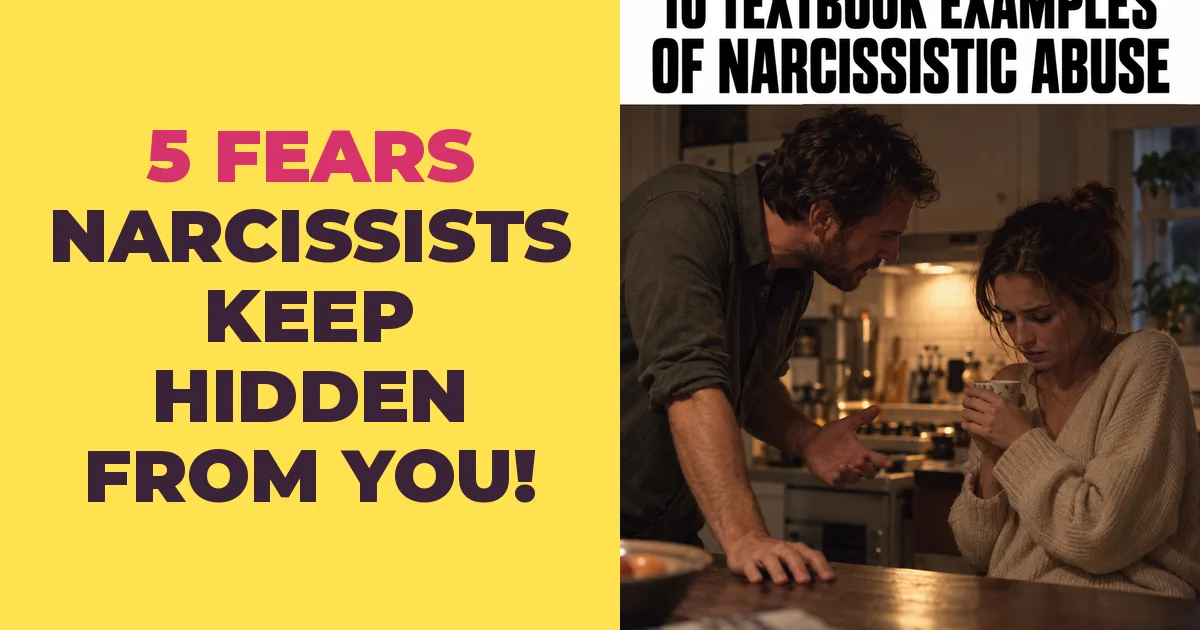
5 Fears Narcissists Keep Hidden

Narcissists work very hard to look fearless.
The big talk. The cool shrug. The way nothing seems to touch them, while you tiptoe around every mood in the house.
Not in front of anyone, anyway.
But that armour is there for a reason.
Underneath sits a self-image that can crack, and the bravado exists to protect it.
Here are 5 fears narcissists keep hidden, and what each one does to you.
What the armour is protecting
For a narcissist, feeling worthwhile usually needs a steady supply of outside approval.
Admiration props it up. Anything that questions it, from a raised eyebrow to a closed door, feels like a threat.
That’s why the bravado matters so much. It protects a self-image that’s far more fragile than it looks.
Every fear below comes back to that.
#1 Someone seeing the real them

Their public image is a full-time project, and you’ve seen backstage.
At the party they’re the funniest person in the room. They top up drinks, know everyone’s name, and hug your mum like she’s their own. Everyone leaves charmed!
Then the car door shuts.
Silence. Or a cold, quiet list of everything you did wrong tonight, delivered while they stare at the road. You spend the rest of the drive hunting for the moment it went wrong.
Why the effort? Looking good to others matters enormously to a narcissist, since being admired is what keeps their self-worth afloat. At home, with no audience to win over, you get the other version.
So when friends say “You’re so lucky,” you smile and nod. Then you lie awake wondering if you imagined the car ride, and whether anyone would believe you if you said it out loud.
You didn’t imagine it. That gap between kind in public and cruel in private is real. Trust what happens behind your own front door, and lean on a friend who has watched both versions up close.
The car ride home counts more than the party.
#2 Criticism lands like a punch
To a narcissist, even gentle criticism can feel like an attack on who they are.
You mention the electric bill is late. Ten minutes later you’re hearing about every bill you’ve ever forgotten, in a voice that sends the dog out of the room. And the bill? Still late.
Or you correct a date in front of friends. They laugh it off. Three days later, over something tiny, they punish you for it, and you can’t even trace why.
Sound familiar?
Psychologists who studied this found that when narcissists feel insulted, they hit back harder, and they aim it squarely at whoever they hold responsible. Being wrong isn’t a fact to them. It’s an injury, and someone has to pay.
So you start pre-editing. You rehearse sentences in the shower. You end up apologising for things that were never yours, just to keep the evening calm. The house gets quieter, and so do you.
If something has to be said, stick to plain facts and few words, or let it go when speaking up feels risky. And if the shouting tips into threats, walk out of that room.
A late bill is just a late bill.
#3 Your wins feel like their losses
When you shine, a narcissist often feels like they’re losing.
You get the promotion. You tell them over dinner, buzzing. They say “Good for you,” glance at their phone, and ask if you’ve seen the car keys. Your big news lasts about four seconds.
Maybe they pick a fight the night before your birthday. Maybe they mock the friends who threw you the party, or find a flaw in the thing you’re proudest of.
Why?
Research on narcissistic admiration and rivalry describes two sides. At first, the charming, self-selling side does the work. Later the competitive side moves in, and anything you gain counts as something they lost.
Envy adds fuel. Your good fortune pokes at their need to feel above you, so they make it smaller, take credit for it, or ruin it. Everyone feels a pang of jealousy now and then. Using it to knock you down is something else.
Bit by bit, you start hiding good news. You downplay the raise. You skip posting the photo. Happy moments feel risky, so you keep them small.
Watch whose face falls when things go your way. Then take your next win to someone who’s glad for you. You’re allowed to be proud out loud.
#4 Being overlooked hits them hard
Being overlooked can feel unbearable to a narcissist, even for a few minutes.
Your sister calls with big news and you’re on the phone for twenty minutes. You laugh, you ask questions, you’re happy for her. When you hang up, the kitchen has gone cold.
“Don’t mind me. I’m only the one who cooked.”
Research on the two faces of narcissism describes a loud form and a quiet one. The loud type grabs the spotlight back with a bigger story. The quiet type sulks, keeps score, and pretends not to care.
Both are guarding the same bruised self-image. Many switch between the two.
And somehow it all lands on you. You tread carefully through every sulk, and their letdowns somehow become your fault. You start keeping calls short. You check their face before you check your messages.
One way to tell: see what happens to their mood the moment attention drifts elsewhere. And ask yourself if a sorry from them has ever arrived with no strings.
A sorry with conditions attached was never really a sorry.
#5 When you pull away, they reel you in
When you pull away, the tone often flips fast.
Maybe you go quiet for a week, or start packing a bag. Suddenly it’s “I miss you.” “I’ve been thinking about us.” “I’ll change, this time for real.”
The popular name for this is hoovering. It has no formal definition. It’s the word for their efforts to reel you back in once there’s space between you.
It tends to show up when they need something or feel replaced. Birthdays and anniversaries are favourite moments for it.
Why does it work so well? Because of the hot and cold that came before. Psychologists call this intermittent reinforcement: warmth you can’t predict grips you tighter than warmth you can count on. It’s the same pull a slot machine has.
So one warm message, and the old hope comes rushing back. Weeks of progress feel undone. That pull is how unpredictable warmth works.
Weigh what they’ve actually done over the years, not what they’re promising tonight, and choose your answer before the next message lands.
Judge the years, not the text.
Fear explains a lot about the narcissist. It doesn’t excuse any of it, and managing it was never your job.
What you saw happened. What you felt made sense. If you’re ready, pick one person you trust and let them hear all of it, from the car ride to the cold kitchen.
And if any of this feels unsafe, people at a domestic abuse service are there to help you work out next steps, at your pace.
8 Unsettling Bedtime Habits Only a Narcissist Would Have

A narcissist doesn’t clock off at lights out.
You’re exhausted. You climb into bed hoping for quiet. Instead you get a fight, a cold back, a glowing phone or a bombshell at midnight.
Then morning comes, and somehow it’s all in your head.
If bedtime has started to feel like the most dangerous part of your day, there’s a reason. Many narcissists treat your needs, even sleep, as an inconvenience.
Here are 8 unsettling bedtime habits only a narcissist would have, and what they’re really about.
#1 The fight starts when the lights go off

The worst arguments often start the second your head hits the pillow.
You ask something small. “Did you call your mum back?” Or you mention, lightly, that they were short with you at dinner.
Ten minutes later you’re sitting up in the dark, defending yourself.
Why? A narcissist may hear even a tiny correction as a hit to the image they guard so closely. Research on threatened egotism describes a reaction far bigger than the trigger, pointed straight at the person they blame. Tonight, that’s you.
Sometimes the fight is about a remark you made days ago and forgot.
So you start checking every word before it leaves your mouth after 9pm. You swallow the question. You say sorry for things you never did, just to get some sleep.
That isn’t peace. It’s a curfew on your voice.
#2 Silence is their bedtime punishment
Silence at bedtime can be a punishment dressed up as tiredness.
You finally want to talk about what happened. They sigh, roll over and click off the lamp.
Or an eye-roll you can feel in the dark.
Then the silence stretches into the next day. They chat to their mum on the phone, laugh with the neighbour, and look straight through you.
Being shut out hits the part of you that needs to belong and to count for something. It can ache like a real wound, and giving in starts to look like the only exit.
Taking time to cool off and saying so is healthy. Going dark to make you pay is not.
What helps? Tell them, one time, that the door is open if they want to talk. Then get on with your evening. You don’t have to follow them down the hall.
#3 Touch becomes something you earn

When touch comes and goes without reason, it starts to feel like a prize.
Monday night they pull you close and whisper that you’re everything.
Tuesday you reach for their hand and they flinch away. “God, can I have some space?”
Nothing happened in between. You check anyway.
That unpredictability is the hook. Rewards that show up at random build the hardest habits to break. Slot machines run on the very same trick. Their warmth becomes your jackpot.
So you try harder and get less back. You lie awake replaying the day, hunting for your mistake, and the rare warm nights make the cold ones seem survivable.
Try this: count the cold nights against the warm ones. What does the average say?
#4 Your side of the bed isn’t yours

To a narcissist, your half of the bed is just more room for them.
The TV blares until 1am because they can’t sleep without it. The big light goes on when they come in late. The covers end up on their side, again.
Ask them to turn it down and you’d think you’d slapped them. “It’s my bedroom too, you know.”
That’s entitlement. If they believe they’re owed more than everyone else, any limit you set feels like an insult, and a simple request sounds to them like a declaration of war.
You end up sleeping on the edge. Literally.
One small shift: stop pre-agreeing. Notice how often you say “it’s fine” before they’ve even asked.
Is it fine, though?
#5 They mock the way you sleep
Some partners turn the way you sleep into a running joke at your expense.
They do an impression of your snoring at brunch. They tell your sister you “talk nonsense” in your sleep. They describe your face when you drool, in slow, gleeful detail.
Everyone laughs. Your cheeks burn.
And they smirk, because your flinch is the point.
Psychologists call this everyday sadism: getting a genuine kick out of small cruelty, for its own sake. A partner who teases for fun backs off the moment you ask. This one doesn’t.
Over time, bed stops feeling safe. You feel watched instead of loved, and you train your face to give nothing away.
Watch for one thing: do they seem happier when you’re upset?
#6 Their phone glows, yours gets questioned

A narcissist’s phone can be a midnight secret while your texts get treated like a crime.
They scroll under the duvet, angled away from you. A buzz at midnight. A tiny smile. Then the screen goes black the moment you shift.
Ask who it is and you get “Nobody, go to sleep.”
Ten minutes later? “Who were you texting earlier?”
Research ties narcissism to treating love like a game, with exes and admirers kept within easy reach. And pinning their behaviour on you spares them from looking at it. Psychologists call that projection.
Before long you’re explaining texts you never sent, and nobody’s asking about theirs.
Treat the accusations as information. About them.
#7 Big days get a sleepless night first

A narcissist may pick a fight just as your big day arrives.
You’ve got the interview at nine. The exam. Your best friend’s wedding, where you’re giving the speech.
And at 11.40pm they sit up and say, “I need to tell you something.” Or they start a row about money. Or they just can’t sleep, so neither can you.
Coincidence? Not when it keeps happening.
Envy is common in narcissism, especially the quieter, more vulnerable form. When you shine, it dents their sense of being above you, so your moment has to be made smaller, taken over or wrecked. A ruined night’s sleep does the job.
No wonder happy moments start to feel risky. You might even stop telling them what’s coming up.
Watch who goes flat when good things happen to you. Then celebrate with the ones who light up.
#8 By morning, it never happened
The next morning, a narcissist may simply rewrite the whole night.
You bring up the fight, the silence, the 1am bombshell. They look at you like you’ve lost it.
“That never happened. You were half asleep.”
Push a little and it flips. “I can’t believe you’re attacking me before I’ve even had coffee.” Suddenly they’re the hurt one and you’re comforting them.
Gaslighting thrives when one person holds more power and the other trusts them. DARVO, short for deny, attack, reverse victim and offender, nudges the person raising the problem into blaming herself, so the talk shuts down fast. No wonder you end up saying sorry.
Write it down when it happens. Check it with a friend outside the relationship. Your memory deserves a witness.
You weren’t dreaming.
If you’ve started to dread lights-out, or you check every word before you say it after 9pm, that tells you something real about the pattern, not about you.
Watch it over months, not single nights. And if you ever feel scared in your own bed, reach out to one person or service who can help you stay safe.
The row at midnight, the cold back, the “that never happened” over breakfast. You were awake for all of it. Your version counts.
7 Strange, Disturbing Hobbies Narcissists Secretly Love

Your phone isn’t where you left it. Neither are your keys. And somehow, that’s your fault.
Narcissists don’t do hobbies the way other people do.
No golf. No pottery.
Their pastimes tend to involve you: your messages, your secrets, your worst moments.
Your phone, your keys, your secrets, your good news.
Here are 7 strange, disturbing hobbies narcissists secretly love, and what each one really does to you.
Why these hobbies feed them
A narcissist’s sense of worth often hangs on what other people give back.
So everyone nearby gets sorted into two boxes. Fans who supply praise. Or dangers who might take it away.
These hobbies feed one and watch the other.
None of this proves anyone has a disorder. It’s a pattern, so look at the whole season, never a single rough evening.
#1 Your phone is their bedtime reading

A narcissist can make your phone their favourite thing to read, and they rarely ask first.
You leave it on the counter to grab the laundry. When you come back, it’s moved an inch. Later, they mention a friend you never told them about.
Then: “Who’s Sam? Why’s she texting you so late?”
Researchers call this kind of pattern coercive control. It rarely shows up as one big scene. It’s lots of small checks and rules that pile up.
So you adapt. You delete harmless chats before bed. You stop texting friends after dark. Soon you’re checking with them before buying a coffee.
If this is your life, hold on to a couple of friends and numbers they don’t control. A domestic abuse service can help you plan for your safety too.
Bit by bit, your life gets smaller.
#2 Your things move and nobody moved them
Moving your things and then denying it is a quiet, very effective hobby.
The car keys you always hang by the door turn up in a coat pocket. Your work folder vanishes the morning of the big meeting. Your mug is in the bin.
You ask. They tilt their head. “Babe, you did that yourself. You’ve been so stressed lately.”
Psychologists call this gaslighting. The aim is for you to stop trusting your own eyes, so their story becomes the official one. It works best when one person controls the story.
Soon you’re snapping photos of where you put things, just to be sure. Somehow you end up saying sorry for their mess.
You’re not losing it. Jot down what happened the same day, and run it past a friend who isn’t part of the house.
Writing it down gives you something their version can’t overwrite.
#3 Good news makes them sour

Your good news often lands on a narcissist like a personal insult.
You got the promotion. You rush home to tell them. They barely look up from the TV. “Huh. More money, or just more work?”
Your birthday dinner? Somehow it ends in a fight.
That idea you shared last month? They’re telling friends it was theirs.
Why? Envy is common in narcissism. When you shine, they feel less superior, so your win gets shrunk, taken or ruined. Everyone feels jealous for a second. Trying to knock you down because of it is different.
So you start hiding good news. You downplay the raise and skip the party. Joy starts to feel like a risk.
Watch whose face falls when things go your way. Then go tell the people who cheer.
#4 They keep exes on the shelf
Many narcissists collect exes and admirers the way other people collect stamps.
Their old flames never quite get thrown out. The ex still likes every photo. A “friend” from work texts at midnight. At dinner, they flirt with the waitress while you sit right there.
Mention it and you hear, “You’re so insecure. She’s just a friend.”
Research links narcissism with treating love like a game. They keep a back door open, stay a little out of reach, and get bored once the chase is over.
So now you’re fighting for the warmth that used to come easily, against people who aren’t even in the room.
You feel replaceable. Being kept unsure does that.
Judge commitment by what they do, week after week, not by what they say. And watch the rhythm. Does every sweet spell get followed by a cold one?
#5 They save your secrets for later
What you tell a narcissist in a soft moment can come back as ammunition.
Late one night, you told them about your dad. About the panic you hide at work. About the job you lost at twenty-two.
Weeks later, mid-fight: “No wonder your dad left.”
Research suggests many narcissists can read your feelings fine. They just don’t bother much, unless caring gets them something. Your sore spots get noticed, and kept.
Some think further ahead, filing away details for later while staying calm and pleasant in front of everyone else.
So you go quiet about your feelings, then wonder if you’re overreacting. Who could blame you?
Share less with them. Take the soft stuff to people who handle it gently. Your past isn’t their filing cabinet.
#6 Gossip about you is a pastime
A narcissist often tells your story to others before you get the chance.
You feel it at the school gate. A friend goes cool on you. Mutual friends stop inviting you. Your sister asks, carefully, if you’re “doing okay, mentally.”
They’ve been saying you’re unstable. Or cruel. Or both.
Research calls this relational aggression. Instead of hitting you, it goes after your friendships and your good name. Nothing shows on the outside, which makes it so hard to prove.
And it often hits just as you’re reaching out for help. Suddenly every conversation feels like a trial.
It isn’t. Carry on being the person people already know, and the story tends to fall apart by itself. If it reaches your job or your kids, save the evidence.
Let them talk. Your steady life is the reply.
#7 Watching you squirm is the fun part

Some narcissists enjoy your discomfort, and that’s the hardest part to believe.
At dinner with friends, they joke about your weight, the thing they know you hate. Everyone laughs. You flinch, and they smile a little wider.
Or they text “We need to talk” at 8am, then won’t explain until night. Making you wait and worry is part of it.
Researchers added a fourth trait to the so-called Dark Triad, which includes narcissism: everyday sadism. For some, a little cruelty is its own reward.
A friend who teases backs off when you say ouch. This doesn’t.
No wonder you’ve learned to keep a blank face. Love isn’t supposed to feel like being stalked.
Pay attention to their face when you’re upset. If it looks pleased, believe it. Giving fewer reactions isn’t coldness. It’s protection.
Checked phones, moved keys, spoiled wins, cruel jokes. Seen together, the pattern is hard to miss.
None of these hobbies mean you’re too much or not enough. They say a lot about them. Pick one thing from this list to watch this week, and write down what you see.
Write it down. Paper doesn’t gaslight.
9 Dark Secrets a Narcissist Will Carry to the Grave Without Telling Anyone

A narcissist often hides what’s really going on underneath.
You see the confidence, the charm at parties and the cold silence in the car home. You’ve spent months, maybe years, trying to work out which one is real.
And you’ve started doubting yourself.
They work hard to protect the image they show.
Here are 9 dark secrets a narcissist will carry to the grave.
#1 Your good news ruins their day

Your good news can land like bad news for a narcissist.
You mention the promotion. They mutter “Good for you,” then spend the evening picking at the dinner, the traffic and your tone.
Or your birthday turns into a fight. Again.
Researchers tie narcissism to envy, most of all in its quieter, more resentful version. When you shine, their sense of being above you wobbles. So your win gets made smaller, soured or quietly claimed as theirs.
Before long you keep good news to yourself. Joy starts to feel like a risk.
Notice whose face drops when things go well for you. That’s the secret, right there.
#2 That confidence covers something fragile
Behind the big confidence sits a self-image that bruises very easily.
Psychologists describe two faces of narcissism. One is loud, bold and hungry for the spotlight. The other is quiet, touchy and sulky, with a running tally of every slight.
Plenty flip between the two.
Both guard the same fragile self-picture. The loud side guards it by showing off. The quiet side guards it by pulling away and feeling hard done by.
So the one bragging at dinner can be the same one sulking for two days because you didn’t laugh at a joke.
Their moods set the weather. You tiptoe through it.
Ever had an apology from them with no “but” on the end?
#3 They need you to feel like someone
To a narcissist, you’re often either a mirror or a threat.
Fans get warmth. Anyone who forgets to clap gets handled like a problem.
You know this from the kitchen. The work story comes out for the third time, and they wait for your face to light up. You’re tired. It doesn’t.
“Wow, thanks for the support.”
Bit by bit, you feel you exist to reflect them back to themselves. Your own needs? A nuisance.
Their sense of worth leans on being confirmed by other people.
Mirrors aren’t supposed to have needs. You have them anyway.
#4 The charm is mostly for the audience
The charming person everyone else sees is a carefully kept public image.
At the party they’re funny, attentive, topping up drinks. Your friends say you’re so lucky.
Then the car door shuts. Not a word the whole way home.
Research on how people present themselves helps explain it. For a narcissist, admiration feeds self-worth, so the public image gets most of the effort.
Everybody puts on better manners for guests. This is different. Kind out there, cruel in here.
And you pay for it. You finally tell someone, and they look at you like you invented it.
Believe what happens inside your own four walls. You were there.
#5 Being questioned feels like an attack
To a narcissist, a simple question can feel like a personal attack.
“Did you call the bank?” becomes an hour about how you never trust them.
Or someone corrects them at dinner. They say nothing, then punish you three days later for a remark you’d long forgotten.
Research on threatened egotism found that when narcissists feel insulted, they tend to hit back harder, at whoever they hold responsible. Out of proportion. Aimed at you.
So you rehearse every sentence. You say sorry for things you never did.
When it isn’t safe, skip the criticism altogether. If anger turns into threats, walk out of the room.
Your safety outranks their pride.
#6 Their early charm hid the rivalry

The slide from perfect start to cold shoulder is a known pattern, and it wasn’t about you.
First you’re adored. Then the criticism creeps in. Then the digs get sharper.
Online, people call this idealise, devalue, discard. It’s a popular label, not a diagnosis.
Research on narcissistic admiration and rivalry fills in the why. In the beginning, they win you over by dazzling and selling themselves. Later the rival side takes the wheel: digs, competing with you, coldness.
What they keep quiet: the dazzle and the digs come from the same place.
So you keep hunting for the person you first met. And the ending feels like your fault.
It isn’t. You met the opening act.
#7 Sweet days kept you hooked
Unpredictable kindness hooks you harder than steady kindness ever could.
Tuesday they’re cruel. Wednesday there are flowers and “I don’t know what I’d do without you.” Which one comes home tonight? You can’t tell.
Psychologists call this intermittent reinforcement. When a reward turns up at random, it’s very hard to quit chasing it. Gamblers feel the same tug at a slot machine.
That’s the part they’d never spell out. The warm days run on no schedule at all.
One sorry from them feels like hitting the jackpot. Good days make the bad ones easier to swallow, and you give more for less.
One way to see it clearly: count. Mark good days and bad days on a calendar for a month.
Then look at the typical day. Not the best one.
#8 They kept their options open
A narcissist often treats love like a game they intend to win.
The ex who’s still “just a friend.” Flirting with the waiter while you sit right there. Admirers kept close, just in case.
Studies connect narcissism with treating romance as a game, and with weaker commitment. It fits the whirlwind start, the cooling and the roaming eye.
Once they feel they’ve won you, interest can fade.
Now you’re working for attention that used to come easily. You feel replaceable.
“You’re the only one for me” costs nothing to say. Showing up, week after week, costs something.
Which one have you actually been getting?
#9 Your pain was seen and ignored
A narcissist can often understand how you feel and still not act on it.
You’re crying in the kitchen. They check their phone, change the subject, or say, “You’re too sensitive.”
Then at a friend’s house, they’re all warmth over someone else’s bad news.
Studies found narcissists tend to show less empathy on their own, yet more once they’re asked to picture the other person’s side. That looks more like choice than inability.
That’s the secret. They saw it.
They also kept note of your weak spots, and used them.
Maybe you’ve stopped sharing feelings at all. Bring them to people who actually respond. Your pain was never too much. It just landed with the wrong person.
You weren’t imagining it. The envy, the coldness and the charm that switched off at the front door follow patterns that have names.
They’ll keep their secrets. You don’t have to keep yours. Tell one person you trust what’s really been happening.
What happened behind closed doors is the part to trust.
10 Things Never to Say to a Narcissist Unless You Want a Fight

One ordinary sentence can turn a quiet evening into a three-day war.
You said something small. A fact, a feeling, a no. And somehow you ended up apologising for a fight you never started.
Now you check every word first.
You aren’t being dramatic, and you aren’t imagining the pattern.
This list walks through 10 of those sentences: why each one lights the fuse, and what you can do instead.
Why small words land like bombs
For a narcissist, feeling worthy is an outside job. It’s propped up by praise, agreement and being right.
So anything that dents that picture can register as an attack.
Psychologists studying threatened egotism describe it plainly. Insult a narcissist and their aggression tends to rise, pointed straight at whoever delivered the blow. Usually that’s you, across the table.
That’s why the anger is often way out of proportion to what you said. It goes after whoever bruised their image, not the actual problem.
#1 Correcting them lights the fuse
To a narcissist, even a small correction can feel like a public slap.
In front of friends, you mention, gently, that the party is Saturday, not Friday. Or that the bill was higher than they said.
Cold silence in the car home.
Then, days later: “You love making me look stupid, don’t you?”
Why so big? You scratched the image they keep polishing, and the fury heads straight for the one who scratched it.
Before long, you’re saying sorry for stuff you never did.
If you must correct them, keep it brief and stick to facts. If it doesn’t feel safe, skip it. And if the anger turns into threats, leave the room.
#2 Labels make them the victim
Calling them a narcissist hands them the victim role on a plate.
It slips out mid-argument: “You’re a narcissist!” For one second, it feels like relief.
Then it flips.
Tears, or a cold laugh. “Wow. After everything I do, I’m the monster?”
Psychologists who study the loud and quiet sides of narcissism note how touchy many are about criticism, and how fast they slide into the wounded role.
Now the fight is about your cruelty.
You don’t need the label anyway. Only a clinician can diagnose, and what you’ve watched over months is real with or without a name.
#3 Your hurt becomes the problem
Saying “I know what I heard” can turn one argument into a fight about your sanity.
You tell them the comment in the kitchen hurt. You were standing right there.
They don’t even blink. “That never happened. You’re too sensitive.”
Just like that, the topic switches from their words to your feelings.
Psychologists call this gaslighting. It thrives where power is lopsided: you trust them, they steer the story, and bit by bit their account replaces yours.
Soon you’re apologising for being hurt. Doubting your own ears.
You don’t have to argue it out loud. Jot down what happened the same day, and run it past a friend who sits outside the relationship. Your memory was never the problem.
#4 A complaint turns into your trial
Telling a narcissist they hurt you can put you on trial instead.
You bring up the comment from dinner. Calmly. Once.
“I never said that, and how dare you accuse me.” Then comes a list of everything you have done wrong since the day you met.
The name for it is DARVO, short for deny, attack, reverse victim and offender. In studies, it left the person who spoke up feeling more to blame.
No wonder you end up saying sorry for mentioning it.
Don’t answer every counter-charge. Steer it back, calmly, to the thing they did.
What did they actually do? Start there.
#5 Good news can sour the room
Sharing your good news with a narcissist can cost you the whole evening.
You got the job. The raise. The thank-you email from your boss. You rush home to tell them.
A shrug. “Must be nice.” Then a fight about the dishes.
Narcissism and envy often travel together. Your success pokes at their need to be on top, so they make it smaller, claim it, or ruin the moment.
Before long, you keep your wins to yourself.
Watch whose face falls when life goes well for you.
Next time, call the friend who’ll cheer first.
#6 A simple no feels like an attack

For an entitled narcissist, your no can land like a personal insult.
“I can’t this weekend, I promised my sister.” A perfectly ordinary sentence.
Except now they’re slamming cupboards. “So your sister matters more than me?”
Research on entitlement helps here. To someone who feels owed, an everyday limit reads as an insult, so your reasonable ask gets treated like a strike.
Soon even asking for an even split feels risky. You keep giving, they keep taking.
Stop saying yes before they’ve even asked. Hear the actual request first.
And keep a quiet tally of what you hand over. Numbers don’t argue back.
#7 Chasing the silence feeds it
Pleading through a silent treatment often ends with you apologising for nothing.
Three days of it. They chat to the kids, the dog, the delivery guy. Not you.
So you knock on the door. “Please, can we just talk? I’m sorry, okay?”
Being shut out hits deep. Research on ostracism ties it to our need to belong and to count, which is why it can feel almost physically painful.
That ache is what makes you cave.
Tell them one time that the door’s open. Then get on with your day. No chasing, no begging.
Let the silence be theirs to carry.
#8 Naming the mask turns the anger on you
Pointing out the gap between their public and private self can make them furious.
At the barbecue they were charming. Funny. Carrying chairs for your mum.
In the car home, nothing. So you ask: “Why are you nice to everyone but me?”
Cue the cold stare.
Their public image matters enormously to many narcissists, since praise keeps their self-worth topped up. Poke holes in it and the anger tends to swing toward you.
Meanwhile, friends keep telling you how lucky you are.
Believe what you see at home. That’s the real version.
#9 They’ll get to the story first
Saying you’ll tell everyone what they did can hand them a head start.
One bad night you say it: “Wait till your family hears about this.”
By Sunday, they’ve already called round. With their version.
Some manipulators think several moves ahead. Their record stays clean while they line up allies, so when you speak, people picture the calm, sensible one and doubt you.
A smear goes after your name and friendships, not your body. There’s nothing to show anyone.
Tell them less about your life. Stay consistent and let time show who you are.
If it touches your job or custody, keep notes. Dates, times, what was said.
#10 Pre-forgiving hands them the reward
Forgiving in advance hands them the reward before they’ve earned anything.
After the blow-up comes the sweet part. Flowers. A long hug. “I don’t know what got into me.”
And you hear yourself say it: “It’s okay. I’ll always forgive you.”
Psychologists call this intermittent reinforcement. Warmth that shows up at random, between cold spells, grips harder than warmth you can count on. Same idea as a slot machine.
So the simplest thing you can do is stop pre-forgiving. Let an apology be earned before you hand over the forgiveness.
Look at the ordinary weeks, not the one perfect evening.
Mark the good days and the bad ones on a calendar for a month. Then count.
You were never the cause of their explosions.
Next time the silence starts, you can say once that the door’s open and get on with your day. Next time they swear the kitchen comment never happened, you can write it down.
And if their anger ever turns into threats or breaking things, leave the room and reach out for support. Walking out ends the fight on your terms.
The Dark Private Rituals Narcissists Hide From Everyone

Everyone keeps telling you how lucky you are.
They get the charm, the jokes, the hand on your back at dinner. You get what happens once the front door clicks shut.
Narcissists rarely let outsiders see their private side.
And since nobody else witnesses it, you’ve begun to wonder if it’s all in your head.
It isn’t.
Here are 7 dark private rituals narcissists hide from everyone, and why they guard them so carefully.
Why the hiding matters to them
For a narcissist, self-worth leans hard on outside approval.
Research on impression management looks at how all of us shape the picture others get. Narcissists pour extra effort into theirs, since admiration is what holds their sense of worth up.
Behind closed doors, nobody’s clapping.
So that’s where the rituals happen, and why the private version can look so different from the public one.
#1 The mask comes off in the car
Strangers often get the warmest version of a narcissist.
At the party they’re the life of the room, refilling glasses, telling stories. Your friends say you’ve done well. Then the car door shuts, and the air goes cold.
Or the jabs start. “Did you really need to tell that story? You made me look stupid.”
That switch has a reason. Their public face earns the admiration they run on, so it gets their best effort. At home there’s no audience. You get the leftovers.
Most of us are politer around guests. This is a different gap: charming out there, cruel in here.
Since nobody else saw it, you second-guess yourself. Was it really so bad?
Yes. Trust what happens behind closed doors.
#2 They keep score of slights
A narcissist can forget your birthday and still hold on to a slight.
Tuesday, you teased them lightly at dinner. Everyone laughed, them included. Saturday, out of nowhere, payback lands: the frosty silence, the sharp remark, the cupboard banged a little too hard.
“You think I didn’t hear what you said in front of my brother?”
Research on the quiet, touchy form of narcissism describes this: sulking over being overlooked and tallying up every slight. They look unbothered, yet criticism stings them badly.
And when their image feels bruised, research on threatened egotism found narcissists turn more aggressive toward the person they hold responsible. Even days afterwards, over a comment you’d long forgotten.
So you start checking each sentence before it leaves your mouth.
You say sorry for things you didn’t do.
#3 Your phone is never really private
Checking your phone is one of the quiet ways control shows up.
It starts small. A look over your shoulder. “Who’s texting you?” Then the location sharing they push for, and the interrogation when it’s off.
“If you’ve got nothing to hide, why does it bother you?”
Psychologists call this coercive control. There’s rarely one dramatic moment. It’s a pile of little rules and checks, until even grabbing coffee with a friend feels like it needs a yes from them.
Life shrinks. Replies to friends slow down, because each message gets questioned. Some chats go quiet for good.
Two partners agreeing on rules together is normal. One partner checking, ruling and punishing is not.
If this feels like your house, talking to a domestic abuse service about safety is an option. Calling doesn’t commit you to anything.
#4 Each person hears a different version
Each person in your life may be getting a different edit of the same narcissist.
Your mum gets the devoted partner. “I’d do anything for her.” Your boss gets the loyal supporter. Your sister gets the easygoing one who laughs at her jokes.
Psychologists call this calculating style Machiavellianism. Think flattery, slow planning, and a squeaky-clean name kept intact while they work against you.
It sits in a trio of overlapping dark traits with narcissism, and plenty of difficult people rate high on more than one.
Public outbursts are rare. Your private confessions get tucked away for later.
So once you do speak, others see someone calm and sensible. Not who shows up when you’re alone.
Tell them less. Get important agreements written down.
#5 Exes and admirers stay within reach
Old flames and fans often stay on a narcissist’s back burner.
There’s the ex who hearts every post. The colleague whose name keeps popping up. “Relax, we’re friends. Why are you so jealous?”
Research ties narcissism to a game-playing approach to love: doors left open, real closeness dodged, commitment kept low. That fits the dizzying start and the roaming eye.
Those extra people serve a purpose too. Family systems research calls it triangulation: dragging an outsider into a problem between two, so jealousy and rivalry grow while nothing gets solved.
Soon you’re competing for warmth that used to come without asking. And feeling foolish for minding.
Like you could be swapped out tomorrow.
Skip the contest. Judge them by steady actions over weeks, not by words.
#6 Good news sours their mood
Your good news can quietly wreck a narcissist’s day.
You got the promotion. You tell them in the kitchen, still smiling. A nod. “Nice. Shame about the hours.”
Then an argument, on the very night you’d planned to celebrate.
Research finds envy runs high in narcissism, particularly the quiet, vulnerable kind. Your wins poke at their need to be on top, so they belittle them, take credit, or sour the moment.
Bit by bit, you keep things to yourself. The raise gets played down. The compliment goes unmentioned. Joy starts to feel like a risk.
Feeling a twinge of jealousy is normal. Using it to knock you down is something else. Notice who falls silent at your success.
Tell the people who cheer first.
#7 The story about you starts early
A narcissist’s version of you is often circulating before you ever leave.
A friend asks, softly, “You okay? I heard you’ve been a bit all over the place.” You haven’t. Yet now people are looking for it.
That’s a smear: gossip and bent stories that chip away at how others see you.
Psychologists call it relational aggression. It goes after your reputation and friendships rather than your body, so there are no bruises to point to.
That’s why it’s so isolating. Calls dry up. The support you’d count on can vanish when things are hardest.
Proving yourself to every person isn’t your job. Stay steady and let your behaviour speak over time.
If work or custody gets involved, keep a simple record of what was said and when.
If parts of your own life showed up here, believe what you saw. You spotted something most people never get shown, and you did it while hearing you were imagining things.
This week, choose one person who’s seen both sides, or who just believes you, and tell them one true thing.
Start with that one person. One is enough to make the private stuff a little less private.
5 Reasons Why Narcissists Grow Crueler as the Years Go By

The comments are sharper now. The silences last longer.
The jokes land on you a little more each year, and nobody else seems to notice. Or they laugh along.
Narcissists rarely soften with the years.
You keep waiting for the person from the early days to come back, the one who couldn’t stop smiling at you.
Instead, each year brings a colder version. You’re not imagining it, and it isn’t your fault.
Here are 5 reasons why narcissists grow crueler as the years go by.
What you are to them
To understand the cruelty, start with how a narcissist sees the people closest to them.
Their self-worth runs on approval from outside. Anyone nearby either supplies that approval or puts it at risk.
At first, you only supplied it.
Then the years bring your needs and your limits. Your needs start to be treated as a nuisance, and you can slide from source of approval to threat.
#1 The charm was only the opening act

The charm that won you over was never built to last.
Think back to the start. The long talks, the texts waiting when you woke, the way they lit up a room.
Research on narcissism describes two sides. One wins people over with charm and showing off. The other protects status by cutting others down.
Early on, the charming side runs the show. With time, the cutting side takes the wheel. That’s why the start felt so good and now feels so bad.
The person who once bragged about you now says, ‘Wow, you finished something for once,’ then laughs like it’s a joke.
There’s an informal name for this arc: idealise, devalue, discard. Pedestal, then criticism, then cold. It’s a popular label, not a diagnosis.
Naming the stage you’re in helps. That shift was built in long before your first argument, so it was never yours to prevent or fix.
You didn’t lose them. You met the opening act.
#2 They think they’ve already won you

Once a narcissist feels they’ve won you, the effort often stops.
Research ties narcissism to a game-playing approach to love. Quick starts, shaky commitment, and other options always kept warm in the background.
Games are only fun until somebody wins.
You moved in, married them, merged the bank accounts and built a whole life. To you, that was a beginning. To them, the chase was over.
Now they flirt with the waiter while you sit right there. An ex is back in their DMs, ‘just as friends.’
And when you bring it up, gently, over dinner? ‘You’re so insecure. Honestly, it’s embarrassing.’
So you plan the dates, dress up and try harder, fighting for attention that used to come easily. And still you feel replaceable.
One way to tell: warmth that always arrives right before they pull away again. Look at what they keep doing, not what they promise. You were never a trophy for the shelf.
#3 The mask stays on for everyone else
A narcissist often keeps the charm for outsiders and the cruelty for home.
At the party, they’re the funny one. They top up glasses, ask your mum about her garden and laugh loudest at your boss’s jokes.
Then the car door shuts.
Silence the whole way home. Or a list of everything you got wrong, starting with ‘Did you have to tell that story?’
Why the switch? Admiration from outsiders keeps their self-worth topped up, so they spend their charm where the applause is.
And the longer you’re together, the more of your life is lived on the private side of that gap.
Meanwhile your friends say, ‘You’re so lucky, they’re lovely!’ Your family adores them. Nobody believes you, and you start to wonder if they’re right.
Everyone is a little more polite in public. The warning sign is kind out there and cruel at home. Find one person who has seen both versions.
The car ride home counts more than the party.
#4 Your growth feels like a threat
The more you grow, the more a narcissist may work to shrink you.
Over the years, you get the promotion, finish the course, make new friends and finally find your feet after a hard stretch.
You’d expect pride. Instead you get a flat ‘Good for you,’ eyes on the TV, and a fight about the dishes that night.
Why?
Envy is common in narcissism. Your win dents their need to feel above you, so they try to belittle it, claim it or wreck it.
It can look like sneering at your new friends. A fight picked on your birthday. Telling everyone the promotion was really their idea.
Over time, you start hiding good news. Happy moments begin to feel risky. Everyone feels a twinge of envy sometimes; the difference is using it against you.
Watch whose face falls when things go well for you. Then share your news with people who cheer. Your wins were never meant to be a secret!
#5 They’ve learned exactly where it hurts
Years together give a narcissist a detailed map of your weak spots.
You told them about your dad. About the weight that came back. About the job that knocked your confidence flat. Back then, they listened.
You told them because that’s what closeness is.
Now those stories come back mid-argument, sharpened. ‘No wonder your dad left.’ Said quietly, so only you hear it.
Here’s what stings most. In studies, narcissists showed less empathy by default, but more when asked to imagine the other person’s side.
That suggests it’s more choice than inability. A narcissist often understands your pain well enough, but may not act on it unless it serves them.
So you stop sharing, even the small stuff. You second-guess every feeling, and ‘You’re too sensitive’ starts to sound true.
It isn’t. Bring your feelings to people who actually care for them. You shared those soft spots in trust, and they can be turned into targets. The trust was never the mistake.
None of this cruelty means you’re hard to love, or that you should have seen it sooner.
It’s a pattern, and patterns tend to repeat. Weigh months and years of what they do, not one good weekend. That long view is real information, gathered the hard way.
Start with one trusted person who hears the whole story.