
Author: Christoph
Celebrities Who Were Banned from Various Locations and Events

It’s commonly assumed that celebrities have exclusive access to certain places, countries, and social media privileges. However, it’s important to remember that they’re just regular people like the rest of us. While they may have special privileges, they’re not immune to the consequences of their actions. Here’s a list of countries, places, and social media platforms that some popular celebrities have been banned from for various reasons. Being famous doesn’t exempt them from the same rules and regulations that apply to everyone else in their daily lives.
Celebrity Tattoos That Are Simply Extraordinary

Celebrities have a penchant for tattoos, often opting for large and eye-catching designs. While some might view their ink as a ploy for attention, many celebrities actually have tattoos that hold deep personal significance, representing pivotal moments, important relationships, and cherished memories (even of pets). In fact, it’s rare to find a celebrity without at least one tattoo, and some have amassed over 50. We’ve compiled a collection of 50+ imaginative celebrity tattoos to spark your own inspiration.
Discover the Current Whereabouts of Our Beloved Meme Stars

The concept of internet memes originated in the mid-nineties, but it wasn’t until the rise of the internet and social media that they truly took off. The debut of YouTube in 2005 marked a turning point, as everyday individuals suddenly became overnight online sensations. While the memes may be timeless, we often overlook the individuals behind them and wonder what they are currently doing and how they have aged. Fortunately, we have you covered!
NBA’s Top Players and Their Significant Others in Real Life

The NBA players’ true all-stars in life are their wives and girlfriends, who stand by their side and support them through thick and thin. Despite amusing height differences in some of these couples, their love is stronger than any physical distance, demonstrating that nothing can impede true love, not even a 50-inch gap.
Foto-foto Superstar dalam Kehidupan Mereka yang Tidak Terlalu Glamor

Banyak yang mengira bahwa para selebriti terlihat seperti datang dari dunia lain, terlihat mewah dan glamor selama 24 jam sehari. Namun, tidak ada yang tahu bagaimana kehidupan para bintang di luar jam kerja. Para selebriti ini adalah manusia biasa seperti kita, dengan emosi yang nyata dan kantung mata yang otentik. Berikut adalah beberapa foto para superstar dalam kehidupan mereka yang tidak terlalu glamor.
BREAKING: K-Pop Star Moonbin Has Passed Away At 25

The K-pop community has been left in shock and sadness following the untimely death of ASTRO’s Moonbin. In an exclusive report from Yonhap News TV, the 24-year-old singer and dancer was discovered deceased in his residence located in the Gangnam district of Seoul during the evening of April 19th. The manager immediately contacted the police, who arrived on the scene and are now investigating the exact cause of his death.
At first, a police official told Yonhap that they suspected Moonbin had died by suicide and were contemplating conducting an autopsy to ascertain the precise cause of death. In an update from Yonhap News, the direct quote from the police official about Moonbin’s death was removed and revised to a statement. Police officials are currently considering conducting an autopsy to determine the cause of death as they believe that Moonbin’s passing was a result of suicide. Meanwhile, Fantagio, the entertainment agency that represents ASTRO, confirmed the member’s passing.
Career
Moonbin was born on January 26th 1998, in Cheongju, North Chungcheong Province, South Korea. He was a multi-talented artist. His real name was Moon Bin. He was known for his skills in singing, dancing, and acting. His career started as a child actor in 2009 and appeared in several television dramas and films before joining ASTRO as a member in 2016 under the agency, Fantagio Music. Moonbin served as the lead dancer and vocalist of the six-member boy group.
Moonbin was widely recognized for his sharp dance moves, stunning visuals, and powerful vocals. Fans appreciated him for his kind personality, and he was known for being genuine and humble. Apart from being an idol and actor, Moonbin was also a skilled composer and songwriter. He co-wrote several of ASTRO’s songs, including “Dream Night,” “You & Me,” and “All Good.”

Moonbin also took part in various variety shows and dramas, further showcasing his talents. He appeared in “To Be Continued” and “The Mermaid Prince,” and most recently starred in “Lovers of the Red Sky” alongside A-list actors such as Ahn Hyo-seop and Kim Yoo-jung.
Moonbin’s passing has sent shockwaves throughout the K-pop community, with many celebrities expressing their heartfelt condolences and tributes to the talented performer. Celebrities such as Hani, Hong Seok Chun, BTS’s RM, and more have already paid their respects.
Al-Hilal Offers €400 Million Per Year Bid for Lionel Messi


The future of Lionel Messi at Paris Saint-Germain (PSG) remains uncertain as his contract with the Ligue 1 club nears its end, with no indication of a renewal on the horizon. As speculation mounts, it has been reported that Messi has received a jaw-dropping offer from Saudi Pro League side Al Hilal.

According to Italian journalist Fabrizio Romano, Al Hilal is prepared to pay an astounding €400 million to secure the services of the Argentine superstar. Such a move would make headlines and represent a significant shift in the balance of power within the football world as clubs outside of Europe begin to flex their financial muscle.
However, Romano has also suggested that Messi’s top priority is to continue playing in Europe, casting doubt on his likelihood of accepting Al Hilal’s lucrative offer. This revelation further intrigues the unfolding saga as fans and pundits ponder the next chapter in the illustrious career of one of football’s most extraordinary talents.
The official bid from Al Hilal has only added to the growing uncertainty surrounding Lionel Messi’s future. Should the 35-year-old superstar decide to move to Saudi Arabia, football fans could be treated to a highly anticipated face-off between Messi’s Al Hilal and Cristiano Ronaldo’s Al-Nassr, reigniting one of the sport’s most iconic rivalries.
Messi’s preference for European competition is understandable, given his illustrious history and numerous accolades earned while playing for Barcelona and PSG. The allure of top-tier European leagues and the opportunity to compete against the best clubs in the world may determine his decision-making process.
As Messi’s contract winds down and the rumors swirl, the football world wonders about the star’s next move. Will the unprecedented financial offer from Al Hilal be enough to sway him, or will his European ambitions prevail? And, if Messi decides to remain on European soil, which club will welcome him into their ranks?
With just a few months left on his current contract, the clock is ticking, and the football community eagerly awaits the outcome of this high-stakes drama involving one of the sport’s most celebrated icons.
Meanwhile, Barcelona is also making strides in its effort to bring Messi back to Spain. Just recently, the club’s vice president, Rafael Yuste, confirmed that they had contacted the Argentine forward’s representatives to discuss the possibility of a return to Camp Nou.
WWE and UFC to Merge, Forming $21B Entertainment Giant

The World Wrestling Entertainment (WWE) and the mixed martial arts franchise UFC, both owned by Endeavor Group, have declared their merger. This amalgamation is set to create a colossal entertainment conglomerate valued at approximately $21 billion, as announced by the companies today.
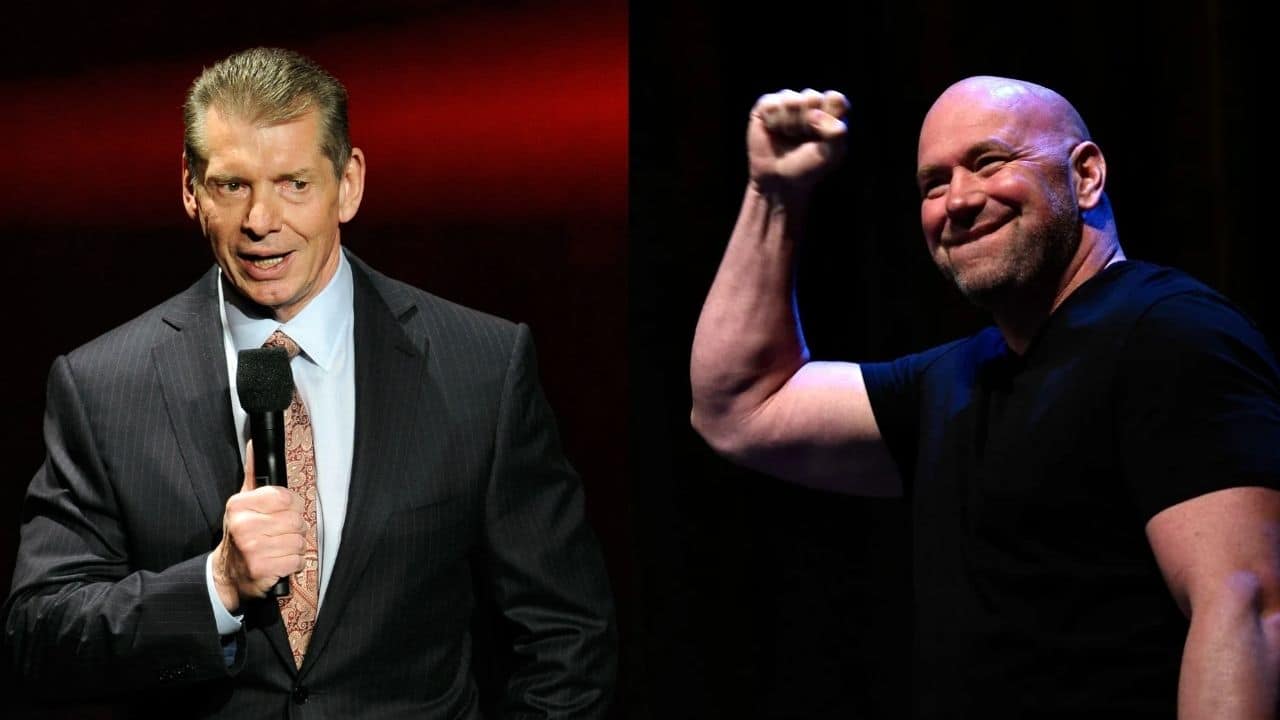
This agreement marks the culmination of WWE’s arduous months-long sale process, which was under the leadership of its co-founder, Vince McMahon. As a result of the merger, a new entity will come into existence, which will be predominantly owned by Endeavor with a controlling interest of 51%. Upon completion of the merger between the WWE and UFC, the resulting corporation, with Endeavor as its majority stakeholder, will be publicly traded on the New York Stock Exchange. The corporation will be listed under the ticker symbol “TKO,” a symbol that is synonymous with technical knockouts, which is a fitting choice for an entity that is set to revolutionize the sports entertainment industry.
Jeff Bezos Spent $42 Million to Build A Giant 10,000-Year Clock

At last, the installation process has commenced for Jeff Bezos’ ambitious 10,000-year clock project. The Amazon CEO has made a significant investment of $42 million into this extraordinary endeavor, including the clock itself and a hollowed-out mountain in Texas. This location is intended to serve a dual purpose, as it will also become a spaceport for Bezos’ aerospace company, Blue Origin. The true origin of this remarkable concept can be traced back to Danny Hillis, who first proposed the idea of a 10,000-year clock in a 1995 article for Wired magazine.
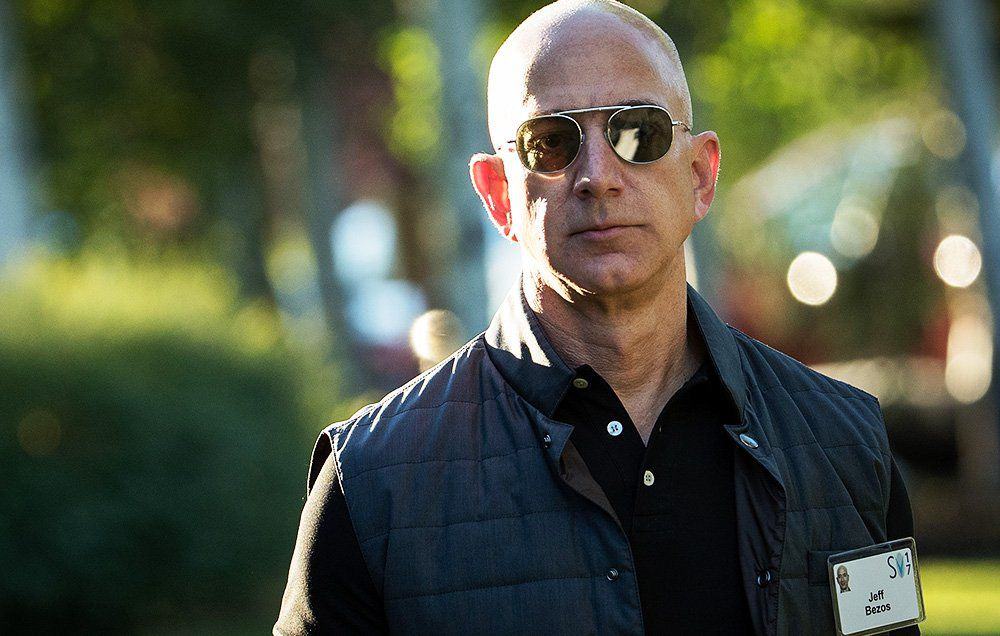
Hillis envisioned the clock as a means to stimulate thoughtful consideration about humanity’s and our planet’s long-term future. Over time, this idea evolved into the Clock of the Long Now, a project undertaken by the Long Now Foundation, which Hillis co-founded. The foundation aims to create a fully functional version of the proposed clock.

As work on this extraordinary timepiece progresses, the Clock of the Long Now symbolizes a commitment to long-term thinking. It emphasizes the need for humanity to consider the future consequences of its actions. Once completed, this monumental clock will stand as a testament to human innovation and our dedication to preserving the planet for countless generations.
The group has already constructed a few prototypes; however, the clock designed by Hillis and funded by Bezos will be the first to operate on a grand scale. Over the past few years, the team has diligently worked on machining the necessary components and carving through the mountain to house these intricate parts. Bezos recently announced in a tweet that the installation process for the unique 500-foot-tall mechanism has now officially begun.
As stated on the website dedicated to Bezos’ 10,000-year clock, it is anticipated that visitors will have the opportunity to admire the completed masterpiece in person. However, it is worth noting that reaching the site will be quite an adventure. The closest airport is several hours away by car, and the journey to the clock will involve traversing a rugged foot trail that ascends nearly 2,000 feet above the valley floor. Despite these challenges, the awe-inspiring timepiece promises to be a unique and thought-provoking attraction that will undoubtedly draw curious visitors from near and far.
The Story of Padma Lakshmi

Padma Lakshmi’s most recent production, “Taste the Nation,” is not just a new venture for the model, actress, and television host but the fulfillment of her lifelong passions as an authentic food writer, history enthusiast, and cultural steward.

Throughout her career, she has demonstrated a keen interest in these areas, making her latest show a natural progression of her passion for food, culture, and history. By showcasing the diverse cuisines and cultural traditions that have shaped America, she is using her platform to break down the longstanding stereotype of what constitutes an American identity.
During my younger years, I eagerly awaited my return home to catch my favorite shows on the Food Network. First on the list was Gale Gand, whose show “Sweet Dreams” featured delectable desserts that left me drooling. However, every week, I was most excited to watch Padma Lakshmi’s “Melting Pot: Padma’s Passport,” where she would cook up warm Indian rice pudding or flavorful saffron and preserved lemon-scented shrimp rice pilaf. It was a unique and thrilling experience to see someone who looked like me on a national stage representing my culture and cuisine. This occurred in the year 2001.
As the year 2001 drew to a close, most Americans became familiar with Afghanistan and Al Qaeda. Unfortunately, this period also saw an increase in prejudice against Brown people who did not fit their expectations. While some aspects of this social climate remain unchanged in the intervening years, there has been a notable shift in public awareness of Padma Lakshmi. As a result of her continued success, more and more people recognize and appreciate her contributions to food culture and beyond.
In the years following 2001, Padma Lakshmi accomplished a great deal. She has starred in a Bollywood film, written a memoir, hosted a travel specialist for Planet Food that took her across the globe, served as a judge on Bravo’s “Top Chef,” welcomed a child into the world, authored a thought-provoking op-ed in the New York Times, demonstrated the art of eating tacos with grace and now, added to this impressive list, she has launched a 10-episode series on Hulu titled “Taste the Nation.” This show seeks to challenge the longstanding notion of who holds power to determine what and who is considered American. By showcasing a variety of cuisines and cultures, Lakshmi aims to promote inclusivity and celebrate the diversity that defines the American identity.
Padma Lakshmi has been a familiar presence in our lives since our youth, and as we’ve grown older, it seems she has grown and evolved alongside us. America, too, has undergone significant changes during this time, as highlighted by Padma’s mother, Vijaya, in an episode of “Taste the Nation.” She observes that there are now many Indian stores and vegetables readily available, marking a shift towards a more diverse and inclusive society. Perhaps “Taste the Nation” represents the true essence of Padma Lakshmi all along, a culmination of her passions and experiences, finally manifested in a show that is uniquely hers. This program offers us an opportunity to see Padma in all her authenticity, celebrating her heritage while promoting a more inclusive vision of American culture.