
Month: October 2026
5 Creepy Things Every Narcissist Hides Somewhere in the House

Something in your own home feels off, but you cannot quite name it.
A drawer stays locked. A phone disappears. Your keys turn up somewhere you already checked.
You ask a simple question and somehow end up defending your memory, your spending or your right to privacy.
That confusion matters, especially when small incidents keep forming the same unsettling pattern.
Not every hidden object proves manipulation, and a personality label cannot explain someone’s behavior by itself.
But secrecy combined with denial, monitoring or control deserves your attention.
Here are five disturbing things that may be hidden or moved around your home, what those discoveries can mean and how you can respond safely.
Why does the house become part of the control?
Your home contains the ordinary details of your life: what you buy, whom you call, when you sleep and where you keep important papers.
For a controlling person, those details can become useful. Moving an object creates confusion. Hiding money limits your choices. Watching a room reveals conversations you thought were private.
The house also offers cover. Visitors may see a clean kitchen and a charming host, while you experience locked cupboards, unexplained devices and rules that change without warning.

One strange discovery may have an innocent explanation. What matters is the pattern around it.
Are reasonable questions met with calm answers, or contempt and blame? Can you access shared information, or does one person control everything? Do you feel free at home, or do you constantly adjust your behavior to avoid consequences?
Those questions are more useful than trying to prove a label. No diagnosis is required before taking your own discomfort seriously.
What does this secrecy do to you?
Repeated secrecy can make you live like a detective in a place where you should be able to rest.
You may check the hook twice after hanging your keys. You may rehearse a question before asking it. You may photograph a bill because you fear it will disappear before morning.
Over time, your attention shifts from your own life to managing another person’s reactions. You stop asking whether their behavior is acceptable and start asking whether you can prove it beyond doubt.

That is why these hidden things are disturbing even when the object itself seems ordinary. A spare phone, cash envelope or camera is not automatically abusive. Its meaning depends on how it is used and what happens when you notice it.
If the discovery is followed by punishment, intimidation, financial restriction or relentless denial, focus on your safety rather than winning an argument.
You are allowed to seek support based on the effect the behavior has on you. A confession is not required before you protect your privacy, documents, money or peace.
#1 Your things move when you aren’t looking
Your charger vanishes from the bedside table. The passport you placed in a folder appears under a stack of towels. Your keys turn up on the shelf you searched twice.
When you ask about it, the answer is immediate: you are careless, forgetful or becoming impossible to live with.
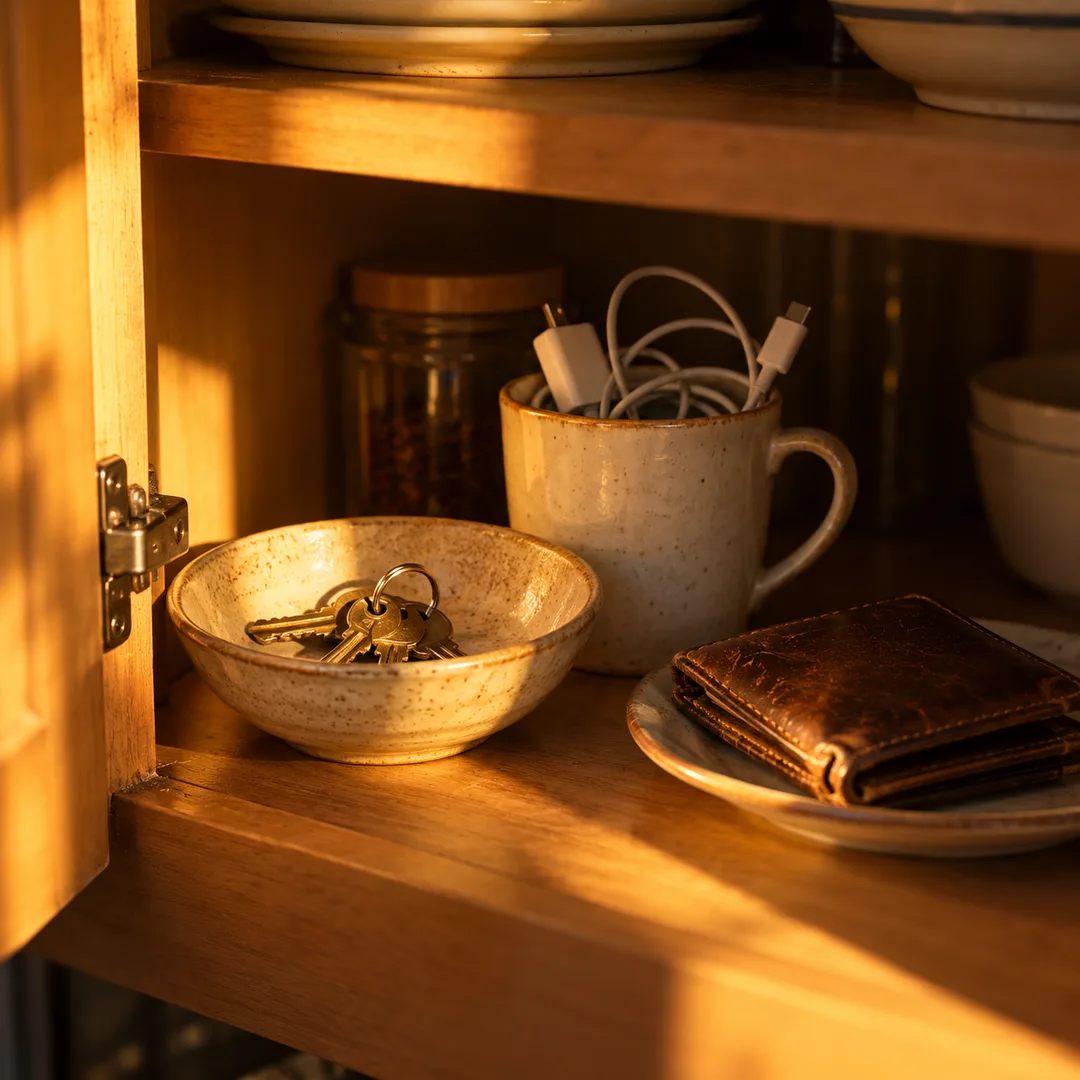
Picture a morning when you are already late for work. You empty your bag, check every pocket and finally borrow a key. That evening, your missing key is back on its usual hook, and the other person smirks when you mention it.
Moving possessions can create inconvenience, but the deeper effect is self-doubt. If someone can make you question what you clearly remember, their account of other events becomes harder to challenge. The pattern may leave you searching, apologizing or depending on them for the item.
Ordinary forgetfulness happens. The warning sign is a repeated pattern paired with ridicule, impossible explanations or objects reappearing in places you already checked.
Record incidents somewhere they cannot casually access, if doing so is safe. Note the date, object and last place you saw it. Keep essential duplicates with a trusted person rather than setting a trap or announcing that you are documenting events.
Your goal is not to catch them dramatically. It is to protect your functioning and keep hold of your own reality.
#2 There’s a second phone somewhere
The second phone may live in a glovebox, gym bag or coat pocket. It stays silent around you but seems to travel everywhere with them.
You discover it when a jacket buzzes. They call it an old work phone, then accuse you of spying before you have even asked another question.
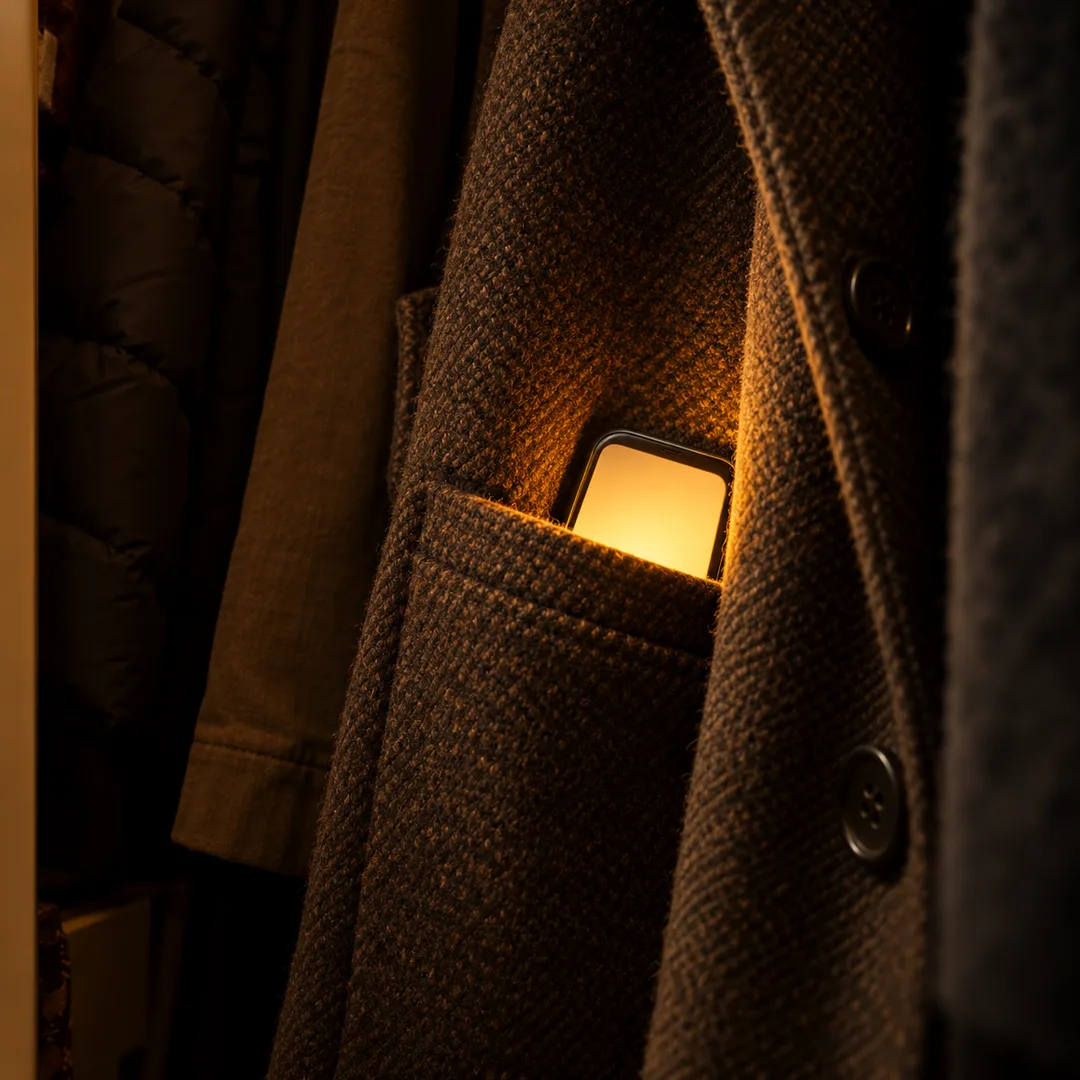
There are legitimate reasons to have two phones. The concern is the surrounding secrecy: changing stories, erased messages, unexplained absences or demands for access to your devices while theirs remain untouchable.
A hidden phone can preserve a separate audience. It may hold flirtation, secret accounts, financial activity or conversations that support a carefully managed public image. For someone who craves attention and avoids accountability, separate channels make it easier to present different versions of themselves to different people.
You may feel an urge to unlock the phone immediately. Pause and consider what discovery could trigger, especially if this person has threatened, intimidated or monitored you before.
Acknowledging broken trust does not require breaking into a device. Write down what you personally observed, secure your own accounts and speak to someone outside the relationship.
If shared health, money or housing may be affected, quietly seek appropriate professional guidance. Make decisions from verified facts and your own safety needs, not from the explanation you feel pressured to accept.
#3 The money they swear isn’t there
You are told there is no money for medicine, transport or new shoes. Every ordinary purchase becomes a hearing in which you must prove that you deserve it.
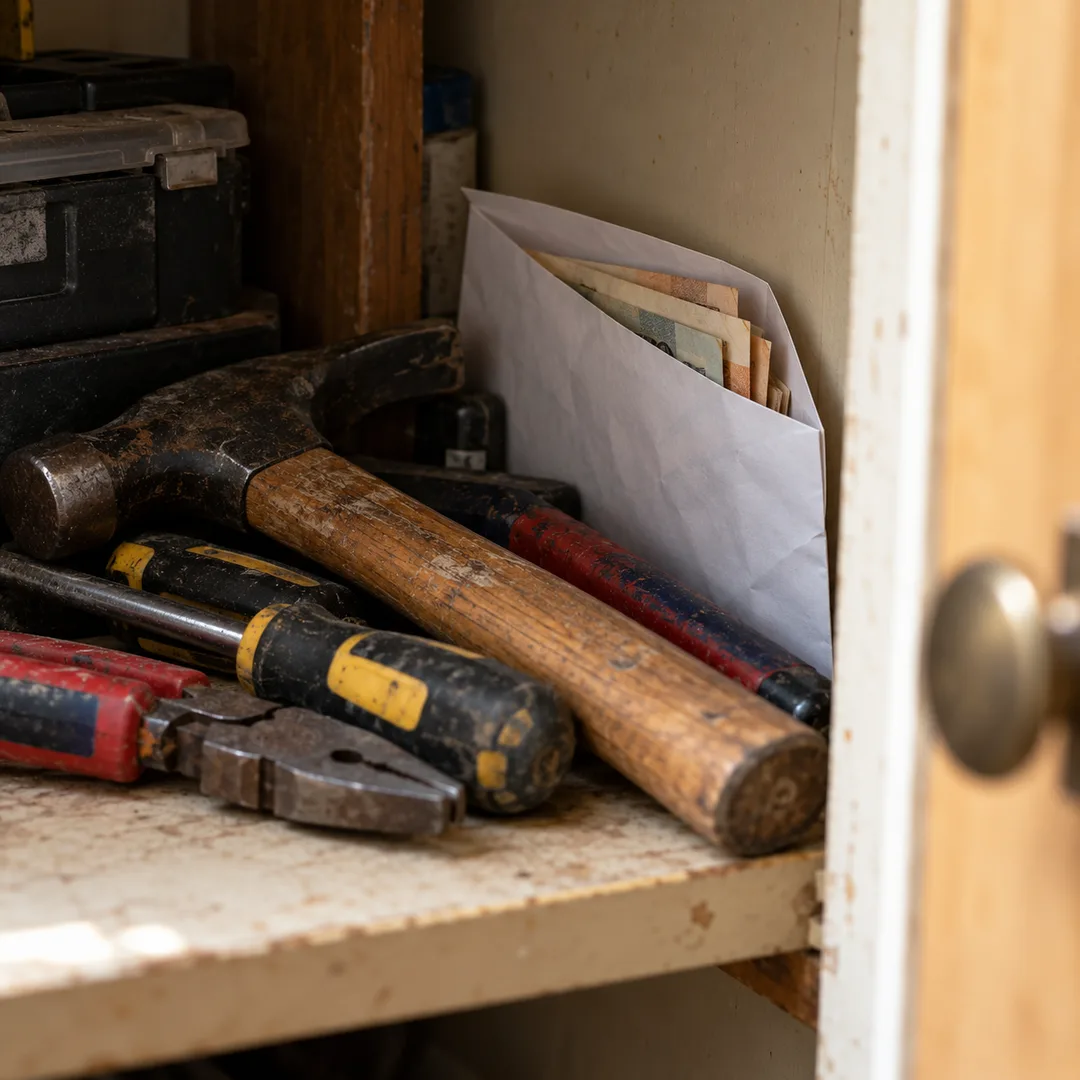
Then you find cash inside a toolbox, an unfamiliar bank card in a coat or statements from an account you never knew existed.
Imagine being scolded for buying groceries while the other person secretly saves enough for a private trip. The issue is not merely that they kept cash. It is that false scarcity was used to restrict you while preserving freedom for them.
Hidden money can create leverage. When one person controls the accounts, passwords and financial story, the other may struggle to leave, obtain advice or even get to work. You may begin asking permission for essentials while they spend without explanation.
If it is safe, gather copies of documents you already have a right to access, including identification, shared bills and account information. Check your credit through the official service available where you live, and consider opening an account at a different institution using a safe mailing and email address.
Do not make a sudden financial move if it could expose you to danger. A domestic abuse advocate or qualified financial adviser can help you think through timing, privacy and local rules.
Your need for independence is not selfish. Money should not be used to make your choices disappear.
#4 A camera that’s really watching you
A camera points toward the sofa rather than the door. A smart speaker appears in a room without discussion. Somehow they know who visited and how long your phone call lasted.
When you object, they say it is for security and ask what you have to hide.
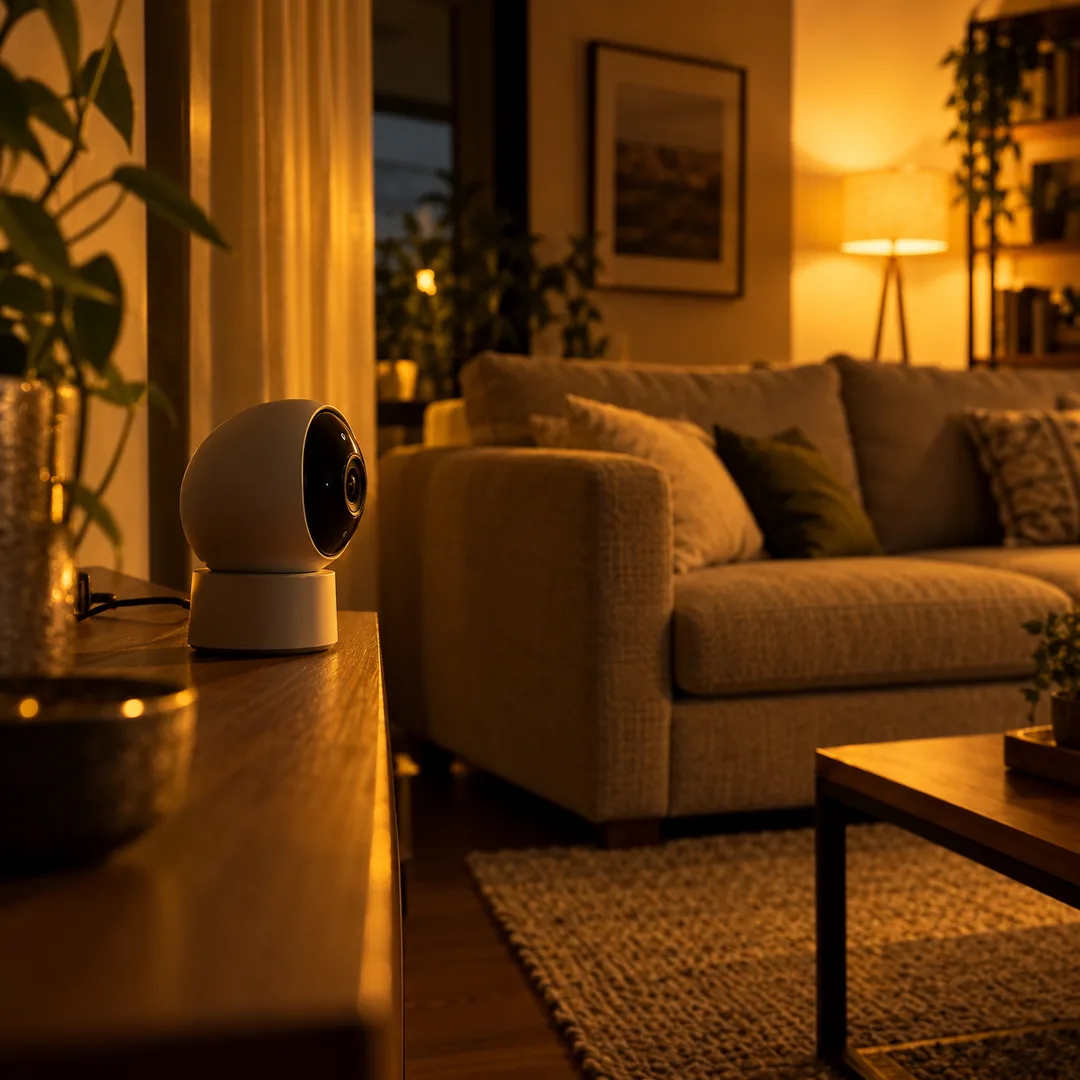
Consider the difference between a doorbell camera that everyone understands and an indoor device one person controls. Shared security has agreed boundaries. Surveillance makes you behave as if you are always being inspected.
The purpose may be information, intimidation or both. Knowing where you sit, whom you call and when you leave allows a controlling person to question ordinary choices. Eventually, the possibility of being watched can control you even when no one is checking.
If you find a device, resist the urge to destroy or disconnect it immediately. Some systems send alerts, and a sudden change could reveal what you know.
Use a safer device outside the home to contact a domestic abuse service or a trusted technology professional. They can help you consider account access, connected devices and evidence without increasing your risk.
Laws about recording vary by location, so obtain local legal guidance if needed. Whatever the legal position, you are allowed to recognize that secret monitoring has violated your sense of safety.
#5 A file on your whole life
The file may contain screenshots from your worst arguments, photographs of journal pages, old medical letters or notes about moments when you were exhausted and upset.
Nothing includes the apology that came later, what provoked the exchange or the calm months around it. The selective collection can create a damaging story that leaves out important context.

Perhaps you discover a folder labeled with your name after a disagreement about custody, housing or money. Soon afterward, a relative repeats a private sentence that only appeared in one of those saved messages.
Selective records can be used to frighten you, discredit you or recruit other people into a conflict. Someone focused on protecting their image may collect your most vulnerable moments while leaving their own behavior undocumented.
Do not assume you must produce a larger counter-file or persuade every mutual friend. Preserve relevant communications lawfully, keep your responses brief and factual, and move sensitive conversations to a safer channel where possible.
Change passwords from a device you believe is secure. Review shared cloud storage and account recovery options. For legal, workplace or custody concerns, get advice suited to your location before changing access or deleting anything.
A curated file is not your whole life. It is one person’s selected version, created without the fuller context surrounding those moments.
Am I overreacting to something that could be innocent?
You may be tempted to judge each incident separately. Keys move. People keep spare phones. Cash gets tucked away for emergencies. Cameras protect homes.
Any one of those explanations may be true.

The clearer question is what happens around the discovery. Does the person answer reasonable questions consistently? Do they care that you feel unsettled? Can you agree on boundaries without being mocked, threatened or punished?
Healthy privacy does not require making you doubt your senses. A respectful partner might be embarrassed or defensive for a moment, but they can still discuss shared money, household monitoring and agreements that affect you.
A controlling pattern looks different. Facts shift. The conversation becomes an attack on your character. Your access shrinks, while their freedom grows. You start concealing harmless actions because any detail may cause trouble.
Keep your focus on observable behavior and impact. There is no need to decide whether someone is truly a narcissist. Ask whether you feel safe, informed and able to make ordinary choices.
If the answer is repeatedly no, seeking confidential support is a proportionate response. You are not required to wait for a more dramatic incident.
Is hiding something the same as having privacy?
No. Privacy is a normal boundary; secrecy becomes harmful when it removes another person’s ability to make informed decisions about their own life.
A private journal may belong only to its writer. A hidden debt attached to a shared account affects both people. A personal conversation with a friend is different from secretly recording you in the living room.

It helps to ask three questions. Does this information affect your body, finances, housing or safety? Was there a clear agreement about it? Does one person demand transparency while granting themselves exceptions?
That last imbalance matters. Someone may inspect your phone, question every purchase and track your location while calling their own devices and accounts private. The word privacy then becomes a shield for unequal power.
You can respect another adult’s personal space without surrendering information you need about shared responsibilities. You can also decide that a relationship no longer works when basic openness is absent.
Boundaries are choices about what you will participate in, not commands that force another person to confess. Quietly seeking advice, separating important accounts or leaving may be safer than debating the definition of privacy with someone who uses the debate to punish you.
What if the evidence disappears before anyone sees it?
A phone is moved. The cash envelope vanishes. A camera is replaced with an ordinary ornament. Now you fear that telling anyone will make you sound unreliable.
Start with what you know firsthand. You can say where you were, what you saw and what happened afterward without guessing about motives.

If documentation is safe, record dates and brief factual descriptions. Save relevant messages or photographs somewhere the other person cannot easily reach. Avoid storing everything in a shared cloud account or on a device they routinely inspect.
Evidence is useful, but your safety matters more than building a perfect case. Do not return to a dangerous room, handle an unknown device or provoke a reaction simply to obtain proof.
A trusted friend can keep copies and provide a reality check. An advocate can help you decide what records may be useful for housing, finances or legal advice in your area.
Even without a photograph, the experience still tells you something important: you no longer feel secure in your home or confident that shared information is honest.
You are allowed to act on that knowledge. Support is not a courtroom, and you do not need flawless evidence before asking someone to listen.
Why do I freeze or keep doubting what I saw?
Finding something hidden can threaten your understanding of your entire relationship. Your mind may search for a harmless explanation because the alternative would require painful decisions.
You may freeze, put the object back or behave normally through dinner. Later, you might wonder whether you imagined the details.

That response does not mean you are weak. Freezing can be your body’s way of buying time when reacting immediately feels risky. Doubt can also grow after months of being told that your perceptions are wrong.
Everything does not have to be resolved on the night of discovery. Move toward steadier ground first. Eat, rest if you can and contact one calm person who will not rush you into action.
Write down sensory facts before debating their meaning: where the item was, what it looked like and what was said. This separates your observation from the explanation someone later supplies.
Then consider the wider pattern. Has secrecy repeatedly affected your freedom, money, relationships or sense of safety?
Your first reaction is not a binding decision. You can take time, gather support and choose your next step without confronting the person who frightened or confused you.
Should I search the house for more hidden things?
The urge makes sense. Once you find one secret, every drawer may feel like it contains the missing explanation.
But an intensive search can increase danger, especially if the other person monitors the home, notices disturbed belongings or has reacted aggressively to questions before.

Searching can also pull you deeper into a cycle in which you need one more discovery before trusting yourself. You may lose sleep, ignore work and become consumed by proving what you already know: the relationship does not feel safe or honest.
Ask what finding more would change. If you already know that shared money is being concealed or that you are being watched, professional guidance may help more than opening another box.
Prioritize items needed for your own safety and independence: identification, medication, essential contacts, keys and records you are entitled to access. Do not take property that is not yours or enter a space that could put you at risk.
If you believe there may be recording equipment, use a safer device and location to obtain specialist advice before touching anything.
You can leave, get support or change what you share without knowing every secret. Complete certainty is rarely available, but safer choices can begin now.
What you can do
You can respond without announcing your plans or trying to force a confession. Choose the steps that fit your circumstances and safety.
Start with immediate safety
If you fear an angry reaction, do not confront the person about what you found. Move to a safer place if you can, and contact emergency help when danger is immediate.
Think about exits, transport, medication and one person you can call. A domestic abuse service can help you make a personal plan even if you are unsure whether you want to leave.
Protect essential information
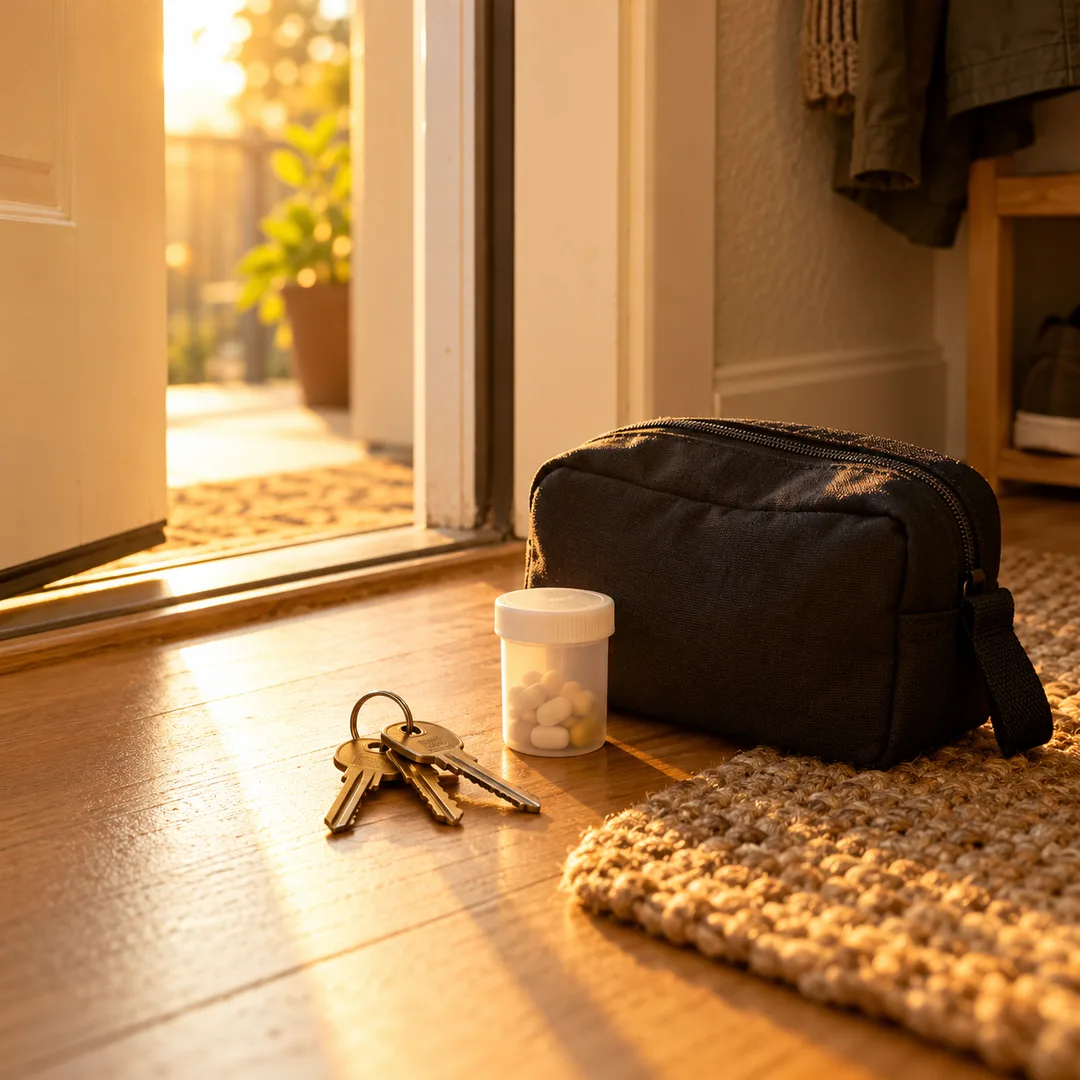
Gather identification, financial records, prescriptions and important contact details you already have a right to use. Keep copies somewhere safer than the shared home when possible.
Use a device the other person cannot access to review passwords and account recovery settings. Remember that sudden password changes or disconnected devices may send alerts, so seek technology-safety advice when monitoring is suspected.
Tell one steady person
Choose someone who can listen without contacting the other person or pressuring you into a deadline. Explain specific events rather than arguing for a diagnosis.
You might agree on a code word, a place to store documents or a regular check-in. One reliable connection can reduce isolation and give you practical help if circumstances change quickly.

Get support that matches the problem
Different discoveries may require different help. A domestic abuse advocate can assist with safety planning. A qualified financial adviser can explain account options, while a local lawyer can clarify recording, property or custody rules.
Leaving is always a valid choice, but it deserves planning when control or surveillance is present. You can seek information confidentially without committing to any particular outcome.
The bottom line
The hidden object is only part of the story. What matters is whether secrecy is being used to confuse you, limit your choices, monitor you or shape how other people see you.
A diagnosis or complete accounting of every secret is unnecessary before responding. Trust the pattern you can observe, protect essential information and involve a safe person outside the home.
Most importantly, do not risk a confrontation to secure proof. Your safety is more valuable than a confession, and leaving or asking for support is a legitimate response to a home that no longer feels like your own.
Keep reading
- When a Narcissist Knows You Know
- 5 Ways Narcissists Quietly Isolate You
- 8 Ways to Take Your Power Back From a Narcissist Without a Fight
If you feel unsafe: in the US, call the National Domestic Violence Hotline at 1-800-799-7233 (thehotline.org). In the UK, call the National Domestic Abuse Helpline on 0808 2000 247. If you are in immediate danger, call your local emergency number.
Sources
- Goffman, E. (1959). The Presentation of Self in Everyday Life. Doubleday.
- Sweet, P. L. (2019). The sociology of gaslighting. American Sociological Review, 84(5), 851-875.
- Stern, R. (2007). The Gaslight Effect. Morgan Road Books.
- Campbell, W. K., Foster, C. A., & Finkel, E. J. (2002). Does self-love lead to love for others? A story of narcissistic game playing. Journal of Personality and Social Psychology, 83(2), 340-354.
- Freyd, J. J. (1996). Betrayal Trauma: The Logic of Forgetting Childhood Abuse. Harvard University Press.
- Postmus, J. L., Plummer, S.-B., McMahon, S., Murshid, N. S., & Kim, M. S. (2012). Understanding economic abuse in the lives of survivors. Journal of Interpersonal Violence, 27(3), 411-430.
- Stark, E. (2007). Coercive Control: How Men Entrap Women in Personal Life. Oxford University Press.
- Christie, R., & Geis, F. L. (1970). Studies in Machiavellianism. Academic Press.
- Jones, D. N., & Paulhus, D. L. (2014). Introducing the Short Dark Triad (SD3). Assessment, 21(1), 28-41.
- Crick, N. R., & Grotpeter, J. K. (1995). Relational aggression, gender, and social-psychological adjustment. Child Development, 66(3), 710-722.
Belle Souls articles explain patterns described in psychology research and recovery writing. They are not a diagnosis and not a substitute for help from a qualified professional.
8 Things Narcissists Do on Vacation That Ruin Every Trip

You saved for months. You booked the room with the view. You pictured slow breakfasts and long walks with nowhere to be.
Then the trip started, and it went the way it always seems to go.
Narcissists don’t take a vacation from being narcissists.
You came home more tired than when you left, quietly wondering if you were the one who ruined it.
You weren’t. Here are 8 things narcissists do on vacation that ruin every trip, and why they do them.
#1 They start a fight before you leave
Your happiness about the trip can feel like a threat to a narcissist.
The bags are packed. The taxi is booked. And the night before, out of nowhere, there’s a fight about the dishes, your tone, or the way you looked at your phone.
“Why are you always like this?”
Sounds random. It often isn’t.
Psychologists who study narcissism link it with envy. When good things happen to someone else, it stings. Your excitement counts as a good thing happening to you. So it gets cut down before it can grow.
Over time, you stop saying how much you’re looking forward to anything. Joy starts to feel like a risk.
Notice who goes quiet, or loud, right when you’re glad. The timing is the tell.
#2 Every plan bends around them
On vacation, a narcissist often expects the whole trip to bend around them.
You wanted the museum. They wanted the beach club. Guess where you went?
Then there’s the waiting. A line at check-in, a slow waiter, a delayed flight. They act like each one was done to them personally. “Do these people know who they’re dealing with?”
Psychologists call this entitlement. Deep down, they feel owed more than anyone else, and rules feel optional. So a normal limit lands on them like an insult.
Your requests land that way too. Asking for one afternoon to yourself turns into a whole battle.
You give more. You get less.
Try keeping a quiet tally of whose plans actually happened. Whose trip was it?
#3 Strangers get the charming version
The narcissist often saves their best self for new people and onlookers.
They joke with the bartender. They tip big when the couple at the next table is watching. The tour guide thinks they’re wonderful.
Then the hotel room door closes, and the warmth goes with it.
Why? Their self-worth runs on admiration, so how strangers see them matters a lot. Psychologists who study narcissistic admiration and rivalry describe the same arc: dazzling with newcomers, cold or cutting with the people closest.
You keep chasing the person you met at the start. The bartender is meeting that person right now.
And when someone at the pool says, “You’re so lucky,” you smile and feel a little crazy.
What happens after the door shuts is the real trip. Believe that version.
#4 One wrong turn becomes a war
A narcissist may treat a simple correction like a public humiliation.
You’re in the rental car. You say, gently, “I think we missed the exit.” Suddenly you’re the problem. “Fine, you drive, since you know everything.”
The cold fury lasts all the way to the hotel. Sometimes it resurfaces two days later, over something you’d already forgotten saying.
Psychologists call this threatened egotism. In studies, narcissists hit back harder after a bruise to their ego, and they aimed it at the person they held responsible. Your comment about the exit was that bruise.
So you begin checking every word before it leaves your mouth. The map. The menu. Your face.
If the shouting ever turns into threats, get out of the room. Your safety matters more than any itinerary.
You don’t owe anyone an apology for reading a road sign.
#5 Silence follows you to the beach
Silence can be a punishment, and a narcissist may pack it for every trip.
A small disagreement at breakfast. Then nothing. They chat with the waiter, the pool attendant, the couple from the next room. Just not you.
You spend a whole day of your vacation trying to work out what you did.
Studies on ostracism explain the sting. Being frozen out hits your need to feel included and to count for something. The hurt can register a lot like bodily pain, and giving in starts to look like the only way out.
So you say sorry just to make the quiet stop. Later they act like the whole day never happened.
One thing helps. Tell them one time that you’re ready to talk whenever they are. Then go enjoy the place you flew all this way for.
The ocean doesn’t need their permission.
#6 Their eyes wander at the pool
A narcissist often keeps one eye on other options, even on a romantic trip.
The long look at the woman by the pool. The friendly chat that runs a little too long. The phone lighting up with an ex’s name, right at dinner.
“Relax, I’m just being friendly.”
Psychologists have tied narcissism to treating love like a game. Commitment runs low, and the back door often stays open.
So on a trip meant for just the two of you, you’re fighting for attention that used to come without asking.
You feel replaceable. On a sunbed. In paradise.
Judge commitment by what they do, day after day. Not by what they post.
#7 Their bad mood becomes your fault
However hard you plan, a narcissist’s disappointment somehow lands on you.
The hotel is lovely, but the pillows are wrong. The restaurant you booked is “fine.” The rain is your fault too, apparently.
They sulk. They sigh. “I guess this is what you wanted.”
Researchers have described a quiet side to narcissism: prickly, sulky, full of self-pity. Feeling hard done by shields an ego that bruises easily. Plenty of narcissists flip between this and the loud, showy side.
So you tiptoe around their mood all week, even at a beach bar with a cocktail in your hand.
One way to tell: listen for an apology with no “but” attached.
Have you ever heard one?
#8 The photos tell a different story
Once the trip is over, the narcissist may rewrite what happened on it.
You bring up the night they yelled at you in the parking lot. “That never happened. We had an amazing time.” Then they post the sunset photo with a caption about the best trip ever.
Everyone likes it. Nobody saw the parking lot.
Psychologists call this gaslighting. The goal is to make you distrust your own memory until their story is the only one left. It works best when they hold more power and get to tell the tale.
Soon you’re asking yourself whether you overreacted. You end up saying sorry for a night that hurt you.
Jot it down the same day, even in your phone’s notes. Then talk it over with a friend who isn’t inside the relationship.
You were there. Your memory counts.
A ruined trip can make you feel like you failed at something simple. You didn’t. Many narcissists act the same wherever they are, so a new place rarely brings a new person.
So pay attention to who you are when you get a moment to yourself on the trip. The woman who wanted the museum and the slow breakfast is worth listening to.
If you feel unsafe: in the US, call the National Domestic Violence Hotline at 1-800-799-7233 (thehotline.org). In the UK, call the National Domestic Abuse Helpline on 0808 2000 247. If you are in immediate danger, call your local emergency number.
Sources
- American Psychiatric Association. (2022). Diagnostic and Statistical Manual of Mental Disorders (5th ed., text rev.).
- Pincus, A. L., & Lukowitsky, M. R. (2010). Pathological narcissism and narcissistic personality disorder. Annual Review of Clinical Psychology, 6, 421-446.
- Krizan, Z., & Johar, O. (2012). Envy divides the two faces of narcissism. Journal of Personality, 80(5), 1415-1451.
- Campbell, W. K., Bonacci, A. M., Shelton, J., Exline, J. J., & Bushman, B. J. (2004). Psychological entitlement: Interpersonal consequences and validation of a self-report measure. Journal of Personality Assessment, 83(1), 29-45.
- Goffman, E. (1959). The Presentation of Self in Everyday Life. Doubleday.
- Back, M. D., Kufner, A. C. P., Dufner, M., Gerlach, T. M., Rauthmann, J. F., & Denissen, J. J. A. (2013). Narcissistic admiration and rivalry. Journal of Personality and Social Psychology, 105(6), 1013-1037.
- Bushman, B. J., & Baumeister, R. F. (1998). Threatened egotism, narcissism, self-esteem, and direct and displaced aggression. Journal of Personality and Social Psychology, 75(1), 219-229.
- Williams, K. D. (2009). Ostracism: A temporal need-threat model. Advances in Experimental Social Psychology, 41, 275-314.
- Campbell, W. K., Foster, C. A., & Finkel, E. J. (2002). Does self-love lead to love for others? A story of narcissistic game playing. Journal of Personality and Social Psychology, 83(2), 340-354.
- Wink, P. (1991). Two faces of narcissism. Journal of Personality and Social Psychology, 61(4), 590-597.
- Miller, J. D., Lynam, D. R., Hyatt, C. S., & Campbell, W. K. (2017). Controversies in narcissism. Annual Review of Clinical Psychology, 13, 291-315.
- Sweet, P. L. (2019). The sociology of gaslighting. American Sociological Review, 84(5), 851-875.
- Stern, R. (2007). The Gaslight Effect. Morgan Road Books.
Belle Souls articles explain patterns described in psychology research and recovery writing. They are not a diagnosis and not a substitute for help from a qualified professional.
8 Dirty Tricks Narcissists Pull Once They Realize You See Through Them

Narcissists hate being seen clearly.
You asked one plain question. Or you didn’t laugh at the joke. Or you just looked at them a second too long, and something in the room went cold.
Now everything is harder.
That isn’t your imagination. Their whole self-image leans on how others see them, so a clear-eyed you is bad news.
Here are 8 dirty tricks narcissists pull once they realize you see through them.
Why being seen scares them
For many narcissists, feeling okay depends on what others reflect back: praise, agreement, a flattering picture.
So the people around them tend to land in two boxes. Fans. Or threats.
The day you see through them, you move boxes.
Some get louder and push harder. Others go quiet, sulk and feel badly wronged. Loud or quiet, it’s the same job: guarding a self-image that cracks easily. Plenty swing between both.
#1 Suddenly you’re the one on trial
The moment you name what they did, they make you the one on trial.
You bring up the money that went missing. Calmly. Ten seconds later: “I never touched it, and how dare you accuse me after everything?”
Then come your faults. All of them, in a list. Then the tears, or the sulking, until you’re the one comforting them.
Psychologists call this DARVO: deny, attack, reverse victim and offender.
Studies on it show something nasty. Whoever raised the problem tends to walk away blaming herself. No wonder the conversation dies so fast.
What helps? Say the first issue again, plainly. Skip arguing each new accusation they throw in.
The missing money is still the topic.
#2 Your memory becomes the problem
Once you can see clearly, they work hard to make you doubt your own eyes.
“That never happened.” “You’re too sensitive.” “I’d never say that, you’re making things up again.”
Your keys aren’t where you left them. The conversation you know you had becomes one you dreamed. They even tell your sister you’ve been “a bit unstable lately.”
That’s gaslighting. It thrives when one person holds more power, and your trust in them hands them the pen to rewrite events.
Soon your phone is full of notes proving last Tuesday was real. And somehow you’re saying sorry for their cruelty.
Jot things down the same day. Then run them past a friend who isn’t inside the relationship.
Your memory was fine all along.
#3 They start the story before you can
If they sense you’re pulling away, they often get to your friends first.
A worried coffee with your best friend. A sad voice: “I’m just scared for her. She’s not herself.”
Then a vague post online about “toxic people” and “finally protecting my peace.”
By then, the story is out.
Research calls this relational aggression. It goes after your reputation and friendships, not your body. No bruises, so nothing to point at.
That’s what makes it so cruel. Your support thins out just when you lean on it hardest, and you feel like you’re on the stand everywhere you go.
You don’t have to be. Act the way you always have. If it spills into your job or custody, keep copies. Time tends to do the talking.
#4 Your relatives start reading their script
Suddenly, relatives who barely called before have strong opinions about your relationship.
Your aunt texts: “Just apologise, love. You’re tearing this family apart.” A friend passes on a message you never asked for.
Sound like someone else’s words? They usually are.
“Flying monkeys” is a popular term, not a formal one, for relatives and friends who end up applying pressure on the narcissist’s behalf. Often they’ve only heard the version where the narcissist got wronged.
It links to what family research calls triangulation: dragging an outsider into a problem between two of you, so it never gets settled face to face.
The result? You feel outnumbered in your own circle.
Skip explaining yourself to the go-betweens. Your private details stay private. They don’t get a vote.
#5 A simple question sets off a storm
A narcissist who feels exposed may turn on whoever did the exposing.
You ask, “Who were you texting at 2am?” One question. And the whole evening explodes.
Or it’s colder. You correct a date in front of friends, and they just smile. Days later, payback arrives for a comment you’d long forgotten.
Psychologists studying threatened egotism saw narcissists hit back harder after an insult, and aim it at whoever delivered it.
To them, being seen clearly feels like an insult.
So you rehearse sentences before saying them. You say sorry for things that were never yours.
If you must point something out, keep it brief and stick to facts. When it feels risky, don’t. And the second threats start, get out of the room. Your safety matters more than the argument.
#6 Silence becomes their punishment
When words stop working on you, many narcissists switch to silence.
No good morning. No reply in the group chat, though they answer everyone else. They leave the house without saying where.
Then, three days later, they stroll back in as if nothing happened.
Why does it hurt so much?
Being shut out hits your need to belong and to count. Researchers who study ostracism compare the sting to physical pain, so caving can feel like relief.
So you say sorry to make it stop. Whole subjects quietly go off-limits.
Tell them one time that you’re happy to talk. Then get on with your day. No chasing, no begging. Their silence isn’t yours to fix.
#7 They accuse you of what they’re doing

The accusations they throw at you often describe them perfectly.
They’re shouting, red-faced, and the line is: “Why are you always so angry?”
You catch a lie, and suddenly you’re the liar. They take and take, then call you selfish. You’re accused of cheating while their phone stays face down.
Psychologists call this projection. Pinning their worst traits on you means they never have to face them in the mirror.
Meanwhile you’re busy disproving things you never did, and whatever you came to talk about vanishes.
Try this. When the same charge keeps coming back, read it as a clue about them. Give the facts one time, then stop.
What do they keep accusing you of?
#8 The old charm comes back out of nowhere
Sometimes the dirtiest trick of all is suddenly being sweet again.
Flowers on the counter. Your favourite takeaway. “I’ve been thinking a lot. I’m going to change, this time for real.”
Or a text out of nowhere: “I miss you.”
“Hoovering” is a popular term, not a clinical one, for the push to reel you back in. It tends to appear when they want something, or sense someone else has their spot. Birthdays are a favourite.
It runs on intermittent reinforcement. Warmth that arrives at random, between cold spells, grips tighter than reliable warmth ever does. Slot machines work the same way.
Hope floods back. Weeks of progress suddenly feel wiped out.
Weigh what they’ve done before, not what they’re promising now. It’s the same jackpot, from the same machine!
Seeing through them didn’t cause any of this. It just made the tricks easier to spot.
Their playbook is old. You see it now.
Trust what you saw. Write it down if that helps, and share it with one person who knows how they act behind closed doors.
If you feel unsafe: in the US, call the National Domestic Violence Hotline at 1-800-799-7233 (thehotline.org). In the UK, call the National Domestic Abuse Helpline on 0808 2000 247. If you are in immediate danger, call your local emergency number.
Sources
- American Psychiatric Association. (2022). Diagnostic and Statistical Manual of Mental Disorders (5th ed., text rev.).
- Pincus, A. L., & Lukowitsky, M. R. (2010). Pathological narcissism and narcissistic personality disorder. Annual Review of Clinical Psychology, 6, 421-446.
- Sweet, P. L. (2019). The sociology of gaslighting. American Sociological Review, 84(5), 851-875.
- Stern, R. (2007). The Gaslight Effect. Morgan Road Books.
- Goffman, E. (1959). The Presentation of Self in Everyday Life. Doubleday.
- Wink, P. (1991). Two faces of narcissism. Journal of Personality and Social Psychology, 61(4), 590-597.
- Miller, J. D., Lynam, D. R., Hyatt, C. S., & Campbell, W. K. (2017). Controversies in narcissism. Annual Review of Clinical Psychology, 13, 291-315.
- Freyd, J. J. (1997). Violations of power, adaptive blindness, and betrayal trauma theory. Feminism & Psychology, 7(1), 22-32.
- Harsey, S. J., Zurbriggen, E. L., & Freyd, J. J. (2017). Perpetrator responses to victim confrontation: DARVO and victim self-blame. Journal of Aggression, Maltreatment & Trauma, 26(6), 644-663.
- Crick, N. R., & Grotpeter, J. K. (1995). Relational aggression, gender, and social-psychological adjustment. Child Development, 66(3), 710-722.
- Bowen, M. (1978). Family Therapy in Clinical Practice. Jason Aronson.
- Bushman, B. J., & Baumeister, R. F. (1998). Threatened egotism, narcissism, self-esteem, and direct and displaced aggression. Journal of Personality and Social Psychology, 75(1), 219-229.
- Williams, K. D. (2009). Ostracism: A temporal need-threat model. Advances in Experimental Social Psychology, 41, 275-314.
- Baumeister, R. F., Dale, K., & Sommer, K. L. (1998). Freudian defense mechanisms and empirical findings in modern social psychology. Journal of Personality, 66(6), 1081-1124.
- Dutton, D. G., & Painter, S. (1993). Emotional attachments in abusive relationships: A test of traumatic bonding theory. Violence and Victims, 8(2), 105-120.
- Ferster, C. B., & Skinner, B. F. (1957). Schedules of Reinforcement. Appleton-Century-Crofts.
Belle Souls articles explain patterns described in psychology research and recovery writing. They are not a diagnosis and not a substitute for help from a qualified professional.
10 Things Narcissists Hate Watching You Enjoy

You laugh at something on your phone, and the air in the room changes.
You get a small win at work, and somehow the evening ends in a fight. You buy yourself flowers and get a look that makes you wish you hadn’t.
It isn’t in your head.
Many narcissists can’t stand watching you enjoy something that isn’t about them.
Here are 10 things narcissists hate watching you enjoy, and why your joy gets under their skin.
Why your joy feels like a threat
A narcissist’s sense of worth often hangs on outside confirmation. Admiration. Attention. Being the one who matters.
So your happiness gets read in a strange way.
Something good lands in your lap, and it pokes at their need to sit above you. Envy shows up. Then your good thing gets made smaller, ruined or claimed as theirs.
None of that is about anything you did wrong.
#1 Your wins feel like their losses
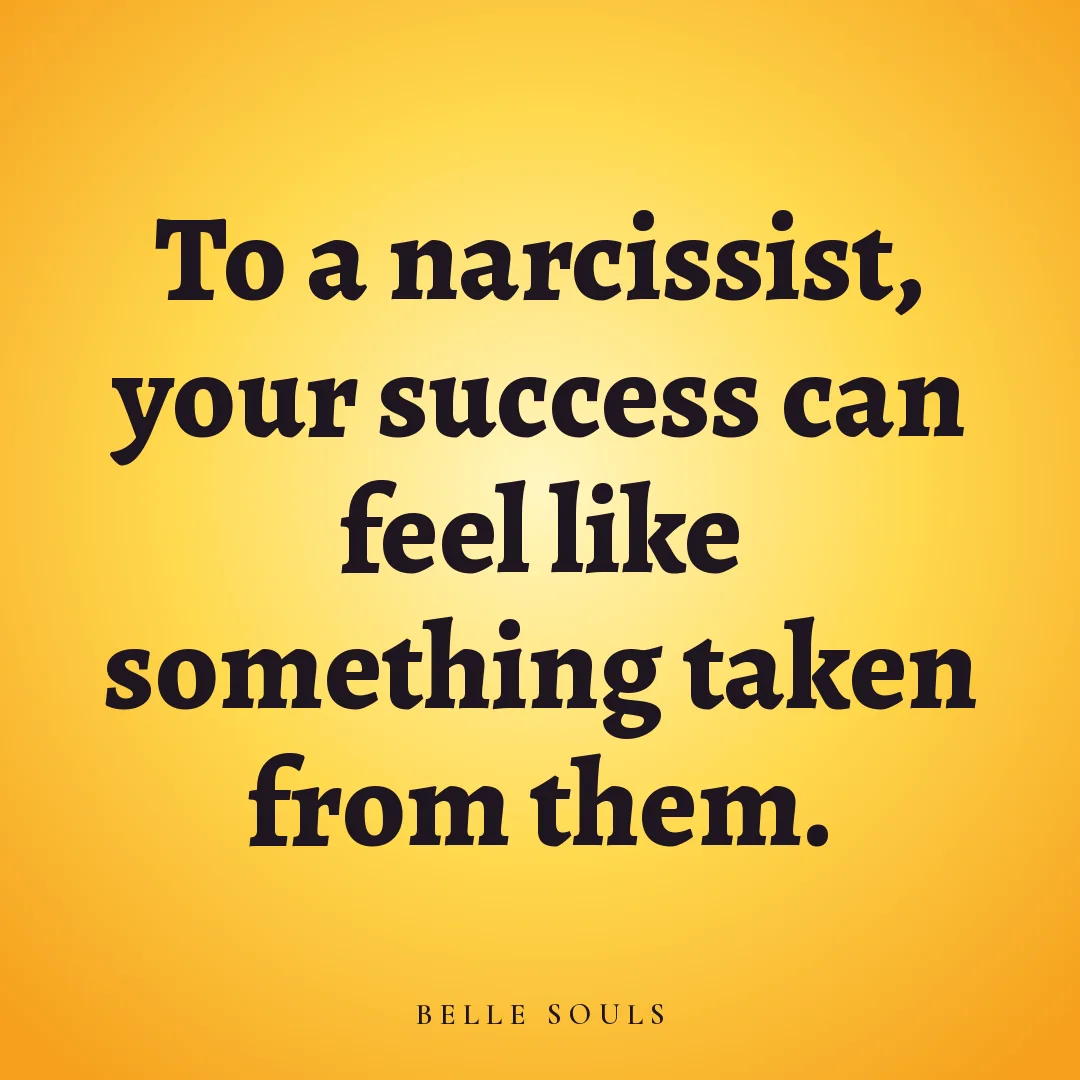
To a narcissist, your success can feel like something taken from them.
You come home buzzing about the promotion. They nod, check their phone, then talk about their own big week. “Took them long enough, didn’t it?”
Psychologists call this rivalry. At first, a narcissist may shower you with charm. Later, the urge to stay on top often wins, and your cheerleader turns into a competitor.
If you go up, they feel they went down.
Bit by bit, sharing good news starts to feel unsafe. You shrink it before they can.
Try this: tell your next win to someone who’s glad for you. Feel the difference?
#2 Birthdays that aren’t about them
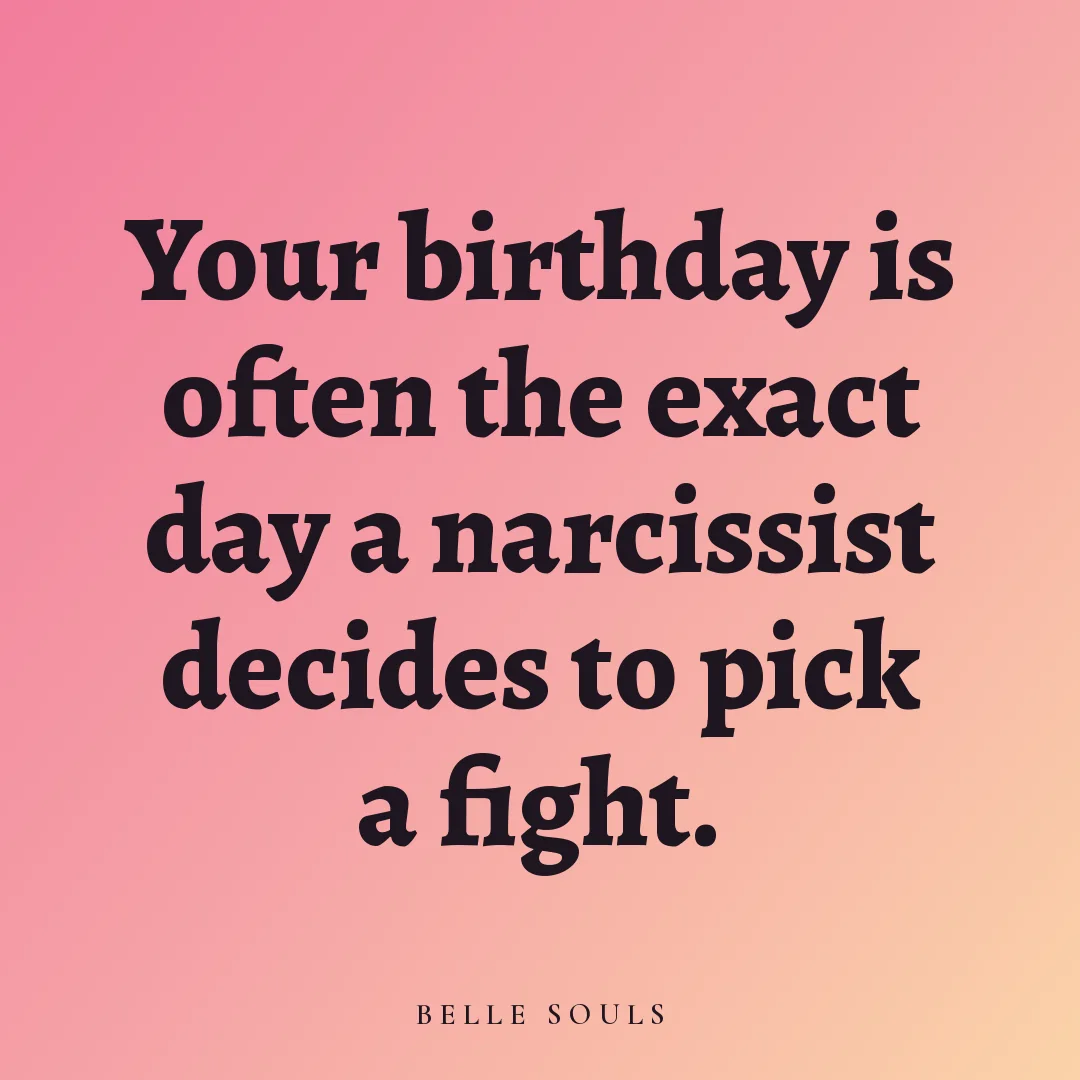
Your birthday is often the exact day a narcissist decides to pick a fight.
The table is booked. Your friends are on their way. Then comes the sigh, the sulk, the row in the car about something from March.
“Why does everything have to be about you?”
Research ties narcissism to envy, a sour grudge when life goes well for someone else. A day openly about you can sting. So they spoil it.
And it works. Joy starts to come with a knot in your stomach.
Notice who goes quiet when you shine. Sounds familiar?
#3 Other people noticing you
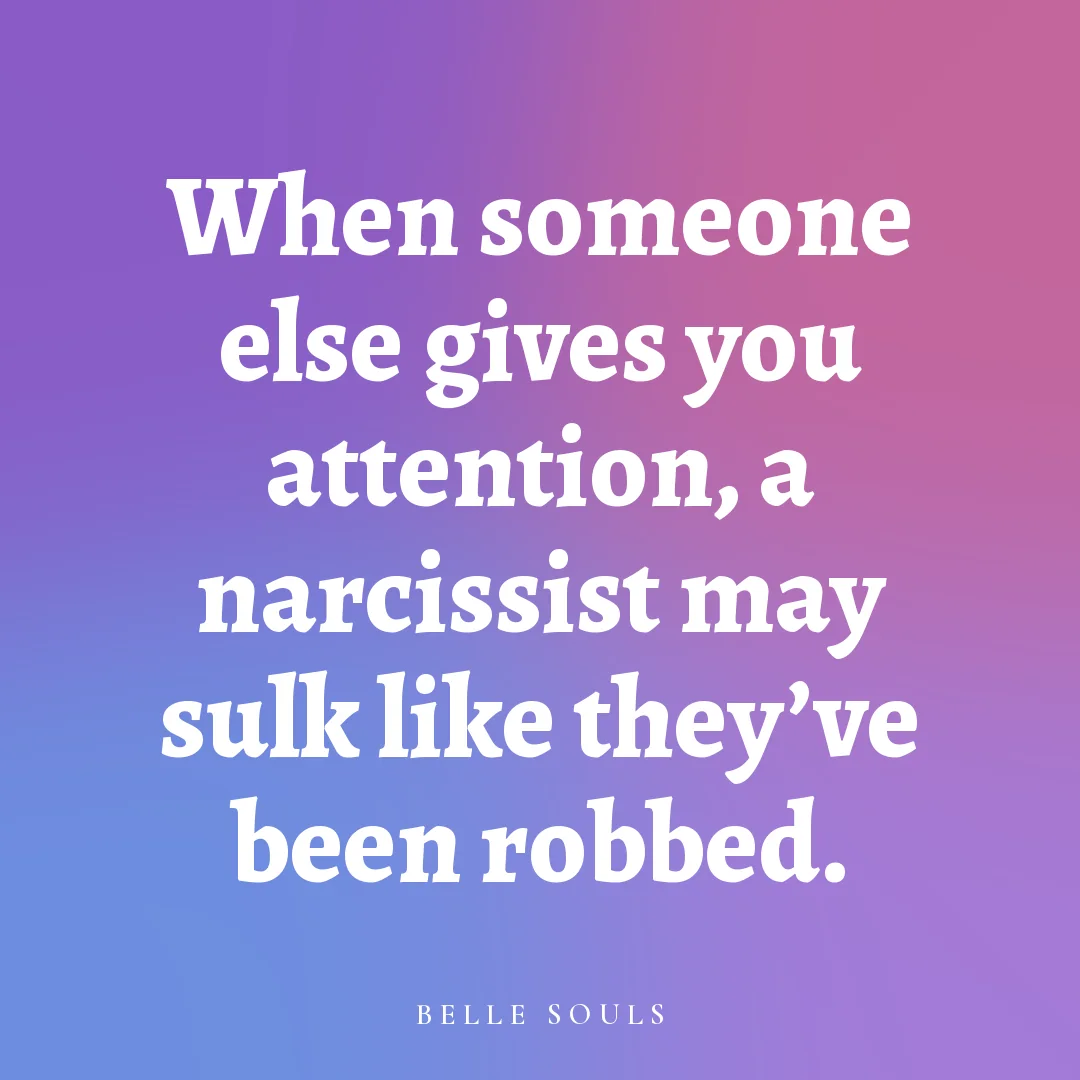
When someone else gives you attention, a narcissist may sulk like they’ve been robbed.
A friend laughs at your story at dinner. Your partner goes quiet, then cold. By the drive home, you were “showing off” and “making a scene.”
Researchers describe a quiet form of narcissism. Prickly. Bitter. It pouts when overlooked and keeps a private tally of every slight.
Then you get blamed for their mood.
So you shrink at parties. Laugh less. Talk less. Tiptoe before anyone’s even upset.
One way to tell: see what happens to them when the room isn’t looking their way. Who were you at parties, before?
#4 Seeing friends without them
Time with your friends can quietly become something you have to earn.
It rarely starts as a ban. It’s a face when you mention brunch. A string of texts while you’re out. “Have fun, I guess.”
Then the small rules pile up. Who. How long. What you wear.
This pattern has a name: coercive control. One person runs the other’s days, friends and freedom, often with no hitting at all. Each rule looks tiny, so there’s no single moment to point at.
Your circle shrinks. Even a coffee starts to need a yes.
Hold on to a few people of your own. If you feel unsafe, a domestic abuse service can help you plan.
Your friends are allowed to be yours.
#5 Spending money on yourself
Money of your own means choices, and losing control of it keeps you dependent.
You buy a new lipstick and hide the receipt. You move the change back before they check the app.
Notice that. Hiding small purchases is a common sign.
Financial abuse is about taking charge of your money, using it or wrecking it. Taking your cards. Loans that never come back. Debt in your name. With no money of your own, walking away gets harder.
“We agreed you’d ask first.” Did you, though?
Your own account and records can matter. A domestic abuse service can talk you through money worries and staying safe.
That lipstick was never the problem.
#6 Plans that don’t include them
A narcissist may expect your plans to bend around theirs.
The spa day has been booked for weeks. That morning: “Oh, I thought you’d drive me to my brother’s.” Then the sulk when you don’t.
Psychologists call this entitlement. Deep down, they feel owed more than anyone, and the normal rules don’t apply. So a plain limit lands like a slap.
So your Saturday becomes an attack on them.
The giving runs one way. Ask for a fair share and the house goes to war.
One small shift: stop pre-agreeing. Let “I already have plans” be a full sentence.
Then go to the spa.
#7 Hobbies they love to mock
Something you love can become the target of their eye-rolls and jokes.
You mention your pottery class and catch the eye-roll. Later, with friends: “She thinks she’s an artist now.” Everyone laughs. Except you.
That’s contempt. Sneering, mocking, sarcastic jokes about you.
Researchers who followed couples for years found contempt and shutting down sat near the top of the signs a relationship would fall apart.
Living with it, you start to feel tiny under your own roof. So the class gets skipped. Then dropped.
Say what you see, calmly, one time. Then watch if the respect ever returns.
And keep the class.
#8 A good day they can’t spoil
You don’t have to spend the silence trying to end it.
They’ve gone cold since breakfast. They answer your sister on the phone, the dog, the neighbour. Not you.
Research on being shut out shows it hits our need to fit in and count. It can ache like a real injury, and that ache pushes many of us to cave.
So you apologise just to make it stop. For what, you’re not even sure.
What helps: let them know one time the door’s open. Then get on with your day.
Coffee. A walk. A laugh with a friend.
Your day belongs to you.
#9 Calm that belongs to you
Your calm gives a manipulator far less to work with.
They poke. “Wow, you’ve really let yourself go.” The old you would have argued for an hour. Now you say “Okay” and keep stirring the pasta.
Many call this grey rock. It’s a popular label for going flat and boring when you can’t avoid them. Fewer reactions may also help the hold they have on you fade over time.
It isn’t a way to win. It’s a way to stop handing over fuel.
And it’s not right for everyone. If they could escalate, plan with a domestic violence service first.
Keep stirring the pasta.
#10 Life getting better without them
Just when your life feels peaceful, the narcissist you left may come knocking.
Months of nothing. Then you post one photo from the beach, and there it is: “I miss you. I’ve changed. For real this time.”
People call this hoovering, a popular word for trying to reel you back in after it ends. It leans on the old pull, and on your wish for the sweet days again.
It tends to appear when they want something, or sense they’ve been replaced.
And the old hope rushes back. Your progress feels undone overnight.
It isn’t undone.
Trust what they’ve done, not what they now swear. Look at how the last promise ended.
If several of these hit home, that tells you something about the pattern. Nothing bad about you.
The lipstick, the birthday table, the pottery class. None of them were ever the problem.
Pick one small thing you love this week. Do it without explaining it to anyone.
If you feel unsafe: in the US, call the National Domestic Violence Hotline at 1-800-799-7233 (thehotline.org). In the UK, call the National Domestic Abuse Helpline on 0808 2000 247. If you are in immediate danger, call your local emergency number.
Sources
- American Psychiatric Association. (2022). Diagnostic and Statistical Manual of Mental Disorders (5th ed., text rev.).
- Pincus, A. L., & Lukowitsky, M. R. (2010). Pathological narcissism and narcissistic personality disorder. Annual Review of Clinical Psychology, 6, 421-446.
- Krizan, Z., & Johar, O. (2012). Envy divides the two faces of narcissism. Journal of Personality, 80(5), 1415-1451.
- Back, M. D., Kufner, A. C. P., Dufner, M., Gerlach, T. M., Rauthmann, J. F., & Denissen, J. J. A. (2013). Narcissistic admiration and rivalry. Journal of Personality and Social Psychology, 105(6), 1013-1037.
- Wink, P. (1991). Two faces of narcissism. Journal of Personality and Social Psychology, 61(4), 590-597.
- Miller, J. D., Lynam, D. R., Hyatt, C. S., & Campbell, W. K. (2017). Controversies in narcissism. Annual Review of Clinical Psychology, 13, 291-315.
- Stark, E. (2007). Coercive Control: How Men Entrap Women in Personal Life. Oxford University Press.
- Postmus, J. L., Plummer, S.-B., McMahon, S., Murshid, N. S., & Kim, M. S. (2012). Understanding economic abuse in the lives of survivors. Journal of Interpersonal Violence, 27(3), 411-430.
- Campbell, W. K., Bonacci, A. M., Shelton, J., Exline, J. J., & Bushman, B. J. (2004). Psychological entitlement: Interpersonal consequences and validation of a self-report measure. Journal of Personality Assessment, 83(1), 29-45.
- Gottman, J. M. (1994). What Predicts Divorce? The Relationship Between Marital Processes and Marital Outcomes. Lawrence Erlbaum.
- Williams, K. D. (2009). Ostracism: A temporal need-threat model. Advances in Experimental Social Psychology, 41, 275-314.
- Durvasula, R. (2024). It's Not You: Identifying and Healing from Narcissistic People. The Open Field.
- Herman, J. L. (1992). Trauma and Recovery. Basic Books.
- Dutton, D. G., & Painter, S. (1993). Emotional attachments in abusive relationships: A test of traumatic bonding theory. Violence and Victims, 8(2), 105-120.
Belle Souls articles explain patterns described in psychology research and recovery writing. They are not a diagnosis and not a substitute for help from a qualified professional.
The One Thing You Should Never Tell a Narcissist

You told them something real once.
And later, mid-fight, they handed it right back. Sharpened.
A narcissist often listens very closely when you open up. Just not for the reason you hoped.
If you now edit every sentence before you say it, there’s a reason for that.
The one thing you should never tell a narcissist is where you’re soft: your wounds, your fears, your hopes. Here are 7 ways it gets turned against you.
Why your soft side isn’t safe
To you, opening up is closeness. To a narcissist, it can be information.
That’s the pattern. Their sense of worth leans on outside confirmation, so the people around them tend to fall into two boxes: sources of admiration, or threats to it.
And this part stings. Research on narcissism and empathy suggests many can understand what you feel. They just don’t act on it unless it serves them.
Think about it.
#1 They save your soft spots for later
A narcissist may hold on to your weak spots and use them later.
Maybe you told them about the dad who never showed up. You were crying on the kitchen floor. They held your hand and said all the right things.
Six months later, you’re arguing about the dishes. And out it comes: “No wonder he left. Look at you.”
That’s the low-empathy pattern. They understood your pain perfectly well when you shared it. They just filed it instead of caring for it. Why waste a good weapon?
So you stop sharing feelings.
Then you start doubting your own reactions. Was it really that bad? Are you too sensitive, like they say?
Your feelings deserve a softer landing. Take them to people who respond with care, not to someone who aims them back at you.
#2 Some enjoy watching you flinch
For some difficult people, your discomfort isn’t a side effect. It’s the reward.
Dinner with friends. Somebody jokes about weight, and the narcissist grins across the table: “Careful, this one’s touchy about that.”
Your face goes hot. Everyone laughs a little. And there it is. A tiny smirk.
Researchers call this everyday sadism, a trait they added to the Dark Triad to form a “Dark Tetrad.” For people high in it, small cruelties feel good in themselves.
Living with that, you can feel hunted instead of loved. You learn to keep your face blank and your voice flat.
One way to tell: playful teasing stops when you ask. This kind seems to enjoy the flinch, and fewer visible reactions leave it less to feed on.
Watch their face when you’re hurt.
#3 Secrets turn into a file on you
A narcissist with a strategic streak may quietly collect what you share and save it for later.
You mention your sister drives you mad. Or that you’re thinking about quitting. Or that money’s been tight.
Weeks later, your sister is frosty at Sunday lunch. Your boss seems oddly well informed.
Strange how that happens.
Psychologists call this style Machiavellianism, and many difficult people score high on more than one dark trait. It plays the long game: saying what each person wants to hear, building quiet alliances against you.
Which is why it’s so lonely. Everyone else sees someone calm and reasonable. You only see the plan once it’s finished, and then nobody believes you.
So share less personal detail with them, and put important agreements in writing. Your inner life doesn’t need an audience.
#4 Your good news makes them sour

Your happiest news can land on a narcissist like an insult.
You got the promotion. You call them from the parking lot, buzzing. “Oh. Well, they must have been desperate.”
Or it’s your birthday, and by dessert you’re fighting.
Research on envy and narcissism suggests resentment of other people’s good fortune is common, especially in the quieter, touchier form. Your win threatens their need to feel above you. So they shrink it or spoil it.
Research on admiration and rivalry adds a twist: in a rival’s eyes, your gain counts as their loss.
No wonder happy moments start to feel risky. You hide good news before you even notice you’re doing it.
Notice who goes quiet when you win. Then share your wins with the ones who cheer.
#5 Honest feedback sets off a storm
Criticism a narcissist hears as a threat can bring anger far bigger than the moment.
You say, carefully, “You were a bit harsh with the waiter.” Silence in the car. Then three days later, a blow-up over the thermostat.
Sound random? It usually isn’t.
Research on threatened egotism found narcissists respond to insults with more aggression, aimed at whoever caused the insult. A small comment can bruise a fragile image. And someone has to pay for that.
So you run each sentence past an inner editor first. You say sorry for things that were never yours, just to keep the air breathable.
If you do say something, keep it factual and short. And if it isn’t safe, you don’t owe anyone feedback at all.
If anger turns into threats, your safety comes first.
#6 Telling them they hurt you backfires
Say they hurt you, and somehow you’re the one saying sorry by bedtime.
You finally get the words out. “When you mocked me in front of your brother, it hurt.”
“That’s not what happened. Unbelievable! After the week I’ve had?” Ten minutes on, they’re sulking on the sofa and you’re the one comforting them.
The name for this move is DARVO. They deny it, they turn on you for asking, then they swap roles so they’re the wounded one.
The sneaky part? Studies of it found the person who spoke up ends up blaming herself more. No wonder the talk ends so fast.
After a few rounds, you quit mentioning problems. They stack up in silence. Which suits them fine.
What helps is boring on purpose. Say what happened, then steer back to it, and skip the bait of their counter-charges. You came about the brother. Stay on the brother.
#7 Your private words go public

What you confide in private can become the story they tell about you in public.
You once admitted you were struggling and barely sleeping. Now a mutual friend texts: “Hey, I heard you’re not doing well. Are you okay?”
They’ve told everyone you’re unstable. Using your own words.
Research calls this relational aggression: damaging someone’s reputation and friendships through gossip, rumours and exclusion. It goes after your social standing instead of your body, so it leaves no bruise anyone can see.
Sometimes the story is out there before you’ve even stepped back.
You feel you have to defend your name everywhere. You lose support right when you need it most.
You don’t have to chase every rumour. Behave like yourself, steadily, and let time show who was telling the truth.
You opened up because you wanted to be close. That was never the mistake.
Your soft side is still yours.
You get to decide who’s allowed near it now. Start small, with one trusted person who listens and doesn’t keep score.
If you feel unsafe: in the US, call the National Domestic Violence Hotline at 1-800-799-7233 (thehotline.org). In the UK, call the National Domestic Abuse Helpline on 0808 2000 247. If you are in immediate danger, call your local emergency number.
Sources
- Hepper, E. G., Hart, C. M., & Sedikides, C. (2014). Moving Narcissus: Can narcissists be empathic? Personality and Social Psychology Bulletin, 40(9), 1079-1091.
- Bushman, B. J., & Baumeister, R. F. (1998). Threatened egotism, narcissism, self-esteem, and direct and displaced aggression. Journal of Personality and Social Psychology, 75(1), 219-229.
- Herman, J. L. (1992). Trauma and Recovery. Basic Books.
- Bancroft, L. (2002). Why Does He Do That? Inside the Minds of Angry and Controlling Men. Berkley.
- American Psychiatric Association. (2022). Diagnostic and Statistical Manual of Mental Disorders (5th ed., text rev.).
- Pincus, A. L., & Lukowitsky, M. R. (2010). Pathological narcissism and narcissistic personality disorder. Annual Review of Clinical Psychology, 6, 421-446.
- Buckels, E. E., Jones, D. N., & Paulhus, D. L. (2013). Behavioral confirmation of everyday sadism. Psychological Science, 24(11), 2201-2209.
- Christie, R., & Geis, F. L. (1970). Studies in Machiavellianism. Academic Press.
- Jones, D. N., & Paulhus, D. L. (2014). Introducing the Short Dark Triad (SD3). Assessment, 21(1), 28-41.
- Paulhus, D. L., & Williams, K. M. (2002). The Dark Triad of personality: Narcissism, Machiavellianism, and psychopathy. Journal of Research in Personality, 36(6), 556-563.
- Krizan, Z., & Johar, O. (2012). Envy divides the two faces of narcissism. Journal of Personality, 80(5), 1415-1451.
- Back, M. D., Kufner, A. C. P., Dufner, M., Gerlach, T. M., Rauthmann, J. F., & Denissen, J. J. A. (2013). Narcissistic admiration and rivalry. Journal of Personality and Social Psychology, 105(6), 1013-1037.
- Freyd, J. J. (1997). Violations of power, adaptive blindness, and betrayal trauma theory. Feminism & Psychology, 7(1), 22-32.
- Harsey, S. J., Zurbriggen, E. L., & Freyd, J. J. (2017). Perpetrator responses to victim confrontation: DARVO and victim self-blame. Journal of Aggression, Maltreatment & Trauma, 26(6), 644-663.
- Crick, N. R., & Grotpeter, J. K. (1995). Relational aggression, gender, and social-psychological adjustment. Child Development, 66(3), 710-722.
Belle Souls articles explain patterns described in psychology research and recovery writing. They are not a diagnosis and not a substitute for help from a qualified professional.
12 Things Narcissists Can’t Stand About Strong, Caring People

To a narcissist, you’re often there to reflect them back to themselves.
You’re the one who checks in, listens, keeps the peace and holds everything together, and you’re also the one who sees clearly and doesn’t fold when things get loud.
And somehow, that’s exactly what sets them off.
You get the eye-roll. The cold shoulder. The “Why do you always have to make a thing of it?”
Your strength and your care get in the way of how they operate. Here are 12 things narcissists can’t stand about strong, caring people, and why.
Why your strength feels like a threat
Many narcissists need other people to keep telling them they matter. Constantly.
So the people around them often get sorted into two boxes. Fans. Or threats.
When you stop simply admiring and start seeing clearly, you can land in the second box. Fast.
Quick, honest note: none of this is a label for one rough evening. Watch what keeps happening, month after month.
#1 Your kindness shows up their coldness
Your kindness makes their coldness much harder to hide.
You notice when a friend goes quiet. You ask how your sister’s scan went. Then you come home upset, and they change the subject or say, “You’re too sensitive.”
Studies hint at something hard to hear. When nudged to imagine your side, many narcissists manage it fine, but left to themselves, they mostly skip it. That looks more like a choice than a blind spot.
Around you, that choice is on full display. So you go quiet about how you feel, then wonder if you should feel it at all.
Your feelings aren’t too much. You’ve just been handing them to the wrong person.
#2 The mask doesn’t work on you
The polished public version of them doesn’t fool you anymore.
At the party, they’re the funny one, topping up everyone’s drinks. In the car home, silence. Or a list of everything you did wrong tonight.
Your friends tell you how lucky you are. You nod.
Admiration from outside feeds their sense of worth, so many narcissists put a lot of work into how they look in public.
Believe the person who shows up once the guests have gone. That’s who shares your kitchen.
#3 Your wins feel like their losses
To a narcissist, your good news can feel like their bad news.
You get the promotion. They say, “Good for you,” then pick a fight about the dishes. On your birthday, somehow, there’s always a crisis. Every year.
Psychologists describe a rivalry streak in narcissism. In that mindset, anything good happening to you counts as something taken from them, so your news gets shrunk, soured or borrowed.
Pretty soon, you keep good news to yourself.
Watch whose face falls when things go well for you. Then share your wins where people actually cheer!
#4 Honest feedback bruises their ego
Even gentle honesty can hit their self-image like a slap.
You mention, kindly, that the gas bill didn’t get paid. Suddenly it’s a two-hour fight. Over a bill. Or it’s cold fury, and days later they punish you for a comment you’d forgotten.
Research on what psychologists call threatened egotism points the same way. When their image takes a hit, narcissists tend to get more aggressive, and they aim it at whoever they hold responsible.
No wonder you rehearse every sentence in your head.
You don’t owe them feedback when it isn’t safe. If the anger turns into threats, leave the room. Your safety matters more than the argument.
#5 Writing it down ruins their version
Gaslighting works by getting you to doubt what you saw, so their version wins.
“That never happened.” “You’re imagining things.” Said calmly enough, it makes you wonder whether you got it wrong.
It does the most damage when one person holds more power and the other already trusts them, because your trust becomes the tool that lets their story overwrite yours.
Strong people hold on to what they saw.
Jot down the date and what was said, the same day. Run it past a friend who isn’t caught in the middle. Your memory isn’t faulty. It’s been pushed on.
#6 A boundary they can’t argue with
A real boundary is about what you’ll do, not what they must do.
“If you shout, I’m leaving the room.” Then you actually leave. No speech. No debate in the hallway.
Boundaries, as the popular idea goes, rest on your own choices. So you don’t need their permission to walk out of a room.
The first few times, they’ll push back hard. You’ll feel guilty too.
Say it one time. Then follow through, again and again. Over time, the guilt makes room for self-respect.
#7 Fairness feels like an attack to them
Asking for fairness can feel like an attack to an entitled person.
You ask about the money they borrowed in spring, or for them to take one turn at the school run, and they react like you’ve insulted their whole family.
Entitlement means feeling owed more than others, as if rules are for the rest of us. To that mindset, a normal limit lands like an insult.
Somehow the giving only flows one way.
Stop handing over money, forgiveness and agreement before anyone’s even asked. And keep a private note of everything you give.
#8 Guilt trips stop landing
A guilt trip makes saying no feel more expensive than giving in.
“After everything I’ve done for you?” Then the sigh. The long face, the heavy silence, until you give in.
There’s a popular name for this: FOG, short for fear, obligation and guilt. It isn’t a diagnosis. It’s a way of describing emotional blackmail.
Feeling guilty after hurting someone is healthy. Guilt used as a lever is something else.
Give yourself a beat before any answer. Their disappointment is theirs to carry.
#9 Sticking to the point drives them mad
Staying on the original issue is what they least want from you.
You bring up the missing money. Within a minute, you’re hearing about your tone, your mother and something you said three years ago.
Psychologists have a name for this move, DARVO. First they say it didn’t happen, then they go on the offensive, then they cast themselves as the one being wronged. Studies show it leaves whoever spoke up feeling more to blame.
That’s why you end up saying sorry.
Bring it back to where you started. Don’t chase every jab. “We were talking about the money.” Then stop.
#10 Competing for attention isn’t your thing
Refusing to compete for their attention takes away a favourite tool.
They mention how their ex “never nagged.” They compare you to their sister. Suddenly “everyone” thinks you’re difficult.
Family systems research calls this triangulation. Instead of sorting out a problem between two people, they drag in a third, and what follows is jealousy, pressure and a contest you never signed up for.
No wonder you feel outnumbered.
Keep the conversation between the two of you. Decline. Let them run it alone.
#11 Calm gives them nothing to feed on
Your calm can leave a cruel person with nothing to play with.
They poke at your weight in front of friends, then watch your face. Some people really do enjoy that flinch.
Researchers have a name for it: everyday sadism. For some, causing small hurts is the reward itself. If your upset seems to cheer them up, take note.
A popular name for short, flat replies is “grey rock”. It won’t win anything, and with a dangerous partner it may not be safe.
The less you show, the less they have to play with.
#12 Self-blame stops working on you
Self-blame is one of the heaviest things manipulation leaves behind, and kindness toward yourself eases it.
It often lingers long after the fight. “If I’d just said it nicer.” “Maybe I really am too much.”
Research on self-compassion describes it as treating yourself with the kindness you’d give a friend. It lowers shame, too.
So talk to yourself the way you’d talk to your best friend.
Take the nap. Have the cry. Strong and caring was never the problem.
You’re not imagining it. And you’re not too much.
Manipulation does best when you’re cut off from people, so getting your footing back often starts with letting one trusted person hear the whole story.
Start with one person. If it helps, write down first what you want help with.
If you feel unsafe: in the US, call the National Domestic Violence Hotline at 1-800-799-7233 (thehotline.org). In the UK, call the National Domestic Abuse Helpline on 0808 2000 247. If you are in immediate danger, call your local emergency number.
Sources
- American Psychiatric Association. (2022). Diagnostic and Statistical Manual of Mental Disorders (5th ed., text rev.).
- Pincus, A. L., & Lukowitsky, M. R. (2010). Pathological narcissism and narcissistic personality disorder. Annual Review of Clinical Psychology, 6, 421-446.
- Herman, J. L. (1992). Trauma and Recovery. Basic Books.
- Bancroft, L. (2002). Why Does He Do That? Inside the Minds of Angry and Controlling Men. Berkley.
- Hepper, E. G., Hart, C. M., & Sedikides, C. (2014). Moving Narcissus: Can narcissists be empathic? Personality and Social Psychology Bulletin, 40(9), 1079-1091.
- Goffman, E. (1959). The Presentation of Self in Everyday Life. Doubleday.
- Back, M. D., Kufner, A. C. P., Dufner, M., Gerlach, T. M., Rauthmann, J. F., & Denissen, J. J. A. (2013). Narcissistic admiration and rivalry. Journal of Personality and Social Psychology, 105(6), 1013-1037.
- Krizan, Z., & Johar, O. (2012). Envy divides the two faces of narcissism. Journal of Personality, 80(5), 1415-1451.
- Bushman, B. J., & Baumeister, R. F. (1998). Threatened egotism, narcissism, self-esteem, and direct and displaced aggression. Journal of Personality and Social Psychology, 75(1), 219-229.
- Sweet, P. L. (2019). The sociology of gaslighting. American Sociological Review, 84(5), 851-875.
- Stern, R. (2007). The Gaslight Effect. Morgan Road Books.
- Cloud, H., & Townsend, J. (1992). Boundaries. Zondervan.
- Campbell, W. K., Bonacci, A. M., Shelton, J., Exline, J. J., & Bushman, B. J. (2004). Psychological entitlement: Interpersonal consequences and validation of a self-report measure. Journal of Personality Assessment, 83(1), 29-45.
- Forward, S., & Frazier, D. (1997). Emotional Blackmail. HarperCollins.
- Freyd, J. J. (1997). Violations of power, adaptive blindness, and betrayal trauma theory. Feminism & Psychology, 7(1), 22-32.
- Harsey, S. J., Zurbriggen, E. L., & Freyd, J. J. (2017). Perpetrator responses to victim confrontation: DARVO and victim self-blame. Journal of Aggression, Maltreatment & Trauma, 26(6), 644-663.
- Bowen, M. (1978). Family Therapy in Clinical Practice. Jason Aronson.
- Buckels, E. E., Jones, D. N., & Paulhus, D. L. (2013). Behavioral confirmation of everyday sadism. Psychological Science, 24(11), 2201-2209.
- Durvasula, R. (2024). It's Not You: Identifying and Healing from Narcissistic People. The Open Field.
- Neff, K. D. (2003). Self-compassion: An alternative conceptualization of a healthy attitude toward oneself. Self and Identity, 2(2), 85-101.
Belle Souls articles explain patterns described in psychology research and recovery writing. They are not a diagnosis and not a substitute for help from a qualified professional.
10 Strange Things Only a Narcissist Would Do

Narcissists rarely show you who they are all at once.
It leaks out in small, strange moments. The sulk on your birthday. The big smile at the party, then silence in the car.
On its own, each moment sounds too odd to explain to anyone. So you keep it to yourself and wonder if you’re overreacting.
You’re not imagining the pattern.
Underneath most of these moments sits one hunger. A narcissist needs other people to keep confirming how special they are, and anyone who doesn’t starts to look like a threat.
Here are 10 strange things a narcissist may do, why they do them, and what each one is quietly doing to you.
#1 Their charm is for everyone else
A narcissist can be the nicest person at the party and a stranger in the car.
They laugh at your sister’s jokes. They top up everyone’s glass. They squeeze your shoulder while people are watching.
Then the car door shuts and the warmth switches off. Silence all the way home, or a cold “Did you have to say that?”
Why? Applause is fuel to them. Friends and strangers hand it over freely, so that’s where all the effort goes.
You get the leftovers.
Then your friends tell you how lucky you are. And you begin to wonder if you’ve got your own home wrong.
Believe the version you live with, not the one they show off.
#2 Your big day becomes their bad mood
Your good news can turn a narcissist strangely sour.
You get the promotion and they shrug. “Good for you. Must be nice.”
Your birthday dinner? That’s the night they pick a fight about the bill, the dishes, the way you looked at the waiter.
Why so sour? Somewhere inside, your success reads as their loss. If you rise, they feel smaller, so the moment gets cut down, claimed or wrecked.
Over time, joy starts to feel risky. You sit on good news before anyone can ruin it.
Watch whose face falls when something goes right for you.
Then share it with the friends who cheer.
#3 They accuse you of what they’re doing
The accusations a narcissist throws at you often describe the narcissist perfectly.
They’re the one shouting, yet you’re the one who’s “so angry all the time.”
They take and take, then call you selfish. They hide their phone, then grill you about yours.
Psychologists call this projection. Pinning the ugly trait on you means they never have to spot it in the mirror.
Meanwhile, you’re stuck defending yourself against things you never did. By midnight, nobody remembers the real issue.
When the same charge keeps coming, read it as a clue about them. Say what’s true one time, calmly, and stop there.
What are they confessing without meaning to?
#4 Silence is their favourite punishment
A narcissist can go silent for days and then act as if nothing happened.
You disagree about something small. Suddenly they chat with everyone in the room except you.
Texts go unread. Dinner happens in silence. Then, three days later: “What’s for breakfast?” Like the week never existed.
Being shut out hits something deep: the need to feel wanted and to count. It can sting like a real wound, which is exactly why so many give in.
So you say sorry for nothing, just to get the quiet to end.
Tell them one time that you’re ready to talk when they are. Then get on with your day. Don’t chase. Don’t plead.
Their silence. Their choice. Not your job to fix.
#5 One complaint and suddenly they’re crying
Raise one problem with a narcissist, and somehow you end up comforting them.
You mention the plans they cancelled again. Calmly. Once.
“I never did that. How dare you? After the week I’ve had?” Then comes the list of your faults, the sulking, maybe tears.
There’s a research name for this: DARVO. They deny it, go on the attack, then cast themselves as the one who was wronged. Studies found it leaves whoever spoke up blaming herself more.
Which is how a talk about their behaviour ends with your apology.
Skip the debate over every jab they throw back. Steer it, calmly, to the one thing you raised.
Your problem didn’t stop being real because they cried.
#6 A tiny comment can start a war
To a narcissist, a small correction can feel like a full-blown attack.
You point out they missed the turn. Or you ask, gently, whether the bill got paid.
The reaction is out of all proportion.
A slammed door. Cold fury. Or nothing at all, until days later, when they punish you for a remark you’d long forgotten.
Research on threatened egotism found that when narcissists feel insulted, they hit back harder, and they aim it at whoever bruised them.
So you rehearse every sentence before you say it. You say sorry for things that weren’t yours.
If speaking up feels unsafe, you don’t owe them the comment. If the anger turns to threats, get out of the room.
Asking was never the crime.
#7 Waiting feels like an insult to them
A narcissist can treat a five-minute wait as a personal offence.
The restaurant is busy. A friend is late. You’re on the phone with your mum. Cue the sighing, the tapping, the “Seriously?”
Meanwhile, you’re expected to drop your plans the moment theirs change.
Psychologists call it entitlement: the quiet conviction that they’re owed more than everyone else, and that rules are for other people.
Normal limits land on them like insults. So your fair requests feel like attacks, and asking for balance feels like declaring war.
Start quietly noting who gives what. And stop saying yes before they’ve even asked.
Who’s doing all the waiting, really?
#8 Your tears can make them smirk
Some of the coldest moments come with a little smile attached.
They bring up your weight at dinner with friends. You flinch. They laugh. “God, it’s a joke. Lighten up.”
Or they let you worry about where they are, and seem pleased when you finally ask.
Researchers have named a trait called everyday sadism: getting a kick out of someone’s discomfort for its own sake. It often sits alongside other dark traits, like coldness and scheming.
Home starts to feel less like love and more like being hunted.
Playful teasing stops when you ask. This doesn’t.
If your hurt seems to cheer them up, trust that.
#9 They deny what you both saw
A narcissist can look you in the eye and deny something you both saw.
You heard them say it. You were standing right there.
“That never happened. You’re too sensitive. Honestly, you need help.”
It’s called gaslighting: getting you to distrust your own mind so their story wins. It works best when they hold more power and you’ve learned to lean on their version.
Soon you’re keeping notes like evidence. You’re saying sorry when you were the one hurt.
Jot things down the same day. Run them past a friend who isn’t caught in the middle.
Your memory isn’t the broken one here.
#10 The kindness shows up right after the cruelty
The sweetest moments often arrive right after the cruellest ones.
Last night they called you pathetic. This morning there’s coffee by the bed and a soft “I love you, you know that.”
Warm one day, cold the next, no reason given. You never know which version is coming home.
There’s a name for it: intermittent reinforcement. Affection that turns up at random grips harder than affection you can count on. Think slot machine.
So you work harder for less.
And the good days make the bad ones feel bearable. Keep a simple tally of good days and bad. Then look at the overall picture, not the one lovely morning.
What does the calendar say?
None of these moments is too small to count. Strange, repeated and aimed at you, they add up to something real.
Go by what keeps happening, not by the soft morning that follows. You saw what you saw.
And if one person outside it all hears the whole story, that’s a strong place to start.
If you feel unsafe: in the US, call the National Domestic Violence Hotline at 1-800-799-7233 (thehotline.org). In the UK, call the National Domestic Abuse Helpline on 0808 2000 247. If you are in immediate danger, call your local emergency number.
Sources
- American Psychiatric Association. (2022). Diagnostic and Statistical Manual of Mental Disorders (5th ed., text rev.).
- Pincus, A. L., & Lukowitsky, M. R. (2010). Pathological narcissism and narcissistic personality disorder. Annual Review of Clinical Psychology, 6, 421-446.
- Herman, J. L. (1992). Trauma and Recovery. Basic Books.
- Bancroft, L. (2002). Why Does He Do That? Inside the Minds of Angry and Controlling Men. Berkley.
- Goffman, E. (1959). The Presentation of Self in Everyday Life. Doubleday.
- Krizan, Z., & Johar, O. (2012). Envy divides the two faces of narcissism. Journal of Personality, 80(5), 1415-1451.
- Baumeister, R. F., Dale, K., & Sommer, K. L. (1998). Freudian defense mechanisms and empirical findings in modern social psychology. Journal of Personality, 66(6), 1081-1124.
- Williams, K. D. (2009). Ostracism: A temporal need-threat model. Advances in Experimental Social Psychology, 41, 275-314.
- Freyd, J. J. (1997). Violations of power, adaptive blindness, and betrayal trauma theory. Feminism & Psychology, 7(1), 22-32.
- Harsey, S. J., Zurbriggen, E. L., & Freyd, J. J. (2017). Perpetrator responses to victim confrontation: DARVO and victim self-blame. Journal of Aggression, Maltreatment & Trauma, 26(6), 644-663.
- Bushman, B. J., & Baumeister, R. F. (1998). Threatened egotism, narcissism, self-esteem, and direct and displaced aggression. Journal of Personality and Social Psychology, 75(1), 219-229.
- Campbell, W. K., Bonacci, A. M., Shelton, J., Exline, J. J., & Bushman, B. J. (2004). Psychological entitlement: Interpersonal consequences and validation of a self-report measure. Journal of Personality Assessment, 83(1), 29-45.
- Buckels, E. E., Jones, D. N., & Paulhus, D. L. (2013). Behavioral confirmation of everyday sadism. Psychological Science, 24(11), 2201-2209.
- Paulhus, D. L., & Williams, K. M. (2002). The Dark Triad of personality: Narcissism, Machiavellianism, and psychopathy. Journal of Research in Personality, 36(6), 556-563.
- Jones, D. N., & Paulhus, D. L. (2014). Introducing the Short Dark Triad (SD3). Assessment, 21(1), 28-41.
- Sweet, P. L. (2019). The sociology of gaslighting. American Sociological Review, 84(5), 851-875.
- Stern, R. (2007). The Gaslight Effect. Morgan Road Books.
- Ferster, C. B., & Skinner, B. F. (1957). Schedules of Reinforcement. Appleton-Century-Crofts.
- Dutton, D. G., & Painter, S. (1993). Emotional attachments in abusive relationships: A test of traumatic bonding theory. Violence and Victims, 8(2), 105-120.
Belle Souls articles explain patterns described in psychology research and recovery writing. They are not a diagnosis and not a substitute for help from a qualified professional.
12 Things Narcissists Do in Public That Give Their True Self Away

Narcissists save their best self for an audience.
At dinner they’re warm and funny, the one everybody wants to sit beside. Then the car door closes and the air goes cold.
You’ve seen this flip so many times you’ve started to doubt your own eyes.
Your eyes are fine. The public act has cracks.
Small ones, the kind most guests never catch.
Here are 12 things narcissists do in public that give their true self away.
Why the act cracks
For a narcissist, being admired is a big part of feeling okay about themselves.
So the public show gets serious effort.
Research on narcissistic admiration and rivalry describes two sides. Charm comes first and wins people over. Later, the urge to knock others down creeps in.
Over time the second side takes over, and small public moments can show it.
#1 The charm stops when the door shuts
The star of the party is often not the person who drives you home.
At the table, they’re hugging your sister and quizzing your friend about her job. In the car? Nothing. Or a flat “Did you have to talk that much?”
Your friends say you’ve got a keeper. You smile, and privately wonder what’s wrong with you.
Nothing is. Most of us are a little nicer with guests around. This is different: warm out there, cruel in here.
Who else has seen both sides of them?
#2 Every chat becomes their show
A narcissist can turn any conversation into a stage built for one.
Your friend starts on her holiday in Spain. A minute later it’s their trip, their hotel, the waiter who praised their accent.
Researchers describe a loud style of narcissism that grabs the floor and holds it. Showing off shields a self-image that’s more fragile than it looks.
Then watch when the talk drifts elsewhere. Blank face. Phone out. A sulk on the drive back.
Bored the second it’s not about them. Sound familiar?
#3 Their stories get bigger each time
A narcissist’s achievements seem to swell a little more every time they’re retold.
The promotion turns into “pretty much running the place.” A 10k becomes nearly a marathon. You were there. You know.
Clinicians describe a lasting pattern where a person’s worth hangs on outside approval, and inflated achievements are part of it. The crowd has to be impressed.
A single tall tale is just vanity. Look at months, not moments.
Your job, apparently, is to nod.
#4 Staff get the side you know
A short wait at a restaurant can bring out the face you usually see at home.
The food’s late and it’s treated like an insult. Loud sighs. Snapping at the server. “Do you know how long we’ve been sitting here?”
Psychologists call this entitlement. They believe they’re owed more than everyone else, so normal limits land like a slap.
Sound familiar? Asking them to split a bill or return money you lent feels like declaring war.
No wonder you stopped asking.
#5 Your weak spots become the punchline
Some narcissists serve up your insecurities for the whole table, then call it a joke.
Drinks with friends. “Careful, she cries at adverts.” Laughter. They see you flinch, and they smirk.
Researchers call this everyday sadism: getting a kick out of small cruelties for their own sake. Your squirming is the reward.
Here’s a way to tell. Real teasing ends the moment you say it hurts. This kind carries on.
Does your pain seem to cheer them up?
#6 The eye-roll comes mid-sentence
Contempt often hides in tiny public gestures only you seem to catch.
You begin a story over dinner. An eye-roll. Your voice copied back. A sarcastic “Here we go.”
Research that followed couples for years found contempt was one of the clearest warning signs a relationship was heading for a breakup. Small gesture, loud message.
So your stories get shorter, then disappear. You feel tiny in a room full of people who like you.
If it feels safe, point it out calmly, one time. Then see if respect ever returns.
Does it?
#7 Your good news turns them sour

Your best news can make a narcissist go oddly flat in front of everyone.
You tell the table about the new job. They say, “Well, it’s not exactly a big company,” and move on.
Your success pokes at their need to feel above you, so they shrink it. Research on rivalry adds that, to them, you winning means they lose.
Small wonder good news started feeling risky to share.
Next time, scan the faces. Who goes silent? Who lights up? Tell the second group first.
#8 They flirt while you’re standing there
A narcissist may flirt with other people while you’re right there watching.
The lingering compliment to your friend. The too-loud laugh at the bar. Later: “Relax, I’m just friendly.”
Research ties narcissism to treating love like a game. Exes and admirers stay within reach, and interest can cool once they feel they’ve won.
So now you’re fighting for attention that used to come easily. You feel like someone they could swap out.
Does the warmth always come right before the distance?
#9 A public correction gets a smile, then fury
Correct a narcissist in public and the payback may come later, in private.
You quietly fix a date in their story. They smile at the table. Then comes icy anger in the car, or days later: “You humiliated me.”
Research on threatened egotism links narcissism with lashing out harder after a bruise to the ego, and the target is whoever caused it.
So you rehearse sentences in your head before saying them. You say sorry for things that weren’t yours.
Keep any correction brief and factual, or let it go if it doesn’t feel safe. If anger becomes threats, get out of the room and reach out for help.
Your safety matters more than their pride.
#10 You’re compared to others out loud
A narcissist may compare you to someone else out loud, with an audience, to start a contest.
“Jess always looks so put-together.” “My ex loved hiking.” Tossed out lightly, with everyone listening.
Psychologists call this triangulation: dragging an outsider into something between the two of you, to stir up jealousy or rivalry.
Suddenly you’re competing with people you shouldn’t have to. At your own table, you feel outnumbered.
You can decline the contest.
Staying out of it is an answer too.
#11 Each guest meets a different them
Some narcissists hand each person in the room the exact version they’d like.
To your dad, they’re the hard worker. To your friend, the gentle listener who agrees with everything she says. Each compliment lands right where it counts.
Research on Machiavellianism, a trait that often overlaps with narcissism, describes this style: flattery, careful long-range plans, and a temper kept hidden from onlookers.
It’s why your story gets doubted. Everyone in that room got a version made just for them.
Keep your private details closer. Get big agreements down on paper.
Who are they winning over? And why?
#12 Their worry about you is a weapon
Sounding concerned about you in public can be a quiet way to wreck your name.
“I’m just worried, she’s been really up and down lately.” Murmured to your friends, with a sad face.
Research on relational aggression describes harm aimed at someone’s reputation and friendships instead of their body. There are no bruises to point to.
Then a friend asks if you’re okay, in that careful voice. Suddenly it feels like you need to explain yourself to everyone.
You don’t. Stay steady, be who you’ve always been, and the truth tends to surface. If it spills into work or custody, keep a record.
Concern that leaves you defending yourself isn’t care.
The friends who call you lucky have only seen the dinner-party version.
Your memory has been working fine all along. The silent drive home happened. So did that look across the table.
Pick one person you trust and tell them what goes on behind closed doors. One person is a good start.
If you feel unsafe: in the US, call the National Domestic Violence Hotline at 1-800-799-7233 (thehotline.org). In the UK, call the National Domestic Abuse Helpline on 0808 2000 247. If you are in immediate danger, call your local emergency number.
Sources
- Goffman, E. (1959). The Presentation of Self in Everyday Life. Doubleday.
- Herman, J. L. (1992). Trauma and Recovery. Basic Books.
- Bancroft, L. (2002). Why Does He Do That? Inside the Minds of Angry and Controlling Men. Berkley.
- Back, M. D., Kufner, A. C. P., Dufner, M., Gerlach, T. M., Rauthmann, J. F., & Denissen, J. J. A. (2013). Narcissistic admiration and rivalry. Journal of Personality and Social Psychology, 105(6), 1013-1037.
- Wink, P. (1991). Two faces of narcissism. Journal of Personality and Social Psychology, 61(4), 590-597.
- Miller, J. D., Lynam, D. R., Hyatt, C. S., & Campbell, W. K. (2017). Controversies in narcissism. Annual Review of Clinical Psychology, 13, 291-315.
- American Psychiatric Association. (2022). Diagnostic and Statistical Manual of Mental Disorders (5th ed., text rev.).
- Pincus, A. L., & Lukowitsky, M. R. (2010). Pathological narcissism and narcissistic personality disorder. Annual Review of Clinical Psychology, 6, 421-446.
- Campbell, W. K., Bonacci, A. M., Shelton, J., Exline, J. J., & Bushman, B. J. (2004). Psychological entitlement: Interpersonal consequences and validation of a self-report measure. Journal of Personality Assessment, 83(1), 29-45.
- Buckels, E. E., Jones, D. N., & Paulhus, D. L. (2013). Behavioral confirmation of everyday sadism. Psychological Science, 24(11), 2201-2209.
- Gottman, J. M. (1994). What Predicts Divorce? The Relationship Between Marital Processes and Marital Outcomes. Lawrence Erlbaum.
- Krizan, Z., & Johar, O. (2012). Envy divides the two faces of narcissism. Journal of Personality, 80(5), 1415-1451.
- Campbell, W. K., Foster, C. A., & Finkel, E. J. (2002). Does self-love lead to love for others? A story of narcissistic game playing. Journal of Personality and Social Psychology, 83(2), 340-354.
- Bushman, B. J., & Baumeister, R. F. (1998). Threatened egotism, narcissism, self-esteem, and direct and displaced aggression. Journal of Personality and Social Psychology, 75(1), 219-229.
- Bowen, M. (1978). Family Therapy in Clinical Practice. Jason Aronson.
- Christie, R., & Geis, F. L. (1970). Studies in Machiavellianism. Academic Press.
- Jones, D. N., & Paulhus, D. L. (2014). Introducing the Short Dark Triad (SD3). Assessment, 21(1), 28-41.
- Paulhus, D. L., & Williams, K. M. (2002). The Dark Triad of personality: Narcissism, Machiavellianism, and psychopathy. Journal of Research in Personality, 36(6), 556-563.
- Crick, N. R., & Grotpeter, J. K. (1995). Relational aggression, gender, and social-psychological adjustment. Child Development, 66(3), 710-722.
Belle Souls articles explain patterns described in psychology research and recovery writing. They are not a diagnosis and not a substitute for help from a qualified professional.
My Sister Played the Perfect Daughter at Mom’s Bedside – Until a Nurse Told Me Who Really Visited

My sister posted another bedside photo the morning I drove four hours to see our mother without asking her permission first.
Day 23. Still here. Still holding her hand. Some of us show up.
It had forty-one likes before I reached the highway. Aunt Joyce had commented first, like always.
“Vanessa, our angel. Ruth is so lucky to have one daughter she can count on.”
One daughter. I read it at a red light, and it landed exactly where it was aimed.
For three weeks, Vanessa had been the gate between me and Mom.
Every time I said I was coming, she had a reason I shouldn’t.
Mom was sleeping. Mom was confused. Mom had a bad night, and the doctor said no stress.
“And honestly, Claire? Seeing the one who left would stress her out.”
I moved for a job eight years ago. In Vanessa’s version, I abandoned everyone.
It had always worked like that with her.
After Dad left, I did Mom’s taxes and drove her to every appointment for two years.
At Mom’s sixtieth, Vanessa gave the toast and thanked herself for “holding Mom together.”
When I mentioned it later, she laughed and said I was being dramatic.
By Christmas, the whole family told it her way.
Arguing with Vanessa was like arguing with fog.
I called Mom’s room every night. It rang and rang.
Vanessa said the nurses kept the phone unplugged so Mom could rest.
I believed her. That part still makes my face hot.
I sent cards instead. Three of them, addressed to Mom’s room.
Vanessa said Mom loved them. She said Mom kept them right by the bed.
Then, that Thursday morning, I zoomed in on her latest photo.
Behind Mom’s bed hung a whiteboard. Nurse: Marisol. Today is: Monday the 4th.
It was Thursday the 14th.
I told myself it meant nothing. Nobody updates those boards.
Then I packed a bag.
Four hours is a long time to talk myself out of something.
Twice I almost turned around. Both times I heard her voice. Seeing the one who left would stress her out.
Both times I kept driving.
The hospital was quiet at two in the afternoon. I found room 312 and stopped in the doorway.
Vanessa was there. Her chair was pulled close, Mom’s hand in hers, her phone propped on the tray table.
She was filming.
“Hi, Mama. It’s me again. I’m right here,” she said, in a soft voice I hadn’t heard since our church plays.
Then she saw me.
Her face didn’t move. Only her eyes did. They went flat and cold, like a door shutting in another room.
A nurse stepped in behind me, and the smile came back so fast it was almost impressive.
“Claire! Oh my gosh, look who finally made it.”
She hugged me. She smelled like new perfume. Her lips were right by my ear.
“Should have called first,” she whispered. “This is going to set her back.”
Mom was asleep. She looked smaller than I had ever seen her. Her hair was flat on one side.
There were no cards on the windowsill. No cards anywhere.
Just a vase of grocery store tulips with a little tag. Love always, Vanessa.
The nurse checked the IV bag. Her badge said Marisol.
She looked at me a second too long.
“The other daughter,” she said.
She wasn’t unkind. She was curious, like a missing puzzle piece had just turned up.
“Claire,” I said.
Something crossed her face. She nodded once and left.
Vanessa spent the next hour narrating.
The doctors she had fought with. The wrong meds she had caught. The nights she had slept in “that awful chair.”
She said all of it loud enough for the hallway.
When Mom stirred, Vanessa leaned in first.
“Mama, Claire’s here. Isn’t that nice? She drove all the way.”
Mom’s eyes opened. They searched the room and found me.
Her mouth worked for a second.
“Clairey,” she said. Just that.
Her hand crept toward me across the blanket. I took it. It weighed almost nothing.
Vanessa laughed a little. “She’s been calling everybody Clairey. She called the orderly Clairey yesterday.”
Mom’s eyes closed again.
Her fingers stayed tight around mine.
At four, Vanessa stood and stretched.
“I need to shower and see the kids. Go get a hotel, Claire. They don’t let anyone stay overnight.”
“The posts said every night,” I said.
A tiny pause.
“Special permission. Because I’m here so much. It doesn’t transfer.”
She kissed Mom’s forehead for the phone, which was still recording. Then she was gone.
I didn’t go to a hotel.
I sat in the awful chair. It really was awful. That part was true.
Around five-thirty, Marisol came back with a warm blanket nobody had asked for. She tucked it over my knees.
“Nobody’s getting thrown out,” she said. “Visiting hours on this floor are mostly for show.”
Then she just stood there, holding her clipboard against her chest.
“Can I ask something?” she said. “Does the family know Ruth asks for Claire? Every day?”
I stared at her.
“Every morning,” she said. “First thing. ‘Is Claire coming? Did anybody call Claire?'”
“My sister said Mom only asked for her.”
Marisol’s mouth went tight. She glanced at the door, pulled the other chair close, and sat.
“I’m not supposed to get into family stuff,” she said. “But I’ve worked twenty-two of Ruth’s twenty-three days. So.”
My heart was pounding.
“Vanessa’s been here four times,” she said. “Maybe five.”
The room went very still. Just the pump, clicking.
“Four times,” I said.
“Twenty minutes, usually. She brings the phone. She fixes Ruth’s hair. Once she asked us to take the oxygen off for a picture. We said no.”
I thought of every post. Day 9. Day 15. Never leaving her side.
“Then who’s been here?” I asked.
“Somebody comes every single day,” Marisol said. “Signs in at six. Stays until we make him go at ten.”
Him. Mom had been alone since Dad left. I couldn’t think of a single man.
“Walt,” she said. “Older gentleman. Brings crossword puzzles. Reads her the clues, and she gets about half.”
Uncle Walt.
Mom’s big brother. The one Vanessa told us all, twelve years ago, had borrowed money from Mom and never paid it back.
The one we stopped inviting to Thanksgiving. The one I hadn’t spoken to since.
“There’s one more thing,” Marisol said, quieter now.
She turned the clipboard toward me and tapped a line in the chart notes.
No calls to be put through from out-of-state daughter. Per family request. Patient becomes agitated.
I read it three times.
“Vanessa asked for that on day one,” Marisol said. “Said Claire upsets her mother.”
“Mom wasn’t agitated,” I said. “She was asking for me.”
“I know,” Marisol said. “That’s why I’m telling Claire.”
My phone had been ringing in an empty room for three weeks. Not unplugged. Blocked.
“And the cards?” I asked. “I mailed three.”
Marisol sighed. “They came. Ruth had us read them twice. Then Vanessa took them home. Said she’d keep them safe.”
Safe. From Mom.
At six o’clock exactly, a tall man in a tan jacket stopped in the doorway with a folded newspaper under his arm.
He saw me and went pale.
“Claire?” he said. “Vanessa said Claire wanted nothing to do with me.”
“Vanessa told me the same thing about Uncle Walt,” I said.
We looked at each other for a long moment.
Then he sat on the other side of the bed, and we talked in whispers until the window went dark.
He pulled a grocery bag out from under the chair. Inside was a stack of crossword books.
Every puzzle was half done in two kinds of handwriting. His neat print. Mom’s shaky capitals.
He told me about the money. It was never his loan. It was Vanessa’s, from Mom’s savings, and he was the one who found out.
He’d said something at the time. A week later, the whole family thought he was the thief.
“Ruth knew,” he said. “But Vanessa was right there, every day, and I wasn’t. Easier to keep the peace.”
I knew that kind of peace.
The one year I asked questions about that loan, Vanessa didn’t speak to me for five months.
Mom finally called and begged me to apologize. So I did. I never found out what for.
Every day. Back then, Vanessa actually had been.
Around eight, Mom woke up properly. She saw us both and started to cry.
“Vanny said Clairey was too busy,” she whispered. “Said she didn’t want to come.”
I put my forehead down on her hand.
“Never,” I said. “Not one day, Mom.”
She squeezed my fingers. Walt read her a clue. She got it.
Before I slept, I found Marisol at the desk. She took the note off the chart with me standing there.
She gave me a small nod. “Ruth’s been waiting for this,” she said.
Vanessa came back at ten the next morning, phone already up, hair done.
She stopped when she saw Walt in the chair.
The cold eyes again. Then she looked at me, and I watched her decide which version of herself to use.
“Hallway,” she said.
Out there, she kept her voice low and sweet, in case anyone walked by.
“Bringing him here was cruel, Claire. Mom can’t handle that kind of drama.”
“He’s been here every day,” I said. “Twenty-three days. The log has his name.”
“So the nurses gossip now? Wow.”
“Four visits, Vanessa. And a note on her chart blocking my calls.”
She didn’t even blink. “Because she was upset. I was protecting her. I’m the one carrying this whole family, and this is the thanks.”
“She asked for me every morning.”
“She’s confused. She called the orderly Clairey.”
“She didn’t, though,” I said.
Her chin started to wobble right as a doctor came around the corner. Real tears. Right on time.
“Claire’s always been so sensitive,” she told him, with a brave little laugh. “Stress does this to her.”
The doctor looked at her, then at me, and kept walking.
I didn’t raise my voice. I had driven four hours to stop doing that.
“I’m staying,” I said. “Walt’s staying. Visit Mom when she’s awake, not when the light is good. And no more posts from her room.”
“Or what?”
“Or the nurses will ask anyone filming to leave. They already agreed.”
She stared at me. Then she turned and walked away, heels loud on the tile.
By noon, the family group chat was on fire.
Vanessa had written a long message about being “ambushed” at Mom’s bedside after “three weeks of sacrifice.”
Aunt Joyce answered first. “Shame on Claire, turning on her sister at a time like this.”
Two cousins added hearts.
Then a private text from Aunt Joyce. Call Vanessa and fix this.
A year ago, that would have had me pacing the hallway, writing apologies.
I let it sit there, unanswered.
I read the group chat once. I didn’t type a word.
I left the group. Then I muted Vanessa’s number, and I didn’t feel the need to explain it to anyone.
I put the phone face down on the windowsill.
Walt had the crossword open on his knee. Mom was propped up, her eyes clearer than they had been the day before.
“Seven across,” Walt said. “Four letters. Someone who stays.”
Mom thought about it. She looked straight at me.
“Here,” she said. “No. Wait.”
She smiled, slow and crooked.
“Kin.”
It was only three letters. Walt wrote it in anyway.
Day one, I thought. No photo. No caption.
Just the three of us, and the pump clicking, and the afternoon light that nobody filmed.
This story is fiction, inspired by the kinds of experiences our readers share with us. Names, places and details are invented.
My Husband Called Me Too Sensitive for 11 Years – Then Our Daughter Said It to Me Word for Word


My daughter tilted her head to the left, the exact way her father does, and said it.
“There she goes. Too sensitive, as always.”
She was nine. She had a smear of frosting on her chin from her own birthday cake.
And she had just used my husband’s words. His pause. Even the little sigh at the end.
Grant laughed so hard he had to set his coffee down.
“That’s my girl,” he said, and held up his hand.
Lily slapped it. Then she looked at me, waiting to see what I would do.
I knew that look. I had worn it for eleven years.
What had I done to earn it?
I had asked her to thank her grandmother for the sweater she’d just tossed on the floor.
That was all. I had said, quietly, “Lily. Grandma drove an hour to bring that.”
Then the head tilt. Then the sigh. Then the line.
Joyce, my mother-in-law, smiled into her napkin.
My son Owen kept eating his cake. Grant’s brother checked his phone.
Nobody at that table seemed to notice anything at all.
Except me. And I was the one who was supposedly too sensitive.
The first time Grant said it, we had been married four months.
We were at his friend Marco’s house. Someone made a crack about my job at the library. Glorified shushing, he called it.
Everybody laughed. I didn’t.
In the car, I told Grant it had stung a little.
He patted my knee. “Dana. Come on. It was a joke. Too sensitive, as always.”
He said it softly. Almost sweetly. Like it was something he loved about me.
I believed him. I believed a lot of things back then.
Then he started saying it to other people.
At dinners, if I went quiet. At barbecues, if I didn’t laugh at something.
He would turn to the table, tilt his head, and sigh. “There she goes. Too sensitive, as always.”
Everyone laughed. I laughed too.
Not laughing would only prove him right.
The year Joyce turned sixty, I planned her party.
Three months of work. The invitations. The slideshow of old photos I scanned one by one. The lemon cake from the bakery she loved.
Grant gave the toast.
“I just wanted Mom to see how loved she is,” he said, his voice catching. “So I put this together.”
Joyce cried and hugged him for a long time.
In the kitchen afterward, I said, “Grant. I did all of that.”
He looked at me the way people look at a stain on a good shirt.
“Seriously? Tonight? It was for Mom, Dana. Not a contest.”
Then his cousin walked in, and his smile came back on. Warm. Easy. Like nothing had happened.
That was the thing about Grant’s smile.
It went on and off like a porch light. And it was only ever off for me.
Over the years, he got better at it.
He would tell people I had agreed to things I never agreed to.
“We talked about this,” he’d say to his brother. “Dana said it was fine.”
I had no memory of saying it. None. But he sounded so sure.
So I started keeping notes on my phone. Dates. What he said. What I said.
I told myself it was a grocery list app. I almost believed that, too.
The worst one was the night of Owen’s fever.
He was two. His temperature hit 104, and I wanted to go to urgent care.
Grant said I was overreacting. He went to bed.
I drove Owen there myself at midnight. Ear infection, both sides.
A week later, at his brother’s house, Grant told the story.
“I knew something was off,” he said. “I told Dana, we’re not waiting. Get him in the car.”
His brother nodded. Joyce said, “Good instincts, honey.”
I opened my mouth. Grant looked at me across the table. Just looked.
I closed it again.
Later, alone, I asked him why he’d told it that way.
“Because that’s what happened,” he said. “Are we really going to fight about who loves our son more?”
When I pushed back, he went quiet.
Two days. Three. Once, almost a week.
He would talk to the kids in a bright, happy voice. He would talk to the dog. He would walk past me like I was a chair.
The whole house felt like holding my breath underwater.
I always broke first. I always apologized.
For what, I could never have told anyone.
And through all of it, I told myself one thing.
The kids are too little to notice.
There were signs I didn’t want to see.
In January, Lily started rolling her eyes when I asked her to set the table.
In February, she called me dramatic when I cried at a movie. Grant grinned at her over the popcorn.
I told myself it was a phase. Nine going on fifteen.
After the cake, I cleaned up the kitchen alone.
Joyce came in to get a glass of water. She put a hand on my arm.
“Grant’s just teasing, sweetheart. Lily adores him.”
She squeezed. “Don’t make it a thing.”
That night, I tucked Lily into bed. Her party crown was still on her nightstand.
“Mom?” she said. “Mad at me?”
“No, baby.”
She picked at her blanket. “Dad says it all the time. He says it’s funny because it’s true.”
I didn’t say anything. I couldn’t.
Then she whispered something that made my whole body go cold.
“He gave me a dollar the first time I did it. He said I sounded just like him.”
I kept my face still. I had eleven years of practice.
“When was the first time?” I asked.
She shrugged. “Before Christmas. We practiced in the car.”
Practiced.
In the car. On the way to school. While I was home packing lunches for the next day.
I kissed her forehead and turned out the light.
Then I sat down on the hallway floor outside her door and opened my phone.
I scrolled back through the notes. Years of them.
I searched for two words. Too sensitive.
I stopped counting at two hundred.
Then I scrolled to December.
There it was. A note I’d typed and forgotten. “G and L laughing in car when I came out. Stopped when I opened door. Said it was a private joke.”
A private joke. About me.
It hadn’t been a joke. It had never been a joke.
It was a lesson. And now he was teaching it to her.
The next morning, Grant was making eggs and humming.
I waited until the kids were in the other room.
“Grant. Did Lily get a dollar for saying that line to me?”
The humming stopped. The smile went off.
“Wow,” he said. “So now we’re interrogating a nine-year-old? Over a dollar?”
“Did she?”
He set down the spatula. His voice went low and wounded.
“I work all week. I come home, I play with my kids, I make them laugh. And my own wife thinks I’m some kind of monster.”
He shook his head slowly. Then he tilted it.
“There she goes,” he said. “Too sensitive, as—”
He stopped. Not because of me.
Because Owen was standing in the doorway in his dinosaur pajamas, watching us.
Six years old. Listening. Learning.
Something in me went very quiet. Not scared quiet. Clear quiet.
“Don’t say that again,” I said. “Not to me. Not about me. Not in front of them.”
Grant laughed, short and sharp. Then he picked up his plate and walked out of the room.
I knew what came next. The silence. Days of it.
I waited for the old panic to rise up in my chest.
It didn’t come.
Instead, I went upstairs and took the paper crown off Lily’s nightstand. I put it in my drawer.
Not to punish her. To make sure I never lost sight of the day she showed me the truth.
That afternoon, I called my sister Rae.
She listened to the whole thing without saying a word.
“How long has he been saying it?” she asked.
“Since the beginning.”
“I know,” she said. “I heard him at the wedding. I didn’t think it was my place.”
She was quiet for a second. “It’s my place now. The basement’s empty. Bring the kids.”
By Wednesday, Joyce was calling.
“Grant says Dana’s threatening to take the kids over a little joke,” she said. “What is going on with her?”
She was talking about me in the third person. To me.
I almost laughed. It was so familiar.
“I’m not going to talk about my marriage with anyone but Grant,” I said. “Take care, Joyce.”
Then I hung up. Politely.
She called three more times that week. I let every call go to voicemail. Each message was a little colder than the last.
Two weeks later, I packed while Grant was at work.
I didn’t sneak. I left a note on the counter that said where we were and that he could call the kids anytime.
He didn’t call me. He called Lily.
On speaker, I heard him say, “Mom’s having a hard time, bug. Be extra nice to her.”
Lily looked up at me with big, worried eyes.
I smiled at her. I wasn’t the one having a hard time. Not anymore.
Three months after that, we had a small apartment ten minutes from the library.
Grant told everyone I was going through something. Hormones, maybe. Stress.
His porch light was on full blast for all of them.
Some people believed him. Marco did. Joyce did.
I let them.
Explaining myself to people who had laughed along for eleven years felt like shouting into a pillow.
Grant sees the kids every other weekend now.
At the handoffs, he’s all sunshine. He hugs the kids, waves at Rae, tells me I look great.
Then the kids climb into his car, and his eyes go flat for one second before the door shuts.
I used to spend whole weekends replaying a second like that.
Now I go to work, shelve books, come home, and sleep.
The first time Lily came back from his place, she was different. Sharper. Rolling her eyes at everything I said.
I didn’t fight it. I didn’t lecture.
I just stayed the same. Every day. Calm and boring and there.
One night in late spring, she knocked a full glass of juice off the table.
It went everywhere. On her homework. On her new shoes.
Her chin started to shake. Her eyes filled up.
Then she sucked in a breath, wiped her face hard, and muttered, “Sorry. Too sensitive.”
I put down the dish towel. I knelt next to her chair.
“Lily. Nobody in this house gets called that. Not even by herself.”
She stared at me. “Then what do we say?”
I thought about it. I wanted to get it right.
“We say, ‘That hurt,'” I told her. “And then somebody listens.”
She looked at the juice dripping off the table. “That was annoying, not hurt.”
“Then we say ‘that was annoying,’ and we get paper towels.”
She laughed. A real laugh, not his.
A few weeks later, Owen lost a Lego piece under the couch and burst into tears.
I was at the sink. Before I could turn around, I heard Lily’s voice.
“That hurt, huh?”
Owen sniffled and nodded.
“Okay,” she said. “I’ll get the flashlight.”
She didn’t tilt her head. She didn’t sigh.
She just got down on the floor next to her brother and started looking.
I turned back to the dishes.
My hands weren’t shaking. They hadn’t been for a while.
This story is fiction, inspired by the kinds of experiences our readers share with us. Names, places and details are invented.