
Author: Christoph
The Sneaky Money Tricks Narcissists Pull In The 48 Hours Before They Vanish

Your login fails. Your bank card isn’t in your wallet. And they’re being strangely sweet.
Narcissists don’t always announce an exit. Sometimes the money announces it for them.
Money can be one of the quietest tools of control. Without money of your own, every next step gets harder.
If the last few days felt off, trust that.
Here are 6 sneaky money moves a narcissist may make in those last days, and why you may have missed them.
Why money comes first
On the way out, money is leverage.
Research on economic abuse spells out why: when your access to money shrinks, walking away gets harder, so you stay dependent.
Add entitlement, the quiet conviction that they’re owed more than anyone else, and the joint account starts to look like theirs.
Many readers know the arc by an informal name: idealise, devalue, discard. Research on narcissistic charm and rivalry sheds light on it. Sweet at first, cold later, often with someone new lined up quickly. Leaving is just the final act.
#1 Passwords change without a word

The first sign can be tiny: a password you’ve used for years just stops working.
The banking app says ‘incorrect details’. The streaming account logs you out. The email you both used for bills now sends a code to their phone instead of yours.
Ask about it and you get a shrug. ‘I had to reset everything, there was some security thing. Relax.’
Relax. Sure.
Researchers who study coercive control point out that lots of little rules and changes pile up until your freedom has quietly shrunk. One reset looks like nothing. Five of them lock a door.
Your world gets smaller, one login at a time.
It helps to hold on to a little money, and a few phone numbers, that are yours alone. No announcement needed. Whose phone gets the codes now?
#2 Your bank card goes missing
A missing bank card can be one of the loudest money warnings there is.
It was in your wallet on Monday. By Wednesday it’s gone. You check every coat pocket, the car seats and the bottom of your bag, twice.
Then comes the line. ‘You probably left it at the shop. You’re always losing things.’
Always? Really?
Psychologists have a word for this: gaslighting. The goal is to get you second-guessing what you saw, so their story becomes the official one. It lands hardest where the power between two partners is lopsided.
Taking a partner’s cards or wages is a recognised sign of financial abuse. Two problems, one excuse.
A small habit helps here. Jot down the date and the shop each time you use it. Notes don’t forget, and they don’t argue back.
#3 Suddenly it’s an emergency

An urgent loan request can land with no time to think, and that’s the point.
The car broke down. A friend’s in trouble. A deposit is due by five. ‘I’ll pay you back Friday, I swear.’
Hesitate? ‘After everything I’ve done for you?’
FOG is a popular name for this squeeze: fear, obligation and guilt. It’s a community term rather than a formal one.
The idea is simple. Guilt trips and old favours dragged back up make no feel like the expensive choice and yes feel like the cheap one. It overlaps with what research calls coercive control.
And Friday? Friday comes and goes. The money doesn’t come back with it.
One thing helps: pause before you answer. ‘Let me think about it’ is a full sentence. Their emergency doesn’t have to become yours.
#4 The cash quietly leaves the house

Some manipulators play the long game, and you only see the plan once it’s finished.
The envelope behind the cereal box is thinner. The holiday jar on the shelf feels lighter. Their stash in the bedside drawer is simply gone.
Nobody slams a door. Nobody explains.
Researchers have a name for one patient, scheming way of handling people: Machiavellianism. Think flattery, long-range planning, and a spotless public image while they work against you behind the scenes.
They rarely blow up in public. Why would they?
That’s what makes it so disorienting. When you describe what happened, friends picture the calm, reasonable one at dinner.
What helps: keep quiet about where your savings live, and get any deal over shared money written down. You can be the calm one, too.
#5 They sell you a future

The sweetest promises can show up right as the money quietly walks out.
Suddenly they’re talking about Spain again. The bigger flat. ‘After this busy patch, it’s just us, I promise.’
Lovely! Except nothing gets booked.
Online, people call this future faking. It’s an informal label, not a clinical one, for vivid plans dangled to keep you hooked, plans they never mean to keep.
Studies on game-playing love tie narcissism to weaker commitment. Big talk, then a fast exit, fits that picture.
Why does it work so well? Shared plans bind you. When you’ve already poured hope into that flat and that trip, walking away feels like losing them too.
One way to tell: check the receipts, not the speeches. What’s booked, paid or signed? Words are free. Notice who’s paying.
#6 Debt quietly lands in your name

Some of the sneakiest tricks happen in the final days and only surface later.
That last week, they were ‘just sorting the post’ and ‘borrowing your laptop for a minute’. Your purse was on the counter. Your details were right there.
Then they’re gone. A few weeks on, a letter arrives about a credit card you never opened.
Your stomach drops right there in the hallway.
Running up debt in a partner’s name is a recognised kind of economic abuse. The ugly logic: wreck someone’s finances and their freedom shrinks with them.
Cold. Calculating. Barely sorry. Researchers bundle traits like these under the name Dark Triad, and treating others as handy objects is part of the picture.
Pulling your credit report and keeping your own paperwork can help. So can a domestic abuse service, for both the money side and the safety side. Your name belongs to you.
#7 Your gut noticed first

Looking back, the signs can feel obvious, but the shame of missing them was never yours to carry.
The reset passwords. The missing card. The thin envelope. The trip that never got booked. Now it all lines up, and a voice in your head asks, ‘How did you not see it?’
Here’s why.
Psychologists call it betrayal blindness. If you rely on a person, part of your brain may tune out proof that they’re betraying you, because seeing it would put the bond at risk. Once it ends, it can all snap into focus.
It’s not stupidity. It’s protection.
That sick, uneasy feeling you couldn’t explain? That was you, noticing.
Give yourself the gentleness you’d hand a friend who missed the same clues. And next time something feels off, run it past a friend outside it all.
Keep your own account and your own records. Check your credit report. Small, boring steps, and every one of them is yours.
If any of this is happening now, talking it through with one person you trust, or ringing a domestic abuse service, can steady the ground under you.
You noticed. That counts.
7 Crazy Things Only Narcissists Do

Narcissists rarely look crazy from the outside.
At the party, they’re the charming one everyone adores. At home, the floor keeps shifting under your feet, and somehow you’re the one who feels unhinged.
You replay arguments in the shower. You wonder if you’re too much, too touchy, too dramatic.
Some of what they do is so strange it’s hard to explain to friends. It sounds made up.
It isn’t.
Here are 7 crazy things only narcissists do, and what each one quietly costs you.

#1 Yesterday gets rewritten while you watch

A narcissist can wipe out a whole fight and make you sorry you remembered it.
You bring up the cruel thing they said on the car ride home. They frown at you like you’ve just invented a new language.
“That never happened. You’re making things up again.”
Psychologists call this gaslighting. It thrives where one partner holds more power: you trust them, and they get to narrate what happened.
So their version wins. Again.
Bit by bit, your memory starts to feel like a broken clock. You screenshot everything. You say sorry for being hurt.
Try this. Jot down what happened that evening, in plain words, then run it past a friend who isn’t inside the relationship.
Two people can remember things differently. Being told you didn’t see what you saw is something else.
#2 The start feels like a fairy tale

Love bombing feels like the best thing that ever happened to you.
Good morning texts before you’re even awake. Flowers at your desk. By week three they’re naming your future dog and planning the wedding out loud.
“I’ve never felt this way about anyone.”
Researchers use the term love bombing for this flood of affection and big promises. It ties you to them fast, long before stress shows you who they really are.
It’s a bond built before the first bad day.
Months later, you’re still hunting for that early high. It felt like intimacy, but it was speed. When the warmth fades, you wonder what you did wrong.
Notice how they react when you say “not yet”.
Pressure to hurry is the tell.
#3 Your tears bore them

Your pain is often the least interesting thing in the room to a narcissist.
You come home shaking after a brutal day at work. They glance up from the TV and ask if you remembered the milk.
Push back, and out it comes: “You’re too sensitive.”
Here’s what stings. Many narcissists often can read your feelings. Research suggests not acting on them is more a choice than an inability, and their empathy rises when it serves them.
Kind in public. Cold at home.
So you go quiet. You start to suspect your reactions are the problem, and you trim your feelings down to fit their patience.
Your feelings were never the problem. Bring them to friends who lean in when you talk, and stop handing your hurt to someone who turns it into ammunition.
Your hurt deserves a softer place to land.
#4 Your big day becomes their stage
A narcissist can turn your birthday into a fight before the cake is cut.
You get the promotion and call them first, buzzing. “Huh. Good for you,” they say, and change the subject to their own week.
Then the big day arrives and somehow it’s all about them. A sulk. A row over nothing. Everyone watching their mood instead of raising a glass to you.
Why? Researchers tie envy to narcissism, most of all the touchy, quieter kind. Your good news pokes at their need to feel above you, so they make it smaller, claim it or ruin it.
Before long you keep wins to yourself. Joy starts to feel dangerous.
Watch who falls silent when something good happens to you.
Then share your news with the friends who throw confetti. You’ve earned the cake!
#5 Calling them out makes them the victim

Bring a narcissist one honest complaint and you’ll often walk away saying sorry.
You calmly say the joke about your weight, in front of their friends, really hurt.
“I never said that. And how dare you attack me after the week I’ve had?”
Ten minutes later they’re sulking on the sofa, and you’re the one rubbing their back.
Psychologists have a name for this flip. DARVO. The letters stand for deny, attack, then reverse victim and offender.
Studies show it leaves the woman who spoke up blaming herself more. No wonder the talk ends so fast.
So skip the counter-attack. You don’t have to answer every accusation they throw. Calmly bring it back to the joke, and stay there.
Their tears didn’t make your point less true.
#6 They vanish, then act like nothing happened
The silent treatment is a punishment wearing the costume of needing space.
After one small disagreement, they go quiet. For days. They chat with your flatmate, laugh on the phone with their mum, answer everyone in the room but you.
Then one morning they stroll into the kitchen, kiss your cheek and ask what’s for dinner. As if the last four days never existed.
Being frozen out hits something deep in you: the need to feel included, to count. Research on ostracism links it to a hurt that can feel almost physical.
So you cave. You say sorry just to break the quiet, then dodge any subject that might bring it back.
A steadier option: tell them once that you’re happy to talk whenever they are. Then get on with your day. Don’t follow them round the house.
Needing space and saying so is fair. Silence used to punish isn’t.
#7 You miss the person who hurt you

You can miss a narcissist most right after they’ve hurt you.
They tore into you on Friday. On Sunday they make your favourite breakfast and hold you like it’s the first month. And your heart leaps.
“You know I love you. I just get like that.”
Psychologists call this intermittent reinforcement. Affection that arrives at random tends to grip you harder than steady affection. Slot machines run on the same trick.
Mix that with one person holding the power, and research on trauma bonding finds the attachment can end up stronger than in a peaceful relationship.
So you stick up for them with friends. You feel embarrassed for staying. Logic says one thing, your gut says another.
None of this makes you weak. It’s how human attachment reacts to a cycle like this. Try measuring the relationship by an ordinary Tuesday, not the best Sunday.
What does your ordinary Tuesday look like?
If you saw your own life in this list, take that as proof your eyes still work.
The confusion is part of the pattern. Start small: one evening written down, one friend let in, one ordinary Tuesday looked at honestly.
10 Quiet Ways a Narcissistic Mother Runs Her Whole Family

You walk into your mother’s kitchen and feel it in your shoulders before anyone says a word.
A narcissistic mother rarely needs to shout to run the family.
She runs it with a sigh, a look, a phone call to your sister. Everyone knows the rules. Nobody recalls agreeing to them.
You’re not imagining it.
Here are 10 quiet ways a narcissistic mother runs her whole family, and what each one does to you.
Why she needs everyone in place
A narcissistic mother’s sense of worth leans on outside approval, so her family can become her audience.
Each person gets sorted.
Either a source of praise or a risk to it. Handing everyone a set part keeps the family’s image polished and its tension under her control. She doesn’t need to win every fight. She needs everyone where she put them.
#1 One child is golden, one gets the blame

In her house, one child could do no wrong and another could do nothing right.
Your brother forgets her birthday and gets a laugh. You bring a cake and hear it’s the wrong flavour. “Why can’t you be more like your sister?”
Why? Set roles let her steer how the family looks and where its tension lands. The golden one shows her off. The scapegoat soaks up the blame.
Both parts cost something. The blamed child carries shame that lingers. The golden one grows up terrified to slip.
And the siblings drift apart.
Somebody gave you that part. It doesn’t describe who you are.
#2 Outsiders only ever see the perfect family

To the outside world, a narcissistic mother often runs the perfect family.
She brings homemade soup to the school fair. Friends tell you how lucky you are. Then the car door shuts, and the warmth shuts off with it.
Her public image matters this much because being admired props up how she feels about herself. So the family has to look good, whatever it feels like inside.
The cost lands on you. When you describe home, people look puzzled. Eventually you wonder if you made it up.
Most of us are a little nicer in public. Her gap runs from warm to cruel.
What happens once the door closes is the real information.
#3 Every no comes with a guilt bill

Saying no to her almost always comes with a guilt bill attached.
You mention you can’t make Sunday lunch. Silence. Then: “After everything I’ve done for you.” By Saturday night, you’ve cancelled your own plans.
Why does it work so well? Each reminder of what she gave up turns your no into a debt. Giving in starts to look cheaper.
Soon you agree before she’s finished asking. Keeping her happy becomes your job.
Guilt after you’ve hurt someone is fair. Guilt she pulls like a handle isn’t.
Try leaving a gap before you reply. Even a day. Who decided she gets an instant yes?
#4 She talks to you through your siblings

A narcissistic mother rarely tells you something directly when a sibling can carry it.
Your sister calls: “Mum’s really hurt you didn’t come.” Your brother hears how well you’re doing, then how little you visit.
Family therapists describe this as a triangle. Rather than settle a problem with you, she drags in someone else to hold it.
Comparisons do the same job. “Your cousin phones her mother every day.”
Before long you’re up against people you love. At the family table, it feels like three against one.
Keep each conversation between you and the person it’s actually about. And step out of the contest for her attention.
Your siblings were never the competition.
#5 Silence is how she punishes

Her silence can punish harder than anything she could say out loud.
You disagree about Christmas. For three days she chats to your dad, your kids, the dog. Not you.
Then she’s back, cheerful, as if nothing happened.
Why does it sting so much? Psychologists who study being ignored say it hits your need to belong and your need to count. That’s why it can ache like real pain.
So you say sorry just to get her talking again. After that, you steer clear of the subject for good.
A mother who says she needs an hour is fine. A mother who goes quiet until you cave is punishing you.
Tell her once that the door’s open. Then live your day. Don’t run after her.
#6 Your good news always lands flat

Your good news often lands flat with a narcissistic mother, or goes quietly sour.
You got the promotion. “Hm. Work isn’t everything, you know.” Then she’s onto the neighbour’s knee surgery.
Or she picks a fight on your birthday, right before the candles.
Envy shows up a lot in narcissism. When you shine, her need to feel above you gets nervous. So she cuts your win down to size, ruins it or claims it.
In her maths, anything you gain gets subtracted from her.
So you stop telling her things. Even a good day starts to feel unsafe.
Watch who falls silent when things go right for you. Then share wins with the ones who light up.
#7 You grew up looking after her

Somewhere along the way, you started looking after her instead of the other way round.
You sat on the edge of her bed while she cried about Dad. You knew the bills were late before you knew long division.
“So mature for her age,” people said. It felt like praise.
The word for this is parentification. You turned into her listener and her helper, and you learned to put yourself at the back of the queue.
Grown up, you still take on too much. Asking anyone for help feels strange.
Setting the table was normal. Holding her together wasn’t your job.
You were a kid. It’s fair to grieve that.
#8 Having your own life feels like betrayal

To her, your privacy and your own plans can look like disloyalty.
You’re 34 and she still asks to read your messages. You book a weekend away with your partner, and the guilt starts before the car is packed.
“So I’m second now?”
The name for it is enmeshment. Being close becomes her way of holding the reins, so pulling away feels dangerous to the whole family.
It blurs you. Some days you can’t tell which feelings are yours. Becoming an adult feels like something to apologise for.
Try one small thing. Pick a decision this week and make it without checking with her.
Then watch the sky not fall.
#9 Her version of the past always wins

In her family, her version of the past is the only one allowed.
You bring up the day she left you waiting at the school gate for hours. “That never happened. You always exaggerate.” Everyone else goes quiet.
Gaslighting thrives where one person holds more power. She’s your mother. Her story came first, long before you had words for yours.
Now you second-guess what you saw. Sometimes you end up saying sorry for the thing she did.
Families mix up details all the time.
That’s not this. This is wiping out what you saw until you stop believing your own eyes.
Jot it down on the day. Run it past a friend outside the family. Your memory gets a vote too.
#10 Push back and the whole family turns

Bring her one fair complaint, and within minutes she’s the injured party.
You tell her the comment about your weight hurt. “How dare you! I never said that.” Then a list of everything you’ve ever done wrong. Then tears.
Psychologists have a name for this move: DARVO. She denies it, goes on the attack, then swaps places so she’s the victim and you’re the bully.
It works, too. In studies, the person who spoke up tended to blame herself more afterwards.
Then your aunt messages: “She’s in bits. Can’t you just say sorry?”
Online, relatives who carry her message get called flying monkeys. It’s a popular label rather than a clinical one, a kind of triangulation with more people in it. Usually they’ve heard only her version.
Skip the defence with messengers. Bring it back to what you first raised, one time.
Sounds familiar?
None of this means you were too sensitive, too difficult or not enough.
It was a system. Systems get easier to spot once you know where to look, and now you do.
Pick one thing from this list and simply notice it this week. Just notice. That’s where taking your life back starts.
5 Things That Torment a Narcissist

A narcissist often acts like nothing you do could ever reach them.
Bored. Superior. Untouchable.
Yet research on the two faces of narcissism describes something else underneath: a touchy, easily bruised self-image behind the cool act.
Maybe you’ve caught it. The tight jaw when your news gets applause. The sulk when you won’t take the bait. The cold edge when someone else gets the attention.
Those flickers fit a pattern.
Here are 5 things that torment a narcissist, and why each one hits so hard.
Why small things hit so hard
For many narcissists, feeling worthwhile isn’t an inside job. It runs on praise, attention and being looked up to.
So the people around them often land in one of two boxes: a fan who feeds that need, or a threat to it.
Each thing on this list quietly moves you from the first box to the second.
That’s the torment.
#1 Your good news ruins their day

Your happiness can feel like a personal insult to a narcissist.
You get the promotion. You finally finish the course. You walk in glowing, and the room goes cold. “Good for you,” they say, eyes on their phone. Not one question. Ten minutes later, there’s a fight about the dishes.
Your birthday? It keeps ending with you crying in the bathroom while they sulk.
Why does this keep happening? Research on envy in narcissism points to their need to feel above everyone else. Your win threatens that, so they belittle it, wreck it, or tell the story as if it were theirs.
Research on narcissistic rivalry adds a colder twist. Ambition is normal. Rivalry means your gain gets counted as their loss, and every compliment you get feels like a point taken from them.
So you start hiding good news. Wins feel risky to share, and joy starts to feel like something you’ll pay for later.
Notice who goes quiet when you win. Then take the next win to people who are glad for you.
So who’s the first person you’ll tell next time?
#2 A shrug hurts them more than a fight
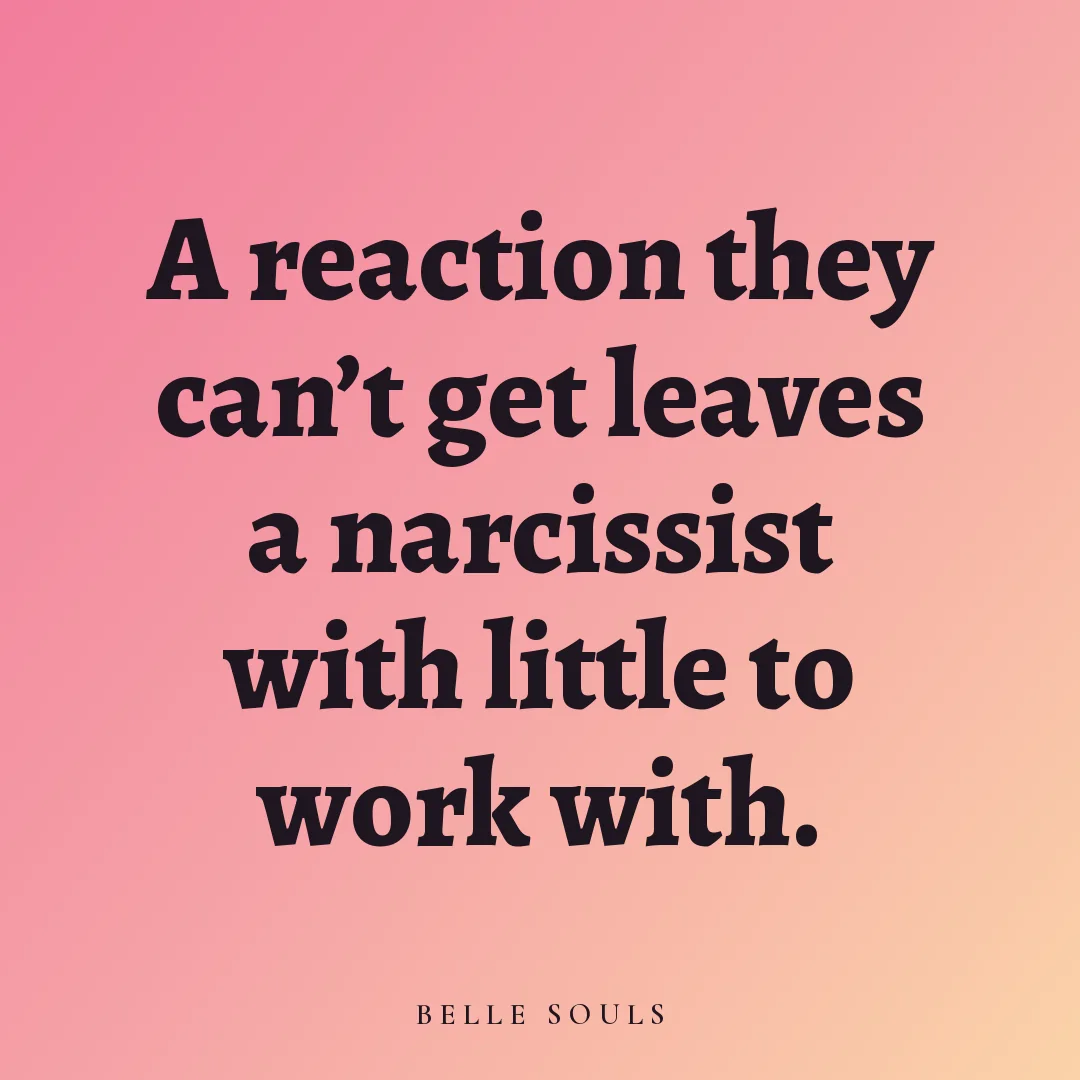
A reaction they can’t get leaves a narcissist with little to work with.
They make the cutting comment at dinner, then glance over to check. You say, “Hm, maybe,” and pass the salad.
They wait for the flinch. It doesn’t come.
Sometimes the bait is blunter. “So you don’t care, then?” It’s an open invitation to explain, defend, cry. You don’t have to accept it.
Why does that matter? Many narcissists need outside confirmation to feel like they matter, and your reactions supply it. Your tears, your anger, your long explanations all hand them fuel. Stay flat, and there’s simply less for them to grab.
There’s a popular name for this: grey rock. It isn’t a clinical term. It just means staying boring and calm when you can’t avoid them. Short, factual replies about logistics. No rising to bait, however tempting.
Over time, it can help the old bond loosen. Treat it as a way to stop feeding the fight, not a way to win. Expect it to feel strange at first. And it may not be safe in every situation.
Next jab? “Hm, maybe.” Pass the salad.
#3 Being seen without the mask

A narcissist often polishes a public image that falls apart behind closed doors.
At the party, they’re the funny one. They top up drinks, ask about everyone’s kids, hug your mother. In the car home, silence. Then, eyes on the road: “Why did you embarrass me like that?”
Meanwhile, your friends say you’re lucky.
That gap is no accident. Everyone tidies themselves up for company. But research on impression management suggests narcissists pour extra effort into their image, since being admired is what props up their sense of worth. Applause is the fuel.
So when the image slips in front of others, it can sting, because that image is what props them up. A neighbour hears the shouting. A friend catches the sneer.
For you, the gap does its own damage. After enough “But they’re so lovely!” you start doubting what you lived through.
One way to tell what’s real: trust what happens behind closed doors over what happens at the barbecue. And talk to someone who has seen both sides, if you have one.
The real one drives you home.
#4 Your plans, your money, your no

Your independence can feel like a slap in the face to a narcissist.
You make Saturday plans with a friend. Now they need you that day. “So I’m supposed to sit here alone? Fine. Go.”
Or you gently ask for the money you lent them in spring. Suddenly you’re petty, cold, keeping score. And somehow they’re the one who’s hurt.
Research on entitlement describes people who feel owed more than everyone around them, as if rules are for other people. Waiting, sharing, paying back: all of it can feel beneath them. So your normal request lands like an attack.
No wonder asking for fairness feels like starting a war.
A boundary, in the popular sense, is about what you will do. “If you shout, I’ll leave the room.” Nobody has to agree.
State it once. Act on it every time. Keep track of what you give, and stop pre-paying, pre-agreeing and pre-forgiving. Expect pushback and guilt at first. Self-respect tends to grow from there. Small, boring consistency does the work.
Your Saturday belongs to you.
#5 You walking away for good
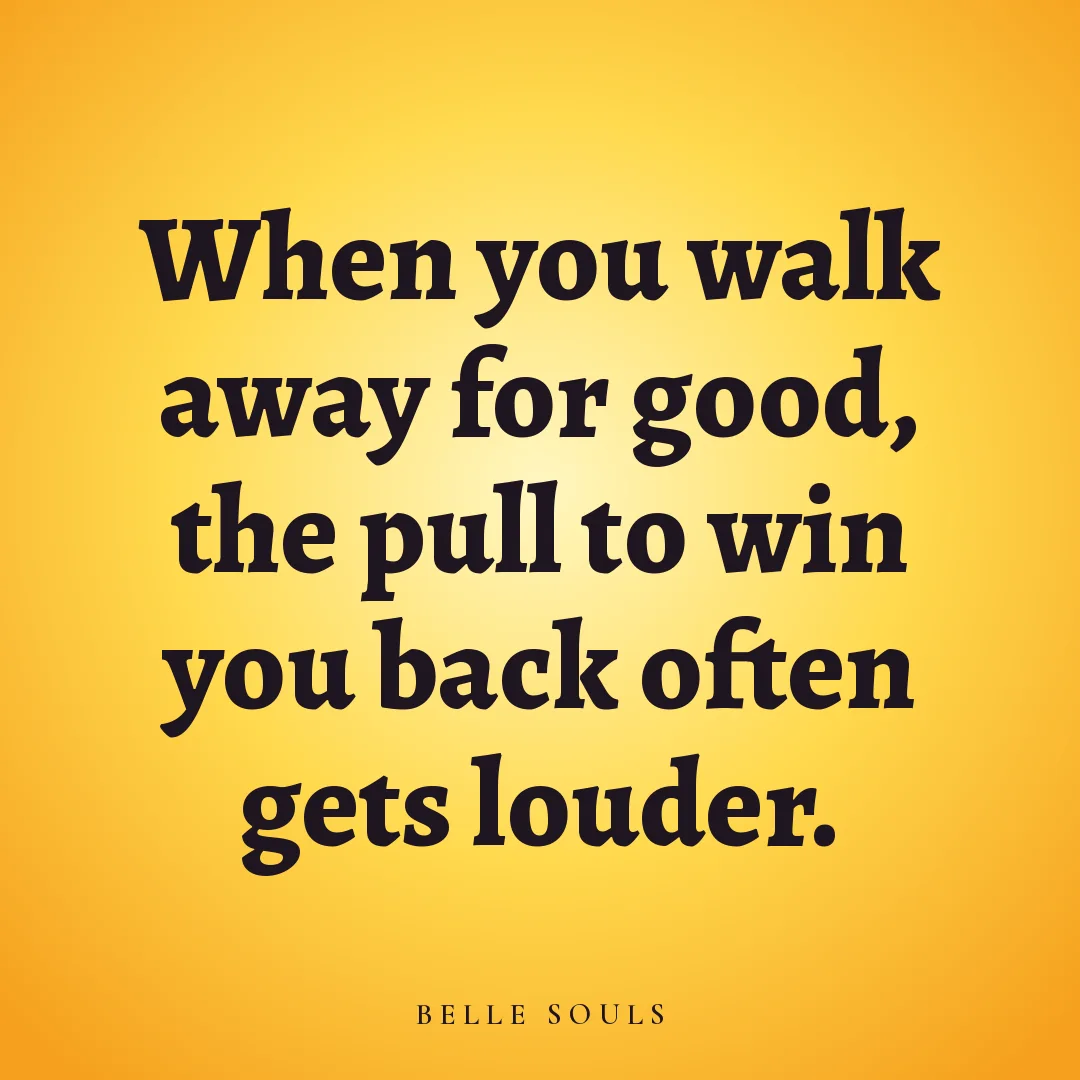
When you walk away for good, the pull to win you back often gets louder.
You’ve pulled away before. They waited, sent something sweet, and it all reset. This time feels different. They seem to sense it.
Then it starts. The “I miss you” text after months of nothing. The sudden emergency only you can fix. The birthday message, right on cue. Contact on your anniversary. The promise to change, this time for real.
Many call this hoovering, a popular label with no formal definition for trying to reel you back in.
It works on the bond you shared and your wish for the old days to come back. And it often appears right when they need something from you, or feel replaced by someone new.
One message can bring old hope flooding back and make your progress feel undone.
What helps: decide in advance how you’ll respond, and trust the past pattern over the new promise. If they might escalate, a domestic violence service can help you plan for safety, quietly and on your terms.
Meaning it can’t be charmed away.
Notice something? Every item on this list is about you living your own life. None of it requires winning a single argument.
If one of these fits, start small. Tonight, write down what actually happened, plainly, before anyone gets the chance to rewrite it.
Then pick one person you trust and tell them the full story.
4 Things You Have to Stop Giving a Narcissist

The narcissist takes, and takes, and takes, and then asks why you look so tired.
You’ve explained yourself until your voice gave out. You’ve cried in the car so nobody would see. You’ve smiled through dinners you didn’t want to be at.
Meanwhile, the promises keep sliding to next month, and your own plans keep getting moved to make room for theirs.
Your explanations. Your tears. Your patience.
That emptiness isn’t proof you gave too little. Some of what you hand over goes every day, unnoticed.
Here are 4 things you have to stop giving a narcissist, and what to keep for yourself instead.
Why it’s never enough
A narcissist’s self-worth runs on outside approval. Without a steady supply of it, the whole thing starts to wobble.
So the people closest to them often stop being people at all. They become mirrors on good days and threats on bad ones. Your needs start to feel like an inconvenience. Your feelings become background noise.
Research on narcissistic admiration and rivalry describes the shift. Early on, charm and showing off win you over. Over time, putting you down takes over, which is why the start felt so good and now feels so bad.
You keep giving to get the beginning back.
#1 Your explanations can become their ammo

Explaining yourself to a narcissist can hand them something new to pick apart.
Picture it. You bring up the comment they made at dinner, the one that made your sister go quiet. You waited until the kids were in bed. You rehearsed it in the shower. You kept your voice soft and calm.
“I never said that. How dare you accuse me?” Ten minutes later, you’re hearing every mistake you’ve ever made.
There’s a research name for this move: DARVO. They deny it, go after you for raising it, then swap places so they’re the one who was wronged. Studies found it leaves the person who spoke up feeling more to blame.
No wonder you end up saying sorry.
So you try harder. More detail, better words, a calmer tone. But studies on narcissism and empathy found many narcissists can grasp what you feel. They just often choose not to act on it, unless it helps them.
What helps? Name the original issue and keep coming back to it. Don’t argue the counter-attack point by point.
You were never short of reasons. They were short of interest.
#2 Your reactions keep the game going

Your biggest reactions can be the very thing a narcissist keeps coming back for.
They joke about your weight in front of your friends. Everyone goes quiet. You flinch. They laugh. “God, it was a joke. You’re so sensitive.” Later, on the drive home, you cry against the window, and their face looks almost pleased.
That look might not be in your head.
Researchers describe a trait called everyday sadism, where some people find other people’s discomfort rewarding all by itself. Not to get something. Just because. Not every narcissist has this streak, though. Teasing that stops when you ask is just teasing.
One thing that helps is simply giving them fewer reactions to feed on. A popular name for this is grey rock.
Short, flat, dull replies. “Okay.” “Maybe.” “I’ll see.” The less there is to grab, the less they have to work with.
It won’t win the fight, and it may not be safe in every situation. If they might escalate, a safety plan matters more than any trick. What grey rock can do is stop feeding the fire.
Your tears deserve a kinder audience.
#3 Their promises keep you waiting

A narcissist may keep you waiting for a life that never arrives.
The house near the sea. The trip to Italy. The wedding “once work calms down.” You’ve told your mum about it. You’ve already picked the tiles in your head. Then the date slides. And slides. And slides again.
Ask about it and you hear, “Why are you pressuring me? I said after this busy stretch.”
A popular name for this is future faking. There’s no formal definition, but it links to what research calls intermittent reinforcement. Rewards that turn up at random hook you harder than steady ones, the same pull that keeps gamblers at slot machines.
Each new promise lands like a small jackpot.
One small win, and you’re back in. And the more you’ve poured into that pictured life, the harder it gets to let go. Some even deny they ever promised, and you’re left feeling unreasonable for asking.
So stop giving them your waiting. Judge by what has actually happened, then set a timeline that’s yours.
How long have you been waiting for “soon”?
#4 Stop giving their accusations somewhere to land

The thing a narcissist accuses you of is often the thing they’re doing.
“You’re so selfish.” Said by the one who blew the holiday fund on a weekend away with friends. “You’re always angry!” Shouted across the kitchen, red in the face, while you stand there with your coat still on.
Psychologists call this projection. Seeing an unwanted trait in you means they never have to see it in themselves.
Fair criticism that stings is something else. This is the same accusation, over and over, that doesn’t match what happened.
Then comes the rewrite. “That never happened.” “You’re imagining things again.” Research on gaslighting describes this: making you doubt your own memory until their version wins.
Before long, you’re defending yourself against things you never did, and the real issue has vanished.
Stop handing over the defence.
Treat a repeated accusation as information about them. State the facts once, then let it sit. Write things down when they happen, and check your memory with someone outside the relationship.
You know what happened. You were there.
None of this is your fault. You gave because you cared, and caring was never the problem. The problem was where it kept going. What you hand over from now on is your call.
Pick one of the four to hold back this week. Maybe it’s the long explanation, or the reaction they’re fishing for.
And if you want someone in your corner, start with one trusted person. Writing down what you want help with can make that first conversation easier.
How Narcissists Teach You To Stop Asking For Anything

Narcissists rarely say “Don’t ask me for anything.” They don’t need to.
You picked it up anyway.
From the sigh. From the fight that came out of nowhere. From the cold look that said you’d crossed a line you couldn’t even see.
Now you rehearse tiny requests in your head. Or you skip them and just do it yourself.
Nobody is born rehearsing requests. You learned it.
Here are 6 ways narcissists teach you to stop asking for anything, and how to spot each lesson while it’s happening.
It happens one small no at a time
For a narcissist, feeling worthwhile often rests on what other people reflect back. So you get sorted into one of two boxes: fan, or threat.
Your needs fit neither box. So they get treated as a nuisance.
One bad moment doesn’t do it. It’s the same reaction, month after month, each time you ask. Until one day you don’t.
Here’s how the lessons usually go.
#1 Asking feels like starting a war

To a narcissist, your ordinary request can land like a personal attack.
You ask for your half of the holiday money back. Or for the bins to go out, just once this week, without you doing it.
Their face changes. “Seriously? We’re keeping score now?”
Why so much drama over so little? Psychologists use the word entitlement for it: a fixed sense of being owed more than anyone else, with the rules meant for other people.
Through that lens, a normal limit reads as an insult. A queue offends them. Now picture how being asked to repay you goes down.
So you hand over more and get back less. Plain fairness starts to feel like picking a fight, and you quietly stop picking it.
One quiet fix: jot down what you give. Not as ammunition. Just so your own memory has backup when the story gets rewritten.
Needing things was never the greedy part.
#2 A simple question becomes a fight

Some questions cost so much that you quietly retire them for good.
“Did you call the plumber?” That’s all you said. Twenty minutes later you’re hearing how ungrateful you are, and the plumber is long gone from the conversation.
Other times nothing happens. Then, days later, you pay for a remark you can’t even recall making.
Why? Researchers studying threatened egotism saw narcissists hit back harder when they felt insulted, and they hit back at whoever they held responsible.
Criticism, rejection or being ignored can set it off. Even a basic question can turn into a fight.
So you pre-edit. You soften every word, practise it in the shower and wait for the right moment. You say sorry for things you didn’t do.
If the anger ever turns into threats or smashed things, leaving the room is a fair choice. So is reaching out for help.
And the plumber? Still not called.
#3 Somehow you end up apologising

Bring up a problem, and somehow you’re the one saying sorry by the end.
You mention the dig they made at dinner. Calmly. Once.
“I never said that. And how dare you, after the day I’ve had?”
Then tears. Then a sulk. Then you’re comforting them.
Researchers have a name for this pattern: DARVO. Deny it, go on the attack, then swap who gets to be the hurt one.
It works for a reason. In studies, the one who spoke up walked away blaming herself more. Conversation over. And next time, you don’t bring anything up at all.
What helps is dull on purpose. Name the first issue, keep steering back to it, and don’t argue their counter-attack point by point. If raising it feels unsafe, you don’t have to.
That dig at dinner? It still happened.
#4 Guilt makes your yes automatic

Guilt can turn your no into a yes before you’ve finished saying it.
You ask for one Saturday with your sister. “Fine. After everything I’ve done for you, but fine.”
Then nothing. Just a heavy silence until you cancel.
A popular label for this is FOG: fear, obligation and guilt. It isn’t a diagnosis, just a handy name for emotional blackmail.
Old favours get dragged out. Disappointment gets laid on thick. Soon a no costs more than a yes ever could.
Over time, yes comes out before you’ve even thought about it. Their moods start to feel like your job, and wanting something for yourself feels selfish.
Next request, pause. Is this their feeling, or your responsibility?
Your sister is still waiting for that Saturday.
#5 Your world shrinks to fit them

Each small rule seems minor until your whole life fits inside them.
You used to just buy the shoes. Now you ask first. Thursdays with friends? Now you check whether that’s “okay this week.”
Nobody announced a rule. It just got expensive to break one.
Psychologists call this coercive control. It means steering a partner’s days, money, friendships and freedom, often with no hitting at all.
One rule here, one punishment there. Piled up, they eat away your independence, and there’s rarely one big moment you can point at.
You ask permission for ordinary things now. And a smaller world has room for fewer requests.
If this sounds familiar, keeping some money and contacts of your own matters. A domestic abuse service can talk through safety planning with you, even if you’re unsure it’s “that bad.”
When did you last do something without checking first?
#6 You lose track of what you want

The deepest lesson is forgetting you ever wanted anything at all.
What would you like for dinner tonight? If your mind jumps straight to what they’d want, that’s the training talking.
You can read the mood from the keys in the door. You say yes before you’ve thought. You apologise when someone else bumps into you.
Psychologists call this fawning and hypervigilance. When anger can come from nowhere, your body stays switched on, and pleasing becomes how you keep the peace.
It’s a survival skill. It made sense.
But it’s exhausting. And somewhere along the way, you lose track of what you even like.
Start tiny. Say small no’s where it’s safe, like to the sales call or the friend who’ll get it. Notice the alarm in your body, then slow down.
Your wants are still in there. They’ve just been very quiet!
Asking for fair treatment, a straight answer or your own money back was never too much.
You went quiet because quiet felt safer, and that kept you going. Now you can spot the lessons as they happen, and decide which ones you’re done learning.
Start with one small ask, somewhere safe. Notice how it feels when the answer is simply yes.
Que deviennent les pervers narcissiques à la fin ?

Vous l’avez sûrement imaginé. Le jour où il paiera enfin pour tout ce qu’il a fait.
Au lieu de ça, vous le voyez enchaîner sans effort une nouvelle relation, un nouveau poste et une nouvelle cour d’admirateurs. Pendant ce temps, c’est vous qui ramassez les morceaux.
Lui a droit à un nouveau départ. Vous, aux ruminations de 3 heures du matin.
Ce qui se passe en général est plus discret qu’un coup de tonnerre. C’est un schéma durable, qui se répète au travail, entre amis et à la maison.
Voici 6 choses qui arrivent souvent aux pervers narcissiques à la fin, et ce que chacune signifie pour vous.

Pourquoi ce schéma le suit partout
Chez le pervers narcissique, l’estime de soi dépend souvent de ce que les autres lui renvoient. L’admiration, il la laisse entrer. Tout ce qui la menace, il le repousse.
Voilà pourquoi le charme arrive en premier. Les recherches sur l’admiration et la rivalité narcissiques décrivent comment le charme et l’autopromotion séduisent au début, puis comment le dénigrement des autres prend le relais.
Une première impression formidable. Les suivantes, beaucoup moins.
Et ce besoin d’admiration est un schéma durable. Il se manifeste dans toutes les situations, pas seulement les mauvais jours.
#1 On vous remplace en un clin d’œil

Un pervers narcissique peut passer à quelqu’un d’autre si vite que la tête vous en tourne.
Vous retrouvez encore son sweat dans votre tiroir. Et sur son Instagram, il y a déjà un nouveau visage partout, avec en légende : « J’ai enfin trouvé la bonne personne. »
Et vous voilà comparée à quelqu’un arrivé la semaine dernière.
La recherche associe le narcissisme à un style amoureux ludique. Autrement dit : garder ses options ouvertes, fuir la vraie intimité et se lasser dès qu’il a le sentiment d’avoir gagné.
Moins d’engagement, c’est des départs rapides et des redémarrages rapides. Beaucoup gardent leurs ex et leurs admirateurs à portée de main en permanence, donc la personne suivante est souvent déjà dans les parages.
Sur les réseaux, on appelle ce cycle idéalisation, dévalorisation, rejet. C’est une étiquette populaire, pas clinique, mais elle résume bien ce jeu : le piédestal, les critiques qui s’installent, le froid soudain, quelqu’un de nouveau.
Alors si vous vous sentez remplaçable en ce moment, regardez encore la vitesse. Elle ne dit rien de votre valeur.
La nouvelle a simplement droit au début que vous avez eu.
#2 Le charme reste à la soirée

Le charme du pervers narcissique est souvent réservé à un public, et la maison n’en est pas un.
En soirée, c’est lui le drôle, qui remplit les verres et prend des nouvelles de l’opération du genou de votre tante. Dans la voiture du retour, silence. Puis : « Pourquoi t’as raconté cette histoire ? »
Deux personnes différentes. Une seule voiture.
Le PN soigne souvent énormément son image publique, parce que l’admiration nourrit son estime de lui. L’écart va donc bien au-delà de poli contre détendu : gentil dehors, cruel dedans.
C’est pour ça que ses amis n’arrêtent pas de vous dire à quel point vous avez de la chance. Eux n’ont jamais droit qu’à la version soirée.
Et quand vous finissez par parler, personne ne vous croit. Alors vous commencez à douter de ce que vous vivez.
Un repère : fiez-vous à ce qui se passe une fois la porte fermée, et parlez à quelqu’un qui a vu les deux facettes.
C’est votre salon qui dit la vérité.
#3 Ses histoires ne tiennent plus debout

Les promesses d’un pervers narcissique ont tendance à s’évaporer dès qu’il faut les tenir.
Les vacances à la mer « après ce mois chargé ». La bague « quand le boulot se sera calmé ». Puis, quand vous osez enfin en reparler : « Je n’ai jamais dit ça. »
Les psychologues appellent cette dernière manœuvre le gaslighting. Il s’agit de vous faire douter de votre propre mémoire pour que sa version des faits l’emporte.
Pour la première partie, on parle de future faking. C’est un terme venu des communautés, sans définition officielle, qui désigne des promesses détaillées faites pour vous garder investie, sans aucune intention de les tenir.
Les projets détaillés vous gardent accrochée. Quand vous avez misé des années sur un avenir commun, partir donne l’impression de tout perdre.
Alors vous attendez une vie qui n’arrive jamais, et vous vous sentez déraisonnable rien que de poser la question.
Au bout du compte, les promesses non tenues s’accumulent. Notez les choses sur le moment, puis jugez sur ce qui s’est réellement passé, pas sur ce qui a été promis.
Le papier, lui, ne vous manipule pas.
#4 La moindre correction le fait vaciller

La plus petite égratignure à son image peut déclencher chez le pervers narcissique la plus violente des réactions.
Vous faites remarquer, l’air de rien, que le dîner était en fait mardi. Et c’est parti pour deux heures de dispute parce que vous « me faites toujours passer pour un idiot ».
Ou bien la colère explose des jours plus tard, pour une remarque que vous aviez oubliée depuis longtemps.
Les recherches sur l’égo menacé ont montré que les narcissiques réagissent aux affronts avec plus d’agressivité. Une agressivité dirigée contre la personne qu’ils tiennent pour responsable.
Tout le monde se met en colère. Ici, le schéma, c’est une colère sans commune mesure, braquée sur celle qui a égratigné son image.
À long terme, c’est souvent là que ça mène : vous réfléchissez à chaque phrase avant de parler, vous vous excusez pour ce que vous n’avez pas fait, et la liste des sujets sans risque rétrécit.
Si vous devez critiquer, restez brève et factuelle, ou abstenez-vous quand ce n’est pas sans danger. Si la colère tourne aux menaces, quittez la pièce et demandez de l’aide.
Combien de temps passez-vous chaque jour à peser vos mots ?
#5 Il revient quand il a besoin de vous

Le message de retour d’un pervers narcissique tombe souvent pile quand il a besoin de quelque chose ou se sent remplacé.
Un « Tu me manques » à 1 heure du matin. Une urgence soudaine que vous seule pouvez régler. Un message d’anniversaire jurant que cette fois, il a vraiment changé.
Sur internet, on appelle ça le hoovering. C’est une étiquette populaire, sans définition officielle, pour désigner ses tentatives de vous ramener à lui.
Si ça marche, c’est à cause du lien. Les psychologues parlent de lien traumatique : une alternance de mal et de gentillesse, plus un rapport de force déséquilibré, qui peut créer un attachement plus fort qu’une relation apaisée.
Alors le vieil espoir revient en force. Des semaines de progrès semblent soudain réduites à néant.
C’est une réaction connue. Pas une faiblesse.
Décidez à l’avance comment vous répondrez, avant qu’un message n’arrive. Puis regardez le schéma passé, pas la nouvelle promesse toute brillante.
À quoi ressemblait « cette fois » les fois précédentes ?
#6 Le temps démasque la rumeur qu’il répand

Votre comportement stable et ordinaire, jour après jour, répond mieux à une campagne de dénigrement que n’importe quel argument.
Peut-être a-t-il déjà raconté à vos amis communs que vous êtes « instable ». Peut-être que cette histoire a commencé avant même votre départ.
C’est une campagne de dénigrement. Les recherches sur l’agression relationnelle la décrivent comme une attaque contre votre place sociale plutôt que contre votre corps, ce qui ne laisse aucune trace visible.
Et soudain, vous avez l’impression de devoir défendre votre réputation partout.
Ce n’est pas le cas.
Restez cohérente et laissez les mois faire leur travail. Attendez-vous à ce qu’il ne change pas, plutôt que d’espérer qu’il rétablisse la vérité.
Si cela touche votre travail ou la garde des enfants, gardez une trace datée de ce qui a été dit, où et quand.
Une rumeur doit être répétée. Une trace datée, non.
La fin que vous attendez n’arrivera peut-être jamais sous la forme d’un grand moment. C’est dur à accepter.
Mais votre fin à vous ne dépend pas de la sienne. Chaque jour où vous faites confiance à votre mémoire, où vous tenez vos propres notes et où vous passez du temps avec des gens heureux de vous avoir, c’est vous qui l’écrivez.
5 choses troublantes que les pervers narcissiques cachent chez eux

Devant votre famille, un pervers narcissique peut être le conjoint idéal. À la maison, le masque tombe.
Vous partagez son toit. Le même canapé, les mêmes factures, les mêmes dimanches matin.
Et pourtant, quelque chose reste sous clé. Un ton qu’il ne prend que porte fermée. Un téléphone qui ne quitte jamais sa poche.
Vous vérifiez son humeur avant même la vôtre.
Certaines choses dorment dans un tiroir ou une poche. D’autres dans ce qu’il sait de vous.
Voici 5 choses troublantes que les pervers narcissiques cachent chez eux, et ce que chacune vous dit vraiment.

Pourquoi ils ont besoin de cachettes
L’estime de soi d’un narcissique dépend souvent de la validation extérieure. Les autres deviennent des sources d’admiration, ou des menaces pour celle-ci.
L’image doit donc être protégée, et tout ce qui pourrait menacer l’admiration disparaît de la vue.
C’est à la maison que tout se cache.
#1 Son vrai visage reste derrière la porte

La personne que tout le monde adore en soirée n’est souvent pas celle qui rentre avec vous.
Au barbecue, c’est le plus drôle. Il remplit les verres, connaît le prénom de chacun et complimente la salade de pommes de terre de votre mère.
Puis la portière se referme. Silence. Ou une petite remarque glaciale sur votre façon de parler trop fort toute la soirée, lâchée sans même vous regarder. Votre ventre connaît le trajet du retour avant votre tête.
Pourquoi ce changement ? Les psychologues qui étudient la gestion de l’impression décrivent comment nous façonnons tous l’image que les autres ont de nous. Beaucoup de narcissiques investissent énormément dans la leur, parce que l’admiration nourrit leur estime d’eux-mêmes.
La maison, ce sont les coulisses. Pas de public, pas de spectacle.
Et puis une amie vous dit : « Tu as tellement de chance de l’avoir. » Votre sœur aussi. Petit à petit, vous doutez de ce que vous vivez chaque jour.
Tout le monde est un peu plus poli en public. C’est normal. Le signal d’alarme, c’est l’écart entre gentil dehors et cruel dedans. Regardez quelle version apparaît quand la porte se ferme.
Fiez-vous à ce qui se passe chez vous. Vous y étiez.
#2 L’argent que vous ne voyez jamais

Certains pervers narcissiques gardent l’argent du foyer hors de votre portée, et ce n’est pas un hasard.
Peut-être qu’il « s’occupe des finances » et que vous ne voyez jamais un relevé. Les mots de passe changent sans prévenir. Votre carte est refusée au supermarché, et il hausse les épaules.
Ou il vous emprunte de l’argent « juste jusqu’à vendredi ».
Les recherches sur la violence économique décrivent exactement cela : contrôler, exploiter ou saboter votre argent, vos revenus ou votre indépendance. Contracter des dettes à votre nom en fait partie. Tout comme saper discrètement votre travail ou vos études.
Sans argent à vous, partir devient plus difficile. Cette dépendance, c’est justement le but.
Alors vous cachez un rouge à lèvres neuf au fond de votre sac. Vous vous excusez d’avoir acheté du shampoing. Des chiffres qu’on vous interdit de voir vous enferment.
Un couple qui gère son budget ensemble, c’est normal. Une seule personne qui détient toutes les clés, c’est une autre histoire.
Un compte à vous, vos propres justificatifs, un coup d’œil sur les crédits à votre nom. Des petits pas. Votre argent a le droit d’être à vous.
#3 Un téléphone toujours face cachée

Beaucoup de pervers narcissiques gardent leurs options ouvertes, même quand ils partagent votre lit.
Le téléphone reste retourné sur le plan de travail. Il vibre à minuit. Il l’emporte aux toilettes, sans exception.
Vous demandez qui lui écrit : « Mon Dieu, t’es vraiment parano. »
Les recherches associent le narcissisme à un style amoureux ludique : garder ses ex et ses admirateurs sous la main, fuir la vraie intimité, se lasser dès que la partie semble gagnée. Départs en trombe, refroidissement, regards qui s’égarent.
Son ex reçoit encore un message d’anniversaire. Quelqu’un au bureau a droit à des émojis clin d’œil. Vous finissez par vous battre pour une attention qu’on vous donnait librement, avec l’impression d’être remplaçable.
Vous vous en voulez peut-être de ne pas l’avoir vu plus tôt. Les psychologues parlent de cécité à la trahison : quand on dépend de quelqu’un, l’esprit peut occulter les preuves de sa trahison pour préserver le lien.
Ce n’est pas de la bêtise. C’est de la protection.
Ne vous blâmez pas pour ce que vous n’avez pas vu. Quand quelque chose cloche, parlez-en à quelqu’un de confiance en dehors du couple. Votre instinct l’a remarqué, et ce n’est pas pour rien.
#4 Des règles qu’il ne dit jamais

Chez un pervers narcissique, beaucoup de règles ne sont jamais dites à voix haute.
Personne ne vous dit que le dîner doit être servi à 19 h. Ni que telle amie pose problème. Vous l’apprenez en enfreignant la règle.
« Quarante minutes pour acheter du lait ? »
Il prend votre téléphone « pour regarder l’heure » et se met à faire défiler. Il sait où vous étiez avant que vous ayez dit un mot.
Les chercheurs appellent ce schéma le contrôle coercitif. Il inclut la surveillance de votre téléphone et de vos déplacements, le contrôle de l’argent, le choix des personnes que vous voyez, et des règles sur vos vêtements, vos repas ou votre emploi du temps.
Aucun moment, pris seul, ne paraît énorme, alors c’est difficile à nommer. Mais les petites règles et les punitions s’accumulent. Votre monde rétrécit, et vous finissez par demander la permission de boire un café avec une amie.
C’est une forme reconnue de violence conjugale. Garder un peu d’argent et des contacts à vous compte, et une association d’aide aux victimes peut vous aider à préparer votre mise en sécurité.
Depuis quand faut-il demander la permission pour vivre ?
#5 Un dossier sur tout ce que vous lui confiez

Chaque secret que vous lui avez confié est peut-être soigneusement rangé pour plus tard.
Ce qui vous a fait pleurer à votre troisième rendez-vous. La dispute avec votre sœur. La dette qui vous faisait honte. Ce que votre père vous a dit quand vous aviez douze ans.
Des mois plus tard, ça ressort lors d’un dîner entre amis. Voix calme. Timing parfait. « Je dis ça parce que je tiens à toi. »
Les psychologues décrivent un trait appelé machiavélisme : une façon cynique et stratégique de traiter les autres, faite de flatterie, de tromperie et de calcul à long terme. Collecter des informations pour s’en servir plus tard en fait partie.
Les chercheurs le regroupent avec le narcissisme dans la « triade noire », et beaucoup de personnes difficiles obtiennent des scores élevés sur plusieurs de ces traits.
Ce profil s’emporte rarement en public. Il soigne sa réputation tout en agissant contre vous. Alors quand vous osez enfin parler, les autres voient quelqu’un de parfaitement raisonnable.
Vous ne voyez le plan qu’une fois qu’il est terminé.
Confiez-vous moins. Gardez des traces écrites. Votre histoire vous appartient.
Si vous avez reconnu une partie de tout cela chez vous, ça ne veut pas dire que vous avez manqué de vigilance. Bien cacher les choses, c’est tout leur talent.
Remarquer le tiroir fermé à clé, ce n’est pas de la paranoïa.
Commencez petit. Racontez toute l’histoire, à voix haute, à une personne de confiance. L’isolement, c’est ce qui fait marcher l’emprise. Renouer avec les autres, c’est ce qui commence à la briser.
10 façons douloureuses dont un parent pervers narcissique traite ses enfants

Vous êtes une femme adulte, et pourtant un simple soupir à table peut encore vous ramener à vos huit ans.
Les parents pervers narcissiques traitent souvent leurs enfants comme ils traitent tout le monde : comme un public.
Tout a commencé avant que vous ayez les mots pour le dire. Alors ça ressemblait simplement à la maison.
Ce n’était pas normal. Et ce n’a jamais été votre faute.
Voici 10 façons douloureuses dont un parent pervers narcissique traite ses enfants, et ce que chacune vous a appris en silence.

#1 Vos émotions étaient toujours de trop

Vos larmes étaient traitées comme une gêne, quelque chose à faire taire au plus vite.
Vous rentriez anéantie après une dispute avec votre meilleure amie. Votre mère jetait un œil à son téléphone et soupirait : « Tu es trop sensible. Endurcis-toi. »
Les recherches sur le narcissisme suggèrent que l’empathie existe souvent. Elle reste simplement éteinte, sauf si quelque chose la déclenche. Ce qui ressemble davantage à un choix qu’à une incapacité.
Alors vous avez appris à pleurer dans la salle de bains. À dire « ça va » avant même qu’on vous pose la question.
Aujourd’hui encore, vous doutez peut-être de chacune de vos réactions.
Vos émotions n’ont jamais été de trop. Elles étaient juste de trop pour elle.
#2 Un amour qui allait et venait sans prévenir

Une tendresse qui va et vient au hasard vous accroche bien plus qu’un amour stable.
Un jour, votre père n’était que blagues et glaces. Le lendemain, il passait devant vous comme devant un meuble.
Vous ne saviez jamais quel père allait franchir la porte. Alors vous essayiez sans cesse de mériter le gentil.
Les psychologues appellent ça le renforcement intermittent. Les récompenses qui tombent de façon imprévisible sont les plus difficiles à cesser de poursuivre. C’est la même force qui retient les gens devant les machines à sous.
Un câlin, de temps en temps, avait des airs de jackpot.
C’est comme ça que vous avez appris à donner toujours plus pour recevoir toujours moins.
Essayez de le juger sur une journée ordinaire, pas sur sa meilleure. Que voyez-vous ?
#3 Vous existiez pour les faire briller

Pour un parent pervers narcissique, un enfant ressemble parfois moins à une personne qu’à un miroir.
Votre mère a choisi la danse classique, la coupe de cheveux, les études. Quand vous avez voulu faire de l’art plutôt que du droit, elle a lâché : « Après tout ce que j’ai sacrifié, tu vas me faire honte comme ça ? »
Pourquoi ?
Quand l’estime de soi d’une personne dépend de l’approbation des autres, ses proches deviennent une source de cette approbation.
Vos notes et votre apparence faisaient partie de son reflet. Vos vrais besoins, eux, la dérangeaient.
Jugez-la sur ce qui se répète au fil des mois. Et attendez-vous à ce que ça reste pareil, plutôt que d’espérer qu’elle change.
Vous n’avez jamais été faite pour servir de miroir à qui que ce soit.
#4 Le silence comme punition

Chez un parent pervers narcissique, certaines des punitions les plus dures se faisaient sans un bruit.
Vous aviez demandé à dormir chez une copine. Votre mère ne vous a plus adressé la parole pendant trois jours.
Au dîner, elle bavardait avec votre frère et regardait à travers vous.
Être ignorée menace un besoin fondamental : appartenir, compter. C’est pour ça que ça peut faire aussi mal qu’une douleur physique. Et que vous vous seriez excusée de n’importe quoi, juste pour que ça s’arrête.
Un parent qui dit « J’ai besoin d’une heure pour me calmer » fait quelque chose de sain. Le silence utilisé comme punition, c’est autre chose.
Si elle le fait encore, dites-lui une fois que vous êtes prête à parler. Puis vivez votre journée.
Sans lui courir après. Sans supplier.
#5 Ils se moquaient de ce que vous aimiez

Ce que vous aimiez le plus devenait souvent la cible la plus facile.
Vos poèmes. Vos posters. Les petits dessins dans la marge de vos cahiers.
Un jour, votre père a trouvé un de vos poèmes et l’a lu au déjeuner du dimanche, d’une voix ridicule. Vous êtes devenue écarlate, il a souri : « Détends-toi, c’est pour rire. Tu n’as pas d’humour ? »
Les chercheurs décrivent un trait appelé sadisme ordinaire : certaines personnes trouvent le malaise des autres gratifiant en soi.
Une taquinerie bienveillante s’arrête quand on le demande. Là, jamais. Alors vous avez cessé de montrer à qui que ce soit ce qui comptait pour vous.
Votre peine a-t-elle déjà semblé lui faire plaisir ?
#6 Chacune de vos victoires devenait la leur

Votre travail acharné pouvait devenir, du jour au lendemain, le trophée de votre parent.
Vous aviez travaillé des mois pour décrocher cette bourse. À la fête, votre mère a annoncé à tout le monde : « Elle tient son intelligence de moi. Je l’ai poussée tous les jours. »
Ses amies vous répétaient que vous aviez bien de la chance.
Les pervers narcissiques soignent souvent beaucoup leur image, parce que l’admiration nourrit leur estime d’eux-mêmes. La réussite d’un enfant, c’est du matériau de choix.
Ajoutez à cela le sentiment que tout leur est dû, cette conviction tenace de mériter plus que les autres, et s’attribuer le mérite leur paraît parfaitement naturel.
Personne à cette fête n’a vu qui avait vraiment fait le travail.
Cette bourse, c’était la vôtre. Entièrement.
#7 Une porte fermée ne comptait pas

Dans certaines familles, vouloir un peu d’intimité est vécu comme une trahison.
Votre mère lisait votre journal intime et appelait ça s’inquiéter pour vous. À trente ans, elle veut encore voir vos messages et boude quand vous réservez des vacances sans lui demander.
« On est une famille. On n’a pas de secrets les uns pour les autres. »
Les psychologues parlent de relation fusionnelle, ou d’enchevêtrement. La proximité sert à contrôler, si bien que chaque pas vers l’indépendance paraît dangereux pour tout le monde.
Souvent, ça se voit quand elle traite votre conjoint comme un rival. Ou dans la culpabilité que vous ressentez simplement parce que vous grandissez.
Commencez petit. Cette semaine, prenez une décision sans lui en parler d’abord.
Votre vie a le droit d’avoir une porte.
#8 Vos bonnes nouvelles les glaçaient

Votre bonheur pouvait être vécu comme une menace par un parent pervers narcissique.
Vous avez appelé pour annoncer votre promotion. Un silence. Puis : « Bon, ne prends pas la grosse tête. »
Et bizarrement, votre dîner d’anniversaire finissait souvent en dispute.
L’envie est fréquente dans le narcissisme. La réussite des autres menace leur besoin de se sentir supérieurs. Alors ils la rabaissent, se l’approprient ou la gâchent.
Elle haussait les épaules devant votre diplôme et démolissait vos amis.
Alors vous avez appris à cacher vos bonnes nouvelles. Les moments heureux ont commencé à paraître risqués.
Partagez vos victoires avec des gens dont le visage s’illumine quand vous les racontez. Ils existent.
#9 Vous êtes devenue le parent

Vous avez consolé votre mère bien avant que quiconque pense à vous consoler.
À dix ans, vous étiez assise sur son lit pendant qu’elle pleurait sur votre père, les factures, sa vie. Vous gardiez ses secrets. Vous prépariez les repas de votre frère.
La famille était admirative : « Qu’est-ce qu’elle est mûre pour son âge ! »
Les psychologues appellent ça la parentification. L’enfant devient le confident ou l’aidant de son parent, et apprend que ses propres besoins passent en dernier.
Aider à faire la vaisselle, c’est normal. Être la psy de sa mère à dix ans, non.
Pas étonnant que demander de l’aide vous paraisse si difficile aujourd’hui.
Laissez quelqu’un prendre soin de vous, pour une fois. Même un peu.
#10 L’un brille, l’autre porte le chapeau

Dans certaines familles, un enfant ne peut rien faire de mal, tandis qu’un autre est accusé de tout.
Votre sœur a oublié l’anniversaire de votre mère et ça l’a fait rire. Vous l’avez oublié une fois et on vous l’a reproché pendant des années.
Peut-être étiez-vous l’enfant chouchou, terrifiée à l’idée de tomber de votre piédestal. Peut-être étiez-vous le bouc émissaire, celle dont personne ne mentionnait jamais les prix.
Dans les deux cas, ces rôles n’avaient pas grand-chose à voir avec vous. Des rôles figés aident un parent contrôlant à gérer l’image de la famille et ses tensions.
Ils peuvent durer longtemps à l’âge adulte, et éloigner les frères et sœurs.
Votre sœur, elle aussi, a reçu un scénario.
Votre rôle vous a été attribué. Il n’a jamais été ce que vous êtes.
Si vous avez reconnu ici plus de votre enfance que vous ne l’auriez voulu, soyez douce avec la petite fille que vous étiez. Elle faisait de son mieux dans une maison qui n’avait aucun sens.
Vous n’avez rien à décider aujourd’hui. Raconter toute l’histoire à une personne de confiance, c’est un bon début.
L’enfant qui a appris à se taire a le droit de parler, maintenant.
7 Money Mistakes That Keep You Stuck With a Narcissist

A narcissist rarely needs to lock the door when they control the bank card.
You check your balance and feel sick. You ask for money that’s partly yours. You say sorry for buying shampoo.
None of that is an accident.
Money is one of the quietest ways a controlling partner keeps you close. Many of the habits that keep you stuck were trained into you, one small rule at a time.
Here are 7 money mistakes that keep you stuck with a narcissist, and why they were never really your mistakes.

Why money works as a leash
Psychologists call it financial or economic abuse. In plain words, someone takes over, uses up or quietly wrecks what you earn and own.
Why does it work so well? With nothing in your own name, walking out the door gets much harder. That dependence holds you in place.
It seldom shows up as one dramatic scene. Research on coercive control describes lots of little rules and penalties piling up until your life feels smaller.
Read every ‘mistake’ below as a trap they built.
#1 Handing them control of every penny

The person who holds all the money holds most of the choices.
It often starts sweetly. “Let me deal with the bills, you’ve got enough on your plate.” Then the card moves to their wallet. The passwords change. A few months later you’re asking for petrol money.
Each step looks reasonable on its own. That’s exactly why it’s so hard to point at.
Sorting out a budget as a team is normal. The line is crossed when only one of you can reach the money and the other has to ask.
What does that do to you? Money starts to feel like a cage, and the space you live in shrinks.
One thing that helps, where it’s safe: an account and paperwork in your name only.
Your money. Your name on it.
#2 Explaining every coffee you buy

When you have to justify a coffee, the money was never really shared.
You walk in with the shopping and the questions start at the door. “What’s this? Did we need it? How much was that?”
So you start hiding small things. The receipt goes in the outside bin. The new top stays in the car boot for a week.
That’s not you being sneaky.
It’s what happens when ordinary choices need permission. Coercive control runs on tiny rules and tiny penalties: the sigh, the lecture, the cold evening. Rules the two of you actually agreed on are a different thing.
You’re an adult asking permission to be one.
So when did buying lunch start feeling like a confession?
#3 Lending money that never comes back

To an entitled partner, your money is a loan that never needs paying back.
It’s two hundred for the car. Then the phone bill. Then “just till Friday.” Friday comes and goes, and when you mention it, they act wounded. “Wow. I didn’t know we were keeping score.”
Why? Research on entitlement describes people who feel owed more than everyone around them, and who treat rules as something for other people. So asking for your money back lands like an insult.
That’s how the giving gets lopsided. You hand over more, get back less, and even asking for what’s fair feels like declaring war.
Wanting your own money back isn’t greedy. Entitlement is when someone brushes your needs aside completely.
One quiet thing that helps: a private note of everything you hand over. Dates, amounts, what it was for.
Paper doesn’t forget the way they do.
#4 Paying to make the guilt stop

Guilt is a bill they can send you again and again.
You say no to paying for their weekend away. They go quiet. Then comes the line: “After everything I’ve done for you?”
Two days later, you’ve paid. Relieved, somehow.
There’s a popular name for this: FOG, short for fear, obligation and guilt. It’s a nickname rather than a diagnosis. It describes emotional blackmail, where giving in starts to feel cheaper than saying no.
Researchers who study coercive control describe the same squeeze: little pressures stacking up until your freedom is gone.
Over time, yes comes out on autopilot. Their moods start to feel like your job, and your bank account pays for them.
Next time a request comes wrapped in guilt, wait a beat before you answer. Their feelings are real to them. They’re still not your bill.
#5 Shrinking your job so they feel big

Your pay rise can feel like a threat to someone who needs to feel superior.
You get the promotion and text them first. The reply is “Cool.” At dinner it becomes “Must be nice to get handed things.”
So next time you don’t mention it.
Research links envy with narcissism, especially the quieter, vulnerable kind. Your success can poke at their need to feel on top, so they may shrink it, take credit for it or spoil it.
With money, spoiling can look like a fight the night before your interview. Or endless complaints about your late shifts until you cut your hours.
Slowly, your independence gets smaller too.
A moment of envy is human. Using it to pull you down is the pattern. Watch who goes quiet when you win.
#6 Waiting on the house they keep promising

A future that never arrives can cost you more than any bill.
The house by the sea. The joint business. The wedding “once things calm down at work.” You’ve already picked paint colours in your head.
Meanwhile your savings go into the present: their car, their debts, their next big idea. And when you ask about the plan? “I never said this year.”
Online, this gets called future faking. It’s a popular term with no official definition. It means rich, detailed promises that keep you putting in, while nothing is ever meant to happen.
Shared plans tie you in. After you’ve poured money into that future, leaving feels like losing it too. Research on game-playing in relationships also links narcissism with lower commitment, which fits.
So you wait.
Look at what has really happened so far. What has been built, apart from their plans?
#7 Counting the years you’ve already paid in

The money you’ve already lost can quietly vote for staying.
You do the maths at 2am. The deposit you put in. The loan you took for their debts. Ten years of your wages in that house.
Leaving would mean it was all wasted. Right?
Psychologists call this the sunk cost effect. You keep paying in because quitting would seem to throw away everything you’ve given.
It sits alongside cognitive dissonance: the strain of believing ‘they love me’ and ‘they hurt me’ at once. To ease it, you explain away the bad parts.
That’s why decisions feel impossible.
One question cuts through the noise: what will the next ten years cost? Past money is spent. Your future isn’t.
If you saw yourself in more of these than you’d like, that isn’t a flaw in you. These habits were built around you, bit by bit.
Start with one thing. One record of your own. One trusted person who hears the full story. If money and safety are tangled together, a domestic abuse service can talk it through with you.
Your money was never the problem. Their grip on it was.
Belle Souls articles explain patterns described in psychology research and recovery writing. They are not a diagnosis and not a substitute for help from a qualified professional.