
Month: October 2026
5 Fears Narcissists Keep Hidden

Narcissists work very hard to look fearless.
The big talk. The cool shrug. The way nothing seems to touch them, while you tiptoe around every mood in the house.
Not in front of anyone, anyway.
But that armour is there for a reason.
Underneath sits a self-image that can crack, and the bravado exists to protect it.
Here are 5 fears narcissists keep hidden, and what each one does to you.
What the armour is protecting
For a narcissist, feeling worthwhile usually needs a steady supply of outside approval.
Admiration props it up. Anything that questions it, from a raised eyebrow to a closed door, feels like a threat.
That’s why the bravado matters so much. It protects a self-image that’s far more fragile than it looks.
Every fear below comes back to that.
#1 Someone seeing the real them

Their public image is a full-time project, and you’ve seen backstage.
At the party they’re the funniest person in the room. They top up drinks, know everyone’s name, and hug your mum like she’s their own. Everyone leaves charmed!
Then the car door shuts.
Silence. Or a cold, quiet list of everything you did wrong tonight, delivered while they stare at the road. You spend the rest of the drive hunting for the moment it went wrong.
Why the effort? Looking good to others matters enormously to a narcissist, since being admired is what keeps their self-worth afloat. At home, with no audience to win over, you get the other version.
So when friends say “You’re so lucky,” you smile and nod. Then you lie awake wondering if you imagined the car ride, and whether anyone would believe you if you said it out loud.
You didn’t imagine it. That gap between kind in public and cruel in private is real. Trust what happens behind your own front door, and lean on a friend who has watched both versions up close.
The car ride home counts more than the party.
#2 Criticism lands like a punch
To a narcissist, even gentle criticism can feel like an attack on who they are.
You mention the electric bill is late. Ten minutes later you’re hearing about every bill you’ve ever forgotten, in a voice that sends the dog out of the room. And the bill? Still late.
Or you correct a date in front of friends. They laugh it off. Three days later, over something tiny, they punish you for it, and you can’t even trace why.
Sound familiar?
Psychologists who studied this found that when narcissists feel insulted, they hit back harder, and they aim it squarely at whoever they hold responsible. Being wrong isn’t a fact to them. It’s an injury, and someone has to pay.
So you start pre-editing. You rehearse sentences in the shower. You end up apologising for things that were never yours, just to keep the evening calm. The house gets quieter, and so do you.
If something has to be said, stick to plain facts and few words, or let it go when speaking up feels risky. And if the shouting tips into threats, walk out of that room.
A late bill is just a late bill.
#3 Your wins feel like their losses
When you shine, a narcissist often feels like they’re losing.
You get the promotion. You tell them over dinner, buzzing. They say “Good for you,” glance at their phone, and ask if you’ve seen the car keys. Your big news lasts about four seconds.
Maybe they pick a fight the night before your birthday. Maybe they mock the friends who threw you the party, or find a flaw in the thing you’re proudest of.
Why?
Research on narcissistic admiration and rivalry describes two sides. At first, the charming, self-selling side does the work. Later the competitive side moves in, and anything you gain counts as something they lost.
Envy adds fuel. Your good fortune pokes at their need to feel above you, so they make it smaller, take credit for it, or ruin it. Everyone feels a pang of jealousy now and then. Using it to knock you down is something else.
Bit by bit, you start hiding good news. You downplay the raise. You skip posting the photo. Happy moments feel risky, so you keep them small.
Watch whose face falls when things go your way. Then take your next win to someone who’s glad for you. You’re allowed to be proud out loud.
#4 Being overlooked hits them hard
Being overlooked can feel unbearable to a narcissist, even for a few minutes.
Your sister calls with big news and you’re on the phone for twenty minutes. You laugh, you ask questions, you’re happy for her. When you hang up, the kitchen has gone cold.
“Don’t mind me. I’m only the one who cooked.”
Research on the two faces of narcissism describes a loud form and a quiet one. The loud type grabs the spotlight back with a bigger story. The quiet type sulks, keeps score, and pretends not to care.
Both are guarding the same bruised self-image. Many switch between the two.
And somehow it all lands on you. You tread carefully through every sulk, and their letdowns somehow become your fault. You start keeping calls short. You check their face before you check your messages.
One way to tell: see what happens to their mood the moment attention drifts elsewhere. And ask yourself if a sorry from them has ever arrived with no strings.
A sorry with conditions attached was never really a sorry.
#5 When you pull away, they reel you in
When you pull away, the tone often flips fast.
Maybe you go quiet for a week, or start packing a bag. Suddenly it’s “I miss you.” “I’ve been thinking about us.” “I’ll change, this time for real.”
The popular name for this is hoovering. It has no formal definition. It’s the word for their efforts to reel you back in once there’s space between you.
It tends to show up when they need something or feel replaced. Birthdays and anniversaries are favourite moments for it.
Why does it work so well? Because of the hot and cold that came before. Psychologists call this intermittent reinforcement: warmth you can’t predict grips you tighter than warmth you can count on. It’s the same pull a slot machine has.
So one warm message, and the old hope comes rushing back. Weeks of progress feel undone. That pull is how unpredictable warmth works.
Weigh what they’ve actually done over the years, not what they’re promising tonight, and choose your answer before the next message lands.
Judge the years, not the text.
Fear explains a lot about the narcissist. It doesn’t excuse any of it, and managing it was never your job.
What you saw happened. What you felt made sense. If you’re ready, pick one person you trust and let them hear all of it, from the car ride to the cold kitchen.
And if any of this feels unsafe, people at a domestic abuse service are there to help you work out next steps, at your pace.
8 Unsettling Bedtime Habits Only a Narcissist Would Have

A narcissist doesn’t clock off at lights out.
You’re exhausted. You climb into bed hoping for quiet. Instead you get a fight, a cold back, a glowing phone or a bombshell at midnight.
Then morning comes, and somehow it’s all in your head.
If bedtime has started to feel like the most dangerous part of your day, there’s a reason. Many narcissists treat your needs, even sleep, as an inconvenience.
Here are 8 unsettling bedtime habits only a narcissist would have, and what they’re really about.
#1 The fight starts when the lights go off

The worst arguments often start the second your head hits the pillow.
You ask something small. “Did you call your mum back?” Or you mention, lightly, that they were short with you at dinner.
Ten minutes later you’re sitting up in the dark, defending yourself.
Why? A narcissist may hear even a tiny correction as a hit to the image they guard so closely. Research on threatened egotism describes a reaction far bigger than the trigger, pointed straight at the person they blame. Tonight, that’s you.
Sometimes the fight is about a remark you made days ago and forgot.
So you start checking every word before it leaves your mouth after 9pm. You swallow the question. You say sorry for things you never did, just to get some sleep.
That isn’t peace. It’s a curfew on your voice.
#2 Silence is their bedtime punishment
Silence at bedtime can be a punishment dressed up as tiredness.
You finally want to talk about what happened. They sigh, roll over and click off the lamp.
Or an eye-roll you can feel in the dark.
Then the silence stretches into the next day. They chat to their mum on the phone, laugh with the neighbour, and look straight through you.
Being shut out hits the part of you that needs to belong and to count for something. It can ache like a real wound, and giving in starts to look like the only exit.
Taking time to cool off and saying so is healthy. Going dark to make you pay is not.
What helps? Tell them, one time, that the door is open if they want to talk. Then get on with your evening. You don’t have to follow them down the hall.
#3 Touch becomes something you earn

When touch comes and goes without reason, it starts to feel like a prize.
Monday night they pull you close and whisper that you’re everything.
Tuesday you reach for their hand and they flinch away. “God, can I have some space?”
Nothing happened in between. You check anyway.
That unpredictability is the hook. Rewards that show up at random build the hardest habits to break. Slot machines run on the very same trick. Their warmth becomes your jackpot.
So you try harder and get less back. You lie awake replaying the day, hunting for your mistake, and the rare warm nights make the cold ones seem survivable.
Try this: count the cold nights against the warm ones. What does the average say?
#4 Your side of the bed isn’t yours
To a narcissist, your half of the bed is just more room for them.
The TV blares until 1am because they can’t sleep without it. The big light goes on when they come in late. The covers end up on their side, again.
Ask them to turn it down and you’d think you’d slapped them. “It’s my bedroom too, you know.”
That’s entitlement. If they believe they’re owed more than everyone else, any limit you set feels like an insult, and a simple request sounds to them like a declaration of war.
You end up sleeping on the edge. Literally.
One small shift: stop pre-agreeing. Notice how often you say “it’s fine” before they’ve even asked.
Is it fine, though?
#5 They mock the way you sleep
Some partners turn the way you sleep into a running joke at your expense.
They do an impression of your snoring at brunch. They tell your sister you “talk nonsense” in your sleep. They describe your face when you drool, in slow, gleeful detail.
Everyone laughs. Your cheeks burn.
And they smirk, because your flinch is the point.
Psychologists call this everyday sadism: getting a genuine kick out of small cruelty, for its own sake. A partner who teases for fun backs off the moment you ask. This one doesn’t.
Over time, bed stops feeling safe. You feel watched instead of loved, and you train your face to give nothing away.
Watch for one thing: do they seem happier when you’re upset?
#6 Their phone glows, yours gets questioned

A narcissist’s phone can be a midnight secret while your texts get treated like a crime.
They scroll under the duvet, angled away from you. A buzz at midnight. A tiny smile. Then the screen goes black the moment you shift.
Ask who it is and you get “Nobody, go to sleep.”
Ten minutes later? “Who were you texting earlier?”
Research ties narcissism to treating love like a game, with exes and admirers kept within easy reach. And pinning their behaviour on you spares them from looking at it. Psychologists call that projection.
Before long you’re explaining texts you never sent, and nobody’s asking about theirs.
Treat the accusations as information. About them.
#7 Big days get a sleepless night first

A narcissist may pick a fight just as your big day arrives.
You’ve got the interview at nine. The exam. Your best friend’s wedding, where you’re giving the speech.
And at 11.40pm they sit up and say, “I need to tell you something.” Or they start a row about money. Or they just can’t sleep, so neither can you.
Coincidence? Not when it keeps happening.
Envy is common in narcissism, especially the quieter, more vulnerable form. When you shine, it dents their sense of being above you, so your moment has to be made smaller, taken over or wrecked. A ruined night’s sleep does the job.
No wonder happy moments start to feel risky. You might even stop telling them what’s coming up.
Watch who goes flat when good things happen to you. Then celebrate with the ones who light up.
#8 By morning, it never happened
The next morning, a narcissist may simply rewrite the whole night.
You bring up the fight, the silence, the 1am bombshell. They look at you like you’ve lost it.
“That never happened. You were half asleep.”
Push a little and it flips. “I can’t believe you’re attacking me before I’ve even had coffee.” Suddenly they’re the hurt one and you’re comforting them.
Gaslighting thrives when one person holds more power and the other trusts them. DARVO, short for deny, attack, reverse victim and offender, nudges the person raising the problem into blaming herself, so the talk shuts down fast. No wonder you end up saying sorry.
Write it down when it happens. Check it with a friend outside the relationship. Your memory deserves a witness.
You weren’t dreaming.
If you’ve started to dread lights-out, or you check every word before you say it after 9pm, that tells you something real about the pattern, not about you.
Watch it over months, not single nights. And if you ever feel scared in your own bed, reach out to one person or service who can help you stay safe.
The row at midnight, the cold back, the “that never happened” over breakfast. You were awake for all of it. Your version counts.
7 Strange, Disturbing Hobbies Narcissists Secretly Love

Your phone isn’t where you left it. Neither are your keys. And somehow, that’s your fault.
Narcissists don’t do hobbies the way other people do.
No golf. No pottery.
Their pastimes tend to involve you: your messages, your secrets, your worst moments.
Your phone, your keys, your secrets, your good news.
Here are 7 strange, disturbing hobbies narcissists secretly love, and what each one really does to you.
Why these hobbies feed them
A narcissist’s sense of worth often hangs on what other people give back.
So everyone nearby gets sorted into two boxes. Fans who supply praise. Or dangers who might take it away.
These hobbies feed one and watch the other.
None of this proves anyone has a disorder. It’s a pattern, so look at the whole season, never a single rough evening.
#1 Your phone is their bedtime reading
A narcissist can make your phone their favourite thing to read, and they rarely ask first.
You leave it on the counter to grab the laundry. When you come back, it’s moved an inch. Later, they mention a friend you never told them about.
Then: “Who’s Sam? Why’s she texting you so late?”
Researchers call this kind of pattern coercive control. It rarely shows up as one big scene. It’s lots of small checks and rules that pile up.
So you adapt. You delete harmless chats before bed. You stop texting friends after dark. Soon you’re checking with them before buying a coffee.
If this is your life, hold on to a couple of friends and numbers they don’t control. A domestic abuse service can help you plan for your safety too.
Bit by bit, your life gets smaller.
#2 Your things move and nobody moved them
Moving your things and then denying it is a quiet, very effective hobby.
The car keys you always hang by the door turn up in a coat pocket. Your work folder vanishes the morning of the big meeting. Your mug is in the bin.
You ask. They tilt their head. “Babe, you did that yourself. You’ve been so stressed lately.”
Psychologists call this gaslighting. The aim is for you to stop trusting your own eyes, so their story becomes the official one. It works best when one person controls the story.
Soon you’re snapping photos of where you put things, just to be sure. Somehow you end up saying sorry for their mess.
You’re not losing it. Jot down what happened the same day, and run it past a friend who isn’t part of the house.
Writing it down gives you something their version can’t overwrite.
#3 Good news makes them sour

Your good news often lands on a narcissist like a personal insult.
You got the promotion. You rush home to tell them. They barely look up from the TV. “Huh. More money, or just more work?”
Your birthday dinner? Somehow it ends in a fight.
That idea you shared last month? They’re telling friends it was theirs.
Why? Envy is common in narcissism. When you shine, they feel less superior, so your win gets shrunk, taken or ruined. Everyone feels jealous for a second. Trying to knock you down because of it is different.
So you start hiding good news. You downplay the raise and skip the party. Joy starts to feel like a risk.
Watch whose face falls when things go your way. Then go tell the people who cheer.
#4 They keep exes on the shelf
Many narcissists collect exes and admirers the way other people collect stamps.
Their old flames never quite get thrown out. The ex still likes every photo. A “friend” from work texts at midnight. At dinner, they flirt with the waitress while you sit right there.
Mention it and you hear, “You’re so insecure. She’s just a friend.”
Research links narcissism with treating love like a game. They keep a back door open, stay a little out of reach, and get bored once the chase is over.
So now you’re fighting for the warmth that used to come easily, against people who aren’t even in the room.
You feel replaceable. Being kept unsure does that.
Judge commitment by what they do, week after week, not by what they say. And watch the rhythm. Does every sweet spell get followed by a cold one?
#5 They save your secrets for later
What you tell a narcissist in a soft moment can come back as ammunition.
Late one night, you told them about your dad. About the panic you hide at work. About the job you lost at twenty-two.
Weeks later, mid-fight: “No wonder your dad left.”
Research suggests many narcissists can read your feelings fine. They just don’t bother much, unless caring gets them something. Your sore spots get noticed, and kept.
Some think further ahead, filing away details for later while staying calm and pleasant in front of everyone else.
So you go quiet about your feelings, then wonder if you’re overreacting. Who could blame you?
Share less with them. Take the soft stuff to people who handle it gently. Your past isn’t their filing cabinet.
#6 Gossip about you is a pastime
A narcissist often tells your story to others before you get the chance.
You feel it at the school gate. A friend goes cool on you. Mutual friends stop inviting you. Your sister asks, carefully, if you’re “doing okay, mentally.”
They’ve been saying you’re unstable. Or cruel. Or both.
Research calls this relational aggression. Instead of hitting you, it goes after your friendships and your good name. Nothing shows on the outside, which makes it so hard to prove.
And it often hits just as you’re reaching out for help. Suddenly every conversation feels like a trial.
It isn’t. Carry on being the person people already know, and the story tends to fall apart by itself. If it reaches your job or your kids, save the evidence.
Let them talk. Your steady life is the reply.
#7 Watching you squirm is the fun part

Some narcissists enjoy your discomfort, and that’s the hardest part to believe.
At dinner with friends, they joke about your weight, the thing they know you hate. Everyone laughs. You flinch, and they smile a little wider.
Or they text “We need to talk” at 8am, then won’t explain until night. Making you wait and worry is part of it.
Researchers added a fourth trait to the so-called Dark Triad, which includes narcissism: everyday sadism. For some, a little cruelty is its own reward.
A friend who teases backs off when you say ouch. This doesn’t.
No wonder you’ve learned to keep a blank face. Love isn’t supposed to feel like being stalked.
Pay attention to their face when you’re upset. If it looks pleased, believe it. Giving fewer reactions isn’t coldness. It’s protection.
Checked phones, moved keys, spoiled wins, cruel jokes. Seen together, the pattern is hard to miss.
None of these hobbies mean you’re too much or not enough. They say a lot about them. Pick one thing from this list to watch this week, and write down what you see.
Write it down. Paper doesn’t gaslight.
9 Dark Secrets a Narcissist Will Carry to the Grave Without Telling Anyone

A narcissist often hides what’s really going on underneath.
You see the confidence, the charm at parties and the cold silence in the car home. You’ve spent months, maybe years, trying to work out which one is real.
And you’ve started doubting yourself.
They work hard to protect the image they show.
Here are 9 dark secrets a narcissist will carry to the grave.
#1 Your good news ruins their day

Your good news can land like bad news for a narcissist.
You mention the promotion. They mutter “Good for you,” then spend the evening picking at the dinner, the traffic and your tone.
Or your birthday turns into a fight. Again.
Researchers tie narcissism to envy, most of all in its quieter, more resentful version. When you shine, their sense of being above you wobbles. So your win gets made smaller, soured or quietly claimed as theirs.
Before long you keep good news to yourself. Joy starts to feel like a risk.
Notice whose face drops when things go well for you. That’s the secret, right there.
#2 That confidence covers something fragile
Behind the big confidence sits a self-image that bruises very easily.
Psychologists describe two faces of narcissism. One is loud, bold and hungry for the spotlight. The other is quiet, touchy and sulky, with a running tally of every slight.
Plenty flip between the two.
Both guard the same fragile self-picture. The loud side guards it by showing off. The quiet side guards it by pulling away and feeling hard done by.
So the one bragging at dinner can be the same one sulking for two days because you didn’t laugh at a joke.
Their moods set the weather. You tiptoe through it.
Ever had an apology from them with no “but” on the end?
#3 They need you to feel like someone
To a narcissist, you’re often either a mirror or a threat.
Fans get warmth. Anyone who forgets to clap gets handled like a problem.
You know this from the kitchen. The work story comes out for the third time, and they wait for your face to light up. You’re tired. It doesn’t.
“Wow, thanks for the support.”
Bit by bit, you feel you exist to reflect them back to themselves. Your own needs? A nuisance.
Their sense of worth leans on being confirmed by other people.
Mirrors aren’t supposed to have needs. You have them anyway.
#4 The charm is mostly for the audience
The charming person everyone else sees is a carefully kept public image.
At the party they’re funny, attentive, topping up drinks. Your friends say you’re so lucky.
Then the car door shuts. Not a word the whole way home.
Research on how people present themselves helps explain it. For a narcissist, admiration feeds self-worth, so the public image gets most of the effort.
Everybody puts on better manners for guests. This is different. Kind out there, cruel in here.
And you pay for it. You finally tell someone, and they look at you like you invented it.
Believe what happens inside your own four walls. You were there.
#5 Being questioned feels like an attack
To a narcissist, a simple question can feel like a personal attack.
“Did you call the bank?” becomes an hour about how you never trust them.
Or someone corrects them at dinner. They say nothing, then punish you three days later for a remark you’d long forgotten.
Research on threatened egotism found that when narcissists feel insulted, they tend to hit back harder, at whoever they hold responsible. Out of proportion. Aimed at you.
So you rehearse every sentence. You say sorry for things you never did.
When it isn’t safe, skip the criticism altogether. If anger turns into threats, walk out of the room.
Your safety outranks their pride.
#6 Their early charm hid the rivalry

The slide from perfect start to cold shoulder is a known pattern, and it wasn’t about you.
First you’re adored. Then the criticism creeps in. Then the digs get sharper.
Online, people call this idealise, devalue, discard. It’s a popular label, not a diagnosis.
Research on narcissistic admiration and rivalry fills in the why. In the beginning, they win you over by dazzling and selling themselves. Later the rival side takes the wheel: digs, competing with you, coldness.
What they keep quiet: the dazzle and the digs come from the same place.
So you keep hunting for the person you first met. And the ending feels like your fault.
It isn’t. You met the opening act.
#7 Sweet days kept you hooked
Unpredictable kindness hooks you harder than steady kindness ever could.
Tuesday they’re cruel. Wednesday there are flowers and “I don’t know what I’d do without you.” Which one comes home tonight? You can’t tell.
Psychologists call this intermittent reinforcement. When a reward turns up at random, it’s very hard to quit chasing it. Gamblers feel the same tug at a slot machine.
That’s the part they’d never spell out. The warm days run on no schedule at all.
One sorry from them feels like hitting the jackpot. Good days make the bad ones easier to swallow, and you give more for less.
One way to see it clearly: count. Mark good days and bad days on a calendar for a month.
Then look at the typical day. Not the best one.
#8 They kept their options open
A narcissist often treats love like a game they intend to win.
The ex who’s still “just a friend.” Flirting with the waiter while you sit right there. Admirers kept close, just in case.
Studies connect narcissism with treating romance as a game, and with weaker commitment. It fits the whirlwind start, the cooling and the roaming eye.
Once they feel they’ve won you, interest can fade.
Now you’re working for attention that used to come easily. You feel replaceable.
“You’re the only one for me” costs nothing to say. Showing up, week after week, costs something.
Which one have you actually been getting?
#9 Your pain was seen and ignored
A narcissist can often understand how you feel and still not act on it.
You’re crying in the kitchen. They check their phone, change the subject, or say, “You’re too sensitive.”
Then at a friend’s house, they’re all warmth over someone else’s bad news.
Studies found narcissists tend to show less empathy on their own, yet more once they’re asked to picture the other person’s side. That looks more like choice than inability.
That’s the secret. They saw it.
They also kept note of your weak spots, and used them.
Maybe you’ve stopped sharing feelings at all. Bring them to people who actually respond. Your pain was never too much. It just landed with the wrong person.
You weren’t imagining it. The envy, the coldness and the charm that switched off at the front door follow patterns that have names.
They’ll keep their secrets. You don’t have to keep yours. Tell one person you trust what’s really been happening.
What happened behind closed doors is the part to trust.
10 Things Never to Say to a Narcissist Unless You Want a Fight

One ordinary sentence can turn a quiet evening into a three-day war.
You said something small. A fact, a feeling, a no. And somehow you ended up apologising for a fight you never started.
Now you check every word first.
You aren’t being dramatic, and you aren’t imagining the pattern.
This list walks through 10 of those sentences: why each one lights the fuse, and what you can do instead.
Why small words land like bombs
For a narcissist, feeling worthy is an outside job. It’s propped up by praise, agreement and being right.
So anything that dents that picture can register as an attack.
Psychologists studying threatened egotism describe it plainly. Insult a narcissist and their aggression tends to rise, pointed straight at whoever delivered the blow. Usually that’s you, across the table.
That’s why the anger is often way out of proportion to what you said. It goes after whoever bruised their image, not the actual problem.
#1 Correcting them lights the fuse
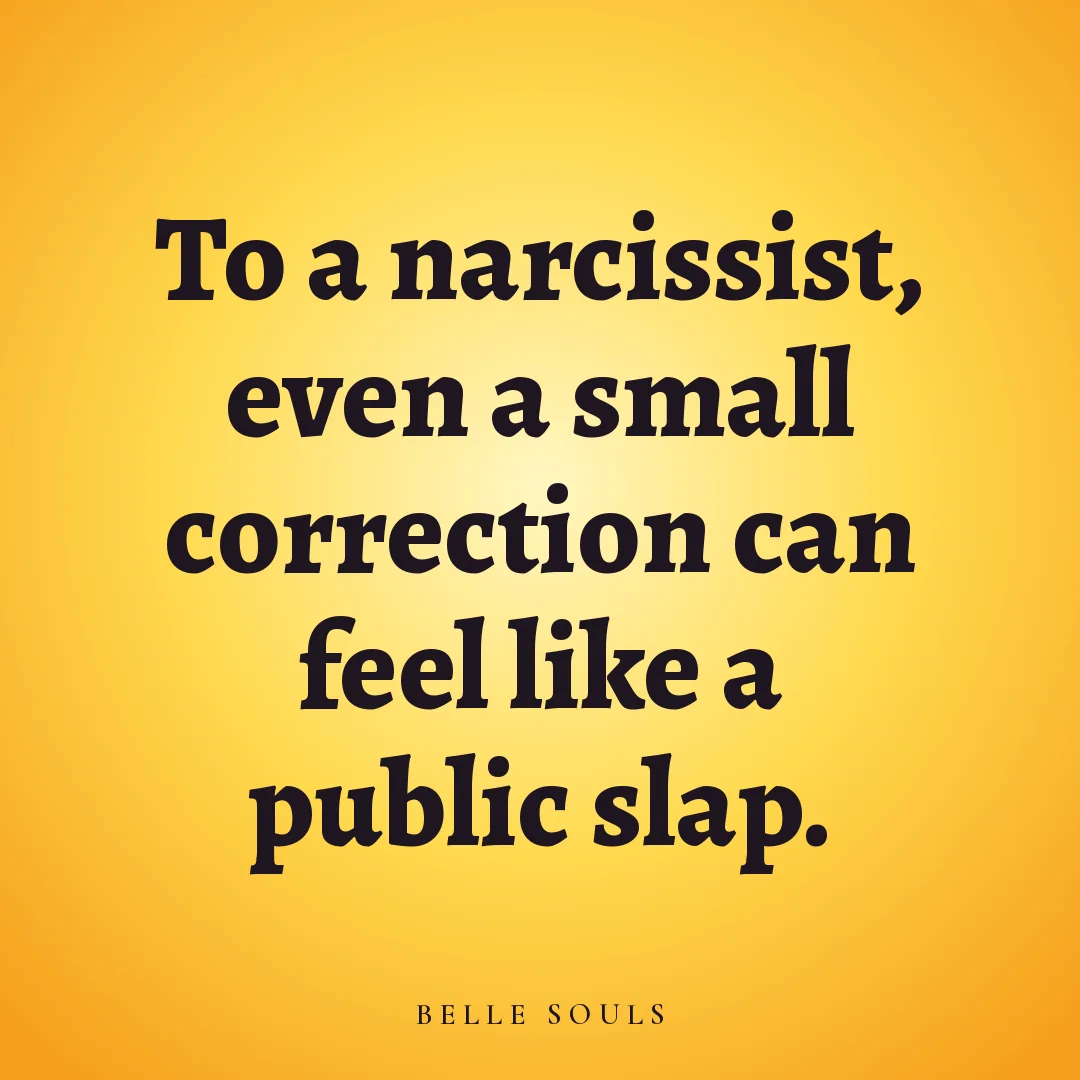
To a narcissist, even a small correction can feel like a public slap.
In front of friends, you mention, gently, that the party is Saturday, not Friday. Or that the bill was higher than they said.
Cold silence in the car home.
Then, days later: “You love making me look stupid, don’t you?”
Why so big? You scratched the image they keep polishing, and the fury heads straight for the one who scratched it.
Before long, you’re saying sorry for stuff you never did.
If you must correct them, keep it brief and stick to facts. If it doesn’t feel safe, skip it. And if the anger turns into threats, leave the room.
#2 Labels make them the victim
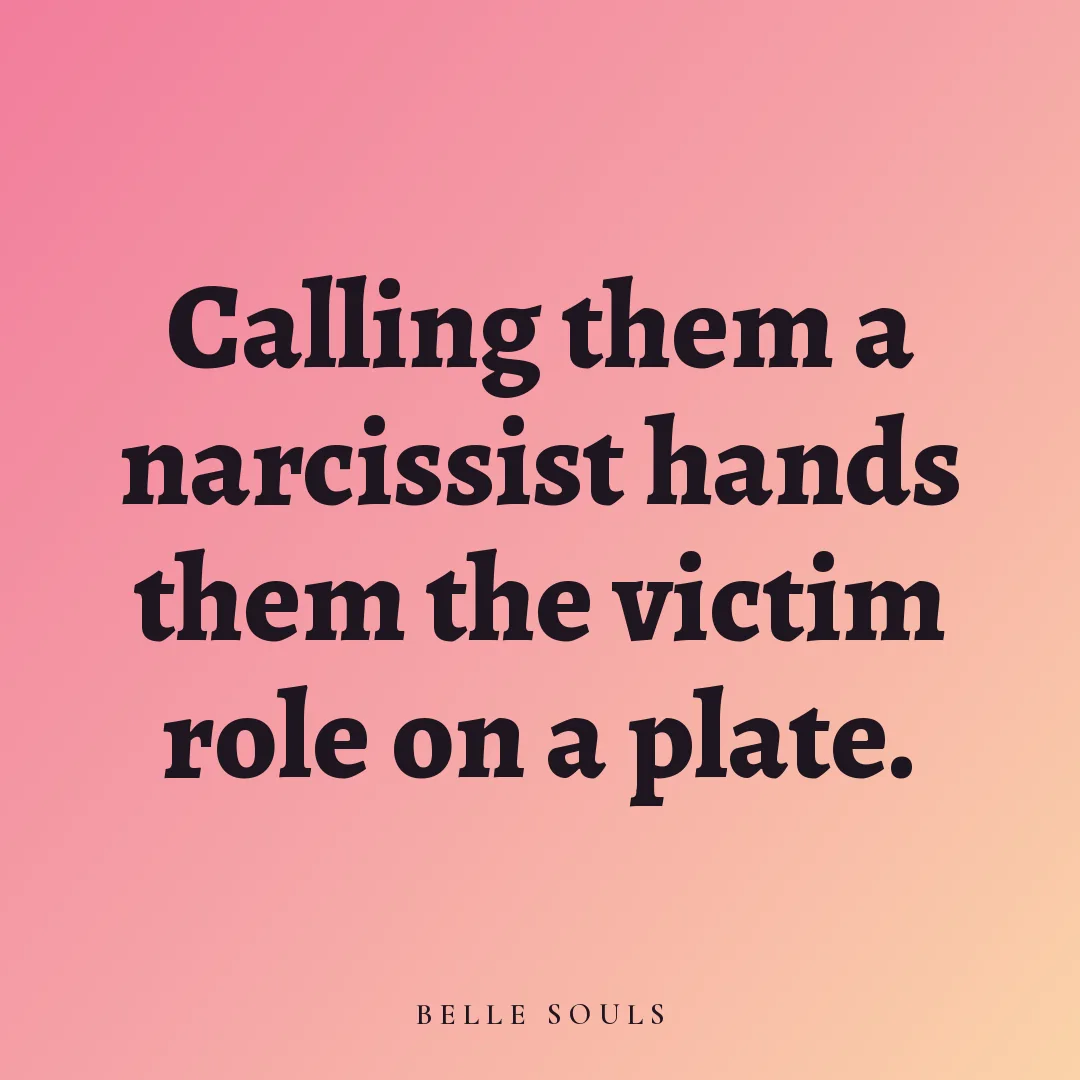
Calling them a narcissist hands them the victim role on a plate.
It slips out mid-argument: “You’re a narcissist!” For one second, it feels like relief.
Then it flips.
Tears, or a cold laugh. “Wow. After everything I do, I’m the monster?”
Psychologists who study the loud and quiet sides of narcissism note how touchy many are about criticism, and how fast they slide into the wounded role.
Now the fight is about your cruelty.
You don’t need the label anyway. Only a clinician can diagnose, and what you’ve watched over months is real with or without a name.
#3 Your hurt becomes the problem
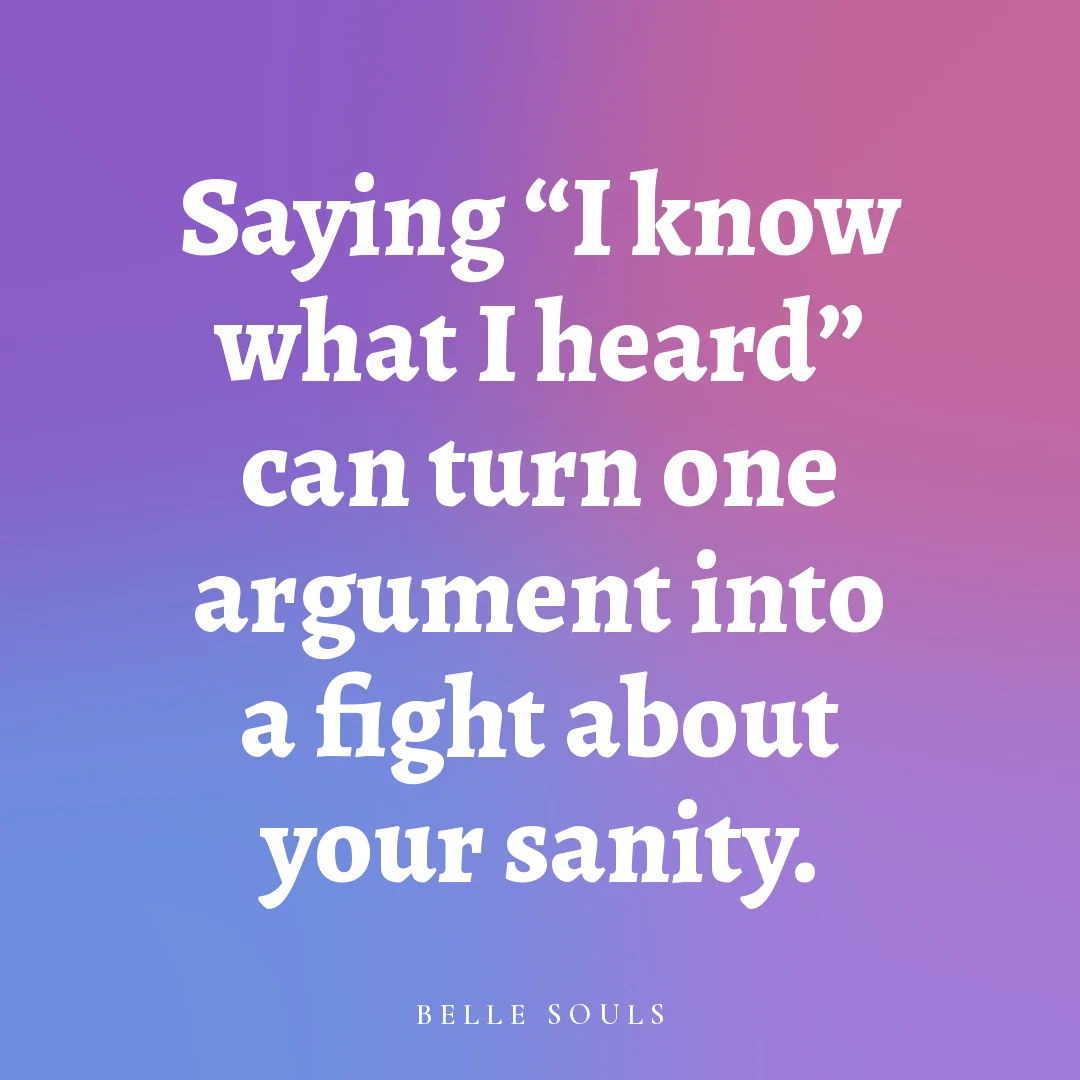
Saying “I know what I heard” can turn one argument into a fight about your sanity.
You tell them the comment in the kitchen hurt. You were standing right there.
They don’t even blink. “That never happened. You’re too sensitive.”
Just like that, the topic switches from their words to your feelings.
Psychologists call this gaslighting. It thrives where power is lopsided: you trust them, they steer the story, and bit by bit their account replaces yours.
Soon you’re apologising for being hurt. Doubting your own ears.
You don’t have to argue it out loud. Jot down what happened the same day, and run it past a friend who sits outside the relationship. Your memory was never the problem.
#4 A complaint turns into your trial
Telling a narcissist they hurt you can put you on trial instead.
You bring up the comment from dinner. Calmly. Once.
“I never said that, and how dare you accuse me.” Then comes a list of everything you have done wrong since the day you met.
The name for it is DARVO, short for deny, attack, reverse victim and offender. In studies, it left the person who spoke up feeling more to blame.
No wonder you end up saying sorry for mentioning it.
Don’t answer every counter-charge. Steer it back, calmly, to the thing they did.
What did they actually do? Start there.
#5 Good news can sour the room
Sharing your good news with a narcissist can cost you the whole evening.
You got the job. The raise. The thank-you email from your boss. You rush home to tell them.
A shrug. “Must be nice.” Then a fight about the dishes.
Narcissism and envy often travel together. Your success pokes at their need to be on top, so they make it smaller, claim it, or ruin the moment.
Before long, you keep your wins to yourself.
Watch whose face falls when life goes well for you.
Next time, call the friend who’ll cheer first.
#6 A simple no feels like an attack

For an entitled narcissist, your no can land like a personal insult.
“I can’t this weekend, I promised my sister.” A perfectly ordinary sentence.
Except now they’re slamming cupboards. “So your sister matters more than me?”
Research on entitlement helps here. To someone who feels owed, an everyday limit reads as an insult, so your reasonable ask gets treated like a strike.
Soon even asking for an even split feels risky. You keep giving, they keep taking.
Stop saying yes before they’ve even asked. Hear the actual request first.
And keep a quiet tally of what you hand over. Numbers don’t argue back.
#7 Chasing the silence feeds it
Pleading through a silent treatment often ends with you apologising for nothing.
Three days of it. They chat to the kids, the dog, the delivery guy. Not you.
So you knock on the door. “Please, can we just talk? I’m sorry, okay?”
Being shut out hits deep. Research on ostracism ties it to our need to belong and to count, which is why it can feel almost physically painful.
That ache is what makes you cave.
Tell them one time that the door’s open. Then get on with your day. No chasing, no begging.
Let the silence be theirs to carry.
#8 Naming the mask turns the anger on you
Pointing out the gap between their public and private self can make them furious.
At the barbecue they were charming. Funny. Carrying chairs for your mum.
In the car home, nothing. So you ask: “Why are you nice to everyone but me?”
Cue the cold stare.
Their public image matters enormously to many narcissists, since praise keeps their self-worth topped up. Poke holes in it and the anger tends to swing toward you.
Meanwhile, friends keep telling you how lucky you are.
Believe what you see at home. That’s the real version.
#9 They’ll get to the story first
Saying you’ll tell everyone what they did can hand them a head start.
One bad night you say it: “Wait till your family hears about this.”
By Sunday, they’ve already called round. With their version.
Some manipulators think several moves ahead. Their record stays clean while they line up allies, so when you speak, people picture the calm, sensible one and doubt you.
A smear goes after your name and friendships, not your body. There’s nothing to show anyone.
Tell them less about your life. Stay consistent and let time show who you are.
If it touches your job or custody, keep notes. Dates, times, what was said.
#10 Pre-forgiving hands them the reward
Forgiving in advance hands them the reward before they’ve earned anything.
After the blow-up comes the sweet part. Flowers. A long hug. “I don’t know what got into me.”
And you hear yourself say it: “It’s okay. I’ll always forgive you.”
Psychologists call this intermittent reinforcement. Warmth that shows up at random, between cold spells, grips harder than warmth you can count on. Same idea as a slot machine.
So the simplest thing you can do is stop pre-forgiving. Let an apology be earned before you hand over the forgiveness.
Look at the ordinary weeks, not the one perfect evening.
Mark the good days and the bad ones on a calendar for a month. Then count.
You were never the cause of their explosions.
Next time the silence starts, you can say once that the door’s open and get on with your day. Next time they swear the kitchen comment never happened, you can write it down.
And if their anger ever turns into threats or breaking things, leave the room and reach out for support. Walking out ends the fight on your terms.
The Dark Private Rituals Narcissists Hide From Everyone

Everyone keeps telling you how lucky you are.
They get the charm, the jokes, the hand on your back at dinner. You get what happens once the front door clicks shut.
Narcissists rarely let outsiders see their private side.
And since nobody else witnesses it, you’ve begun to wonder if it’s all in your head.
It isn’t.
Here are 7 dark private rituals narcissists hide from everyone, and why they guard them so carefully.
Why the hiding matters to them
For a narcissist, self-worth leans hard on outside approval.
Research on impression management looks at how all of us shape the picture others get. Narcissists pour extra effort into theirs, since admiration is what holds their sense of worth up.
Behind closed doors, nobody’s clapping.
So that’s where the rituals happen, and why the private version can look so different from the public one.
#1 The mask comes off in the car
Strangers often get the warmest version of a narcissist.
At the party they’re the life of the room, refilling glasses, telling stories. Your friends say you’ve done well. Then the car door shuts, and the air goes cold.
Or the jabs start. “Did you really need to tell that story? You made me look stupid.”
That switch has a reason. Their public face earns the admiration they run on, so it gets their best effort. At home there’s no audience. You get the leftovers.
Most of us are politer around guests. This is a different gap: charming out there, cruel in here.
Since nobody else saw it, you second-guess yourself. Was it really so bad?
Yes. Trust what happens behind closed doors.
#2 They keep score of slights
A narcissist can forget your birthday and still hold on to a slight.
Tuesday, you teased them lightly at dinner. Everyone laughed, them included. Saturday, out of nowhere, payback lands: the frosty silence, the sharp remark, the cupboard banged a little too hard.
“You think I didn’t hear what you said in front of my brother?”
Research on the quiet, touchy form of narcissism describes this: sulking over being overlooked and tallying up every slight. They look unbothered, yet criticism stings them badly.
And when their image feels bruised, research on threatened egotism found narcissists turn more aggressive toward the person they hold responsible. Even days afterwards, over a comment you’d long forgotten.
So you start checking each sentence before it leaves your mouth.
You say sorry for things you didn’t do.
#3 Your phone is never really private
Checking your phone is one of the quiet ways control shows up.
It starts small. A look over your shoulder. “Who’s texting you?” Then the location sharing they push for, and the interrogation when it’s off.
“If you’ve got nothing to hide, why does it bother you?”
Psychologists call this coercive control. There’s rarely one dramatic moment. It’s a pile of little rules and checks, until even grabbing coffee with a friend feels like it needs a yes from them.
Life shrinks. Replies to friends slow down, because each message gets questioned. Some chats go quiet for good.
Two partners agreeing on rules together is normal. One partner checking, ruling and punishing is not.
If this feels like your house, talking to a domestic abuse service about safety is an option. Calling doesn’t commit you to anything.
#4 Each person hears a different version
Each person in your life may be getting a different edit of the same narcissist.
Your mum gets the devoted partner. “I’d do anything for her.” Your boss gets the loyal supporter. Your sister gets the easygoing one who laughs at her jokes.
Psychologists call this calculating style Machiavellianism. Think flattery, slow planning, and a squeaky-clean name kept intact while they work against you.
It sits in a trio of overlapping dark traits with narcissism, and plenty of difficult people rate high on more than one.
Public outbursts are rare. Your private confessions get tucked away for later.
So once you do speak, others see someone calm and sensible. Not who shows up when you’re alone.
Tell them less. Get important agreements written down.
#5 Exes and admirers stay within reach
Old flames and fans often stay on a narcissist’s back burner.
There’s the ex who hearts every post. The colleague whose name keeps popping up. “Relax, we’re friends. Why are you so jealous?”
Research ties narcissism to a game-playing approach to love: doors left open, real closeness dodged, commitment kept low. That fits the dizzying start and the roaming eye.
Those extra people serve a purpose too. Family systems research calls it triangulation: dragging an outsider into a problem between two, so jealousy and rivalry grow while nothing gets solved.
Soon you’re competing for warmth that used to come without asking. And feeling foolish for minding.
Like you could be swapped out tomorrow.
Skip the contest. Judge them by steady actions over weeks, not by words.
#6 Good news sours their mood
Your good news can quietly wreck a narcissist’s day.
You got the promotion. You tell them in the kitchen, still smiling. A nod. “Nice. Shame about the hours.”
Then an argument, on the very night you’d planned to celebrate.
Research finds envy runs high in narcissism, particularly the quiet, vulnerable kind. Your wins poke at their need to be on top, so they belittle them, take credit, or sour the moment.
Bit by bit, you keep things to yourself. The raise gets played down. The compliment goes unmentioned. Joy starts to feel like a risk.
Feeling a twinge of jealousy is normal. Using it to knock you down is something else. Notice who falls silent at your success.
Tell the people who cheer first.
#7 The story about you starts early
A narcissist’s version of you is often circulating before you ever leave.
A friend asks, softly, “You okay? I heard you’ve been a bit all over the place.” You haven’t. Yet now people are looking for it.
That’s a smear: gossip and bent stories that chip away at how others see you.
Psychologists call it relational aggression. It goes after your reputation and friendships rather than your body, so there are no bruises to point to.
That’s why it’s so isolating. Calls dry up. The support you’d count on can vanish when things are hardest.
Proving yourself to every person isn’t your job. Stay steady and let your behaviour speak over time.
If work or custody gets involved, keep a simple record of what was said and when.
If parts of your own life showed up here, believe what you saw. You spotted something most people never get shown, and you did it while hearing you were imagining things.
This week, choose one person who’s seen both sides, or who just believes you, and tell them one true thing.
Start with that one person. One is enough to make the private stuff a little less private.
5 Reasons Why Narcissists Grow Crueler as the Years Go By

The comments are sharper now. The silences last longer.
The jokes land on you a little more each year, and nobody else seems to notice. Or they laugh along.
Narcissists rarely soften with the years.
You keep waiting for the person from the early days to come back, the one who couldn’t stop smiling at you.
Instead, each year brings a colder version. You’re not imagining it, and it isn’t your fault.
Here are 5 reasons why narcissists grow crueler as the years go by.
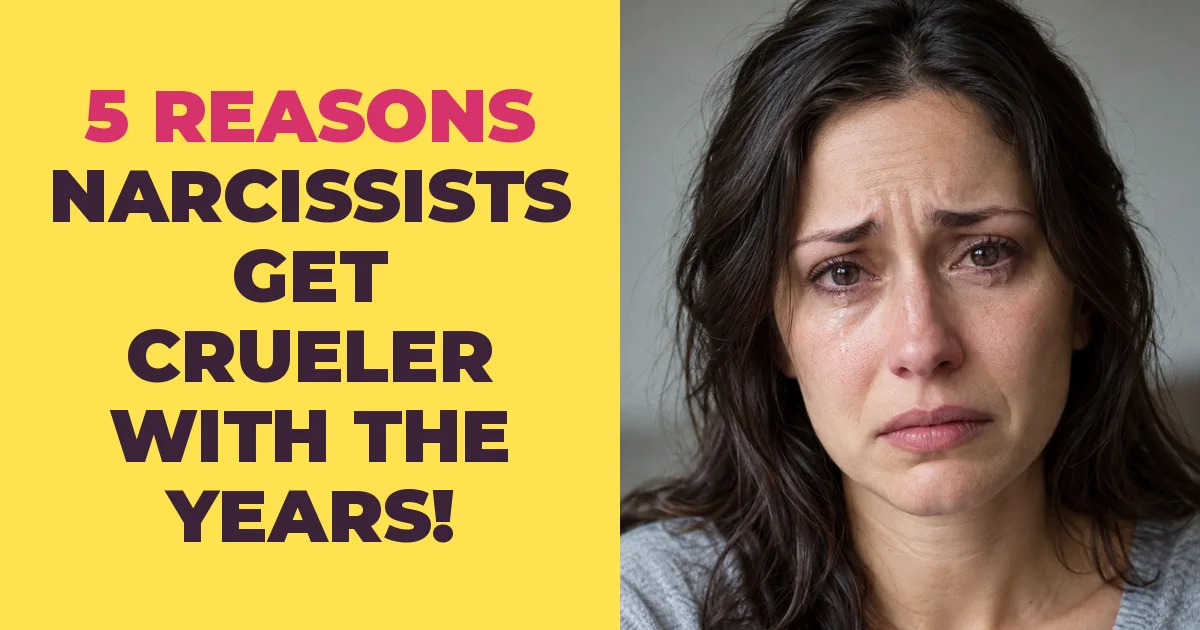
What you are to them
To understand the cruelty, start with how a narcissist sees the people closest to them.
Their self-worth runs on approval from outside. Anyone nearby either supplies that approval or puts it at risk.
At first, you only supplied it.
Then the years bring your needs and your limits. Your needs start to be treated as a nuisance, and you can slide from source of approval to threat.
#1 The charm was only the opening act

The charm that won you over was never built to last.
Think back to the start. The long talks, the texts waiting when you woke, the way they lit up a room.
Research on narcissism describes two sides. One wins people over with charm and showing off. The other protects status by cutting others down.
Early on, the charming side runs the show. With time, the cutting side takes the wheel. That’s why the start felt so good and now feels so bad.
The person who once bragged about you now says, ‘Wow, you finished something for once,’ then laughs like it’s a joke.
There’s an informal name for this arc: idealise, devalue, discard. Pedestal, then criticism, then cold. It’s a popular label, not a diagnosis.
Naming the stage you’re in helps. That shift was built in long before your first argument, so it was never yours to prevent or fix.
You didn’t lose them. You met the opening act.
#2 They think they’ve already won you
Once a narcissist feels they’ve won you, the effort often stops.
Research ties narcissism to a game-playing approach to love. Quick starts, shaky commitment, and other options always kept warm in the background.
Games are only fun until somebody wins.
You moved in, married them, merged the bank accounts and built a whole life. To you, that was a beginning. To them, the chase was over.
Now they flirt with the waiter while you sit right there. An ex is back in their DMs, ‘just as friends.’
And when you bring it up, gently, over dinner? ‘You’re so insecure. Honestly, it’s embarrassing.’
So you plan the dates, dress up and try harder, fighting for attention that used to come easily. And still you feel replaceable.
One way to tell: warmth that always arrives right before they pull away again. Look at what they keep doing, not what they promise. You were never a trophy for the shelf.
#3 The mask stays on for everyone else
A narcissist often keeps the charm for outsiders and the cruelty for home.
At the party, they’re the funny one. They top up glasses, ask your mum about her garden and laugh loudest at your boss’s jokes.
Then the car door shuts.
Silence the whole way home. Or a list of everything you got wrong, starting with ‘Did you have to tell that story?’
Why the switch? Admiration from outsiders keeps their self-worth topped up, so they spend their charm where the applause is.
And the longer you’re together, the more of your life is lived on the private side of that gap.
Meanwhile your friends say, ‘You’re so lucky, they’re lovely!’ Your family adores them. Nobody believes you, and you start to wonder if they’re right.
Everyone is a little more polite in public. The warning sign is kind out there and cruel at home. Find one person who has seen both versions.
The car ride home counts more than the party.
#4 Your growth feels like a threat
The more you grow, the more a narcissist may work to shrink you.
Over the years, you get the promotion, finish the course, make new friends and finally find your feet after a hard stretch.
You’d expect pride. Instead you get a flat ‘Good for you,’ eyes on the TV, and a fight about the dishes that night.
Why?
Envy is common in narcissism. Your win dents their need to feel above you, so they try to belittle it, claim it or wreck it.
It can look like sneering at your new friends. A fight picked on your birthday. Telling everyone the promotion was really their idea.
Over time, you start hiding good news. Happy moments begin to feel risky. Everyone feels a twinge of envy sometimes; the difference is using it against you.
Watch whose face falls when things go well for you. Then share your news with people who cheer. Your wins were never meant to be a secret!
#5 They’ve learned exactly where it hurts
Years together give a narcissist a detailed map of your weak spots.
You told them about your dad. About the weight that came back. About the job that knocked your confidence flat. Back then, they listened.
You told them because that’s what closeness is.
Now those stories come back mid-argument, sharpened. ‘No wonder your dad left.’ Said quietly, so only you hear it.
Here’s what stings most. In studies, narcissists showed less empathy by default, but more when asked to imagine the other person’s side.
That suggests it’s more choice than inability. A narcissist often understands your pain well enough, but may not act on it unless it serves them.
So you stop sharing, even the small stuff. You second-guess every feeling, and ‘You’re too sensitive’ starts to sound true.
It isn’t. Bring your feelings to people who actually care for them. You shared those soft spots in trust, and they can be turned into targets. The trust was never the mistake.
None of this cruelty means you’re hard to love, or that you should have seen it sooner.
It’s a pattern, and patterns tend to repeat. Weigh months and years of what they do, not one good weekend. That long view is real information, gathered the hard way.
Start with one trusted person who hears the whole story.
The One Loss No Narcissist Ever Recovers From

A narcissist’s sense of worth leans heavily on other people’s belief.
But you’ve caught glimpses. The stunned silence when you didn’t argue back. The flood of texts after you went quiet. The rage over something tiny.
Something shifted, and you may have felt the whole atmosphere change.
One thing that can unsettle a narcissist is losing that belief. When you stop confirming their version of you, of them and of what happened, you can start to look like a threat.
Here are 7 ways that one loss shows up, and why charm, rage and apologies so often fail to undo it.
Why your belief mattered so much
Psychologists describe narcissism as a pattern where a person’s sense of worth depends on outside confirmation.
So the people closest to them tend to land in two boxes. Sources of admiration. Or threats to it.
For years, you may have been the main source. You believed the stories, laughed at the jokes, and took the blame when the night went wrong.
When that belief goes, the mirror goes with it.
#1 You stopped believing their story
Their version of events only works while you trust it more than your own.
You know the lines by heart. “That never happened.” “You’re too sensitive.” “You’re making things up again.”
Gaslighting, researchers say, works best where power is lopsided. The more you trust them, the easier it is for them to rewrite what happened.
That’s why it lands so hard. You end up apologising on nights you were the one who got hurt.
Then something changes. You start writing things down when they happen. The date, the words, the look on their face. You check it with a friend outside the relationship.
So the next “That never happened” doesn’t shake you. You were there. You have it on paper.
Quiet loss for them. Huge win for you.
#2 Your calm gives them nothing to grab
The fewer reactions you give, the less a manipulator has to work with.
Picture the old version. They make a dig about your sister at dinner, and you spend an hour explaining, defending, then crying in the bathroom.
Now this: “Okay.” You pass the salt.
There’s a popular name for it: grey rock. It means staying dull and unreactive when contact can’t be avoided. It isn’t a formal therapy term. Think short, factual replies about pickups and bills, and nothing else.
Fewer reactions and less contact can also help loosen what psychologists call a trauma bond, the strong pull that forms through cycles of hurt and kindness.
It won’t feel like winning, and it isn’t meant to. If they might escalate, quiet alone isn’t a safety plan, so a domestic violence service is the place for that part.
Boring? Maybe. But boring gives them nothing to hold.
#3 Their favourite trick stops landing
Their favourite move turns your complaint into a list of your faults.
You bring up the missing money. Five minutes later you’re hearing about every mistake you’ve made in years, and somehow they’re the one who’s hurt.
“I never did that. And honestly? How dare you.”
Psychologists have a name for this three-step move: DARVO. They deny it, go after you for asking, then swap places so they become the injured party.
Studies of it point to something cruel. It leaves the one who raised the problem blaming herself more.
That’s why so many talks end with you saying sorry. And why you’ve slowly stopped bringing anything up.
The fix is dull. Name the first issue, keep coming back to it, and don’t fight their list of your faults line by line.
The money is still missing. Funny how that works.
#4 The charm doesn’t work twice
The charming person you met at the start was only half the picture.
New people still get the full show. The jokes, the attention, the warm hand on the shoulder. Your friends tell you you’re so lucky.
Then the car door shuts. The remarks start.
Research on narcissistic admiration and rivalry describes this shift. Early on, charm and self-promotion win people over. Over time, putting others down takes over, which is why first impressions are so good and later ones so bad.
So you chase the person from the beginning, sometimes for years. You learn to keep good news to yourself, because sharing a win starts to feel dangerous.
Once you clock the gap between their public and private self, that warm smile stops working on you.
You’ve seen behind it. That can’t be unseen.
#5 Your no bruises their image
When their self-image takes a hit, a narcissist is more likely to lash out at whoever they blame.
You say no to Sunday lunch at their mother’s. Just a polite no. Suddenly it’s the end of the world.
“After everything, this is how you treat me?” Then the cold fury. Then a punishment three days later for a comment you’d long forgotten.
Studies of threatened egotism found narcissists answer insults with more aggression, pointed straight at whoever delivered them. Rejection, criticism or being ignored can bruise their image the same way.
No wonder you pre-edit every sentence.
If the anger turns into threats or breaking things, leaving the room makes sense, and so does talking to a domestic violence service.
Your safety comes before their pride.
#6 A fast replacement proves nothing

A new partner showing up within weeks says more about their pattern than your worth.
You see the photos. Same restaurant, same beach, same captions. It took them a month.
And it guts you. You feel replaceable, like a part swapped out of a machine.
Research links narcissism with a game-playing love style: options kept open, fast starts, pulling away, lower commitment overall. Moving on to someone new very quickly fits right into it.
Online, this arc gets called idealise, devalue, discard. It’s a popular description rather than a diagnosis, but it lines up with that research: charm first, boredom and rivalry later.
The new person gets the perfect start. You already know how that chapter tends to go.
Speed isn’t love. It’s a pattern.
#7 No promise rewrites what you saw
The comeback message often arrives when they need something or feel replaced.
Months of silence. Then, on your birthday: “I miss you. I’ve done a lot of work on myself. This time is different.”
Old hope comes back in a rush.
Hoovering is the popular term for these attempts to pull you back. It leans on the same hook as hot-and-cold kindness: rewards that come unpredictably are the hardest habit to break.
A sincere apology followed by real, lasting change is a different thing. Hoovering tends to restart the old cycle instead.
What helps is deciding ahead of time how you’ll respond, then holding the new promise up against the old pattern.
They can promise anything. You still saw it.
If you’re angry at yourself for not seeing it sooner, go easy. Research on betrayal blindness describes how the mind can block out betrayal by someone you depend on, to protect a bond you need.
That’s a protective response. Seeing clearly now doesn’t mean you have to decide anything today.
Start with one trusted person. Write down what you want help with, then tell them the whole story.
10 Textbook Examples of Narcissistic Abuse

Narcissistic abuse can be difficult to explain because so much of it happens quietly.
You may remember the look, the silence or the cutting joke, yet still wonder whether you are overreacting.
You may also spend more time examining your response than the behavior that hurt you.
That confusion is not proof that nothing happened.
A healthy relationship can include mistakes, disagreements and bad moods without making you afraid to speak.
When control, humiliation and blame become a pattern, the pattern matters.
Here are ten examples, what may be driving them and practical ways you can protect your reality, choices and safety.
Narcissistic abuse is still abuse
Abuse does not have to leave a visible injury. It can be a repeated effort to frighten, confuse, isolate or control you until your needs barely appear in the relationship.
Perhaps you choose every word carefully because a harmless question may trigger rage. Maybe you cancel coffee with a friend because the punishment afterward feels unbearable. You are technically free to go, but every choice carries a price.

The individual moments may look small from outside. Together, they can change how you live: you doubt your memory, hide ordinary decisions and monitor another adult’s mood before checking your own.
Labels can help you understand a pattern, but you do not need to diagnose anybody to take your experience seriously. Look at what repeatedly happens, how it affects you and whether your boundaries are respected.
If you feel frightened or controlled, support is appropriate now. You do not have to wait for something worse.
#1 They rewrite what you saw
You remember the insult clearly. They deny saying it, insist you misunderstood and confidently retell the evening with you cast as the aggressor.
Picture standing in the kitchen after a family dinner. You mention the comment they made about your job. Instead of addressing it, they say you always invent drama and ask whether you have been sleeping properly.

One disputed memory is not automatically manipulation. The warning sign is a repeated process that leaves you distrusting your senses while their account is treated as unquestionable fact.
Rewriting events helps them escape responsibility and retain control of the story. If you are busy proving that something happened, the original harm never gets discussed.
Record important incidents somewhere private and safe. Include dates, words and any messages you already possess. Speak with a trusted person who does not report back to them.
You do not need to win a debate about your memory. If it feels safe, you can say, “That is not how I remember it,” end the exchange and make decisions from the pattern you have observed.
#2 The beginning felt like a movie
The early attention can feel breathtaking. There are constant messages, elaborate plans and declarations that nobody has ever understood them as you do.
Within weeks, they may discuss marriage, living together or a shared future. When you ask to slow down, the warmth disappears. Suddenly you are cold, damaged or afraid of love.

This intensity creates attachment before you have seen how they handle disappointment, limits or ordinary boredom. Later, you may tolerate mistreatment while trying to recover the extraordinary person from the beginning.
Excitement alone is not abuse. The clearer test is whether affection remains respectful when you choose your own pace. Genuine closeness has room for uncertainty, separate friendships and the word no.
Keep your normal routines while a relationship develops. Delay financial commitments, shared housing and other hard-to-reverse decisions until behavior has been consistent over time.
Notice what happens when you say, “Not yet.” Their response to a boundary often tells you more than a hundred romantic promises.
#3 Eye-rolls replace real answers
Criticism in an abusive pattern is not a respectful request about one behavior. It becomes a running verdict on your intelligence, appearance, family, work and worth.
You ask whether household jobs can be shared more evenly. They laugh, copy your voice and say even a child could manage what you do. At dinner, they repeat the joke so other people can join in.

Contempt keeps you beneath them. If you feel foolish before the conversation begins, you are less likely to question unfairness or expect a thoughtful answer.
Over time, you may stop sharing ideas, start apologizing before you speak and check their face to see whether your opinion is acceptable.
Compare their complaint with a healthy one. Does it describe a specific problem, allow your reply and leave your dignity intact? Or does every subject become evidence that something is wrong with you?
You can end conversations that become degrading. Write down recurring insults and reconnect with people who knew you before your confidence began shrinking. Their contempt is behavior, not an accurate description of you.
#4 Their jokes land on you

A cruel joke gives them two rewards: your discomfort and an escape route. If you object, they claim you are humorless, oversensitive or determined to ruin the evening.
Imagine drinks with friends. They tell everyone about a private fear you shared after a difficult night. The table becomes awkward, but they grin and say, “Relax. I was only joking.”

Playful teasing is mutual and stops when somebody is hurt. Weaponized humor targets tender places, creates an audience and makes your reaction the supposed problem.
They may use it to establish superiority or test what you will tolerate. If you laugh to keep the peace, the subject often becomes more personal next time.
You do not have to prove that the joke was objectively offensive. If speaking up feels safe, you might say, “Do not use that story for entertainment.” Otherwise, step away and tell someone privately.
Then watch the response. A caring person may feel embarrassed, but they adjust. Someone invested in control may dismiss your pain, blame your sensitivity and continue the behavior.
#5 Days of silence as punishment
There is a difference between taking time to calm down and using silence to make you suffer. A healthy pause is explained, limited and followed by a return to the conversation.
Punishing silence feels different. After you disagree about weekend plans, they speak pleasantly to everyone except you. Messages go unanswered. They walk around you at home until you apologize simply to become visible again.

The uncertainty encourages you to chase, plead and surrender the original issue. They do not need to state a rule; your distress teaches you not to challenge them again.
Try not to bargain endlessly for ordinary communication. Continue necessary routines, contact somebody supportive and note when the silence began and what preceded it.
You might send one practical message: “I am available to discuss this respectfully tomorrow.” After that, protect your energy.
If silence comes with blocked access to money, transport, medication or help, treat the situation as control rather than a communication problem. Seek confidential support and plan around your safety.
#6 A simple question starts a war
You ask whether the rent was paid. Minutes later, doors are slamming and you are being accused of spying, nagging and never appreciating anything.
The size of the reaction changes the subject. Instead of getting an answer, you must defend your character or calm the room. Eventually, you rehearse simple questions and scan for the safest time to ask them.

Whatever drives the rage, it shifts attention away from the unanswered question and can discourage you from asking again. It can also train you to stop requesting information that affects your own home, money or future.
Anger is human. Intimidation, threats, reckless driving, cornering you or breaking objects are not normal conflict skills. Do not try to settle the factual issue while you are frightened.
Move toward an exit if you safely can. Keep a phone and keys accessible, and avoid rooms where you could become trapped or where weapons are present.
If leaving immediately would increase danger, focus on getting through the moment rather than making a point. A domestic abuse service can help you create a plan suited to your circumstances.
#7 Your world keeps getting smaller
Isolation often arrives disguised as concern. Your friend is supposedly jealous, your brother is disrespectful and your colleague clearly wants to damage the relationship.
Then every visit produces consequences. They sulk before you leave, message throughout dinner and interrogate you afterward. Staying home becomes easier than paying the emotional price.

Control may spread to clothes, work, spending, passwords and transport. One restriction can sound petty; together, they make independent choices almost impossible.
Isolation removes witnesses and practical options. Without outside perspectives, their version of events becomes harder to question. Without money or transport, leaving becomes harder to imagine.
Rebuild connection carefully. Contact one trustworthy person, preferably through a device or account the controlling person cannot access. Create neutral reasons for regular contact if secrecy is necessary for safety.
Keep copies of vital documents and important numbers somewhere secure. Do not announce a leaving plan if you fear retaliation. Quiet preparation is not dishonesty; it is protection.
#8 Guilt keeps you saying yes
Guilt becomes controlling when every boundary is presented as betrayal. Their sacrifice is counted carefully, while your needs are treated as selfish extras.
You plan an afternoon with your sister. They sigh, mention everything they have done for you and predict how lonely they will be. Soon you cancel, although they never directly ordered you to stay.

This works because you care. They turn empathy into an obligation to manage their disappointment, rescue them from consequences and prove your loyalty repeatedly.
Notice whether gratitude is being used like debt. A loving act does not purchase permanent control over your time, body, money or relationships.
Create a pause before answering requests. “I will think about it and tell you tomorrow” gives you space to hear your own preference.
You may still feel guilty when you say no. That feeling does not mean the boundary is wrong. If refusal brings threats, stalking or punishment, stop treating it as a persuasion problem and seek safety advice without revealing your plans.
#9 Kindness shows up at random
One morning they bring coffee and call you wonderful. That evening they barely acknowledge you. After several cold days, affection suddenly returns as though nothing happened.
Unpredictable warmth can keep hope working overtime. You search for the right tone, meal or mood that might bring the loving version back.

Because the reward cannot be predicted, you may invest more effort rather than less. A rare tender evening then feels especially powerful, even when the ordinary week remains painful.
Look beyond the latest good moment. Track several weeks privately and note respect, fear, insults, apologies and whether promises produced lasting change.
Ask yourself about the typical day. Can you raise a concern without paying for it later? Are you kind because you choose to be, or because you are trying to prevent the next withdrawal?
Kindness matters, but it does not erase control. Judge change by steady behavior, accountability and respected boundaries, not gifts or a short return of affection after harm.
#10 The calm never lasts
The cycle may begin with tension you feel before anything obvious happens. Their footsteps sound sharper, ordinary mistakes irritate them and everyone adjusts to the atmosphere.
Then comes the incident: rage, degradation, threats, disappearance or another form of punishment. Afterward, they may cry, apologize, give gifts or promise that this was the final time.

The peaceful period restores hope. It can also make the previous harm feel distant, especially when you desperately want the relationship to work.
What matters is not how convincing the apology sounds. Does the harmful behavior stop? Do they accept responsibility without blaming you, respect your boundaries and seek sustained change themselves?
Mark incidents and calm periods on a private calendar. Patterns become easier to see when they are not competing with today’s relief.
Leaving can be a process, not a single brave moment. If the pattern includes intimidation or control, get confidential advice before announcing a decision. Separation can be a dangerous period, and careful planning is a strength.
Why do ordinary decisions start feeling impossible?
When everyday choices repeatedly lead to criticism or punishment, you may begin treating each one like a test. Even deciding what to wear, whom to call or when to run an errand can require careful planning.
You may mentally rehearse explanations, predict their mood and choose whatever seems least likely to cause fallout. The decision itself is no longer the hardest part; managing their possible reaction is.

This can leave you feeling indecisive, even though you make choices all day. Much of your energy is being spent calculating risk instead of considering what you actually want.
Start with one low-risk decision that does not require their approval. Notice your preference before imagining their response, and discuss larger choices with someone safe.
If independent decisions could trigger danger, do not announce them simply to prove that you can. Plan privately, preserve practical options and seek confidential support.
Difficulty choosing does not mean you are incapable. It may show how much pressure has been attached to ordinary freedom.
Why do you end up feeling like you are nothing?
Repeated criticism can become an inner voice. After hearing that you are incapable, unattractive or lucky to be tolerated, you may begin rejecting opportunities before anybody else can.
Perhaps a manager praises your work, but you hide the message because you expect ridicule at home. Their opinion has started outranking evidence from the rest of your life.

Making you feel replaceable can discourage resistance. If you believe nobody else would care for you, leaving, asking for help or even imagining a different future feels risky.
Borrow a steadier view until your own returns. Keep kind messages, list decisions you handled well and spend time with people who do not require you to shrink.
Avoid measuring your worth through their rare approval. Their praise may reflect whether you are useful or compliant in that moment, not who you are.
Confidence often returns through small independent actions. Make one choice, complete one task and let it belong to you without requesting their verdict.
Why is everything somehow your fault?
Blame shifting moves attention away from their conduct. They shouted because you asked at the wrong time. They lied because you are suspicious. They embarrassed you because you made them angry.
This reasoning confuses a trigger with responsibility. Your question may have caused discomfort, but each adult remains responsible for how they respond.

Review the sequence plainly. What did you do? What did they choose to do next? Would you consider their response acceptable if it happened to a friend?
You can acknowledge your genuine mistake without accepting invented responsibility. Being late might deserve an apology. It does not make intimidation, insults or punishment reasonable.
Watch for apologies that reverse direction: “I am sorry, but you forced me.” The second half cancels accountability and predicts that the behavior can happen again whenever they feel provoked.
You are allowed to improve your behavior and still recognize theirs as harmful. Those truths can exist together.
Why do silence, drama and fallout follow your boundaries?
A boundary reveals that you are a separate person. Someone who expects control may experience your independence as disobedience and create enough fallout that surrender feels easier.
You decline an event. They stop speaking, cancel shared plans or tell relatives you are unstable. The punishment becomes larger than the original decision.

This does not mean you expressed the boundary incorrectly. Sometimes there is no perfect wording because the objection is to your right to choose.
Keep boundaries short and practical. Avoid giving ten reasons that can each become a new argument. Then decide what you will do if the behavior continues.
With a safe person, that might mean leaving the conversation. With a controlling or violent person, visible enforcement may increase risk. Use quiet safety measures and outside support instead.
A boundary is not a tool for forcing someone to behave. It is information about what you will participate in, provided you can act without endangering yourself.
Why do they become the victim and then try to pull you back?
When you create distance, the story may change quickly. The person who dismissed your pain suddenly appears devastated, helpless or transformed.
They may send long apologies, promise therapy, recall private memories or create an urgent problem only you can solve. If that fails, anger and accusations may return.

The switch can feel convincing because it touches your compassion and the hopeful memories from earlier. Yet distress about losing access to you is not the same as accountability for harming you.
Look for sustained actions: specific responsibility, no pressure for immediate forgiveness, respect for distance and change that continues without your supervision.
You do not owe contact because someone is upset. Ask a trusted person to screen messages, adjust privacy settings and preserve threatening communications.
If they threaten to harm themselves, contact emergency or crisis support where appropriate rather than becoming their only responder. You can take a threat seriously without returning to an unsafe relationship.
Why do other people think they are so nice?
Public charm and private cruelty can exist in the same person. They may be generous at gatherings, calm in messages and skilled at offering help where others can see it.
Behind closed doors, the tone changes. If you speak up, they may tell friends that you are unstable, ungrateful or abusive. Some people believe the polished version because it is the only one they know.

Trying to correct every rumor can consume you and create more openings for conflict. Share concise facts with people whose support matters, then let consistent behavior speak where it can.
Save relevant messages and review shared accounts, passwords and location access. If false claims could affect children, housing, work or legal matters, seek qualified local advice rather than fighting publicly.
Someone appearing pleasant does not disprove what happened in private. Abuse often survives precisely because the person can control when others see it.
You do not need unanimous belief before protecting yourself.
What you can do
Put immediate safety first
If you fear an escalation, move toward a safer place and contact emergency help where available. Keep essential medication, keys, identification and a charged phone accessible when doing so is safe.
Do not announce plans that could trigger retaliation. A domestic abuse service can help you assess risk and plan confidentially, even if you are uncertain about leaving.
Create a private record and support circle
Document dates, messages, financial restrictions and threats somewhere they cannot access. Tell at least one trustworthy person what has been happening and agree on a simple way to signal that you need help.

Check whether devices, cloud accounts, vehicles or shared plans expose your location. Use a safer device if you suspect monitoring.
Choose your next step without pressure
You may reduce contact, seek counseling for yourself, obtain legal information or plan to leave. You do not need to make every decision today.
Focus on the next safe, realistic action. Support should strengthen your choices, not pressure you into confrontation. Leaving, staying temporarily while preparing and asking for help are all valid responses to a complicated situation.
The bottom line
Narcissistic abuse is not defined by one rude comment or imperfect argument. It is the repeated pattern: your reality is denied, your world narrows, accountability disappears and peace depends on your compliance.
You do not need a diagnosis, a dramatic final incident or everybody else’s agreement to take that pattern seriously.
Trust what consistent behavior shows you. Preserve connections outside the relationship, plan carefully and seek confidential support if control or fear is present.
You are not required to keep proving your pain to the person causing it. Your safety, dignity and right to a life of your own are reason enough to seek support or make a change.
Keep reading
11 Ways Narcissistic Abuse Changes How Your Brain Works

A narcissist doesn’t need to raise a hand to change how you think.
You replay a conversation and can’t tell which version is true. You rehearse a simple question three times before you ask it. You jump when a door closes.
Then you wonder what’s wrong with you.
Nothing is.
Living with this pattern reshapes how you recall, decide and react. Slowly. Quietly. Usually without you noticing until you feel like a stranger in your own head.
Here are 11 ways narcissistic abuse changes how your brain works, and why each one makes sense.
Why your mind adapts
Think about what your days have asked of you. Watch their mood. Guess the right answer. Doubt what you saw.
Someone keeps rewriting the story, and their anger arrives without warning. Your body learns to stay braced. Your mind learns to second-guess itself.
Every change below started as a way to cope.
#1 Your memory stops feeling like yours
When someone keeps rewriting what happened, your memory starts losing every argument.
You know they said it. Saturday, in the kitchen, while you loaded the dishwasher. Then comes the flat stare: ‘That never happened. You’re too sensitive.’
Psychologists call this gaslighting. It thrives where one person holds more power: you trust them, and they own the official version of events.
So you start keeping notes, just to be sure you’re not imagining it. Write it down the same day, somewhere they can’t see, then run it past a friend who isn’t involved.
Your notes don’t argue back.
#2 You edit every sentence before it leaves your mouth
When one wrong word can start a fight, you edit every sentence before it’s out.
You ask a simple question about the electricity bill. Somehow it turns into an hour of ‘So now I’m useless?’
Research on threatened egotism points the same way. Bruise a narcissist’s image, even by accident, and the anger tends to land on whoever they hold responsible.
You rehearse. You trim. Then you go quiet.
Soon you’re saying sorry for things that were never yours to own. Short and factual is enough. When it isn’t safe, silence is allowed.
#3 Tiny choices start to feel huge
If someone else makes all the rules, even choosing lunch can feel like a test.
Coercive control is rarely one dramatic scene. It’s a pile of little rules: what you spend, what you wear, what you eat, who gets your time. ‘Why did you buy that?’ ‘Who said you could go?’
Before long you’re checking in before ordinary things, and freezing in the supermarket aisle over which bread to buy.
A small stash of your own money and a few numbers they don’t control can help. A domestic abuse service can talk through safety with you.
You’re not indecisive. You’re out of practice.
#4 Your body hears the keys first
When anger can come from nowhere, your body learns to never fully switch off.
You can read their mood from the sound of keys in the door. The way the bag hits the floor. How long the car sits in the drive before they come in.
A cupboard slams. You flinch. Nobody else does.
Psychologists call this hypervigilance, a constant watch for the next storm. It kept you ready. It’s also exhausting.
When the jolt comes, notice the alarm in your body and slow down. Your body was doing its job.
#5 Yes leaves your mouth too fast
Guilt, fear and obligation can make yes come out before you’ve even thought.
‘After everything I’ve done for you?’ One line, and your plans for Saturday quietly disappear.
People online call it FOG: fear, obligation and guilt. There’s no official definition. It’s a nickname for emotional blackmail, where refusing feels more expensive than caving, and it sits close to what researchers call coercive control.
Soon their moods feel like your job.
Try a pause. ‘Let me get back to you.’ Six words that give your own mind a vote.
#6 Good news starts to feel dangerous
Your wins can feel like a threat to a narcissist, so you learn to keep them small.
You got the promotion. You tell them over dinner. They shrug, check their phone, then pick a fight about the dishes.
Envy shows up often in narcissism, more so in the quiet, touchy version. When you shine, they feel smaller, so your moment gets shrunk or spoiled.
So you hide good news. Birthdays feel tense.
Watch who falls silent when something goes right for you. Then take your next win to someone who actually cheers.
#7 Two truths fight inside your head

Loving someone who hurts you forces your mind to hold two clashing truths.
‘They love me.’ ‘They hurt me.’ Both feel true.
Psychologists call this cognitive dissonance. The clash is so uncomfortable that your mind hunts for excuses: ‘They had a hard childhood.’ ‘Work’s been stressful.’ Then there’s the time you’ve put in. Walking away can feel like throwing those years in the bin.
No wonder you argue with yourself all day and feel like you’re going crazy.
Try listing the facts of a fight, with no explanations attached. That feeling of madness? It’s the clash talking.
#8 The good days hook you deeper
Kindness you can’t predict grips tighter than kindness you can count on.
Monday they’re cold. Wednesday they bring your favourite coffee and kiss your forehead. You never know which version is coming home.
Psychologists call this intermittent reinforcement. Rewards that turn up at random are the toughest habit to break. Slot machines run on the same trick.
One rare sorry lands like a big win.
The sweet days cover for the cruel ones. So tally both this month and look at the average, not the highlight. What would it say?
#9 What you want goes quiet
When your whole day revolves around their needs, your own wants go silent.
You fix their problems first. You cover for them when they let others down. Then you sit for ten minutes and feel guilty for resting.
Lots of people use the word codependency here. It’s an everyday label, not a medical one. It means your life bends around their moods while yours wait.
It ties in with what psychologists call fawning, keeping the peace by keeping them happy. Looking after them feels safer, and someone this self-focused is glad to let you.
Each morning, put one question first: what do I want today? And this week, let them handle one mess of their own.
#10 Their public charm makes you doubt yourself
The partner everyone admires in public can be someone else entirely at home.
At the party they’re funny and attentive, topping up your glass. In the car home, silence. Or worse.
Your friends say, ‘You’re so lucky.’ Nobody believes you, and slowly you stop believing yourself.
A narcissist may pour a lot into how they look to others, since being admired props up how they feel about themselves. Kind out there, cruel in here: that gap is the tell. Find one person who has seen both versions.
Believe what happens when the door shuts.
#11 Not seeing it was protection

Your mind can hide a betrayal when seeing it would cost you too much.
Then one day it ends, and suddenly it’s all so clear. The lies. The late nights. The things everyone else noticed.
And the shame hits: ‘How did I miss it?’
Psychologists call this betrayal blindness. If you rely on someone, your mind may quietly look away from proof they’re betraying you, because seeing it would put the bond at risk.
Your mind was guarding you. Talk to yourself about what you missed the way you’d talk to a friend who missed it too.
Every change on this list made sense where it started. Staying alert. Saying yes fast. Doubting yourself before they could. Those were ways to get through.
When your memory feels shaky, check it with someone outside the relationship. Talk to one person you trust about what’s been happening, in a way that feels safe for you.
Your memory deserves a second witness.