
Month: October 2026
A Narcissist’s Downfall Begins the Moment They Push an Empath Too Far

A narcissist can lean on your kindness for years and never once wonder if it might run out.
You explained. You forgave. You fixed the mood before anyone else even noticed it.
Then one ordinary evening, something in you went still.
Not loud. Not dramatic. Just done.
That stillness is where their arrangement starts to wobble, because much of what propped them up was coming from you. Here are 7 things that happen when the one who gave everything finally stops giving.
Why your giving held them up
Underneath the swagger, a narcissist often can’t feel worth much on their own. They borrow it from the people around them, and anyone who won’t lend it starts to look like a threat.
Your patience was part of that loan. So was your “you’re right”, your covering for them, your guilt every time you sat down to rest.
Some call that codependency. It’s a popular word, not a diagnosis, for a life arranged around someone else’s moods. Looking after them felt like the safest way to keep things calm, and a self-focused partner was happy to collect.
Take it away, and the whole arrangement wobbles. Their worth leaned on that outside confirmation, and now there’s less of it.
#1 You stop explaining yourself
The day you stop explaining yourself, they lose their favourite weapon.
Picture the usual fight. You raise one thing. “How dare you accuse me, after everything?” Minutes later it’s a list of your faults, and you’re the one saying sorry. Again.
Psychologists have a name for that spin: DARVO. First they deny, then they go on the attack, then they swap roles so they become the wronged one.
Studies show the trick works. Whoever brought up the problem tends to walk away blaming herself more. No wonder you stopped bringing things up.
So this time you skip the counter-attack. You don’t defend each fresh accusation. You steer back to the thing you raised, calmly, one time.
Or you keep your replies short and boring. Many call that grey rock, a popular name for going flat when contact can’t be avoided. The less you react, the less a manipulator has to grab onto. It isn’t safe in every situation, though.
No fuel. No fire.
#2 They read your calm as surrender
Your quiet looks like agreement to someone who rarely checks how you feel.
You go silent at dinner. They talk about their day, their boss, their big plans. Not one question about why you’ve stopped laughing at their jokes.
Studies on narcissism and empathy point to something uncomfortable. Many narcissists can tune into your feelings. They simply switch that on when it pays off for them.
Your mood only registers if it lands on them somehow. A sadness that asks nothing of them? Easy to miss.
So the shift slips right past. Your calm gets filed under “finally being reasonable”.
For years, that blind spot taught you to stop sharing how you felt, and to doubt your own reactions.
Your feelings belong with people who actually respond to them.
#3 Your silence bruises their image
Being ignored can bruise their self-image, and a bruised self-image often hits back.
You stop reacting to the digs. The heavy sigh at breakfast lands on nobody. The sarcastic comment on the car ride home gets a shrug.
Psychologists studying what they call threatened egotism spotted a pattern. When pride is threatened by criticism, rejection or being ignored, a narcissist is more likely to lash out at whoever they blame. The anger often runs way out of proportion.
That’s why a simple “okay” can set off an explosion. Or why they punish you days later for a remark you’ve already forgotten.
You might catch yourself pre-editing every sentence again. That’s the old fear talking, and it makes sense.
If the anger ever tips into threats, walking out of the room is a perfectly good answer. Safety comes before any point.
Their temper is theirs to carry.
#4 They rush to tell their side first
When they can’t control you, they try to control the story about you.
Suddenly your sister texts. “He says you’ve been really unstable lately. Is everything okay?”
Researchers call this relational aggression. The damage lands on your reputation and your friendships, through whispers, rumours and being left out. Nothing anyone could photograph.
The public mask helps them too. The charming one at the party, silent in the car home, is the only version most of your friends have met.
That’s why nobody believes you at first. They’ve seen the polished side and nothing else.
Behaving consistently and letting time show the truth often works better than chasing every rumour. And if the story ever reaches your job or a custody issue, notes and records are worth keeping.
Trust what happened behind closed doors. You were there.
#5 The sweet version suddenly reappears

Right when you stop chasing, the person you fell for walks back in.
Flowers on the counter. A long message at midnight. “I’ve been thinking. I’m going to change, for real this time.”
People online call this hoovering, after the vacuum. It’s a popular word, not a formal one, for the push to suck you back in. It tends to arrive right when they need something, or sense they’ve been replaced.
Why does it pull so hard? Psychologists name the hook intermittent reinforcement. Warmth that shows up at random, between cold spells, grips tighter than warmth you can count on. It’s the slot machine effect.
One warm evening can make months of cold feel almost bearable.
Choosing your answer before the next message arrives takes a lot of the pressure off. Then weigh the promise against the track record.
How many times has “this time” come before?
#6 The guilt comes before the relief
Pulling back often feels like guilt long before it feels like freedom.
You hold firm on one small thing. You don’t answer the 11pm text. And then you lie awake feeling like the cruel one.
That guilt is common when you start holding boundaries. A boundary is a popular idea with a simple core: a choice about what you’ll do, never an order about what they must do.
Guilt usually shows up first. The self-respect catches up. Expect pushback early on, too.
Some nights it’s more than guilt. You miss them, even after the cruel weeks.
When hurt and tenderness keep taking turns, and one person holds more power, psychologists call the tie that forms a trauma bond. It can grip harder than a calm relationship. Feeling that pull is a known reaction, and no sign of weakness.
Feeling guilty doesn’t make you guilty.
#7 You stop arguing with yourself
The real turning point comes when you stop making excuses for them.
“They had a hard childhood.” “Work’s been brutal.” “It’s been eight years, I can’t just throw that away.” Sound familiar?
The name for that tug-of-war is cognitive dissonance. Two beliefs, “they love me” and “they hurt me”, can’t sit comfortably side by side, so your mind smooths the hurt over.
Excusing them was how your mind eased the clash.
Researchers have a term for why it took so long: betrayal blindness. If you rely on someone, your brain may quietly screen out signs of their betrayal so the attachment survives. That’s protection, not stupidity.
So go easy on yourself about what you didn’t see sooner. Jotting down the facts of what happened, minus the excuses, keeps the picture sharp.
Nobody needs to hear the decision. It’s already yours.
If you’re still in the middle of it, that’s fine. Mixed feelings at this stage are normal.
You don’t owe anyone a big announcement. Talking to one trusted person, or a domestic abuse service if things feel unsafe, can make the next step clearer.
That quiet you found? Keep it close.
9 Things in Narcissistic Relationships That Aren’t Normal at All

A narcissist rarely announces they’re in charge. They just slowly become it.
You notice it in small ways. The way you check their face before you speak. The way you say sorry first, every time.
No single moment looks big enough to complain about. That’s how control often creeps in: one tiny rule here, one little punishment there, and nothing dramatic enough to name.
So it starts to feel normal.
It isn’t. Here are 9 things in narcissistic relationships that aren’t normal at all, and why they happen.
#1 You know their mood before they speak
You learn their mood from the sound of the keys in the door.
A heavy step means trouble. A slammed cupboard means stay quiet. A cheerful whistle means you can breathe, for now. The ping of their text decides your whole evening.
Psychologists call it hypervigilance.
When anger can arrive at any moment, your nervous system learns to stand guard. It scans faces and messages for trouble, then tries to defuse it early by agreeing, soothing, giving in.
No wonder you’re exhausted by 9 a.m.
Next time your stomach drops at a sound, catch that jolt and let yourself move slower. That’s your body trying to keep you safe.
That isn’t nerves. It’s training.
#2 Their bad day comes first
When they’re hurting, the whole house stops. When you’re hurting, nobody notices.
Their rough meeting gets an hour of your attention, dinner made, phone on silent. Then you mention your own awful day and they reach for the remote.
Or worse: “You’re too sensitive.”
Research on empathy in narcissism points somewhere uncomfortable. Left to themselves, they tend to show less of it. Ask them to picture your side, and it goes up. So it looks less like can’t and more like won’t.
So you start keeping your feelings to yourself. You even doubt whether you’re allowed to have them.
Bring those feelings to the people who lean in when you talk. You’ve spent enough on someone who looks away.
#3 Saying no feels impossible
In a narcissistic relationship, yes stops being an answer and becomes a reflex.
They ask you to cancel your plans. You hesitate for one second, and here it comes: “After everything I’ve done for you?”
So you cancel.
Many people call this FOG: fear, obligation and guilt. It’s a popular term, not a diagnosis. A hint of consequences, a list of past sacrifices, a heavy sigh. Each one makes no feel more expensive than yes.
It works a lot like the small pressures researchers describe in coercive control.
Before you answer the next request, pause. Their feelings are real, but they aren’t your job to fix.
What would happen if you said “Let me think about it”?
#4 Speaking up ends with your apology
You raise one problem and somehow walk away apologising for it.
You mention the lie about Saturday. Ten minutes later you’re hearing every mistake you’ve made since the day you met, and they’re the one in tears.
“I can’t believe you’d accuse me of that.”
Psychologists have a clunky name for it: DARVO. Deny, attack, then flip who’s the victim and who did the harm. Studies found it leaves the person who spoke up blaming themselves more. No wonder it ends the talk so fast.
After enough rounds, you stop bringing anything up at all.
If you do speak, stick to the one thing you came to say and steer back to it. Skip defending every new charge they throw.
Saturday still happened.
#5 Ordinary things need their permission
You’re a grown woman asking permission to buy shampoo.
Maybe it was never said out loud. But you know the rules. Which top is “too much”. How long the grocery run may take. Who checks the bank app.
Researchers call this pattern coercive control.
There’s rarely one dramatic moment. Instead there’s a pile of little rules and little punishments, and each one takes a sliver of your freedom. That’s why it’s so hard to explain to anyone else.
Your world gets smaller. Quietly.
If this feels close, hold on to a little money and a few phone numbers that are yours alone. A domestic abuse service can help you think through staying safe.
Shampoo shouldn’t need a meeting.
#6 Your friends slowly disappear
Losing your friends rarely feels like being cut off. It feels like drifting.
Nobody bans your best friend. They just sulk every time you see her. “She’s a bad influence.” “You always come home different.”
So you see her less. Then not at all.
Choosing who you get to spend time with is a hallmark of coercive control. Fewer friends means fewer people asking how you really are.
And fewer people to check the story against.
Getting back in touch is how the way back usually starts. You don’t need the whole crowd back. Start with one person and one honest message.
Who’s the first name that came to mind?
#7 Good news feels risky to share

In a healthy relationship, your win is good news. Here, it’s a threat.
You get the promotion. You tell them over dinner. They say “Huh, good for you,” then spend the evening picking at your cooking.
And your birthday? Somehow there’s always a fight.
Research links narcissism with envy, most of all in its quieter, more fragile form. Your success pokes at their need to be the one on top. So they make it smaller, take credit for it, or wreck the mood.
So you start keeping wins to yourself. Even happy days feel like walking on ice.
Watch whose face falls when things go well for you. Then celebrate with people who cheer louder than you do.
Hiding your wins was never your idea.
#8 You lose track of what you want
Somewhere along the way, their needs became your schedule and your own disappeared.
A friend asks what you want for dinner and you genuinely don’t know. You know what they like. You know which restaurant won’t start a fight.
Your own taste? Gone quiet.
There’s a popular word for this, codependency. It isn’t a diagnosis, but it ties into what researchers call fawning: keeping the peace by pleasing.
Looking after them can feel like the safest place to stand. And someone wrapped up in themselves is happy to let you.
The cost is burnout, and resentment you can’t say out loud. Feeling guilty for resting is a clue.
Each morning, start with one question: what would I like today? Even if the answer is just tea.
#9 The person hurting you is your comfort

The person who hurt you is often the one you run to for comfort.
They say something cruel in the car. By midnight you’re crying on their shoulder, and it feels like relief when they finally hold you.
Hurt, then comfort, from the same person.
Psychologists call this trauma bonding. When one person holds more power, and cruelty keeps getting followed by tenderness, the attachment can grow tighter than it would in a calm relationship. Your head and your heart pull in opposite directions.
So you stick up for them with your friends, ache for them hours after a fight, then feel ashamed of both.
Drop the shame. Your mind is doing something well documented, and it says nothing bad about you. People outside the relationship can help loosen the knot.
You needed comfort. That was never the problem.
Seeing yourself in more than one of these doesn’t mean you’re broken. You adapted to something that was never normal, and you did it to get through.
You don’t have to sort it all out today. Pick the one that hit hardest and start there.
Seeing it for what it is counts.
Behind Closed Doors, Narcissists Love These 7 Hobbies That Would Unsettle You

The narcissist your friends know is charming, generous and fun at parties.
The one who shares your hallway at night is a different person.
In private, your phone gets checked, your secrets get stored, your good news gets a sour look. You’ve watched it up close. On bad days you wonder if your mind is playing tricks.
It isn’t.
Below are 7 private hobbies many narcissists have in common, what drives each one, and how it quietly wears you down.
Why the door stays closed
For a narcissist, feeling worthy often hangs on what other people think of them.
Praise keeps them going.
So the outside world gets the polished version. The patience. The jokes. The generous tip.
At home, the effort switches off. These habits stay hidden for a reason: one glimpse and the image would start to crack.
#1 Your phone is their favourite reading
When the narcissist wants to know everything, your phone stops being yours.
You step out of the shower and it’s moved. Then, a bit too casually: “Who’s Sam?” They know Sam is your cousin.
Some check your location. Some demand passwords, “because couples shouldn’t have secrets.” Strange how their own phone lives face down.
Psychologists call the bigger pattern coercive control. It’s built from many small rules and checks, so it’s hard to point to one big moment.
Holding on to some money and contacts that are only yours can give you room. Specialist abuse services can talk safety through with you, too.
Your world gets smaller. One day you notice you’re asking permission to text a friend.
#2 They move your things, then deny it
Moving your things and then denying it is a sneaky way to shake your trust in yourself.
The keys aren’t in their bowl. The towels you folded are a heap again. The spice rack you sorted is a mess.
You say something. They tilt their head, almost gentle. “I haven’t touched anything. Are you feeling okay?”
Psychologists call this gaslighting: getting you to doubt your own memory so their story wins. It thrives where power is uneven and trust runs deep. Doubt your eyes, and you’ll lean on theirs.
So you start checking twice. You hear yourself apologising for losing things you know you put back.
Two people remembering an evening differently is normal. Keys wandering around the house on their own aren’t. Jot it down the same day, and run it past someone outside the relationship.
Your memory is fine.
#3 Exes are kept on the shelf
Old exes and new admirers are often kept close, just in case.
Late at night their screen lights up. They angle it away. “It’s just Jess. We’re friends. Relax.”
Other times the ex gets mentioned on purpose, right when things feel steady. “She never minded when I went out.”
Research ties narcissism to a game-playing approach to love, with options kept open and real closeness held back. Dragging a third person in stirs up jealousy and pressure.
And it works. Attention that once came freely now has to be won.
You feel replaceable. That’s the point.
Being slow to commit is normal. Keeping you guessing on purpose is the game. Watch what they do, week after week. And step out of the contest. You never entered it.
#4 They collect your secrets for later
What you share in soft moments is often saved for later.
You tell them about your dad, the job you lost, the panic attack at your sister’s wedding. They listen so well, with all the right questions.
Months on, in the middle of a fight, it lands with perfect aim. “No wonder your father left.”
Psychologists have a name for this cool, calculating style: Machiavellianism. It plans ahead, stores up information, and wears a calm face in front of others.
That calm face hurts most. They seldom blow up where anyone can see, so friends find your story hard to believe.
Often the plan is only visible once it’s done.
Keep personal details closer, and get important agreements in writing. Not because you’re scheming. Because they might be.
#5 Your good news ruins their day
Your good news can feel like a threat to a narcissist who needs to stay on top.
You land the promotion and ring them first, still buzzing. A pause. “Huh. So you’ll be working even later now?”
Or your birthday dinner ends in a row in the car on the way home.
Envy shows up a lot in narcissism, research suggests, most of all in the touchy, resentful type. Your win dents their sense of being better, so they shrink it, spoil it or take credit.
In their eyes, your gain is their loss.
So you start keeping wins to yourself. Happy days feel risky.
Save your news for people whose faces light up.
And notice who goes quiet when you win.
#6 Their version reaches people first
Many narcissists spread their version of you before you know a story exists.
A friend turns oddly cool. Your mother-in-law asks, softly, if you’re “getting help.” Someone mentions how worried your partner’s been about you.
Research calls this relational aggression: damage done through gossip, rumours and leaving someone out. It goes after your reputation, not your body, so there’s nothing visible to show.
It often begins before you leave. Sometimes it ends up in vague posts online.
You feel you have to clear your name everywhere. And support thins out just when you need it.
Honestly telling their side is one thing. Bending the story to isolate you is another. Keep records if your job or custody is affected.
A smear leaves nothing to point at. How you act, steadily, month after month, is what time lets people see.
#7 Watching you squirm is the fun part

Some people, narcissistic or not, get a real kick out of your discomfort.
They poke at your sore spots, then laugh when you flinch. “God, it was a joke. Lighten up.”
“Back by six.” Nine o’clock, still nothing. They know.
At dinner with friends, your insecurity becomes the funny story. You glance up and catch the smirk.
Researchers call this everyday sadism, a separate trait they added to the Dark Triad to make a “Dark Tetrad.” For these people, cruelty is its own reward.
So you learn to hide your face. Love starts to feel like being hunted. Fewer reactions also give them less to enjoy.
Playful teasing stops when you ask. This doesn’t. If your hurt seems to please them, believe what you see.
If several of these hit home, you’re not being dramatic. What happens over months says more than any one bad night.
Start small. Tell one person you trust what really goes on when the door shuts. Out loud, it often sounds as wrong as it felt.
Because it was.
6 Harmless Hobbies Narcissists Take Up Just for Show

A narcissist’s hobby can be a performance.
You’ve seen the marathon medal go up online, the charity selfie, the perfect sourdough. Then you’ve seen what happens at home when nobody’s clapping.
The hobby looks harmless. Healthy, even. So when it leaves you feeling lonely or used, you start wondering if the problem is you.
It isn’t.
Here are 6 harmless hobbies narcissists take up just for show, and what each one is really for.
Why the audience matters most
Psychologists use the term impression management for the way all of us shape the picture others see. A narcissist may pour far more into it, because their sense of worth depends on outside admiration.
So the hobby is a stage.
The likes, the praise, the ‘you’re amazing’ are the real prize. You just happen to live backstage.
#1 Charity that only counts with an audience
A narcissist can be generous to strangers and stingy with the person they live with.
They’re at the food bank every Saturday. There are photos. The post gets two hundred likes and comments like ‘such a good soul,’ and they bring it up at every party.
Then they come home and won’t drive you to your appointment.
Same person. Same Saturday.
With narcissism, the gap between the public mask and the private person can get extreme: kind in front of others, cruel behind closed doors. The public side gets all the effort, because admiration feeds their self-worth.
Friends tell you how lucky you are. You smile. Who would believe it?
That’s the cost. When nobody believes you, you start doubting your own experience. So trust what happens at home, not what happens on the feed.
The audience gets the volunteer. You get the rest.
#2 The gym selfie matters more than the gym
For a narcissist, the workout only counts once someone has watched it.
They post every run, every lift, every mirror shot. Over dinner, a 10K turns into ‘basically a half marathon, honestly.’
You ask how training’s going and get twenty minutes on split times, protein and the new shoes.
Your day? Never comes up.
That’s the loud side of narcissism. Research describes it as dominant and hungry for the spotlight, often steering the conversation back to them. Puffing up achievements fits the same pattern.
Live with it long enough and you feel like a mirror they check their reflection in. Their sore knee is a crisis. Your bad week is an inconvenience.
Getting fit isn’t the problem, and confidence isn’t a disorder. The tell is the pattern over months. Does it ever stop being about them?
And who’s cheering for you?
#3 Dinner parties where you do the dishes

The dinner party is their show, and you’re the unpaid crew.
They announce a five-course meal for eight. You shop, chop, set the table and scrub pans until midnight while they pour the wine.
At the table, they take the bow. ‘Oh, it was nothing. I just threw it together.’
You made half of it.
Psychologists call this entitlement: a steady belief that they deserve more than others. Taking credit for shared work is one of its classic signs.
And if you’ve ever asked for a simple thank-you, you know how that went. Ordinary limits feel like insults to them, so a fair request lands like an attack.
So you stop asking. You give more and get less, and the next party is already on the calendar.
One thing that helps: keep track of what you give, just for yourself. Your hands made that meal too.
#4 Calm on the mat, cold in the kitchen
Inner peace on Instagram doesn’t mean kindness at home.
They talk about mindfulness, gratitude and good energy. The retreat photos are gorgeous, all soft light and quiet smiles.
Then you cry after a brutal day, and they change the subject. Or sigh. ‘You’re too sensitive. Work on your energy.’
Kind to the retreat crowd. Cold to you.
Research on low empathy found narcissists often show less of it by default, but more when they’re prompted to take the other person’s view. That looks like a choice, not an inability.
So the calm is for the audience. The empathy they show others doesn’t come home.
Before long, you stop sharing feelings. You start doubting your own reactions. Maybe you really are too much?
Someone awkward with emotions who still tries is different. This is seeing your pain and stepping over it. Take your feelings to people who actually respond to them. You’re not too much.
#5 The trip is ruined if nobody likes it

Some narcissists don’t travel to see the world. They travel to be seen in it.
The whole trip is built around the shot: the right sunset, the right outfit, you behind the camera for forty minutes.
Then the post goes up.
If it gets enough attention, the day is perfect. If it doesn’t, the mood drops like a stone, and they sulk through dinner.
‘You took it at a terrible angle. You ruined it.’
That’s the quiet side of narcissism. Research describes it as touchy and resentful, sulking when not noticed. Many switch between loud and quiet, and both forms protect a fragile self-image.
So you walk on eggshells on your own holiday, blamed for a disappointment that was never yours. One way to tell: watch how they act when they’re not the centre of attention.
You came for a holiday. You got a photo shoot.
#6 Suddenly your hobby becomes theirs
When you love something, a narcissist may decide to love it louder.
You’ve painted for years, quietly, just for you. Then they buy a better easel, take a class and post a canvas before you’ve shown anyone yours.
Now it’s their thing. At your friend’s party they announce, ‘I’m the creative one in this house.’
Each copy shrinks your thing a little more.
Research on envy describes the pattern. Your good fortune threatens their need to feel superior, so they shrink it, steal it or spoil it. Copying you and claiming it first is a classic move.
Studies of narcissistic rivalry add the rest: your gain gets treated as their loss.
So the thing that was yours starts to feel risky. You hide the sketchbook. You stop sharing wins.
Notice who goes quiet when you win, and show your work to people who are glad for you. Your easel. Your joy. Still yours.
None of these hobbies are bad. Running, cooking, painting, helping out: they’re good things in good hands.
What hurts is being the only one who sees what happens after the audience goes home. What you saw was real.
Trust the version of them that shows up at home. And keep the hobbies that feel like yours.
10 Everyday Struggles Narcissistic Abuse Survivors Feel Too Ashamed to Share With Anyone

You replay a two-minute chat for an hour. You say sorry to a chair you bumped into.
Nobody sees these habits. You make sure of it.
They feel embarrassing. Weird, even. So you keep them to yourself.
But they didn’t come from nowhere. When someone’s moods can flip without warning, your body learns to stay on guard and smooth things over, fast.
Here are 10 everyday struggles survivors carry in silence, and why each one makes complete sense.
#1 Arguments play on a loop in your head
Your mind runs drills for fights that haven’t happened yet, and may never happen.
You’re folding laundry and suddenly you’re mid-argument. What you’ll say. What they’ll snap back: “Why would you even bring that up?” Your reply to that.
Why? Because a small comment once set off an explosion.
Research on threatened egotism showed that when narcissists feel insulted, they hit back harder. And they hit back at the person they blame.
So you started checking each word before it left your mouth. That rehearsal is armour. You built it for a reason.
Next time it starts, notice it and ask yourself one thing. Is this conversation even coming?
#2 Sorry comes out before you think
Sorry leaves your mouth before your brain has even checked the facts.
Someone bumps into you at the shops. You apologise. The waiter brings the wrong order. You apologise for mentioning it.
This isn’t politeness. It comes from fear.
When anger could land at any moment, your body finds a shortcut: soothe it. Agree. Smooth it over. Say yes first, think later.
Psychologists call this fawning. Back then, it protected you. These days it mostly drains you and blurs what you even want.
Try a tiny pause before the word comes out. Notice the alarm in your body. Then ask if you actually did anything wrong.
Often, the honest answer is no.
#3 Your memory feels like it’s on trial
When your past gets rewritten often enough, you start doubting your own eyes.
You know what you heard in the car. Then comes the calm, flat voice: “That never happened. You’re too sensitive.”
And somehow you’re the one apologising.
Gaslighting research says it thrives when one person holds more power. Your trust in them becomes the tool they use to edit the past.
So now you screenshot texts. You type notes on your phone at 2am. You feel a bit ashamed doing it.
Don’t be. Notes made in the moment are how you keep hold of what’s real.
Your memory isn’t broken. It’s been argued with.
#4 Their kindness keeps you hooked
Their sweetest moments often show up right after their cruelest ones.
Last night: the cold shoulder, the cutting remark about your cooking. This morning: coffee in bed and a kiss. Which one is real? Which version comes home tonight?
Paranoia? No. Pattern.
Rewards that turn up at random are the hardest habit to break. It’s the same pull that keeps someone feeding coins into a slot machine. Affection handed out that way works on you too.
You end up trying harder and getting less. The odd sweet morning makes a rough week feel survivable.
One way to tell what’s going on: look at the ordinary day, not the highlight.
What does your ordinary day look like?
#5 Anger turns into guilt within seconds
Bringing up a real problem somehow ends with you saying sorry.
You finally say it. They skipped your mum’s birthday dinner again. Thirty seconds later: “I never said I’d come, and how dare you attack me after the week I’ve had.”
Then the sulking. Then you’re comforting them.
There’s a name for this: DARVO. Deny, attack, then swap who’s the victim and who did the harm. Studies show it leaves the one who spoke up feeling more to blame.
That’s why your anger never gets to finish. It gets flipped.
If it feels safe, go back to what you first raised. Leave their counter-accusations alone.
The skipped dinner is still a skipped dinner, whatever got thrown back at you.
#6 Every small purchase feels like a crime
Buying yourself a coffee can feel like getting away with something.
You cut the tags off fast. You pay cash so it won’t show up anywhere. You keep a line ready: “Oh, this old thing?”
That fear has roots.
Research on economic abuse covers partners who grab your wages or your cards, rack up debts under your name, or borrow and never repay.
No money of your own means every choice costs more. That’s the design. Dependence.
Hiding small purchases is one of the ways it shows up in you. A domestic abuse service can help you think through money and safety, quietly and at your own pace.
Your coffee shouldn’t need an alibi!
#7 Calm days make you nervous

A quiet week can put your whole body on alert for the next blow-up.
Everything’s fine. They’re laughing at dinner, telling stories. And you’re lying awake later, waiting for the floor to drop.
Because it usually did.
Research on the cycle of abuse maps a loop. Pressure rises. Something blows up. Flowers and sorry follow. A quiet spell. Then round again.
Those quiet spells refill your hope, which makes the next blow-up land as a shock.
No wonder peace feels suspicious. You’ve been living by the cycle’s timetable.
Try marking the bad days on a calendar. Patterns show up on paper that stay hidden in your head.
Paper doesn’t gaslight.
#8 Good news stays locked inside
You’ve learned to hide your happiest moments because joy used to cost you.
You got the promotion. You tell your sister first. Or nobody. Last time, they went quiet, then picked a fight that wrecked the whole evening.
Your birthday too, probably.
Envy runs through a lot of narcissism. When you shine, their sense of being above everyone wobbles. So your win gets shrunk, stolen or spoiled.
“That’s nice. Anyway.” One line like that can drain a whole week of pride.
Before long, joy feels like a risk. You keep it small and quiet.
Notice who goes quiet when you win. Then take your news to people who light up. They exist!
#9 Making friends feels risky now
After a smear campaign, every new friend can feel like a future witness against you.
Maybe mutual friends stopped calling. Maybe someone heard you were “unstable” before you’d said a single word.
That leaves no bruise. It still hurts.
Research on relational aggression describes damage done through whispers, rumours and being left out, aimed at your place among people. Support drains away just when you need it.
So now you hold back. You share less. You wonder what people have already heard about you.
Cutting you off is one of manipulation’s tools. Finding your people again is one of recovery’s.
Start with one person. Just one. Who would that be?
#10 Part of you still misses them

You can miss someone who hurt you, and it doesn’t make you foolish.
You’d never say it out loud. But some nights you scroll back through old photos. You defend them when a friend calls them cruel.
Then the shame hits.
Missing someone is one thing. A trauma bond goes deeper. When hurt and tenderness keep taking turns and one person holds more power, a bond can form that’s stronger than in a calm relationship. Missing them can be part of it.
Your head pulls one way. Your heart pulls the other. That tug-of-war is exhausting.
Missing them is a known reaction to that cycle. Weakness has nothing to do with it.
Missing them is a feeling. It doesn’t have to be a decision.
None of these habits mean something is wrong with you. They’re what a careful, clever mind does to stay safe around someone unpredictable.
Pick the one that stung most. Talk to yourself about it the way you’d talk to a friend this week.
The rehearsing, the quick sorry, the news you kept quiet? Each one was a skill you built to get through. Now you get to decide which ones you still need.
The Unexpected Way a Narcissist Reacts When You Stop Caring

You’ve stopped explaining. Stopped arguing. Stopped waiting up.
And instead of peace, things got strange.
Narcissists rarely take your indifference quietly.
One day they’re furious. The next they’re bringing you coffee like nothing happened, and you start wondering if you imagined the last two years.
You didn’t.
Here are 7 ways a narcissist may react when you stop caring, and why each one happens.
Why caring less hits them so hard
Caring less is something you do for yourself. It isn’t a rule you set for them.
That difference matters. Not reacting gives a manipulator less to work with.
Some call this going grey rock: staying dull and unreactive when contact can’t be avoided. It’s a popular nickname, not a formal term.
It won’t win you anything, and it isn’t safe in every situation. It just stops feeding the conflict.
#1 Your calm makes them furious
Being ignored can bruise a narcissist’s self-image just like criticism or rejection.
You answer with a shrug instead of tears. Suddenly a question about the dishes turns into a war: “Oh, so now you don’t care about anything?”
Why? Research on threatened egotism describes the pattern. A bruised self-image, from criticism, rejection or being ignored, makes many narcissists more likely to strike out at the person they hold responsible.
Your calm is the bruise. You’re the one they hold responsible.
And the anger can be out of all proportion. A cold fury that lasts for days. A punishment for a remark you’ve long forgotten.
Before long, you’re pre-editing every sentence again.
If you must say something critical, keep it brief and factual. If it doesn’t feel safe, don’t say it at all. If anger turns into threats, leave the room. Your safety outranks any argument.
#2 Suddenly they’re sweet again
Just when you’ve gone quiet, the warm version of them may walk back in.
Flowers on the counter. A text every hour. “I’ve been thinking about us, babe. That trip we always talked about? Let’s book it.”
It looks a lot like the beginning. Back then, love bombing, that rush of attention, gifts and promises, bonded you fast, before you’d seen how they act under stress.
That early high became the memory you kept chasing. Now it’s being handed back.
And it lands hard because warmth has been so rare. Warmth you can’t predict, mixed in with coldness, grips harder than warmth you can count on. Slot machines run on that very same trick.
One sweet week feels like a jackpot.
So weigh the ordinary weeks, not the one golden one. And notice how they react when you say “not yet.” Does the sweetness survive it?
#3 The guilt trips get louder
A guilt trip is a lever, built to make no feel more costly than yes.
“After everything I’ve done for you?” Old favours come out of storage, like the airport run from three years ago. Then the sigh, and the wounded look across the kitchen table until you give in.
Some people call this FOG, short for fear, obligation and guilt. It’s a popular label rather than a clinical one, and it sits close to what researchers call coercive control: lots of small pressures that slowly shrink your freedom.
Every reminder is a small push toward yes.
For years, it worked. Yes became automatic. Their moods became your job.
Try a pause before you answer any request. Even ten seconds.
Their feelings are real to them. They’re still not your responsibility. What would change if you let that pause stretch?
#4 They go quiet to make you chase
Silence used as punishment often has one job: to send you running back.
Days of nothing. They chat to your sister at dinner and look straight through you. Then they stroll in on Sunday like nothing happened.
Being shut out hits two deep needs at once: the need to belong, and the need to count. So the pain can feel almost physical, and giving in starts to look like the only cure.
Before, you’d have said sorry just to end it. Any topic that might set it off, you’d quietly avoid.
Now you don’t. That’s the part they didn’t plan for.
Someone who says “I need an hour to calm down” is doing something healthy. Days of silence meant to punish you are a different thing. Tell them one time that you’re ready to talk whenever they are. Then get on with your day.
No chasing. No begging. Let the silence be theirs.
#5 They tell everyone you’ve changed
If a narcissist can’t move you directly, they may try moving the people around you.
Your aunt texts out of nowhere: “You’re tearing the family apart. Just apologise.” A mutual friend passes on a message you never asked for.
Researchers have a name for this: relational aggression. It goes after your reputation and your friendships with gossip and whispers, not your body. So there’s no visible bruise.
Online, the messengers have a nickname: flying monkeys. It’s slang, not a formal term, for kind or loyal people who believe the version where the manipulator is the wronged one, and act on it.
Suddenly you feel alone inside your own circle.
A friend who’s truly worried sounds different. They ask about you, instead of repeating someone else’s script.
You don’t owe the messengers a defence. Keep details private. Stay consistent, and let time do the talking.
#6 You were the mirror they needed
To a narcissist, your attention can be more than a bonus. It can be what holds their self-worth up.
Think about it. The hurt, the pleading, the late-night explanations. Every reaction told them they mattered.
With narcissistic patterns, self-worth often leans on outside approval. So the people around them get sorted into two piles: fans, or threats.
When you stop caring, you move from one pile to the other.
Some react loudly and take over every room. Others go quiet, sulky and wounded: “Fine. I guess I’m just the bad guy now.” Research sees both styles as guarding the same fragile self-image.
Look for the pattern over months, not one bad night.
If you’ve ever felt like you existed only to reflect them back, that’s why. The mirror just went dark.
#7 The ‘I miss you’ text arrives
Months of quiet can end with one short message that undoes your whole week.
“Hey. I miss you.” Or an emergency only you can fix. Or a promise that this time it’s different, landing right on your birthday.
The internet calls this hoovering. It’s slang rather than a clinical term, for efforts to reel you back in after time apart. It leans on the bond you had, and on hope that the old good days are coming back.
It often turns up when they need something, or feel replaced.
Old hope rushes in. Progress feels undone.
So decide how you’ll respond while you’re calm, before any message lands. Every reaction you hold back is one less thing for them to use. Weigh what they’ve done before, not what they’re promising now.
You already know how the last promise ended.
When you stop giving so much, guilt often shows up first. The self-respect tends to arrive later.
So when the rage, the sweet week or the ‘I miss you’ text shows up, you’ll know what you’re looking at.
If any of this has you scared, talk to someone you trust or a support service. One person is enough to start.
9 Tactics Female Narcissists Use to Manipulate Men

You can see it from across the table. She’s all smiles. He barely speaks.
A female narcissist rarely has to shout to run a man’s life.
Maybe he’s your son, your brother, your dad or an old friend. He used to be easy and loud. Now he checks her face before he answers a simple question.
And when you spoke up? You became the problem.
Here are 9 tactics female narcissists use to manipulate men, and what each one looks like from where you’re standing.
Why the charm turns cold
A narcissist’s sense of worth leans on outside confirmation. The people around her become mirrors, or threats.
Research on admiration and rivalry maps the arc. First, charm and showing off pull people in. Over time, the put-downs win.
That’s why the start felt so good.
This list can’t diagnose anyone. What it can do is help you name a pattern you’ve been watching for months.
#1 The fairytale starts in week one

She can make a man feel chosen before he’s had time to think.
Three weeks in, she’s calling him her soulmate. Good-morning texts, surprise gifts, talk of the house by the sea and what they’ll name the kids.
He’s dazzled. Who wouldn’t be?
Love bombing speeds up attachment. The bond gets strong before he’s ever seen her stressed, tired or crossed. Big plans add more glue: once he’s banking on that life together, walking away feels like losing it.
Then the plans stall. “After things calm down at work, babe.”
One way to tell: watch how she reacts when he says “not yet.” Enthusiasm can slow down. Pressure can’t.
Has he ever been allowed to slow down?
#2 Everyone thinks she’s an angel
The woman everyone adores at parties is not always the woman he goes home with.
At the barbecue she’s laughing, refilling drinks, resting a hand on his arm. Your friends lean over and whisper, “He’s so lucky.”
Then comes the silent car ride home.
Everyone shapes how they come across. A narcissist pours extra effort into it, because being admired props up how she sees herself. The polish is the point.
Everyone is a bit nicer in public. The gap here is different. Kind out there, cruel in private.
That gap is why he may sound unbelievable when he finally talks. And why he starts doubting what he lived through.
Trust what you saw behind closed doors.
#3 Her tears end every argument

He brings up one problem and somehow ends up comforting her for an hour.
He mentions the credit card bill. She goes pale. “I can’t believe you’d accuse me of that. After the week I’ve had?”
Then the tears. Then the list of everything he’s done wrong since the day they met.
Psychologists have a name for this: DARVO. She denies it, goes on the offensive, then swaps places so she’s the one who was wronged. Studies show the man who raised the problem walks away blaming himself more.
No wonder the talk ends right there.
The quieter side of narcissism often looks like this too. Easily wounded, full of self-pity, tallying every small hurt.
So watch for one thing. Does she ever say sorry with no strings attached? Or is he always the one apologising?
#4 Warm on Monday, ice by Wednesday
Unpredictable kindness hooks a man harder than steady kindness ever could.
Monday she’s cooking his favourite dinner and calling him her rock. Wednesday she won’t look at him, and he has no idea why.
Friday? Flowers on the counter and a sweet note.
Psychologists call this intermittent reinforcement. When a reward shows up at random, the habit of chasing it is the toughest to break. Slot machines run on the same trick.
You might hear him defend her: “You don’t know her like I do. She’s amazing when she’s happy.”
So he tries harder and gets less. One lovely evening makes a rotten week feel survivable.
Look at a normal week, not the highlight reel. What does a normal week look like?
#5 There’s always another man waiting
A narcissist may keep exes and admirers close so he never feels secure.
Her ex still texts on her birthday. A gym friend comments on every photo. She mentions both, casually, over dinner.
“Relax. Mark’s just a friend. Why are you so jealous?”
Psychologists call this triangulation: dragging a third person into a problem between two, to stir up jealousy and rivalry. Research also ties narcissism to treating love like a game, keeping options open and dodging real closeness.
So he fights for attention that used to come free. He starts to feel replaceable.
Watch for the rhythm. Closeness, then distance, then a new name dropped into conversation.
He’s paying attention, and so are you.
#6 His money quietly becomes hers
Entitlement turns his paycheck, his time and his plans into things she’s owed.
She borrows for the car and never pays it back. His savings cover her trip with the girls. When he asks about it, the room goes cold.
“Wow. So now you’re keeping score?”
At its core, entitlement means believing she deserves more than others and the rules don’t apply to her. To her, normal limits feel like a slap, so a fair question sounds like an attack.
In some relationships it goes further: taking his cards, running up debt in his name, sabotaging his job. No money of his own means fewer ways out.
A domestic abuse service can help him think through money and safety.
And if he starts hiding small purchases from her? Pay attention.
#7 Seeing you starts to feel like betrayal
Guilt is how she shrinks his world without ever saying no.
He wants to come to your birthday. She doesn’t forbid it. She just sighs, “Go. I’ll be fine here on my own. Again.”
He stays home.
This is often called FOG: fear, obligation and guilt. She reminds him what she’s given up, lets her disappointment hang in the air, and suddenly no feels too expensive.
Research on coercive control describes small rules and punishments piling up until his independence is gone. A checked phone here, a vetoed friend there. Nothing big enough to point at.
His world shrinks. He asks permission for ordinary things.
Keep your door open. Send the text that asks for nothing.
#8 He stops trusting his own memory
Gaslighting makes a man doubt his own memory until her version wins.
He’s sure she said Saturday. She looks at him like he’s lost it. “That never happened. You really need to get your head checked.”
So he apologises. For something she did.
It thrives where power is lopsided. He trusts her, she controls the story, and so she gets to rewrite what happened.
You may notice he’s started screenshotting messages, or saying “I think” before things he used to know for sure.
People recall things differently all the time. Denying what he saw so he stops trusting himself is something else.
Be the calm voice outside it who says, “That’s how I recall it too.”
#9 You become the villain of her story

If you can see what’s happening, you may be the next character she rewrites.
Suddenly you’re the jealous mother. The bitter ex. The sister who “never accepted her.”
Relatives call. You’re tearing the family apart, apparently.
Relational aggression goes after your reputation and friendships, not your body, so there’s nothing visible to show anyone. People who carry her version around get called “flying monkeys,” a popular term, not a diagnosis. Many are decent folks who’ve only heard one side.
You may feel you have to defend your name everywhere.
Skip defending yourself to the messengers. Keep the details private and keep behaving the way you always have.
Time shows the truth to whoever stays steady. That’s you.
You can’t untangle this for him.
What you can do is stay steady and reachable. Keep the texts light. Keep your own story straight.
Seeing the pattern doesn’t make you jealous or difficult. It makes you the person he can find his way back to.
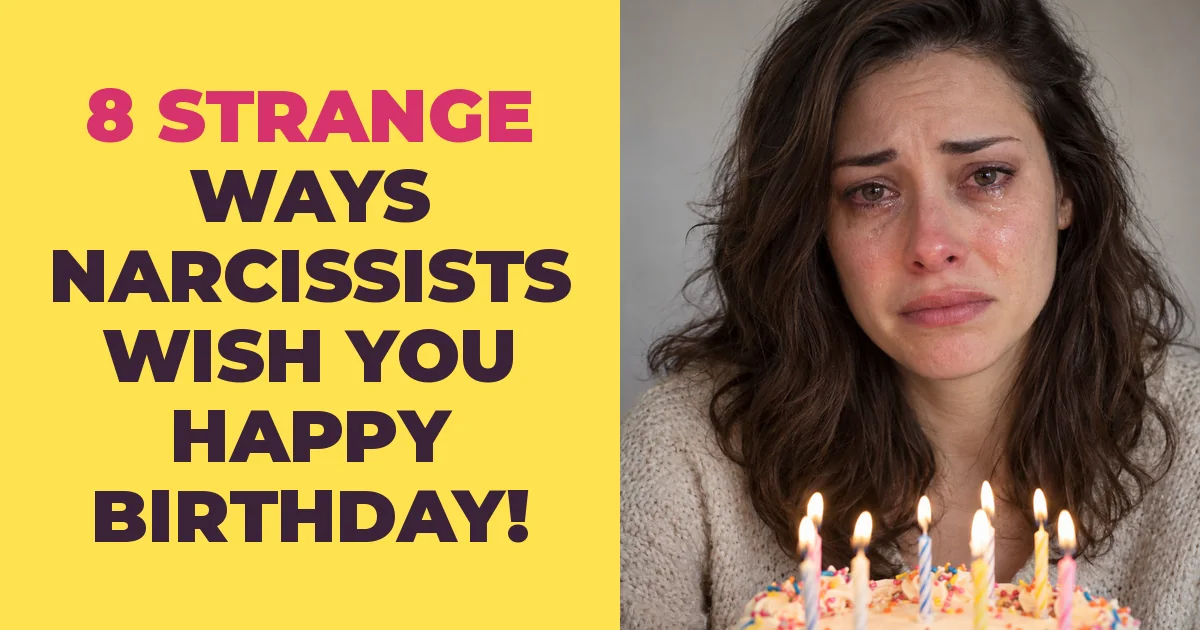
8 Strange Ways Narcissists Wish You a Happy Birthday

Your birthday should be the one day nobody can spoil.
With a narcissist, it rarely works that way.
Maybe you spend the week before it braced for something. A fight, a sulk, a gift that feels like a dig. Then you wonder if you’re being dramatic.
You’re not. Birthdays put you in the spotlight, and many narcissists struggle when someone else’s good fortune gets the attention.
Here are 8 strange ways narcissists wish you a happy birthday, and what each one is really about.
#1 Your big day becomes a fight
Some narcissists can’t stand a day that’s officially about you.
You wake up ready for a nice day. By lunch, you’re arguing about the dishwasher, or the tone you used on the phone.
“Why does everything always have to be about you?”
On your birthday. Think about it.
Envy often runs deep in narcissism. Your good day pokes at their need to be the one on top, so they cut it down to size.
Before long, celebrating anything starts to feel like a risk. You might even dread your own birthday.
One way to tell: watch who turns sulky, or starts a row, the moment the attention lands on you.
That says nothing about you.
#2 The flowers are for the audience
Over-the-top birthday gestures are often aimed at everyone watching, not at you.
A giant bouquet arrives at your work. A long, glowing post goes up on Facebook: “To the most amazing woman in the world.”
Your colleagues sigh. Your friends tell you you’re so lucky.
Then you get in the car with them, and the warmth is gone.
Their public image matters enormously to many narcissists. Applause from others props up how they see themselves, and a big show in front of a crowd brings plenty.
The hard part? The people around you can’t see the other side. Then you start wondering if you imagined that car ride.
What happens when nobody’s watching is the real birthday card.
#3 A day out that’s all about them
A narcissist may plan your birthday around the things they enjoy.
You mentioned a quiet lunch by the sea. Instead, you spend six hours at a car show, or a match, or their favourite steakhouse that you’ve never liked.
“I organised a whole day for you. You could at least look happy.”
Entitlement means believing their wants simply count for more than yours. To them, an ordinary request feels like an insult.
So when you say what you’d actually like, they hear criticism.
Year after year, the giving runs one way. Even on the day that’s supposed to be yours.
Keep a quiet tally of what you give. Then ask yourself: when did they last plan a day around you?
#4 A bare text at 11:58pm
Sometimes the coldest birthday wish is the one that barely arrives at all.
All day, nothing. They’re chatting in the family group and liking other people’s posts.
Then, at 11:58pm: “hbd.”
Or it comes the next morning, with no apology. Or the day before, so the real day passes in silence.
Being ignored strikes at something deep in you: feeling that you belong and that you count. It can sting like a real injury, which is exactly why silence gets results.
You check your phone all evening. You might even say sorry for nothing, just so the quiet ends.
You don’t have to chase that text.
#5 An expensive gift you never wanted
An expensive gift you hate can come with a very expensive guilt trip.
It’s the designer bag in a colour you’d never wear. The gadget you said you didn’t need. And the price gets mentioned more than once.
You try to smile. They notice anyway.
“Do you know what that cost me? After everything I’ve done for you?”
Many narcissists can read how you feel perfectly well. Whether they bother to act on it is another matter. Your taste was never really the point.
Guilt becomes a lever. Admitting you don’t love it starts to cost more than faking a smile.
Pause before you answer. Their disappointment isn’t yours to fix.
#6 They post your worst photo
Some cruelty comes dressed up as a sweet birthday post.
Out of hundreds of photos, they pick the one where you’re mid-blink, mid-chew, or at the angle you’ve told them you hate. Then they tag you, so everyone sees it.
“Happy birthday to this one! Lol.”
When you ask them to take it down: “Relax, it’s a joke.”
Psychologists call this everyday sadism: a small, ordinary kind of cruelty that feels rewarding to the person doing it. Teasing that’s playful stops the moment you ask.
If theirs keeps going, watch whether your upset seems to cheer them up. Smaller reactions mean less reward.
You’re not vain for minding.
#7 The party comes with a bill
The bigger the party they throw you, the bigger the bill can be later.
They book the venue, invite everyone and make a speech. For one night, you’re the centre of attention.
And that’s the problem.
A day later, the sulking starts. They’re cold, hurt and keeping score: you talked to your friends too long, you didn’t thank them properly.
Research describes two faces of narcissism: a bold, showy one and a quieter, prickly one. Plenty of narcissists flip between them. The showy side throws the party. The prickly side resents sharing the spotlight.
For weeks you tiptoe around their mood, and somehow their letdown is your fault.
One way to tell: do their apologies ever arrive without a “but”?
#8 They come back for your birthday
Months of silence can end the moment your birthday comes round.
The number’s been quiet for ages. You’ve been doing better. Then your phone lights up.
“Happy birthday. I still think about you every day.”
Hoovering is a popular nickname, not a formal term, for a try at reeling you back in after time apart. It leans on the bond you had, and on your hope the old days might come back.
Birthdays and anniversaries are classic timing.
Suddenly the hope is back. All those weeks of feeling stronger seem to vanish.
Choose your response before the day arrives. Judge them by years of history, not one sweet line.
That message is about their need, not your day.
Your birthday is still yours.
Spend the next one, if you can, with people who are glad you were born. They’re easy to spot. They’re the ones who never make you pay for it.
8 Ways to Take Your Power Back From a Narcissist Without a Fight

A narcissist knows exactly what to do with your anger.
Your calm is another story.
You’ve tried explaining. You’ve tried yelling. You’ve tried the long text at 2am that you rewrote eleven times.
And somehow every fight ends with you apologising.
You’re not bad at arguing. The fight was never fair to begin with.
Here are 8 quiet ways to take your power back, no shouting match required.
Why fighting keeps you stuck
Studies on what psychologists call threatened egotism point one way. When a narcissist feels insulted, hostility climbs, and it lands on the person they hold responsible.
So even a fair, gentle point can set off a reaction way bigger than the moment. You end up managing the explosion instead of the problem.
Every idea below runs on what you choose.
None of them needs their permission.
#1 Their counter-attack isn’t the real issue
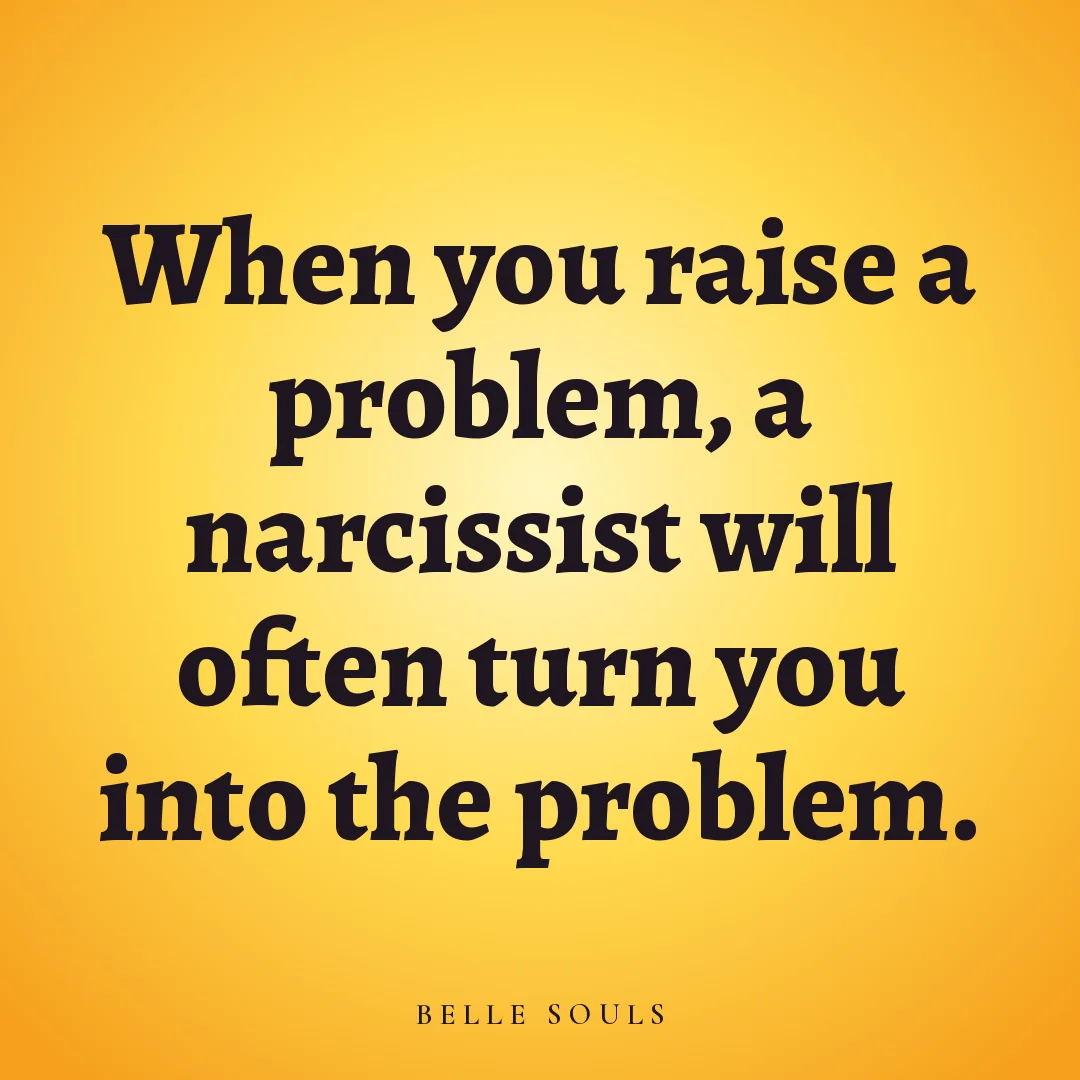
When you raise a problem, a narcissist will often turn you into the problem.
You mention the money missing from the joint account. Ten seconds later you’re hearing about the shoes you bought in March, your mother, your tone.
“Me? Unbelievable that you’d even say that.” Then the sulking starts, and you’re the one comforting them.
Psychologists have a name for this move: DARVO. Deny. Attack. Flip who’s the victim and who did the harm.
Studies suggest the pattern leaves the woman who raised the issue feeling more at fault. That’s why you walk away saying sorry for something they did.
Skip the side arguments. Say the facts one time, then steer back. “We were talking about the account.”
Again and again, if you have to.
#2 Answer on your own schedule
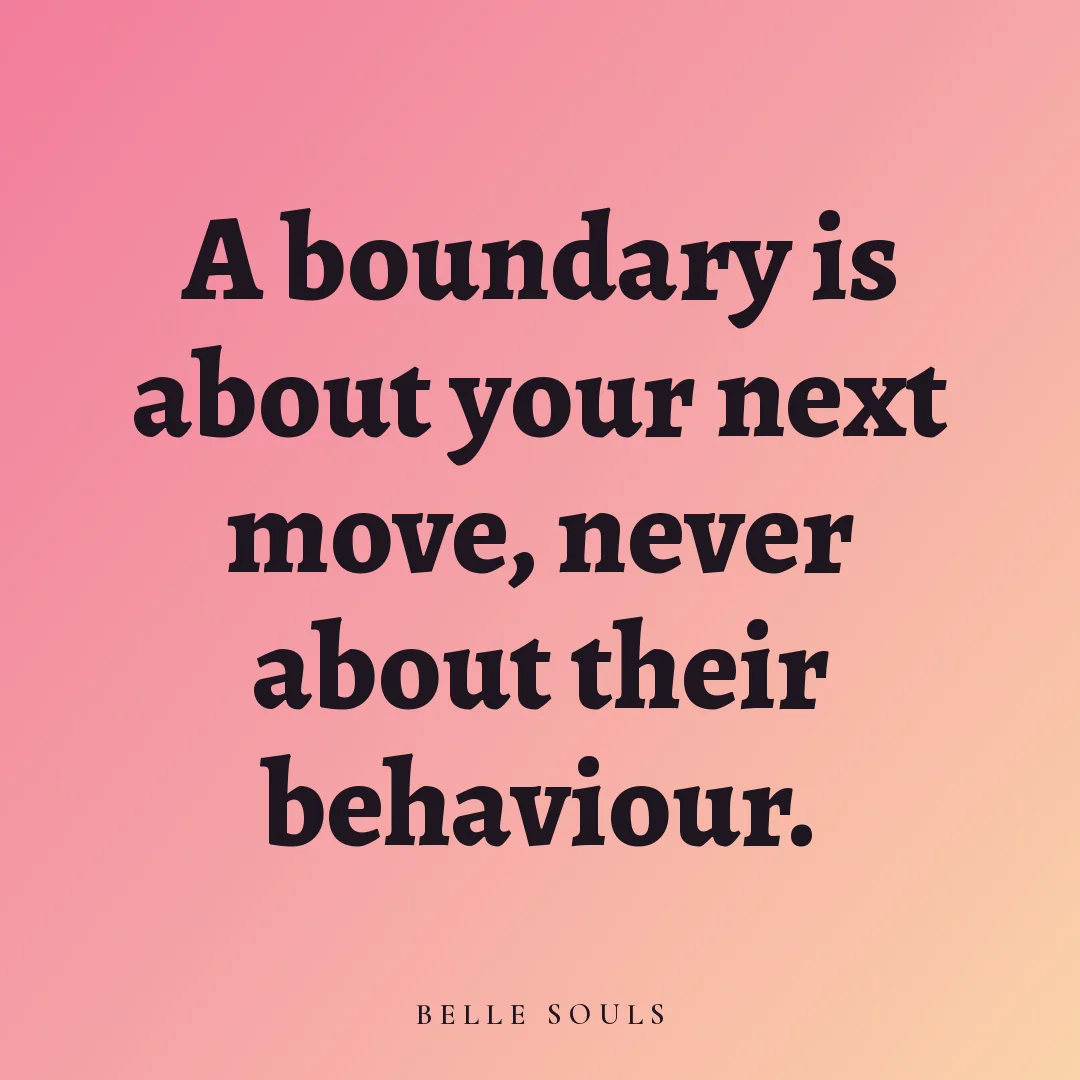
A boundary is about your next move, never about their behaviour.
The phone buzzes at 11:40pm. Then again. Then three times in a row. “Why are you ignoring me?”
Your stomach drops before you’ve even read it.
Here’s why this matters. Because a boundary runs on your choices, it never needs their agreement to work.
Leaving late-night texts until morning counts. So does hanging up the second a call turns nasty.
Expect pushback at first, and expect to feel guilty. Both are normal. Decide once, then follow through each time.
It’ll keep till morning. So will you.
#3 No doesn’t need a speech
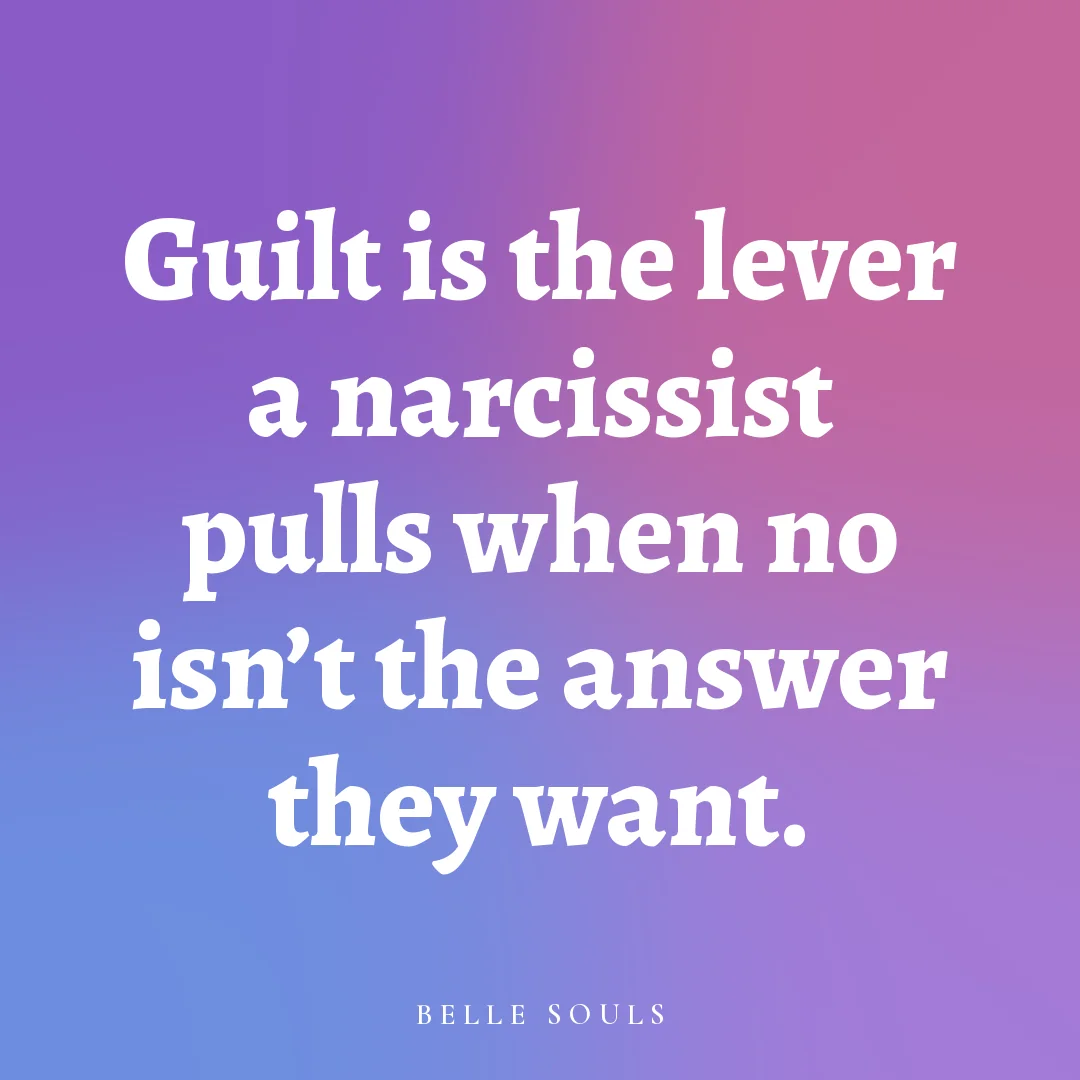
Guilt is the lever a narcissist pulls when no isn’t the answer they want.
You say you can’t drive them to the airport on Saturday. Silence. Then: “Wow. I’d do it for you in a heartbeat.”
And just like that, you’re rescheduling your weekend.
Many call this FOG, short for fear, obligation and guilt. It’s a popular label for emotional blackmail, not a diagnosis, and it’s related to what research calls coercive control.
Hints of consequences, a list of past favours, that heavy sigh. Each one makes refusing feel pricier than caving, until yes comes out on autopilot.
Try a pause. “Let me check and get back to you.” Then ask yourself: is this my job, or just their mood?
“I can’t do Saturday.” That’s a full answer.
#4 Boring is your best defence
The less you react, the less a narcissist has to play with.
At dinner with friends, they poke at the one thing you’re most insecure about. Then they watch your face.
With some people, your flinch is the whole point. Researchers call it everyday sadism, where small cruelty is its own reward.
Grey rock is a popular name for going flat and dull when you can’t avoid contact. Short, plain answers leave nothing to grab, and over time the hook loosens.
“Pick-up is at five.” “Okay.” That’s it.
It won’t win you anything. It just stops topping up the drama, and with some people it isn’t safe to try.
Does your upset please them? That tells you plenty.
#5 Save your wins for people who cheer

Your good news can land like bad news with a narcissist.
You got the promotion. You tell them in the kitchen, still in your coat. They say “Huh” and ask what’s for dinner.
Or they pick a fight on your big night.
Envy shows up a lot in narcissism. Your good fortune pokes at their need to sit above you, so it gets shrunk or spoiled. Research also describes rivalry: in their head, any gain of yours costs them.
No wonder you’ve started hiding the good stuff.
Take your wins to the people who light up for you. The friend who screams down the phone. The sister who turns up with cake!
Notice who goes quiet when you win. That’s your answer.
#6 Judge them by what actually happens
Promises are easy to make, so judge by what has actually happened.
The trip to Lisbon. The house with the garden. The ring. “After this busy stretch, I promise.”
That stretch has lasted three years.
Future faking is a popular term for big, detailed promises that keep you hanging on, with no real plan behind them. The more you’ve built your hopes around those plans, the harder they are to drop.
Throw in one kept promise now and then and the hook sinks deeper. Psychologists call this intermittent reinforcement. Rewards you can’t predict keep you hoping longer than reliable ones.
So look at the usual week, not the rare great one. What has really happened? Then set your own timeline.
Your life gets to start now.
#7 Let the silence be theirs
Silence used as punishment is built to make you give in, and you don’t have to chase it.
Three days. They chat to the dog, the delivery guy, their brother on speakerphone. Not you.
Then they stroll back in like the last three days never existed.
Research on being shut out says it strikes somewhere deep: the need to fit in and to count. The sting can register a lot like bodily pain. Small wonder you give in.
You apologise for something you can’t even name.
Try this instead. Say once, calmly, that you’re open to talking. Then get on with your day. Don’t chase. Don’t beg.
Make the coffee. Call your friend. Go for the walk. Let the silence be the only thing they’ve got.
#8 You don’t need to win the story
You can’t stop a smear campaign by shouting louder than the narcissist does.
Your aunt texts out of nowhere: “You need to apologise. You’re tearing this family apart.” She’s never once asked your side.
Researchers file this under relational aggression. Instead of hurting your body, it goes after your name and your circle, and it leaves no bruise anyone can point to.
Flying monkeys is a popular label for relatives and friends who carry the narcissist’s message, often without knowing the full story. Usually they’ve heard a version where the narcissist is the wounded one.
Don’t explain yourself to messengers. Keep details private.
Stay steady and give the truth time to surface. If work or custody comes into it, keep notes.
Your aunt heard one side. Let time show her the other.
None of this needs a fight. It needs you to keep showing up for your own life, one quiet choice at a time.
Pick one thing. Just one. Try it this week.
Maybe it’s one text left until morning. Maybe it’s one “Let me get back to you.” Start there.
8 Mental Health Struggles Narcissists Leave

You replay one conversation for the fifth time today. You flinch when your phone buzzes. You say sorry to people who bumped into you.
The narcissist may not even be in the room.
What they leave behind doesn’t show on a scan. Friends can’t see it. Some days, you can’t even name it.
None of this is a diagnosis, and only a professional can give one. These are patterns, and each one makes sense once you see where it came from.
Here are 8 mental health struggles narcissists leave behind, and why each one happens.
#1 You stop trusting your own memory
Gaslighting makes you doubt the one witness who was actually there: you.
You remember the fight clearly. It happened in the car, on the way home from your sister’s birthday.
Then comes the flat reply: “That never happened.” Or the classic: “You’re too sensitive.”
Psychologists use the word gaslighting for this: chipping away at what you saw and heard until their story is the only one left standing. It lands hardest when they hold more power and you’ve trusted them for years.
So you start keeping notes. Screenshots. A private file on your phone, just to prove to yourself you’re not losing it.
One thing helps: jot the moment down the same day, then run it past a friend who isn’t part of the relationship and has no reason to twist it.
Your memory isn’t the problem.
#2 Your body never stands down
When their anger could erupt any minute, your body learns to keep watch around the clock.
You can read the whole evening from the sound of keys in the door. Heavy footsteps? Too quiet? You already know.
Psychologists call this hypervigilance: a nonstop sweep of the room for the next sign of trouble. Its partner is fawning, keeping the peace by smoothing things over, agreeing and giving in.
So you say yes before you’ve thought about it. You apologise to the chair you bumped. You jump when someone drops a spoon.
No wonder you’re exhausted.
Your body has been working the night shift for months, maybe years. Somewhere in all that scanning, what you actually want gets lost.
Next time your chest tightens, catch that jolt and let your breathing go slower. Is there danger in this exact moment?
#3 Every word gets edited first
When a small comment can start a war, you learn to edit everything.
You rehearse “Did you call the plumber?” three times in your head. Then you don’t ask at all, and fix the sink yourself.
Why?
Last time, a basic question turned into a two-hour fight about your tone. Research on threatened egotism found that when a narcissist’s image takes a hit, they’re more likely to strike back at the person they hold responsible.
Their reaction dwarfs what you said. So you trim every sentence before it leaves your mouth, and apologise for things you never did.
If criticism isn’t safe, you don’t owe it. And if anger turns into threats, getting out of the room comes first.
The size of their anger was never about your question.
#4 Nobody seems to believe you
The person who hurts you at home may be the most charming one at the party.
They tell jokes, refill everyone’s drinks, hug your mother goodbye. Then the car ride home is silent, or worse.
Friends say, “You’re so lucky.” Your stomach drops.
Psychologists call this impression management. Many narcissists pour energy into how they look from the outside, since being admired is what props up their self-worth.
So nobody believes you. Slowly, your own experience starts to feel shaky too. And manipulation thrives when you’re cut off.
That’s why reaching out matters. Pick one person, maybe someone who’s seen them both at home and in public, and give them the unedited version.
What happens behind closed doors counts. You saw it.
#5 Simple decisions feel impossible
Believing “they love me” and “they hurt me” at the same time is exhausting.
Psychologists call that clash cognitive dissonance. It feels awful, so your mind hunts for a way to make it stop.
Often that means excuses. “They had a hard childhood.” “They’re just stressed at work.”
Then the sunk cost pull kicks in.
Walking away can feel like tossing all those years in the bin. So you argue with yourself all day, and even a text feels impossible to answer.
One thing that helps: list the plain facts of what happened, minus the excuses. Then ask what staying would cost from here on, not what you’ve already put in.
Of course you feel torn. Both feelings are real.
#6 Their needs swallow yours whole
Over time, your whole day can start to orbit around their moods.
“Can you just deal with it?” So you fix their problem before your own. You cover when they bail on your friend’s dinner. You feel guilty sitting down.
Many call this codependency. It’s a popular term, not a diagnosis, and it overlaps with fawning: keeping things calm by putting the other person first.
Caretaking can feel like safety.
And a partner focused on themselves is happy to keep it coming. The cost? Burnout, plus a quiet resentment you’re not allowed to say out loud.
Try one small switch. Before working out what they need, check in with yourself first. Then let their mess stay theirs to clean up.
When did someone last ask what you want?
#7 You miss the one who hurt you
A bond built on hurt and kindness can grip harder than a calm one.
They said something cruel on Friday. On Sunday they brought you coffee and said, “You know I’m crazy about you.” And you felt relief.
Psychologists call this trauma bonding. When one person holds more power and cruelty keeps trading places with tenderness, the attachment can grow stronger than in a peaceful relationship.
It explains the parts that make you feel ashamed. Defending them to friends. Going back more than once. Missing them right after they hurt you.
Leaving can feel physically painful. Your logic says one thing, your heart says another.
This is a known reaction. Not a weakness.
Leaning on people outside the relationship makes a difference. Who could you tell this week?
#8 Shame moves in and stays
Of everything manipulation leaves behind, shame is often the heaviest to carry.
You look back at the lies and wince. “How did I miss it? Everyone else saw it.”
Research on betrayal blindness offers a kinder answer. If you rely on someone, your mind may quietly screen out proof that they’re betraying you, to keep the attachment safe.
That’s protection, not stupidity.
Then the grief arrives, once it’s all clear.
Self-compassion helps here: being as gentle with yourself as you’d be with a close friend. Research links it with less shame and less blaming yourself. Small daily routines that are only yours, like a walk or a song, count too.
So talk to yourself the way you’d talk to her. You’d never call her a fool.
If one of these sections read like a page from your own diary, take that seriously. Seeing the pattern clearly is where things start to shift.
Start small. One note, one honest conversation, one kind sentence to yourself.
And if you ever feel unsafe, a domestic abuse service can help you think things through, whatever you decide to do next.