
Month: October 2026
How Narcissists Gradually Drain the Joy From the Things You Love

Narcissists rarely smash the things you love. They just wear them down.
Your painting, your running club, your Sunday sourdough. Somewhere along the way, the thing that used to light you up started to feel heavy.
You can’t point to the day it happened.
That’s because it didn’t happen in a day. It happened in sighs, jokes, guilt and long silences, one small dent at a time.
Here are the 7 ways narcissists slowly drain the joy from what you love, and how to start taking it back.
Why your joy is a problem for them
Your happiness isn’t about them. That’s the problem.
A narcissist often needs other people to keep confirming their worth. So anything that makes you happy without them involved can feel like competition.
Research links envy and narcissism. When you do well, it can poke at their need to feel above you, and their answer is to make your good thing smaller, take it over or ruin it.
Work on narcissistic rivalry points the same way. If you go up, in their mind, they go down.
#1 Your excitement gets a shrug

The narcissist’s reaction to your best news is often the flattest in the room.
You finish the half-marathon and walk in glowing. They barely glance up from the phone: “Good for you. What’s for dinner?”
Or worse, they pick a fight that night, and your big day ends with you apologising for something you can’t even name.
Why? Your win pokes at their need to stay on top. Making it small makes them comfortable again.
Anyone can feel a twinge of envy. What matters is whether they use it to pull you down, over and over.
After a while, you start keeping good news to yourself. You text your sister first, or nobody at all. Being happy out loud starts to feel like a risk.
So ask yourself. Whose face falls when things go right for you?
#2 The jokes about it aren’t really jokes

Contempt dressed up as humour is still contempt.
“Off to your little pottery class?” they say, in that voice. Your friends laugh. You laugh too, a beat late.
Then the eye-roll when you show them the bowl you made. The sigh. Their phone coming out while you’re still talking.
Psychologists file eye-rolls, mockery and snide ‘jokes’ under contempt. Couples research that followed partners for years found it’s one of the clearest warning signs a relationship is heading for the end.
And if you say it stung? “Relax, it’s a joke. You’re way too sensitive.” Often a narcissist notices exactly how much it hurt. They just choose not to act on it.
So you stop bringing it up. Your own living room starts to shrink you, over a hobby that used to make you feel big.
Say it calmly, one time. Then see if the respect ever returns.
#3 They turn your passion into a contest

In a narcissist’s world, your win often counts as their loss.
You take up guitar. Within a month, they’ve bought a better one and play it loudly whenever your friends come over.
You start a garden. Suddenly they know far more about soil than you do, and they make sure you hear it.
Psychologists have a name for this side of narcissism: rivalry. The charm usually comes first. Later, guarding their status can matter more, and backing you turns into beating you.
Ambition is fine. This isn’t ambition.
The result? Telling them about a good day starts to feel unsafe. Your hobby stops being yours and turns into a scoreboard you never asked to keep.
Take your good news to the people who light up when they hear it. Who on your list does that?
#4 Every plan comes with a guilt bill
Guilt is the price tag they quietly attach to your free time.
Book club is Thursday. On Wednesday night, they mention how tired they’ve been. How much they do around here. How they’ll just eat alone, it’s fine.
“Go, enjoy yourself. I’ve given up so much for this family, but don’t worry about me.”
You go. You check your phone all night.
Survivor communities often call this FOG: fear, obligation and guilt. It isn’t a diagnosis, just a handy label for pressure that makes no feel more expensive than yes.
Researchers studying coercive control describe something related: lots of little rules and pressures that, piled together, chip away at your independence.
Next time, take a beat before you reply. They’re allowed to feel things. Fixing it isn’t on you.
#5 Somehow it all circles back to them
Your hobby is fine, as long as it never gets in their way.
Saturday is your pottery class. Saturday is also, suddenly, the day they need the car, need you at their mother’s, need help with a job that can’t wait.
“You can do your little thing another week, right?” Their plans are urgent. Yours are optional.
That’s entitlement at work. When someone believes they deserve more than everyone else, a normal limit like your two hours a week lands as an insult.
So the giving runs one way. Even asking for a single afternoon can feel like declaring war.
Try this: for one month, jot down every plan you drop for theirs. And stop saying yes before they’ve even finished asking.
Count the Saturdays. Whose life is getting smaller?
#6 You start giving it up to keep the peace
The quietest loss is the one you end up agreeing to yourself.
Nobody banned your Sunday swim. You just stopped going.
You’d hear their keys in the door and know the mood before they said a word. You learned which plans were worth the fallout. Fewer and fewer were.
When anger can arrive at any moment, your body learns to stay on guard. It also learns a shortcut: keep them happy and the storm might pass. Psychologists call that fawning.
That’s a fear response. Not a flaw.
It’s tiring in a bone-deep way. And bit by bit, what you actually want gets blurry.
Start small. When your chest tightens, pause, then try one tiny no somewhere safe. What would you choose if nobody’s mood was watching?
#7 The joy is still yours to take back

They can dim the things you love, but they can’t own them.
The paints are still in the cupboard. The running shoes are still by the door. Some part of you still knows how that felt.
Psychologists who study self-compassion mean something simple: speaking to yourself as gently as you would to a good friend. It can ease the shame and self-blame manipulation tends to leave behind.
So no grand comeback. Ten minutes with the sketchbook. One lap of the park. A small routine that’s only yours.
And when the old voice asks “Who do you think you are?”, answer it the way you’d answer a friend.
Keep it quiet if you need to. Show it to the people who cheer you on.
It was yours first. It still is.
If your favourite things feel flat right now, nothing is wrong with you. Joy that’s been sighed at, mocked and guilted for years doesn’t spring back overnight.
It comes back in small pieces. Let it.
And if it helps, start with one person you trust. Tell them what you’ve been giving up, and what you’d like back.
Why a Narcissist Craves Your $10 More Than Their Own $100

They drop $100 on themselves and don’t think twice.
But your ten dollars? That becomes a fight.
A spontaneous new phone for them. A sigh over your latte. The loan that quietly disappears from their memory.
Until you see what your money is really buying.
Below are 9 reasons your small change matters so much to a narcissist, and what each one reveals.
What your money really buys them
Many narcissists lean on other people’s reactions to feel worth something. Their own $100 can’t do that job. It’s invisible.
Yours can.
Getting it shows them they rank first. It also leaves you with less of a cushion. Studies of economic abuse point out the catch: with no money of your own, walking away gets harder.
That ten dollars is a scoreboard, and they’re keeping it.
#1 Your money is never just yours

To a narcissist, your wallet is shared property and theirs is off limits.
You cover $50 of fuel. Seven days later you bring it up, softly, and they stare like you demanded an organ. Their own cash never moves.
“Seriously? You’re keeping score?”
Psychologists call it entitlement. Deep down, they believe they’re owed more, and the rules are for everybody else.
So a normal limit lands like an insult.
You end up giving plenty and getting crumbs. Even a fair request can set off a battle.
Quietly jot down what you hand over. Nobody else needs to see it.
A dated list of what you paid shows the pattern.
#2 They turned into your rival

The charm that won you over often turns into competition once a narcissist feels sure of you.
Early on, they grabbed every bill and bragged about your job to their friends. Now your pay is a joke, and your spending gets measured against theirs.
“Cute little salary. Must be nice to have hobbies.”
Research on narcissistic admiration and rivalry describes this shift. Charm and self-promotion win people over first. Later, putting others down takes over.
So they compete with you instead of backing you.
Meanwhile you keep chasing the generous, proud person from the start, wondering where they went.
Same person, two faces: toasting you at the party, cutting you down in the car home. Notice that gap.
#3 Money of your own threatens them

Your own money gives you breathing room, which is exactly why a controlling partner may go after it.
It starts small. “Two accounts is silly. Just pay your wages into mine.” Later, a bill turns up in your name that you never signed off on.
Psychologists call this economic abuse. It covers controlling, using or wrecking a partner’s money and independence.
Why bother?
Because with nothing of your own, leaving gets much harder. Dependence suits them.
You might feel stuck long before you have a word for it. An account and paperwork that belong only to you can steady the ground.
Checking your credit report now and then shows if anything was opened in your name.
#4 Every coffee needs a receipt

Strict rules about tiny purchases can slowly make your whole world smaller.
They grab a $200 gadget without a word. You buy a $4 coffee and face questions all the way home. “Who was there? Why did you need it?”
Psychologists call this pattern coercive control. Lots of little rules and penalties pile up until your independence is gone.
That’s why there’s rarely one big moment. Many small rules just add up.
Shopping bags get hidden. Ordinary things need a yes first. Specialist abuse services talk through safety plans, and money is part of that.
Since when does shampoo need a permission slip?
#5 A raise for you is a loss for them

Good news about your pay can ruin a narcissist’s whole evening.
You land the raise and tell them over dinner, glowing. They shrug, then spend hours criticising how you stack the dishwasher.
“Must be nice for some.”
Research ties envy to narcissism, more so the touchy, quiet version. Your success pokes at their need to come out on top, so they make it smaller or wreck the moment.
Soon you’re keeping your wins to yourself. Celebrating starts to feel dangerous.
Everybody feels a pang of jealousy sometimes. Using it to knock you down is different.
Watch who goes silent when things go well. Then share the next win with someone who cheers.
#6 Your money stress leaves them cold
Your fear about bills barely seems to register with a narcissist.
Midnight, kitchen table, you’re adding up rent and the overdraft. They stroll past, peek at the screen and ask about tomorrow’s dinner.
Or worse: “You’re way too sensitive about money.”
Studies suggest many narcissists do grasp how you’re feeling. Their empathy sits low by default and climbs when someone nudges them to take your view.
So it’s less can’t than won’t.
That’s why asking for your last ten dollars doesn’t weigh on them. Your worry simply doesn’t get counted.
No wonder you second-guess your own fear and open up less each month.
That fear about rent is real. Bring it to someone who responds.
#7 Some enjoy watching you worry

Some people get a kick out of watching you sweat over money.
The car payment is due Friday and they know it. Their half goes “missing” until late Friday, and they smile while you keep refreshing your banking app.
Researchers call this everyday sadism. Small cruelties feel good to them for their own sake, not just as a way to get something.
Holding back money you need is an easy way to make you wait and worry, which can be part of the pleasure for them.
Plenty of careless spenders aren’t like this.
Teasing that ends when you say stop is another matter. The tell is that your stress appears to cheer them up.
Bit by bit, you hide your face. Love starts to feel like being hunted.
Fewer visible reactions leave them less to enjoy. Your panic isn’t their show.
#8 They forget what they borrowed

Money they owe you tends to slip straight out of their memory.
You handed over $300 in March. You can still see the café, the hug, the promise. Now? “I never took anything. You’re making it up.”
Psychologists call this gaslighting. It means pushing you to distrust your own memory so their story wins, and it thrives where one person holds more power.
Two memories that differ a little are ordinary. Flat denial of what happened, over and over, is something else.
So the notes begin. Screenshots. Transfer records.
Keep every one.
Writing it down on the day is solid ground to stand on.
The dated note and the screenshot are your record. Checking it with a friend outside the relationship helps too.
#9 Guilt is how they collect
Guilt is often how your cash ends up in their pocket.
You refuse another loan. First the sigh. Then: “After everything I’ve done for you?” Then a list of favours from years back.
Some call this FOG: fear, obligation and guilt. The term isn’t a diagnosis. It’s a label for emotional blackmail, and it overlaps with coercive control.
Old sacrifices get dragged out until no costs more than yes.
So yes becomes automatic. Your $10 is gone before the question ends.
Next time, buy yourself a moment. “I’ll get back to you.”
Their disappointment is theirs to carry. Your wallet doesn’t owe it anything.
If your own kitchen table showed up in this, you aren’t being petty.
The ten dollars was never the point. Your right to keep it is.
Counting what you give is allowed. So is holding on to what’s yours.
11 Reasons Why Narcissists Won’t Let You Meet Certain Friends and Family Members

Narcissists keep their worlds in separate boxes.
You’ve heard all about their sister. The best friend from school. The work crowd they drink with on Fridays.
You’ve just never met any of them.
There’s always a reason. Bad timing. A family thing. “They’re not really your type.” And slowly you start wondering what’s wrong with you.
Nothing is. Those boxes exist for their benefit, and they say a lot about how they think.
Here are 11 reasons why narcissists won’t let you meet certain friends and family members.
Every person is a fan or a threat
For many narcissists, self-worth runs on outside confirmation.
So the people around them get sorted into two piles: the ones who clap, and the ones who might stop the clapping. Fans get the charming version. The rest get kept at arm’s length.
You meeting their sister or their oldest friend? That’s two of their worlds touching. And they can’t control what happens next.
#1 They’ve seen behind the mask

The people they hide are often the ones who’ve seen both sides.
At parties, the narcissist is the charming one, topping up everyone’s drinks. In the car home, silence. The face at the party and the face at home can belong to two different people.
Why? Being admired keeps them propped up, so the image gets guarded hard.
A brother who watched the private version for twenty years can’t be charmed into forgetting it. One honest look across the dinner table, and your experience finally makes sense to someone else.
That’s a risk they won’t take.
#2 You two might compare notes
A narcissist may tell each person a different story, and that only works apart.
To you, their best friend is “a bit jealous of us.” To the friend, you’re “the reason I’m always busy now.” Each of you hears exactly what keeps you quiet.
Psychologists call this style Machiavellianism. It’s a cool, plotting way of handling people: a compliment here, a quiet story there, always a long game.
Put the two of you at one table and the versions collide.
Ten minutes of small talk could undo it all.
#3 Sharing the spotlight is unbearable

When you meet their people, the attention splits, and they hate that.
Watch what happens if their mum laughs at your joke. The loud type talks over you and drags the story back. The quiet type goes cold and sulks for the rest of the night.
Psychologists describe a loud kind of narcissism and a quiet, touchy kind, and many flip between the two. Either way, the job is shielding an ego that bruises easily.
Later you hear it: “You were showing off.”
So you walk on eggshells next time. Or there isn’t a next time.
#4 Someone in that circle is an option
Some of the people you never meet are options they’re keeping open.
The “old friend” who still texts at midnight. The ex who’s “basically family.” The coworker you’ve only seen as a name lighting up their phone.
Researchers have tied narcissism to treating love like a game, with weaker commitment. Holding on to exes and admirers fits right in.
Introduce you as their partner, and that option shrinks.
So you stay a vague mention in their world, fighting for the attention that used to come easily. Sound familiar?
#5 Your shine feels like their loss
If their friends like you more, a narcissist may feel it as a loss.
Rivalry is the word researchers use. In their head, anything good that comes your way comes out of their pocket. Anyone brighter gets cut down to size.
So the warm, funny version of you stays far from their crowd. And if you do meet once? On the drive home: “Don’t get too comfortable. They’re just being polite.”
Take your good news to the ones who cheer.
Being liked was never a crime.
#6 Simple questions turn into fights
Meeting their people means you’d ask questions, and questions bruise their image.
You only ask, “Why don’t I ever see your dad?” Suddenly it’s a fight. “Why are you always digging? Do you not trust me?”
Psychologists who study threatened egotism describe a clear link. When a narcissist feels insulted, the anger runs bigger, and it lands on whoever they blame. A plain question can count.
So you start pre-editing every sentence about their family.
Curiosity shouldn’t feel dangerous.
#7 They speak for everyone you never meet

If you never meet them, the narcissist gets to tell you what they think.
“My sister thinks you’re a lot.” “The guys say you’ve changed me.” You can’t check, so it just sits in your chest.
Family systems research calls this a triangle. Instead of sorting out tension between two people, a third gets dragged in. You end up competing, pressured, outnumbered.
The catch?
Meet the sister, and you might find she never said it. The invisible crowd only works while it stays invisible.
#8 Family asks about the future
Families ask about the future, and a narcissist may have nothing real to say.
“So when are you two moving in?” Their gran asks it over Sunday lunch, kindly, and you look at your partner for the answer.
That’s the problem. There’s a popular, informal name for this: future faking. Big talk about a shared home or a wedding to keep you hooked, with no real intention behind it.
Researchers have linked narcissism to treating love like a game, quick to promise and quick to cool.
In front of family, those promises would need dates. So what has actually happened so far?
#9 Leaving you out costs them nothing

They can often see that being hidden hurts you, and they choose not to act.
You say it quietly: “It makes me feel like a secret.” They change the subject. Or sigh. “You’re too sensitive about this stuff.”
In studies, narcissists tended to show little empathy on their own, yet more once someone asked them to picture the other person’s view. That looks like a choice.
Your hurt isn’t the problem here.
Take it to people who actually respond to it.
#10 A smaller world is easier to run

Deciding who you get to see is about much more than your calendar.
It starts small. “Not that party, her friends are fake.” “Why go to your cousin’s? We never get time alone.” Each rule sounds almost reasonable on its own.
Researchers call this pattern coercive control. Rule by rule, your freedom shrinks, which is why there’s rarely one big moment to point at.
Your world gets smaller. You start asking permission for ordinary things.
Keep a few contacts that are only yours. They matter more than they look.
#11 Someone might confirm what you saw

The people they hide could tell you that you’re not imagining things.
For months you’ve heard “That never happened” and “You’re making things up again.”
Gaslighting thrives when one person holds more power and owns the version of events. Because you trust them, their account slowly replaces yours.
Then their old friend laughs and says, “Oh, they’ve always done that.” One sentence, and the rewrite cracks. Of course they’d keep that friend away.
Your memory was fine all along.
Being kept away from someone’s people can feel like proof that you’re not good enough. It isn’t proof of that.
It’s information about them.
Write down what you notice as it happens, and run it past someone who isn’t part of the relationship. One steady person who knows your life can help you trust your own eyes again.
8 Reasons You Shouldn’t Trust Anyone In The Narcissist’s Family

Their family can smile at you over Sunday lunch and report back by Monday.
You told their sister one honest thing. Now the narcissist knows it, word for word.
And somehow you’re the one ‘causing drama’.
You’re not paranoid. A family built around a narcissist often protects the narcissist first, whatever it costs you.
Here are 8 reasons you shouldn’t trust anyone in the narcissist’s family, and what each one looks like up close.
Why you end up in the middle
Family systems research has a word for a big part of this: triangles.
When tension builds between two people, a family may pull in a third person to soak it up instead of sorting it out directly.
Sometimes that third person is a sibling.
Sometimes it’s you.
#1 They’ll tell you to apologise
Their relatives will often carry the narcissist’s message to you, almost word for word.
A text from their mum: ‘I don’t know what happened, but you should apologise. You know how upset they get.’
She wasn’t there. She heard one side.
Online, relatives like this get called ‘flying monkeys’. That’s a nickname, not a diagnosis, though plenty of readers know the feeling.
The idea: the narcissist tells a version where they’re the wronged one, and decent, loyal relatives act on it. Researchers who study triangulation describe a similar move, where a third party gets drawn into a two-person problem.
Suddenly your own circle feels empty. How to tell? Real worry comes in their own words. A messenger recites someone else’s lines.
The messenger doesn’t get your defence.
#2 They only know the charming version

Many narcissists save their best behaviour for family and their worst for you.
At the birthday dinner they’re attentive and funny, topping up everyone’s glass. In the car home, silence. Or worse.
Then their aunt says, ‘You’re so lucky. They adore you.’
Psychologists call this impression management. We all tidy ourselves up for company. A narcissist may pour enormous effort into it, since being admired props up how they see themselves.
Good manners at a party are normal. Going from warm to cruel the moment the door shuts isn’t.
So when you describe the car ride, they stare like it’s fiction. Then you start to wonder too.
Believe the version that shows up at home.
#3 Your secrets may not stay secret

Anything you confide in their family can travel straight back to the narcissist.
You cry to their sister about a rough week. Two days later the narcissist says, ‘Everyone’s worried about you. You’re not coping.’
Your bad week is now their evidence.
That’s triangulation in action: your words carried, compared and repeated to keep you on the back foot. Smear campaigns run on the same fuel. Gossip. Hints. A quiet story that you’re ‘not stable’.
No bruise anyone can see. Only a kitchen that falls silent as you walk in.
It tends to land when you’re most in need of support.
Hold the details close. Has anyone in that family ever kept a secret of yours?
#4 Everyone has a role, including you
In a narcissist’s family, the children are often cast in fixed roles that last into adulthood.
One child could do no wrong. Another got blamed for everything, even as an adult.
Watch Christmas. The golden child arriving late is ‘traffic’. The scapegoat arriving late is ‘typical’.
Researchers describe a controlling parent handing out fixed parts, golden child and scapegoat, to keep the family looking good and the tension contained. Brothers and sisters end up pitted against each other, often well into adulthood.
If the blame keeps finding you, that’s the part you were cast in. Nothing more.
Next lunch, count who gets an excuse and who gets a sigh.
#5 Some won’t risk being the next target
Some of their relatives see it clearly and still stay quiet.
Their brother catches your eye when the narcissist snaps at you. Later he says nothing. At the next lunch he laughs at their joke about you.
Why?
Studies of what’s called threatened egotism found that when narcissists feel insulted, they hit back harder, aimed at whoever they blame. One possible reading of his silence: he’s seen where that anger lands and would rather it wasn’t him.
Living around anger you can’t predict can teach people to keep the peace at any price. Nod along. Change the subject. Listen for the mood in how the front door closes.
Watch him once the narcissist leaves the room. A quiet ‘that wasn’t fair’ in the hallway means something.
If it never comes, you have your answer.
#6 Your independence looks like betrayal

To an enmeshed family, your privacy and independence can look like betrayal.
You book a weekend away, just the two of you. By Friday their mum has rung three times. ‘So we’re not good enough for you now?’
The term for this is enmeshment. Nobody in the family gets real edges, and closeness turns into a leash.
In that system, you’re not a new member. You’re a rival.
Every plan of your own arrives with a side of guilt. Some days you can’t find the line between their family and you.
Try small, clear limits. Make the decision. Mention it later.
Your weekend away isn’t an attack on anyone.
#7 Guilt is how they keep you in line
Guilt is often the family’s favourite tool for keeping you quiet.
‘Just let it go, for Mum’s sake. Her nerves can’t take this.’ Or the classic: ‘After everything this family has done for you?’ So you swallow it. Again.
Online it’s often called FOG. The letters stand for fear, obligation and guilt. It’s a popular label rather than a clinical one, for pressure that makes refusing feel pricier than giving in.
Researchers studying coercive control describe a related pattern. No single huge incident, just lots of little rules and pushes that slowly shrink your freedom.
Yes becomes automatic, and you start feeling responsible for their moods.
Give yourself a beat before you reply. How they feel is theirs to carry.
What if you waited a day to answer?
#8 They’ll help you doubt your own memory

Their family can make you doubt what you saw with your own eyes.
You finally tell their dad what happened. He frowns. ‘That doesn’t sound like them. Are you sure you’re not being too sensitive?’
Then the narcissist cries. And suddenly you’re the bully.
That first move has a name: gaslighting. It wears down your trust in your own recall until their account is the last one standing. It works best where one person controls the story.
The tears have a name too. DARVO: deny it, go on the attack, then swap who’s the victim and who’s the offender. Studies found it leaves whoever spoke up feeling more to blame.
So you say sorry. Then you go quiet next time.
Jot down what happened that same day. Run it past a friend who isn’t related to any of them. Doubting yourself doesn’t mean you’re wrong.
Next time a relative asks how things are really going, ‘Fine, thanks’ is a complete answer.
Find one person outside that family who listens and believes you. Start there.
Their family wrote you a part. You don’t have to play it.
Here Are the Things a Narcissist Won’t Ever Do For You

A narcissist won’t give you the small things that make love feel safe.
You keep asking anyway. For an honest sorry. For a hand on your back when you cry. For a straight answer about what was said on Saturday.
And somehow wanting the basics leaves you feeling greedy.
You aren’t greedy.
Below are 10 things a narcissist won’t ever do for you, and the quiet price you pay for each one.
Why it so often circles back to them
With narcissism, self-worth leans hard on outside applause.
That splits the people nearby into two camps. Fans who feed that feeling. Or dangers who might puncture it.
Some go about it loudly, all charm and centre stage. Others go quiet, sulky and counting every slight. Plenty flip between the two.
Either way, what you need turns into a problem to handle. Not a need to meet.
#1 They won’t say sorry and mean it
An apology from a narcissist often arrives with a hook in it.
You mention, gently, that their joke about your weight in front of your friends hurt.
“Wow. I’d never say that. And you pick tonight, when I’m exhausted, to start on me?”
Ten minutes later, you’re comforting them.
Researchers named this pattern DARVO. First comes denial. Then an attack on you for raising it. Then a role swap, where the one who did the hurting plays the hurt one.
Research found it makes the person who raised the issue blame themselves more. That’s exactly why the conversation dies so quickly.
Think back. Has a single apology ever arrived without strings?
If it comes with a “but”, it isn’t one.
#2 Your good news is never safe

To a narcissist, your success can feel like proof they’re slipping behind.
You land the new job and call them from the car park. A pause. “Great. So I’ll be cooking every night now?”
Or the row kicks off on your birthday. Again.
Researchers who study narcissistic rivalry describe it plainly: what you gain, they count as lost. So they shrink your news, sour it or make it about them.
Bit by bit, you keep things to yourself. Even joy starts to feel risky.
Take the next win to someone who lights up for you. And watch who falls silent when things go your way.
Your wins were never the problem.
#3 They change the subject when you cry

A narcissist often sees your pain clearly and decides it isn’t worth acting on.
You’re in tears on the sofa after bad news about your dad. They pick up the remote. “Is there any of that pasta left?”
Or the sigh, then: “Here we go again. Waterworks.”
This is the part that stings. Research found narcissists show less empathy by default. Yet when asked to picture the other person’s view, it went up. Which suggests choice, not inability.
Over time you stop sharing. You start doubting whether you’re even allowed to react.
Your feelings aren’t too much. They’re going to the wrong address.
Who actually leans in when you’re upset?
#4 You’re only there to reflect them
Around a narcissist, you can start to feel like a mirror with a pulse.
They talk through their day for forty minutes. You begin yours. Their phone lights up and so do their eyes.
Their plans are headline news. Yours get in the way.
When self-worth runs on outside approval, the people closest get cast as the audience. Your own life barely fits in the room.
And if the VIP treatment doesn’t show up? A sulk. Or a clipped “Fine, I’ll sort it myself, as usual.”
Don’t judge by one bad evening. Look at the last six months.
An equal gets asked about her day. When were you last asked?
#5 Every boundary becomes a battle

For an entitled partner, a normal limit can land like a slap in the face.
You say no more loans until the last one comes back. Now you’re “so tight” and “obsessed with money.”
Entitlement means quietly believing they’re owed extra and that rules are for other people. Your reasonable request reads to them as an attack.
The upshot? You put in more, get back less, and fairness becomes a fight you dread starting.
A boundary, in the everyday sense, is about your next move, not theirs. “If you shout, I’m going to another room.” Because it rests on what you do, they don’t have to sign off on it.
They’ll probably push back. Hard.
Their anger doesn’t make your limit wrong.
#6 A simple question starts a fight
Being questioned can sting a narcissist’s pride, and you’re usually the one who pays for it.
You ask why they didn’t text that they’d be late. Soon the cupboards are banging. “Oh, so I have to clock in now?”
Research on what psychologists call threatened egotism found narcissists answer an insult with extra aggression, aimed squarely at whoever delivered it.
To a fragile ego, your plain question can feel like that insult. And the payback may come days later, over a comment you can’t even recall.
So you start pre-editing. Every sentence gets a test run in your head first.
When you do bring something up, make it short and factual. When it feels unsafe, you can skip it entirely. And if the shouting tips into threats, leave the room.
That much fury was never about the text.
#7 Their kindness comes and goes

Warmth that shows up at random hooks you deeper than steady warmth would.
Monday brings one-word texts and a cold shoulder. By Wednesday there’s your favourite takeaway on the counter and a cheery “Hey, gorgeous.”
You never know who’s walking through the door tonight.
The term is intermittent reinforcement. Rewards on a schedule you can’t predict build the hardest habits to break. Slot machines run on the very same trick.
So you try harder and get less. Then one sweet evening makes a rotten week seem bearable.
Try a month of tallies. A tick for each good day, a cross for each bad one. Then go by the overall picture, not the highlight.
So, what do your ticks and crosses say?
#8 The charm stays at the party

The delightful version everyone else gets is a performance, and you get the leftovers.
At the barbecue they’re the life of it, refilling drinks, charming your aunt. On the drive home? Nothing. Then: “Did you really have to tell that dull story?”
Narcissists often pour a lot into how they’re seen, because applause props up how they feel about themselves.
The bill comes to you. People say you’re lucky. No one buys your side, and you start to wonder if you’re imagining it.
Most of us are a touch nicer in company. Normal.
What matters is the jump from warm to cruel. Believe what happens with the door shut.
You live there. Not at the party.
#9 The promised change keeps not arriving
A narcissist’s promise to change often turns out to be the old cycle starting again.
“I’ve had time to think. I get it now. I swear it’s different.” Maybe with flowers. Maybe months after you’d stopped expecting a word.
Many call this hoovering, a popular label with no official meaning, for the moves that reel you back in. It leans on your bond and on hope that the sweet times are returning, the same hot-and-cold pull from #7.
Hope floods in. All your progress suddenly feels wiped out.
Real remorse looks like change that is sustained, not a one-off gesture. Hoovering just runs the same loop again.
Pick your response ahead of time, before the next message lands. And expect the behaviour to stay the same.
Trust the pattern, not the promise.
#10 Your memory never gets to win

A narcissist may retell events until your own memory feels like the liar.
You heard it. You were right there in the hallway. “That never happened. Honestly, where do you get this stuff?”
There’s a name for it: gaslighting. It works best when the power is lopsided, because the more you trust them, the more of the story they get to own.
Soon you’re apologising for your own hurt. Or keeping screenshots like a lawyer, just to prove a conversation existed.
Mismatched memories are normal between any two humans. Being told your own eyes got it wrong is something else.
Write it down while it’s fresh. Then check it with someone outside the relationship, who has no stake in either version.
Your memory gets a vote too.
None of this means you fell short. These are things a narcissist often holds back, however kindly you ask.
Asking for an honest sorry was never too much.
Start small. Carry one feeling, one win, one story to someone who meets you halfway. Then notice how different that feels.
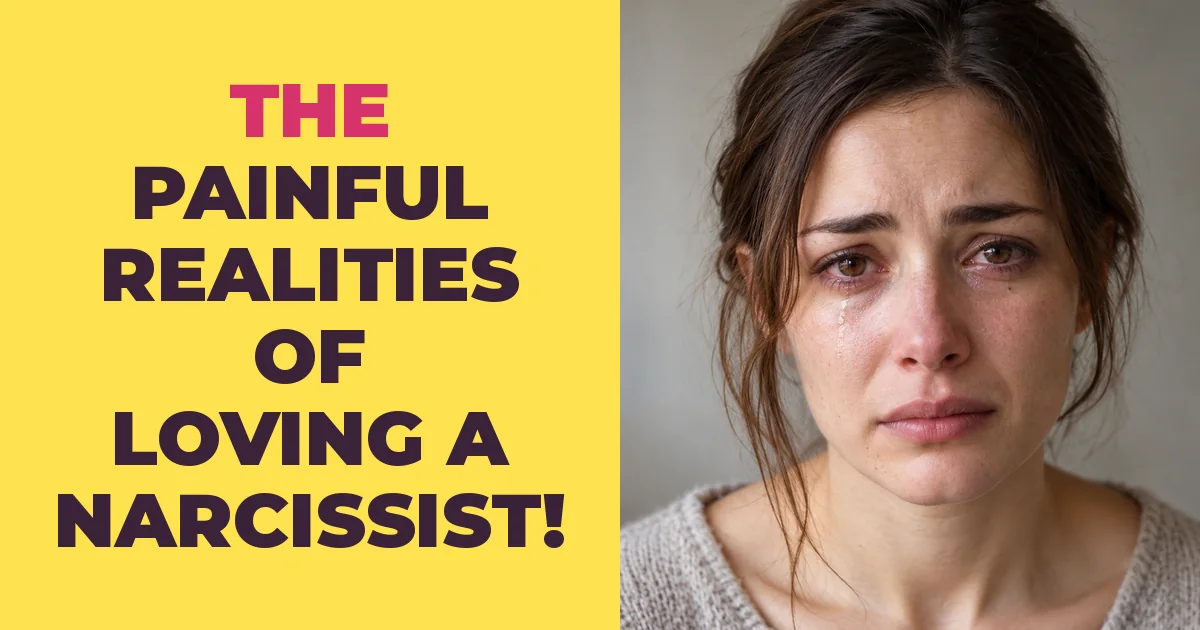
Loving A Narcissist Comes With These Painful Realities

Loving a narcissist can feel like pouring water into a glass with no bottom.
You give. You wait. You hope the next good day is the one that finally lasts.
And somehow you’re still the one saying sorry.
You’re not imagining it.
Here are 7 painful realities of loving a narcissist, why they happen, and one thing that helps with each.
#1 You’ll love harder than they ever will

You will often love them far more than they choose to love you.
You cry in the kitchen after a brutal day at work. They glance up from their phone, then ask what’s for dinner.
Or worse: “You’re too sensitive.”
Your needs land like an inconvenience. Theirs land like emergencies.
Studies on empathy point to something hard to hear. A narcissist may grasp exactly how you feel. Whether they do anything with that depends on what’s in it for them.
So you keep explaining your hurt louder and clearer, as if the problem were your wording. It isn’t.
Over time, you stop sharing at all and start second-guessing every reaction. Your hurt deserves someone who answers it. Who in your life actually does?
#2 Hope becomes the whole relationship
Hope is the hook that keeps you holding on through the worst days.
Monday they’re cold. Wednesday they bring your favourite coffee and say, “Let’s book that trip this summer.” By Friday the trip has quietly vanished.
Why does this grip so hard?
Psychologists call it intermittent reinforcement. When warmth arrives at random, between stretches of coldness, it grips tighter than warmth you can count on. Slot machines run on the same trick.
Then there’s what many call future faking: the house, the wedding, the trip, promised in detail and never quite arriving. It’s a popular term, not a diagnosis, but it feeds that same unpredictable reward.
You end up working harder for less, waiting for a life that keeps sliding out of reach. Try rating the ordinary Tuesdays, not the rare perfect Saturday.
So what do the Tuesdays look like?
#3 Your own memory stops feeling safe

A narcissist can make you doubt things you saw with your own eyes.
You bring up the comment they made at dinner with your sister. “That never happened. You’re imagining things again.”
You were there. Still, a small voice wonders.
Psychologists call this gaslighting: chipping away at your trust in what you saw until their account is the only one left standing. It thrives when one person holds more power, since your faith in them hands them the pen.
So you start keeping notes on your phone, just to prove to yourself what happened. You apologise for being hurt.
Two people recalling an evening a little differently is normal. Being told, again and again, that you didn’t see what you saw is something else entirely.
Jot it down the same day. Run it past a friend who isn’t inside it. Your memory isn’t the broken part.
#4 Peace lasts only as long as you obey

Peace in the house often depends on you doing exactly what they want.
You hear the keys in the door and your shoulders rise. You check the sink, rehearse your words, and read the mood from how the door shuts.
One small question, “Did you call the plumber?”, and the whole evening explodes.
Researchers studying what they call threatened egotism saw that when a narcissist feels insulted, the anger runs hotter and lands on whoever bruised them. Even a plain question can register as an attack.
So your body learns to stay on alert. You agree before you think. You pre-edit each sentence and apologise for things you didn’t do.
That’s how people survive anger they can’t predict.
And if the anger turns into threats, you’re allowed to leave the room. Your safety comes first.
#5 They take, and you keep giving
You give your time, money and energy, and they treat it as owed.
You cancel your plans because theirs suddenly matter more. You lend money that never comes back. They tell friends the kitchen renovation was all their idea.
Ask for fairness? “Wow. After everything I do around here?”
Psychologists call this entitlement. Deep down, they feel owed extra, and rules are something other folks follow. So a normal limit from you reads to them as a personal snub.
Which is why your perfectly reasonable request lands like a declaration of war.
You give more. You get less.
One quiet step: jot down what goes out from your side, and notice how often you say yes, forgive or pay before anyone even asks. Numbers don’t argue back.
#6 The bond pulls harder than logic

You can know they hurt you and still ache to go back.
Your friend asks why you stay. You hear yourself say, “They had a hard childhood,” or “We’ve been through so much together.”
And part of you believes it.
Psychologists call this trauma bonding. When hurt and tenderness keep taking turns, and one person holds more power, the attachment can grow tighter than anything a calm relationship builds.
Add cognitive dissonance: two beliefs that can’t sit comfortably together, “they love me” and “they hurt me.” To quiet that discomfort, you find reasons for the bad parts. All those invested years make leaving feel like throwing them away.
So logic says one thing and your heart says another. You argue with yourself half the night.
This is a known human reaction. It says nothing bad about you. The real question is what the future will cost, not what the past already took.
#7 You’ll grieve the person they promised to be

The hardest loss is the person they seemed to be at the very start.
The texts all day. The talk of soulmates in week three. The way they looked at you across the table as if nobody else existed.
Then, slowly, the cutting comments. The coldness. The competing.
Research on narcissistic admiration and rivalry helps explain the shift. At first, they lead with charm and shine. Later, the drive to cut others down wins out. It’s why meeting them felt like magic and living with them feels like a slow chill.
Love bombing speeds it up: a flood of messages, gifts and big plans that ties you in before you’ve watched them handle a hard week. Later, that flood is what you keep trying to get back.
So you grieve twice. Once for the relationship, and once for someone who was mostly a first impression.
You weren’t foolish for believing it. It was built to be believed.
If you saw yourself in this list, go gently with yourself tonight. Being kind to yourself eases the shame and self-blame that weigh so much after manipulation. Those belong to the pattern, not to you.
Start small. Pick one person you trust and tell them everything, or ring a helpline simply to talk. Getting support doesn’t mean anything has to change today.
You read this far. That counts.
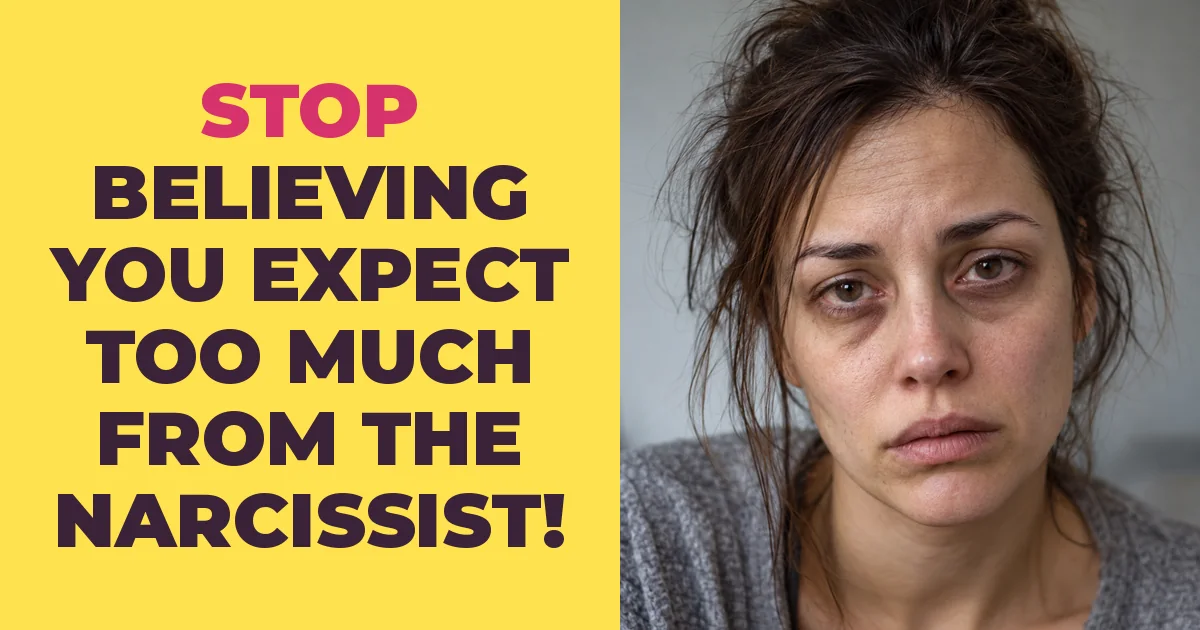
Stop Believing You Expect Too Much From The Narcissist. You’re Asking The Wrong Person

Narcissists can turn the smallest need into proof that you’re impossible to please.
A heads-up when plans change. A hand with the laundry. Five minutes of real attention after work.
Over time, those began to sound like big demands, even to you. So you cut the list down. You softened your voice. You said sorry before you’d even finished asking.
It still wasn’t enough.
Here are 8 reasons your expectations were never the issue, and why you’ve been taking them to the wrong person.
Why ordinary asks land like insults
Psychologists who study entitlement describe a fixed sense of being owed more than everyone around them. Rules? Those are for other people.
Now picture your request arriving in that head. A normal limit gets heard as a slight.
Which is why a fair question can feel, to them, like you threw the first punch.
Your tone was never the problem.
#1 Your basic needs aren’t a big ask
Needing the basics from a partner doesn’t make you high-maintenance.
You’d like a quick message when the evening plans change. You’d like one Saturday a month that’s built around you. That’s it. That’s the whole wishlist.
Their face reacts like you asked for a kidney.
Entitlement is about brushing off what the other person needs. Saying what you need is something else entirely. It’s just how two people share a life.
Around a narcissist, though, your needs can get handled like a nuisance blocking their way.
Their reaction measures them, not your request.
Be honest. Would your closest friend call this too much?
#2 Fairness comes with a price tag
Asking a narcissist to even things out can cost you more than the thing itself.
You paid for the car repair in March. And the birthday dinner. The money you lent them in spring? Still waiting. So you mention it, gently, over dinner.
“Seriously? You’re keeping score now?”
Research on entitlement describes a steady belief that they deserve more than others. Paying back money or favours doesn’t fit that picture. Neither does sharing credit for work you did together.
So the scales tip, quietly. You give more and get less, and bringing it up feels like starting a war.
Two habits help: keep track of what you give, and stop pre-paying, pre-forgiving and pre-agreeing.
What would you stop covering first?
#3 They see your pain and change the subject

Plenty of narcissists understand exactly how you feel. They just don’t do anything with it.
You’re in tears at the kitchen table after a horrible week. They look up, scroll their phone, and ask if there’s any pasta left.
Or they go with: “Here we go again. You’re so sensitive.”
Studies on narcissism and empathy suggest it stays low on its own, then rises when they’re asked to imagine your side. That looks less like can’t and more like won’t.
So finding better words for your pain was never the fix. Many women go quiet about their feelings, then begin wondering if those feelings even counted.
They counted. Bring them to people who answer back.
#4 Bringing it up becomes your crime

Point out one problem to a narcissist and you can walk away as the bad guy.
You bring up the joke they made at your expense in front of your friends. Seconds later: “That didn’t happen, and I can’t believe you’d say that.”
Next, a run-down of everything wrong with you. Then wounded silence, until you’re the one patting their shoulder.
Psychologists have a name for it: DARVO, for deny, attack, reverse victim and offender. In research, it left the one doing the confronting blaming herself more. No wonder the talk just dies.
So you say sorry for raising it. Later, you quit raising anything.
What helps is going back, calmly, to the thing you first said, and leaving their counter-charges unanswered.
Your original point still stands. Their list of your faults doesn’t cancel it.
#5 Their promises keep you on hold

A narcissist’s big plans can keep you hooked on a life that never shows up.
The beach holiday. The engagement. The flat with the balcony. “Once things calm down at work, babe, I swear.”
Things never calm down.
Lots of women online call this future faking. It’s a popular label, not a clinical term. The logic behind it: after you’ve poured yourself into a shared plan, leaving feels like throwing the plan away.
Research ties narcissism to treating love like a game, with weaker commitment, which fits the pattern.
And all the while, asking “when?” starts making you feel pushy.
It shouldn’t. Look at what’s really happened so far, and pick your own deadline. How long have you been on hold?
#6 Crumbs start to look like a feast
Kindness you can’t predict grips you tighter than kindness you can count on.
On Monday they barely speak. By Wednesday your texts sit unanswered. Then Friday brings takeaway, a hug, and “I don’t know what I’d do without you.”
The relief is so big it almost hurts.
When rewards turn up at random, chasing them becomes a very hard habit to break. Slot machines run on the very same trick.
A rare sorry lands like winning big. A single sweet evening makes a rotten week seem fine. You give more and get back less.
No wonder the bare minimum now feels like asking a lot. You learned to live on so little.
Try scoring your typical week instead of your best night. What does an ordinary week actually feel like?
#7 Guilt taught you to shrink the ask
Guilt is often the thing that stops a fair request before it leaves your mouth.
You’d love two nights at your sister’s. They go silent, then mutter: “Nice. After all I do around here.”
So you cancel. Again.
Some call this FOG: fear, obligation and guilt. That’s a popular label, not a diagnosis. It means pressure that makes refusing feel pricier than caving, and it can sit alongside the wider pattern called coercive control.
Repeat that enough and yes comes out on its own. Their mood starts to feel like your shift to cover.
Next time, wait a beat before replying. Their feelings are theirs to carry. Your weekend is yours.
Love shouldn’t send an invoice.
#8 The charming early version has gone
Often, asking for too much really means asking for the person you met at the start.
Back then they wanted to hear about your day. They laughed at your stories, sent good-morning messages, turned up before you did.
These days a reply takes all afternoon.
Research on narcissistic admiration and rivalry describes this shift. Early on, charm and showing off win you over. Later the rivalry side grows: cooler, sharper, more competitive with you.
So the first months shine and the later ones sour. And you keep reaching for that early version, hoping the right tone will bring it back.
Watch the pattern across months, not the odd sweet moment. Plan as if things stay the same, not as if change is coming.
You weren’t greedy. You were missing someone who’s gone.
Your needs were never the trouble. Wanting to be listened to, helped and thought about is an ordinary thing to want.
Begin with one person who actually responds. A friend, your sister, a support group. Being cut off is part of how manipulation works, so reaching back out is part of how you get free.
Take your list to the right person, and see how modest it always was.
Most Parents Would Be Shocked If They Found Out Narcissists Do This To Their Children

You saw a side of them nobody else got to see.
To guests, the narcissist was delightful. Behind your front door, you got moods that flipped without warning. Rules nobody ever said out loud.
Try telling anyone, and they’d say your parent seemed so lovely.
You weren’t making it up back then. You aren’t now.
Here’s what narcissists do to their children once the door closes, and why it still shows up in your grown-up life.

Why it lands on the kids
The pattern of narcissism leans on other people for proof of worth. Anyone nearby is either feeding that need or getting in its way.
In a house like that, you were one of the people expected to reflect the parent back to themselves.
And you were too small to step away.
Research on emotionally immature parents fills in the rest. Kids cope by burying what they need, or by looking after the parent instead. Those coping habits travel with you.
#1 Everyone else gets the charm

The parent everyone else adored was not the parent who came home with you.
At the school play, they were warm and funny. Teachers loved them. Another mum leaned over: “Aren’t you lucky to have such a fun mum?”
Then the car door shut.
Not a word for twenty minutes. Or a list of everything you’d messed up on stage.
Why the switch? Image matters enormously to a narcissist, because being admired is what props up their self-worth. No audience, no reason to perform.
And it costs you. When nobody believes your version, you begin to question it yourself. A simple test: weigh what went on in your kitchen over what the neighbours got to see.
They saw the show. You lived with the person.
#2 They rewrote what you saw
A narcissistic parent could talk you out of something you watched happen.
You cried after they screamed at you over spilled juice. By bedtime the story had changed: “I never raised my voice. You’re too sensitive.”
That’s gaslighting. It hits hardest when one person holds most of the power. A small kid who trusts a parent holds almost none.
Research on low empathy adds something darker. Narcissists often can tell what you’re feeling. The studies hint that tuning it out is closer to a decision than a blind spot.
So you quit telling anyone how you felt. You learned to second-guess your reactions, and maybe you still do.
Two habits help. Jot down what happened on the day it happens. Then compare notes with a person outside the family.
Your memory was fine. The story was wrong.
#3 Their love came and went

Affection that shows up at random grips you tighter than affection you can count on.
One day you were “my best girl” and got ice cream after school. The next, you said hello and got a cold stare. No reason given.
Then something sweet out of nowhere, right after the worst night of the month.
Psychologists have a name for this: intermittent reinforcement. When a reward turns up at random times, the urge to keep chasing it gets very hard to shake. Think of a gambler pulling a lever.
You tried harder and got less back. A single warm afternoon made a week of coldness feel survivable.
If someone like this is still in your life, look at a typical Tuesday with them, not the highlight reel.
One sweet afternoon never cancelled out the month.
#4 The quiet never lasted
The calm days in a narcissist’s house were often just a pause before the next blow-up.
You know the rhythm. Tension builds. Everyone tiptoes. Then someone explodes over a dish left in the sink.
Afterwards come the apologies, maybe a gift, maybe pizza night as if nothing happened. “I said I’m sorry, what more do you want?”
Researchers describe this as a cycle of abuse. Pressure climbs, something blows, there’s a make-up phase, a stretch of peace, and round it goes.
The peace is the sneaky part. It brings hope back, which makes the next explosion harder to spot.
If some version of this still runs your days, put a small mark on the calendar each time it erupts. The pattern shows up fast.
Your nerves were keeping count all along.
#5 You became the grown-up

In many narcissistic homes, you end up parenting the parent.
You sat on the edge of their bed while they cried about their marriage. “You’re the only one who understands me.”
You were nine.
Then came packing your little brother’s lunch, holding grown-up secrets, and being praised as “so mature.”
Psychologists call this parentification. You turned into their shoulder to cry on and their helper, and absorbed the rule underneath it all: you go last.
Is that why asking for help still feels impossible? Getting better can mean mourning the childhood that got skipped, and slowly letting other people look after you for a change.
Start tiny. Let a friend carry the shopping.
#6 One of you could do no wrong

Some narcissistic parents pick one golden child and one scapegoat, and the roles stick.
Your sister breaks a vase, and it’s an accident. You get an A, and nobody mentions it. You forget one chore, and it’s “Why can’t you be more like her?”
Research on family roles explains the logic. Giving each kid a fixed part helps a controlling parent keep up appearances and keep a lid on tension.
Siblings end up pitted against each other. So the gap between you and your brother or sister may belong to neither of you.
The golden child pays too, under constant pressure to be flawless. The scapegoat gets the shame.
Either way, that part was assigned. It was never the truth about you.
Who would you be without it?
#7 You still scan every room

You learned to read the room before you could read a book.
The sound of keys in the door told you everything. Heavy footsteps meant trouble. A sigh at dinner meant you’d better fix something, fast.
A home with anger you can’t predict teaches your body to stay switched on, and to soothe danger by going along with it. Psychologists call this hypervigilance and fawning.
So now you say yes before you’ve thought. You apologise when someone bumps into you. You’re worn out, and not sure what you even want anymore.
Research on emotionally immature parents says these habits carry into adult love, sometimes toward partners who feel strangely familiar.
Start small. When your body sounds the alarm, pause. Try a tiny no where it’s safe to.
That alert kid kept you safe. She can rest.
None of this was yours to carry. You were small, and you adapted to the house you were given.
Those adaptations made sense then. They can loosen now, one small no, one honest note, one kind voice at a time.
Tonight, write down one thing that happened today, in your own words. Then believe what you wrote.
Nothing Hurts Like Watching A Narcissist Harm Your Child

You can take the digs, the sulks, the cold shoulder at dinner. You’ve had practice.
What you can’t take is watching it land on your child.
Their face falls. Something in you breaks.
Worse, most of it happens in small moments nobody else sees, so you end up wondering if you’re making too much of it.
You’re not. Here are 6 ways a narcissist harms a child, and what you can do for your kid in each one.
#1 They save their best side for an audience

A narcissist can be the most loving parent in the room, as long as the room is watching.
At school pickup they crouch down, ask about the spelling test, promise a trip to the park and laugh at the teacher’s joke. Other parents tell you how lucky your child is.
Then the car door shuts.
The questions stop. Your child starts a story about lunch and gets a flat “Not now” while they scroll their phone. The rest of the ride is silence.
Why the switch? Many narcissists invest heavily in how they come across, because admiration is what feeds their sense of worth. A teacher’s smile pays off. A seven-year-old’s lunch story doesn’t.
That gap is what makes this so lonely for you. Friends say you’re lucky, nobody believes what happens at home, and some days you start doubting it yourself.
So trust what happens behind closed doors, not what happens at the school gate.
Your kid knows which one comes home.
#2 Your child’s tears get waved away
A narcissist often sees your child’s pain clearly and simply chooses not to respond.
Your daughter comes home crushed because she wasn’t invited to a party. Before she’s finished the sentence, the subject has switched to their own bad day at work.
Or worse: “Stop crying. You’re too sensitive.”
Research on empathy in narcissism found something uncomfortable. Narcissists tend to show less empathy by default, but more when they’re prompted to see the other person’s side. That points to a choice more than an inability.
It’s also why their warmth turns on when they want something from your child, then vanishes when your child just needs comfort and has nothing to offer back.
What does that do to a kid? Slowly, they stop bringing their feelings to that parent. They start wondering if their own reactions are wrong.
This is where you matter most. Be the place your child’s feelings land, and answer them.
Listen first. Don’t change the subject to yourself.
#3 The warmth cools as your child grows

Many narcissists are warm while admiration flows, then turn cutting when someone outshines them.
Early on, it can look lovely: the proud posts, the glowing stories at dinner, your child shown off like a little star.
Then your child starts to shine on their own.
Research on narcissistic admiration and rivalry describes this arc. Early on, charm and self-promotion win people over. Over time, the rivalry side takes over, putting others down to protect their own status. A growing child can end up on the wrong side of that.
Envy tends to join in. A great school report gets a sour “Don’t get a big head.” A birthday somehow ends in a row nobody saw coming, right before the cake.
Your child may start keeping wins quiet, because good news has begun to feel risky. Their successes become something to hide from their own parent.
Notice who goes quiet when your child wins.
Then make sure your child has people who cheer out loud!
#4 One child shines, another takes the blame

In some families, one child can do no wrong and another gets blamed for everything.
You see it at the dinner table. Spilled milk from one child is “an accident.” The same spill from the other is “Typical. You never think.”
Psychologists call these roles the golden child and scapegoat.
Fixing kids into roles helps a controlling parent manage the family’s image and its tension. One child carries the pride. The other carries every problem.
The scapegoat’s good grades and kind moments get ignored. The siblings get set against each other, and the roles can last well into adulthood.
Neither role is a gift. Both can leave marks: lasting shame, or a constant pressure to be perfect, plus distance between brothers and sisters.
So say it to your kids as often as they need to hear it: these roles aren’t true, and they aren’t who they are.
Scapegoat or golden child, it was assigned, never earned.
#5 Your child ends up looking after them

Some children end up as their parent’s therapist, and a narcissist may quietly hand them the job.
It sounds like “You’re the only one who understands me.” It looks like your ten-year-old on the stairs while they vent about work, money, even you. Sometimes it ends with a secret your child has to keep.
Then comes the praise: “So mature for her age!”
That praise can make the job feel special.
The term for this is parentification. The child becomes the parent’s confidant or caretaker and learns, one evening at a time, that their own needs come last.
Kids raised this way can grow into adults who take on too much responsibility and struggle to ask for help, even when they’re drowning.
At home with you, let your child practise the opposite: no jobs, no secrets, just a snack, a hug and someone asking how their day went.
When did your child last get to just be a kid?
#6 Fear teaches your child to read the room
Living with unpredictable anger trains a child’s body to stay on high alert.
Watch your child when the front door opens. They go still at the sound of the keys, shoulders up, reading the mood before they’ve seen a face.
One small comment can set it off.
Your child corrects a fact at dinner, and there’s cold fury, or a blow-up days later over a remark everyone else forgot. Research on threatened egotism found that narcissists respond to insults with more aggression, aimed at whoever they blame.
So your child adapts. They say yes before thinking and apologise for things they never did. “Sorry, sorry, I’ll fix it.” There’s a name for this: fawning, staying safe by pleasing.
It wears a kid out. Over time, they can lose track of what they actually want.
Give your child small, safe places to practise saying no, starting with you. “No, I don’t want the red one” counts.
And when they say it, let the no stand.
Watching this happen and holding it together for your child takes more strength than anyone at the school gate will ever see. Some days you stay calm in the room and fall apart later in the bathroom. That’s what love under pressure looks like.
You noticed. That matters.
And you don’t have to hold it alone. Tell one trusted person the whole story, or call a domestic abuse service just to talk it through. Your child has you looking out for them. Let someone look out for you too.
12 Reasons Narcissists Make The Most Frightening Parents

You still flinch when someone sighs too loudly in the next room.
Narcissists rarely look frightening from the outside.
There were no bruises the neighbours could see. Just a house where the air changed when one person walked in, and you learned to change with it.
If you grew up with a narcissistic parent, that fear wasn’t you being dramatic. You were paying attention.
Below are the 12 things that made that house so scary, and the habit each one left behind in you.

#1 You grew up on high alert
You could read your parent’s mood from the sound of the keys in the door.
Heavy steps meant trouble. A slammed car door meant hide. Whistling meant relax, but only a little.
A home full of sudden temper teaches a small body to stay switched on. Keeping the peace by pleasing becomes your first reflex.
So you scanned. Faces. Tone. Footsteps.
Now you jump at small noises and agree before you’ve even thought. When that alarm goes off, slow down. It was wired for an old house.
#2 Their love came and went without warning
Kindness that shows up at random hooks you harder than kindness that’s always there.
One night your mother was laughing on the sofa, calling you her best girl. Next morning, the same question earned a cold stare.
You never knew which mother would be at breakfast.
Rewards that arrive on no schedule are the toughest habit to quit. Slot machines run on exactly that trick. So you kept trying, giving more and getting back less.
One warm evening could wipe out a whole week of cold ones. Judge her by the average, not the best night.
#3 Small mistakes set off huge explosions

A narcissistic parent can take your small mistake as a personal insult.
Spilled juice at Sunday lunch. A wrong answer in front of an aunt. Your father’s face went tight: “Do you want people thinking I raised an idiot?”
Psychologists call this threatened egotism. A bruise to their image makes narcissists likelier to strike back at whoever they hold responsible. Often, that was you.
Sometimes the punishment came days later.
So you rehearsed every sentence in your head and said sorry for things that weren’t yours. Nobody should need a script to survive spilled juice.
#4 Your feelings were always too much

A narcissistic parent can often see your pain clearly and still choose not to act.
You came home crying about a friend. Within a minute your mother had made it about her day, her stress, her headache. Then: “You’re too sensitive.”
Research found their empathy goes up when they’re asked to imagine your side. So the ability is there. Often it’s simply switched off.
So you adapted. You stopped sharing.
The lonely feeling you still get around her makes sense. Take your feelings to someone who answers them, like the friend who asks a follow-up question when you’re upset.
#5 The family looked perfect from outside
A narcissistic parent can be charming at the school gate and cold in the car home.
Teachers loved your dad. Neighbours waved. Friends said you were lucky to have him.
Then the car door shut. So did the smile.
Praise from outsiders props up a narcissist’s sense of worth, so the polished version gets huge effort. The public image mattered so much that what happened at home stayed behind closed doors.
That gap is why nobody believed you. Trust what happened behind closed doors. You were there.
#6 Privacy felt like betrayal to them

In an enmeshed family, wanting your own space gets treated as disloyalty.
Your diary was read “because I worry about you.” Your door had to stay open. Even now, your mother may expect a say in your job, your home, your partner.
Closeness was used as control.
Any step away felt dangerous. That’s why growing up felt like a crime, and why it’s hard to tell where you stop and she starts.
Start tiny. Pick next weekend’s plans without asking first. Then keep them.
#7 Your wins became their problem

Your success threatens a narcissistic parent’s need to feel superior.
You got into university and rang home buzzing. Your father said, “Don’t get a big head,” then talked about his own exams.
Your birthday ended in a row. Most years.
Envy makes them cut your good news down to size, take it over, or ruin it. So you began keeping happy news to yourself.
Notice who goes quiet when you win. Then call someone who cheers instead!
#8 One child could do no wrong
In some families, one child is adored and another is blamed for everything.
Your brother broke the vase, and you got the lecture. His drawings went on the fridge. Your top marks barely got a glance.
Handing out fixed parts keeps the household story tidy for the parent in charge. The blame needs a home, and it rarely lands on the parent.
Shame. Perfectionism. Siblings who feel like strangers.
That role was handed to you. It was never the truth about you.
#9 Silence was used as punishment

Being shut out by a parent can ache like a real injury.
Your mother could go quiet for days. At dinner she chatted with everyone at the table but you.
Then she’d act like nothing happened.
Being ignored strikes at the deep need to matter and belong. So you said sorry just to make it stop, even with no idea what you’d done. Some topics you never touched again.
So did the silence end because you were wrong? Or because you gave in?
#10 Guilt kept you in line

Guilt can be a tighter leash than shouting.
“After everything I’ve done for you.” You probably heard it before you turned ten.
The popular shorthand is FOG. The letters stand for fear, obligation and guilt, the three things that made saying no feel too expensive.
It isn’t a clinical term. Researchers describe something close called coercive control: lots of small rules and pressures that slowly shrink your freedom.
Pause before your next yes. Their disappointment is theirs to carry.
#11 Their bad moods became your fault

When a narcissistic parent’s day went badly, someone had to pay, and it was usually you.
Some narcissists are loud and dominant. Others are touchy, sulky and full of self-pity. Many flip from one to the other.
Underneath, both styles guard the same shaky picture of themselves. So your dad slammed cupboards, then sighed, “Look what you’ve done to me.”
You walked on eggshells around moods you never caused.
Notice whether his apologies ever came without conditions. Or did they always end with “but you”?
#12 You ended up raising your parent

You became the grown-up in your house long before you were grown.
You sat on your mother’s bed while she cried about money. You packed your little brother’s lunch. Relatives beamed, “She’s so mature for her age.”
Psychologists call this parentification. You turned into her listener and her helper, and whatever you needed sank to the bottom of the pile.
Now you handle everything. Asking for help? Nearly impossible.
That little girl needed a parent. Let someone look after you for a change.
None of this happened because you were a difficult child. Kids adapt to the house they’re given, and you adapted to survive.
Those habits can loosen. Start with one trusted person, and tell them one true thing about that house. Then another.
You got through it. The rest can be gentler.