
Month: October 2026
11 Things No Narcissist Can Cope With Emotionally

Narcissists rarely show you when they’re hurting.
They show you something else. The slammed cupboard. The three-day silence. The sudden list of everything wrong with you.
And you’re left replaying the conversation, trying to work out what you did.
Often, you didn’t do anything. You just brushed against something that threatens their self-image.
Here are 11 things no narcissist can cope with emotionally, and why each one hits so hard.
Why so little knocks them over
Underneath the swagger, many narcissists lean on a shaky picture of themselves that only holds up while others keep propping it up.
Some guard it loudly, by showing off. Others guard it quietly, by sulking and nursing grudges. Plenty flip between the two.
Either way, anything that dents the picture feels like danger.
That’s what this list is really about.
#1 Even gentle criticism feels like an attack

To a narcissist, one small comment can land like a personal attack.
You say, “I think we missed the turning.” Ten minutes later you’re hearing that you never support them and you’re always looking for faults.
Psychologists studying threatened egotism saw narcissists answer insults with more aggression, pointed straight at the person they blamed.
That’s usually you.
So you rehearse sentences in your head before saying them. You say sorry for things that were never yours.
Watch the size of the reaction against the size of the comment. When it’s wildly bigger, the problem isn’t your wording.
#2 Being asked to own what they did
Ask a narcissist to own a mistake and you’ll often end up on trial instead.
You mention the message you saw on their phone. Suddenly it’s “So now you’re snooping? Unbelievable. I can’t do anything right in this house.”
Next comes the wounded silence. Or tears. By Sunday, their mum has heard you’ve been having a go at them.
There’s a research name for this: DARVO. They deny it, turn on you for asking, and swap places so they’re the injured one. Studies suggest it leaves the person who spoke up carrying more of the blame in her own head.
No wonder it ends with you saying sorry.
What helps? Steer back to the first issue, quietly, and let the side jabs go. Not every one of them needs an answer.
#3 Control slipping out of their hands

Control rarely shows up as one big moment. It arrives as a hundred small rules.
Who you text. What you spend. How long that coffee with your friend took. “I just like to know where you are.”
Psychologists call it coercive control. Many small rules and punishments add up, and no single one looks big.
So the day you break one, skip the check-in, buy the shoes without asking, the punishment often comes fast. The icy look. The row. The blocked card.
Your world shrinks. Ordinary things start needing a yes from them.
If you feel unsafe, a domestic abuse service can help you make a plan.
And keep a little money and a few phone numbers that are only yours.
#4 Someone else getting the spotlight
A narcissist may treat any spotlight that isn’t on them as a personal slight.
At your friend’s engagement dinner, the loud version talks over the toasts. The quiet version sits there sulking: “Nobody asked me a single question all night.”
Two styles, one goal: protecting a shaky self-image. One grabs the mic. The other tallies every slight.
And you spend the evening managing their mood instead of enjoying your own.
Want a quick tell? Watch what happens when the attention moves on.
Do they interrupt, sulk or start keeping score?
#5 Rules that apply to them too
Being treated like everyone else feels like an insult to a narcissist.
The restaurant says twenty minutes. Your partner acts like the waiter spat in their soup. “Do they know who they’re dealing with?”
Psychologists describe entitlement as a steady sense that they’re owed more, and that rules were written for other people. So everyday limits register as insults.
That’s why a fair request, splitting bills, taking turns choosing the film, gets treated like a declaration of war.
It isn’t. Wanting your needs met is not entitlement.
Keep a quiet tally of what you give. Numbers don’t gaslight.
#6 Your wins, when they feel like their loss
Your good news can feel like bad news to a narcissist.
You get the promotion. You rush home. They say “Oh. Good for you,” then spend the night picking at how messy the kitchen is.
In research terms, this is the rivalry side of narcissism, where your win counts as their loss. Envy then nudges them to shrink it, sour it, or take some of the credit.
Before long, you keep good news to yourself. Joy starts to feel risky.
Pay attention to who goes flat when you win.
Then take your news to people who celebrate you.
#7 An audience that stops clapping

Admiration isn’t a nice extra for many narcissists. It’s what their sense of worth runs on.
Their worth leans on other people’s approval, so everyone around them gets sorted into fans or threats.
At first you laughed at the stories and praised the big plans. Then you got tired. You stopped saying “That’s amazing” about every small thing.
And suddenly you’re the problem. “You used to be so supportive.”
It can leave you feeling like a mirror held up for their benefit, while your own needs get treated as a nuisance.
You’re a person, not a mirror.
#8 You trusting your own memory
Gaslighting needs one thing from you: trusting their version over yours.
“That never happened.” “You’re too sensitive.” “You always twist things.” Said calmly, over and over, it starts to stick.
The aim is to make you doubt what you saw so their story wins. It tends to work where the power is lopsided and they get to tell the story.
So their version only wins while you doubt yours. Hold on to your own memory, and the tactic loses its grip.
That’s why a record of your own matters. Jot things down on the day, and check in with someone outside the relationship.
Your memory was fine all along.
#9 A boundary that doesn’t need their agreement
A real boundary is about what you’ll do, not what they have to do.
“Stop shouting at me” is a request they can ignore. “If the shouting starts, I’ll go to the other room” is a decision only you control.
They may push back, but it doesn’t depend on their yes. No permission required.
Expect guilt trips at first. “So now you’re punishing me?”
Say it once. Follow through, every single time.
Self-respect tends to grow from there.
#10 Getting nothing back from you

For some people, your hurt is the prize, and your reaction is how they collect it.
They poke at the thing you’re insecure about, at dinner, with friends watching. Then smirk when your face falls. “Relax, it was a joke.”
Researchers who study everyday sadism describe a streak where small cruelty feels good for its own sake. Not every narcissist is like this. So notice whether your distress seems to please them.
If it does, reactions are fuel. A flat “Okay.” Short, factual replies.
If they get angrier when you go quiet, put your safety first.
The fewer reactions you give, the less they have to work with.
#11 Watching you build a life without them

Your new, happy life is often exactly when the “I miss you” texts start.
Months of nothing. Then you post one photo from a weekend away, and your phone lights up. “Been thinking about you. I’ve changed, I swear.”
It has a popular name: hoovering. It’s a label, not a diagnosis, for the pull-back attempt that tends to show up when they feel replaced or want something.
It tugs on the bond built from rounds of hurt followed by kindness, which psychologists call trauma bonding. That’s why hope floods back so fast, and your progress can feel wiped out.
Judge them on the old pattern, not the shiny new promise.
And decide how you’ll answer that text before it lands.
If more than one of these sounded like your home, take that seriously. Patterns over months tell you more than any single moment.
Their reactions belong to them. If you want a first step, pick one person you trust and tell them the full story.
You’re allowed to take up space again.
12 Clear Signs The Narcissist is Scared to Death of Losing You

You feel the shift before you can name it.
The partner who barely looked up from their phone last month is suddenly sending hearts. Your messages feel watched. Every small step toward your own life sets off a storm.
A narcissist won’t tell you they’re scared. They’ll show you.
It looks like sweetness, guilt, jealousy and rage.
Here are 12 clear signs the narcissist is scared to death of losing you, and what each one really means.
Why your distance rattles them
In the pattern of narcissism, self-worth is propped up by other people’s approval. You’re either feeding it or threatening it.
You’ve been a steady supply. So when you step back, it can feel like danger to them.
Your needs? An inconvenience.
One warning before the list. These signs don’t mean they’re changing. Watch what happens over months, not over one sweet week.
#1 The sweetness comes back fast
The moment you pull away, the warm version you’ve been missing comes rushing back.
Flowers on the counter. Your favourite takeout, unasked. A long message at midnight: “I miss us. I’ll do better this time, I swear.”
There’s a popular name for this: hoovering. It has no formal definition. It tugs at the attachment you’ve built, which researchers call a trauma bond when it grows out of rounds of hurt followed by kindness.
Old hope floods back. Progress feels undone.
So weigh what they’ve done before, not what they’re offering tonight. How did it go last time?
#2 The promises get bigger

When they sense you slipping away, the future suddenly gets very detailed.
The beach trip. The ring. The house with the yellow kitchen. “Just let me get through this busy stretch, babe.”
People online call this future faking. Once you’ve pictured a shared life, walking away feels like throwing it out. Studies also tie narcissism to treating love like a game, with weaker commitment underneath.
Then the dates move and never get rebooked.
Count what’s really happened so far. How many of those trips have you packed a bag for?
#3 Your phone becomes their business
Checking your phone and location without your say, then punishing pushback, is control.
“Who’s texting you this late?” They read over your shoulder. They ask why your location was off for an hour on Tuesday. Put a passcode on, and they sulk for a day.
Researchers call the wider pattern coercive control. No single check looks huge. Stacked together, they chip away at your freedom bit by bit.
Your circle shrinks.
Soon you’re asking permission for coffee with a coworker. Hold on to a little cash and a few phone numbers that are only yours.
#4 Your friends become the problem
Deciding who you can see is one of the quietest forms of control.
“Your sister’s toxic.” “Jess is jealous of us.” Every girls’ night ends with a sulk in the car on the way home.
Envy shows up a lot in narcissism. When someone else’s life looks good, it pokes at their need to come out on top. That includes the friends who make your life good.
So they cut them down.
Bring your good news to the people who light up when they hear it. Keep them close.
#5 Loving one minute, furious the next
Unpredictable kindness mixed with coldness hooks you harder than steady kindness ever could.
Monday they cook your favourite pasta. Wednesday they slam the cupboard because you “looked at them funny.” Friday, right after you’ve gone quiet, a sweet text arrives.
Psychologists have a name for it: intermittent reinforcement. When rewards land at random, the habit digs in deeper than when they arrive on time. That sweet gesture right after a cruel night is what pulls you back in.
You keep trying harder and getting less.
Count the good days and the bad ones for a month. Then look at the average. Not the highlight.
#6 Asking for space makes you the villain
Guilt is the leash that tightens the second you want a night to yourself.
You mention a weekend at your mom’s. Cue the heavy sighs, the closed door, the wounded “Fine. Go. I’ll just sit here alone.”
Some call it FOG, short for fear, obligation and guilt. It’s a popular label, not a diagnosis, and it ties into what researchers describe as coercive control. Each no gets so expensive that yes feels cheaper.
Soon you agree on autopilot.
Next time, take a beat before you reply. Their feelings are real. They’re just not your job.
#7 Suddenly there’s a scoreboard

The favours they did for you turn into debts the moment you get distant.
Out comes the airport run from three summers ago. The time they fixed your car. “After everything I’ve done for you?”
Hauling up old favours works because guilt works. Pair that with entitlement, a steady sense that fair shares are for other people, and the tally never tips your way.
You hand over more. You get back less.
Jot down what you give, just for your own eyes. The list might surprise you.
#8 An ex appears out of nowhere

Bringing a third person into the picture is a fast way to make you compete.
Their ex “just happened” to message. A coworker “really gets them.” They drop it over dinner and watch your face.
Family systems research calls this triangulation. Rather than settling tension between the two of you, they drag someone else into the middle.
Now you’re up against people you should never have to fight.
Step out of the contest. You were never in a race.
#9 Money and work become a battleground

Your own paycheck can look like an escape route to a partner who wants you dependent.
They “forget” to pay you back. They pick a fight the night before your exam. They say, “Why bother with that job? I’ve got us.”
Research on economic abuse spells out the logic. No money of your own means no easy way out.
You feel stuck. You hide small purchases.
Specialist abuse services talk through cash and safety with women in exactly this spot. Hang on to copies of your own statements, too. They’re yours.
#10 You’re suddenly the one cheating
The accusations they throw at you often describe exactly what they’re doing themselves.
You’re ten minutes late from the gym. “Who were you really with?” Meanwhile their phone lives face down on the table.
Psychologists call this projection. Pin the flaw on you, and they never have to spot it in the mirror.
You end up defending things you never did.
State the facts once, then stop explaining. Repeated accusations are information about them. Who’s really hiding something?
#11 Pulling away sets off the anger
Being rejected or ignored stings a narcissist’s ego, and that sting often comes out as rage.
You skip one call. By evening it’s “So I’m nothing to you now?” Three days later they’re still punishing you for it.
Studies on threatened egotism link a bruised ego in narcissists to more aggression. It tends to land on the person they hold responsible. Right now, that’s you.
You start checking every word before you say it.
If the shouting turns into threats, get out of the room and somewhere safe. Your safety comes first, every single time.
#12 Suddenly they’re the wounded one
Bring up a real problem, and within seconds the narcissist is somehow the injured party.
You mention the lie about Saturday. “That’s not what happened. Wow. So now I’m a liar?” A few minutes later they’re crying and you’re fetching tissues.
Deny, attack, then flip who’s the victim and who’s the offender. Psychologists shorten it to DARVO. Studies suggest the woman who spoke up often walks away blaming herself, which shuts the talk down fast.
So the talk ends. With your apology.
Next time, name the original issue and come back to it. Skip the counter-attacks. What did you actually come to say?
None of this means you caused it. It means you’re finally seeing the pattern clearly.
If you want a next step, pick one person you trust and tell them everything, start to finish. Saying it out loud can make choices clearer.
If contact can’t be avoided, some women try what’s popularly called grey rock: short, dull replies that give them less to grab. It isn’t safe everywhere. If they might escalate, make a safety plan with a domestic violence service first.
10 Really Strange Things Narcissists Do With Their Mother

You watched them hug their mother at the door. Twenty minutes later, they were snapping at her over the gravy.
Narcissists are rarely simple with the woman who raised them.
Sweet, then cruel. Needy, then cold. Sometimes in the same phone call.
And it matters, because the pattern you see with her may feel very familiar to you.
Here are 10 really strange things narcissists do with their mother, and what each one tells you.
What their mother is to them
For a narcissist, self-worth depends on outside confirmation.
So people tend to land in one of two boxes: a source of admiration, or a threat to it.
A mother can end up in either box, sometimes both.
None of this is a diagnosis. Judge by the pattern over months, not one bad Sunday lunch.
#1 Mom is the unpaid staff
A narcissist often treats their mother like a service they never have to pay for.
She waits in for their plumber. She babysits on two hours’ notice. She cooks the party food they take credit for.
And the thanks? “You’re retired, what else are you doing?”
Entitlement makes ordinary limits feel like insults. So when she says no, they hear an attack.
Watch what happens when she asks for one favour back. The mood changes fast.
Now count what you give them. Does your list look any different?
#2 The love comes out for an audience
In front of other people, a narcissist can be the most devoted child in the room.
Flowers on Mother’s Day, posted online. An arm around her at the wedding. A toast that makes the aunts cry.
Then the car ride home is silent.
Narcissists invest heavily in their public image, because admiration feeds their self-worth. Being seen as the devoted child earns applause. Being one in private earns nothing.
So her friends tell her how lucky she is. And she starts to doubt what happens when the door closes.
Trust what happens behind closed doors, for her and for you.
That’s the real person.
#3 Nobody asks how she’s doing
Narcissists rarely ask their mother how she’s doing. She hears every one of their problems instead.
They call her for an hour about their boss, their ex, their back. She mentions her own bad week. “Anyway, so then he said…”
Subject changed.
Research on narcissism and empathy describes something uncomfortable. Narcissists often can understand what someone feels. They just show less empathy by default, and more when it serves them.
So it’s less that they can’t care. Often, they don’t choose to.
If she gets upset, she’s “too sensitive”. You’ve heard that one too, haven’t you?
#4 Her good news makes them sour

A narcissist can find their own mother’s happiness strangely hard to watch.
She finally retires, or books the trip, or meets a nice man. Their reply is a shrug. “Must be nice.”
Her birthday dinner turns into a fight about something from years ago.
Envy is common in narcissism. Someone else’s good fortune threatens their need to feel superior, so they shrink it, spoil it or steal it back.
Even when that someone is the woman who raised them.
Over time, she learns to hide good news. Happy moments start to feel risky.
Notice who goes quiet when you win.
#5 Her choices need their sign-off
Some narcissists treat their mother’s life as theirs to run.
She wants to sell the house. They say no. She plans a holiday with friends. “You never even asked me.” She cuts her hair and hears about it for weeks.
Psychologists call this enmeshment: family ties with blurred boundaries, where privacy and independence feel like betrayal.
Closeness gets used as control. So her stepping away, even a little, feels dangerous to them.
She ends up feeling guilty for having plans of her own.
Small, clear boundaries help. So does deciding without asking first.
Whose permission are you waiting for?
#6 She becomes the villain of their sob story
In a narcissist’s life story, their mother is often cast as the villain.
You heard it on the second date. The cold mother. The missed recitals. How nobody ever understood them.
Then you met her, and she seemed… nice.
Narcissism has a quiet side: touchy, resentful, self-pitying. Research describes it as another way to protect a fragile self-image, and many switch between loud and quiet.
The quiet type plays the victim when challenged, and keeps score of slights.
That doesn’t make every bad-mother story false. It means the story is worth checking against what you see.
What do you see?
#7 The jokes keep landing on her

Contempt often hides inside a joke, and their mother hears a lot of them.
They do her voice at the dinner table. They roll their eyes while she tells a story. “Mom, nobody cares, honestly.” Everyone laughs. She laughs too.
Then she goes quiet for the rest of the meal.
Eye-rolling, mocking and sarcastic “jokes” are what researchers call contempt. In long-term studies of couples, contempt and shutting down were among the strongest signs a relationship would break down.
It makes her feel small in her own family.
Notice whether respect ever comes back after the laughing stops.
#8 Silence is how they punish her
When their mother disappoints them, a narcissist may simply stop speaking to her.
She forgot to call on their big day. Now it’s three weeks of nothing. They answer their dad’s texts, like their aunt’s photos, and leave hers on read.
One day they’re back, smiling, as if nothing happened.
Being ignored threatens basic needs to belong and to matter. That’s why it hurts so much, and why so many people give in just to end it.
So she apologises for something she can’t even name.
Have you been on the end of a silence like that?
#9 Whatever went wrong, she did it
Their mother gets blamed for whatever goes wrong, including things they did themselves.
They borrow her car and bring it back scraped. “You should have told me the brakes were soft.” They ask for money, then call her selfish when she says not this month.
That last one has a name: projection.
Seeing an unwanted trait in someone else lets a person avoid seeing it in themselves. Selfish? Not them. Her.
She ends up defending herself against things she never did, and the real issue gets lost.
Treat repeated accusations as information about them.
Not about her. Not about you.
#10 You get set up as her rival
A narcissist may quietly turn you and their mother into competitors.
To you, it’s “She never liked you, you know.” To her, it’s “Your cooking beats hers, don’t tell her.” Both of you are a little bit hooked.
Neither of you has heard the whole story.
Family systems research calls this a triangle: pulling a third person into a two-person tension instead of solving it directly.
Their tension with their mother becomes your problem. Your tension with them becomes hers.
So you end up competing with someone you were never meant to fight.
What would happen if you simply refused?
If any of this looked familiar, it wasn’t your imagination.
A pattern that repeats over months is worth taking seriously, whoever it is aimed at.
Trust what you’ve seen with your own eyes. Then take your feelings to the people who actually answer them.
8 Cruel Things Narcissists Do Just Because They’re Bored

Narcissists don’t do boredom quietly.
When life goes calm and there’s nothing left to chase, the air at home changes. Suddenly, you’re the show.
A slow Sunday ends in tears. An ordinary week turns into a puzzle. And at 2 a.m. you’re replaying it all, wondering where you went wrong.
You didn’t. Not once.
Here are 8 cruel things narcissists do just because they’re bored, and how to spot each one before it gets inside your head.
Why boredom turns cruel
Research has tied narcissism to treating love like a game. Winning someone over is the thrill. After that, interest tends to fade.
Many readers know the arc that follows as idealise, devalue, discard. On the pedestal, then picked apart, then frozen out. That label comes from the community, not a diagnosis, but the game-playing research helps explain why boredom sets in.
Some carry an extra edge. Researchers call it everyday sadism, where small cruelties feel good all on their own.
Mix those together, and a peaceful week can look like an opening.
#1 A simple question becomes a war
The smallest question can set off the biggest fight in the house.
You ask whether they rang the plumber. Ten minutes on, you’re hearing a list of everything you’ve got wrong since the wedding. Somehow the leak is on you too.
Why so big, so fast?
Research on threatened egotism found that a bruised ego makes narcissists more aggressive, and the anger lands on whoever they blame. Your little question can feel like that bruise.
So every sentence gets edited in your head first. Apologies slip out for things that were never yours to own.
When something has to be said, make it short and factual. When it isn’t safe, skip it. If shouting tips into threats, leave the room.
Asking isn’t attacking.
#2 Your name becomes their hobby
Talking about you behind your back can become their favourite way to kill a slow afternoon.
A friend is oddly quiet at brunch. Your sister asks if you’re “doing okay” in that careful voice. A cousin likes a vague post about “toxic people.”
Someone’s been busy.
Researchers have a name for this: relational aggression. Instead of hurting your body, it goes after your standing with people, so it leaves no bruise to point at.
Some manipulators play a long, patient game. They stay calm and reasonable in public, which is exactly why their story sticks.
Meanwhile you feel you must defend your name everywhere. And just when support matters most, people slip away.
Skip chasing every rumour. Keep acting like yourself, week after week. Time tends to back up the steady one.
Calm is hard to smear.
#3 The silence is the punishment
Ignoring you is one of the quietest, cruellest moves they’ve got.
They chat to your mum, joke with the neighbour, thank the delivery driver. You get nothing. For days. Then they wander back in as if the whole thing never happened.
It hurts for a reason.
Research says being ignored threatens two deep needs, to belong and to matter. That’s why it can feel almost physical, and why caving in starts to look like the only exit.
So you apologise only to end it. Whole topics go off-limits in case they set off round two.
Needing time to cool off, saying so and coming back to finish the talk is healthy. Silence used as punishment isn’t.
What helps: say one time, plainly, that the door is open whenever they want to talk. Then go live your Saturday. Don’t follow them around. Don’t beg.
Your day still belongs to you.
#4 Warm at breakfast, ice by dinner
Kindness you can’t predict hooks you harder than kindness you can count on.
Monday, coffee in bed. Tuesday, they won’t meet your eyes. Wednesday, out of nowhere: “Missed you today.”
No reason. No pattern you can find.
Psychologists call this intermittent reinforcement. Rewards that turn up on no schedule build the hardest habits to break. It’s the same pull that keeps a gambler glued to a slot machine.
So your effort goes up while the warmth goes down. One sweet morning makes a cold week feel bearable.
Try this. For a month, mark each good day and each bad day on the calendar. Judge the relationship by the average, not the best morning.
Which marks win?
#5 Your things move and nobody touched them
Hiding your things and then denying it is a fast way to shake your trust in yourself.
Your keys were on the hook. Now they’re in the freezer. “You must have put them there. You’ve been so scattered lately.”
Next it’s the charger. Then a talk you definitely had last night. “That never happened.”
Psychologists call this gaslighting. Its aim is to make your memory feel unreliable so their story wins, and it works best where one partner holds more power.
Two people recalling a night differently is normal. Being told you didn’t see what you saw is not.
Soon you’re keeping notes to prove what happened, and apologising after being the one who got hurt.
That urge to write it down is smart. Do it the same day. Then check it with a friend outside the relationship.
Your memory is not the problem.
#6 They poke your sore spots for fun

Some partners prod your insecurities because your flinch is the prize.
Dinner with friends: “She’s on another diet, bless her.” Everyone laughs. You go red. They smirk.
Or they’re forty minutes late with their phone off, then oddly cheerful to find you anxious. “Aw, were you worried? That’s sweet.”
Researchers call this everyday sadism and added it to the Dark Triad, making a Dark Tetrad. For people high in this trait, cruelty is rewarding in itself.
Bit by bit, home starts to feel like being hunted, not loved. You train your face to stay blank.
A quick check: playful teasing stops when you ask it to. This kind doesn’t. Notice whether your distress seems to lift their mood.
Giving fewer reactions leaves them less to enjoy.
Does your hurt make them happier?
#7 An ex suddenly reappears in the chat

A bored narcissist may drag a third person in just to rattle you.
Out of nowhere, their ex is texting again. They read one out and laugh. “Relax, we’re just friends. Why are you so jealous?”
Or a coworker comes up five times over one dinner.
Psychologists call this triangulation. Someone new gets pulled into a matter that belongs to just you two, and suddenly there’s a contest. Research also links narcissism to a game-playing love style, where exes and admirers stay close.
Now you’re competing for attention you once got freely. Feeling replaceable creeps in.
Don’t enter the contest. Nobody wins a race they never signed up for.
You were never up for audition.
#8 They end it just to watch you chase
Some narcissists dump you, then saunter back as though it was nothing.
It’s a Tuesday. No big fight. “I don’t think this is working.” They pack a bag, dodge your calls and post a grinning selfie.
Three days later: “I miss you. Let’s start over.”
Why? Research links narcissism with a game-playing approach to love and with weaker commitment. Leaving you unsure on purpose is part of it.
The comeback, often called hoovering, plays on your bond and on the hope that the good times will return. Hope floods back. Progress feels undone.
What helps: decide ahead of time how you’ll answer, while you’re calm. Then weigh what they’ve actually done, not the shiny new promise.
A real goodbye doesn’t come with a return ticket.
If this list sounded like your week, you’re seeing clearly. You’ve been watching closely for a long time.
Their boredom is their job to deal with. Your calm, your memory and your good days are yours.
Start with one person you trust and tell them what’s been going on. Tonight doesn’t need to fix everything.
9 Superhuman Strengths The Narcissist Unlocks in You

You feel tired in a way sleep doesn’t fix.
Your memory feels shaky. Your nerves feel raw. Some days it seems the relationship took everything and gave nothing back.
Maybe you’ve started to believe that.
Look closer. To get through what you’ve lived, you had to grow skills you never asked to learn.
They came at a price. They’re still yours.
Here are 9 strengths you built surviving a narcissist, and what each one can do for you now.
Built under pressure, kept by you
None of this is a thank-you note to the narcissist.
You didn’t choose these strengths. You built them because you had to, on days when just getting through was the whole plan.
Some of them still come with fear attached.
The goal now? Keep the skill. Let the fear go when you’re safe enough to.
#1 Your radar never switches off

You can read a mood before anyone in the room says a word.
You know it from the sound of the keys in the door. The way a cupboard closes. Whether the hello is clipped or warm.
Years of not knowing when the next explosion would come taught your body to keep watch. It also taught you to keep the peace fast, usually by agreeing.
Useful? Very! Free? No.
That watchfulness often runs on exhaustion. And it can bury what you want under what everyone else needs.
When your chest tightens, slow down and notice the alarm.
If the danger is real, trust it. That radar kept you safe.
#2 Gaslighting doesn’t land like it used to
Once you’ve been gaslit, you start to hear it in a single sentence.
“That never happened.” “You’re too sensitive.” “You’ve got it all wrong again.”
Gaslighting is a campaign to make you distrust your own mind until their story is the only one left. Research describes it thriving where one person holds more power, since the trust you gave them becomes the tool for rewriting events.
You probably started keeping notes. Maybe you said sorry after nights when they’d hurt you.
Those notes weren’t paranoia. They were a sensible way to hold on to what really happened.
Keep jotting things down the day they happen. Run them past one person who isn’t inside the relationship.
Your memory was never the problem.
#3 Fast charm sets off alarms now

Too much, too fast now looks like a warning sign.
Soulmate talk in week two. Messages from morning till midnight. A holiday planned for next summer before you’ve even met their friends.
Psychologists call this love bombing. The rush ties you to someone long before you’ve seen what they’re like on a bad day, under real pressure.
Later, that first rush turns into the thing you keep trying to get back.
You learned the hard way that a flood of attention isn’t the same as being known. That lesson cost you, and it stays.
Now you can watch how someone handles a gentle “not yet.”
Do they wait? Or do they sulk?
#4 The public mask can’t fool you

You can spot the gap between someone’s public face and their private one.
Charming at the party. Laughing at your sister’s jokes. Then silence the whole car ride home, or a list of everything you did wrong.
Narcissists often pour effort into how they look from the outside, since being admired props up how they feel about themselves.
That’s why friends said you were lucky. And why it felt like nobody believed you.
Most of us are a little nicer in front of guests. What you lived with was different: warm out there, cruel at home.
What you gained is faith in what you saw at home, with nobody watching. That’s where the real story lives.
Whose version do you believe now? Yours.
#5 Their counter-attack won’t derail you
You can feel a conversation being flipped, and you can steer it back.
You mention the money that went missing. Within a minute it’s “How dare you accuse me, after the week I’ve had?” and suddenly you’re the one on trial.
Psychologists have a name for this pattern: DARVO. They deny it, they go on the offensive, and then they cast themselves as the one who got hurt.
Studies suggest it leaves whoever spoke up blaming themselves more. No wonder you so often walked away apologising for a fair question.
Now you notice the switch. You skip the bait and bring it back to what you first asked about, without defending yourself line by line.
And if raising it at all could set off a dangerous reaction, you don’t have to raise it. This is about protecting yourself, not winning.
Calm. Short. Only when it’s safe.
#6 Guilt stops working as a leash
Guilt trips don’t pull the strings they used to.
“After everything I’ve done for you.” A heavy sigh. A long, disappointed silence until you give in.
Many survivors use the name FOG for this: fear, obligation and guilt. It’s a popular label, not a diagnosis, for pressure that makes saying no feel so costly that giving in seems easier.
Researchers studying coercive control describe something related, where many small rules and punishments slowly add up.
Back then, yes came out before you’d even thought about it. Keeping them happy felt like a shift that never ended.
Now you pause before answering. Their feelings are real, but they’re not yours to fix.
One breath between the ask and the answer. That’s where your yes becomes a choice.
#7 Boundaries become something you do
A boundary is what you will do, not what they must do.
Asking them to stop shouting never worked. They argued, mocked you, or promised and forgot.
Then something clicked. “If the shouting starts, I’ll leave the room.” And then you actually leave.
That’s the popular idea of a boundary: it rests on what you choose to do, so their approval isn’t required. It’s the flip side of the control you lived under, where one person made the rules for both.
They’ll probably push against it. You’ll probably feel guilty.
Say it one time. Then follow through, again and again.
No permission needed.
#8 Hot and cold loses its grip

You’ve learned to look at the whole month, not the one sweet evening.
Monday they’re cold. Wednesday there are flowers and “I don’t know what got into me.” By Friday the ice is back.
Psychologists call this intermittent reinforcement. Warmth you can’t predict grips tighter than warmth you can count on. It’s the same pull that keeps a gambler feeding coins into a machine.
That’s why a rare sorry felt like winning big. And why one good weekend could cover a fortnight of cold.
You gave more and got less back. Not because you were foolish. Because that’s how the hook works.
Now you count. Good days against bad, week after week.
What does your tally say?
#9 You can forgive yourself for missing it
Not seeing it sooner was your mind protecting you.
Maybe your friends noticed first. Maybe you explained away the lies, or felt sick for months without knowing why.
Research on betrayal blindness explains it. When you rely on someone, your mind may screen out the evidence of their betrayal, just to keep that attachment safe.
Then the fog lifts in one go. Shame shows up, and grief right behind it.
This is where your quietest strength grows: speaking to yourself as gently as you’d speak to your best friend.
Studies on self-compassion connect that kindness with feeling less ashamed and blaming yourself less. After manipulation, those two weigh the most.
You saw it in the end. That counts.
The radar that hears the keys. The notes in your phone. The tally of good days and bad. You built all of it under pressure.
Start small. Write down one thing that happened today, exactly as it happened, and let yourself trust it.
Your mind is clearer than they ever wanted you to believe.
10 Examples That Show The Narcissist Doesn’t See You as a Person

The narcissist can sit right next to you and still not see you.
You talk, and they look past you. You cry, and they check their phone. You give, and somehow it’s never quite enough.
It’s a lonely feeling. And it’s hard to explain to anyone who hasn’t lived it.
You’re not imagining it. You’re not asking for too much, either.
Here are 10 examples that show the narcissist doesn’t see you as a person.
Why you’re a function to them
In a narcissistic pattern, feeling worthy isn’t something they can do on their own. It has to be topped up from outside, again and again.
So everyone around them lands in one of two boxes. You either feed their image, or you put it at risk.
Praise them, and you’re useful. Question them, and suddenly you’re the problem.
Your hopes, your tired days, your quiet needs? They don’t fit either box. So they barely register.
#1 Your feelings are an interruption
Your feelings get handled like an annoying delay in their day.
You start telling them about the awful meeting, and halfway through they ask what’s for dinner. You cry in the car, and they turn the radio up.
Push back, and you get the classic: “You’re too sensitive.”
Here’s what stings. Research on narcissism and empathy suggests many can read your hurt just fine. It looks more like a choice than an inability, and their empathy rises when it serves them.
So you stop sharing. Then you start doubting whether you should feel anything at all.
Your feelings are fine. Take them to people who actually answer.
#2 Sweet in public, cold at home
The kindest version of them is saved for people who aren’t you.
At the party they’re charming. They refill drinks, laugh at your mum’s jokes, and tell everyone how proud they are of you.
Then the car door shuts. Silence the whole way home.
Your friends say you’re so lucky. You smile and say nothing.
Why the act? Their image matters enormously to them, since being admired is what props up their sense of worth. Everyone gets the polished version. You get what’s left.
That’s why your friends don’t believe you. And why some days, you don’t quite believe yourself.
Believe what you see at home. That’s the real them.
#3 They call when they need something
You hear from them right on time, whenever there’s something they need.
Three days of nothing. Then a sweet message: “Hey babe, can you pick up my suit on your way?”
Or the warm phone call that ends in a favour. Again.
Using others for what they want is a common part of the narcissistic pattern. Your feelings only get their attention when they touch their own plans.
Which leaves you feeling like a tool they keep in a drawer.
Look at months, not one nice evening. When does the warmth show up?
And what does it ask for right after?
#4 A simple no feels like an attack
To someone with a strong sense of entitlement, your limits feel like a personal insult.
You say you can’t drive them to the airport at 5am. Suddenly it’s a betrayal.
“After everything I do for you, you can’t do this one thing?”
Psychologists call this entitlement. Deep down, they believe they’re owed more than anyone, and that rules are for other people. So your normal limit hits them like a slap.
You give more. You get less.
Even asking for a fair split starts to feel dangerous. Needing things doesn’t make you the selfish one.
Keep track of what you give. And stop agreeing before they’ve even asked.
#5 Your soft spots become their punchline

Some people get a little hit of pleasure from your discomfort.
They mention your weight at dinner with your friends. They do an impression of your nervous laugh. When you flinch, they grin.
“God, it’s a joke. Lighten up.”
Researchers have a name for this: everyday sadism. It means taking small, daily pleasure in watching someone squirm. Being cruel feels good on its own, no other payoff needed.
Over time you learn to hide every reaction. Love starts to feel like being hunted.
One way to tell: real teasing ends the moment you say it hurts.
Does theirs?
#6 Even your memory is up for debate

When your memory gets in the way of their story, your memory has to go.
“That never happened.” “I never said that.” “You’re imagining things again.”
You were there. You heard it. An hour later, you’re not sure.
This is gaslighting. The aim is to get you trusting their account over what you saw with your own eyes. It thrives when they have the upper hand and get to tell the story.
Soon you’re keeping notes on your phone just to prove the obvious.
Keep them. Jot down what happened the same day, and run it past a friend who isn’t involved.
Your memory was never the problem.
#7 Somehow, they’re always the victim

Bring up something they did, and somehow you end up apologising.
You mention the comment they made at your sister’s. Two minutes later: “How dare you accuse me? You’re the one always attacking me!”
Then the tears, or a long sulk, until you’re patting their back.
There’s a research term for this: DARVO. They deny it, go on the attack, then swap roles so they’re the wounded one. Studies show it leaves you feeling guilty for raising it at all.
No wonder you stop bringing things up.
Next time, say the first issue again, calmly. Skip the bait. You don’t have to answer every accusation they throw back.
What did you actually come to talk about?
#8 Good news makes them go sour
Your good news seems to make the whole room colder.
You got the promotion. They say “Huh, nice,” and go back to their phone. Later they wonder aloud if your boss just felt sorry for you.
Your birthday? That’s when the fight starts.
Envy shows up a lot in narcissism, and even more in its touchy, quiet version. Your win feels like their loss. So they make it smaller, take credit for it, or ruin the moment.
So you start hiding the good stuff.
Watch who falls silent when things go well for you. Then celebrate with people who light up.
You were allowed to be happy that day.
#9 They act like you’re not there
Sometimes they punish you by acting like you simply don’t exist.
They chat to everyone at the table but you. Days pass. Then they stroll back in as if nothing happened.
Why does it work so well? Studies on being shut out show it threatens our need to belong and to count. The hurt can feel almost physical, so giving in looks like relief.
So you apologise just to end it. Even when you did nothing wrong.
A partner who says “I need an hour to calm down” is fine. Going quiet to make you pay is different.
Let them know once that you’re ready to talk. Then get on with your day.
No chasing. No begging.
#10 To them, you were replaceable
To them, you were often one option among several, even while they swore otherwise.
The ex still texts. The coworker gets flirty jokes right in front of you. And when it ends, someone new shows up in their photos almost overnight.
Researchers have tied narcissism to treating love like a game. Options stay open. Real closeness gets dodged. Once they feel they’ve won you, the interest fades.
Online, this arc gets called idealise, devalue, discard. That’s a popular phrase, not a diagnosis, but the game-playing research fits it well.
You feel replaceable because they treated you that way.
Not because you were.
Now you can name it when your no turns into a betrayal, or your good news makes the room go cold.
Their blind spot was never a measure of you. Start with one person who does see you, and tell them one true thing.
THIS is the Simplest Way to Annoy a Narcissist

Tears, shouting, long explanations. A narcissist can often use every one of them.
A calm, flat reply? That gives them far less to work with.
You’ve tried explaining. You’ve stayed up until 2 a.m. replaying the same fight, wondering what you said wrong this time.
None of it changed a thing. If anything, it gave them more to grab onto.
The simplest move has nothing to do with clever comebacks or big showdowns.
Here are 6 quiet changes that take away what a narcissist feeds on, and why each one bothers them so much.
Why it gets under their skin
Underneath, a narcissist often needs other people to prop up how they see themselves. Your attention counts. So does your hurt, your effort, your anxious double-checking.
So everyone around them ends up as either fuel or danger.
Fewer reactions, less contact? There’s less for them to work with.
One honest warning first. Going quiet won’t make you the winner, and with someone who might escalate, it can carry real risk. If that’s you, a domestic violence service can help you plan.
#1 Your reaction is what they’re after

For some difficult people, seeing you hurt is the whole point.
They bring up your weight at dinner with friends. You flinch. They smirk. ‘Relax, it was a joke,’ they say, while your cheeks are still burning.
Researchers have a name for it: everyday sadism. When someone scores high on it, the cruelty itself is the reward.
So your pain is the payoff.
Every gasp, every tear, every shaky ‘How could you say that?’ pays them. Slowly, home stops feeling like love and starts feeling like being hunted.
Maybe you already keep your face blank around them. Good instincts. You were protecting yourself.
A smaller reaction hands them a smaller prize. You can still feel every bit of it. You just don’t have to show it at the table, where they’re watching. Let it out later, with someone safe.
Next time you flinch, glance at their face. Pleased?
#2 Explaining yourself only feeds the fight
Arguing their counter-attack point by point is how the real issue gets lost.
You bring up how they left you alone at the party. Thirty seconds later, you’re defending the way you load the dishwasher. And your tone. And something from three summers ago.
‘I never did that. And honestly? After how you treated me last week, you’ve got some nerve.’
Psychologists have a name for this pattern: DARVO. First they deny it, then they go on the attack, then they cast themselves as the one who got hurt. Tears or a long sulk can follow, until you’re patting their back.
Research suggests it pushes whoever spoke up toward blaming herself. Which is exactly why the talk dies so quickly.
So you say sorry. Then you quit bringing things up.
What helps is almost boring. Pick the first issue back up. ‘We were talking about the party.’ Calmly, as many times as it takes.
Their counter-attack can wait. Forever.
#3 A calm no feels like an attack to them

To an entitled person, an ordinary limit can land like a personal insult.
You say you can’t drive them to the airport at 5 a.m. on Saturday. Suddenly you’re cold, selfish, and you ‘never do anything’ for them. The sigh down the phone could stop traffic.
Entitlement is a fixed sense that they’re owed extra, and that rules are other people’s problem. Seen that way, your normal request reads like an assault.
No wonder asking for fair feels like declaring war.
This is why a boundary works so well. It’s your action, not an order you give them.
‘If you shout, I’ll leave the room.’ Then you leave. Every single time.
Their agreement isn’t needed. You can also quit saying yes, forgiving and paying up before they’ve even asked.
Expect pushback, and guilt. Neither means you’re wrong.
#4 Guilt trips need a fast yes
A guilt trip runs on a fast yes, and a pause takes that away.
‘After everything I’ve done for you, you can’t do this one thing?’ Or the softer version: ‘Fine. I’ll just do it myself, like always.’
There’s a popular nickname for it, FOG, short for fear, obligation and guilt. It isn’t a formal term.
The reminders of old favours. The sighs. The silent disappointment that hangs around the kitchen until you cave.
Each push makes refusing cost more than caving. Soon yes just falls out of your mouth, and their moods somehow land on you.
Try a pause instead. ‘Let me think about it.’ Then actually think about it, away from them.
Their feelings are theirs to carry.
A slow answer is still an answer.
#5 Your wins are hard for them to watch
Your happiness can feel like a threat to someone who needs to feel superior.
You get the promotion and tell them over dinner. ‘Huh. Must be nice.’ Then they pick up their phone and start scrolling. Not a word about how hard you worked for it.
Envy shows up a lot in narcissism, most of all in the quiet, touchy version. Your luck can register as an insult to them.
So they shrink it. Or spoil it.
Psychologists describe a rivalry streak too, one that often takes over the longer you’re together. Support quietly turns into competition.
So good news starts to feel dangerous. You tuck it away like a secret.
You don’t have to dim anything. Share it where it’s safe, with people who are actually glad for you.
And notice who goes quiet when you win.
#6 Their silence stops running your day
Silence used as punishment is meant to make you give in, and it hurts.
Three days of nothing. They chat with your sister on the phone, joke with the neighbour, thank the delivery driver. You get a closed door.
Being ignored strikes at two deep needs: to belong, and to count. The pain can feel almost physical.
So you say sorry just to break the quiet, even when you did nothing wrong. Then they wander back in like nothing happened.
Try a different move. Tell them once, calmly, that you’re ready to talk whenever they are. Then get on with your day.
Make the coffee. Call your friend. Go to the class you nearly skipped. Let the sulk play to an empty room.
No chasing. No begging.
Their mood doesn’t get a vote on your Tuesday!
You don’t need a perfect comeback or a dramatic exit to take your life back.
Start small. One pause. One calm no.
They may never change. Your world can still get bigger anyway, one quiet morning at a time.
The One Thing a Narcissistic Woman Can’t Stand

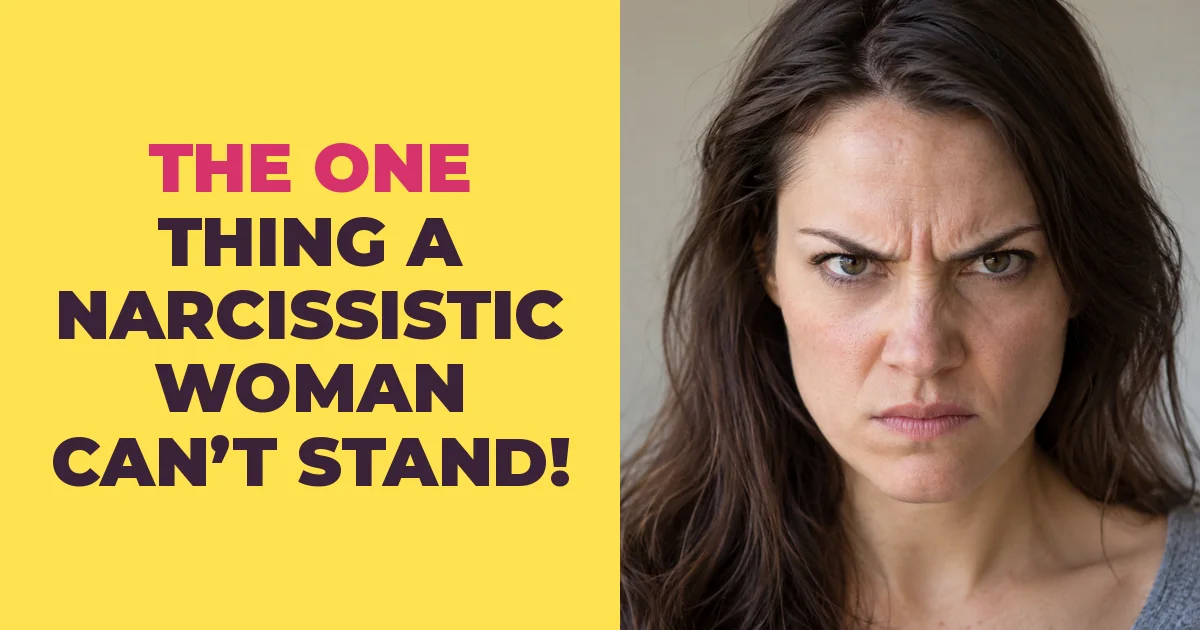
A narcissistic woman hides what rattles her. Mostly.
But you’ve caught the flashes. The sulk when the room stopped looking at her. The sharp little comment on the day you looked happy.
Maybe it’s your mother. Your sister-in-law. The friend who somehow always ends up the victim.
And you’ve spent years trying to keep her calm.
Here’s what sits underneath, and 6 ways it shows up. Because the one thing she can’t stand is you, steady, no longer chasing her approval.
Why approval is her oxygen
Under all that confidence, she needs other people to keep confirming she matters.
So everyone near her gets a job. Reflect her glow back to her, or count as a danger to it.
Researchers talk about a loud version of narcissism that hogs attention, and a quiet version that sulks, tallies slights and feels hard done by. Plenty of narcissists flip from one to the other.
Either way, the goal is guarding a self-image that cracks easily.
#1 Small things become big drama
One tiny comment can set off a full-blown crisis with a narcissistic woman.
You mention she’s twenty minutes late. By dessert she’s teary, telling the whole table, “I can’t believe you’d humiliate me like that.”
Why so big?
When narcissists feel insulted, research on threatened egotism links them to more aggression, and it lands on the person they hold responsible. A passing remark can count as that insult.
If shouting doesn’t work, she goes quiet instead. The pout. The chilly shoulder. A punishment on Thursday for something you said on Monday and forgot.
So every sentence gets checked twice before you say it. You end up saying sorry for things that weren’t yours.
One way to tell: her reaction keeps dwarfing whatever started it. And if her anger tips into threats, you’re allowed to walk out of the room.
Your comment was small. Her reaction wasn’t.
#2 Your good news ruins her day
Your happiness can feel like a personal insult to a narcissistic woman.
You tell her about the promotion. She says, “Must be nice,” then asks if you’ve seen her new kitchen tiles.
Or your birthday comes round and she’s started an argument before lunch.
Envy shows up a lot in narcissism, most of all in the touchy, quiet type. Your win dents her need to feel above you, so she makes it smaller, sours it or takes it.
She might sneer at your friends. She might borrow your idea and announce it as hers.
Slowly, good news stays in your pocket. Joy starts to feel like a bill that’ll arrive later.
A simple tell? Watch whose face goes blank when something goes right for you.
Then take your next win to someone who cheers. Loudly!
#3 She charms everyone but you

A narcissistic woman can be warm and funny with everyone else, then cold with you.
At the party she’s the one everyone wants beside them. On the drive home, silence. Or a rundown of what you did wrong tonight.
Research on narcissistic admiration and rivalry explains the flip. Early on, charm and bragging pull people in. Once you’re close, the rivalry side wins: colder, sharper, competing with you.
Her public image gets so much effort because applause is what holds her up.
Then your friends say, “You’re so lucky to have her.”
And you start questioning what you lived through. When no one buys your version, you go quiet.
Believe what happens in private. Find someone who has watched both of her faces.
The drive home counts. Maybe more.
#4 She thinks she’s a step ahead

A narcissistic woman’s cruelest moves can be planned long before you notice them.
That thing you told her in confidence last spring? It comes back at a family lunch, perfectly timed, in front of everyone.
Psychologists call this streak Machiavellianism: flattery, lies and patient scheming to come out on top. It often sits alongside narcissism, and plenty of difficult people rate high on more than one trait.
Everyone hears the version they like. Allies line up behind her without a fuss. In public, she almost never snaps.
So when you speak up, people picture someone calm and sensible. And they doubt you.
The plan only shows itself when it’s done.
What helps is dull. Tell her less about your private life. Get agreements down in a text or email, even tiny ones.
She can’t use what she never gets.
#5 Your no feels like an attack to her

To an entitled narcissist, an ordinary limit can feel like a slap.
You say you can’t drive her to the airport at 5am. Suddenly you’re selfish, cold, “not the friend I thought you were.”
Psychologists describe entitlement as a fixed belief that she’s owed more, and that rules are for other people. So a normal request from you hits her like an attack.
Your plans are supposed to bend around hers. Favours travel in one direction.
No wonder asking for fair treatment feels like declaring war.
A boundary helps here. It’s a popular term for a simple idea: it’s about your own actions, so her agreement isn’t needed. “If you shout, I’ll go.” Then you go.
She’ll probably push hard at first. Say it one time, follow through each time.
Her anger at your no doesn’t make the no wrong.
#6 Unbothered is the one thing she can’t stand

A calm, flat, unbothered reply gives her almost nothing to grab.
She sends the bait in the family group chat: “I guess some of us actually care about this family.” You answer, “Sunday at two works.” Nothing more.
Online this is called grey rock. It’s a popular name, not a clinical one, for being boring and unreactive when you can’t avoid contact.
The logic is simple. The less emotion she gets back, the less she has to play with, and the hook loosens over time. Some women go further and cut contact completely.
Brief, factual replies. Plans and times only. Written down where possible.
This isn’t about beating her. It’s about not handing her more fuel.
Grey rock isn’t safe for everyone, though, and cutting contact can raise the risk too. If she might escalate, a domestic violence service can help you plan either one safely.
She wanted a reaction. You gave her a rock.
Having feelings never made you the problem. You just learned to hand them to someone who used them.
Start small. One shorter reply. One piece of good news shared with someone kind. One evening that’s only yours.
She may never change. You don’t have to wait for her to.
7 Unsettling Things Narcissists Do When You’re Happy

You got the promotion. You finally felt good. And somehow, by dinner, you were the one apologising.
Narcissists rarely let your happiness stand on its own.
Your good news turns into a fight, a joke or a cold silence. Later you replay it, trying to work out what you did wrong. You start wondering if it’s safer to keep quiet about anything that goes right.
You’re not imagining it.
Here are 7 unsettling things narcissists do when you’re happy, and why your joy feels like a threat to them.
Why your joy feels like a threat
For a narcissist, self-worth has to be topped up from outside. The people around them get sorted fast: either a source of praise, or a risk to it.
So when the spotlight swings your way, something shifts.
Researchers who study narcissistic rivalry point to a harsh bit of math. Your gain counts as their loss. Plain ambition wouldn’t work like that. Rivalry does.
Keep that in mind as you read on. Moments that never made sense start to fall into place.
#1 Your good news gets a cold shrug

The person closest to you often gives your best news the flattest reaction.
You call from the car, buzzing. The job offer came through. They say “Oh. Nice.” and ask what’s for dinner.
That’s it. No question, no hug, no follow-up.
Why so flat? Research ties narcissism to envy, most of all the quieter, touchier kind. Your good fortune pokes at their need to feel superior, so a shrug shrinks your news before it can grow.
Over time, you start sitting on good news. You tell your sister first, or nobody at all. Joy starts to feel like something to hide.
Try this. Pay attention to who suddenly has nothing to say when you win. And who can’t stop asking questions.
Those people get your next phone call.
#2 The compliment comes with a sting
A narcissist can congratulate you and cut you down in the same breath.
You show them your new haircut. “It’s brave. Not everyone could pull that off.” You mention the weight you lost. “Good for you. Finally.”
It sounds like praise. It lands like a slap.
Researchers split narcissism into an admiration side and a rivalry side. Early on, charm does the work. The closer you get, the more the putting-down takes over, and your partner turns into your competitor.
So they can’t simply be glad for you. They have to win the moment back, even with a smile.
The result? You learn to tell good news in a smaller voice, trimming it down before they get the chance.
You probably smiled and said thanks. Of course you did.
#3 They take the credit for your win

Your success gets quietly rewritten until it somehow belongs to them.
At the family dinner, they tell the story of your degree. “I pushed her to finish. She’d have quit without me.” Everyone nods.
You were there for the late nights. They were asleep. You open your mouth, then close it again.
Psychologists call this entitlement. It’s a settled belief that they deserve more than anybody, and that the usual rules are for other people. Grabbing credit for shared work comes naturally. Grabbing yours is easy.
Ordinary limits feel like insults to them. Gently correct the story, and asking to be treated fairly can feel like you’ve declared war.
What helps is small and private. Keep your own record of what you did: the hours, the exams, the drafts.
Your effort was yours.
#4 Suddenly they’re the one who’s hurting

The moment you’re glowing, a narcissist may find a reason to be wounded.
You’re telling a friend about your trip. They go quiet, then sigh. Later: “Must be nice. Some of us never get a break.”
Now you’re comforting them. Your trip never comes up again.
Researchers describe a bold, showy kind of narcissism and a quiet, resentful kind, and plenty of narcissists flip between the two. The quiet version sulks when ignored, keeps score of slights and plays the injured party. Feeling wronged protects a fragile self-image.
So your happiness becomes their hurt. Then their letdown is somehow your fault, and you tiptoe around their moods.
Here’s a tell. See how they act when nobody’s looking at them. And check whether “sorry” ever comes without a “but”.
Whose moment was it supposed to be?
#5 Your big day turns into a fight
Birthdays, launches and graduations are exactly when the fights tend to start.
Twenty minutes before the party, they’re picking at you. The dress. The guest list. The tone you used in the car.
You walk in shaky, smiling for everyone. Nobody else saw a thing.
A pang of envy is human. What’s different here is acting on it, wrecking your day because your success threatens their spot at the top.
After a few ruined occasions, you might dread your own birthday, bracing for it weeks ahead.
Give your wins a second celebration with people who actually cheer. Dinner with two good friends counts. So does this weekend.
You’re allowed to have a good day!
#6 They mock whatever lights you up

Contempt is the eye-roll that greets the thing you love most.
You’ve joined a choir, started painting, found a running group. They mimic your excited voice in front of friends. “Ooh, look at me, I’m an artist now.”
Everyone laughs. Except you.
Psychologists call this contempt: sneering, sarcasm, mean little “jokes” about a partner. Couples researchers who followed marriages for years found it among the strongest predictors of a breakup.
Living with it, you shrink at your own kitchen table. So you stop mentioning things. Even the good things. Especially the good things.
Say it plainly, one time. Then see if respect ever comes back, or if the jokes just get quieter and meaner.
Your joy isn’t a punchline.
#7 You’re frozen out for being happy
Sometimes the punishment for being happy is simply silence.
You come home glowing from a great evening with friends. They don’t look up. They chat with everybody in the room but you.
Days pass like that. The house goes quiet in a way you can feel in your chest. Then they act as if nothing happened.
Psychologists who study being shut out say it threatens two basic needs: to belong and to matter. It can sting like a physical injury. That’s why it so often works.
So you apologise just to end it, even though you can’t name what you did. Next time, you skip the evening out.
What helps: let them know, once, that you’re open to a conversation. After that, carry on as normal. Don’t chase. Don’t beg.
Sounds familiar? Your evening was still good.
Your happiness was never the problem.
Notice who’s glad for you, and let them be glad. Say yes to the friend who asks how it went. Keep a little of your joy somewhere it can’t be taken. A note, a photo, a quiet walk.
That’s yours. It always was.
10 Ways Narcissists Try to Keep The Kids Away From You

Narcissists rarely announce a war over the kids. They wage it quietly.
You see it in small things. The phone call that goes unanswered. The child who comes home cold and won’t say why.
And you start wondering if you’re imagining it.
Someone with strong narcissistic traits often treats other people as sources of admiration or as threats. Your bond with the kids? That can look like a threat.
Here are 10 ways narcissists try to keep the kids away from you, and how to spot each one.
#1 They run you down in front of the kids

The easiest way to pull kids away is to chip at how they see you.
It rarely sounds like an attack. A sigh when your name comes up. “Well, you know how your mum gets.” A laugh in the car about your cooking.
Psychologists call this relational aggression. It hurts by attacking your standing, not your body, so it leaves no visible evidence.
That’s why it’s so hard to point at.
You end up feeling like you have to defend your name to your own children.
Don’t match it.
Stay steady and let time show the kids who you really are.
#2 The kids become their messengers
When a narcissist won’t talk to you directly, the kids get handed the message.
“Tell your mum I said she’s late again.” “Ask her why she thinks she gets the whole holiday.”
A nine-year-old ends up carrying adult anger home in a school bag.
Family systems research calls this triangulation. Instead of dealing with tension head-on, a third person gets pulled in to hold it.
Here, that third person is your child.
And you feel outnumbered in a conversation you never agreed to.
What helps? Speak only to the adult involved, in plain words. The kids aren’t the post office.
#3 The kids end up comforting them
A narcissist’s tears can turn your child into their caretaker.
Red eyes at the kitchen table. “I just miss being a family. Your mum didn’t want that.” A hug the child feels they have to give.
Research on the quieter, self-pitying side of narcissism describes this: playing the victim, feeling wronged, keeping score.
And the child becomes the confidant. Psychologists call it parentification, when a kid is made responsible for a parent’s feelings.
Guess who gets blamed for the sadness?
One way to tell: chores and kindness are normal. Carrying an adult’s secrets and grief is not.
That weight was never theirs to carry.
#4 Being the fun parent is a competition
To a narcissist, your good day with the kids can feel like their loss.
You do homework and bedtimes. They do pizza, late nights and “Your mum’s so strict, at my place there are no rules.”
Your rules quietly stop counting.
Researchers describe a rivalry side of narcissism. It competes instead of supporting, and protects status by putting others down.
So you start keeping your wins with the kids to yourself. The school play, the great weekend. Sharing them feels risky.
Share those moments with friends who are glad for you.
Parenting was never meant to be a scoreboard.
#5 Suddenly you’re the unstable one

Calling you unstable is one of the fastest ways to make the kids doubt you.
You cry once after a horrible phone call. By Friday the kids have heard, “Mum’s not well right now, she gets like this.”
When you object? “You’re too sensitive.”
That’s gaslighting. It works best where the power is unequal and one person controls the story, so their version wins.
Soon you’re the one apologising, even though you were the one hurt.
Write things down the day they happen. Then check your memory with someone outside it all.
Feeling shaken isn’t the same as being unstable.
#6 Your calls somehow never get through
Controlling when you can reach the kids is control over you, too.
The video call they “forgot”. The phone that’s somehow dead by seven. The tablet checked after each chat with you.
Then: “They were busy. Don’t make this a thing.”
Psychologists call this kind of pattern coercive control. Many small rules and punishments add up, which is why there’s rarely one big moment to point at.
Your world shrinks. You start asking permission just to say goodnight.
If it feels like control, a domestic abuse service can help you think through safety and planning.
Wanting to hear your child’s voice isn’t asking too much.
#7 Your own family repeats their script
Sometimes the pressure to back off comes from your own relatives.
Your aunt texts, “Just apologise so the kids can have some peace.” Your brother says you’re “tearing the family apart.”
Suddenly you feel alone in your own circle.
There’s a popular name for this online: flying monkeys. It’s an informal term for relatives or friends who carry out a manipulator’s pressure, often without knowing the full story.
The narcissist tells a version where they’re the wronged one, and loyal, kind relatives act on it. Researchers call the bigger pattern triangulation.
Don’t defend yourself to messengers. Keep the details private.
They’re reading someone else’s lines.
#8 Everything you say gets saved for later

Some narcissists play the long game, and your worst moments become their evidence.
You admit on a tired night, “I’m struggling.” Months later the school, or your sister, hears: “She told me herself she can’t cope.”
Calm voice. Concerned face.
Researchers call this style Machiavellianism, a trait that overlaps with narcissism. Flattery, collecting information to use later, and a clean reputation while working against you.
That’s why you often only see the plan once it’s finished.
Share less with them. Put agreements in writing.
Being honest about a hard day doesn’t make you a bad mum.
#9 Loving you starts to feel like betrayal

In some homes, a child loving both parents gets treated as disloyal.
Your son comes back from your weekend and won’t say he had fun. Later he whispers, “Dad gets sad if I like it at yours.”
No fun allowed. Not out loud.
Psychologists call this enmeshment: family bonds with blurred boundaries, where independence feels like betrayal. Closeness gets used to control.
So time with you starts to carry guilt, as if having his own plans were a crime.
One way to tell: close families respect a kid’s privacy and feelings. This kind punishes them.
Watching your child shrink like that hurts. Of course it does.
#10 It’s the kids’ choice, apparently
The final move is the cleanest: making the distance look like the kids’ own idea.
“I’d never keep them from you. They just don’t want to come.” Said kindly, in front of teachers and friends.
Who argues with that?
Narcissists often invest heavily in a polished public image, because admiration feeds their self-worth. Behind closed doors can look very different.
So friends see someone reasonable, and nobody believes you.
Trust what you’ve seen at home. Talk to someone who has seen both sides.
A clean story isn’t the same as a true one.
If you saw your life in this, that’s not you being paranoid. It’s a pattern, and patterns can be named.
Manipulation works through isolation, so getting support works through connection. Start with one person who hears the full story.
Your bond with your kids is still yours.