
Month: October 2026
What a Narcissist Does the Second You Fall Apart That a Loving Partner Never Would

You finally cracked. Maybe it was the bills, the job, the long week, or one more cold word. The tears came and wouldn’t stop.
And the person beside you looked at you like you were an interruption.
Narcissists rarely rush to comfort.
Often they rush away from your pain, or turn it into something about themselves. If you’ve ever felt more alone with them than without them, that’s why.
Here’s what a narcissist does the second you fall apart, and what a loving partner would do instead.
Why your pain is inconvenient
To someone with strong narcissistic traits, the people close to them often have one job: mirror them, looking good.
Their self-worth isn’t homemade. It’s borrowed from other people’s approval, so anyone close is either feeding it or endangering it.
Now picture you, crying, needing something.
In that moment you aren’t a mirror. You’re a request. And to them, a request feels like a nuisance. Everything below grows from that.
#1 They change the subject, fast
Your tears are often met with a quick swerve to another topic.
You’re at the kitchen table, shaking, finally saying how bad today was. They nod once, eyes on the counter. Then: “Did you call the plumber?”
Or they pick up their phone. Or launch into their own awful day.
Anything but the thing in front of them.
Here’s what stings. Research on low empathy suggests many narcissists get what you’re feeling perfectly well. The understanding is there. The action isn’t.
In studies, when they were nudged to imagine the other side, their empathy rose. That sounds less like can’t and more like won’t.
So the lesson sinks in. You cry in the car now, or under the noise of the shower. They’re no longer the place you bring it.
Do they ever notice how quiet you’ve gone?
#2 Suddenly it’s all about them

Your worst night can become their stage within minutes.
You say you’re exhausted and can’t do this anymore. They sigh: “Do you think this is easy for me?”
Or they go quiet and wounded, waiting for you to ask what’s wrong with them.
Now you’re comforting them, your own face still wet. There’s no room left for your tears, so they dry up.
Psychologists describe a bold, showy version of narcissism and a quieter, touchier one. Many flip between them.
The quiet version broods when ignored and acts hard done by. Underneath, both are guarding a self-image that bruises easily.
So on your own worst day, you’re the one managing their mood, and somehow at fault that they feel let down.
One way to tell: notice what happens when the spotlight drifts off them. Your crisis was that moment. How did they handle it?
#3 Your tears feel like an attack to them

To a narcissist, your pain can sound a lot like blame.
You said, quietly, “I really needed you tonight.” Somehow that turned into a fight, and now you’re the problem.
“So now I’m the bad guy?” Then the whole evening is about defending yourself instead of what broke you.
Why? Psychologists studying threatened egotism saw that a bruised ego in a narcissist tends to hit back harder, and at the person it blames.
Your hurt can feel like that bruise. If you’re sad, maybe they failed you, and that idea stings their image. So they strike first.
Soon you’re checking every feeling before it leaves your mouth. You say sorry for crying. Sorry for things that were never yours to own.
Anger itself isn’t the red flag. It’s how big it gets, and that it aims straight at whoever got hurt.
Your tears were never the crime.
#4 You’re told you’re too sensitive

When you fall apart, a narcissist may simply tell you it isn’t real.
“You’re too sensitive.” “It wasn’t that bad.” “Here we go again.”
By the car ride home, you’re not upset about what happened anymore. You’re upset with yourself for being upset.
Psychologists call this gaslighting. The aim is to make you second-guess what you saw and felt, until their story is the only one left standing.
It thrives when the balance is lopsided. You trust them. They hold the pen. Slowly, you’re rewritten as the dramatic one.
So you say sorry for getting hurt.
One thing that helps: jot it down the same day, in plain words. What was said. How it felt. Then run it past a friend who isn’t part of it.
Your feelings never needed their permission.
#5 A loving partner moves toward you

A loving partner may not know what to say, but they stay.
They put the phone face down and sit on the floor next to you. They bring tea you won’t drink. They ask, “What do you need right now?” and wait for the answer.
Maybe they fumble and say the wrong thing.
Nobody’s perfect at comfort.
That’s the difference worth knowing. Clumsy but trying is one thing. Seeing your pain clearly and walking past it is another.
With a narcissistic pattern, what you need tends to arrive as a bother. With someone who cares, it arrives as something they want to help with, even badly.
Don’t decide off one rough night, though. Watch across months. Who keeps showing up when you’re low?
You already know.
#6 Your pain becomes their ammunition
What you confess while crying can come back later as a weapon.
That night you admitted you feel like a failure at work? Two weeks later, mid-argument: “No wonder your boss doesn’t rate you.”
It lands right where it hurts. On purpose.
Low empathy doesn’t always mean they missed your pain. Often they clocked it perfectly, filed away the sore spots, and saved them for later.
This is what you lose, beyond comfort. Your soft places stop feeling safe anywhere. You go quiet about feelings and start questioning whether yours even make sense.
So quit handing your hurt to someone who turns it on you. That isn’t coldness. It’s protection.
Bring your feelings to the ones who answer them with care. A friend, a sister, a support group. Start with one.
Your heart was never meant to be their arsenal.
If you saw yourself here, it doesn’t make you weak or too much. Falling apart is human. Being met with coldness was the unfair part.
Next time it all gets too heavy, notice who moves toward you. Then let that person a little closer.
Wanting comfort was never too much to ask.
10 Ways Narcissists Talk Themselves Into Being The Good Guy

Narcissists rarely see themselves as the bad guy. Even when you’re the one left hurting.
You’ve watched them hurt you, then stroll off looking calm. Even proud.
Friends say how lucky you are. The group chat loves their posts. And you’re left wondering if you’ve misread the whole thing.
You haven’t.
Here are 10 ways narcissists talk themselves into being the good guy, and how to spot each one.
Why the story matters so much
For many narcissists, feeling worthwhile depends on how others see them.
That picture breaks easily. Some guard it by showing off. Others sulk and nurse a grudge.
Either way, any hint that they did wrong feels like danger. So the story gets bent until they walk away spotless.
#1 They always end up the injured one
Point out one thing a narcissist did, and the apology somehow ends up coming from you.
Last night’s snide remark about your cooking. You mention it gently, just once.
Ten minutes later it’s ‘How dare you accuse me,’ then a full list of your own faults. Then the long, wounded silence.
Now you’re comforting them.
There’s a research name for this move: DARVO. Deny, attack, then swap who’s the victim and who did the harm. Studies found it pushes the one who spoke up to blame herself more, so the talk just stops.
What helps? Go back to your first point, calmly. Skip the bait of each new accusation.
You weren’t wrong. You were redirected.
#2 Outsiders get the charming version
The warmest version of a narcissist tends to be reserved for everybody else.
At the barbecue they’re the life of it, laughing, refilling glasses. On the drive home, nothing. Or a lecture.
Their feed is all family snaps, charity runs and soft quotes about kindness.
‘You’re so lucky,’ your friends say.
Psychologists talk about impression management, the effort we put into how we come across. For many narcissists, praise keeps their self-worth afloat, so the image gets polished hard. Every compliment proves they’re one of the good ones.
Meanwhile, those around you don’t buy your side, and your grip on what happened starts to wobble. Put more weight on what goes on when the door shuts.
Strangers get the show. You get backstage.
#3 Their job title does the talking

An impressive job can act like a glowing reference they wrote for themselves.
The promotion. The bonus. The meeting where they ‘rescued everyone’. Each retelling gets bigger.
Inflating achievements is a familiar part of the narcissistic pattern. Why? When worth hangs on what others think, bigger achievements bring more admiration.
Back home, what you need gets treated like a nuisance.
‘Not now. I manage twelve people, in case you forgot.’
Look at months of behaviour, not the CV. Being good at work tells you nothing about kindness over dinner.
Twelve people report to them. That doesn’t make them right about you.
#4 Cruel words get called honesty
Brutal honesty is often plain cruelty wearing a respectable excuse.
A dig about your weight, with friends listening. You go quiet. ‘What? I’m only being real. You’re way too sensitive.’
Watch where the ‘truth’ tends to hit. Usually the soft spots you once confided.
Studies on empathy found something telling. Narcissists show less of it by default, yet more when asked to picture your side. That points to choice, not inability.
Researchers also describe a separate trait, everyday sadism, in a smaller group who enjoy small cruelties for their own sake. Not every narcissist has it.
One way to tell teasing from harm. Real teasing stops the moment you ask. And you can stop explaining your pain to someone who uses it.
Your soft spots aren’t target practice.
#5 Someone else always looks worse
A narcissist shines brightest beside someone they’ve just cut down.
Your sister is ‘a disaster’. Your best friend ‘can’t keep a job’. Their ex-boss? ‘Jealous.’
The list never ends.
Research splits this into two drives, admiration and rivalry. The first wins people over with charm. The second protects status by belittling whoever gets close to the top.
At the start, you got the charm. Later the rivalry often wins, and anything you achieve gets counted against them. Good news earns a sour look, so you start keeping it quiet.
Take your wins to friends who light up for you.
Your win was never their loss.
#6 In their head, they’re misunderstood
Plenty of narcissists feel secretly superior and deeply misunderstood at the same time.
Not loud? Look for the quiet version. Sulking when ignored. A mental tally of every slight.
‘I’m wasted on these people.’
Researchers describe a touchy, quieter side of narcissism. It shields the same brittle self-image as the showy side, only by pulling back instead of showing off.
In their head, they’re simply better than everyone around them, just unappreciated. Living with that, you learn to tiptoe around their moods.
A quick check: has an apology ever come without a ‘but’?
‘Sorry, but…’ isn’t sorry.
#7 Your memory gets rewritten

Once you doubt your own memory, the other person’s version of events wins by default.
‘That didn’t happen.’ ‘I never said that.’ ‘You’re mixing things up again.’
The name for it is gaslighting. It works best where the power is lopsided. You trust them, they steer the story, and the past quietly changes shape.
Mixed-up memories happen to everyone. This is different. They deny what you plainly saw until your own eyes feel unreliable.
Maybe your phone is full of notes now, kept as proof. Maybe you say sorry after they hurt you.
Jot things down on the day. Run it past a friend who isn’t involved.
Your memory isn’t the problem.
#8 Their faults end up on you
What a narcissist accuses you of often describes what they’re doing themselves.
They yell from the hallway that you’re ‘always angry’. They drain the joint account, then call you greedy.
Psychologists call this projection. Spotting the flaw in you spares them from spotting it in themselves.
Think about it. If you’re the greedy one, they stay the hero.
So you end up fighting off charges that were never true, while the real problem slips quietly out of sight.
When the same accusation keeps coming, read it as a clue about them. Say what happened, one time, and leave it.
Ever been blamed for the very thing they did?
#9 Your fair requests feel like attacks

To an entitled narcissist, a perfectly normal request can land like an insult.
You ask for the money back. Or for help with the dishes. Suddenly you’re ‘nagging’ and ‘ungrateful’.
Studies of entitlement describe a fixed sense of deserving extra, with rules meant for other folks. So an everyday limit gets taken as a personal slight.
Inside that belief, they’re the reasonable one.
Bit by bit, your side of the scale gets heavier. Even asking for an even split can feel like declaring war.
Keep your own tally of what goes out. And stop handing over forgiveness before anyone has earned it.
Asking for your own money back is just maths.
#10 Old favours get called in
A narcissist’s favours rarely come free, and the invoice often turns up later.
They gave you a lift to the airport three years back. It comes up every time you say no.
‘After everything I’ve done for you?’
One popular nickname for this is FOG, short for fear, obligation and guilt. Treat it as handy shorthand rather than a diagnosis. It sits close to what researchers describe as coercive control.
Old sacrifices get waved around until refusing costs more than giving in. Soon yes comes out automatically, and keeping them happy feels like your task.
Take a beat before you reply. Their disappointment is theirs to carry.
A gift with strings was never a gift.
Spotting the pattern won’t change them. It does mean the next ‘You’re too sensitive’ lands differently.
The gap between the public charmer and the person at home was real. Write down what happens, tell one person who has seen both, and trust what you lived through.
7 Cruel Things Narcissists Do Right After You Have Forgiven Them

You forgave them. You meant it.
You let the hurt go, made up in the kitchen, maybe even laughed about it. Then, within days, something cold crept back in.
For many narcissists, your forgiveness doesn’t close the chapter. The calm after a fight often just resets the clock.
And you’re left wondering if the apology ever happened at all.
Here are 7 cruel things narcissists do right after you’ve forgiven them, and why they do it.
#1 The same thing happens again
The promise to never do it again often lasts just long enough to bring your hope back.
Sunday, it was tears at the kitchen table. “I’ll never do that to you again. I swear.” By Thursday, the same comment, the same tone, the same slammed door.
Why so fast?
Research on the cycle of abuse describes a loop that repeats: pressure builds, there’s a blow-up, then sorry and a quiet spell. That quiet spell brings your hope back, so the next blow-up catches you off guard.
So your whole life starts running on their schedule, waiting for the good part to finally stick. It rarely does.
One thing that helps: put a small mark on the calendar each time it happens. A few months in, the pattern is there in ink, even when your memory wobbles.
The calendar shows the loop your hope keeps hiding.
#2 Your pain is suddenly old news

Once you’ve forgiven them, your hurt becomes a subject they’re officially done with.
You bring it up again, quietly, in the car on the way home. They sigh, turn up the radio and ask what’s for dinner, like you just mentioned the weather.
“Are we seriously still on this?”
Here’s what stings. Studies found that narcissists tend to show less empathy on their own, yet more when they’re asked to imagine your side. So it looks more like a choice than a missing ability.
Often they can see your pain. They just don’t act on it.
Over time, you stop telling them how you feel at all. Why hand someone a wound they’ll only shrug at?
Bring your hurt to people who answer it with care. The friend who listens. The sister who texts back. They’re worth finding.
#3 That promise never happened

Sometimes the promise they made to win you back simply vanishes from their memory.
You mention it, gently. “You said you’d stop texting her.” They frown like you’ve invented it. “I never said that. You’re way too sensitive.”
And just like that, you’re the problem.
Psychologists call this gaslighting: getting you to doubt your own memory until their story is the one left standing. It works best when they hold more power and you trust them.
Two people can honestly recall things differently. Gaslighting is insisting you didn’t hear what you heard, until you stop trusting yourself.
The result? You begin jotting down dates and words, just to have proof. You say sorry for hurts that were done to you.
Make a note right after it happens. Run it past one person outside the relationship. Your memory is fine. Their story just needs you to doubt it.
#4 Your old mistake comes back out
Raise any new hurt, and the one mistake you ever made gets dragged back into the room.
Maybe you missed their work dinner three years ago. You apologised. You made up for it. None of that counts now.
You point out they broke their word, and suddenly it’s “Well, what about the time you…?” Within minutes you’re defending yourself, and the thing they did has quietly disappeared.
Psychologists have a name for this move: DARVO. They deny it, go on the attack, then flip the roles so they’re the one who’s been wronged. Research found it leaves the person who spoke up blaming themselves more, so the talk just ends.
When it feels safe to, name what they did and steer back to it calmly. Skip the counter-charges. They’re a detour.
If raising it makes things tense or unsafe, let it go for now.
The old mistake was settled. Theirs wasn’t.
#5 Asking for anything makes you difficult
Ask for one small thing after a fight, and suddenly you’re high maintenance.
A text when they’ll be late. Help with the dishes. Ten minutes of their attention without a phone in the way. That’s all.
“God, you’re so needy. Nothing’s ever enough for you.”
It can land right after you’ve given them another chance.
Psychologists call this entitlement: a fixed sense that they’re owed more than everyone else. To them, everyday limits feel like an insult, so a fair request lands like an attack.
You end up pouring in more and getting back less. Even asking for an even deal feels like starting a war.
One quiet fix: jot down what you give for a few weeks, just so you can see it. And you’re allowed to need things. Even after a fight.
#6 They punish you for being right

When a narcissist feels corrected or exposed, the payback may land squarely on you.
Not on the spot, though. Days later, when you’ve finally relaxed.
A cutting remark at your friend’s birthday dinner. A sudden explosion over how you loaded the dishwasher. Cold fury over a comment you’d long since forgotten making.
Research on threatened egotism showed that when narcissists feel insulted, they get more aggressive, and they aim it at whoever they blame for the sting. Being the one who called them out can be enough.
So you start checking every sentence before you say it. You say sorry for things you never did.
If the anger ever turns into threats or smashed things, walking out of the room is fair, and so is reaching out for help.
Being right was never your crime.
#7 The warmth switches off again

The sweet spell after you forgive them is often what keeps you hooked.
For two days, they’re the person you fell for again. Coffee in bed. Inside jokes. A hand on your back in the supermarket queue. You let yourself relax.
Then, with no warning, the cold is back.
Psychologists call this intermittent reinforcement. When warmth arrives at random, between cold spells, it grips harder than warmth you can count on. Slot machines work on the same pull.
So you try harder and get less back, and one sweet weekend makes a rough month seem fine. You wonder what you did to lose them. Nothing!
For a month, count the good days and the bad ones. Then judge the relationship by the usual day, not the best one.
Let the tally speak louder than the coffee in bed.
If the repeat hurts, the shrugged-off pain, the vanishing promises and the warmth that switches off sounded like your last month, you weren’t imagining it.
Forgiving them was generous. What they did with it says a lot about them and nothing about you. You can keep the kindness and still see clearly.
Start with one person you trust, and tell them the whole story.
Why Saying Nothing Is One of the Most Powerful Moves You Can Make With a Narcissist

Your tears. Your anger. That long, careful text you sent at 2 a.m. To a narcissist, all of it is useful.
One jab about dinner, and suddenly it’s a two-hour fight. The more you try to be understood, the worse things get.
You explain. They bend it. Then, somehow, you’re the one apologising.
So a thought has crept in: what if you just stopped talking?
Here are 7 reasons why saying nothing can be one of your strongest moves with a narcissist, and how to do it without going cold inside.
Why less works
Manipulation runs on material. What you feed it is your reactions.
Grey rock is a popular nickname, not a clinical term. It means staying dull on purpose when contact can’t be avoided. Short answers about logistics. No taking the bait.
The logic is simple. Give them a flat surface and there’s little to grip.
This is about a calmer life, not a trophy. With some people, going quiet can raise the risk, so trust your gut about your safety.
#1 They’re fishing for your reaction
What a narcissist wants most from a fight is your reaction.
It often starts tiny. A jab about dinner. A remark about your mum, timed for the moment you sit down.
Take the bait, and the night belongs to them.
You defend the lasagne. Your voice rises. Now they can sit back: “See? This is why nobody can talk to you.”
Each big response gives them fresh ammunition. A flat “Okay” gives them close to none.
That’s grey rock in action: boring, brief, unbothered. At first it may itch, like a pull to jump back in and correct every word.
Let it itch. They have nothing to hold.
#2 Your hurt can be their entertainment

For some difficult people, seeing you uncomfortable is a prize all by itself.
Researchers have studied a trait they call everyday sadism, a small-scale enjoyment of other people’s discomfort. They added it to three darker traits to form a “Dark Tetrad”.
A joke aimed at your sore spot. You wince. They grin.
Your weight comes up at a dinner with friends, and they smirk as your cheeks burn. “Relax, I’m kidding.”
Want a quick test? Friendly teasing ends when you say stop. This keeps going.
Watch them when you’re upset. If your distress seems to lift their mood, a duller response gives them less to savour.
No wonder it can feel like being hunted instead of loved. Of course you’ve learned to keep your face still.
That still face is armour.
#3 They file away your weak spots

Many narcissists can see what you feel and still don’t act on it.
You admit you’ve been lonely lately. They nod. Then they start talking about their day.
Weeks later, in a row about the dishes: “No wonder you’ve got no friends.”
There it is. Your confession, turned into a target.
Studies suggest a narcissist’s default empathy is low, but it rises when they’re asked to picture your side. That looks less like can’t and more like won’t.
Slowly, you stop sharing. You start wondering whether your hurt even counts.
So stop handing your tender places to someone who aims at them. Give them to people who meet your feelings with care.
Their file stays empty now.
#4 Defending yourself feeds the accusation

The most outrageous accusations often describe them better than they describe you.
“You’re so selfish.” From the one who ditched your birthday dinner for the pub.
“Stop yelling!” Delivered at full volume.
Psychologists call this projection. Pinning a flaw on you saves them from spotting it in the mirror.
So you defend. And defend. Against things you never did.
Meanwhile, the thing you actually wanted to discuss slips out of sight.
The fix is almost dull. One calm line: “That’s not true.” Then silence.
If the same accusation keeps returning, ask yourself who it really fits. A lie doesn’t earn a speech.
#5 Correct them and pay for it later
To a narcissist, a tiny correction can feel like an all-out attack.
You point out, softly, that the party was Saturday, not Friday. Their expression turns to ice in front of everyone.
Days later, from nowhere, you’re paying for a comment you’d forgotten making.
Research on what’s called threatened egotism found that when narcissists feel insulted, their aggression goes up, and it lands on whoever they see as the cause.
Why? A correction dents an image they’re desperate to guard.
So you trim every sentence before it leaves your mouth. You say sorry for things that weren’t your fault.
Here, silence can be the safest option. If something truly needs saying, keep it short and factual. If it isn’t safe, let it go. And if anger turns into threats, leave the room.
Winning the Friday argument isn’t worth your peace.
#6 How you end up apologising to them
One fair complaint can end with you apologising for having it.
You ask why they didn’t call when they ran three hours late. Minutes later: “Wow. Accusing me, after the week I’ve had?”
Next come the tears. Or the sulk.
And now you’re the one doing the comforting.
Researchers call this DARVO: deny, attack, then reverse who’s the victim and who’s the offender. Studies found it makes the person who raised the issue blame themselves more. No wonder the conversation shuts down so quickly.
Over time, you quit bringing things up.
Arguing every counter-charge keeps you on their ground. State the original issue once. Then stop.
Every problem you swallow is one they never have to face.
#7 Your quiet is not their silent treatment

Choosing quiet is a world away from their silent treatment.
Theirs looks like days of nothing after a disagreement. Chatting to everyone at the table but you. Strolling back in like nothing happened.
That silence is a punishment. Being ignored threatens the deep need to belong and to matter. It can sting like real pain, which is why many cave just to end it.
Yours is different.
Say “I’m happy to talk when things are calm” once. Then carry on with your day. Taking time to cool down, and telling them so, is healthy.
No chasing. No pleading. No frosty glare designed to make them suffer.
The first weeks of reacting less can feel rough. For many, calm builds with time.
You’re not punishing anyone. You’ve just stopped feeding the fight.
You don’t need the perfect speech that finally gets through. One calm “That’s not true,” then quiet, can do more than an hour of explaining.
Sometimes the strongest answer is a short one. Sometimes it’s none.
Your feelings still matter. Take them to the people who meet them with care, not the one who files them away.
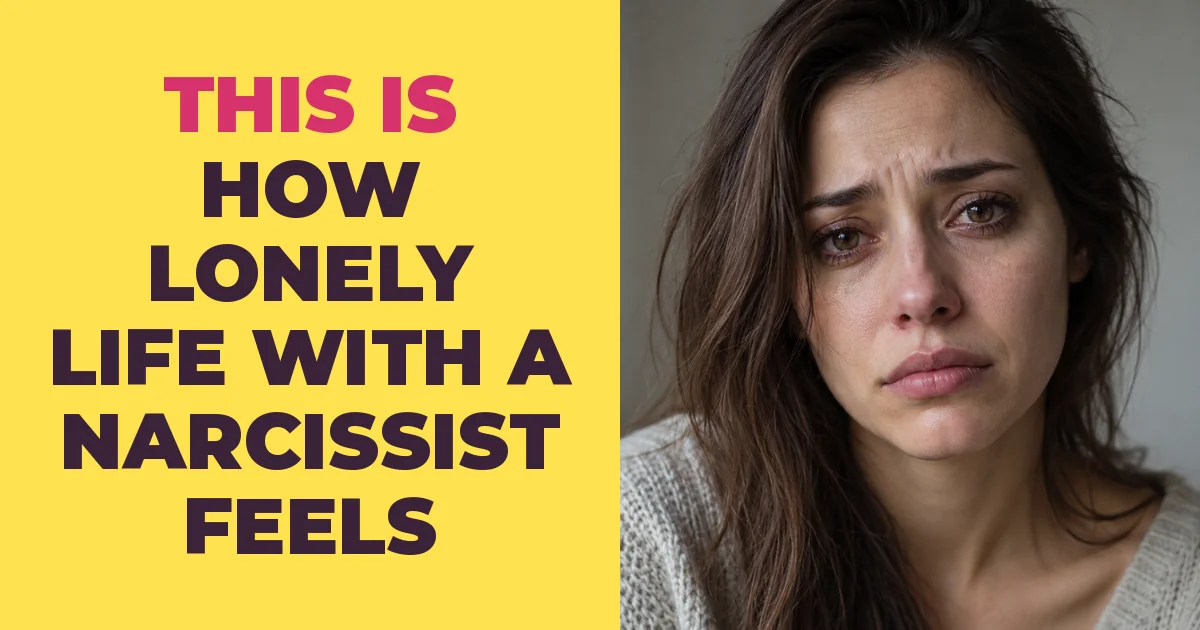
THIS Is How Lonely Life With a Narcissist Really Feels

Narcissists can make a shared home feel like an empty one.
You cook for two. You share a bed, a sofa, a car, a calendar. And still, most nights, you feel completely on your own.
Friends see a couple. You see a person who’s in the room but never really with you.
That ache is real.
Here’s how lonely life with a narcissist really feels, in 7 ways you’ll probably recognise, and why it happens.
Why it feels so empty
A narcissist often needs other people to keep telling them they matter. So whoever’s closest gets treated as a mirror, or as a threat.
Either way, you never get to be a real partner.
There’s a second layer. Cutting you off from others helps manipulation work, and getting reconnected helps you get better. So the loneliness isn’t a side effect. It’s part of the setup.
#1 You feel alone in a full house

The loneliest place in your home can be the sofa right next to them.
You tell them about the awful meeting, the strange call from your sister, the lump in your throat all afternoon. They nod. Then they ask what’s for dinner.
Or they sigh: “You’re too sensitive.”
Research on narcissism and empathy suggests many narcissists do pick up on your feelings. What’s missing is the follow-through. Kindness shows up mainly when it pays off for them.
Bit by bit, you stop bringing your feelings home. You start doubting whether your reactions even make sense, since nobody on the other side of the sofa seems to think so.
This week, bring one feeling to somebody who answers it with care. A friend, a sister, a coworker who asks twice. Notice the difference.
Being heard can feel like finally putting down a heavy bag.
#2 Everyone else gets the nice version

Everyone else meets the charming one, and you live with the other one.
At the party they’re funny, warm, topping up drinks. In the car home, nothing. Or a quiet list of everything you did wrong.
Then your friend texts: “You’re so lucky.”
Why the show? Narcissists often work hard on how others see them. Being admired props up how they see themselves. At home, the performance can drop.
Sure, most of us put on better manners for company. The gap here is bigger. Kind out there, cruel in here.
That gap is lonely in a way that’s hard to put into words. When nobody believes you, your own memory starts to wobble. Maybe you’re exaggerating? Maybe it’s you?
It isn’t. What happens once the front door shuts is the real relationship.
#3 Silence is their favourite punishment
Silence can be used as a punishment, and it hurts far more than it looks.
A small disagreement on Sunday. By Monday they’re chatting to their mum on the phone, laughing at the TV, thanking the delivery driver. Not you. Days go by, then they stroll back in as if nothing happened.
Research on being ignored explains why it cuts so deep. Being shut out hits your need to belong and to count, so it can hurt like physical pain.
No wonder you want it to stop.
You say sorry simply to make the quiet stop, even when you have no idea what you did. Then you steer around any topic that might set it off again.
One thing that helps: tell them one time, calmly, that you’re ready to talk whenever they are. Then go and live your day. No chasing. No begging. No pacing outside a closed door.
Your peace was never theirs to switch off.
#4 Your world quietly gets smaller

Your world can shrink so slowly that you barely notice it happening.
It starts with a sigh when you mention a night out with friends. Then a sulk. Then, “You’d rather be with them than me?” Soon it’s easier to just stay in.
Psychologists call the wider pattern coercive control. It’s built from lots of little rules, about friends, money and where you go, each with a small penalty attached. Together they chip away at your freedom.
There’s rarely one big moment. What would you even point to?
So you catch yourself asking permission for ordinary things. Coffee with a coworker. A long phone call with your cousin. New shoes.
A little money and a few phone numbers that are only yours can make a real difference. A domestic abuse service can also talk through a safety plan with you.
Your life was meant to be bigger than this.
#5 Your good news lands with a thud
Sharing good news with a narcissist can start to feel strangely risky.
You got the promotion. You come home buzzing. They barely look up: “Huh. Hope they’re actually paying you for it.” And that’s the end of that.
Research finds envy shows up a lot in narcissism, most of all in the quieter, more fragile form. When you do well, their need to feel above you takes a hit. So your win gets shrunk, taken over or ruined.
Ever had a fight picked on your birthday? Exactly.
Over time you start hiding your wins. You downplay the raise, skip the story about the compliment from your boss. Happy moments start to feel like something to brace for.
One way to tell: watch whose face falls flat when things go right for you. Then share your news with the friends who light up.
You’re allowed to be proud out loud!
#6 Their moods run the whole house
Living with a narcissist often means living by the weather of their moods.
You hear the car in the drive and you already know. The keys hit the counter a little too hard. Today’s a bad day.
Psychologists describe narcissism in two flavours, a loud one and a quiet one, and plenty flip between them. Bold and charming one evening. Sulky, tallying every slight, the next. Each guards a shaky sense of self.
And somehow you end up blamed for their disappointment.
So you walk on eggshells. When anger can come out of nowhere, your body learns to stay braced, and to smooth things over by going along. You say yes before you’ve even thought.
Always scanning their mood leaves little room to notice your own. Next time you feel that jolt, pause before you answer.
What do you actually want right now?
#7 You’re the mirror they check themselves in

With a narcissist, you can end up feeling like you exist just to reflect them back.
They retell how they saved the big deal at work, and you nod in all the right places. You add one line about your own week. They’re already back to the deal.
“Did you see how impressed everyone was with me?”
Why? A narcissist’s sense of worth often leans on praise from outside. So the person closest to them can become a source of admiration rather than someone to truly know.
That’s how you can share a room every night and still feel unseen. You’re there to reflect. Rarely to be looked at.
One way to tell: judge by the pattern over months, not by one sweet evening. And expect the behaviour to stay the same rather than waiting for the day they finally look back at you.
A mirror only shows them. You have a face of your own.
If this read like your own diary, the loneliness finally has a shape. And a shape is something you can see clearly, even on the tired days.
Start small. One trusted person, one honest conversation, the full story told to someone who listens. That’s often where things begin to change.
You were never too much. You were just alone with it for too long.
If You Are Staying With a Narcissist This Is the One Way to Keep Your Happiness Safe

Narcissists rarely wreck your happiness in one big blow.
They chip at it. A sigh when you laugh too loud. A sour face at your good news. A cold night after a warm one.
And slowly you notice the only time you feel calm is when they’re out of the house.
Maybe you’re not ready to leave. Maybe you can’t. Maybe you simply haven’t decided. That’s your call, and nobody else’s.
But while you stay, there’s one way to keep your happiness safe: stop handing it to them. Here are 7 ways to do exactly that.
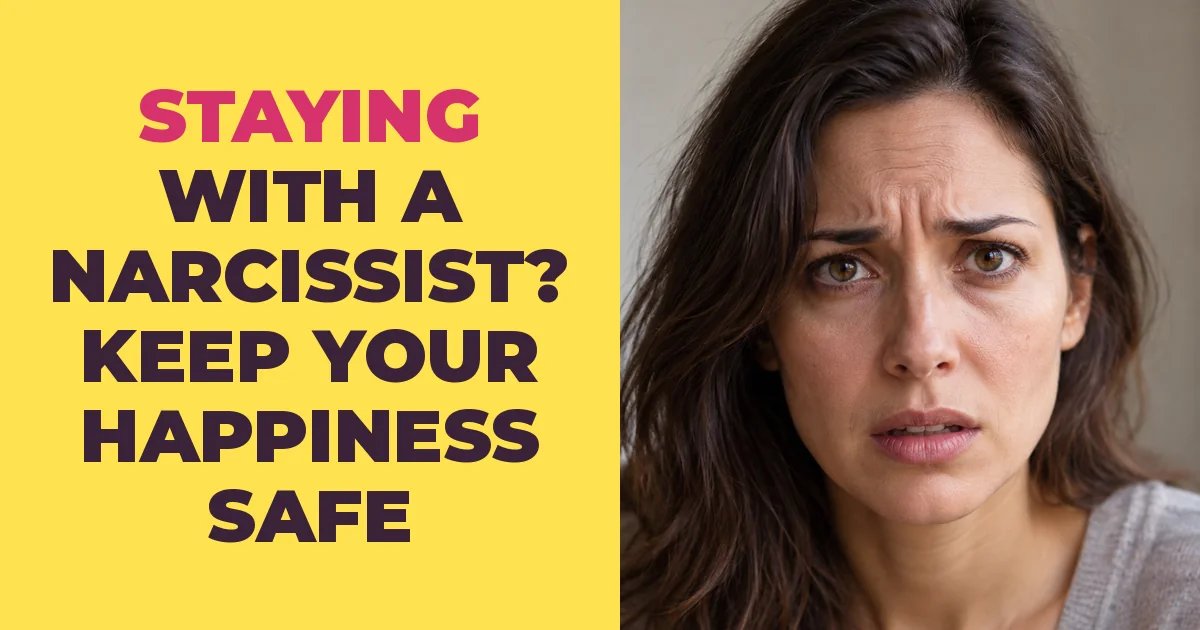
Why your happiness keeps slipping away
A narcissist’s sense of worth depends on what they get from the outside.
So the people closest to them get sorted into two boxes: a source of admiration, or a threat to it. Your joy can easily land in the second box.
Your needs start to look like an inconvenience.
If your happiness depends on their mood, they hold the key. Keeping it safe means moving it somewhere they can’t reach.
#1 You check their mood before your own

Living with unpredictable anger teaches your body to stay on guard.
You hear the keys in the door and you already know. Heavy steps mean a bad night. Humming means you can breathe.
Psychologists call this hypervigilance. Its partner is fawning: agreeing, soothing and saying yes before you’ve even thought about it.
It keeps the peace, but it leaves you exhausted.
And you lose track of what you actually want. All your attention goes to the weather on their face.
Next time the alarm goes off, slow down and notice it. Then practise saying no somewhere low-stakes, like turning down a coffee you don’t want.
Whose mood did you check first today?
#2 Expect them to stay the same

Waiting for a narcissist to change keeps you waiting.
You tell yourself it’ll get better after the move. After the busy season. After the holidays.
Then the same thing happens. They expect special treatment, sulk when it doesn’t come, and snap, “Why are you making this about you?”
This is a pattern, and patterns like this tend to stay. Judge them by the pattern over months, not by one sweet Sunday.
Hard to hear. I won’t sugar-coat it.
But there’s freedom in it. Once you expect the behaviour to stay the same, you stop pouring your energy into a project that was never yours.
Your needs were never an inconvenience. They just got treated like one.
#3 Your good news makes them sour

For a narcissist, your happiness can feel like a threat to their place on top.
You get the promotion and they shrug: “Good for you, I guess. Who’s cooking now?”
Your birthday dinner turns into a fight in the car. Your best friend becomes “a bad influence” the week you two get closer.
Why? Envy is common in narcissism. Your success pokes at their need to feel superior, so they shrink it or spoil it.
So you start hiding good news. Happy moments begin to feel risky.
What helps: tell your wins to people whose faces light up. And pay attention to who goes silent the moment things go well for you.
Your joy doesn’t need their permission.
#4 A boundary is something you do

A boundary is what you will do to protect yourself, not a rule for them.
“Boundaries” is a popular word, not a clinical one. It matters most when many small rules and punishments start to shrink your world.
“Stop yelling at me” is a request. They can ignore it, and a narcissist often will.
“If you shout, I’ll leave the room” is a boundary. It runs on your actions, so it doesn’t need their agreement.
Expect pushback. Expect guilt too, at first.
Say it one time. After that, follow through, quietly, without a speech.
Over time, that steady follow-through brings back something they kept taking: your self-respect.
#5 They see your pain and look away

Many narcissists can read your hurt perfectly well and still decide it isn’t their problem.
Tears at the kitchen table, and they keep scrolling. Eventually: “Are we eating or not?”
Another night it’s an eye-roll and “God, it was a joke. Lighten up.”
Research on empathy in narcissism found it sits low by default but climbs when they’re nudged to picture your side. So it looks more like a choice than a missing skill.
Over time you go quiet. You second-guess whether you should even be upset.
Your hurt isn’t a lesson for someone who keeps notes on it. Bring it to the people who lean in: a sister, an old friend, the group chat that actually replies.
Your tears were never the problem.
#6 Guilt is the lever they pull
Guilt is often the leash that keeps you saying yes.
“After everything I’ve done for you.” “Fine, I’ll just do it myself.” Then a heavy silence that lasts until you cave.
Some call this FOG. The letters stand for fear, obligation and guilt, and it’s a popular label for emotional blackmail rather than a diagnosis.
Old favours get dragged out. Vague hints hang in the air. Saying no starts to cost more than going along, one of the small pressures that stack up in controlling relationships.
Soon yes slips out on its own. Their mood starts to feel like your chore.
Try a pause. “Let me think about it” gives you a moment to check what you actually want.
Their feelings are real. They are not your job.
#7 Keep a life they can’t touch

The safest place for your happiness is a life that’s partly your own.
Small things count. The morning walk. The Thursday class. The old hobby you dropped because they called it silly.
Manipulation works through isolation, so reconnecting is part of getting yourself back. Pick one person, a therapist who understands abuse or a support group, and tell the real story.
Then talk to yourself the way you’d talk to a friend in your shoes.
Research on self-compassion links it to less shame and self-blame, two of the heaviest things a manipulative relationship leaves behind.
Self-compassion isn’t self-pity. It’s treating yourself fairly.
They can have a say in your evenings. They don’t get the final say in who you are.
Staying doesn’t mean giving up on yourself.
Your happiness was yours before them, and it can stay yours alongside them, in small, guarded pieces. Pick one piece and protect it this week.
Maybe it’s the morning walk. Keep it yours.
What Happened to the Narcissist Long Before You Met That Explains Everything They Did to You

The narcissist didn’t start with you.
The charm, the sulking, the cold spells, the way your good news fell flat. It feels personal, because it landed on you.
Maybe you’ve replayed it a hundred times, looking for the moment you broke something.
But the pattern behind it was running long before you walked in.
That doesn’t make it your fault. It makes it older than you.
Here are 6 things that were already in place before you met, and how each one explains what they did to you.
The need that was there first
Nobody outside their head can tell you exactly what made them this way.
What can be described is the pattern itself. As a disorder, narcissism means grandiosity, a hunger for admiration and little empathy that hold steady and show up everywhere, not on one bad day.
Underneath it, their self-worth depends on other people confirming it. So everyone around them gets filed as either a supply of admiration or a danger to it.
You were sorted long before you knew there was a sorting. Each point below circles back to that one need.
#1 The script was written before you

The way it started and the way it soured follow a script many narcissists repeat.
Think back to the beginning. The texts at midnight. “I’ve never felt this way about anyone.” You felt chosen.
Then the little digs crept in. A comment about your laugh. Coldness you couldn’t trace to anything you did.
The popular name for this arc is idealise, devalue, discard. It’s not a formal diagnosis, but research on narcissistic admiration and rivalry helps make sense of it.
At the start, charm and self-promotion pull you in. Later, the rivalry side wins out: devaluing, hostility, cutting you down. It’s why the first months felt so good and the later ones so bad.
So you keep chasing who they were in the beginning. And when it ends, the ending feels like it’s on you.
It isn’t. That person was always the opening act.
Put a name to the stage you’re in, out loud if you have to. Which one are you in right now?
#2 A fragile ego hides behind the show
Under all that confidence sits a self-image so fragile it needs constant guarding.
Psychologists describe two faces of narcissism. The loud one is bold, dominant and charming, hungry for the spotlight. The quiet one is prickly, resentful and drowning in self-pity. Plenty flip between them, sometimes in one evening.
You make one gentle suggestion over dinner. They shrug like it means nothing. An hour later: “Fine. Forget I said anything. I can’t do anything right.”
Both faces guard the same thing. The loud one shores up a shaky self-image by showing off. The quiet one does it by pulling away and nursing the wound.
It’s why criticism lands so hard, even when they pretend it doesn’t.
So you tiptoe around their moods, and still end up the reason they’re let down.
One way to tell: watch whether you ever get an apology with no strings. No “but”. No “if you hadn’t”.
Can you think of one?
#3 You were never the only option

To many narcissists, love is a game, and games are better with extra players.
The ex who still texts on their birthday. The coworker they flirt with right in front of you. “She’s just a friend. Why are you so jealous?”
Those people didn’t appear by accident.
Research ties narcissism to treating love like a game, with weaker commitment. Leave doors open, dodge real closeness, get bored once they’ve “won”.
That explains the fast start and the cooling off. It also explains the wandering eyes.
Meanwhile, you’re fighting for attention that used to come for free. You check who liked their photo. You feel replaceable, because that’s how they treat you.
So measure commitment by what they do again and again, not by what they promise. And watch whether every close moment is followed by them pulling away.
Is it?
#4 Everyone else gets the polished version

The person everyone else sees is a version they work hard to keep polished.
At the party, they’re the one refilling drinks and telling the funny story. In the car home, silence. Or worse.
“You’re so lucky,” your friend says the next week. You smile and say nothing.
People manage the impression they give. Research describes narcissists putting enormous effort into how others see them, since being admired props up their self-worth.
Their audience gets the best. You get what’s left.
Nobody believes you. After a while, you start doubting your own experience too, wondering if you made the car ride up.
Everyone’s nicer in public. That’s normal. Here, the difference is kind versus cruel.
Believe what happens when the door is shut. That’s the real version, and you’ve seen it.
#5 You keep looking for the good person

The hunt for a good person hiding inside them can keep you stuck.
You’ve seen glimpses. A soft moment. A rare kind word. So you keep digging, sure the real them is in there somewhere.
Then come the questions at 3 a.m. How did I miss it? Why didn’t I see it sooner?
Research on betrayal blindness explains a lot. When you rely on someone, your mind may screen out signs they’ve betrayed you, so the bond can survive.
That’s not stupidity. It’s a protective response.
You end up ashamed of being fooled, when the fooling was never yours.
What helps is boring but steady: judge them by what they do over months, not by what they say. And go easy on yourself about what you missed.
You saw what you could bear to see.
#6 Their hard childhood is not your debt

Their hard childhood can turn into your excuse for everything they do.
Maybe you’ve said it yourself. To a friend, to your sister, to the mirror. “You don’t know what they went through.”
And maybe something did happen to them. That still doesn’t change what’s happening to you.
Psychologists call the clash between “they love me” and “they hurt me” cognitive dissonance. It’s uncomfortable, so the mind smooths it over by finding excuses for how they act.
A sad backstory makes a perfect excuse.
Then sunk cost piles on. Walking away starts to feel like throwing out all those years, so you pour in more.
One thing that helps: put the facts on paper, without the explanations. Weigh what staying will cost from here, not what’s already spent.
Their past is theirs to carry. Not yours.
Whatever came before you, the pattern was already running when you walked in. You didn’t build it.
You don’t have to fix their past to take your own life back. Start with what you saw, and trust it.
You were there. You know.
A Narcissist Will Say Anything to Get Out of Paying You Back — This Is Exactly How It Sounds

A narcissist can owe you money for months and still act like you’re the problem.
You lent it in good faith. Maybe it was rent, a car repair, a “just till Friday.” Now every time you bring it up, the story shifts.
You start wondering if you’re being petty.
You’re not.
The lines they use follow a pattern you can learn to spot. Here are 8 things a narcissist says to get out of paying you back, and what’s really going on behind each one.
Why paying you back feels unfair to them
Research on entitlement points to a steady belief that they deserve more than everyone else. Waiting your turn, settling what’s owed? Rules meant for other people.
Paying back a loan is one of those rules.
So your simple request lands on them like an insult. To you, it’s only fair. To them, it’s an attack.
That’s why the excuses get so creative.
#1 The money is always coming next week

With a narcissist, the money can always be coming, just never today.
You ask in the kitchen, casually. They don’t even look up. “Yeah, yeah. I’ll get it to you after payday.”
Payday comes and goes. Then it’s after the bonus, after this busy month, after the car’s sorted.
Future faking is the popular, non-clinical label for this: detailed promises with no follow-through, used to keep you invested.
The hook is something researchers call intermittent reinforcement. Rewards that turn up unpredictably keep a person trying harder than steady ones do. Each new “maybe” tugs that same way.
So count what has reached your account.
How much is that so far?
#2 The charm came before the ask

The early charm is exactly what made saying yes feel so easy.
Think back. They were warm, funny, generous with compliments. When they mentioned being short this month, lending felt like the kind thing to do.
Research on narcissistic admiration and rivalry splits the pattern in two. Early on, charm and self-promotion win people over.
Over time, the rivalry side takes charge. Cold. Cutting.
That’s why the person who borrowed from you and the person dodging you now feel like two different people.
And you keep waiting for the first one to come back and settle up.
Trusting someone who was kind to you was never the mistake.
#3 Suddenly there was no loan

A loan a narcissist doesn’t want to repay can simply stop existing.
“What money? I never borrowed anything from you.”
You can picture the exact day. The bank app. The text that said “thanks babe x”. Still, their face is so blank you start to wobble.
Gaslighting is the research term for making you doubt your own memory so their version wins. It works best when one person holds more power and the other trusts them.
Two people remembering a detail differently is normal. Denying a transfer you both saw is something else.
Write down each amount and date. Keep the screenshots.
Your memory isn’t the broken part here.
#4 They count favours as payment

Some narcissists don’t deny the debt, they just decide it’s already been paid.
“Haven’t I paid you back in other ways? I drove you to the airport. I fixed your shelf.”
Suddenly every lift and every takeaway has a price tag. Funny how your favours never did.
FOG stands for fear, obligation and guilt. It’s a community phrase, not a clinical one.
Reminders of old sacrifices make saying no feel costly. Giving in looks cheaper. So you let it slide.
Pause before you answer. Their list of favours is a feeling. The loan is a fact.
Did you ever send them a bill for your kindness?
#5 Asking makes you the greedy one
Ask for your money back and a narcissist may call you the selfish one.
“Wow. All you care about is money.” Said by the person holding your money.
There’s a research term for this: projection. Spotting an unwanted trait in someone else lets a person avoid spotting it in themselves.
So the borrower becomes the one giving sermons about greed.
It throws you. You start defending your whole character instead of asking about the 400 you lent.
When the same accusation keeps coming back, it tells you more about them than about you. Say what happened, one time, and leave it there.
You asked for your own money back. That’s all.
#6 One question and you’re the villain

With some narcissists, one polite question about money turns you into the villain.
You text, “Any chance you could send the money this week?” An hour later you’re reading a paragraph about how you always make them feel small.
Then come the sulking, or the tears. Somehow you end up comforting them.
DARVO is the research name for this move. Deny, attack, then reverse who’s the victim and who’s the offender.
Research found it leaves the person who spoke up blaming herself more. That’s why the talk shuts down so fast.
Skip the bait in their reply. Bring it back to the one thing you asked: “I lent you money. I’d like it back.”
Their list of your faults was never the question.
#7 Your money quietly becomes ours

To some narcissists, being a couple can mean your money is theirs, and theirs is private.
“I thought your money was my money. We’re together, aren’t we?”
Strange how that rule only runs one way. Their wages stay theirs. Your savings become shared.
Research on economic abuse covers controlling, exploiting or sabotaging a partner’s money. Loans that never get repaid sit right on that list.
Why it matters: with less money of your own, leaving gets harder, if you ever want to. Many end up feeling trapped, or hiding small purchases.
A separate account and a paper trail are yours to have. A domestic abuse service can help if money and fear are tangled together.
Your money doesn’t need their permission.
#8 Judge the loan by months, not moods
Six months of a narcissist’s behaviour tells you more than one nice evening ever will.
Maybe last night was lovely. They hugged you, laughed at your joke, said “I haven’t forgotten about the money, I promise.”
You felt hopeful again. Understandable.
Only a clinician can diagnose anyone, and this article describes behaviour patterns, not diagnoses. What matters is what keeps happening over months, whatever label fits.
So open your notes. Write every amount you lent and every amount that came back, with dates. Keeping track of what you give is one of the simplest things that helps.
Then expect the next six months to look like the last six, rather than waiting for a change.
One page of dates and amounts can’t be talked out of existing.
Wanting your money back doesn’t make you petty, cold or obsessed. It makes you someone who lent in good faith.
Your memory is fine. Your request is fair.
Whatever you decide to do next, you’re allowed to stop arguing about whether it happened.
La seule chose à ne jamais dire à un pervers narcissique

Un jour, vous lui avez confié quelque chose de vrai.
Et plus tard, en pleine dispute, il vous l’a renvoyé en pleine figure. Aiguisé.
Un pervers narcissique vous écoute souvent très attentivement quand vous vous livrez. Mais pas pour la raison que vous espériez.
Si aujourd’hui vous relisez chaque phrase dans votre tête avant de la prononcer, ce n’est pas un hasard.
La seule chose à ne jamais dire à un PN, c’est où vous êtes fragile : vos blessures, vos peurs, vos espoirs. Voici 7 façons dont tout cela se retourne contre vous.

Pourquoi votre part sensible n’est pas en sécurité
Pour vous, se confier, c’est se rapprocher. Pour un pervers narcissique, ça peut être de l’information.
Voilà le schéma. Son estime de lui repose sur la validation extérieure. Alors les gens autour de lui tombent dans deux cases : ceux qui l’admirent, et ceux qui menacent cette admiration.
Et c’est là que ça pique. Les recherches sur le narcissisme et l’empathie suggèrent que beaucoup comprennent très bien ce que vous ressentez. Simplement, ils n’en tiennent compte que si ça les arrange.
Réfléchissez-y.
#1 Il garde vos failles pour plus tard

Un pervers narcissique peut mettre vos points faibles de côté pour s’en servir plus tard.
Vous lui avez peut-être parlé de ce père qui n’a jamais été là. Vous pleuriez par terre dans la cuisine. Il vous tenait la main et trouvait les mots justes.
Six mois plus tard, vous vous disputez pour la vaisselle. Et ça sort : « Pas étonnant qu’il soit parti. Regarde-toi. »
C’est le schéma du manque d’empathie. Il avait parfaitement compris votre douleur quand vous l’avez partagée. Il l’a juste rangée au lieu d’en prendre soin. Pourquoi gâcher une si bonne arme ?
Alors vous arrêtez de parler de ce que vous ressentez.
Puis vous commencez à douter de vos propres réactions. C’était vraiment si grave ? Vous êtes trop sensible, comme il le dit ?
Vos émotions méritent un accueil plus doux. Confiez-les à des gens qui répondent avec bienveillance, pas à quelqu’un qui les retourne contre vous.
#2 Certains aiment vous voir tressaillir

Pour certaines personnes toxiques, votre malaise n’est pas un effet secondaire, c’est la récompense.
Un dîner entre amis. Quelqu’un plaisante sur le poids, et lui sourit de l’autre côté de la table : « Attention, elle est susceptible là-dessus. »
Vos joues brûlent. Tout le monde rit un peu. Et là, vous le voyez. Un petit rictus.
Les chercheurs appellent ça le sadisme ordinaire, un trait ajouté à la triade noire pour former une « tétrade noire ». Chez ceux qui en sont très dotés, les petites cruautés font du bien en elles-mêmes.
À vivre au quotidien, on se sent traquée plutôt qu’aimée. On apprend à garder un visage neutre et une voix plate.
Un indice : la taquinerie bon enfant s’arrête quand on le demande. Celle-ci semble se délecter de votre réaction, et moins vous en montrez, moins elle a de quoi se nourrir.
Observez son visage quand vous avez mal.
#3 Vos secrets deviennent un dossier contre vous

Un manipulateur stratège peut collecter discrètement tout ce que vous lui confiez, et le garder en réserve.
Vous dites que votre sœur vous rend folle. Ou que vous pensez démissionner. Ou que l’argent manque en ce moment.
Quelques semaines plus tard, votre sœur est glaciale au déjeuner du dimanche. Votre patron semble étrangement bien informé.
Curieux, non ?
Les psychologues appellent ce style le machiavélisme, et beaucoup de personnes toxiques cumulent plusieurs traits sombres. Il joue sur le long terme : dire à chacun ce qu’il veut entendre, tisser en silence des alliances contre vous.
C’est pour ça qu’on se sent si seule. Tout le monde voit quelqu’un de calme et raisonnable. Vous ne découvrez le plan qu’une fois achevé, et là, personne ne vous croit.
Alors livrez-lui moins de détails personnels, et mettez les accords importants par écrit. Votre vie intérieure n’a pas besoin de public.
#4 Vos bonnes nouvelles le rendent aigri

Vos plus belles nouvelles peuvent tomber sur un pervers narcissique comme une insulte.
Vous avez eu la promotion. Vous l’appelez du parking, toute excitée. « Ah. Bon, ils devaient être désespérés. »
Ou c’est votre anniversaire, et au dessert, vous êtes en pleine dispute.
Les recherches sur l’envie et le narcissisme suggèrent que le ressentiment face au bonheur des autres est fréquent, surtout dans la forme plus discrète et susceptible. Votre réussite menace son besoin de se sentir au-dessus. Alors il la rabaisse ou la gâche.
Les recherches sur l’admiration et la rivalité ajoutent un détail : aux yeux d’un rival, ce que vous gagnez, il le perd.
Pas étonnant que les moments heureux deviennent risqués. Vous cachez vos bonnes nouvelles avant même de vous en rendre compte.
Remarquez qui se tait quand vous réussissez. Puis partagez vos victoires avec ceux qui vous applaudissent.
#5 Une remarque honnête déclenche la tempête

Une critique qu’il perçoit comme une menace peut provoquer une colère sans commune mesure avec la situation.
Vous dites, prudemment : « Tu as été un peu dur avec le serveur. » Silence dans la voiture. Puis trois jours plus tard, une explosion à propos du chauffage.
Ça vous paraît sans rapport ? Ça l’est rarement.
Les recherches sur l’égotisme menacé montrent que les narcissiques réagissent aux affronts avec plus d’agressivité, dirigée contre celui qui les a provoqués. Une petite remarque peut égratigner une image fragile. Et quelqu’un doit payer.
Alors chaque phrase passe d’abord par un censeur intérieur. Vous vous excusez pour des choses qui ne vous appartenaient pas, juste pour que l’air reste respirable.
Si vous dites quelque chose, restez factuelle et brève. Et si ce n’est pas sans danger, vous ne devez de remarque à personne.
Si la colère tourne aux menaces, votre sécurité passe avant tout.
#6 Dire votre douleur se retourne contre vous

Dites-lui qu’il vous a blessée, et c’est vous qui finirez par vous excuser avant de dormir.
Vous arrivez enfin à le formuler. « Quand tu t’es moqué de moi devant ton frère, ça m’a fait mal. »
« Ce n’est pas du tout ce qui s’est passé. Incroyable ! Après la semaine que j’ai eue ? » Dix minutes plus tard, il boude sur le canapé et c’est vous qui le consolez.
Cette manœuvre porte un nom : DARVO. Il nie, il vous attaque d’avoir osé en parler, puis il inverse les rôles pour devenir la victime.
Le plus vicieux ? Les études montrent que la personne qui a pris la parole finit par se culpabiliser davantage. Pas étonnant que la discussion tourne court.
Après quelques épisodes, vous ne soulevez plus aucun problème. Ils s’accumulent en silence. Ce qui lui convient très bien.
Ce qui aide est volontairement ennuyeux. Dites ce qui s’est passé, revenez-y, et ne mordez pas à l’hameçon de ses contre-accusations. Vous êtes venue parler du frère. Restez sur le frère.
#7 Vos confidences deviennent publiques

Ce que vous lui confiez en privé peut devenir l’histoire qu’il raconte sur vous en public.
Un jour, vous avez avoué que vous n’alliez pas bien et que vous dormiez à peine. Maintenant, une amie commune vous écrit : « Coucou, on m’a dit que tu n’allais pas fort. Ça va ? »
Il a raconté à tout le monde que vous étiez instable. Avec vos propres mots.
Les chercheurs parlent d’agression relationnelle : abîmer la réputation et les amitiés de quelqu’un par les ragots, les rumeurs et l’exclusion. Elle vise votre place sociale plutôt que votre corps, donc elle ne laisse aucun bleu visible.
Parfois, l’histoire circule avant même que vous ayez pris vos distances.
Vous avez l’impression de devoir défendre votre nom partout. Vous perdez du soutien au moment où vous en avez le plus besoin.
Vous n’avez pas à courir après chaque rumeur. Restez vous-même, avec constance, et laissez le temps montrer qui disait la vérité.
Vous vous êtes confiée parce que vous vouliez être proche. Ça n’a jamais été une erreur.
Votre part sensible vous appartient toujours.
C’est à vous de choisir, désormais, qui a le droit de s’en approcher. Commencez petit, avec une personne de confiance qui écoute sans tenir de comptes.
8 coups bas du pervers narcissique quand il comprend que vous l’avez démasqué

Les pervers narcissiques détestent qu’on voie clair en eux.
Vous avez posé une question toute simple. Ou vous n’avez pas ri à sa blague. Ou vous l’avez juste regardé une seconde de trop, et l’ambiance s’est glacée.
Depuis, tout est plus compliqué.
Vous n’inventez rien. Toute son image de lui-même repose sur le regard des autres. Alors, quand vous voyez clair, c’est une mauvaise nouvelle pour lui.
Voici 8 coups bas du pervers narcissique quand il comprend que vous l’avez démasqué.

Pourquoi être vu le terrifie
Pour beaucoup de pervers narcissiques, se sentir bien dépend de ce que les autres leur renvoient : compliments, approbation, une image flatteuse.
Du coup, leur entourage se range dans deux cases. Les admirateurs. Ou les menaces.
Le jour où vous voyez clair dans son jeu, vous changez de case.
Certains haussent le ton et poussent plus fort. D’autres se murent, boudent et se sentent terriblement lésés. Bruyant ou silencieux, le but est le même : protéger une image de soi qui se fissure au moindre choc. Beaucoup alternent les deux.
#1 Soudain, c’est vous qu’on juge

Dès que vous nommez ce qu’il a fait, c’est vous qui passez au tribunal.
Vous parlez de l’argent qui a disparu. Calmement. Dix secondes plus tard : « Je n’y ai jamais touché, et tu oses m’accuser après tout ce que j’ai fait pour toi ? »
Puis vient la liste de vos défauts. Tous. Puis les larmes, ou la bouderie, jusqu’à ce que ce soit vous qui le consoliez.
Les psychologues appellent ça le DARVO : nier, attaquer, inverser les rôles de victime et d’agresseur.
Les études sur le sujet montrent quelque chose de vicieux. La personne qui a soulevé le problème finit souvent par s’en vouloir. Pas étonnant que la discussion tourne court.
Ce qui aide ? Reformulez le problème de départ, simplement. Ne vous lancez pas dans la réfutation de chaque nouvelle accusation.
Le sujet, c’est toujours l’argent disparu.
#2 Votre mémoire devient le problème

Dès que vous voyez clair, il s’acharne à vous faire douter de vos propres yeux.
« Ça n’est jamais arrivé. » « Tu es trop sensible. » « Je n’ai jamais dit ça, tu inventes encore. »
Vos clés ne sont plus là où vous les aviez posées. La conversation que vous êtes sûre d’avoir eue devient un rêve. Il raconte même à votre sœur que vous êtes « un peu instable en ce moment ».
C’est du gaslighting. Ça prospère quand l’un a plus de pouvoir que l’autre, et votre confiance lui tend le stylo pour réécrire les faits.
Bientôt, votre téléphone déborde de notes pour prouver que mardi dernier a bien existé. Et sans savoir comment, c’est vous qui vous excusez de sa cruauté.
Notez les choses le jour même. Puis parlez-en à une amie extérieure à la relation.
Votre mémoire allait très bien depuis le début.
#3 Il raconte l’histoire avant vous

S’il sent que vous prenez vos distances, il va souvent voir vos amis en premier.
Un café « inquiet » avec votre meilleure amie. Une voix triste : « J’ai juste peur pour elle. Elle n’est plus elle-même. »
Puis une publication floue sur les réseaux à propos des « gens toxiques » et de « enfin préserver ma paix ».
À ce stade, sa version circule déjà.
La recherche parle d’agression relationnelle. Elle s’attaque à votre réputation et à vos amitiés, pas à votre corps. Pas de bleus, donc rien à montrer.
C’est ce qui la rend si cruelle. Votre soutien s’effrite au moment où vous en avez le plus besoin, et vous avez l’impression d’être à la barre partout où vous allez.
Vous n’avez pas à l’être. Comportez-vous comme d’habitude. Si ça déborde sur votre travail ou la garde des enfants, gardez des copies. Le temps finit souvent par parler.
#4 Vos proches récitent son texte

Tout à coup, des proches qui n’appelaient presque jamais ont un avis tranché sur votre couple.
Votre tante vous écrit : « Excuse-toi, ma chérie. Tu es en train de déchirer la famille. » Un ami vous transmet un message que vous n’aviez pas demandé.
On dirait les mots de quelqu’un d’autre ? C’est souvent le cas.
Les « singes volants » (flying monkeys), c’est une expression populaire, pas un terme officiel. Elle désigne les proches qui finissent par faire pression pour le compte du pervers narcissique. Souvent, ils n’ont entendu que sa version, celle où c’est lui la victime.
Ça rejoint ce que la recherche sur les familles appelle la triangulation : mêler un tiers à un problème entre vous deux, pour qu’il ne se règle jamais en face à face.
Résultat ? Vous vous sentez en minorité dans votre propre entourage.
Ne vous justifiez pas auprès des intermédiaires. Votre vie privée reste privée. Ils n’ont pas voix au chapitre.
#5 Une simple question déclenche la tempête

Un pervers narcissique qui se sent démasqué peut se retourner contre celle ou celui qui l’a démasqué.
Vous demandez : « Tu écrivais à qui à 2 heures du matin ? » Une seule question. Et toute la soirée explose.
Ou alors c’est plus froid. Vous corrigez une date devant des amis, et il se contente de sourire. Quelques jours plus tard, la vengeance tombe pour une remarque que vous aviez oubliée depuis longtemps.
Des psychologues qui étudient l’égotisme menacé ont observé que les narcissiques ripostent plus fort après une insulte, et visent celui qui l’a prononcée.
Pour eux, être vu tel qu’ils sont, c’est une insulte.
Alors vous répétez vos phrases avant de les dire. Vous vous excusez pour des choses qui ne vous ont jamais appartenu.
Si vous devez soulever un point, soyez brève et tenez-vous-en aux faits. Si ça semble risqué, abstenez-vous. Et dès que les menaces commencent, quittez la pièce. Votre sécurité compte plus que la dispute.
#6 Le silence devient sa punition

Quand les mots n’ont plus d’effet sur vous, beaucoup de pervers narcissiques passent au silence.
Pas de bonjour. Aucune réponse dans le groupe WhatsApp, alors qu’il répond à tout le monde. Il sort sans dire où il va.
Puis, trois jours plus tard, il revient tranquillement comme si de rien n’était.
Pourquoi ça fait si mal ?
Être mise à l’écart touche votre besoin d’appartenir et de compter. Les chercheurs qui étudient l’ostracisme comparent cette douleur à une douleur physique. Céder peut alors ressembler à un soulagement.
Alors vous vous excusez pour que ça s’arrête. Des sujets entiers deviennent tabous, sans bruit.
Dites-lui une fois que vous êtes prête à parler. Puis continuez votre journée. Pas de poursuite, pas de supplications. Son silence n’est pas à vous de le réparer.
#7 Il vous accuse de ce qu’il fait

Les accusations qu’il vous lance le décrivent souvent à la perfection.
Il hurle, rouge de colère, et sa réplique, c’est : « Pourquoi tu es toujours si en colère ? »
Vous le prenez à mentir, et soudain c’est vous la menteuse. Il prend, prend encore, puis vous traite d’égoïste. On vous accuse de tromper alors que son téléphone reste face contre la table.
Les psychologues appellent ça la projection. En vous collant ses pires travers, il n’a jamais à les affronter dans le miroir.
Pendant ce temps, vous vous épuisez à réfuter des choses que vous n’avez jamais faites, et le sujet dont vous vouliez parler disparaît.
Essayez ceci. Quand la même accusation revient sans cesse, lisez-la comme un indice sur lui. Donnez les faits une fois, puis arrêtez.
De quoi vous accuse-t-il en boucle ?
#8 Le charme d’antan revient de nulle part

Parfois, le coup le plus bas de tous, c’est de redevenir soudain adorable.
Des fleurs sur le plan de travail. Votre plat à emporter préféré. « J’ai beaucoup réfléchi. Je vais changer, cette fois pour de vrai. »
Ou un message surgi de nulle part : « Tu me manques. »
Le « hoovering » est une expression populaire, pas un terme clinique, pour désigner ses efforts pour vous ramener dans ses filets. Ça arrive souvent quand il veut quelque chose, ou sent que quelqu’un a pris sa place. Les anniversaires sont un grand classique.
Ça fonctionne grâce au renforcement intermittent. Une tendresse qui arrive au hasard, entre deux périodes de froid, accroche bien plus qu’une tendresse fiable. Les machines à sous fonctionnent exactement pareil.
L’espoir revient d’un coup. Des semaines de progrès semblent soudain effacées.
Fiez-vous à ce qu’il a fait, pas à ce qu’il promet aujourd’hui. C’est le même jackpot, sorti de la même machine !
Ce n’est pas parce que vous avez vu clair que tout ça est arrivé. Vous repérez simplement mieux ses manœuvres.
Son répertoire est vieux comme le monde. Maintenant, vous le voyez.
Fiez-vous à ce que vous avez vu. Écrivez-le si ça vous aide, et parlez-en à une personne qui sait comment il se comporte une fois la porte fermée.