
Month: October 2026
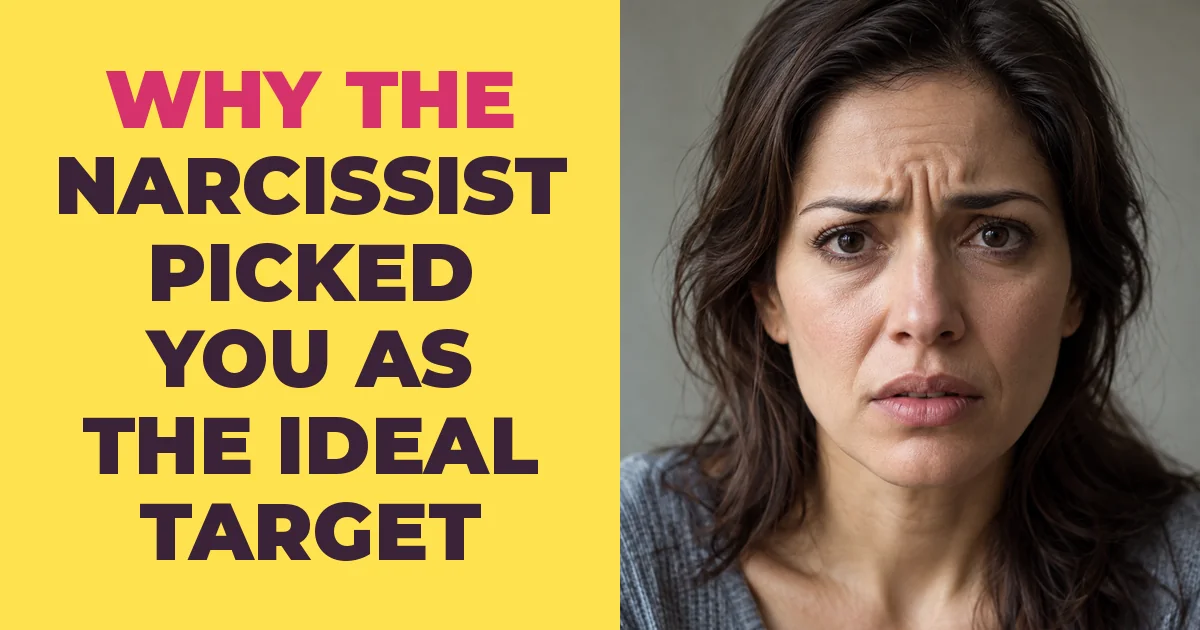
Why The Narcissist Picked You As The Ideal Target

The narcissist didn’t pick you for your flaws.
Maybe you keep replaying those first weeks. The texts, the dinners, the way they seemed to know you already. You’re hunting for the moment you should have seen it.
And underneath it all sits the question that hurts most: why me?
Below are 7 reasons the narcissist chose you, and how they kept you hooked once they had you. Not one of them is a flaw in you.
It’s about what they need
A narcissist’s self-worth needs a constant top-up from outside. When the praise dries up, their picture of themselves starts to wobble.
So the people around them often end up in two groups: the ones who feed that picture, and the ones who threaten it. Research on narcissistic admiration and rivalry adds a timeline.
The charm shows up first. The put-downs arrive later.
The real question isn’t what’s wrong with you. It’s what they thought you’d give them.
#1 Your attention made them feel big

Your full attention was the first thing the narcissist wanted from you.
Think back to those early dinners. They talked about the promotion they deserved, the ex who never appreciated them, the big plans. You listened, asked questions, laughed in the right places.
To someone who needs other people to confirm their worth, that felt like oxygen.
But the listening only ran one way. Mention your rough day and you’d hear, “Anyway, did I tell you what my boss said?”
Over time, you may feel like a mirror they check themselves in. What you need starts to seem like a nuisance, even to you.
One way to tell: look at months of behaviour, not one lovely evening. And don’t count on a sudden change. Patterns like this tend to hold.
Your rough day deserved an answer too.
#2 They showed you their best side first
The dazzling beginning bonded you before you saw the rest.
Good-morning texts before you woke up. Flowers at your work. A trip planned by week three, and “I’ve never felt this way about anyone.”
Research on love bombing describes how a rush of attention ties you to someone fast, long before you’ve watched them handle a bad week.
By the time the digs started, you were hooked.
That first version became the person you kept chasing. All that intensity passed for closeness. And when they changed, you probably blamed yourself.
For next time, notice what happens when you say “not yet.” Someone who’s simply excited can wait.
Speed you can’t slow down is the warning sign.
#3 Your kindness looked endless

To an entitled partner, your generosity looks less like a gift and more like a given.
You dropped your weekend plans when theirs came up. You lent money and stopped mentioning it. You handled the birthdays, the chores, the awkward calls to their mother.
And when you asked for a little back? “Wow. So now you’re keeping score?”
Psychologists who study entitlement describe a fixed sense of deserving more than everyone else. Normal limits feel like a slap to them, so a fair request from you can land like an attack.
Even asking for an even split starts to feel like war.
Try one quiet shift: jot down what you give, even just in your notes app. Then stop handing over money, forgiveness and agreement before anyone’s earned it.
Your kindness is real. It just isn’t bottomless.
#4 They kept your soft spots on file
The secrets you trusted them with early on often became their sharpest weapons.
At first they asked about everything. Your dad. Your body worries. The job that let you go. The thing you’ve never told anyone.
It felt like being seen.
Months later, mid-fight, there it was: “No wonder your father left.” Or a joke at dinner about your weight, with that little smile.
Research on low empathy suggests narcissists often grasp what you’re feeling and simply choose not to respond. Research on Machiavellian traits describes quietly gathering information to use down the line.
So you stop opening up. You start second-guessing yourself.
Share less with anyone who has turned your pain against you. Bring your feelings to people who actually answer them. Your openness was never the mistake.
#5 Charming at parties, cold in the car

The narcissist’s public image matters hugely to them, and it hides what happens at home.
At the party they’re a delight. They top up drinks, tell the funny story, hold your hand across the table. Your friends say, “You’re so lucky.”
Then the car door shuts. Silence the whole way home, or a slow list of everything you did wrong in front of everyone.
Psychologists who study impression management describe how all of us shape the picture others see. For a narcissist, that picture feeds their sense of worth, so they pour effort into it.
Friends can’t see it. Then you start to wonder if you made it up.
Most of us are a little more polite in public. What counts here is the jump from warm to cruel. Talk to someone who has watched both versions.
Trust what happens after the car door shuts.
#6 Seeing you win stung them

To a narcissist, your success can feel like someone stealing their spotlight.
You got the job. They said “Congrats” without looking up from their phone, then spent the evening picking at your cooking, your friends, your new boss.
Your birthday dinner? Somehow it ended in a fight.
Research on envy in narcissism links it to bitterness when good things happen to others. Your win threatens their need to feel above you, so they shrink it, take credit for it or ruin the moment.
Research on narcissistic rivalry describes it simply: when you gain, they feel they’ve lost.
So you start keeping good news to yourself. Happy days feel risky.
Watch whose face falls when something goes right for you. Then celebrate with the friends who light up!
#7 The hot and cold kept you hooked
Kindness you can’t predict grips you tighter than kindness you can count on.
Monday they barely speak. By Wednesday there’s your favourite coffee on the counter and a soft “I don’t know what I’d do without you.” Friday, the frost returns.
Which version will walk in tonight?
Psychologists call this intermittent reinforcement. When a reward shows up at random, the habit of hoping for it is very hard to break. Slot machines run on the same idea.
Research on trauma bonding adds another layer. When one person holds more power and hurt keeps swapping with affection, the bond can grow stronger than in a calm relationship. Walking away can actually ache.
One sweet morning can cancel out a cruel week.
Look at your ordinary days, not the rare great ones. What does a normal Tuesday feel like?
If you’re kicking yourself for not seeing it sooner, go easy. Research on betrayal blindness describes how your mind can screen out betrayal by someone you rely on, so the bond stays in one piece. That’s a shield. Nothing stupid about it.
Self-compassion helps here. Research links speaking to yourself like a good friend would with less shame and self-blame, two of the heaviest things manipulation leaves behind.
They picked you for what you give. Start giving some of it back to yourself.
8 Ways The Narcissist Pretends They’re Helping You

The narcissist never looks kinder than when they’re stepping into your life uninvited.
They fix things you didn’t ask them to fix. They make choices “for your own good.” Then they tell everyone how much they do for you.
And somehow you feel ungrateful for hating it.
You’re not ungrateful.
That kind of help tends to arrive with strings, rules and a bill, even when nobody mentions them.
Here are 8 ways the narcissist pretends they’re helping you, and what each one really costs you.
#1 Their help comes with a bill attached
A favour from the narcissist is really a loan, and they often collect.
They pick your mum up from the airport. They sort out the dripping tap. They drive you to the station in the rain.
Then weeks later, mid-argument about something else entirely, the bill turns up: “After everything I’ve done for you?”
That line does a job. Dragging up old favours and piling on guilt makes no feel expensive, and giving in feels cheaper.
Some call this FOG, for fear, obligation and guilt. It’s a popular label rather than a formal one, and it sits close to what researchers call coercive control.
Soon, yes is automatic.
Next time they ask, wait a beat before answering. That favour from March doesn’t get to own your Saturday.
#2 Big decisions get made without you

A narcissist may make your biggest life choices and call it looking after you.
You come home and they’ve put a deposit down on a new flat. Across town. Far from your sister, your job, your friends.
“I didn’t want to stress you out. I’ve sorted it.”
Researchers call this kind of pattern coercive control. It’s built from many small rules and punishments that add up until your independence shrinks, which is why it’s hard to point to one big moment.
Who you see. What you spend. Where you live.
Bit by bit, your life shrinks. One day you catch yourself checking whether you’re allowed coffee with a friend.
Keep a few contacts and a corner of life that belongs only to you. Whose life is it, anyway?
#3 Their sympathy is really about them
A narcissist’s sympathy can sound like support while it quietly turns into their story.
You mention your awful day. Your boss tore into you in front of the whole team, and you held it together until the car.
“Oh, I totally get it. Let me tell you what I went through at the bank…” And they’re off for twenty minutes.
It sounds like help. They’re relating, right? But nobody ever circles back to your day.
Research on low empathy finds many narcissists grasp how you feel, yet don’t respond unless nudged. That points to a choice, not an inability.
So you stop sharing. What’s the point?
Bring your bad days to people who ask, “And then what happened?” Feel the difference.
#4 Advice that’s really a put-down

A narcissist’s honest advice tends to land right on whatever you’re proudest of.
You show them the new job offer. The dress for the wedding. The cake you stayed up half the night to bake.
“I’m only saying this because I care, but are you sure you’re ready for that?”
Research on narcissistic rivalry fits this. Anything you win can count as something they lost, so they compete rather than cheer.
And it works. You start shrinking your news in advance, because a win now feels risky to share.
Notice who falls silent when the good news is yours. Then take it to the ones who light up for you.
Real support doesn’t flinch at your happiness.
#5 They kindly correct your memory

A narcissist may offer to set your memory straight, until you can’t trust it at all.
You bring up the cruel thing they said at your sister’s birthday. You heard it. Everyone at the table went quiet.
“That never happened. You’re exhausted, you’re too sensitive. I’m only trying to help you see things clearly.”
By bedtime, you’re the one saying sorry.
Psychologists call this gaslighting: getting you to doubt your own memory or judgement so their version wins. It works best where you trust them and they hold more power.
So you start keeping notes on your phone, just to prove what you saw.
Write it down when it happens. Check it with a friend outside the relationship. Your memory isn’t the problem.
#6 Taking over the money, for your sake
When they run your money for you, kindness can quietly become a cage.
“Let me handle the bills. You’re hopeless with numbers anyway.”
Your card ends up in their wallet. Your wages land in their account. A haircut means asking for cash and explaining why.
Research on economic abuse covers exactly this: one person controlling, using or undermining another’s income. With nothing of your own, walking away gets harder, which keeps you dependent.
You feel stuck. You hide small purchases.
Planning a budget as a team is normal. One person holding every key is not.
A domestic abuse service can help you with money and safety. Being “bad with numbers” was never the problem.
#7 They play the hero in public
The narcissist’s help gets loudest whenever there’s an audience.
At the barbecue, while you’re refilling everyone’s drinks, they sigh, “Honestly, I don’t know how she’d manage without me.”
Your friends say you’re so lucky. You smile, because what else can you do?
In the car home? Silence.
They never did the hospital runs or the midnight calls for your mum. You did. Many narcissists pour effort into how they look, since admiration props up their sense of worth.
Taking credit for shared work is another sign of entitlement. And when you finally tell it straight, people don’t believe you.
What happens behind closed doors is the real version. Believe that.
#8 Your secrets become their ammunition
What you told the narcissist in confidence can end up in other people’s mouths.
You confided about your anxiety, your debt, that awful thing with your dad. They held you and said they’d always have your back.
Then a friend messages: “I heard you’re struggling. They’re so worried about you.”
It looks like concern. It works like a rumour.
Research on Machiavellian traits describes people who store up details for later and line up allies against you without a fuss, all while looking perfectly reasonable.
Gossip leaves no bruise. So support drains away right when you need it.
Tell them less. Your softest stories belong with people who’ve earned them.
Your unease was right. Help that leaves you smaller, quieter and lonelier was never really for you.
If you want one first step, pick a person you trust and tell them everything. Cutting you off is part of how this works, so reaching out is part of how it loosens.
You saw it. That counts.
Why You Can Never Fully Trust The Narcissist’s Relatives

The narcissist’s family will smile at you, hug you, and still choose the narcissist.
You thought they were your people too. Maybe one of them even said they understood.
Then something shifted. A sister went cold. A mother asked why you couldn’t just let it go.
Now you’re not sure who at that table is safe to talk to.
Here are 9 reasons why you can never fully trust the narcissist’s relatives, even the kind ones.
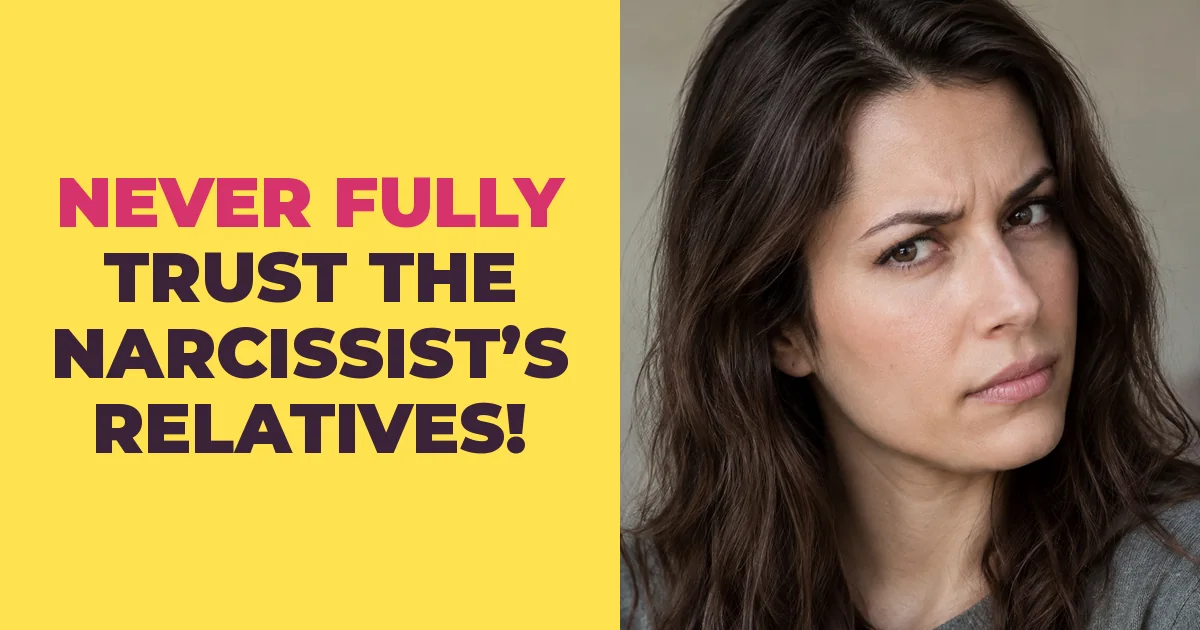
Why the family closes ranks
Psychologists who study families describe triangles. When tension builds between two people, a third gets pulled in instead of the problem being solved.
In a family built around the narcissist, you’re often that third person.
Some families also blur the lines between members, so stepping back feels like betrayal. Psychologists call this enmeshment.
So the tension you’re absorbing often started between other people.
#1 They only know the charming version
The narcissist’s family often knows a completely different person than you do.
At Sunday lunch, the narcissist carves the roast, pours everyone’s wine, tells funny stories and asks Grandma about her knee. Then the car ride home is silent.
Research on impression management describes how people shape the image they show. Narcissists invest heavily in theirs, because admiration feeds their self-worth.
So the relatives say, “You’re so lucky.”
Nobody believes you, so you start doubting what happens behind your own front door.
Trust what you live through. Not the version they get served.
#2 Keeping the narcissist calm is their job
Many relatives learned long ago that peace matters more than the truth.
Watch the room when the narcissist’s voice changes. Someone refills a glass. Someone changes the subject. A brother laughs a little too loud.
Psychologists describe how living with unpredictable anger trains people to stay on alert and to calm the threat by agreeing.
And research on threatened egotism found narcissists tend to lash out at whoever bruised their image.
So when you speak up, you threaten their quiet afternoon too.
Don’t expect backup from people who are still scanning the room for danger.
They’re tired too.
#3 You get cast as the troublemaker

In some families, one person gets blamed for every problem, and that person can become you.
You mention, calmly, that the narcissist cancelled your birthday dinner again. Within a week, the group chat has a new story: you’re “always stirring things up.”
Research on golden child and scapegoat families describes how a controlling parent assigns fixed roles. One can do no wrong. Another carries the blame. It keeps the family image tidy.
Those roles can last well into adulthood. And the blamed one gets blamed for every problem, big or small.
That label is heavy. It can leave you ashamed of things you never did.
See it for what it is: a role handed to you. Not the truth about you.
#4 Whatever you share travels back
Anything you tell a relative may end up in the narcissist’s ear by dinnertime.
You confide in the narcissist’s cousin over coffee. Two days later, the narcissist quotes you word for word.
There’s a popular term for this: flying monkeys. It’s no diagnosis. It describes people who carry out a manipulator’s pressure, often without the full story.
It ties to what psychologists call triangulation, pulling a third person into a two-person problem.
The relative has heard the narcissist’s version, where the narcissist is the one wronged. Kind, loyal people act on that.
Keep details private. Pleasant talk is fine.
Your heart doesn’t have to be on the table.
#5 Their excuses were written years ago
Many families have had years of practice making excuses for the narcissist.
“That’s just how they are.” “They had a hard childhood.” “You know they don’t mean it.”
Psychologists call the discomfort behind this cognitive dissonance. Holding two clashing beliefs, like “I love them” and “they hurt people,” feels bad. So the mind explains away the bad behaviour.
Their investment is huge, too. Years of holidays and loyalty they don’t want to waste.
So your story doesn’t get weighed. It gets smoothed over, like every story before it.
Ever noticed how fast the excuse arrives? Before you’ve even finished the sentence.
#6 One parent quietly covers for everything

Often one parent has spent a lifetime covering for the narcissist.
She calls to smooth things over. She buys the gift and signs the narcissist’s name. She says, “Don’t be upset, you know how it gets.”
There’s a popular word for this pattern: codependency. It isn’t a diagnosis. It means organising your life around someone else’s needs and moods, and it links to the fawning researchers describe.
Caretaking feels like control and safety to her. And a self-focused person rewards it, so the covering rarely stops.
Then the job gets passed along. She asks you to bring the gift, make the call, keep the narcissist sweet.
One thing that helps: let the narcissist handle their own consequences.
You don’t have to inherit her job.
#7 They’ve fallen out and made up before
Many relatives have been frozen out by the narcissist and then welcomed back, more than once.
A brother wasn’t invited to the wedding. Two years later, he’s the best friend again, laughing at the barbecue as if nothing happened.
Psychologists call this intermittent reinforcement. Kindness that comes unpredictably, mixed with coldness, hooks people harder than steady kindness. It’s the same pull as a slot machine.
So the relative who sided with you last month? They might be back in the fold tomorrow.
Judge where they stand by the average over the years, not by one warm month.
Warm today doesn’t mean safe tomorrow.
#8 Seeing the truth would cost them too much
Some relatives can’t see the narcissist clearly because they depend on them.
Maybe the narcissist helps pay a parent’s bills. Maybe a sibling needs them for childcare or a job.
Psychologists call this betrayal blindness. When we depend on someone, the mind can block out evidence of their betrayal to keep the bond safe.
It isn’t stupidity. It’s protection.
So when you say, “I need you to see what’s happening,” they look straight past it.
That’s why the truth lands like an insult. Your clarity threatens something they need.
Their blindness isn’t proof you’re wrong.
#9 The story reached them before you did
By the time you speak up, the narcissist’s version is often already in place.
An aunt’s hug is a little stiff. A cousin asks, “Are you feeling better now?” You didn’t know you’d been ill.
Research on relational aggression describes attacks on a person’s reputation and relationships through gossip, rumours and leaving them out. It leaves no visible evidence.
And a smear can start before you ever step back.
That’s how a smear can turn people against you: early, with a story you never got to hear.
You’ll want to defend your name to everyone. You don’t have to. Behave consistently and let time show the truth.
Your name doesn’t need a defence tour.
None of this means the family is evil, or that you misread them. It means they’re standing inside a system built long before you walked in.
You can be polite with them. You can be warm. And you can still keep your plans, your worries and your hurt out of the family group chat.
Your memory is fine. Trust what you saw.
The Narcissist’s Most Toxic Habit Is The One No One Mentions

You told them your news and watched their face go flat.
Then came the shrug. The change of subject. Maybe a little joke that stung for days.
The yelling gets all the attention. This habit hides in plain sight.
It’s the way the narcissist quietly spoils your good moments, again and again, until you stop having them anywhere near them.
Here’s why the narcissist can’t stand to see you happy, and the 7 ways it shows up in your life.
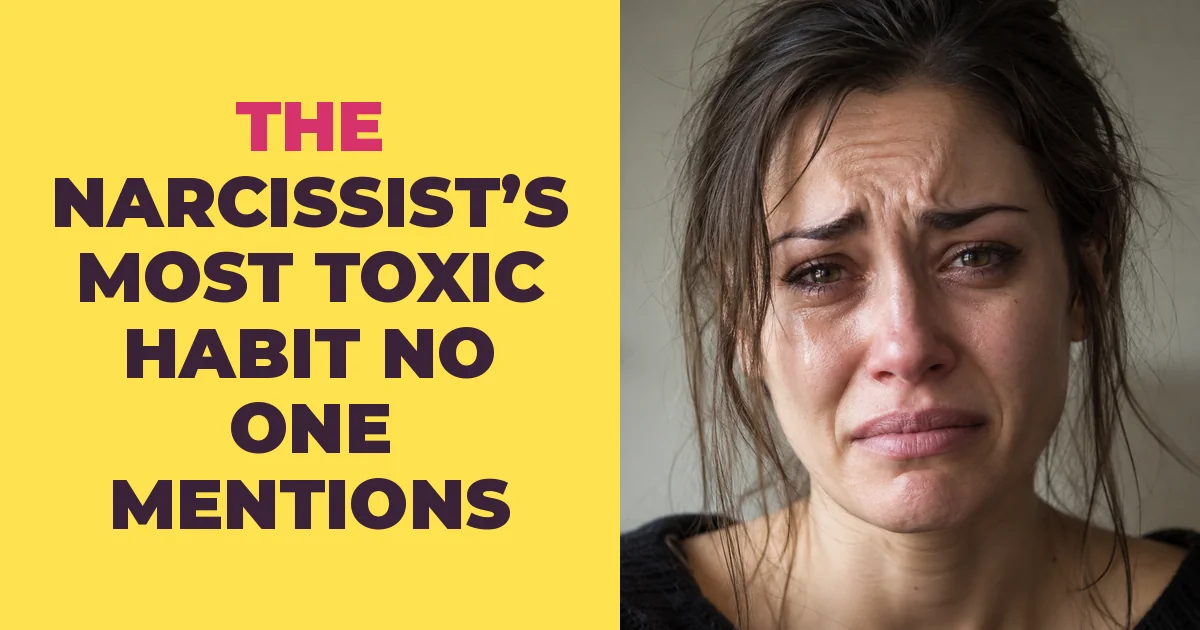
Why your joy feels like a threat
Research on narcissism describes two faces. One is loud, showy and charming. The other is quiet, touchy and resentful. Many switch between both.
Both protect the same thing. A fragile self-image.
Envy is common in narcissism, especially in the quiet form. Your success threatens their need to feel above you, so it can’t just be allowed to exist.
So they shrink it, steal it or spoil it. Often without ever raising their voice.
#1 Good news makes them go flat
A lukewarm or sour reaction to your good news is one of the clearest signs of envy.
You get the job offer and rush into the kitchen, phone still in your hand. They keep scrolling. “Oh. Good for you.” Then they ask what’s for dinner.
No hug. No questions. Not even eye contact.
Why? Your success threatens their need to feel superior. So it has to be made smaller, and fast.
A flash of envy is human. Anyone can have one. The pattern is acting on it to bring you down, again and again, whenever you have something to celebrate.
Over time, you stop rushing into the kitchen. Notice who goes quiet when you win. That silence says a lot.
You deserved a hug in that kitchen. Not a shrug.
#2 Your birthday turns into a fight
Big days are often when the narcissist’s mood turns sour.
The table’s booked. Your friends are on their way. And somehow, an hour before, there’s a row about something you said last Tuesday.
You spend the whole evening smoothing it over. Your birthday quietly becomes about them.
Picking a fight on your birthday or big day is a classic sign of envy. The spotlight is on you for once, and that’s hard for them to bear.
It isn’t always loud. Sometimes it’s just a long face across the cake, and a sigh when you open your presents.
The result? Happy occasions start to feel risky. You brace for them instead of looking forward to them.
The row was never about last Tuesday.
#3 They compete instead of cheering

With a narcissist, every win you have can count as their loss.
You mention your race time. They mention theirs, from years ago, and of course it was faster.
You get praise at work. “Must be nice having such an easy boss.”
Psychologists call this narcissistic rivalry. They chase admiration with charm, and they protect their status by putting others down. Early on, the charm wins. Later, the rivalry takes over.
That’s why the person who once bragged about you to everyone now treats your wins like a contest. And you keep chasing the one you met at the start.
Ambition alone isn’t rivalry. Rivalry means your gain gets treated as their loss.
Since when did your partner become your opponent?
#4 The covert ones do it with a sulk
The quiet narcissist can ruin your moment without saying a single word.
You come home glowing from a night out with friends. They’re on the sofa, arms crossed. “No, it’s fine. I just thought you’d want to be here.”
Suddenly you’re apologising for having fun.
Research describes a quieter form of narcissism: touchy, resentful, self-pitying. It sulks when it isn’t noticed, keeps score of slights and plays the victim when challenged.
Same fragile self-image underneath. Different costume.
This is the version no one warns you about, because it looks like hurt feelings. Shyness isn’t this. The giveaway is entitlement and low empathy behind the quiet face, and you walking on eggshells around it.
Watch how they act when they aren’t the centre of attention. Do they sulk, keep score or play the victim?
#5 Your ideas come back as theirs

What you build, the narcissist may quietly claim as their own.
You suggest the holiday spot. Weeks later, at dinner with friends, they announce it like they found it. “I’ve always wanted to go there.”
You smile. You say nothing. It’s not worth the fight.
Copying what you do and claiming it first is a known sign of envy. Taking credit for shared work points to entitlement, a steady belief that they deserve more than everyone else.
It eats away at you slowly. You give more and get less back, and asking for fairness starts to feel like declaring war.
One thing that helps: keep track of what you give. Privately, just for you.
Your memory is fine.
#6 In public they clap the loudest
The narcissist often cheers you in public and cuts you down in private.
At the party, they raise a glass to your new business. “So proud of her!” In the car home, there’s silence. Or worse: “Don’t let it go to your head.”
Two different people. One seat apart.
Their public image feeds their sense of worth, so they work hard at looking supportive. Behind closed doors, there’s no audience left to impress.
This is what makes it so crazy-making. Friends tell you how lucky you are. Nobody believes you, and you start to doubt what you lived through.
Trust what happens when the door shuts. That’s the real relationship.
Is there one person who has seen both sides? Talk to them.
#7 You start hiding your own happiness
The deepest damage is when you stop sharing your happiness at all.
You get the good news and text your sister first. You play down the raise. “It’s not that much, really.”
You didn’t decide this. You learned it.
This is what living with envy does to the person on the receiving end. You hide good news. Happy moments feel risky. Your successes start to feel dangerous to share.
Slowly, your joy goes underground. You keep it small so it can’t be spoiled.
Share your wins with people who are truly glad for you. Notice how different that feels in your body.
Your sister’s happy reply? That’s what your news deserved all along.
If you saw yourself in this, it doesn’t mean you’re imagining things. Or that you’re too sensitive.
Look at the pattern over months, not one bad night. Patterns like this tend to stay the same, so trust what you’ve seen, not what you’ve been promised.
Your good news still deserves a cheer. Go find the people who give it.
What The Narcissist Never Gets Over After Losing You

You left, or you finally stopped bending. Now the angry texts, the rumours and the sudden sweetness make no sense.
The narcissist doesn’t get over losing you.
Not in the way you hoped, though.
They rarely miss you, the real person. What stays with them is what your leaving did to their picture of themselves.
Here are 9 things the narcissist never gets over after losing you.
Why losing you hits so hard
With a narcissistic pattern, feeling good about themselves usually depends on other people keeping the praise coming.
You were a big part of that praise.
Psychologists who studied threatened egotism saw something telling. Reject or insult a narcissist, and the anger tends to go straight at whoever they hold responsible.
Guess who that is now?
#1 You left before they could discard you

In their story, they were always supposed to be the one who leaves.
Many women describe the same arc: the pedestal, the criticism, then the cold drop. It’s a popular description, not a diagnosis, and research on charm turning into rivalry backs its shape.
Except this time you stepped off first.
Being rejected is the kind of hit that sparks anger far bigger than the moment. So your calm goodbye text gets back three furious paragraphs. “You’ll regret this. Nobody else would put up with you.”
That reaction is about the bruise to their image. It was never proof you got it wrong.
If the anger turns into threats, your safety comes first.
Every time.
#2 They lost their favourite mirror

You were the mirror that told them they were brilliant, every single day.
Think about how it went. You laughed at stories you’d heard ten times. You praised a promotion they’d inflated. You said “You’re right” just to keep dinner calm.
Every bit of that fed them.
Their sense of who they are leans on applause from outside. People around them end up as either fans or threats.
So when you go, they lose a reflection more than a partner.
No wonder it felt like your job was to reflect them, while anything you needed got treated as a nuisance.
You were a whole person the entire time.
#3 The mask doesn’t work on you

You’re the one person who has seen what happens after the guests leave.
Charming at the party. Silent and icy in the car home. Friends kept telling you how lucky you were.
Many narcissists pour a lot of effort into how they look in public, because being admired props up how they feel inside.
Your leaving cracks that image. You know the private version.
That’s why their story often gets out before yours does. “She’s unstable.” “I did everything for her.” Mutual friends go oddly quiet.
You don’t have to defend your name to everyone. Act the way you always do and let time show who’s who. If it touches work or custody, keep records.
The mask is for the audience. You saw the face.
#4 Now they have to do it all themselves
The life that ran so smoothly was running on your unpaid work.
You booked the dentist. You sent the card on their mother’s birthday. You covered the bills they “forgot” and smoothed things over with their boss.
Entitlement is a quiet certainty that they’re owed extra and the rules are for other people. So your effort felt like rent you owed them.
Now the fridge is empty. The excuses have nowhere to land.
That’s why asking for fairness used to feel like starting a war.
You gave more and got less.
You can stop forgiving before they’ve even said sorry. Their mess is theirs now. Overdue, isn’t it?
#5 Watching you do well eats at them
Your good news was never safe with them, and it still isn’t.
Think back. The new job got a shrug and a “Must be nice!” Your birthday somehow turned into a row about them.
Envy turns up often in narcissism, research suggests, and more in the quiet, fragile form. Your shine threatens their need to feel on top. So your win gets shrunk, stolen or spoiled.
Research on rivalry adds a twist: your gain gets counted as their loss.
So a new job, a trip, a laugh in a photo can land on them like a defeat.
You learned to hide good news. Tell it to the friends who cheer.
Who goes quiet when you win?
#6 They keep checking if the door is open
A narcissist often comes back around right when you’ve started to feel free.
“I miss you.” “I’ve changed, for real this time.” A sudden emergency only you can fix. A message on your anniversary.
Lots of women know this as hoovering. It’s an internet word, not a clinical one, for pulling you back after a breakup.
It runs on hope. Psychologists who study intermittent reinforcement describe how kindness you can’t predict, mixed in with coldness, hooks harder than kindness that stays steady.
It also tends to turn up when they want something or sense they’ve been replaced.
If old hope rushes back, that’s a known pull, not a flaw in you. Decide now how you’ll answer, and go by what they’ve done, not what they promise.
What did the last promise turn into?
#7 In their version, they’re the victim

Being left doesn’t fit their self-image, so they rewrite who hurt whom.
Suddenly they’re the wounded one. Sad posts. Long sighs to anyone who’ll listen. “I gave her everything and she just walked out.”
Researchers describe a loud, showy narcissism and a quiet, touchy one, and many slide between the two. The quiet side sulks, tallies every slight and goes straight to victim mode when challenged.
Both guard a self-image that cracks easily.
One shows off. The other feels wronged.
So you get blamed for their disappointment, and you end up replaying old fights, wondering if you were the cruel one.
Here’s one way to tell. Did an apology from them ever come without conditions?
#8 Guilt doesn’t work on you anymore
Their strongest lever was your guilt, and it has stopped working.
“After everything I’ve done for you.” “If you leave, I don’t know what I’ll do.” For years, those lines turned your no into a yes.
There’s a popular nickname for this: FOG. The letters stand for fear, obligation and guilt. It isn’t a formal term, but it sits next to something researchers do study, coercive control, where a pile of tiny rules and punishments slowly eats your independence.
Threats. Reminders of old favours. Guilt trips. Each one raised the price of a no until giving in looked cheaper.
Now there’s a pause before you answer. That pause is new.
Their feelings are real. They also belong to them.
Not your job anymore.
#9 You stopped giving them a reaction

What they can’t stand most is a version of you who doesn’t react.
The bait still comes. A dig about your weight. A jab at your new friend. A text built to start round forty.
You answer “Okay.” Or only about pickup times. Or not at all.
The internet name for this is grey rock. When contact can’t be avoided, you go dull and flat, like a stone on a path. The stricter option is cutting contact completely.
Each flat reply hands them less material. It may also help the trauma bond fade, that pull researchers have studied, built from cycles of hurt and kindness.
The first weeks can feel like withdrawal. Calmer days come later. If they might escalate, a safety plan matters more than any strategy.
Their show needs an audience. You walked out.
If you’re waiting for them to admit what they lost, you could wait a very long time.
What they can’t get over is theirs to carry.
Yours is quieter and better: your evenings back, a phone that stays silent, and your own version of what happened.
13 Reasons Trusting The Narcissist Always Backfires

*Trusting the narcissist feels like handing your keys to someone who’s already been through your bag.*
You tell them something private. You lend them money. You believe the promise one more time.
And somehow it bites you.
That isn’t bad luck. Or naivety.
Trust needs two people who care what happens to each other. With a narcissist, that second part is often missing.
Here are 13 reasons trusting the narcissist always backfires, and what to watch for next time.
Why trust doesn’t work here
For a narcissist, people often have one job: keeping their self-image polished.
Their worth leans on what others reflect back. So you land in one of two piles. Someone who admires them, or someone who might dent that admiration.
Trust can’t live in either pile.
Look at the pattern across months rather than one lovely evening. One evening proves very little.
#1 Your secrets end up in the group chat
Whatever you tell the narcissist in private can be saved up for later.
You admit you’re scared about work, or share your sister’s news. Weeks later it pops up at a family dinner, bent just enough to make you look bad.
Research on Machiavellianism describes people who quietly gather personal details to use down the line, while staying calm and reasonable in front of others.
So when you object, everyone sees a pleasant person and wonders why you’re upset.
Tell them less. You did nothing wrong.
#2 The pedestal is only temporary
The way they adore you at the start is only the opening act.
“I’ve never met anyone like you.” You heard it, and you believed it. Who wouldn’t?
Psychologists describe two sides to narcissism: admiration and rivalry. Charm wins people over early. Later, the competitive, put-down side starts running the show, and the cutting comments arrive.
That’s why you keep looking for the person from those first weeks.
Those first weeks were the charm side. The rest came later.
#3 Good news makes them go cold

Your good news can feel like a threat to someone who needs to stay on top.
You get the promotion. They say “Good for you,” then spend the evening criticising how you loaded the dishwasher.
Envy shows up often in narcissism. Your success pokes at their need to feel superior, so they belittle it, borrow it or wreck the moment.
After a while, you keep your wins quiet. Even a nice day starts to feel risky.
Who goes quiet when you win? Notice.
#4 Promises are just bait

A detailed promise about the future can keep you hanging on for years.
The trip to Italy. The new kitchen. “After this busy stretch, I promise.” The busy stretch never ends.
Many call this future faking. It’s a popular label, not a diagnosis, and it sits close to what research calls game-playing in love: plenty of talk, little real commitment.
Plans pull you in. The more you’ve pictured that life together, the harder it is to let it go.
Look at what’s actually happened so far. That’s your answer.
#5 Ask later and it never happened
The narcissist may deny saying things you heard with your own ears.
You bring up the promise. “I never said that. You’re imagining things again.” They sound so certain that your memory starts to wobble.
That’s gaslighting. It works best when they hold more power in the relationship and get to tell the story of what happened.
Remembering things a bit differently is normal. Being told, over and over, that what you saw never happened is something else.
Jot it down the day it happens. Paper doesn’t argue back.
#6 Favours only flow one way
Many narcissists believe they deserve more than others, so fairness never quite applies to them.
You lend them two hundred dollars. It never comes back. You cover their mess at work, and they take the credit.
Research on entitlement shows how normal limits land as insults. Asking for your money back? In their eyes, you just declared war.
So the giving runs one way, and you feel petty for noticing.
You’re not petty. Keep a quiet tally.
#7 Their help comes with a bill
When the narcissist helps you, expect to pay for it later in guilt.
They fix the leaking tap once. Months later, mid-argument: “After everything I’ve done for you?”
Many call this FOG: fear, obligation and guilt. It’s a popular label, not a formal one. It overlaps with what researchers call coercive control, where small pressures pile up until no feels too expensive to say.
Soon you’re agreeing before they finish asking.
Pause before you answer. A favour freely given isn’t a debt.
#8 Your soft spots become targets

The narcissist can often see your pain and choose not to act on it.
You cry about your dad one night. Two weeks later, in a fight: “No wonder he left.”
Research suggests narcissists start out lower on empathy, yet show more of it when prompted to imagine your side. So it looks less like can’t and more like won’t.
No wonder you’ve gone quiet about your feelings.
Bring them to people who handle them with care. Your pain isn’t ammunition.
#9 Progress gets quietly sabotaged
When you start building something of your own, the narcissist may quietly knock it down.
The fight the night before your exam. The car they “need” the morning of your interview. Suddenly your evening class is “selfish.”
Research on economic abuse includes undermining a partner’s job or studies. Without money of your own, leaving gets harder, which keeps you dependent.
Check the timing. Is it always before big days?
Keep your own account and your own records. Check your credit report, too. Debt can hide in your name.
#10 Calling it out makes you the villain
Raise a problem with the narcissist and you may end up apologising for raising it.
You say the comment hurt. “Wow. After the week I’ve had, you accuse me of that?” Ten minutes later, you’re the one comforting them.
Psychologists call this DARVO: deny, attack, then flip who’s hurt and who did the hurting. Studies show it leaves the person who spoke up blaming herself.
No surprise the talk fizzles out.
Go back to what you first raised. You don’t owe a reply to every jab.
#11 They need to know everything

A narcissist may want full access to your life while guarding their own.
“Who’s texting you?” They check your phone, ask where you were, want to know what you spent. Their phone stays face down.
Researchers call this coercive control. Lots of little rules and checks slowly eat away at your independence, so there’s rarely one big moment to point to.
Bit by bit, you stop doing ordinary things without asking first.
Keeping some money and contacts of your own matters, and a domestic abuse service can help with safety planning. Notice how small your world has gotten.
#12 Nobody believes the private version
The narcissist often saves their best self for an audience that isn’t you.
At the party, they’re funny and attentive. Your friends say you’re lucky. In the car home, total silence.
Everyone polishes how they come across. Many narcissists pour extra effort into it, because praise from others props up how they see themselves.
So when you finally say something, nobody believes you. Some days, neither do you.
What happens at home is the real version. Believe that.
#13 One good day resets everything
Kindness that shows up at random hooks you harder than kindness you can count on.
After three cold days, they bring you coffee in bed. “Sorry, I’ve been so stressed.” And just like that, you trust them again.
Psychologists call this intermittent reinforcement. When you can’t predict the reward, you keep reaching for it. Slot machines run on the same trick.
One sweet morning makes a cold week seem worth it.
Count the good days and the bad ones. Go by the usual, not the best. What does your count say?
None of this means you were foolish. Trust is what kind people offer, and you offered it in good faith.
From here, you can give it more slowly. Watch what happens over months. Let actions earn it.
And if nothing changes over months, you don’t have to keep waiting for it to.
The One Thing Narcissists Do So You’ll Never Find Closure

One day they were texting you good morning. The next, nothing.
No fight. No goodbye. Just silence.
You check your phone in the bathroom at work, in traffic, at 3 a.m. You tell yourself you just need to know why.
Narcissists often leave without giving you the one thing you need most: an ending that makes sense.
So you replay every message, hunting for the moment it all went wrong.
Here’s the one thing narcissists do so you’ll never find closure, and the seven ways it keeps you stuck.
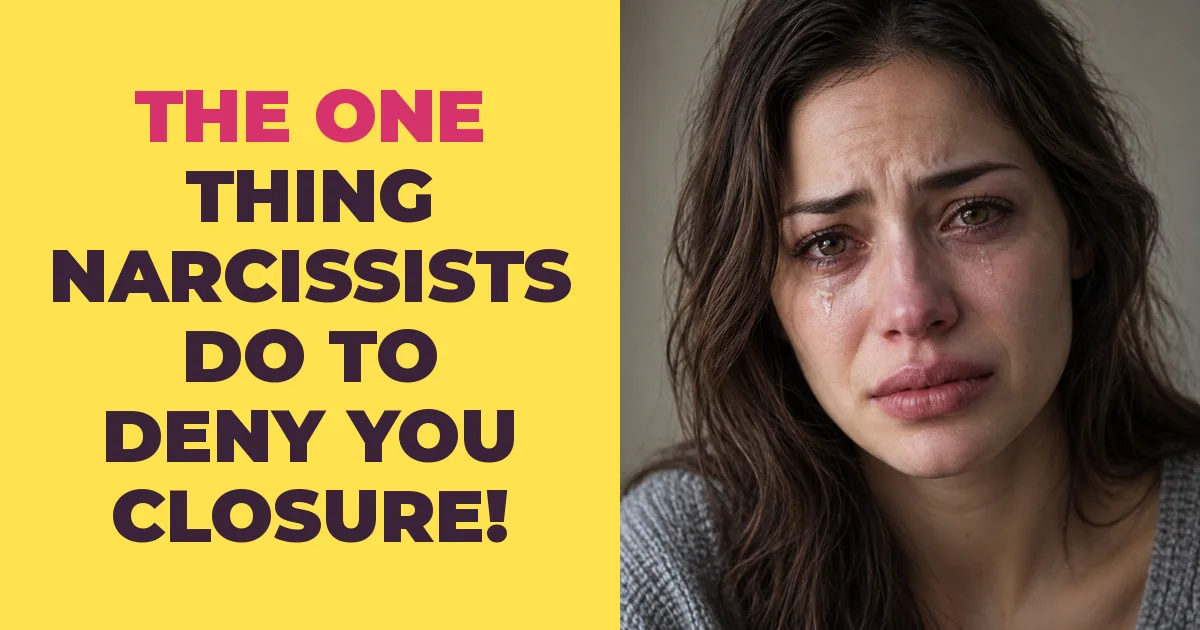
Why silence is their exit
Silence is how they leave without ever answering you. That’s the one thing: they vanish, or go cold, and explain nothing.
That leaves you holding every question, alone, while they carry on as if nothing happened.
Online, many call this arc idealise, devalue, discard. It’s an informal label, not a diagnosis: up on a pedestal, picked apart, then dropped. Studies of narcissistic charm and rivalry match that shape, with warmth early and hostility later.
Closure needs two people. They just left the room.
#1 Their silence makes you cave
Being shut out by the person you love can hurt almost like a physical injury.
You draft a text. Delete it. Draft it again.
Why does it gut you like this? Being ignored hits two things everyone needs: feeling part of something, and feeling that you count.
That ache makes caving feel like relief. Soon you’re typing ‘I’m sorry, can we please just talk?’ about something you never even did.
You might start steering clear of any topic that could set off another freeze.
Healthy space sounds different. ‘I need a few days to cool off. I’ll call you Sunday.’ And then they call.
Punishing silence rarely says when it ends.
#2 Your pain doesn’t change their plans
A narcissist can often see exactly how much you’re hurting, and still choose to look away.
They know your weak spots. And they use them.
You finally call, voice shaking, wanting one honest answer about what happened. They sigh like you’re a chore. ‘You’re being dramatic. I’m not doing this right now.’ Then they hang up.
Studies on narcissists and empathy found something hard to hear. Left alone, they show less of it. Asked to imagine your side, they show more.
Which means they can. They often just don’t.
They see the pain. They choose not to act on it. So the explanation you’re waiting for never comes.
Quit explaining your hurt to someone who turns it into a weapon. Bring it to a person who answers when you call.
#3 Someone new shows up fast
Their new partner often appears so fast it knocks the air out of you.
Three weeks of silence. Then a photo: the same restaurant, the same smile, someone new across the table.
‘They’ve moved on already?’ your friend texts.
Researchers tie narcissism to treating love like a game. They rush in, commit little, keep old flames within reach, and get bored once the ‘win’ is in the bag.
It fits a pattern: a fast start, interest that fades, then a quick move to someone new. No wonder you feel so replaceable right now.
Being slow to commit is one thing. Leaving you guessing on purpose is another.
Their speed tells you how they love. It tells you nothing about how lovable you are.
#4 You keep arguing with yourself

Without a real ending, your mind keeps trying to write one, night after night.
At 2 a.m. it’s ‘They loved me.’ By breakfast it’s ‘They hurt me.’ Both feel true, and you can’t make them fit.
Psychologists call it cognitive dissonance. Two beliefs fight in your head, and it’s exhausting.
So you quietly make excuses on their behalf. ‘They had a hard childhood.’ ‘Work was crushing them.’
And all those years you put in? Walking away starts to feel like wasting them. Every decision feels impossible.
Try this: jot down the plain events. Skip what you think they meant.
Facts don’t argue back. Even at 2 a.m.
#5 They’ll rewrite how it ended
If the narcissist ever does talk about the ending, their story may not match yours.
‘I never ignored you. You pushed me away.’ Or simply: ‘That never happened.’
Psychologists call this gaslighting. The aim is for you to stop trusting what you saw, so their story becomes the official one.
It lands hardest when one person holds more power. You trusted them, and they control the narrative, so the rewrite sticks.
A few even whisper to shared friends that you ‘lost it.’ So you end up scrolling old texts at midnight, checking whether you imagined it all.
Two people can recall things differently. Denying what you saw is something else.
Run it past someone you trust outside the relationship.
#6 The door is left open on purpose
Many narcissists leave the door open just wide enough to pull you back in.
Months of nothing. Then, on your birthday: ‘Hey stranger! Been thinking about you.’
The internet nickname is hoovering, like the vacuum. It’s not a clinical term, though it ties to research on intermittent reinforcement. Watch the timing: it tends to arrive when they want something, or sense they’ve been replaced.
Affection you can’t predict grips tighter than affection you can count on. Slot machines run on the very same trick.
One warm text, and old hope floods back.
Pick your answer ahead of time, while you’re calm. Silence counts as an answer too.
Look at what they did before, not what they promise now. How did last time go?
#7 Missing them isn’t a weakness

Missing someone who hurt you is a well-known reaction, not a flaw in you.
A friend says one honest word about them, and you leap to their defence. ‘They weren’t always like that, you know.’
When hurt and tenderness keep trading places, and one person holds the power, a trauma bond can form. Psychologists describe that attachment as one that can grow tighter than in a calm relationship.
Logic says go. Feeling says wait.
Then the shame creeps in. ‘Why do I still want them?’
If the relationship ran on sting then sweetness, that cycle can build a pull like this. Missing someone is human either way.
Share the weight with someone outside it all. Who’s one person you could tell this week?
Closure might never come from them. You can make your own, on your side of the silence, alongside people who answer. If staying in touch ever feels frightening, a domestic abuse service can help you think through safety.
Speak to yourself as gently as you would to a friend dropped like this. That gentleness softens the shame and self-blame these endings tend to leave.
You can stop waiting by the phone now.
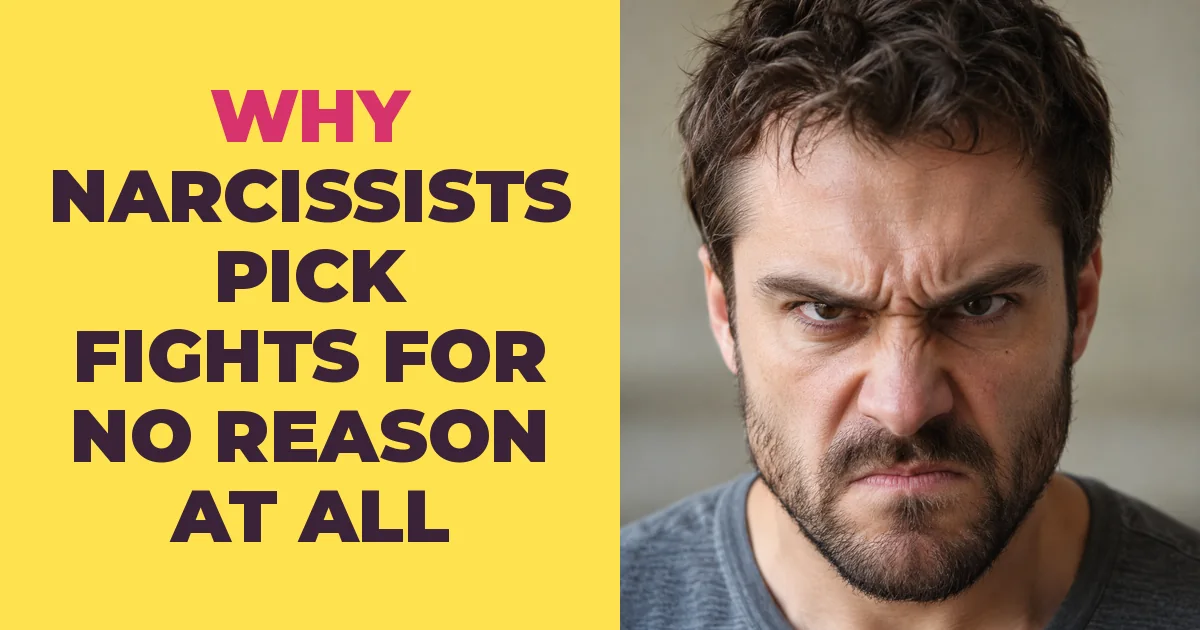
Why Narcissists Pick Fights for No Reason at All

Narcissists rarely need a real reason to start a fight.
One minute you’re making dinner. The next, you’re defending yourself over a tone of voice you never used.
Later you replay it in your head and can’t find the moment it went wrong.
You feel tired, a bit crazy, and somehow guilty.
Here are 7 things going on when a fight comes out of nowhere, and what each one does to you.
Why it feels so random
From the outside, these fights seem to come from nowhere.
But a narcissistic person often borrows their sense of worth from other people. So everyone close gets sorted into two boxes. Fans. Or threats.
Under the loud or sulky surface sits a fragile self-image that needs guarding around the clock.
So the fight isn’t really about you. You just happen to be standing closest.
#1 A tiny comment bruised their ego
To a narcissist, a small comment can feel like a full-blown attack.
You ask, “Did you pay the electric bill?” Simple question. Suddenly you’re hearing how you never appreciate anything and treat them like a child.
Psychologists who study threatened egotism describe this pattern. Bruise a narcissist’s image, even by accident, and their aggression tends to rise. It gets aimed at whoever they decide did the bruising.
Sometimes the punishment comes days later, over a remark you’d already forgotten.
So you start editing every sentence before it leaves your mouth. You say sorry for crimes you didn’t commit.
If you have to raise something, keep it brief and stick to facts. If it doesn’t feel safe, you don’t have to raise it at all. And once anger tips into threats, walking out of the room is allowed.
The bill was never the problem.
#2 Your normal request felt like an insult
Entitlement turns your ordinary limits into personal insults.
You say you can’t drive them to the airport on Saturday because you’re working. You’d think you had set the house on fire.
Psychologists call this entitlement: the quiet conviction that they’re owed extra, and that the usual rules are for other people. Being made to wait in line? An outrage.
To someone like that, a normal no sounds like an attack. So they hit back.
“I’d do it for you. But fine, now I know where I stand.”
Bit by bit, even a fair request starts to feel like a risk, and your side of the scale keeps getting heavier. One thing helps. Quietly note what you hand over, and stop saying yes before they’ve finished asking.
Your no was never the crime.
#3 Your good news is the real target

The fight that ruins your big day often isn’t an accident.
You get the promotion. You call them, buzzing. Within an hour they’re furious about the dishes you left this morning, and the promotion never comes up again.
Or it’s your birthday, and somewhere between the restaurant and the car park, a war breaks out over nothing.
Envy runs high in narcissism. They need to be the one on top, so your win lands like their loss. They make it smaller, take it over, or wreck it.
A fight does all three at once. Suddenly the evening is about them. “Must be nice when everything goes your way.”
Before long, you sit on good news for days. Joy starts to feel like something that will cost you. A good tell: watch who goes silent when things go well for you, then take your news to the people who cheer.
The promotion is still yours. The dishes can wait.
#4 They enjoy watching you flinch

Some difficult partners get a real kick out of your discomfort.
They poke at the thing you’re most insecure about, right in front of your sister. You flinch. They smirk. “Relax, I’m only joking. Why do you make everything a thing?”
Researchers have a name for this: everyday sadism. They added it to three other ‘dark’ traits, turning the trio into a ‘Dark Tetrad’.
For someone high in it, a little cruelty is its own reward. No other payoff needed. A fight out of nowhere serves it up nicely.
Living with it, home starts to feel like a place where you’re prey. You learn to keep your face blank.
Teasing that ends the second you say ‘stop’ is something else. The tell is whether your hurt seems to cheer them up. If it does, give them less to watch.
That remark in front of your sister wasn’t a joke.
#5 Random fights keep you on edge
Fights with no warning teach your body to brace all the time.
The car pulls into the driveway and your shoulders are already up by your ears.
Unpredictable anger keeps your inner alarm running day and night. Your body also finds a fast fix: soothe them. Agree, smooth it over, back down.
So you agree before the question’s finished. You say sorry when they drop a fork.
Psychologists call this fawning. Its root is fear. Not good manners.
The price is bone-deep tiredness. Your own wants go blurry.
Next time your stomach drops, name it and take a slow beat. Then practise saying no where it’s safe, like turning down a second slice at a friend’s. How long since you felt off duty?
#6 The blame lands on you, somehow

Many of these fights exist to move the blame off them and onto you.
You see a message on their phone that doesn’t add up. Ten minutes later, you’re the one accused of cheating.
Psychologists call it projection. Pinning their own behaviour on you means they never have to look at it in themselves.
And if you push back? “Unbelievable. You go through my phone and I’m the bad guy?” Then the sulking starts, and somehow you end up comforting them.
Researchers call this DARVO. They deny it, go after you for asking, then cast themselves as the one who’s been wronged.
Research found it leaves the person who spoke up blaming herself more, which is why it works so well at shutting the conversation down.
What helps: say the original problem once more and stay on it. Skip the urge to answer every jab they throw back. And when the same accusation keeps coming, notice what it says about them.
You were never the one on trial.
#7 Making up keeps you hooked
The tender make-up after a blow-up is part of the hook.
Thursday they snap at you over a coffee cup. By Saturday there are flowers on the counter and they’re the partner you fell for.
That rare apology? It feels like hitting the jackpot.
Here’s how it works. Warmth you can’t predict, mixed in with coldness, hooks harder than warmth that’s steady. A reward with no schedule is the toughest kind to walk away from. Same reason slot machines are hard to leave.
So the blow-ups and the sweetness are a team. You give more and get less back. And the nice days make the bad ones feel survivable.
Keep a private tally of good days and bad days, in a hidden note or on a trusted friend’s phone. Then judge by the average, not the best day.
What does an ordinary Tuesday look like?
None of these fights mean you’re too sensitive, too much, or slow to see it.
Look at what keeps happening over months, not at one bad night. One blow-up over the bill means little. Ten of them over a year tell you something.
And if it’s getting heavy, pick one person you trust. Tell them everything, start to finish.
The One Thing Narcissists Can’t Bear to Lose

The moods. The rules nobody wrote down. The sulking when you won’t play along.
And the charm that switches on the second someone else walks in, then switches off in the car home.
It can feel random. It isn’t.
Running through all of it is one thing a narcissist hates losing more than an argument or the last word.
Control.
Here’s how they hold on to it, why it matters so much to them, and what changes when you quietly stop handing it over.
Why control matters so much
For many narcissists, feeling worth something depends on what comes from outside. Praise. Attention. Being right.
That turns the people closest to them into one of two things: a source of admiration, or a threat to it.
That’s where control comes in. Psychologists who study coercive control describe lots of small rules and punishments that pile up until your independence is gone.
#1 Control is what they guard most
Control rarely shows up as one big moment. It shows up as a hundred small rules.
“Who were you texting?” They pick up your phone like it’s theirs. They sigh at the receipt for new shoes. They mention, lightly, that your friend Jess is a bad influence.
Nobody ever announced the rules.
You learned them by breaking them.
Over months, your world shrinks. Ordinary things start to need permission. Coffee with your sister. A haircut.
That’s what makes it so hard to explain to anyone. There’s no single awful night to point at. The damage lives in the pile-up.
One small protection: hold on to some cash and a few phone numbers that belong to nobody but you.
When did you last make a plan without checking first?
#2 They have to own the story
A narcissist needs their version of events to be the one that sticks.
“That never happened.” “You’re overreacting, as usual.” You heard what was said at the dinner table. Clearly. Now you’re turning it over at 2am, unsure.
Why does it work so well?
Gaslighting thrives where one person holds more power. You trust them, they control the story, and that lets them redraw what happened.
Soon you’re saving screenshots like evidence. You say sorry on nights when you were the one left hurting.
Mixed-up memories happen to everyone. Gaslighting is different: someone denying what you saw until you stop believing your own eyes.
So jot things down the same day, in plain words. Then run them past a friend who isn’t inside the relationship.
Your doubt is the goal.
Your mind is working just fine.
#3 Your guilt is their steering wheel

Guilt is one of the quietest levers a narcissist pulls.
You mention a weekend away with the girls. Their face drops. “After everything I’ve done for you?”
Or no words at all. Just a heavy, disappointed silence over dinner, until you cancel the trip yourself.
FOG is a popular name for this, short for fear, obligation and guilt. It isn’t a clinical term, but it sits close to what researchers call coercive control.
The mechanics are simple. Hints of consequences, reminders of old favours and guilt trips make no feel expensive. Giving in feels cheaper.
Do that often enough, and yes stops being a choice. It becomes a reflex.
So slow it down. Give yourself a gap between their request and your reply, even ten minutes.
How they feel is theirs to carry. You were never hired as their mood manager.
#4 Charming out there, cruel in here

A narcissist will guard their public image at almost any cost.
At the party, they’re the funniest person in the room. They refill drinks, squeeze your hand, tell a sweet story about how you met. Then the car door shuts. Silence all the way home.
Your friends sigh, “You’re so lucky.” You nod. What else can you say?
Everyone manages how they come across. But many narcissists pour far more into it, because admiration is what keeps their sense of self afloat.
So anyone who only sees the show struggles to believe you. And bit by bit, you start to wonder if you’re the problem.
You’re not. Most of us are a little more polite in public. The gap here is something else: kind out there, cruel in here.
Believe what happens when the front door closes.
That’s the person you live with.
#5 A simple no lands like an insult
To an entitled narcissist, your ordinary limits can feel like a personal attack.
You ask for the money you lent them back. You say you can’t skip your mum’s birthday for their work drinks. And suddenly the room goes cold.
“Wow. So I’m not a priority anymore?”
Psychologists call it entitlement. A steady belief that they deserve more than others, and that rules are for everyone else.
Seen through that lens, a fair request sounds like an insult. Which is why asking for fairness can feel like lighting a fuse.
So you give more. You get less. You ask less often.
Wanting what you need isn’t entitlement. Entitlement steamrolls what the other person needs.
A quiet first step: keep a simple note of what you hand over. Money, favours, time.
What if you stopped saying yes before they’d even asked?
#6 Being bruised makes them lash out
When their image takes a knock, a narcissist often aims the fallout at you.
You gently correct a date at dinner with friends. They laugh it off. Then the drive home is ice. Or it’s three days later, and you’re paying for a comment you’d long forgotten.
One remark. Days of fallout.
Psychologists studying what they call threatened egotism saw a clear pattern. Insult a narcissist, and they tend to hit back harder, straight at the person they hold responsible.
Everyone loses their temper sometimes. The warning sign is fury way out of proportion to what set it off.
So you start rehearsing sentences in your head. You apologise for things you never did.
If something must be said, keep it brief and stick to facts. When it doesn’t feel safe, you don’t have to say it at all. And if anger turns into threats, leave the room.
No point is worth more than you are.
#7 Your calm is the thing they can’t steer

Steady, unbothered answers leave a narcissist with almost nothing to grab.
The bait lands in your phone. “Must be nice having all that free time.” You reply about Thursday’s school pickup. That’s all.
Online, this has a nickname: grey rock. Short, dull, factual. The aim is simple: stop feeding the conflict.
A boundary works the same way. It’s about what you will do, not what they must do. “If you shout, I’ll step outside.” Then you step outside.
Expect pushback at first. They may poke harder, hunting for the old reaction. You may feel guilty too. The calm tends to come later.
One honest warning. Grey rock isn’t safe in every situation. If they might escalate, talking to a domestic violence service about a safety plan is a smart first call.
Less reaction gives them less to work with.
And over time, more calm for you.
All that control was never proof that you were weak.
Each small choice that becomes yours again counts. A coffee. A pause. A plan you didn’t run past anyone.
Ten quiet minutes before your next yes is a fine place to begin.
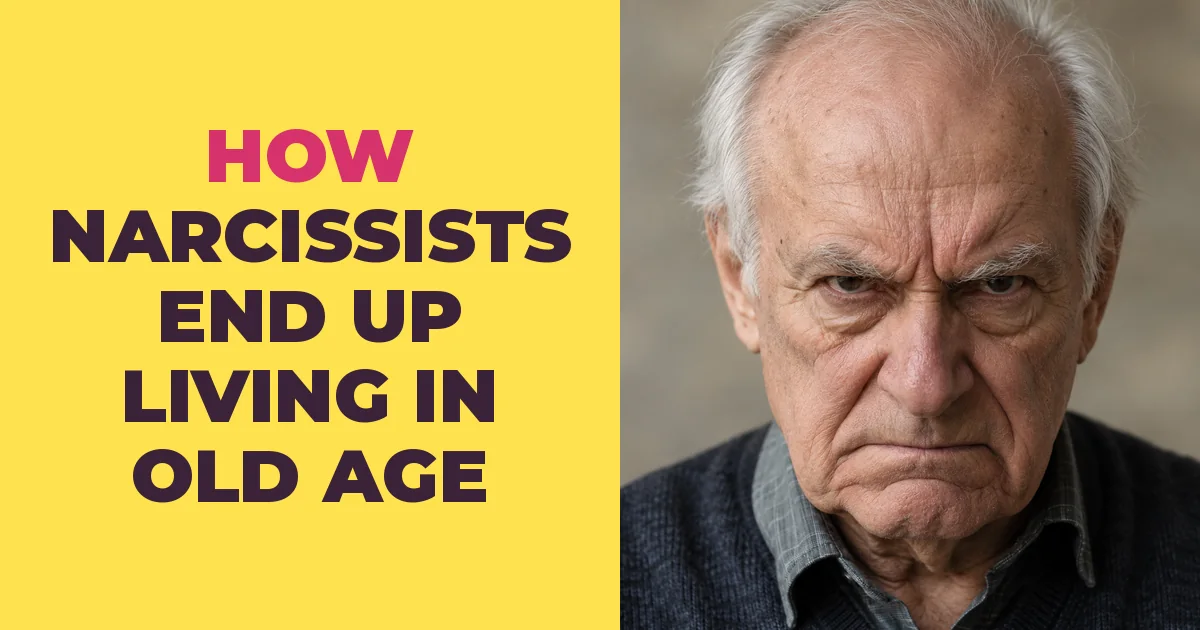
How Narcissists End Up Living in Old Age

The pattern doesn’t retire with them.
Maybe it’s a parent who’s getting older. Maybe it’s a partner you once pictured growing old beside. Either way, you keep hoping the years will soften them.
Some days, you think they finally have.
Then the phone rings, and it’s the same old script in a slower voice.
This article won’t predict how anyone ages. It shows how the same lasting pattern can look with an older parent or partner: the demands, the guilt, the charm for strangers, and the story where you’re the villain.
Here are 7 ways the old pattern can keep showing up in later life, and what helps with each.
Why the pattern doesn’t retire
A narcissist’s sense of worth leans on outside confirmation. Other people get sorted into two boxes: sources of admiration, or threats to it.
That need is a lasting pattern, not a phase.
Research on narcissistic admiration and rivalry describes a shift. Early on, charm wins people over. Over time, putting others down takes over. That’s why first impressions shine and later ones sour.
So the people who’ve stuck around longest, often you, get the cold side most.
#1 They still expect you to come running
To a narcissist, your time often looks like theirs to spend.
Saturday, 9 a.m. You’re halfway through your own errands when the call comes. “The light in the hall is out. When are you coming?”
Not if. When.
Entitlement is a steady belief that they deserve more and the rules are for everyone else. It makes ordinary limits feel like insults. So “I can come Tuesday” doesn’t land as a plan. It lands as an attack.
And that’s how it adds up: you give more, they give less, and asking for fairness feels like starting a war.
One small thing helps. Stop pre-agreeing. Let “I’ll check my week” be a full answer, and keep quiet track of what you give.
Write down this month’s favours. The list may surprise you.
#2 Every no costs you a guilt trip
Guilt is the lever that turns your no into a yes.
You mention a trip with friends. Your mother sighs down the phone. Then: “Go, enjoy yourself. After everything I’ve done for you, I’ll manage on my own.”
You cancel the trip. Again.
There’s a popular name for this: FOG, short for fear, obligation and guilt. It isn’t a diagnosis. It’s a plain way to describe emotional blackmail.
Reminders of old favours, hints about consequences, silent disappointment that lasts until you give in. Each one makes saying no feel more costly than saying yes.
Over years, yes becomes automatic, and their moods start to feel like your job.
Try a pause before answering. Their feelings are real. They’re still not your responsibility.
#3 Strangers get the charming version
The nicest version of a narcissist is often saved for people who barely know them.
The neighbour gets jokes and compliments. The new doctor hears what a wonderful family they have. Then you walk in, and the temperature drops.
“Why do you always look so miserable?”
Narcissists invest heavily in their public image, because admiration feeds their self-worth. The charm works best on new people. Once someone knows them well, the cold, cutting side tends to show.
So friends tell you how lucky you are. Nobody quite believes you. Some days, neither do you.
Trust what happens behind closed doors. Find one person who has seen both sides, and talk to them.
You’re not imagining the gap.
#4 Contempt slowly empties the room
Contempt wears down a relationship one eye-roll at a time.
In long-term studies of couples, contempt and stonewalling were among the strongest predictors of a relationship breaking down.
Now picture it at the anniversary dinner.
The eye-roll when you talk. The mocking voice when you share good news. The sarcastic “joke” over dessert, then walking out mid-sentence when you object.
“Oh, here we go. Miss Sensitive.”
Each moment is small. Together, they make you feel small in your own home, and slowly you stop bringing things up at all.
Name it calmly once, then watch whether respect ever comes back. That answer tells you a lot.
#5 The bully can become the martyr
Loud or quiet, narcissism protects the same fragile self-image.
Researchers describe two forms. The loud one is bold, dominant and hungry for the spotlight. The quiet one is touchy, resentful and full of self-pity. Many people switch between both.
So the one who ran every room can turn up as the wounded one.
“Nobody calls me. I could be lying on the floor and no one would know.” Never mind that you called yesterday. They keep score of slights, and you’re often the one who’s behind.
Challenge it, and they often play the victim.
It works because you walk on eggshells around their moods, and their disappointment somehow becomes your fault.
Watch what happens when they’re not the centre of attention. The sulk says more than the speech.
#6 Suddenly you’re the bad guy
Set one limit, and a narcissist may recruit others to push it back.
Your aunt texts first. Then your cousin. “Your dad is heartbroken. Just apologise.” Nobody asks what actually happened.
Flying monkeys is a popular term for these messengers, with no formal definition. It links to what family systems research calls triangulation: pulling a third person into a two-person problem instead of solving it directly.
Often these relatives are kind people acting on one version of the story. The one where he’s wronged and you’re cruel.
Then comes the comparison. “Your sister would never treat me like this.” Now you’re competing, and outnumbered.
You don’t owe messengers a defence. Keep details private, and speak only to the person directly involved.
A short reply is enough: “That’s between Dad and me.”
#7 That apology may never come
The apology you’re waiting for may never come without strings.
You’ve rehearsed it. Maybe in a hospital room, maybe at the kitchen table where it all started. They finally say they’re sorry, and they mean it.
What arrives instead: “I’m sorry you feel that way. I did my best, which is more than I ever got.”
Notice whether an apology from them ever comes without a condition attached.
This is a pattern that lasts across years and situations. So the steadiest bet is to expect the behaviour to stay the same, rather than wait for change.
That sounds bleak. It can also be a relief.
Plan your next visit around who they are, not who you hoped they’d become.
Whatever their later years look like, they’re built from a pattern you didn’t create.
You can care about them, keep your distance, or do some of both. Their old age is theirs to live. Your years are still yours to shape.
When a good day comes, enjoy it. Then judge by the months, not the moment.