
Month: October 2026
The Moment You Stop Doing This, the Narcissist Loses All Interest

Narcissists need your reactions far more than they ever let on.
You’ve watched it happen. The sighs, the digs, the sudden sweetness the moment you start to pull away.
And you’re tired of reacting to all of it.
Their self-worth needs constant topping up from outside, and your reactions were an easy place to get it.
Here’s what you’re feeding them without knowing it, and 7 things that change the moment you stop.
What you’re about to stop doing
It’s your reaction. Your tears, your explanations, your arguments, your praise.
For many narcissists, feeling good about themselves hangs on other people’s approval. So anyone close ends up cast in one of two roles: fan or threat.
Your reactions prove you’re still in orbit.
One honest warning. Feeling ignored can sting their image, and research on threatened egotism found some hit back at whoever they hold responsible. If the anger turns to threats, put your safety first.
#1 Your reactions stop paying off
When your reactions dry up, a narcissist has far less to work with.
Picture dinner. They drop the usual line: “Funny how you’re always tired when my mother visits.”
Old you would have explained, defended, then cried in the bathroom. This time you say, “Okay,” and pass the salt.
Fewer reactions mean fewer hooks. Nothing to twist, nothing to replay to friends, nothing to win.
Lots of people call this grey rock. It’s a nickname, not a clinical term: when you can’t avoid contact, you go flat and boring. The aim is simple. You stop giving the conflict fuel.
The first weeks can bring cravings, almost like withdrawal. Calm tends to come later. And with someone who escalates, it may not be safe.
Okay. Pass the salt. That’s the whole reply.
#2 You stop being their mirror

A narcissist often needs you to reflect them back, bigger and better than they are.
You know the routine. They tell the story of their day, and your job is to gasp in the right places.
Your day? That gets about four seconds before the subject changes.
The clinical picture of narcissism includes a hunger for admiration and little empathy, and only a clinician can diagnose anyone. You don’t need a label to see the pattern, though. Your needs land like an inconvenience.
“Can we talk later? I’ve had a really hard week.” Their weeks are always hard, and yours never seem to count.
Look at months, not one bad night. When you stop reflecting, you stop shrinking yourself to fit their frame.
Who were you before you became the mirror?
#3 Their charm is for everyone else

Narcissists chase admiration with charm, and protect their status by putting you down.
Researchers who study narcissistic admiration and rivalry describe two sides. Early on, charm wins people over. Over time, the rivalry side takes over: coldness, cutting remarks, competing with you.
That’s why the start felt so good.
Think of the work party where they’re hilarious, generous, the best listener in the room. Then the car ride home, silent and cutting.
You got a promotion? “Must be nice to have a boss who likes you.” Soon your wins feel dangerous to share.
You may have spent years chasing the person from the first months. Once you stop, the gap between their public and private self gets hard to miss. Take your good news to friends who are glad for you.
The party guests get the charm. You get the car ride home.
#4 Their version of events stops winning
Gaslighting needs you to trust their memory more than your own.
You bring up Saturday’s comment. They look puzzled. “That never happened. You’re too sensitive.”
Researchers call this gaslighting: getting you to doubt what you saw and remember, so their account comes out on top. It thrives when one person holds more power and owns the story.
So you end up apologising. For being hurt.
The shift often starts small. A note on your phone, same day. A quick “was that weird?” to a friend who isn’t involved. Slowly, their version stops being the only one in the room.
Remembering a fight differently is normal. Being told your own eyes lied is a different thing.
Your notes don’t argue back.
#5 You decide how you respond now
A boundary is about your next move, not about controlling theirs.
They raise their voice in the kitchen, again. You say it once, calmly: “If you shout, I’ll leave the room.” Then you actually do.
No lecture. No second warning.
That’s where the upper hand slips. Your boundary runs on what you do, so their approval isn’t required.
Boundaries are a self-help idea, not a clinical one. When one person imposes rules and punishes any break, researchers call that coercive control.
Expect pushback at first. “So now you’re walking out on me?” Guilt may tag along early. Self-respect usually grows with every follow-through.
Say it once. Leave the room. Every time.
#6 They try to pull you back in
When you pull back, many narcissists try to pull you back in.
Months of silence, then: “I miss you. I’ve been doing a lot of thinking.” Or a sudden emergency only you can fix.
This has a nickname: hoovering. It isn’t a clinical term, just a common label for trying to suck you back in after a split or a cooling-off. It tends to appear when they want something or sense they’ve been replaced.
It leans on what researchers call intermittent reinforcement. Warmth handed out at random, between cold spells, grips tighter than reliable warmth ever could. Think slot machine.
So one warm text can feel like a jackpot.
Hope floods back and your progress seems to vanish. It helps to pick your response before the text arrives. And to weigh what they’ve done, not what they swear they’ll do.
You’ve heard this promise before. How did it end?
#7 They go looking for a new audience

Many narcissists treat love like a game, and move on fast once they feel they’ve won.
Studies link narcissism to a game-playing love style. Options stay open, real closeness gets dodged, and commitment runs low.
That explains the fast start. And the fast finish.
It shows in the exes they kept close and the flirting in front of you. Then a new person appears in their photos, two weeks after you stopped reacting.
It can sting. You may even feel replaceable.
Look at what they did, not what they said. Did warmth always arrive just before they pulled away? That rhythm belonged to them.
Their new audience gets the opening act, the charm, the future talk. You’ve already seen how the show ends.
None of this means you did anything wrong. You reacted the way anyone who cared would, for as long as you could.
Stepping back can feel lonely before it feels calm. Take it one quiet response at a time, and lean on the friends who smile when things go right for you.
Next time the dig comes at dinner, “Okay” is a complete answer.
Is Your Partner a Narcissist? 12 Questions That Give It Away

A narcissistic partner hands you the truth in small pieces.
You catch glimpses. An icy stare when you laughed too loud at dinner. Your story, somehow retold as theirs. Then a lovely weekend that makes you think you dreamed the rest.
So you doubt yourself. You explain it away. You keep waiting for the version that charmed you.
One rough evening proves nothing. The same thing, month after month, says plenty.
These 12 questions pull that pattern out where you can see it, so you can believe your own eyes again.
#1 It always comes back to them

Your news, your rough day, your story: somehow it all circles back to them.
On the drive home you mention a tough meeting. Sixty seconds later it’s their boss, their pressure, their genius fix. Your meeting? Gone.
Why? Researchers describe a loud, showy form of narcissism that craves centre stage, because under the swagger the self-image is brittle.
Try sharing the floor. Watch for the sigh, the phone, the sudden headache.
Sounds familiar?
#2 The start felt like a movie

Love that arrives too fast and too big can hook you before you know who they are.
Think back. Texts waiting when you woke up. Flowers at your desk. Holiday plans and house talk within a month. “I’ve never felt like this before.”
Psychologists call this love bombing. The rush ties you to them early, long before a bad week shows you their other side.
Later, those first weeks turn into the thing you keep reaching for. When it fades, you wonder what you broke.
Nothing. And how did they take it when you asked to slow down?
#3 Your job is to applaud
A narcissist may run on your praise the way a car runs on fuel.
New car, new trainers, a shelf put up straight. You’re meant to spot it, admire it and say so. Miss your cue and the air goes cold: “You didn’t even say anything.”
Their wins tend to grow with each telling. A small promotion turns into a rescue mission. A gentle jog becomes nearly a marathon.
Underneath, their worth needs topping up from outside. Your clapping keeps the tank full.
No wonder you feel like a mirror.
#4 Your good news makes them go quiet

Your good news can feel like bad news to them.
You got the job. You tell them in the kitchen, beaming. They keep scrolling. “Good for you. Shame about the commute.”
Envy shows up a lot in narcissism. When you shine, their sense of being above you wobbles, so your moment gets shrunk, borrowed or ruined. Sometimes on your birthday.
Soon you start keeping wins to yourself.
Pay attention to who falls silent when things go well for you. Then tell your next win to someone who whoops.
#5 Everyone else gets the nice version
The charming person everyone adores isn’t always the one who walks through your door.
At the party they’re witty, warm, attentive. They fill your glass. Your friends whisper that you got lucky.
Then the drive home. Nothing.
Many narcissists pour effort into how they look to others, since being admired props up how they feel about themselves. You get the leftovers once the audience goes home.
That’s why your story sounds unbelievable to others. What you live in private counts more.
#6 One small comment starts a war

A tiny correction can land like a full assault on a fragile ego.
You say, softly, that you missed the turning. They go silent. Three days later, from nowhere: “You love making me look stupid.”
Research on what psychologists call threatened egotism links narcissism with lashing out after a blow to their pride, aimed at whoever they hold responsible.
Everyone gets angry. This is way out of proportion.
So you rehearse every sentence before you say it. If anger ever tips into threats, leave the room. Your safety comes first.
#7 Somehow every fight is your fault
Bring up one problem and you’ll often end up saying sorry for it.
You mention the money they borrowed. Moments later you’re defending your tone and your timing. “How dare you accuse me!”
Psychologists call this DARVO. They deny it, go on the offence, then cast themselves as the one wronged. Studies show it leaves the person who spoke up feeling more to blame, which shuts the conversation down fast.
You don’t have to answer every jab. Steer back to what you first said.
It still deserves an answer.
#8 Their sorry always has a catch
Their apology often comes with a condition stapled to it.
“I’m sorry you feel that way.” “I’m sorry, but you pushed me.” “Fine, sorry, happy now?”
The quieter, touchy side of narcissism tends to feel wronged whenever it’s questioned, and it tallies every slight. Owning the fault outright would crack a self-image that can’t take the hit.
So the blame slides back onto you.
A quick check: how many of their apologies came with no strings? Count them.
#9 Every favour comes with a bill

Their help often comes with an invoice you never agreed to.
They collected your sister from the station once. You hear about it for a year. “After everything I’ve done for you, you can’t do this one thing?”
And the money you lent? Still lent.
Entitlement is a steady belief that they’re owed more than everyone else. Add guilt and a running list of past kindnesses, and no starts to cost more than yes.
Next time they ask, wait a beat before answering. What would happen?
#10 Friends have slowly faded away
Your world can get smaller one quiet step at a time.
It rarely starts with a ban. It starts with a sigh when your friend rings, a sulk before girls’ night, “Your sister never liked me anyway.”
Psychologists call this coercive control. No single big moment, just lots of little rules and penalties that slowly eat away your freedom.
Being cut off is part of how the control works. Getting reconnected is part of how you get your footing back.
Start with one person. One text today?
#11 You check their mood before your own

Unpredictable anger teaches your body to stay braced for trouble.
You can read their mood from how the keys hit the counter. Before your coat’s off, you’re smoothing, soothing, agreeing.
Psychologists call this fawning and hypervigilance. You keep the peace by pleasing, and you scan for anger all day long. Kindness is a choice. This runs on fear.
It’s exhausting.
Somewhere in there, your wants go missing. When your chest tightens, slow down. What do you want right now?
#12 You no longer trust your memory
Gaslighting chips away at your trust in your own mind until their story is the only one left.
You know what was said in the kitchen last night. They look at you, calm, puzzled. “That never happened. You’re too sensitive.”
It works best where you trust them and they hold more power, because they get to tell the story. Soon you’re the one apologising for getting hurt.
Two people recalling a night differently happens in any couple. Flatly denying what you saw, again and again, is another thing.
Jot it down the same day. Notes don’t argue.
If more of these questions fit than you’d like, that isn’t weakness. It means you were paying attention.
Nothing has to be decided today. Start by believing what you saw, and by telling one person who’ll listen.
Your memory was fine all along.
10 Vacation Habits That Reveal a Narcissist

A narcissist never takes a vacation from being a narcissist.
You packed the sunscreen, booked the room and quietly hoped this trip would be different. Then the plane landed, and the tension landed with it.
New place. Same pattern.
Narcissistic traits don’t switch off when the setting changes, and a holiday is no exception. Pool, airport, rental car. It all comes along for the ride.
Here are 10 vacation habits that reveal a narcissist, and what each one is doing to the trip you were looking forward to.
#1 The whole trip runs on their plans
On a trip with a narcissist, your plans quietly stop counting.
You wanted the museum. They wanted the beach club. Somehow it’s the beach club, every single day.
Mention it and you hear, “Why do you always have to make things difficult?”
That’s entitlement at work. When someone is sure they deserve more than everyone else, your small request lands as a personal attack.
So you hand over more and get back less. Asking for one afternoon that’s yours feels like declaring war.
Keep a quiet tally of what you give up. Seeing it in black and white helps.
One museum. Is that really too much?
#2 Waiting is a personal insult

A delayed flight can turn a narcissist into the angriest person in the terminal.
The room isn’t ready. The table isn’t by the window. The upgrade didn’t happen.
Then comes the scene at the front desk, and you’re standing there wishing the floor would swallow you.
Many narcissists count on being treated as special, and fury follows when the world doesn’t play along. Their self-worth hangs on outside approval, so a clerk saying no feels like a threat.
Afterwards they turn to you: “Don’t look at me like that. Somebody has to stand up for us.”
One meltdown is a bad day. What tells you more is how often it repeats over months.
Does the drama follow you to every check-in?
#3 A wrong turn starts a war
One small correction in the rental car can ruin a whole afternoon.
You say, gently, “I think the exit was back there.” The silence that follows is louder than the engine.
Then it comes. “Fine, you drive, since you know everything.”
Research on threatened egotism fits this scene. A bruise to their image makes narcissists more likely to aim anger at the person they hold responsible.
And on vacation, that’s you.
So you start checking every sentence before it leaves your mouth. You stay quiet while the GPS is wrong. You apologise for a turn you didn’t take.
If that anger ever tips into threats, walking out of the room is allowed. Your safety matters more than any itinerary.
#4 Silence fills the hotel room
Days of silence feel endless when you share one hotel room.
They chat with the bartender. They laugh with the couple from the pool. They don’t say a single word to you.
Being frozen out hits your deep need to feel wanted and seen. No wonder it can ache like a real injury.
It’s also why you cave and say sorry, sometimes with no idea what for.
Then breakfast arrives and they act like nothing happened.
Tell them one time you’re ready to talk when they are. Then grab your towel and go swim.
Your vacation doesn’t have to wait for their mood.
#5 Your good moments get spoiled

Your happiest moment on the trip is often the one they go after.
You finally get the sunset dinner you planned for months. Right on cue, they pick a fight about the bill, the view, your dress.
Or you’re glowing about the snorkelling, and you get a flat “It was fine, I guess.”
Envy runs strong in narcissism. When you’re happy, their need to feel above you is threatened, so your moment has to get smaller.
Before long, joy feels dangerous. You dim your smile so nobody notices.
Watch who goes flat the moment you light up.
Then save your best stories for people who light up when they hear them.
#6 You end up paying for everything

The narcissist’s wallet has a funny habit of vanishing at the checkout.
“Can you get this one? I’ll sort you out later.” Later never comes.
The hotel, the dinners, the boat tour. All on your card, while they order the expensive wine.
Entitlement means fairness is a rule for other people. Settling up just doesn’t occur to them.
Ask about it and suddenly you’re petty.
Jot down what you spend, even privately. And before the next booking, stop covering costs upfront and saying yes in advance.
A list on your phone doesn’t argue back.
#7 Their eyes wander by the pool

A narcissist may flirt openly on vacation, even with you sitting right there.
The waitress gets their best smile. The woman on the next sunbed gets a long conversation. You get their back.
Then the phone lights up. An ex, “just saying hi” from home.
Research ties narcissism to treating love like a game: other doors left open, true intimacy kept at arm’s length.
Suddenly you’re fighting for attention that used to come easily. On a trip for two, you feel swappable.
Measure their loyalty by what they do week after week. Not by sweet talk on the flight home.
Who was this trip really for?
#8 They tease you where it hurts
Some cruelty shows up dressed as a joke about your swimsuit.
“Brave choice!” they say at the pool, loud enough for the group to hear. Everyone laughs. You pull your towel closer.
Then they smirk, because you flinched.
Researchers have a name for this: everyday sadism. Some people find your discomfort satisfying in itself.
Friendly teasing ends when you say stop. This keeps going.
So you learn to keep a straight face. It feels more like being hunted than being loved.
Watch their face when you’re hurting. Do they look pleased? That tells you plenty.
#9 Online, it looks like paradise
The vacation photos tell a story the hotel walls would never back up.
Cocktails. Arms around you. A caption about being blessed.
Your friends comment, “You two are goals!” and “You’re so lucky.” Meanwhile you spent the afternoon crying in the bathroom.
Many narcissists pour energy into how they look to others, since praise props up how they feel about themselves. The charm is for the audience.
So nobody believes you. Some days you barely believe yourself.
We’re all a bit nicer in public. This gap is different: warm out there, cruel in here.
Trust what you lived through behind that door. You were there.
#10 The trip gets rewritten at home

Back home, the narcissist’s version of the trip slowly replaces yours.
The fight in the rental car? “That never happened.” The night they ignored you? “You were in a mood the whole time.”
Before long, you’re apologising for ruining a holiday you tried so hard to save.
Psychologists call this gaslighting. You’re pushed to question what you saw until their version takes over.
Jot a few lines in your notes app the same day things happen.
Then share the real story with one person outside the relationship.
Your memory of that trip belongs to you.
You didn’t ruin the vacation. You were the one trying hardest to enjoy it.
One bad trip can happen to anyone. A pattern that repeats, place after place, is worth taking seriously, and now you can see it clearly.
Wherever you go next, your enjoyment counts too.
9 Money Habits That Give a Narcissist Away

A narcissist can hide a lot. Money is where the mask slips.
You see it in small moments. The loan nobody mentions again. The sigh when you buy shoes. The dinner bill that somehow always lands on your side of the table.
Each one looks petty. So you let it go.
But money shows how someone treats you over months. The pattern is the tell.
Here are 9 money habits that give a narcissist away.

Why money tells you so much
Many narcissists need other people to tell them they matter. So everyone around them lands in one of two boxes: a fan, or a threat.
Money touches both. It buys a shiny image, and it can keep you dependent.
Researchers have a name for the worst of it: economic abuse. It means taking charge of, using up or wrecking a partner’s money and freedom. When your cash runs through their hands, walking out gets harder.
One stingy moment proves nothing. Watch for the habit.
#1 They never pay you back
A narcissist may borrow your money as if it was always theirs.
It starts small. Twenty for petrol. Your card for dinner because theirs ‘isn’t working’. Then half the rent, just this once.
Ask for it back and the air changes. ‘Wow. I didn’t know we were keeping score.’
Psychologists call this entitlement. Deep down, they feel owed more than anyone else, and limits are for other people. To them, a normal ‘can I have it back?’ sounds like an insult.
So the asking stops. The money keeps flowing one way.
Try keeping a quiet note of what you hand over, with dates and amounts. You don’t have to show it to anyone.
Numbers don’t argue back.
#2 Every receipt gets questioned
Control over your spending is often control over your whole life.
You buy a coffee and a paperback. By dinner, they’ve checked the banking app. ‘Twelve on a book? Must be nice.’
No single moment looks big. That’s the point.
Researchers call this coercive control. It’s built from dozens of tiny rules and penalties, until your independence has quietly drained away. No wonder there’s never one ‘big’ moment to point at.
Slowly, everyday things need a yes from them. Shampoo. A birthday card for your sister. Lunch with a friend.
A little cash and a few phone numbers that are only yours can matter more than it sounds.
When did a sandwich need approval?
#3 Big spender in public, tight at home

The narcissist who picks up the whole table’s bill may argue with you over milk.
At the party, they buy rounds, tip big and tell everyone about the charity run they sponsored. In the car home, it’s a lecture about the heating bill.
Your friends say you’re lucky.
Researchers call this impression management. Most of us are politer in public. For a narcissist, though, the image is fuel, because praise props up how they see themselves.
Generosity needs an audience. At home, nobody claps.
That split is exactly why your story sounds unbelievable to others, and sometimes even to you.
The real budget lives at home.
#4 Your pay rise starts a fight

Your good news about money can feel like a threat to a narcissist.
You come home with a pay rise. You expected a hug. Instead you get a flat ‘Great,’ then a fight about the dishes before dinner’s even on the table.
Why?
Your win dents their need to be on top. So they make it smaller, take credit for it, or ruin the moment. ‘Well, it’s not like you earn what I do.’
Research on narcissistic rivalry describes this: when you gain, they act as if they’ve lost.
Soon you downplay the bonus. You sit on the promotion until it’s official. Good news starts to feel like something to hide.
Watch who goes silent when things go well for you. Then tell someone who’ll actually cheer.
#5 The gifts come right after the cruelty

The most generous gift often lands the day after the worst fight.
Saturday, they called you useless with money. Sunday, there’s a bracelet on your pillow and a note: ‘You know I love you.’
It feels like a jackpot. That’s no accident.
Psychologists call this intermittent reinforcement. Warmth that shows up at random, between cold spells, grips tighter than warmth you can count on. Slot machines run on the same trick.
So you try harder and get less.
One bracelet, and a week of coldness suddenly seems survivable.
Try counting good days and bad ones for a month. The average says more than any bracelet.
#6 The house is always next year

A narcissist may sell you a future that never quite arrives.
The house. The joint savings. The trip to Italy. ‘Once work calms down, we’ll sort all of it.’
Work never calms down.
There’s a popular name for this: future faking. It means big, detailed promises that keep you hanging on, with no plan to deliver. It’s a common label, not a formal one.
Here’s why it works. Once you’ve planned your life around that shared future, leaving feels like throwing it away. And, much like the hot-and-cold pattern, a little hope turns up just often enough.
Bring it up and suddenly you’re ‘nagging’.
Look at what’s actually happened, not what’s been promised. How many of those plans ever left the kitchen table?
#7 Their favours come with a bill
Every favour a narcissist does for you may come with an invoice later.
They covered your car repair two years ago. You’ve heard about it in every argument since. ‘After everything I’ve done for you?’
Some call this FOG, short for fear, obligation and guilt. It’s a popular name for emotional blackmail, not a clinical term.
Every reminder of what they once did for you makes ‘no’ feel pricier than just giving in. It sits close to what researchers call coercive control.
Before long, you say yes on autopilot.
Their bad mood starts to feel like your job to fix.
Next time an old favour gets dragged out, take a beat before answering. Their feelings aren’t your debt.
#8 Your money stops being yours

Bit by bit, a narcissist may make your money theirs and theirs untouchable.
Your wages go into the ‘joint’ account only they can open. Your card is ‘safer’ in their wallet. A credit card shows up in your name that you never signed for.
Some pick a huge fight the night before your exam or job interview.
Researchers call this economic abuse. When every pound goes through them, getting out gets harder, and that keeps you leaning on them.
You feel stuck. You hide a new lipstick like it’s evidence.
Your own records, and a look at your credit report, can show what’s been done in your name.
Budgeting together is normal. Being locked out of your own money isn’t.
#9 They call you selfish after taking it all
The person who took the most will often call you the selfish one.
You’ve covered the rent for six months. You finally ask for their half. ‘Wow. It’s always about money with you, isn’t it?’
That’s projection: blaming you for exactly what they’re doing.
Psychologists explain it simply. Spotting a flaw in someone else is easier than facing it in yourself.
So you end up defending things you never did. The real issue gets lost. And their half of the rent quietly never comes up again.
Say the facts once. Skip the long defence. When the same accusation keeps coming, it tells you about them.
Selfish? You paid the rent.
None of this means you’re bad with money or bad at love. It shows how someone treats the person who shares their life.
Go by what you’ve watched happen over months. A gift and an apology each last a day. Your memory deserves more credit than they’ve given it.
And if it helps, start with one person you trust. Tell them the whole story.
12 Cars Narcissists Love to Drive, and What Each One Says About Them

To a narcissist, a car is rarely just a way to get to work.
It’s a stage. A trophy. Sometimes a way to keep you nervous.
You’ve felt it. The sigh when you touch the radio. The silence on the drive home. The payment nobody asked you about.
Maybe you’ve wondered if you’re reading too much into a vehicle.
The way they use a car can show the same hunger for admiration and control you live with every day. Here are 12 rides they tend to pick, and what each one gives away about the person behind the wheel.

Why the car matters so much
Many narcissists can’t feel valuable on their own. The feeling has to be supplied by other people: the applause, the double takes, the envy.
A car is very visible to other people. The neighbours see it. The school gate sees it.
So it gets the polish and the pride. The people inside it often get what’s left.
#1 The gleaming convertible you may never drive
The gleaming convertible you’re never allowed to drive shows exactly where you rank.
It’s spotless, top down on sunny days, always with them at the wheel. You once asked to take it to the shops and got a look, then: “Why would you need my car?”
That’s entitlement. A normal ask from you lands on them like an insult.
So you take the old car. You give more, get less, and fairness starts to feel like a fight.
It’s a car. So why does asking feel risky?
#2 Their sports car came out of your account

The flashiest car in the street is sometimes paid for by the person who never drives it.
Maybe it went on a card in your name. Maybe it was “just a loan” that never came back.
There’s a name for this: economic abuse. When your money is tangled up in theirs, walking away costs more, and staying put starts to look like the only option.
An account only you can open. Your own paperwork. A look at your credit report.
If you’ve started hiding small purchases from them, that’s worth noticing.
#3 That SUV has to prove they’ve made it

For a narcissist, a big luxury car can be a billboard that says I matter.
Matte black, tinted windows, parked where everyone at the gym can see it. They mention the price before you’ve buckled up. “Most people could never afford this.”
Why? Their self-esteem tends to run on other people’s reactions. No reactions, no fuel. The car keeps the reactions coming.
And you? You’re there to admire it. Ask to stop for groceries and watch the sigh.
In that car, your needs are an inconvenience.
#4 A custom-plated coupe nobody may ignore
A custom-plated coupe is a small brag, until nobody notices the plate.
Some narcissists are loud about it. They point it out to the waiter, the neighbour, your dad. Others go quiet and sulk when your friends don’t comment.
Researchers describe two faces of narcissism, one showy and one touchy, and plenty flip between them. Both are guarding a self-image that bruises easily.
Guess who gets blamed? “Your friends are so rude. They didn’t say a word.”
Eggshells. Over a licence plate.
#5 Someone else’s new car ruins their week
Few things sour a narcissist’s mood like someone else’s good fortune.
Your sister gets a new electric car. Within a week, they’ve ordered the newer model, upgraded on launch day, and told everyone theirs came first.
Research ties envy closely to narcissism. Another person’s luck pokes at their need to feel superior, so they copy it, top it or spoil it.
It isn’t only cars. Your friend’s promotion, your cousin’s holiday: often met with a sour little comment.
A flash of envy is human. Racing to spoil someone’s moment isn’t.
#6 One scratch and the whole day explodes
A tiny scratch on their pride and joy can set off rage out of all proportion.
You brushed the door of the old muscle car with a shopping bag. Three days later, it’s still coming up: “You never respect anything of mine.”
Psychologists call this threatened egotism. In studies, narcissists who felt insulted hit back harder, at the person they held responsible. A mark on that car can feel like a mark on them.
So you pre-edit every sentence.
If the shouting turns to threats, walking out of the room isn’t overreacting. It’s sense.
#7 Bored the minute the new smell fades

Some narcissists swap cars the way they treat love: thrilling at first, dull once it’s won.
The German sedan gets traded every two years. Always the newest. Always “an upgrade.” And they keep an eye on what else is out there.
Studies connect narcissism to treating love like a game, with weaker commitment. Big rush at the start. Then the chill. Then the browsing.
You hear “Relax, I’m just looking” a lot. In showrooms and out of them.
You start to feel replaceable. Like last year’s model.
#8 Your big day becomes their red carpet
The partner who once cheered loudest for you can start racing to outshine you.
It’s your graduation. They turn up in a rented supercar, revving in the car park, and suddenly everyone’s taking photos of them.
Researchers split narcissism into two drives, admiration and rivalry. Early on, charm wins, and you get the biggest fan in the room. Over time, rivalry takes over, and your moment becomes their stage.
Afterwards: “What? I was celebrating you.”
And you’re left chasing the person you met at the start.
#9 Your fear is part of their fun
For some partners, watching you squirm in the passenger seat is the best part of the drive.
The lifted truck has never hauled a thing. But it tailgates, it races through yellow lights, and when you grab the door handle, they laugh. “Relax, you’re so dramatic.”
There’s a research term for this: everyday sadism. For a few, your unease is the reward itself.
Teasing that stops when you ask is just teasing. This doesn’t stop.
Does your fear seem to please them?
#10 Their new toy comes before the family car
A narcissist’s two-seater often comes first, while the promised family car stays next year.
They pick you up in the roadster with no room for a car seat. “After the bonus, we’ll get the safe one for the kids.” Then it’s after the busy season. Then after the move. Then they buy themselves new wheels for it.
The internet calls it future faking, a popular label rather than a diagnosis. The promise keeps you invested, much like rewards you can’t predict, which research finds are the hardest to quit.
Judge by what has actually happened.
How many “next years” have there been?
#11 The shared hatchback with a tracked key fob
A shared hatchback with a tracked key fob can decide where you’re allowed to go.
The spare key went missing. The app shows them every stop, “for your safety.” And you need a reason to take the car at all.
The research name is coercive control. No single big moment, just rule after rule until your freedom quietly shrinks.
Hold on to some cash and phone numbers that are only yours. Specialist abuse services talk through safety plans every day.
That was never about the car.
#12 A quiet luxury sedan, a different person inside

The quiet luxury sedan is where the party charm switches off.
At the party they were warm, funny, attentive. Your friend whispered, “You’re so lucky.” Then the sedan doors shut, and the critique started: “Why did you say that?”
This is impression management. Everybody shines up their public side a little, but for many narcissists the shine is everything, since applause props them up. In a closed car, there’s nobody left to perform for.
That’s why nobody believes you.
Trust what happens when the doors close. That’s the real one.
If a few of these felt uncomfortably familiar, you’re seeing a pattern, and patterns can be named.
Look at what happens over months, not one good drive.
And notice what stays the same. That tells you more than any promise.
8 Ordinary Things That Make a Narcissist Miserable

A tiny, ordinary moment can be enough to set a narcissist off.
You’ve probably seen it. You do something small and normal, and they react like you’ve set the kitchen on fire.
A shrug. A plain no. A good day they weren’t part of.
For you, it’s a Tuesday. For them, it’s a threat.
You’re not imagining that gap. A narcissist often needs other people to keep confirming their worth, so everyday moments that don’t do that can sting.
Here are 8 ordinary things that make a narcissist miserable, and why each one hits so hard.
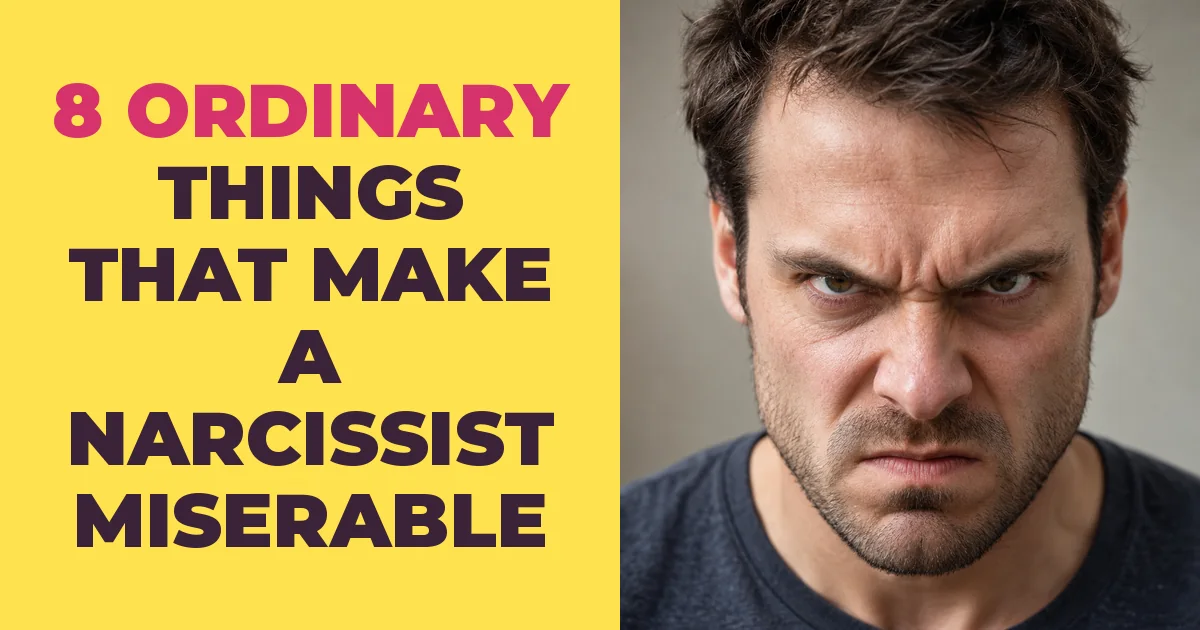
Why small things feel huge to them
Underneath, a narcissist’s self-worth runs on what other people reflect back. Everyone around them is either feeding that or getting in the way.
That’s why they may demand to be treated as special, and turn sour when they aren’t.
So nothing on this list is dramatic.
It just doesn’t feed them.
#1 Your blank face gives them nothing to work with
A calm, blank face gives a manipulator much less to work with.
They make the dig about your cooking at dinner. They wait for the flinch. And you just pass the salad.
For a few, your discomfort is the point. Researchers call this everyday sadism: small cruelties that feel good to them in themselves.
Grey rock is a popular, informal name for going boring and flat when you can’t avoid contact. The aim is to starve the conflict of fuel.
It’s no trick to beat them, and it isn’t safe with everyone.
Does your hurt seem to cheer them up?
If it does, that’s a good reason to show them less of it.
#2 A tiny correction feels like an attack
To a narcissist, being corrected over something small can feel like a full attack.
You mention they forgot the milk. Ten minutes later you’re hearing about every mistake you’ve made since your wedding.
“I never said I’d get it, and how dare you keep score?”
Psychologists studying threatened egotism found narcissists hit back harder after an insult, and they aim it at the person who caused it. A tiny comment can do it.
Then DARVO kicks in: they deny it, go on the attack, and cast themselves as the one wronged. Research links it to more self-blame in the person who spoke up.
Which is why you end up apologising. About milk.
If it’s safe, bring it back to the milk in one calm sentence. Don’t chase every counter-accusation.
If it isn’t safe, drop it. And if the anger turns to threats, get out of the room.
It was always about the milk.
#3 Nobody is looking at them
A room where they aren’t the centre of attention can ruin their whole night.
Your sister announces her engagement at the family barbecue. Everyone hugs her. They go quiet, scroll their phone, and suddenly need to leave.
Psychologists describe two faces of narcissism. The bold one snatches the spotlight back. The quieter one sulks and tallies every slight.
Either way, it’s guarding a self-image that bruises easily.
Guess who gets the silent car ride home?
Watch how they react when the room turns elsewhere.
Then watch it happen again next month. The pattern tells you more than any single night.
#4 A plain, polite no stings

A calm, polite no can feel like an insult to an entitled person.
You can’t mind their friend’s dog this weekend. You have plans. Simple, right?
“Wow. I guess I just can’t count on you for anything.”
Psychologists call this entitlement: the quiet conviction that they’re owed more, and that the rules are for other people. Your plans are supposed to bend around theirs.
So the scales tip. You hand over more, they hand back less, and asking for even a little balance feels like picking a fight.
Try quietly noting what goes out from your side. And let yourself wait before saying yes.
Your no was never rude.
#5 Your wins feel like their losses
Your success can feel like a personal loss to a narcissist.
They laughed when you signed up for the course. “Back to school at your age?” Now you’ve passed, and suddenly they’re tired, distracted, picking at dinner.
Research on narcissistic rivalry puts it simply: in their head, anything you gain comes out of their pocket.
Envy runs strong in narcissism, more so in the quieter type. Your success makes it harder for them to feel above you, so they may play it down, take credit, or sour it.
That’s why your good news gets a sour “Mm.” And why your birthday somehow ends in a fight.
Slowly, you start hiding your wins.
Take your good news to the friends who light up. And notice who falls silent when things go well for you.
#6 Being held to account gets under their skin
Being asked to own a mistake, plainly and calmly, tends to make a narcissist miserable.
They forgot to pick you up from the station. You don’t yell. You just say, “I waited an hour. I’d like an apology.”
“Okay, sorry, but you know how busy I am.” “Sorry if you’re upset.” “Fine, I’m a monster, happy now?”
Notice what’s missing? The part where they own it.
Psychologists describe narcissists as often hypersensitive to criticism while acting like it rolls right off. A clean apology would mean admitting a crack in the image they protect.
So the sorry bends back toward them, and suddenly you’re the one blamed for their disappointment.
Does a sorry from them ever come with no “but” attached? One messy apology is human. A long line of sorry-buts is a pattern.
#7 You keep your word to yourself
A boundary is about your own actions, so it never needs their sign-off.
They start shouting about the bills again. You say, “I’ll talk when you stop yelling,” and go to the bedroom. No speech. No tears.
Boundary is an everyday word, not a clinical one. It simply means what you’ll do to look after yourself, like leaving the room or not answering a 2am text.
Compare that with coercive control, which researchers describe as one person laying down rules for another and punishing any slip. A boundary is only a rule for you.
And that’s what gets under their skin. A boundary works whether they agree or not, so the yelling has nowhere to land.
One clear sentence. Then follow through, again and again. They’ll likely push hard early on.
The guilt comes first. The self-respect catches up.
#8 You stop waiting for them
Once your life stops orbiting them, a narcissist may come looking.
Months of nothing. Then, on your birthday: “Hey stranger. I’ve been thinking about you a lot lately.”
People online call this hoovering, as in sucking you back in. It isn’t a clinical term. It leans on what research calls intermittent reinforcement: warmth that shows up when you least expect it.
It tends to turn up when they want something or sense they’ve been replaced. Funny timing, isn’t it?
Hope can flood back fast. That’s normal.
Pick your response now, before the message comes.
Then judge it by what they’ve done before, not what they’re promising this time.
If you saw your own life in this list, you weren’t imagining it.
None of this asks you to be clever, cold or brave every single day. It just asks you to keep living your ordinary life.
Speak to yourself the way a good friend would. It takes some of the weight off the shame and self-blame.
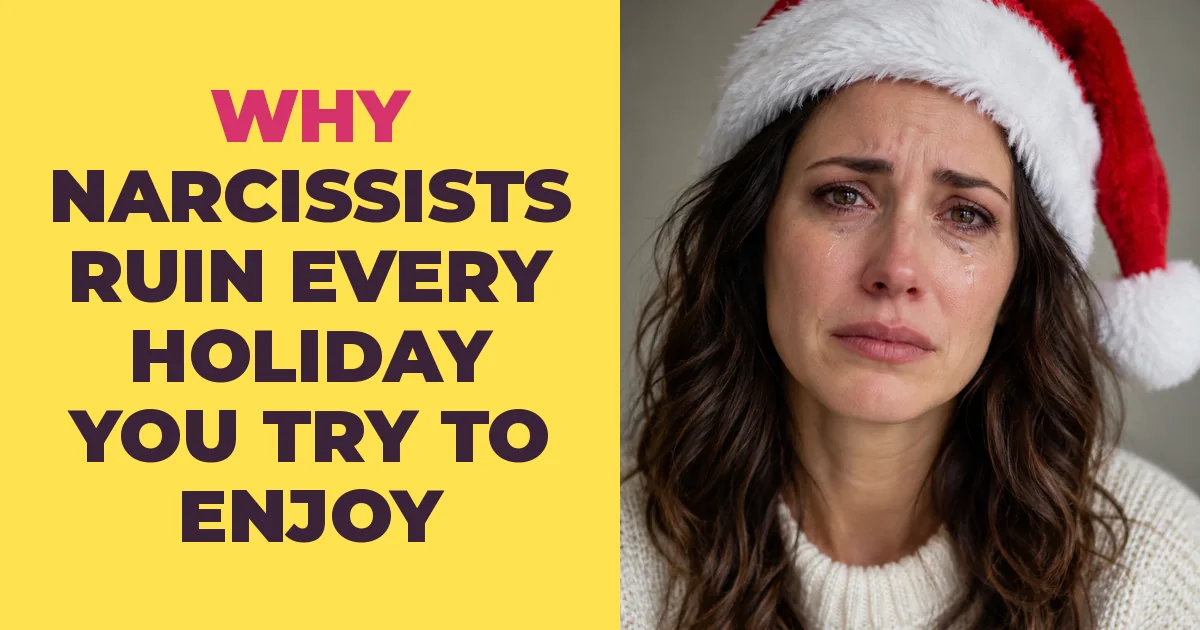
Why Narcissists Ruin Every Holiday You Try to Enjoy

Narcissists hate a day that isn’t about them.
You’ve seen it happen. The tree is up, the table is set, and by dinner the mood has turned into something nobody can name.
Christmas. Your birthday. The trip you saved for all year.
Somehow the best days become the worst ones, and you’re left wondering what you did wrong.
You did nothing. Here are 7 reasons narcissists ruin the holidays you try to enjoy, and why it keeps happening.
Why special days set them off
A narcissist’s sense of worth leans on outside attention. Admiration keeps them steady.
Holidays move that attention. Toward the birthday girl, the kids, the food, the guests.
Studies tie narcissism to resentment when good things happen to others. So a day full of joy that isn’t theirs can feel like a threat.
Not to you. To them. Think about it.
#1 They can’t stand seeing you happy

Your good day can feel like bad news to a narcissist.
You wake up on your birthday feeling light. By noon there’s a fight about the dishwasher, the plans, the tone of your text.
“Why do you always make such a big deal of your birthday?”
Coincidence? Often it isn’t.
Envy is common in narcissism. Your joy pokes at their need to feel superior, so they cut it down to size or wreck it outright.
Over time, happy moments start to feel risky. You hide good news. You keep your birthday quiet so there’s less to lose.
One way to tell: notice who goes quiet when you win. Then notice who lights up. That’s who your day belongs with.
#2 You start bracing days before
Living around unpredictable anger teaches your body to stay on alert.
So the dread arrives early. Days before the holiday, you’re planning the menu around their moods and the seating around their grudges.
You listen to the keys in the door. You read the mood before the coat comes off.
There’s a word for this: hypervigilance. If you can’t tell when the next blow-up is coming, your body keeps watch and tries to smooth things over by giving in.
Saying yes before you’ve thought. Apologising for the weather.
No wonder you’re wiped out by the time the guests leave. Your body worked a double shift.
Next time the alarm goes off, pause and slow down. Ask what you want from this day. When did anyone last ask you that?
#3 The day has to revolve around them

A narcissist may need the spotlight, even on a day meant for someone else.
Some do it loudly. They take over the toast, tell the long story, turn your mother’s birthday lunch into their show.
Others do it quietly.
They sulk in the corner while the gifts get opened. They keep score of who thanked whom. “Nobody even asked how my week was.”
Researchers describe a loud version of narcissism and a quiet one, and plenty of narcissists flip between the two. Both are guarding the same shaky self-image.
So you end up managing their mood instead of enjoying yours. And somehow their disappointment becomes your fault.
See how they behave the minute everyone’s looking at somebody else. It tells you everything.
#4 Perfect guest, cold car ride home

The narcissist your family sees and the one you live with can be different people.
At dinner they’re charming. They praise the gravy, laugh at your uncle’s jokes, help clear the table.
Then the car door shuts. Silence, or a cold “You were so embarrassing tonight.”
Researchers have a term for this: impression management. Being admired props up how a narcissist feels about themselves, so the public image gets enormous effort.
In the car, there’s no audience left to impress.
Your aunt squeezes your arm and says you’re so lucky. You smile, and you start to doubt what you know.
Believe the version you get at home. That’s the real person.
#5 One small comment sets off a storm
To a narcissist, a tiny correction can feel like a public insult.
You mention the turkey needs ten more minutes. Or you laugh when your sister teases them. The room goes cold.
Then comes the explosion, or a slow fury that can surface days later. “You humiliated me in front of your whole family.”
Studies on what’s called threatened egotism show that a narcissist who feels slighted tends to hit back harder, straight at the person they hold responsible. Not at the turkey. At you.
So you start checking every sentence before it leaves your mouth. You say sorry for things you never did.
If you need to point something out, make it brief and stick to facts. When it feels unsafe, let it go. And if the anger tips into threats, get yourself out of there.
Your safety outranks the dessert course.
#6 Silence becomes their holiday gift
The silent treatment can turn a whole holiday into a punishment.
A small disagreement on Christmas Eve. Then nothing. They chat with everyone at the table and pass the potatoes to everyone but you.
The cold shoulder lasts through New Year.
Being shut out strikes at something deep: the need to feel you belong and that you count. Studies describe the sting as close to physical pain. That’s why it works.
You apologise just to end it. Next year, you avoid anything that might set it off.
Try this instead: tell them one time that the door’s open when they want to talk. Then get on with your Christmas. Don’t chase. Don’t plead.
The fairy lights still work without their permission!
#7 Somehow the ruined day is your fault

When you name what happened, the narcissist often turns into the victim.
You say, gently, that the shouting at dinner hurt. Within minutes you’re hearing a list of your faults.
“I never shouted. How dare you. I worked so hard on this day and you ruined it.”
Then the tears, or the sulking, until you’re the one handing over tissues.
This move has a name, DARVO. Short for deny, attack, reverse victim and offender. Studies show it leaves the woman who spoke up blaming herself even more.
That’s why you end up apologising for bringing it up. Then you stop bringing anything up.
If you do raise something, keep coming back to what actually happened and let the counter-attack go. The shouting happened. You were there.
The holidays aren’t cursed. You aren’t too much. The pattern is theirs, and patterns like this often stay the same year after year.
So put your hope where it can land: with people who are glad when you’re glad.
Celebrate with them. Even if it’s one friend and a slice of cake.
10 Strange Little Things Only Narcissists Do

Narcissists rarely give themselves away with one big scene.
It’s the small stuff. The compliment that stings an hour later. The story they tell at dinner that used to be yours.
Each thing on its own sounds too petty to mention. So you don’t.
And then you wonder why you feel so tired around them.
Strange little habits like these often add up to something bigger, and what counts is how often they keep happening.
Here are 10 strange little things narcissists do, and what each one is really about.
#1 Lovely in public, frosty at home
The person everyone adores at dinner may barely speak to you on the drive home.
At dinner they laugh at your jokes, top up your glass and tell your friends how proud they are of you. Then the car door shuts. Silence. Or a list of everything you did wrong.
Why the switch? Many narcissists pour energy into how others see them, because applause from outside is what keeps their self-worth standing.
Your friends get the highlight reel. “You’ve got a good one there,” they say.
And you start to doubt what happens at home.
Believe what you live with in private. That’s who they are when nobody’s clapping.
#2 Their compliments come with a hook
A narcissist’s compliment often has a small blade hidden inside it.
“You look great. Much better than last time.” “Good for you, getting that job. They must have been desperate.”
It sounds like praise. It lands like a slap.
Researchers who study narcissistic rivalry describe a status-guarding streak. If you rise, they feel they’ve slipped, so they knock you down a notch.
So they can’t fully cheer. They have to shave a bit off first.
Over time, you start keeping your wins to yourself. Notice that.
Who in your life just says “Well done” and means it?
#3 Bragging dressed up as a shrug
Some narcissists work their achievements into every conversation, sometimes disguised as a complaint.
“Ugh, my boss wants me to lead everything. So annoying.” “I barely studied and still got the top mark. Weird.”
Then they wait. For the gasp.
Narcissism runs on a hunger for applause. When self-worth depends on what others reflect back, they keep casting for praise, and the story tends to get bigger with every retelling.
Meanwhile, your news gets a nod. Your needs feel like an interruption.
One humblebrag is nothing. Look at a whole season of them.
Is anyone ever allowed to be impressive but them?
#4 Your idea becomes their idea

A narcissist may copy what you do, then act like they thought of it first.
You take up running. Suddenly they’re training for a marathon. You mention a business idea over coffee, and three weeks later it’s their idea, told at a party.
“What? Lots of people do that.”
Envy shows up a lot in narcissism, research suggests, most of all in its quieter, prickly form. When you do well, their sense of being on top wobbles. So they make your win smaller, ruin it, or take it.
Copying is the taking part.
Sound petty? Maybe. But it keeps happening.
Pay attention to who goes flat when good things happen to you. And who suddenly wants exactly what you have.
#5 Every story turns into their tragedy
Your bad day can quickly become a story about their much worse life.
You tell them your mum is in hospital. Within a minute you’re hearing how nobody ever visited them, how hard their year has been, how misunderstood they are.
And somehow you’re comforting them.
Researchers describe a softer-looking, vulnerable side of narcissism. Prickly. Full of grievances. Secretly sure they’re better than everyone, yet unseen. Casting themselves as the wounded one keeps a brittle ego safe.
Point it out? They sulk. “Wow. I can’t even talk to you anymore.”
It’s not shyness or a hard life that marks this. It’s how often your pain gets pushed aside for theirs.
Whose turn is it to be hurting? Theirs. Almost every time.
#6 Shared wins somehow belong to them

Shared wins have a funny way of becoming theirs alone.
You planned the whole holiday. Booked it, packed for it, found the restaurant. At dinner with friends, it’s “I found this amazing place.”
The house you both fixed up? “My project.”
Psychologists call this entitlement: a quiet conviction that they’re owed more than the rest of us. Grabbing the credit for something you built together fits right in.
Correcting them feels petty. Asking for an even split of the credit feels like lighting a fuse.
So you hand over more and get less back, without a word. Jot down what you contribute, even just in your notes app.
You were there. You know who booked the flights.
#7 A new person is suddenly perfect
Out of nowhere, one new person becomes the most amazing human alive.
A coworker, a gym friend, a neighbour. Their name comes up at every meal. “Jess is so easygoing. She’d never make a fuss about this.”
Ouch.
There’s a name for this: triangulation. A problem between the two of you gets a third player added, someone to make you jealous or push you harder. It saves them from talking to you straight.
New people often get the full charm. The cold side shows up later.
Suddenly you’re in a contest you never signed up for.
You don’t have to enter that race.
#8 They understand your pain just fine
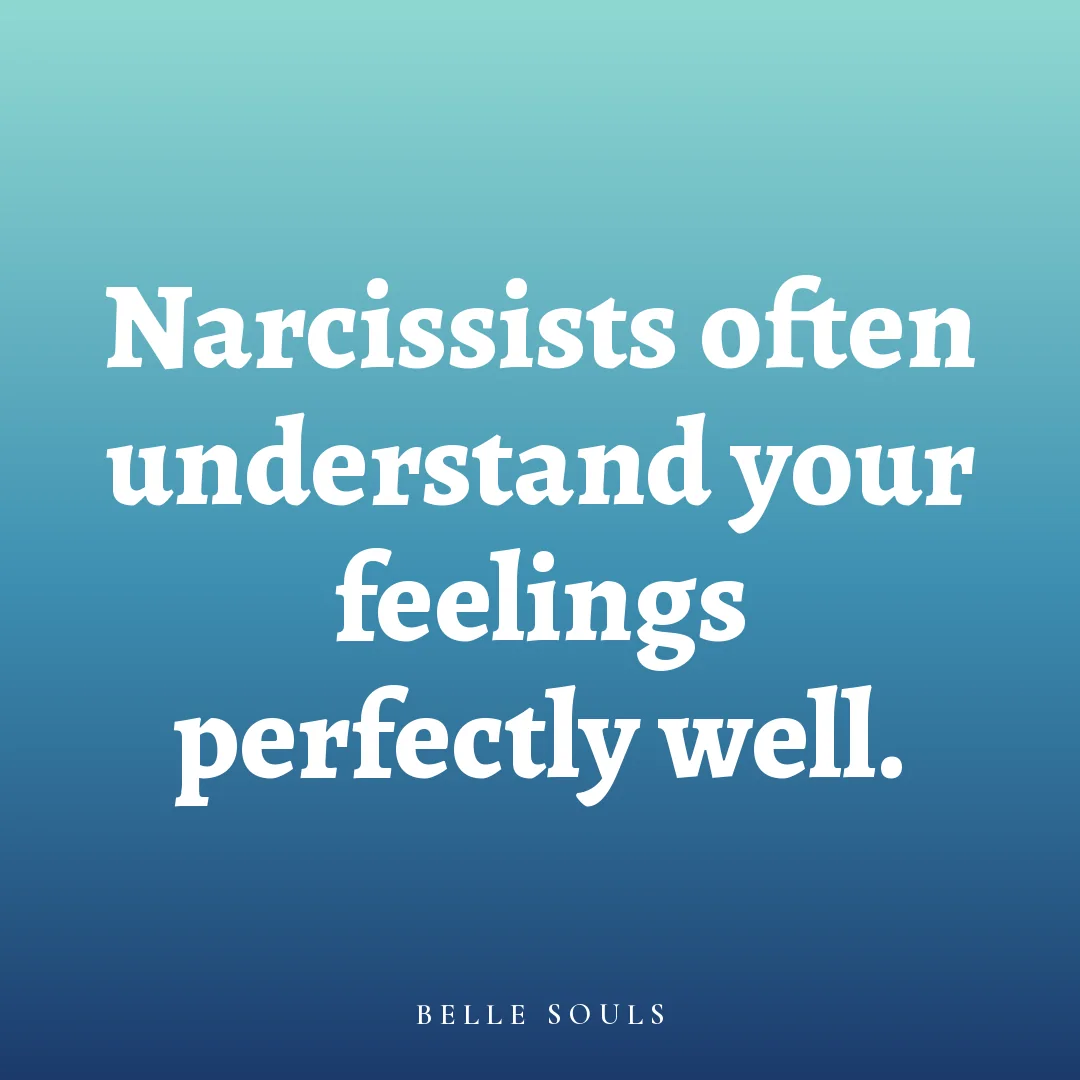
Narcissists often understand your feelings perfectly well. They just don’t act on them.
You cry, they change the subject. You say you’re hurt, and you hear “You’re too sensitive.”
Then, mid-argument, they bring up the exact insecurity you told them about at 2 a.m.
So they were listening.
In studies, narcissists showed less empathy at first, yet more of it when asked to imagine the other person’s view. In other words, it can be switched on. They often just don’t.
No wonder you’ve gone quiet about your feelings and second-guess every reaction. Bring your heart to people who actually respond to it.
Some people will. Gladly.
#9 Their memory fails during apologies

The moment you ask for an apology, their memory suddenly stops working.
You bring up last night’s comment. Blank face. “That never happened.” Then, a beat later: “And how dare you accuse me of that.”
There’s a research term for it: DARVO. They deny, go on the attack, then swap places so they’re the wounded one. Research suggests the person who raised the problem walks away blaming herself more.
Which is exactly why it works.
Ten minutes later, you’re the one apologising. For bringing it up.
Make a quick note on the day something happens. If you raise it, keep coming back to the first issue and let the counter-attacks slide past.
Your memory is fine. Theirs is selective.
#10 They accuse you of their own moves
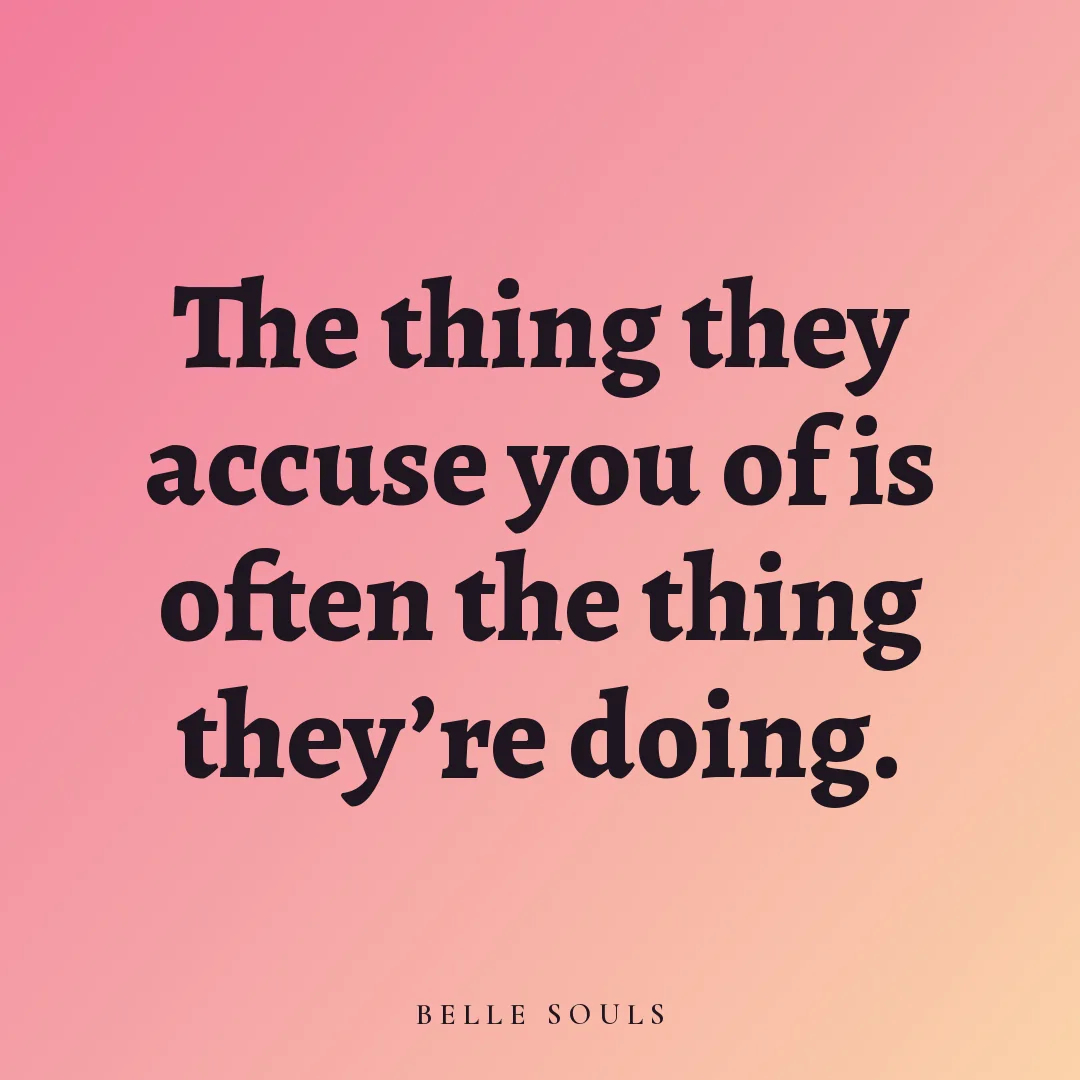
The thing they accuse you of is often the thing they’re doing.
“You’re always on your phone.” Said by the person glued to theirs. “Stop shouting!” Said while shouting.
It’s dizzying.
The name for this is projection. Spotting a flaw in you is easier than facing it in the mirror.
You end up arguing your innocence over things you never did, and the original problem quietly disappears.
Here’s a different lens. A charge that shows up again and again may tell you more about them than about you. Say what’s true one time. Then stop explaining.
Sometimes the accusation is a confession.
If you saw your life in this list, you’re not being dramatic. One odd moment means little. A pattern over months tells you far more.
You don’t have to prove any of it to them. You only have to stop doubting what you saw.
Start small. Tell one person who knows you well one true thing that happened this week.
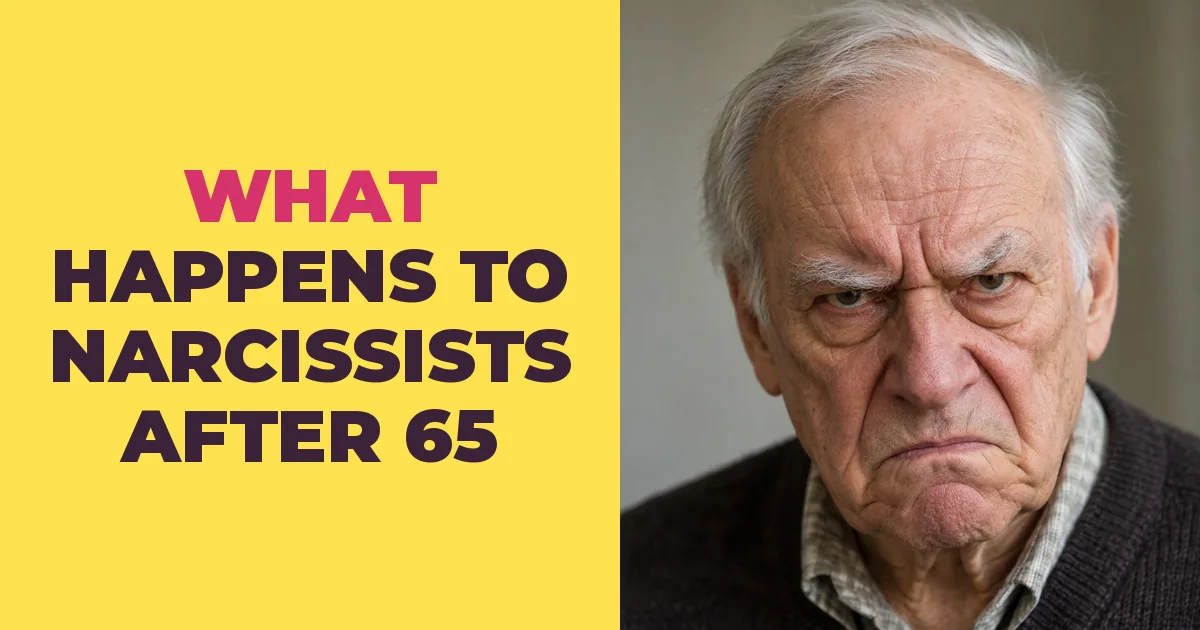
What Happens to Narcissists After 65

A narcissist rarely mellows with age, no matter how many candles are on the cake.
Maybe you’re waiting for age to soften your father. Or your mother. Or the ex you still see at every family birthday.
You keep thinking the next health scare, the next quiet year, the next lonely Christmas will finally make them see what they did.
It usually doesn’t.
Here’s what really happens to narcissists after 65, and why the change you’re waiting for keeps not coming.
Why the years change so little
Narcissism is a lasting pattern, not a mood. It means a need to feel special, a constant hunger for admiration, and very little room for how anyone else feels.
Underneath, their sense of worth depends on outside confirmation. Other people are either a source of it or a threat to it.
A birthday doesn’t rewrite that.
It changes the setting. The script stays.
#1 Getting older doesn’t soften them
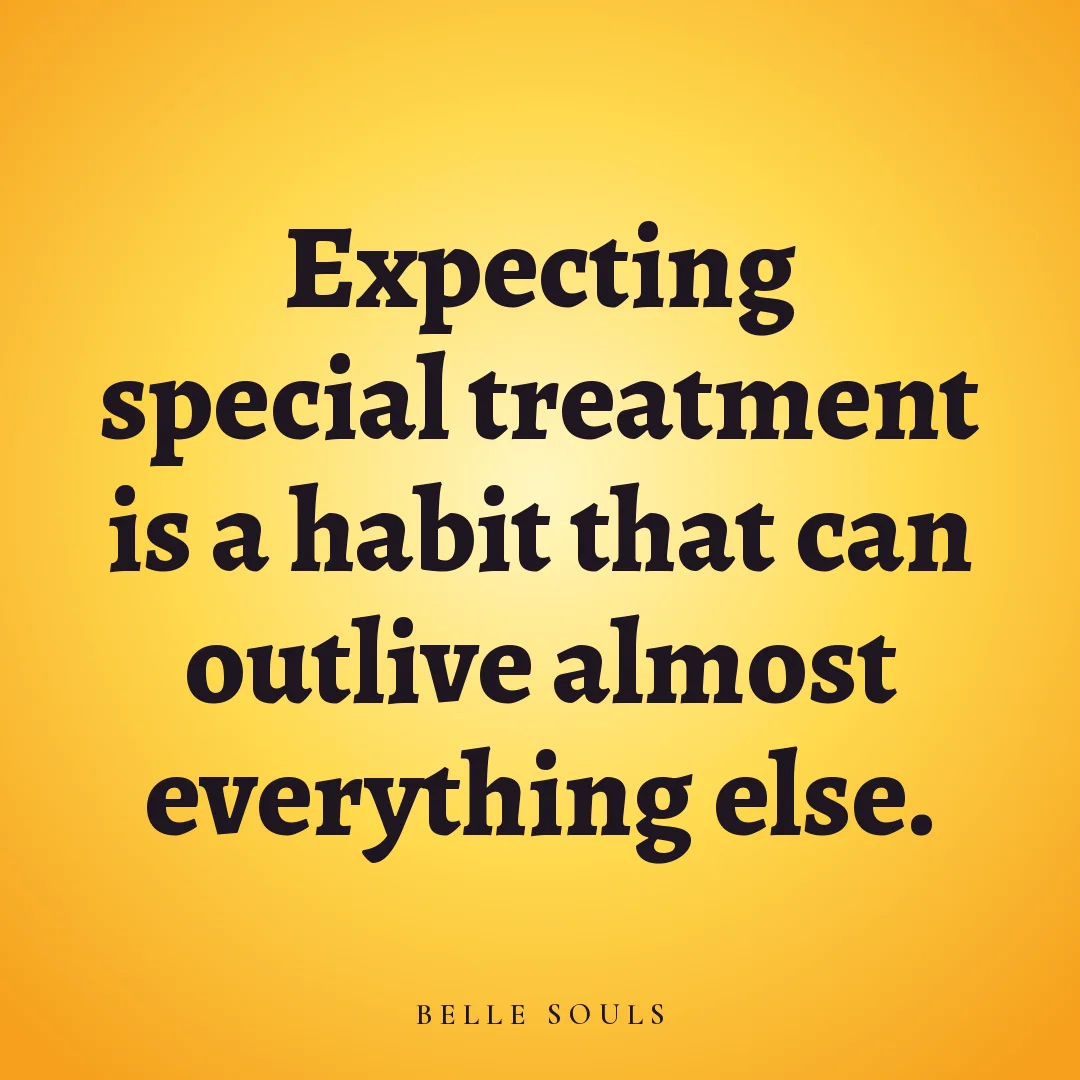
Expecting special treatment is a habit that can outlive almost everything else.
Sunday lunch with your father. He’s 78, walks with a stick, and still expects the best chair, the first plate and the last word.
When he doesn’t get it, the mood in the room drops. “I suppose I’ll just sit here, then,” he says, staring at the corner chair.
The stories get taller too. The promotion he nearly got decades ago is now the company he practically ran.
Ask about your week and watch his eyes drift. Your news only matters if it touches his.
And your needs? Still an inconvenience.
Judge by the pattern over months, not by one gentle afternoon. Expect the behaviour to stay the same, rather than waiting for the grey hair to change it.
His chair was never yours to guard.
#2 The need for an audience rarely retires
The hunger for admiration rarely retires when the job, the title or the crowd does.
Picture your mother’s retirement party. Speeches, laughter, a toast. Everyone calls her a legend.
Then the next morning she phones you three times with the same story about how lost they’ll all be without her.
Narcissists often invest heavily in a polished public image, because admiration feeds how they see themselves. That image always needed an audience to work.
A lasting pattern like this can simply find a new stage in later life. When the crowd shrinks, a narcissist may turn to whoever’s still close. Often that’s you.
You end up reflecting her back to herself, one retold story at a time.
Trust what happens behind closed doors over what the crowd saw. Are you her daughter, or her audience?
#3 Their health turns into your job
Entitlement often doesn’t fade when the body slows down. It can just find a new excuse.
The text lands at 7am: “Appointment at 10. You’re driving.” Not a question.
So you move your meeting and sit two hours in a waiting room, then get told you parked too far away.
Needing help is human. Expecting yours, every time, without asking, is entitlement.
It makes ordinary limits feel like insults. So “I can’t do Thursday” lands as an attack, and asking for fairness feels like starting a war.
You give more and get less, so start keeping track of what you give. Stop pre-agreeing before you’ve checked your own week.
Your Thursday counts too.
#4 The wounded act gets louder
The loud narcissist and the sulking one are often the same person on different days.
Psychologists describe two faces of narcissism: a bold, charming one and a quiet, touchy, self-pitying one. Many people switch between both.
The quiet face sounds like this: “Nobody visits me. Not that anyone cares.”
Then comes the list. The Christmas you left early. The call you missed in March. Every slight, filed and dated.
Both faces guard one fragile self-image.
Either way, their disappointment becomes your fault, and you walk in already apologising.
Watch how they act when they’re not the centre of attention. That’s often where the sulk begins.
And notice whether a sorry ever comes without a “but” attached.
#5 Don’t hold your breath for an apology
Bringing up the past rarely earns you an apology. More often, it puts you on trial.
You finally say it, quietly, at the kitchen table: “It really hurt when you missed my graduation.”
“That never happened. And how dare you? I’m an old woman and you come here to attack me?”
Deny. Attack. Flip the roles.
Psychologists call this DARVO. Research found it makes the person raising the issue blame themselves more. That’s why you drive home feeling like the bad guy.
If the past ever comes up again, you don’t have to argue each counter-attack. The original point still stands.
Their missing regret isn’t proof you were wrong.
#6 Relatives start delivering their messages
When you step back, the pressure often starts arriving through other people’s mouths.
Your aunt texts: “Your mum’s not getting any younger. Just call her.” Then your brother. Then a cousin you haven’t heard from in years.
Some people call these relatives flying monkeys. It’s a popular term, not a clinical one, for those who carry someone’s pressure on their behalf.
It links to what family researchers call triangulation: pulling a third person into a two-person problem instead of facing it directly.
Many of them aren’t cruel. They’ve heard a version where the narcissist is the wronged one, and they’re being loyal.
Still, you end up outnumbered in your own family.
You don’t owe a messenger your side, so keep the details private. One way to tell: are they asking how you are, or repeating a script?
#7 Guilt is the hook they still have

Fear, obligation and guilt can keep you saying yes long after you’ve stopped wanting to.
“After everything I’ve done for you.” Then the sigh down the phone, the one that means you’ve failed again.
Some people call this FOG. It’s a popular name for emotional blackmail.
Reminders of old sacrifices make saying no feel more costly than giving in. So yes becomes automatic, and their loneliness starts to feel like your job.
Guilt after you’ve hurt someone is healthy. Guilt used as a lever is different.
A boundary is something you do, so it doesn’t need their agreement. “If the call turns to insults, I’ll hang up.” Then you do.
Pause before you answer. The yes can wait.
No birthday was ever going to hand you the parent, or the partner, you needed. That was never yours to fix.
What you can do is stop putting your life on hold for a change that keeps not coming.
Start with one person who’s on your side. Tell them the real version.
7 Hidden Weaknesses That Bring Every Narcissist Down

Narcissists look untouchable. Up close, they’re anything but.
You’ve seen them own the room at dinner, steamroll every argument and stroll off from fights you’re still replaying at 2 a.m.
So it feels like they hold all the cards.
They don’t. Behind the swagger sits an ego so thin that a sigh, a raised eyebrow or a calm ‘no’ can put a crack in it.
Below are the 7 soft spots hiding under that act, and what each one looks like from where you’re standing.
The fragile core
Researchers see two faces of narcissism. One is loud: bold, charming, in charge. The other is quiet: prickly, bitter, sorry for itself. Plenty of narcissists flip between the two.
Different outfits. Same purpose.
Each one shields an ego that bruises easily. The loud version puffs itself up. The quiet version pulls back and nurses a grudge.
That’s why the weak spots below are so precise. Poke the image, and to them it can feel like their whole self is under fire.
#1 Your attention is their oxygen

A narcissist’s sense of worth isn’t stored inside them. It’s borrowed from your reaction.
It shows up in small ways. The same story told three times at the barbecue. The promotion that gets bigger with each retelling. ‘Did you see their faces?’ as you buckle your seatbelt.
Why? Their value only feels real when someone else confirms it. So everyone nearby ends up as either an audience to impress or a danger to the act.
Guess where your needs end up.
Slowly you can feel like a mirror on legs. Polish them, reflect them, look impressed. Your bad days, your worries and your plans get treated as a nuisance.
Look at months, not one awkward night. One vain moment proves nothing. A steady hunger does.
And nobody can fill that tank for them.
#2 The smallest criticism feels like an attack
A narcissist can hear one gentle comment as a full-scale attack.
The milk didn’t get picked up, and you mention it lightly. Ten seconds later it’s a war. ‘Oh, so I’m useless now? Brilliant. Thanks.’
Other times the air just freezes for the evening. Then, days later, a jab about a remark you’d long forgotten.
Psychologists call this threatened egotism. In the research, narcissists answered an insult with more aggression, aimed right at the person they blamed for it.
Criticism, rejection, being ignored. Any of it can bruise the image.
Living with that, your words start passing through an inner editor first. Apologies slip out for things that were never yours.
If you do raise something, keep it short and factual. If it doesn’t feel safe, let it go. And if the anger turns into threats, leave the room.
Your safety beats winning the point.
#3 They need the world to believe the mask

A narcissist protects their public image like it’s the family silver.
At the party, they refill glasses and ask about everyone’s kids. On the drive home? Nothing. Or a rundown of every mistake you made.
Your friends tell you how lucky you are. You smile and let it go.
The reason is simple. Being admired is what props up their self-worth, so they pour serious effort into how outsiders see them.
That gap is the weak spot. It’s also why your story gets doubted, and why you begin doubting it too.
Sure, everyone’s a bit nicer at parties. This is different. This is warm versus cruel. If one person has seen both versions, lean on them.
What happens behind closed doors is the real record.
#4 Good news makes them go sour

Your happiness can land like an insult to a narcissist.
You get the job. You tell them, buzzing. ‘Huh. And the pay’s decent, is it?’ Then the topic moves on.
Or your birthday dinner ends in a fight. Again.
Research ties envy to narcissism, most of all the quiet kind. Your wins rattle their need to sit above you, so they make your news smaller, take credit for it, or ruin the moment.
Studies on narcissistic rivalry describe the same thing. Anything you gain counts as something they lost.
So you start keeping good news to yourself. Happy days begin to feel dangerous.
Pay attention to whose face falls when things go well for you. Then bring your wins to the people who cheer.
Your joy was never the problem.
#5 Fair rules feel like an insult

To a narcissist, an ordinary limit can feel like a slap in the face.
You ask about the money they borrowed in March. You say you can’t skip your sister’s thing for their work dinner. Cue the outrage. ‘Wow. After all I do around here?’
Psychologists call this entitlement: a fixed sense that they’re owed extra, and that rules exist for other people.
So your normal request sounds like an attack to them. Even a queue at the bakery becomes a personal insult.
Meanwhile the scales tip. You put in more, you get back less, and wanting anything at all starts to feel like picking a fight.
Wanting your needs met is not the same thing. Quietly note what you hand over. And quit handing out money, forgiveness and yeses before anyone’s even asked.
Fair isn’t a fight, whatever they call it.
#6 They can’t admit they were wrong
Point out a narcissist’s mistake and somehow you walk away as the guilty one.
You mention the dig about your weight in front of your mum. Within a minute: ‘I never said that. How dare you? You always do this.’
Then come the tears, or the sulk. Somehow you’re the one patting their back.
Researchers named it DARVO. First comes denial, then an attack on you, then a role swap where they suddenly become the wounded party.
Studies found it makes the person speaking up blame herself more. No wonder the talk ends so fast.
After enough rounds, problems stop getting mentioned at all.
Don’t chase each counter-accusation down its rabbit hole. State the original issue once and keep circling back to it.
What did they actually do? Start there.
#7 Your calm leaves them with nothing

A narcissist can’t do much with a reaction that never comes.
They text something built to sting. Normally you’d fire back three paragraphs. This time: ‘Noted. I’ll drop the kids’ coats off Saturday at 10.’
Then silence.
Online, this gets called grey rock: being flat and boring when you can’t avoid contact. Its bigger cousin, no contact, means stepping away completely. Both are popular labels, not clinical treatments.
The logic is simple. Less emotion from you means less material for them, and the trauma bond gets space to loosen. The first weeks can bring cravings. Calm tends to follow.
It isn’t a contest you win, and it isn’t always safe. If they might escalate, a domestic violence service can help you plan.
That steadiness you feel? That’s you, coming back.
A narcissist can still do real harm. But the weight pressing on you was never as solid as it seemed.
You weren’t imagining the eggshells. You were reading a fragile person correctly. Pick one point from this list and just watch for it this week.
That’s plenty for now.