
Month: October 2026
10 Weird Habits Only Narcissists Have

Narcissists rarely look strange from the outside.
Up close, though, you notice things. The odd compliment that stings for hours. The story that was yours last week and is theirs today. The apology that somehow ends with you saying sorry.
You start to wonder if you’re imagining it.
Doubting yourself isn’t proof you’re wrong. Seen alone, each habit looks small. Seen together, over months, they form a pattern that tells you a lot.
Here are 10 weird habits only narcissists have, and what each one is really doing to you.
#1 Their memory vanishes when sorry is due
Ask a narcissist to apologise, and their memory suddenly stops working.
You bring up the comment from Saturday. They frown. “I never said that. You always twist things.”
Push a little, and the conversation flips. Now it’s about your tone, your timing, your problems.
Psychologists have a name for this move: DARVO. Deny, attack, then swap victim and offender. Studies show it leaves the one who complained feeling more at fault.
That’s why you walk away apologising.
One thing helps. Jot down what happened the same day. Then steer back to your original point, calmly, as often as needed. Skip the side fights.
Doubting yourself after hearing “that never happened” doesn’t mean you were wrong.
#2 Their compliments come with a sting
A narcissist’s compliment often has a tiny blade tucked inside it.
“You look great. Did you finally start going to the gym?”
“Nice promotion. They must have been desperate.”
Researchers describe two sides here: admiration and rivalry. Charm does the work at the start. Later, competing with you wins out, and anything good for you registers as a loss for them.
So the praise comes, but it’s been shrunk first.
Soon your successes feel risky to share. Bring your wins to the friends who cheer.
Real praise doesn’t need a but.
#3 Life is one long audition for them

In public, a narcissist plays the part of the perfect partner.
At the party, they refill your glass, laugh at your jokes, touch your back. Your friends say, “You’re so lucky.”
Then the car door shuts. Silence the whole way home.
Most of us are a bit more polite with company. This is a different gap: warm out there, cold in here. Their image matters so much because being admired props up how they see themselves.
And since everyone else only sees the show, nobody believes you. You start doubting what you lived through.
Believe the private version. That’s the one you live with.
The audience goes home. You don’t.
#4 Your news becomes their story
Tell a narcissist your news, and within a minute it’s about them.
You mention your sister is sick. “Oh, that reminds me of when I had that awful flu at work.”
Twenty minutes later, you’re hearing about their boss.
The loud, showy type of narcissist tends to hog the spotlight. How you feel only gets airtime when it touches their life.
Over time, you can start to feel like a mirror they talk into. Your needs become a nuisance. Even to you.
One way to tell: see how they act when the room’s attention drifts elsewhere. Do they sulk, interrupt, or drift off?
Your sister is still sick, by the way.
#5 Every small slight goes in the file
A quieter narcissist may keep a running list of every slight, real or imagined.
You forgot to thank them in front of your friends. They said it was fine. Three weeks later, mid-argument, it comes back word for word.
“I didn’t want to make a fuss. I never do.”
Psychologists describe a quieter, touchier form of narcissism. It sulks when ignored and acts like criticism doesn’t land, when it clearly does. Like the loud form, it guards a fragile self-image.
So you tiptoe. And you get blamed for their disappointment.
One way to tell: do their apologies ever arrive without a condition attached?
You can’t win against a list you’re not allowed to see.
#6 They copy you and swear they didn’t

A narcissist may quietly copy you, then insist it was their idea first.
You start running. Suddenly they’re training for a half marathon. A month later, they tell friends they got you into it.
Mention it, and you get, “Wow. Not everything is about you.”
Envy runs strong in narcissism, most of all in the quieter form. When things go well for you, their sense of being above you wobbles. Shrinking, stealing or spoiling your win steadies it.
Copying is stealing with a smile.
Everyone feels a pang of jealousy now and then. Using it over and over to knock you down is something else.
Watch who falls silent at your good news.
#7 Empathy switches on only when it pays

Many narcissists can read your feelings fine. They simply don’t bother doing anything with them.
You cry after a brutal phone call with your mom. They check their phone and say, “You’re too sensitive. Let it go.”
Then a coworker is upset, and they’re suddenly warm and patient.
In studies, their empathy started low but climbed when they were asked to picture the other side. So it’s less can’t, more won’t.
They saw your tears. They chose the phone.
Bit by bit, you go quiet. Save your heart for the friends who actually show up, not someone storing your soft spots as ammunition.
Your feelings were never the problem.
#8 Shared wins somehow belong to them
When something goes well for both of you, a narcissist often walks off with the credit.
You planned the trip, booked the hotel, found the restaurant. At dinner with friends, it’s “I wanted to treat us.”
The garden you dug together? “My project.”
Researchers call the root of this entitlement: a lasting sense of being owed more than anyone else. Even basic fairness lands as a personal slight.
You pour in more and receive less. Asking for a crumb of credit feels like declaring war.
Keep a quiet list of what you put in. Not to argue with them. Just so you know.
Your effort happened, even if no one said so.
#9 You become invisible in a full room

Cross a narcissist, and you may find yourself erased in plain sight.
They chat with your mother at Sunday lunch, joke with your brother, thank the waiter. You ask a question. Nothing.
Days go by. Then they’re back, cheerful, as if nothing happened.
Humans need to feel included and to count. Being frozen out hits both, which is why it can ache in the body and wear you down until you cave.
You say sorry simply to make it stop. Whole topics go off-limits.
Tell them once you’re happy to talk when they’re ready. Then get on with your day. No chasing.
Let the silence be theirs to carry.
#10 They accuse you of their own moves
The things a narcissist accuses you of often describe them perfectly.
They’re texting someone at midnight, and you’re the one “hiding something.” They’re shouting, and you need to “calm down.”
They take and take, then call you selfish. You lie awake replaying it.
Psychologists call it projection. Pinning a flaw on you means they never have to spot it in the mirror.
So you end up defending things you never did, while the real issue quietly disappears.
Hearing the same charge again and again? That repetition is telling you about them. Give the facts once, then let it sit.
When they say “calm down,” notice who’s shouting.
Patterns like these show up across situations, not just on a bad day. And none of them are your fault.
Look at months, not moments. One sweet day doesn’t cancel the rest, and one awful day isn’t the whole picture. Plan for the habits to stay, rather than holding your breath for a change.
You saw it clearly enough to read this far. Trust that.
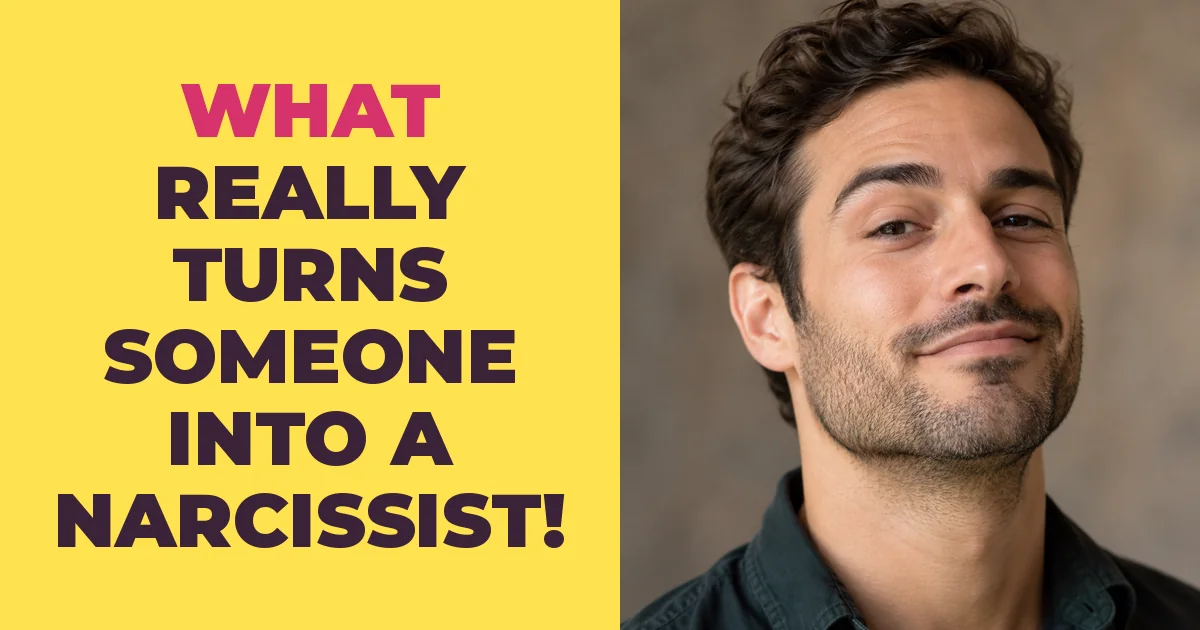
What Really Turns Someone Into a Narcissist

A narcissist runs on a need that nobody can ever fully fill.
You’ve felt it. The compliment that’s forgotten by morning. The mood that flips the second someone else gets the attention.
And you’ve probably spent hours trying to work out why. Was it their childhood? Their ex? Something you said?
It wasn’t something you said.
Here are 7 things that really drive a narcissist, from the inside out.
What’s running the engine
You’ve probably been handed a story about why they’re like this. A rough childhood. A cruel ex. Stress at work.
Those stories might be true. But underneath the behaviour sits a sense of worth that has to be propped up from the outside. When praise flows in, they’re charming. When it dries up, other people become the problem.
Only a clinician can diagnose anyone. This is about patterns, so you can spot yours.
#1 Their worth is on loan from you
A narcissist can’t feel good about themselves unless someone else keeps saying it.
That’s why the compliment you gave this morning is gone by dinner. They need another one. And another.
Watch them at a party. They tell the promotion story again, a little bigger each time, scanning faces for the reaction.
Everyone becomes a fan or a threat.
And you? You start to feel like a mirror they check on the way out the door. Your own needs get treated as an interruption.
One way to tell: look at the last few months, not one bad evening. Anyone can have a vain day.
This pattern doesn’t take days off.
#2 The big act guards something fragile
The loud narcissist and the quiet one are protecting the same shaky self-image.
The loud one takes over dinner, talks over your sister and needs the spotlight. The quiet one sulks in the car because nobody asked about their day, and keeps a running list of slights.
Psychologists call these grandiose and vulnerable narcissism. Many people switch between the two.
Both are armour. The loud version puffs up. The quiet version pulls back and nurses a grudge.
Criticise either and they may act like they couldn’t care less. Then comes, “I guess I can never do anything right,” and suddenly you’re the one doing the comforting.
No wonder you walk on eggshells.
Try this: check whether a sorry ever shows up with no strings on it. “I’m sorry you feel that way” doesn’t count. When did you last get a clean one?
#3 A small comment feels like an attack
Bruise a narcissist’s image, even by accident, and the anger tends to land on you.
You ask, “Did you call the plumber?” Ten minutes later you’re fighting about how you never appreciate anything.
Or you correct a date in front of friends. They laugh it off. Then the cold fury starts on the drive home, and days later they bring up a comment you can’t even recall making.
Research on what psychologists call threatened egotism links narcissism with hitting back harder after an insult, and at the person behind it.
Everyone gets angry. This is anger way out of proportion, aimed squarely at you, and soon you’re apologising for things that were never yours.
You start pre-editing every sentence.
If the anger turns into threats or breaking things, leaving the room isn’t overreacting. Your safety comes first.
#4 Rules are for everyone else
To a narcissist, an everyday limit can feel like a slap in the face.
You mention your work dinner on Thursday. They’d assumed you’d be home cooking. Now you’re “selfish” and the whole week tilts.
The money you lent them in spring? Never mentioned again. The project you built together? Somehow it was their idea.
Psychologists call it entitlement. It’s a settled sense that they’re owed more than the rest of us, and that the usual limits are for other people.
Your simple ask becomes a fight you started.
You give more. You get less. Wanting things even feels like declaring war.
Asking for what you need doesn’t make you entitled. One small shift: stop agreeing, forgiving and paying in advance, and quietly jot down what you hand over. The list may surprise you.
#5 Your good news is their bad news
To a narcissist, your success can feel like their loss.
You get the job. They shrug: “Nice.”
Your birthday somehow ends in a row. Your friend’s engagement turns into a lecture on how fake she is.
Research ties envy to narcissism, more so the quiet, vulnerable kind. Someone else doing well pokes at their need to be on top, so your win gets made smaller, borrowed or wrecked.
It also explains the charming start. Psychologists split it into two sides. Admiration is the charm that reels people in early. Rivalry shows up later and cuts others down.
So you start hiding good news.
Pay attention to who goes silent when things go well for you. Then take your wins to people who light up for them!
#6 They see your pain and look away
Many narcissists know exactly how you feel. They just choose to do nothing.
You’re crying in the kitchen. They check their phone, then change the subject to their day.
Later you hear, “You’re too sensitive.” And the thing that hurt you shows up again in the next argument, aimed right at the sore spot.
Studies on empathy describe something telling. Left to themselves, narcissists show less of it. Asked to picture things from your side, they show more.
Think about it. That’s won’t more than can’t.
It’s why they can be warm with strangers and cold at home. So you go quiet about what hurts, and start second-guessing your own reactions.
Save your hurt for people who handle it kindly.
#7 The sad backstory keeps you excusing them

The sad backstory often becomes the reason you keep excusing the harm.
“They had a hard childhood.” “Their dad was worse.” “Their ex really did a number on them.” You’ve said these to friends, or to yourself at 2am.
Psychologists call the strain underneath cognitive dissonance. Believing “they love me” while living “they hurt me” is so uncomfortable that the mind hunts for ways to make the hurt make sense.
Add the years you’ve already put in, and walking away feels like throwing them out.
So you argue with yourself. Every decision feels impossible.
One thing that helps: put the facts on paper. Just the events, without the meaning. Leave the backstory off the page.
What would that list say?
You can’t fix the engine.
That was never your job.
Watch the pattern over months, don’t hold your breath for it to change, and save your energy for people who meet you halfway. Trying this hard to understand someone isn’t a weakness. It shows how much you care, and that care belongs somewhere it’s returned.
12 Things Narcissists Do in Public That Give Them Away

You’re at a dinner, watching them light up the whole table, and you feel strangely alone.
Narcissists save their best show for an audience.
Everyone else sees the charm. You see the cracks, because you’re the one who goes home with them.
And when you try to explain it, it sounds like nothing.
It isn’t nothing. The public version leaks, in small ways, if you know where to look.
Here are 12 things narcissists do in public that give them away.
Why the mask slips in public
A narcissist’s sense of worth leans on other people’s admiration.
So a room full of people is a stage. They work hard on how they look, because that admiration feeds them.
But the mask is aimed at the crowd. In small moments it slips, and the real person shows.
#1 The charm fades once they know you
The longer a narcissist knows you, the less of their charm you get.
At your first party together, they hung on your every word. Now, at the same parties, you get a cutting remark about your dress before you’ve taken your coat off.
Research on narcissistic admiration and rivalry explains the shift. Early on, charm wins people over. Over time, the cold, cutting side takes over.
So you keep chasing the person you met at the start.
That person was the opening act.
#2 Every conversation circles back to them
In any group, a narcissist often treats the conversation as their stage.
Your friend starts telling everyone about her new job. Halfway in, they cut across her. “That reminds me of when I…” And the floor is theirs for twenty minutes.
Psychologists describe a loud form of narcissism that dominates conversations and needs the spotlight. Underneath, it’s guarding a fragile self-image.
You end up apologising to your friend later.
Her news. Their twenty minutes.
#3 Your news turns into their bigger story

Share good news in front of a narcissist and watch it get topped.
You mention your promotion at brunch. They jump straight in: “Oh, they offered me a director role last year. I turned it down.” Nobody asks about your promotion again.
Research on narcissistic rivalry describes exactly this. They compete with you instead of supporting you.
Wanting to win isn’t the issue. With rivalry, your gain counts as their loss.
Your promotion. Their speech.
#4 A late order feels like an insult

Ordinary waiting feels like a personal insult to a narcissist, and the waiter takes the hit.
The food is ten minutes late and they’re waving their arm in the air. “Do you know how long we’ve been sitting here?” Then a stingy tip and a big smile for the table.
Entitlement is a steady belief that they deserve more than everyone else. It makes ordinary limits feel like attacks.
And you? You sit there apologising with your eyes.
Here’s the uncomfortable part. Your normal requests at home land the same way.
#5 Their wins grow with every telling
A narcissist’s achievements often get bigger every time the story is told.
You were there. It was a small local award. By the next dinner party it’s “the top prize in the industry,” and you’re nodding along.
Exaggerating achievements is a classic part of the pattern. Their sense of worth leans on outside applause, so the story has to impress.
One tall tale is just vanity. A pattern over months is something else.
Don’t wait for the story to shrink. It won’t.
#6 Private secrets become party jokes
Bringing up your insecurities in front of others is cruelty dressed up as a joke.
You told them about your weight in confidence. Now, over drinks, it’s “Careful, she’s on a diet again!” Everyone laughs. They smirk while your face burns.
Some people, narcissistic or not, enjoy your discomfort in small ways. Researchers call it everyday sadism.
Playful teasing stops when you ask. This doesn’t.
Watch whether your discomfort seems to please them. If it does, give them less to watch.
#7 Their praise comes with a sting
A narcissist’s compliments often arrive with a little knife tucked inside.
Your sister praises your new haircut, and they add, “Much better than before.” Your friends toast your new business: “Let’s see if it lasts.”
Envy is common in narcissism, especially the quieter form. Other people’s good fortune stirs resentment, and it leaks out sideways.
So you start hiding good news, even from your own friends.
Notice who goes quiet, or sour, when you win.
#8 Not the centre? Suddenly it’s time to leave
When the spotlight moves to someone else, many narcissists sulk or head for the door.
It’s your best friend’s birthday. The cake comes out, everyone sings, and they’re standing by the door, keys in hand. “I’m tired. We’re going.”
That’s the quieter face of narcissism: touchy, resentful, sulking when unnoticed. Many switch between the loud form and this one.
“You knew I didn’t want to come.” Somehow it’s your fault.
Watch how they act when they aren’t the main event. That’s the tell!
#9 Correct them once and pay for it later
Correcting a narcissist in public can cost you for days.
You gently fix a date in their story at dinner. They smile. In the car, the air goes cold. Two days later, it explodes over the dishwasher.
Research on threatened egotism found narcissists answer insults with more aggression, aimed at whoever bruised their image.
So you edit every sentence before you say it.
If the anger ever turns into threats, leave the room. Your safety comes first.
#10 They flirt right in front of you
A narcissist may flirt with others while you’re standing right there.
The bartender gets a wink. An ex gets a long hug and “You look amazing.” You get a hand on your back and a tight smile.
Research links narcissism with treating love as a game: keeping options open, keeping admirers close and avoiding real closeness.
So you end up competing for attention you once had for free.
Feel replaceable? That’s how the game works.
#11 Your tears get treated as a scene
Get upset in front of others and a narcissist may treat you as the embarrassment.
A comment at the barbecue stings and your eyes fill. They laugh it off for the group. “Ignore her, she’s too sensitive.” Then they change the subject.
Studies suggest narcissists often understand what others feel but don’t act on it. Their empathy shows up when it serves them.
So you stop sharing feelings at all.
Your reactions aren’t the problem. Take them to people who respond.
#12 Everyone thinks you’re the lucky one

When the public mask is this polished, nobody believes what happens at home.
Your friends gush on the way out. “You’re so lucky, they’re amazing!” You try telling your sister once. “Really? But they’re so lovely.”
Many narcissists invest heavily in their public image, because admiration feeds their self-worth. Everyone is politer in public. The gap here is between kind and cruel.
So you start doubting your own experience.
Find the one person who has seen both sides. Start there.
If you saw your life in this list, you’re not imagining it.
You don’t have to prove it to the whole room. Judge the pattern over months, not single moments, and believe what you live through in private.
Your eyes were right all along.
6 Signs a Narcissist Is Secretly Suffering Because of You

A narcissist will almost never let you see them hurting.
Instead you get the cold shoulder.
The rumours. The new partner posted online two weeks after you left. The shrug when your name comes up.
And you’re left wondering if you ever mattered at all.
Here’s what often sits underneath. When their ego gets bruised, the pain tends to leak out sideways, at the person they hold responsible.
These are 6 signs a narcissist is secretly suffering because of you, and what each one really means.
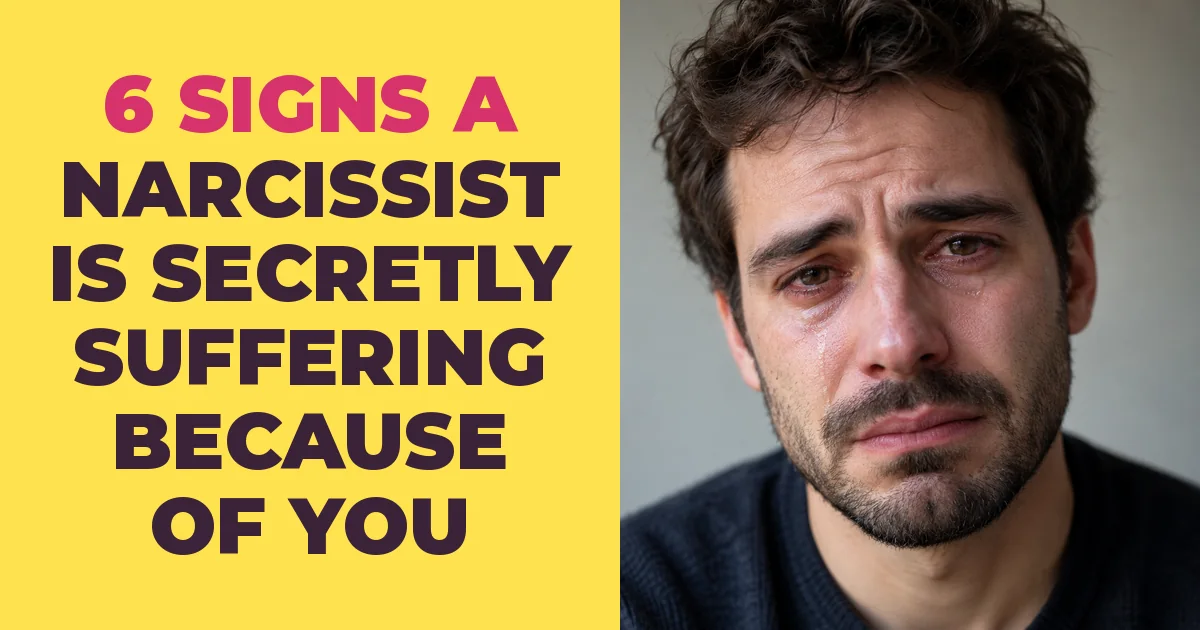
Why their pain looks like an attack
Underneath the swagger, a narcissist needs other people to keep telling them they matter.
You were one of those mirrors. When you pull away, push back or stop clapping, the mirror cracks.
Narcissism has a showy, bold face and a quieter one that’s prickly and self-pitying. Many switch between the two. Either way, they’re shielding a self-image that bruises easily.
So their hurt rarely looks like hurt.
#1 They tell everyone their version first
A smear campaign is often how a narcissist shows you got under their skin.
Your cousin goes quiet in the group chat. A mutual friend asks, gently, if you’re “doing okay”. Someone has been talking.
The story is usually the same. You’re unstable. You’re bitter. “I tried everything, but she’s not well.”
Why? Admiration keeps them afloat, so their public image gets enormous effort. If you walk away or tell the real story, the polish cracks. Telling their side first patches it.
Psychologists call this relational aggression. It goes after your name and your friendships instead of your body, which leaves no bruise anyone can see.
It’s exhausting. Suddenly every room seems to need your explanation, just when you could use people on your side.
No need to argue your case in every kitchen. Keep showing up as the same person, and let the weeks do the talking.
If it starts touching your job or custody, keep records.
#2 Their indifference is a costume
Acting like they don’t care is often the loudest sign that they do.
They walk past you at a friend’s party like you’re a stranger. They tell people the relationship was “nothing serious”. They make sure you hear about it.
It stings. Look closer, though.
Psychologists who study the quieter, vulnerable form of narcissism describe this combination. Thin-skinned about criticism, yet acting as if nothing touches them. Keeping a ledger of slights. Sulking when ignored. Secretly sure they’re better than everyone, just never understood.
So the shrug is armour. What it protects is fragile.
Meanwhile you’re the one tiptoeing. Even now, you might catch yourself managing a mood that isn’t yours, or taking the blame for their disappointment.
One way to tell: watch how they act when they’re not the centre of attention.
Who exactly is that performance for?
#3 Someone new appears very quickly

A brand-new partner within weeks says more about their needs than your worth.
You see the photos before you’ve even changed the sheets. The restaurant you loved. The same “never been this happy” caption.
It feels like a slap.
Researchers have linked narcissism with a game-playing style of love. Keep the options open. Skip the deep closeness. Lose interest after the win. A speedy rebound fits right in.
Add a self-worth that runs on other people’s approval, and losing you leaves a hole in it. That hole feels urgent. Someone has to fill the mirror, fast.
None of that means you were replaceable. It means admiration is something they find very hard to go without.
You may feel replaceable anyway. That feeling is common, and it says nothing true about you.
Watch what they do over months, not what they post. A highlight reel isn’t a life.
#4 Your good news ruins their day
Your happiness can quietly threaten a narcissist’s need to feel superior.
You get the promotion. They say “Good for you,” then spend dinner scrolling their phone. Your birthday? Somehow that’s the night they pick a fight.
Not a coincidence.
Research finds envy runs strong in narcissism, most of all in the quieter type. When you shine, their need to be the best gets poked. That threat feels real to them, so your win gets shrunk, borrowed or spoiled.
Psychologists also describe a rivalry streak: if you go up, they feel they’ve gone down. Wanting to do well is normal. Needing you to do worse isn’t.
Over time, you learn to keep good news to yourself. Celebrating starts to feel like a risk, something you’ll pay for later.
Share your news where it’s met with real delight.
And notice who goes quiet when you win.
#5 They suddenly miss you

The “I miss you” text often lands right when they feel replaced or need something.
It’s been months. Then at 11pm: “Hey. Saw something today that reminded me of you.” Or a sudden emergency only you can fix. Or a promise that this time, they’ve really changed.
Your stomach flips.
“Hoovering” is a nickname people use for this, not a clinical label. It describes tugging you back after a breakup or a spell of distance. It works on the bond you had, and on hoping the good stretch returns.
Psychologists call the hook underneath intermittent reinforcement. Kindness you can’t predict holds on tighter than kindness you can. Slot machines run on the same trick.
One text, and the hope floods back. Weeks of progress can feel wiped out.
Decide now how you’ll answer the next one. Then measure it against years of the same pattern, not the latest promise.
What has actually changed, apart from the message?
#6 Your calm can bruise their ego
Being ignored, rejected or calmly corrected can feel like a wound to a narcissist.
You answer a long, angry text with “Okay.” Or you ask one simple question about the bills. Suddenly it’s a fight about everything you’ve ever done wrong.
That reaction tells you something.
Research on threatened egotism points to a clear pattern. When their self-image takes a hit, a narcissist turns more aggressive. And that fury goes looking for whoever bruised them. Often, that’s you.
Everybody gets mad sometimes. The giveaway is the size of it. A blow-up over one small remark. Payback days later for a sentence you’ve long forgotten.
Over time, you rehearse every sentence in your head first. You say sorry for things that were never yours.
Short and factual works best, if you speak up at all. Staying quiet is fine when speaking feels unsafe. And if the anger turns into threats, leave the room and call for help.
Their rage was never proof you did something wrong.
None of this means their pain is yours to fix.
Seeing it clearly can still help. The rumours, the shrug and the late-night text often say more about their fragile image than about who you are.
So the next time a story about you drifts back, or that 11pm message lights up your phone, you’ll know what you’re looking at.
9 Morning Red Flags That Give a Narcissist Away

A narcissist’s mask is at its best at the party. At 7 a.m., it slips.
The kitchen is quiet. The kettle is on. And you’re already bracing for whichever version of them walks in.
Mornings have no audience.
No guests, no friends, no neighbours. Just you.
Mornings are private. And private is where the gap between the public mask and the real behaviour shows.
Here are 9 morning red flags that give a narcissist away.
#1 The silence starts before the coffee
Silence over breakfast is often a punishment you never saw coming.
You say good morning. Nothing.
They pour their coffee, scroll their phone and chat away to the dog. When your sister rings, they’re suddenly all warmth on speaker.
Then the call ends. Not a word to you.
Being shut out hits something deep: the need to feel you belong and that you count. Researchers who study ostracism say it can sting like a physical injury.
So you crack first, and say sorry for a crime you can’t even name.
Tell them one time that you’re happy to talk. Then get on with your morning. The silence is theirs to break.
#2 Their mood sets your whole day
A narcissist’s footsteps on the stairs can tell you what kind of day it’ll be.
Monday, they kiss your head and make you toast. Tuesday, the cupboard door slams and you get one-word answers. Nothing happened in between.
So you listen. The sigh. The keys. The tone.
Psychologists call this hot-and-cold pattern intermittent reinforcement. Affection handed out at random grips you tighter than affection you can count on, like a hand that won’t leave the slot machine.
Moods you can’t predict teach your body to keep its guard up. Yes slips out before you’ve thought. Sorry comes on autopilot.
By nine, you’ve managed their mood and forgotten what you even wanted for breakfast.
Try counting warm mornings against cold ones for a month. One good day doesn’t wipe out three bad ones.
#3 Their routine beats your needs
In a narcissist’s morning, your needs are often treated as something in the way.
They need the bathroom at 7:15. If you’re in there, the handle rattles. “I told you I need it at quarter past.”
Your early meeting doesn’t count. Neither does being up first.
Psychologists describe entitlement as a settled sense that they’re owed more, and that the usual rules are for other people. Even sharing a sink can land as an insult.
They won’t wait two minutes for the kettle. You’ve waited forty for the shower.
Bit by bit, you squeeze your mornings around theirs. The scales tip further each week, and even asking for an equal turn feels like picking a fight.
Try one small thing: stop saying yes before they’ve even asked. When did your mornings become theirs?
#4 The mirror gets more attention than you
The mirror often gets more of a narcissist’s attention than you do.
Twenty minutes on the hair. Three shirts tried and tossed on the bed for you to hang up. A selfie, then another, from the better side.
Then: “This one or the blue?” You’d better have an answer.
Why so much effort? Everyone shapes how they come across, research on impression management says. Narcissists pour extra into it, because other people’s admiration props up their sense of worth.
Looking good isn’t the problem. Plenty of kind partners own a lot of hair products!
The red flag is where the attention goes. Their reflection gets twenty minutes and your opinion on the shirt. Your question about the lost keys gets a sigh.
When did you last get twenty minutes of their focus?
#5 Being up first makes them better

To a narcissist, even getting up early can become proof they’re better than you.
“Some of us have been up since five.” Said while you’re still finding your slippers.
The run, the cold shower, the inbox already cleared. You hear about all of it before your first sip of tea.
Puffing up achievements is a common narcissistic pattern. Research on narcissistic rivalry adds the other half: they guard their status by cutting you down to size.
So their morning is a win. Yours is lazy.
Your gain is their loss, even over cereal.
Maybe you’ve started setting alarms just to dodge the comment. Getting up at five makes someone an early riser. Nothing more.
#6 Your neighbour gets their best smile
A narcissist can switch on the charm the second someone else is watching.
In the kitchen, grunts. Then the front door opens, the neighbour is out with the bins, and suddenly: “Morning, Dave! How’s the knee?”
The grin. The joke. The wave from the car.
Research on narcissistic admiration and rivalry helps explain the switch. Charm wins over people at a distance. Up close, once they know you well, the cold, cutting side takes over.
Dave thinks you’re lucky. Your friends might too.
And you start wondering if the problem is you.
It isn’t. What happens inside your own four walls is the real record. Find one person who has seen both faces.
#7 Every plan you make gets questioned
A narcissist may want your whole day mapped out before you’ve left the house.
“Where are you going after work? Who’ll be there? Why do you need the car?”
Telling each other your plans is normal. Being punished for them isn’t. Mention lunch with a friend and you get the cold shoulder until you cancel.
When the questions come with rules, and breaking a rule costs you, psychologists call it coercive control. Each rule looks tiny on its own, so there’s rarely one big moment to point at.
Soon you’re asking permission to buy milk.
If that’s your house, it’s worth having a little cash and a few phone numbers that belong only to you. Specialist abuse services can help you plan for safety, quietly.
Since when did lunch need clearance?
#8 Your bad morning is an inconvenience
Your worst morning can barely register with a narcissist.
You wake up with a migraine, or you’re crying over a work email. They glance over. “Are you making coffee or not?”
Or your rough night becomes a story about theirs.
Studies on narcissism and empathy found something telling. Narcissists tended to show less empathy on their own, yet more when asked to imagine the other person’s side. So it looks more like a choice than a missing ability.
A partner who’s awkward with feelings but still brings you water is different. This one sees it and walks past.
Slowly, you stop saying how you feel. Then you wonder if you’re overreacting.
You aren’t. Take your hard mornings to someone who answers with a hug, not a shrug.
#9 Last night’s comment comes back for breakfast

A remark you forgot by bedtime can still be waiting for you at breakfast.
Last night at dinner, you corrected a date in front of friends. Small thing. They laughed it off.
This morning, the cupboard slams. Your mug is “in the way”. Then it lands: “Enjoyed making me look stupid, did you?”
Research on threatened egotism found that a bruised self-image makes a narcissist more likely to hit back at the person they hold responsible. The reaction is often far bigger than the slight.
So you replay every word. You say sorry for something you didn’t do, and next time you trim your words before they’re out.
If the anger ever turns to threats or smashed things, get out of the room. Your safety comes first.
One corrected date shouldn’t cost you a whole morning.
Burnt toast, a slammed cupboard, a sigh at the mirror. Small things, until they happen every single day.
One cold breakfast proves nothing. A pattern that runs month after month is worth trusting, and so is the woman who’s been quietly noticing it.
Tomorrow, pour your coffee and watch. Then trust what you see in your own kitchen.
The 8 Stages Everyone Goes Through With a Narcissist

It began like something out of a film. Now calm feels like a stranger in your own home.
A narcissist’s charm rarely lasts.
You keep rewinding to those first weeks, hunting for the moment you ruined it. You doubt what you heard. You apologise for things you didn’t do.
There’s a pattern here.
These are the 8 stages so many women live through with a narcissist, and what each one quietly does to you.
#1 They put you on a pedestal

The faster they fall for you, the harder it gets to see who they are.
Texts waiting when you wake up. Flowers delivered to your desk. Three weeks in, they’re picking baby names and saying, “I’ve never felt this way about anyone.”
Psychologists call this love bombing.
All that attention ties you to them early, long before you’ve watched them handle a bad day. It feels like closeness. Often it’s only speed and heat.
Later, those weeks become the thing you ache to get back.
A good tell: what happens the first time you say “not yet”? Excitement is fine. A pace you’re not allowed to slow is the warning.
How did they take yours?
#2 The criticism creeps in
The person who once adored you slowly turns into your harshest critic.
It starts tiny. A sigh at your dress. Eyes rolling while you tell a story at dinner. A “joke” about your cooking that gets a laugh from everyone but you.
Your promotion earns a shrug. Their bad day eats the whole evening.
Research on narcissistic admiration and rivalry explains the switch. Charm and self-promotion draw you in at first. As time goes on, the urge to cut you down wins out.
So you keep trying to get back to the early version of them. Sharing a win starts to feel risky.
In rivalry, your gain is their loss.
Who in your life is actually happy when you succeed?
#3 You stop trusting your own memory
Gaslighting works by making their story feel truer than your own eyes.
You heard it. You were right there by the fridge. Then: “That never happened. You’re too sensitive.”
It thrives where power is lopsided. You trust them, they steer the story, and bit by bit the past gets edited in their favour.
Maybe there are notes on your phone now, proof that a conversation really took place. Maybe you’ve said sorry for being hurt.
Remembering things differently happens to every couple. Denying what you saw, so you lose faith in yourself, is another thing entirely.
Jot it down the moment it happens. Then compare notes with someone outside the relationship.
Your memory isn’t broken.
#4 Silence becomes their weapon
Being ignored by someone you love can hurt like a physical blow.
One wrong word and the house goes cold. They chat with the kids, laugh with a friend on the phone, talk to everyone in the room except you. For days.
Then they stroll back in like nothing happened.
Why does it work? Being shut out hits your deep need to belong and to matter. Giving in starts to look like the only way out.
You say sorry just to make it stop, without knowing what you did. Soon whole topics are off-limits.
Needing space and saying so is healthy. Freezing you out as punishment isn’t.
Tell them once you’re happy to talk. Then get on with your day. No chasing. No pleading.
#5 The good days keep you hooked
Kindness you can’t predict grips you harder than kindness you can count on.
Tuesday they’re cutting. Wednesday they bring your favourite takeaway and say, “I don’t know what I’d do without you.”
Which version is coming home tonight? You never know.
Psychologists call this intermittent reinforcement. Rewards that show up at random are the hardest habit to quit. Slot machines run on the same trick.
A rare apology lands like a win at the casino. So you put in more and more for crumbs, and one sweet evening makes a week of coldness seem survivable.
One idea: for the next few weeks, give each day a quick tick or cross in your diary. Look at the overall score, not the highlight.
What does the score tell you?
#6 You start walking on eggshells
Living with anger you can’t predict teaches your body to stay on guard.
The jangle of keys in the door tells you what kind of night it’ll be. Yes leaves your mouth before you’ve decided anything. “Sorry” pops out for nothing at all.
Psychologists talk about hypervigilance and fawning. You keep watch for trouble, and you try to settle it by agreeing and smoothing things over.
That’s survival. It’s also exhausting.
In time, your own wants go blurry. Someone asks what you fancy for dinner, and your mind goes blank.
Quick check: is your yes coming from care, or from fear?
When the alarm goes off inside, pause. Try one tiny no somewhere safe, and see that nothing falls apart.
#7 Pushing back makes them explode
Challenge their image, even gently, and a small comment can turn into a war.
You ask, calmly, why they didn’t call. Within minutes: “I never did that. How dare you?”
Next comes a rundown of your faults. Then the sulking, until you’re the one comforting them.
Researchers have a name for it: DARVO. They deny, they go on the attack, then they swap places and play the injured one. Research found it makes the person raising the issue blame herself more, which shuts the talk down fast.
Studies of threatened egotism fill in the rest. When their self-image takes a knock, narcissists are more likely to strike at whoever they hold responsible.
What helps? Bring it back to the thing you first asked about. Skip the point-by-point defence. If the anger turns into threats, get out of the room.
Your question was allowed.
#8 They drop you, then come back
A narcissist may drop you out of nowhere and return just as fast.
One week you’re their whole world. The next they’re icy, and a new face keeps showing up in their photos.
Many people call this arc idealise, devalue, discard. It’s a popular description, not a formal term. Research on charm turning into rivalry and boredom helps explain why it happens.
Then, months later, your phone lights up: “I miss you. I’ve really changed this time.”
That’s what people call hoovering. It pulls on your attachment and your hope of getting the old days back, and it often turns up when they want something or sense they’ve been replaced.
Old hope floods in. Progress feels wiped out.
Decide now how you’ll answer that message. Trust the track record, not the promise.
If you’re beating yourself up for not seeing it sooner, stop. When you depend on someone, your mind can hide their betrayal from you to protect the bond. That’s not stupidity.
You see it now. Speak to yourself as gently as you would to a friend telling you this same story.
Start with one person you trust, and tell them all of it.
7 Things a Narcissist Never Gets Over

You stopped playing the part they expected you to play.
Maybe you left, questioned a story, celebrated your own success, or simply stopped reacting.
Yet the comments, blame, sudden messages, and rewritten history keep coming.
You may wonder what you did that was so unforgivable.
Often, you threatened the image or control they were trying to protect.
That does not mean you owe them an apology, another chance, or endless access to you.
Here are seven things a narcissist struggles to get over, why they sting, and what you can do next.
Why the grudge sticks
Most people can feel embarrassed, disappointed, or angry without turning that feeling into a permanent campaign. They cool down, consider another perspective, and eventually move forward.
Someone with strong narcissistic patterns may experience the same event differently. A correction can feel like humiliation. Your independence can feel like rejection. A boundary can be treated as proof that you are disloyal.

The event itself may be small. What matters is what it represents: they were not admired, obeyed, needed, or allowed to control the story.
That helps explain why old incidents keep returning during unrelated arguments. The grudge protects them from facing shame, disappointment, or responsibility. If you remain the villain, they never have to examine their own behavior.
Repeated explanations may not resolve a grievance when the other person consistently rejects responsibility. You can listen once, correct a false claim briefly, and decide how much contact you are willing to have. You do not have to spend years defending yourself in the same imaginary courtroom.
What their resentment means for you
A lasting grudge can keep you emotionally tied to someone even after the relationship changes. You find yourself composing explanations in the shower, checking whether mutual friends believe them, or dreading every notification.
The goal is not to discover the perfect sentence that finally makes them understand. There may be no sentence that can do that.

Instead, notice the pattern around the resentment. Does it produce guilt, pressure, surveillance, public embarrassment, or repeated attempts to pull you back? Does every conversation end with you surrendering something just to restore peace?
Your answer should match the behavior. Mild sulking may call for a clear boundary. Harassment may require saved messages, blocked channels, and outside support. Threats, stalking, financial control, or fear call for safety planning rather than a face-to-face showdown.
You are allowed to protect your time before you can prove what motivates them. A label is not required. The effect on your life is enough information to take seriously.
#1 You know who they are at home
You have seen the gap between the polished public person and the private one. That makes you difficult to impress and potentially dangerous to the story they tell about themselves.
At a family dinner, they refill everyone’s glass and praise you warmly. In the car, their voice turns cold because you spoke for too long or laughed with the wrong person. The next day, relatives tell you how fortunate you are.

They may resent you because your memory competes with their carefully managed image. If you reveal what happens privately, they risk losing admiration. They might discredit you first, call you unstable, or insist that you misunderstood.
You do not need to persuade the whole room. Start with one trustworthy person who has shown that they can listen without carrying everything back. Describe specific behavior rather than arguing over labels.
Keep private notes if doing so is safe, especially when events are repeatedly denied. Store them somewhere the other person cannot access.
Knowing the private version does not make you responsible for exposing them. Your first responsibility is your own safety, clarity, and support.
#2 A simple question feels like war

You ask who used the savings account. They answer by criticizing your spending, your family, and a mistake you made four years ago. Soon you are defending your character instead of receiving an answer.
A simple question can feel intolerable when a person hears accountability as humiliation. Anger then shifts attention away from the original issue and teaches you that asking again will be costly.

After enough scenes like this, you may rehearse ordinary requests, soften every sentence, or apologize before speaking. That is not normal problem-solving. It is a sign that the conversation has become organized around managing their reaction.
When it feels safe, state one fact and one request: The payment left our account. I need the receipt. Do not chase ten new accusations. End the exchange if it becomes abusive or circular.
If questions trigger threats, property damage, blocked exits, or frightening behavior, do not use confrontation as a test of courage. Move toward safety and contact someone you trust or a domestic abuse service.
You are allowed to ask ordinary questions. Their anger does not turn a reasonable request into an attack.
#3 Your applause dried up
Perhaps you once supplied a steady stream of attention. You laughed at familiar stories, praised every plan, and rearranged evenings whenever they wanted an audience.
Then you became tired. One Tuesday, they announced another triumph and you simply said, “Okay.” They noticed the missing enthusiasm immediately.

Admiration can act like reassurance for someone whose self-worth depends heavily on other people’s reactions. When your applause stops, they may become demanding, wounded, sarcastic, or suddenly interested in attention elsewhere.
They might claim you never support them, although support has come to mean constant agreement. You may feel tempted to perform excitement just to avoid the sulking.
Try separating kindness from worship. You can recognize genuine effort without exaggerating, abandoning your plans, or agreeing with every claim. Their disappointment is not automatically an emergency for you to solve.
Notice what happens when attention is shared. Can they celebrate another person and stay connected when they are not the center? The answer tells you more than their speeches about loyalty.
Keep one plan of your own this week instead of rearranging it to provide an audience.
#4 Your wins make them sour
You receive an offer for the job you wanted. Their first response is that the company must have been desperate. Later, they start an argument just before your celebration dinner.
Your happiness may unsettle someone who treats life as a ranking system. If you rise, they feel lowered. Instead of sharing your joy, they minimize the achievement, claim credit, identify a flaw, or create a crisis that returns attention to them.

Over time, you may stop sharing good news. You make your voice smaller, apologize for being busy, or act as though the promotion does not matter. That protects the evening, but it slowly teaches you to disappear.
Tell safe people who can be happy with you without competing. Mark important moments even if the celebration is modest: dinner with a friend, a walk, or a private note about what the achievement means.
If they try to spoil the occasion, you do not have to debate whether they are jealous. Protect the event. Change the subject, end the call, or continue without them.
Choose one safe person to tell first the next time you have good news, and make the celebration plans before sharing it more widely.
#5 Their rules stopped working on you
The rules may begin as concern. Send a picture so they know you are safe. Let them manage the money because they are supposedly better at it. Stop seeing a friend who is a “bad influence.”
Each demand looks small by itself. Together, they can leave you reporting your movements, requesting access to money, and judging every choice by whether it will cause trouble.

When you reclaim a little freedom, the reaction may be intense. You had coffee without permission, changed a password, or kept your own key. To them, the issue is not coffee or keys. It is that their control failed.
Avoid announcing a major escape plan to someone who may retaliate. Quietly strengthen your options instead. Speak with a trusted person, learn where important documents are, and consider how to access transport, medication, money, and a safe place.
If you fear monitoring, use a device or account they cannot reach when seeking help. A domestic abuse service can help you think through risks without forcing you to leave before you are ready.
Your independence is not betrayal. Safety may require rebuilding it carefully rather than all at once.
#6 Calm leaves them with nothing
A late message says you are cruel, selfish, and ruining the family. You want to correct every line. Instead, when contact is necessary, you reply, “Pickup is Saturday at ten.”
Your calm removes the emotional struggle they expected. Some people depend on outrage, pleading, or long defenses because every reaction creates another opening for argument and control.

Keeping communication brief and ordinary is sometimes called the grey rock approach. It can be useful for routine contact, but it is not a contest and it is not safe in every situation. A controlling person may escalate when familiar reactions disappear.
Use plain replies only when doing so fits your circumstances. Discuss one practical subject, avoid unnecessary personal information, and wait before answering if urgency is being manufactured.
Save hostile messages when safe, especially when you share children, housing, or legal responsibilities. Let a trusted person know if the tone changes.
You do not have to prove that you are calm enough to handle mistreatment. Blocking contact, using a third party, getting professional support, or leaving are equally valid choices. The aim is peace and safety, not winning through perfect self-control.
#7 You’re doing fine without them
Months pass quietly. You sleep better, reconnect with friends, and stop checking your phone. Then a message arrives on a meaningful date: they miss you, understand everything, and have finally changed.
They may also invent an emergency, offer an extravagant apology, or mention a memory only the two of you share. The contact appears just as your life is becoming your own again.

Your recovery can sting because it shows they were not essential. Reaching out may be less about rebuilding a healthy relationship and more about checking whether they can still move you.
Do not judge change by the intensity of one message. Look for steady responsibility, respect for boundaries, repaired harm, and different behavior maintained over time. Promises are easy during the moment when access is uncertain.
Choose your response before the next message arrives. You might not answer, ask a friend to screen it, or use one prepared sentence. If contact is required, keep it focused on practical matters.
Missing good moments does not erase the full pattern. You can feel tenderness, grief, and relief while still keeping the door closed.
Does confidence, self-love, or caring about appearance mean narcissism?
No. Confidence lets you value yourself without requiring everyone else to feel smaller. Healthy self-love also leaves room for apology, curiosity, and another person’s needs.
Imagine two friends getting ready for an event. One enjoys their outfit and takes a few photos. The other spends the evening insulting everyone else, demanding praise, and punishing a partner for looking away. Caring about appearance is not the important difference. Entitlement and treatment of others are.

The same distinction applies to confidence. A confident person can hear, “That hurt me,” without making the entire conversation about their own humiliation. They may disagree, but they can stay present and consider repair.
Someone using confidence as armor may need to dominate every room and dismiss correction as jealousy. Their impressive surface does not tell you what happens when they are disappointed.
Ask how you feel around the behavior. Are you free to succeed, disagree, and have preferences? Or must you constantly reassure the person that they are more attractive, capable, or important than everyone else?
You do not need to distrust healthy pride. Look for confidence that can coexist with empathy and equality.
Are anger, ambition, or charisma warning signs?
Each can be healthy. Anger can tell you that a boundary was crossed. Ambition can sustain years of meaningful work. Charisma can make people feel welcome and energized.
The question is how those qualities are used. Healthy anger names a problem without making you afraid. Unhealthy anger intimidates, humiliates, or forces agreement. A person who throws objects and then says you made them angry is shifting responsibility for their actions.

Healthy ambition accepts limits and other people’s success. Harmful ambition treats colleagues as tools, steals credit, and expects family members to sacrifice indefinitely.
Charisma deserves similar care. Warmth is not manipulation by itself. Watch whether the charm remains when there is nothing to gain. Does the person respect a server, accept no gracefully, and behave consistently after the audience leaves?
A single trait cannot explain a whole person. Look at repeated choices, especially during frustration. Do they repair harm, or do they make everyone else responsible?
You can appreciate someone’s drive or social ease without ignoring how they treat you privately. Charm is an introduction, not proof of character.
Is putting yourself first selfish?
Sometimes putting yourself first is basic care. Sleeping, attending an appointment, keeping your wages, or declining a draining visit does not make you cruel.
In a controlling relationship, however, any independence may be renamed selfishness. You spend one evening with a friend and return to silence. You buy something affordable for yourself and receive a lecture about loyalty.

The accusation works because you care. You review your behavior and try harder, while the other person’s demands remain beyond review.
Healthy relationships involve give and take over time. Both people sometimes compromise. Both can also say no without punishment. Self-centeredness means repeatedly treating other people’s needs as irrelevant, not merely having needs of your own.
Try a simple check: if a friend described the same choice, would you call them selfish? Would you expect them to cancel every plan, surrender every password, or remain available throughout the night?
You are not required to become exhausted before your boundary counts. Start with one protected commitment, such as therapy, exercise, rest, or time with a trusted person. Their displeasure may be uncomfortable, but it does not define whether your need is legitimate.
Do cheating and constant “me, me, me” prove narcissism?
Cheating can involve entitlement, deception, and a disregard for another person’s wellbeing, but it does not provide a complete explanation of someone’s personality. People betray relationships for different reasons, and a label does not repair the betrayal.
Likewise, a person who talks too much about themselves may be nervous, excited, lonely, or simply unaware. One tedious dinner is not the same as a lasting pattern.

Look at what happens when your experience enters the room. Do they ask questions and remember your answers? Can they tolerate your pain without demanding comfort for themselves? When trust is broken, do they accept consequences and make sustained repairs?
A harmful pattern is clearer when everything returns to them. Your illness becomes a complaint about inconvenience. Their affair becomes a discussion of how neglected they felt. Your request for honesty becomes an attack on their privacy.
You do not need certainty about narcissism before deciding that betrayal or chronic self-absorption is unacceptable. Focus on the agreement that was broken, the impact on you, and whether behavior actually changes.
Leaving is valid even when you cannot produce a perfect psychological explanation.
Is every lie, denial, or disagreement gaslighting?
No. People remember events differently, become defensive, and occasionally lie. Gaslighting is a repeated pattern of denying or distorting events that causes you to distrust your perception and can help the other person avoid responsibility or maintain control.
You might show them the agreed date in a message. They insist the message means something else, say you are always confused, and bring up unrelated examples of your supposed instability. Later, they deny that conversation too.

The pattern matters more than one disputed detail. Are records repeatedly dismissed? Does the story change whenever evidence appears? Do you leave ordinary conversations unsure whether you can trust your own mind?
Do not get trapped trying to make someone admit the term. Preserve important messages or dates somewhere safe, and reality-check them with a trustworthy person. For practical matters, confirm agreements in writing when possible.
If documenting events could be discovered and put you at risk, prioritize safety instead. An advocate can help you consider safer options.
You can acknowledge uncertainty without surrendering your whole reality. Saying, “We remember that differently, and this is what I will do now,” can be enough. You do not need their confession before setting a boundary.
Why do they return after exposure, lost control, or lost attention?
Renewed contact does not require an immediate answer. Give yourself time to identify exactly what is being requested before deciding whether any response serves you.
Separate the message from the decision. An apology, emergency, invitation, or emotional memory may feel urgent, but you can verify practical claims independently and discuss the contact with someone you trust.
Consider the safest level of access rather than choosing only between reunion and silence. Options include written communication, a separate email address, a third party, or a brief exchange limited to one practical subject.
If you are considering more contact, begin with a small boundary that does not put your safety, money, housing, or privacy at risk. Notice whether the boundary is accepted without pressure, punishment, repeated negotiation, or attempts to bypass it.
Decide in advance what would end the exchange. Insults, surprise visits, demands for passwords, pressure to meet alone, or contact through friends after you said no can provide useful information about whether your limits will be respected.
You can revise your decision if the contact becomes harmful. Agreeing to one conversation does not promise another, and declining contact does not require a courtroom-quality defense.
What you can do
Check safety before setting a boundary
Consider how they have responded to independence before. If you fear threats, monitoring, stalking, financial punishment, or physical intimidation, avoid announcing plans or confronting them alone. Use a safer device if needed and contact a trusted person or domestic abuse service. A careful exit is not weakness; it is protection.
Make the boundary about your action
You cannot force them to agree, stop resenting you, or tell the truth. You can decide what you will do. Try, “I will end the call if I am insulted,” rather than a long argument about their character. Follow through quietly when it is safe.
Build a record and a support circle
Save relevant messages, dates, financial information, and agreements somewhere private if documentation will not increase danger. Tell one dependable person what has been happening. Isolation makes confusing behavior harder to judge, while a calm outside perspective can help you recognize patterns and plan practical next steps.
Choose distance when contact keeps harming you
Reduced contact, communication through a third party, blocking, or leaving may be healthier than another attempt to be understood. Support from a counselor, advocate, lawyer, or trusted friend can help with the practical pieces. You are allowed to leave because the relationship is harming you, even without their agreement.
The bottom line
A narcissist may struggle to get over the moment you saw behind the image, questioned them, stopped applauding, succeeded, reclaimed your freedom, stayed calm, or built a life without them.
Their grudge does not prove that you wronged them. It may simply show that an old source of control or reassurance is gone.
You do not have to wait for forgiveness before moving forward. Trust repeated behavior, protect important parts of your life, and bring safe people closer. If remaining connected costs your security or sense of self, support and distance are valid choices.
Keep reading
10 Things Normal People Love That Narcissists Can’t Stand

Narcissists can’t stand the things that make your life feel good.
It creeps up on you. Your birthday ends in tears. A plain question about the bins turns into a war. One evening with your sister buys you a week of frost.
So you quietly trim the good stuff, just to keep things calm.
And a small voice asks if wanting it makes you difficult.
It doesn’t. These are things almost everybody enjoys.
Here are 10 things normal people love that narcissists can’t stand, and what’s going on underneath.
Why good things feel like threats
For a narcissist, feeling worthy depends on other people confirming it.
That turns everyone nearby into either a mirror that admires them or a danger to the mirror.
Your joy, your friends, your independence can all end up on the danger side. All it takes is attention drifting away from them.
Nobody but a clinician can diagnose. These are patterns, and months of behaviour say more than one rotten evening.
#1 Your good news makes them sour
Your good news can curdle a narcissist’s mood in seconds.
Most of us adore a birthday or a promotion. We want to tell someone the second it happens.
Tell a narcissist about the job offer and you might get a shrug. “Good for you, I suppose.” On your birthday, a row appears out of nowhere.
Why? Envy. Someone else doing well dents their need to feel above everyone, so they make your moment smaller or ruin it outright.
Soon you keep wins to yourself.
Watch whose face falls when life goes right for you. That tells you plenty.
Save your celebrating for people who celebrate you.
#2 They glaze over when you’re hurting
A narcissist may see exactly how you feel and decide it isn’t worth the effort.
Most of us love being looked after when we’re low. A hug, a cuppa, someone who stays.
You come home shaky after a horrible meeting. They scroll their phone and say, “Here we go again.” Or, “You’re too sensitive.”
Studies suggest narcissists start out with lower empathy, yet show more of it when nudged to imagine your side. So it looks more like won’t than can’t.
Gradually, you go quiet about what hurts. Then you second-guess whether you should feel it at all.
Bring your hurt to people who answer it with care.
And stop explaining your pain to someone who uses it.
#3 Getting close makes them restless
For many narcissists, love is a game, and safety means the game is over.
Most of us long for the settled part. Slow Sunday mornings. Private jokes. Knowing where you stand.
A narcissist may sprint in, then go cool just as you unclench. Next thing, they’re chatting up the bartender while you watch.
Research ties narcissism to treating love as play and to weaker commitment. Doors stay open. Once they feel they’ve won you, the spark fades.
And suddenly you’re fighting for attention that used to come easily.
Ask yourself: does every warm spell come just before a cold one?
Trust what keeps happening, not what gets said.
#4 The early charm turns competitive

For many narcissists, the charm comes first and the competing comes later.
Most of us want a partner on our team. The person yelling loudest at your 5K.
Early on, they hung on your every word and told everyone how brilliant you were.
Now you mention the course you’ve signed up for and hear, “Don’t get ideas above your station.” They top your story, spot the flaw, sneer at the friend who’s doing better.
Psychologists call this narcissistic admiration and rivalry. The charming side wins people over at first. Over time, the rivalry side takes over: colder, cutting, competitive.
Which is why you keep hunting for the sweet version from the early days.
Watch how they treat someone new. Then watch how they treat you.
#5 A simple question starts a fight
A narcissist whose image feels bruised is more likely to hit back hard.
Most of us like straight talk. “Did the gas bill go out?” is just admin.
Here, it earns a banged cupboard door and “Oh, so I’m hopeless now?” Or a chilly silence that saves the payback for Thursday.
Research on threatened egotism shows narcissists get more aggressive when insulted, and they aim it at whoever did the insulting. A plain question can feel like an insult to them.
Before long, even tiny remarks get scripted before they leave your mouth. Apologies slip out for things you never did.
Keep questions short and factual. When it feels unsafe, you don’t have to raise things at all. If the anger turns to threats, leave the room.
You’re not overreacting.
#6 Fair give-and-take feels like an attack
Entitlement turns everyday limits into personal insults for a narcissist.
Most of us like things even. You cook, I wash up. You lent me fifty, I pay it back.
With a narcissist, the fifty quietly disappears. Your weekend bends around theirs. Bring it up and it’s, “Wow. Keeping score now?”
Entitlement is a steady sense that they’re owed more and the usual rules don’t touch them. So a normal ask sounds like an assault.
You pour in. Little comes back.
Try jotting down what you hand over. And stop paying, forgiving and agreeing before you’ve even been asked.
Wanting fair isn’t greedy.
#7 Their jokes land on you
Humour that only works when you’re the punchline isn’t humour.
Most of us love being daft together. Silly voices, terrible dancing, crying with laughter.
A narcissist’s “jokes” come with a target. They copy your voice at dinner with friends. Eyes roll mid-sentence. “God, relax, I’m kidding.”
Long-term research on couples found contempt and stonewalling were among the clearest warning signs of a relationship falling apart.
Bit by bit, home stops feeling like yours.
Only if it feels safe, name it calmly, once. You don’t need to call it out to know what it is. Watch whether respect ever comes back.
Not laughing is allowed.
#8 Your own plans look like betrayal
Control often arrives as small rules, one at a time, until there’s little left.
Most of us love a bit of room. Coffee with a friend. Money that’s ours.
With a controlling partner, every plan gets questioned. “Who’ll be there? Why do you need to go?” Your phone gets checked. Receipts get read.
Psychologists call this coercive control. Lots of tiny restrictions and penalties stack up until your independence is gone, with no single big moment to point at.
One day you realise you’re asking whether you can buy shampoo.
Holding onto some money and contacts of your own can help. So can a domestic abuse service, for safety planning.
Your life belongs to you.
#9 They’d rather go silent than talk it out
Silence used as punishment cuts deep, because it attacks your need to belong.
Most of us love making up. A row, some space, then “Can we talk?”
A narcissist may go mute for days. They laugh with everyone at the table except you. Then they stroll back in as if the week never happened.
Research on being ignored shows the sting can feel like bodily pain. No wonder people cave.
So you apologise purely to break the quiet. Whole topics go off-limits in case they set it off again.
What helps: say once, calmly, that you’re happy to talk whenever they are. After that, carry on with your own plans.
Begging isn’t your job.
#10 Home is where the mask comes off
Admiration feeds a narcissist’s self-worth, so the public image gets a lot of their energy.
Most of us are basically the same everywhere. A bit politer at a party, maybe, but still ourselves.
With a narcissist, it’s charm at the barbecue and stony silence in the car. Friends gush, “You’re so lucky!” You smile and say nothing.
The gap isn’t polite versus relaxed. It’s kind versus cruel.
That’s why your friends can’t picture it, and why you start questioning what you lived through.
Believe what happens when the front door shuts. It outweighs any party.
If someone has seen both versions, talk to them.
If you saw your life in this list, you don’t have to carry it by yourself. Isolation is part of how this works, so reconnecting is part of how it eases.
Birthdays, friends, silly jokes, slow Sundays. Wanting them is normal. Wanting them back is normal too.
If it feels heavy, start with one person you trust. Tell them all of it.
11 Phones and Gadgets Narcissists Can’t Stop Showing Off

The new phone comes out at dinner, and suddenly everyone at the table has to admire it.
Again.
You’ve seen this show before. The smartwatch stats. The fancy headphones. The perfect photo for social media while the real evening quietly falls apart.
To a narcissist, a gadget is rarely just a gadget. It’s a stage, and you’re expected to be the audience.
Here are 11 phones and gadgets narcissists can’t stop showing off, and what each one quietly says about what’s happening in your home.
#1 Launch day is their favourite holiday

For many narcissists, a brand-new phone is a trophy that needs an audience.
They’re first in line on release day. Then it goes round the dinner table, hand to hand. “Feel how light it is. Nobody here has this yet!”
A narcissist’s self-worth tends to lean on other people’s approval. A shiny object is a shortcut to it, because everyone has to say wow.
Forget to look impressed, and the mood turns. Meanwhile, your news from work sits there untouched, treated like an interruption.
Who’s always expected to clap?
#2 Their smartwatch turns everything into a race
A narcissist’s smartwatch can turn a quiet evening walk into a competition.
They check the screen every few minutes. “Twelve thousand steps. How many did you do?” You mention your first 5K, and suddenly they’ve signed up for a half marathon.
Psychologists call this the rivalry side of narcissism. In their scorebook, every point you earn is a point they lose.
Before long, you stop mentioning your runs at all.
Tell the friend who’ll whoop at your next personal best. Your progress was never a threat.
#3 A ring light for the perfect couple photo
The ring light comes out whenever the narcissist wants the world to see a perfect couple.
Ten takes of the same smiling selfie. A caption about being “so blessed.” Then the phone goes down, and they don’t say a word to you all the way home.
A polished public image matters enormously to many narcissists, since being admired is what props them up. The photo is the point. You’re the prop.
Then the comments roll in: “You two are goals!” The gap between that and the silent drive makes you question your own memory.
Trust the car ride home.
#4 That giant TV you somehow paid for

That huge TV in the living room was somehow paid for with your money.
“I’ll pay you back next month.” Next month never comes. Their friends still come over for the game, though, and they brag about picking the best model.
Psychologists call this entitlement. The narcissist quietly assumes the normal give-and-take of a couple doesn’t apply to them. Your polite reminder? To them, it’s an attack.
You give more. You get less.
Bringing up the money can feel like starting a war. So write down what goes out, privately, with dates. Numbers don’t argue back.
#5 Headphones go on when you start talking
The noise-cancelling headphones they brag about can become a wall the moment you start talking.
“Best sound money can buy. Do you know what these cost?” Every visitor gets a demo.
Then you start explaining why last night hurt. They slide them on, roll their eyes and turn back to the screen. Later: “Sorry, I was listening to something important.”
Couples researchers who followed partners for years found that sneering and shutting down were some of the clearest signs a relationship would end.
Say what you saw, once, calmly. Then notice whether respect ever comes back. Feeling small in your own home isn’t oversensitivity.
#6 A laptop for a business that never launches

A new laptop often arrives with a big story about the business it will build.
“Once this launches, we’re buying the house.” The software gets installed, the logo gets designed, the plans get talked up at every party. Nothing ever ships.
People online call this future faking. It’s not a clinical term. It describes grand plans dangled to keep you emotionally invested.
It links to what psychologists call intermittent reinforcement. Sweet, hopeful moments that come unpredictably can hook you harder than steady kindness.
Years go by on hold. Ask when, and you’re “not supportive.” Count what got finished, not what got promised.
#7 Their phone buzzes with admirers

Their phone works like a trophy case of exes, admirers and people who still reply.
It buzzes during dinner. They glance down and smile. “Just someone from the old gym. You’re not jealous, are you?”
Researchers have tied narcissism to treating love like a game. Doors stay open. Real closeness stays off the table. And interest fades once the chase is over.
Now you’re the one auditioning for attention that used to flow your way without effort. Any stranger could take your place. That’s the feeling.
Judge commitment by consistent actions, not words.
#8 Location sharing they call caring
Location sharing gets shown off as proof of love, but it can work like a leash.
“I just like knowing you’re safe.” Then come the questions. Why were you at the café for two hours? Who else was there? Why didn’t you answer?
Psychologists call this coercive control. No single check looks huge. Stacked up, the questions and rules eat away at your freedom, one ordinary day at a time.
Soon you’re explaining a coffee. You think twice before a detour. Keeping some money and contacts of your own matters, and a domestic abuse service can talk through safety planning.
Love doesn’t need a tracking dot.
#9 New toys appear right after your good news

Your good news has a strange habit of being followed by their brand-new gadget.
You get the promotion. That same evening a drone arrives, and the whole family video call is about them flying it over the garden. Your news gets one lukewarm “Nice.”
Psychologists link narcissism, especially the quieter kind, with envy. Your win pokes at their need to be on top. So they cut it down to size, or hijack it.
So you start sitting on good news. Even a nice day feels like something to keep quiet.
Watch whose face falls when things go well.
#10 Screenshots saved for later
The most calculating narcissists keep a camera roll full of your worst moments.
The angry text you sent at 2am. The rant you vented in a private message. They scroll to it calmly in front of friends. “See? This is what I live with.”
Psychologists have a name for this cool, strategic style: Machiavellianism. It plays the long game, gathering ammunition and staying charming in public. It’s one of three dark traits that often show up together.
Friends see a calm, patient partner. Your side sounds far-fetched.
Guard your private details. Get important agreements in writing.
#11 Gifts that come with a bill

The phone they gave you early on can come back later as a debt.
It came beautifully wrapped, top of the range, back when everything felt like a fairytale. Months later, it comes up in every argument. “After everything I’ve bought you, this is how you treat me?”
FOG, short for fear, obligation and guilt, is a popular name for this pressure, not a clinical term. Reminders of what they’ve given make saying no feel more costly than giving in.
It’s linked to what psychologists call coercive control, where small pressures add up until your freedom shrinks. Soon yes comes on reflex, and their moods feel like your job.
Let a beat pass before you answer. A present doesn’t come with a payment plan.
The gadgets change every year. The pattern usually doesn’t.
One sweet evening or a shiny box doesn’t cancel months of the same story. Judge by what keeps repeating, not by the best night.
And the next time a new phone gets passed around the table, you’re allowed to just keep eating.
7 Things That Torment Every Narcissist

A narcissist will rarely let you see them squirm.
But you’ve seen the cracks.
The sulk when friends laughed at someone else’s joke. The cold fury over one simple question. The way your good news landed like an insult.
It can make you feel like you’re the problem.
You’re not imagining it. Here are 7 things that torment a narcissist, why they sting so much, and what each one tells you about your own footing.
Why small things hit so hard
Underneath the swagger, a narcissist’s sense of worth often hangs on other people.
Admiration props it up. Anything that dents it, a slight, a no, a question, can register as a threat.
Some react loudly and show off. Others go quiet, sulk and feel wronged. Many switch between both.
Same fragile core. That’s why ordinary moments can set them off.
#1 Being ignored feels like a threat
To a narcissist, being ignored can feel like a threat, and they often lash out at whoever they blame.
Picture the family dinner. Your sister tells a funny story, everyone laughs, and nobody asks the narcissist a single thing. By dessert, they’ve gone quiet and sour.
Then the car ride home. “You all talked over me. Nobody even noticed I was there.”
Why does it sting so much? Their self-image is fragile, and attention keeps it propped up. Without it, they feel small.
The one they blame is usually you.
So you start steering conversations back to them and walking on eggshells, just to keep the peace. You pre-edit everything you say.
One way to tell: watch how they act when someone else holds the spotlight. The sulk says more than the charm ever did.
#2 Your good news ruins their mood
For a narcissist, your win can feel like their loss.
You get the promotion and rush home to tell them. They barely glance up from the phone. “Huh. Hope they’re paying you more for all that stress.”
Or they pick a fight on your birthday, and somehow the whole evening ends up being about them. You spend dessert apologising for something you can’t name.
Your success threatens their need to feel above you. So they shrink it, spoil it or quietly take credit for it.
It often starts later. Early on, they cheered you on. Once they knew you well, the cutting comments crept in.
Over time, you hide good news. Share it with people who light up when you do, and notice who goes quiet.
Your joy was never the problem.
#3 Their charm hits a calm wall

Love bombing needs speed, and a calm ‘not yet’ takes that away.
The flood is hard to miss. Texts from morning to midnight. Flowers at your work. “I’ve never felt like this about anyone. We’re soulmates.”
Three weeks in, they’re picking out your future flat.
That speed has a job. It builds a strong bond before you’ve seen how they act under stress, and it becomes the memory you keep chasing later.
So if you’ve ever said, “This is lovely, but I’d like to slow down,” you may have seen the mood flip. Sulking. Pushing harder. “Don’t you feel what I feel?”
Intensity isn’t the same as closeness. Real interest can survive a slower pace, and time shows you how they really behave.
Pressure you can’t slow down? That’s your answer.
#4 A boundary feels like an attack

An ordinary limit can feel like a personal insult to a narcissist.
You say you can’t drive across town tonight because you’re exhausted. Their reply comes fast: “Wow. I’d do it for you. Guess I know where I stand.” Twenty minutes later, you’re in the car.
That’s entitlement at work. They believe they deserve more than others, so a normal request from you lands as an attack. Asking for fairness starts to feel like declaring war.
Meanwhile, you give more and get less.
A boundary isn’t a rule you set for them. It’s what you’ll do to protect yourself. “If you shout, I’ll leave the room.”
That’s why it works without their agreement. State it once, and act on it each time.
Expect pushback at first. It doesn’t mean the boundary failed.
#5 Owning up is their worst nightmare
Few things rattle a narcissist like being asked to own what they did.
You mention, calmly, that they skipped your work dinner without a word. Within minutes you’re hearing a list of your own mistakes, going back years.
Then come the tears or the slammed door. “I can’t believe you’d attack me like this.”
There’s a name for this move. Psychologists call it DARVO, short for Deny, Attack, Reverse Victim and Offender. Studies show it leaves the one who spoke up blaming herself more. No wonder the talk ends so fast.
So you end up apologising.
Criticism bruises their self-image, and the anger is often aimed at whoever caused the bruise. If it ever turns into threats, leave the room. Your safety matters more than the point.
You don’t have to argue each counter-attack. The original issue still counts.
#6 The lie you caught them in

Catch a narcissist in a lie, and you may suddenly be the one called a liar.
A message lights up their phone on the kitchen counter. A name, a heart emoji, 1 a.m. They don’t miss a beat. “Why are you checking up on me? You’re the one who can’t be trusted.”
Or simply: “That never happened. You’re too sensitive.”
Projection lets them avoid a flaw in themselves by pinning it on you. Gaslighting rewrites what happened so their version wins. Both shift the spotlight off what they did.
Before long, you’re defending yourself against things you never did, and the real issue has vanished.
Write things down when they happen. Dates, words, what you saw. Your memory deserves a backup.
Their accusations often describe themselves.
#7 Feeling replaced brings them circling back
A narcissist often comes circling back right when they feel replaced.
Months of silence. Then your phone buzzes on a Tuesday night. “Hey. Saw something that made me think of you. I miss us.”
It often shows up when they need something or feel replaced. Maybe you’ve got someone new, or a life that runs without them.
Many call this hoovering. It’s a popular term, not a diagnosis, for attempts to pull you back.
It works on the same hook as hot-and-cold affection: rewards that come unpredictably are the hardest to walk away from. Old hope rushes in, and progress feels undone in one text.
Decide ahead of time how you’ll respond, if at all. Then look at the old pattern, not the new promise. Silence is an answer too.
Your peace was never theirs to take back.
If you saw your own life in this list, that isn’t weakness. It means you’ve been paying attention all along.
Notice who goes quiet when you share good news.
Start with one small thing that’s yours. A note in your phone. A friend who gets it. An evening where nobody else’s mood runs the show. Your read on things was sharper than they let you believe.