
Month: October 2026
6 Small Boundaries Every Narcissist Is Afraid Of

You say one small no, and the whole evening tilts.
They sulk. They push. They tell you you’ve changed.
Narcissists rarely look scared. But watch what happens when you hold a limit, even a tiny one.
To someone who feels entitled to more than everyone else, an ordinary limit can feel like a personal attack. That’s why the small stuff rattles them so much.
Here are 6 small boundaries a narcissist is afraid of, and why each one lands right where it hurts.
Why small limits feel huge to them
Boundary is a popular word without a strict definition. The most useful version: a boundary is what you will do to protect yourself. Think of it as the opposite of coercive control, where one person piles rules onto the other.
That’s the part a narcissist hates. It runs on your actions, so it doesn’t need their agreement, their approval or their good mood.
Add entitlement, and every ordinary limit can feel like an insult to them. Some pushback at the start is expected.
Pushback doesn’t mean you got it wrong.
#1 You stop defending yourself on repeat
Every time you explain yourself again, the conversation drifts further from what they did.
You bring up the comment they made in front of your friends. Two minutes later, you’re defending your tone, your timing and something you said three summers ago.
“I never said that. And honestly, how dare you accuse me?”
Psychologists have a name for this three-step move: DARVO. First they deny, then they attack, then they swap roles so they’re the one who got hurt. Studies show the person who spoke up ends up blaming herself more.
So you end up apologising. For bringing it up.
That’s the trap. After enough rounds, you stop raising problems at all, because what’s the point?
The boundary is small. Say what the issue was, once, and steer back to it whenever they wander. Their counter-attacks don’t each need a reply.
“We were talking about what you said.” Calm, flat, on repeat. Watch the reversal stop working.
#2 A plain no with nothing after it
A no without a speech attached gives a guilt trip nothing to grab.
They want you to cover the bill again, or drive across town on your only free evening. You hear yourself start with “I’m so sorry, it’s just that…”
And there it is. A reason they can argue with.
There’s a popular label for this squeeze: FOG, short for fear, obligation and guilt. It’s a nickname for emotional blackmail rather than a diagnosis, and it overlaps with what researchers call coercive control.
“After everything I’ve done for you?” The sigh. The old favours dragged out again. The silent disappointment that lasts until you cave.
Over time, yes becomes automatic. Their moods start to feel like your job.
So try a pause before you answer. Then: “No, that doesn’t work for me.” Full stop. No essay.
Their feelings about it are theirs to carry.
#3 Your replies come when it suits you
To an entitled partner, waiting even an hour can feel like a personal insult.
The message pings at 11:40 pm. Then another. Then “Hello??” Then “Wow. Nice to know where I stand.”
You used to answer within seconds. In the bathroom, at work, halfway through dinner with your sister.
Research on entitlement describes a steady belief that rules apply to everyone else. Ordinary limits, like you having a life, start to feel like attacks to them.
Meanwhile you give more and get less. Every buzz makes your stomach drop.
Not answering late-night messages is one of the quietest boundaries there is. No announcement, no fight. You reply in the morning, when you’re ready.
Expect pushback at first. That comes with the territory.
Your phone isn’t their leash.
#4 Some things stay yours
Whatever you tell a manipulator today can turn up as ammunition next month.
You told them about your fear of failing, late one night, when things felt close. Then, mid-argument: “This is why your boss doesn’t take you seriously.”
Ouch. And you can’t take it back.
Research on Machiavellian traits describes people who collect information to use later, while keeping a calm, reasonable face in public.
Studies on low empathy add a sting: many narcissists can understand what you feel, but choose not to act on it unless it serves them.
So you start doubting your own reactions. Maybe you are too sensitive?
Sharing less isn’t lying. It’s choosing who gets the soft parts of your life.
Take your feelings to people who respond to them. Let the narcissist have the weather report.
#5 You walk out when it turns ugly
You don’t have to stand there while anger turns into threats.
It starts with a basic question. “Did you pay the electric bill?” Ten seconds later, cupboard doors are slamming and somehow it’s about your mother.
Research on threatened egotism found that when narcissists feel insulted, they respond with more aggression, aimed at whoever they blame.
Even a mild question can count as an insult.
So you pre-edit every sentence. You apologise for things you didn’t do, just to bring the temperature down.
A boundary here sounds like this: “If you shout, I’ll leave the room.” Then you do. Every single time.
If the anger includes threats, breaking things or hurting you, that’s a safety issue, and help lines exist for exactly that moment.
Your exit is the boundary. Not your argument.
#6 They never get a vote on it
A boundary works without their permission, and that’s what makes it so hard to fight.
You don’t call a family meeting. You don’t post a speech. You just stop picking up the bait.
They make the snide comment about your weight at Sunday lunch. You pass the potatoes. “Mm.”
There’s a popular name for this: grey rock. Staying dull and unreactive when contact can’t be avoided.
Grey rock won’t win the argument. That’s not the point. Fewer emotional reactions give them less to work with, and over time the bond that keeps pulling you back can fade.
It can feel strange at first, almost like withdrawal. Calm tends to come later.
One caution: going quiet may not be safe with someone who might escalate. A domestic violence service can help you plan for that.
They never agreed to your limits. They don’t need to.
None of these boundaries need to be loud. Most of them happen in a pause, a slower reply, a door you close gently behind you.
The guilt at the start is normal. Self-respect tends to grow in its place.
Pick one. Just one. Try it this week, somewhere it feels safe.
5 Body Language Signs a Narcissist Is Lying to You

You catch it in a split second. The smirk. The eye-roll. The flat stare while they swear they’re sorry.
Then the words come, smooth and reasonable, and you’re left wondering if you imagined the whole thing. Again.
You didn’t.
A narcissist pours a lot of effort into the face the world gets to see. The polished one. The patient, reasonable one.
Yet the body often tells on them. What happens around the words can say something very different from the words themselves.
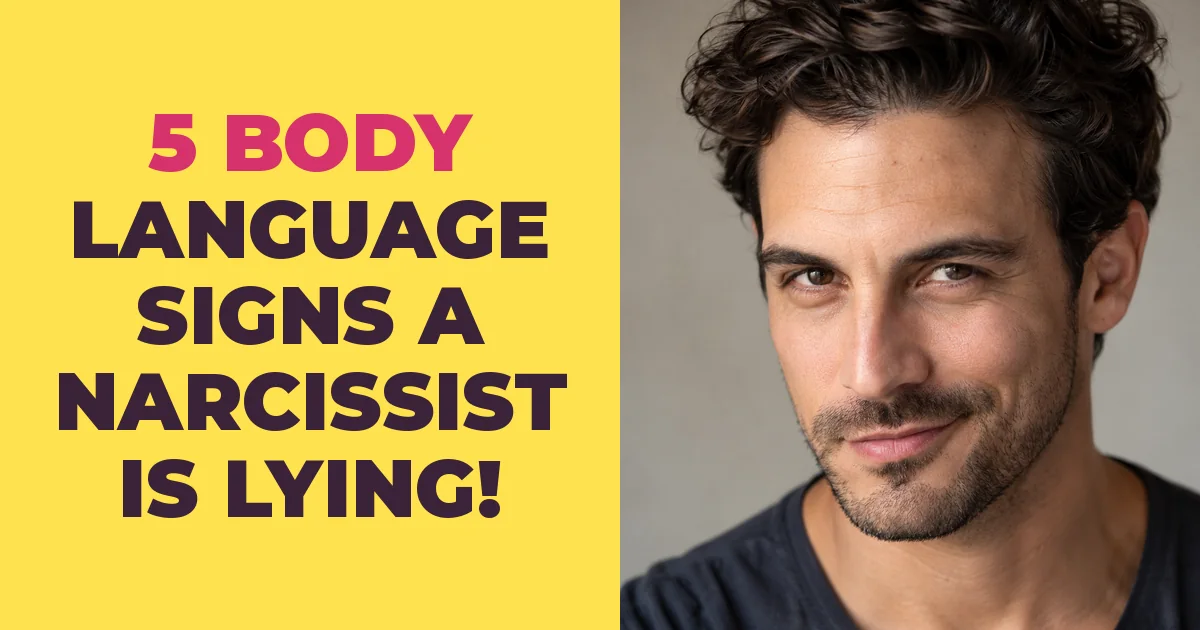
Here are 5 body language signs that what a narcissist is saying isn’t what’s really going on.
One glance proves nothing
I won’t sugar-coat this: there’s no magic tell. One glance away or one shrug doesn’t prove anyone is lying.
What counts is the pattern. Watch over months, not single moments, and ask whether the same gap between their words and their face keeps showing up.
Jot it down when it happens, with the date and what was said. Notes are a lifeline when you’re later told, “That never happened.”
Then trust what you saw.
#1 The eye-roll says what their mouth won’t
An eye-roll while you’re talking is an answer, whatever their words claim.
You’re explaining why last night hurt. They say, “Fine, I’m listening.” Then their eyes drift to the ceiling, and out comes a sigh built to be heard.
Or they copy your words in a whiny voice, laugh, and walk off mid-sentence. Later: “Relax, it was a joke.”
Couples researchers call this mix contempt and stonewalling. In their long-term studies, those two ranked among the strongest signs that a relationship was heading for a breakdown.
No small habit, then.
And it lands. You shrink in your own kitchen. You test every topic against the sneer first, and slowly you stop bringing things up at all.
One way to tell? Someone who needs a break from a fight comes back later to finish it. Contempt walks off and stays gone.
Say what you saw, calmly, one time. Then watch whether respect ever finds its way back to the room. Has it?
#2 The smirk that cancels their apology

A smirk while you cry says more than their apology ever will.
You’re crying in the kitchen after a nasty comment. They lean on the counter: “I’m sorry you feel that way.” And the corner of their mouth twitches up.
Or at dinner with friends, they poke your sorest insecurity and laugh when you flinch. “Wow, you can’t take anything!”
Researchers call this everyday sadism: getting a kick out of someone’s discomfort in small, ordinary ways. They added it to the Dark Triad, the cold, scheming cluster that includes narcissism.
For these people, the cruelty itself is the reward.
So your hurt isn’t an accident. No wonder love starts to feel like being hunted, and you’ve trained your face to go blank.
How to tell the difference? Friendly teasing backs off the moment you say it hurts. This kind leans in. If your pain seems to brighten their mood, show them less of it.
Your tears were never the problem.
#3 Tears that show up right on cue
Sudden tears the moment you raise a problem can end the whole conversation.
You finally ask about the lie they told about Friday night. First comes “I never said that.” Then “How dare you, after everything I do?”
Then the tears. Or the long, wounded sulk. Ten minutes later you’re rubbing their back and apologising for something they did.
Psychologists call this DARVO.
It stands for deny, attack, reverse victim and offender. Research found it leaves the person who spoke up blaming themselves more, which is why it shuts things down so fast.
The tears may even be real. But look at what they do. Your complaint quietly disappears, and their hurt takes up the whole room.
A single defensive moment isn’t DARVO. The sign is that the roles flip every time, until raising anything feels pointless.
So bring it back: “We were talking about Friday.” Skip arguing each counter-attack. A change of subject doesn’t need a rebuttal.
#4 Charming at the party, stone cold in the car
The warm smile they wear in public can switch off before the car door shuts.
At the party they touch your arm, laugh at your stories, top up your drink. Your friend leans in: “You’re so lucky.”
Then the drive home. Jaw tight, radio up, eyes on the road. Ask what’s wrong and you get “Nothing. Drop it.”
So which one was the act?
Psychologists describe how we all manage the impression we give. For a narcissist the stakes run higher, since admiration props up their self-worth.
Manners shift for everyone at a party. This is a bigger swing: warmth for the guests, coldness saved for you.
And it costs you. Your friends have only met the charming version, so they doubt your story, and before long you doubt it too.
Believe the version you get when nobody’s watching. If there’s one person who has seen both, tell them. The car ride home counts.
#5 They saw your pain and looked away
A narcissist often understands exactly how you feel and simply chooses not to act on it.
You tell them your mom is sick, and your voice cracks. Their eyes flick to the TV. “Anyway, did you call the plumber?”
When you say it stung, out comes the line: “I had no idea you were that upset. You’re too sensitive.”
No idea? They saw your face.
In studies, narcissists showed less empathy on their own, yet more once they were asked to picture the other person’s side. Choice, then, more than inability.
Think about it. The partner who blanks you at home can turn tender with a stranger when it makes them look good.
Someone just awkward with feelings still fumbles toward you. This is different. You stop opening up and start second-guessing your own reactions.
Maybe you really are too much? You aren’t. Bring your feelings to the ones who meet them, and stop handing your hurt to someone who turns it into ammunition.
You weren’t imagining the smirk, the eye-roll or the tears that arrived right on time. Your eyes caught what their words tried to cover.
Write it down when you see it, and check it with someone outside the relationship. A pattern on paper is hard to argue away, even on a foggy day.
Be as kind to yourself as you’d be to a friend who’d seen all this. You noticed. You trusted your eyes. That matters.
7 Things Narcissists Say That Really Mean the Opposite

The words sound almost normal. Then you walk away feeling smaller, and you can’t say why.
Narcissists often say one thing and do another.
Kind at the party, cold in the car home. You raise one problem and get handed a list of your faults. Then you lie awake replaying it, wondering if the problem is you.
Some lines are built to make you doubt yourself.
Here are 7 things narcissists say that really mean the opposite, and what each one quietly does to you.
Why their words flip
A narcissist’s sense of worth often leans on outside approval. So the people close to them tend to get treated as admirers or as threats.
What they say can serve that.
So don’t judge by one line. Judge the pattern over months, and expect the behaviour to stay the same rather than waiting for change.
#1 Your feelings are the problem, apparently
Calling you too sensitive makes your hurt vanish, and their part in it too. You tell them the comment at dinner stung.
They sigh, check their phone and mutter, “Here we go again. You’re too sensitive.”
And just like that, you’re the one saying sorry.
Research on narcissism and empathy suggests it’s often lower by default. When narcissists were nudged to imagine the other person’s view, more of it showed up. So it looks more like a choice than a missing skill.
You begin second-guessing your own reactions. You open up a little less each time, then not at all. Why bother?
A partner who’s clumsy with feelings still tries to help. This one notices your pain and walks past it.
Bring your hurt to people who actually hold it. The sting from that dinner comment was never the problem.
#2 ‘That never happened’ is a tactic
Denying what you both saw lets a narcissist write their own version of events.
You mention the night they yelled at you on the drive home. They tilt their head, half amused. “That never happened. You’re making things up again.”
You were there. You know it.
Psychologists call this gaslighting. The aim is to make your memory feel shaky so their story wins, and it works best when they hold more power and you still trust them.
Two people recalling things differently is normal. Gaslighting goes further. It denies what you saw until you start doubting yourself.
Maybe you already keep notes, proof that a Tuesday really happened. Good. Jot things down as they happen, somewhere only you can reach.
And run them past one person outside the relationship.
Their denial doesn’t erase the drive home.
#3 The joke was the point

A cruel joke that only ever lands on you was never really a joke.
At your sister’s birthday, they bring up your cooking, your parking, the time you cried in a meeting. Everyone laughs. You smile and count the minutes.
Later, in the car: “Relax, I was kidding. You can’t take anything.”
Researchers use the term everyday sadism for people who enjoy small doses of someone else’s discomfort. For them, your wince is the payoff.
Mocking ‘jokes’ at your expense also sit near contempt: the eye-rolls, the sneers, the talking down. Living with that can make you feel small inside your own home.
Real teasing stops the moment you ask. This keeps going. Watch their face when you’re hurt. Does it look like they’re enjoying it?
Did they smile when you flinched?
#4 Their favours come with a bill
A narcissist’s favours can turn into a debt that never gets paid off.
You say you can’t drive their mum to the airport on Saturday. Silence. Then: “Wow. After everything I’ve done for you?” Out comes the list. The rent they covered that one winter. The lift home from work.
There’s a popular name for this: FOG, which stands for fear, obligation and guilt. It isn’t a formal term.
It describes how guilt trips and reminders of old sacrifices make no feel too expensive to say. Researchers studying coercive control describe something related: lots of small pressures that slowly shrink your freedom.
Bit by bit, yes comes out on autopilot. Their moods start to feel like your job.
Try a pause. “Let me get back to you” gives you room to sort their feelings from what’s actually yours to carry.
A gift with strings attached is a loan.
#5 Someday is a holding pattern

Big plans about your future together can keep you waiting for years.
The cabin in the mountains. The road trip. The wedding. “After this crazy stretch at work, I swear.”
The crazy stretch never ends.
Future faking is a popular, informal name for this: detailed promises that keep you invested, with no real intention behind them.
It ties into a research idea called intermittent reinforcement. Warmth that arrives unpredictably grips harder than steady kindness. And after you’ve poured years into a shared future, walking away feels like losing it.
Meanwhile, asking makes you feel unreasonable. Genuine plans fall through too, but they get a new date. Go by what has actually happened, and pick a timeline of your own.
How many somedays have you waited through?
#6 Somehow they become the victim
When you raise a problem, a narcissist may end up as the injured one.
You finally mention the late-night texts from their ex. Within a minute it’s “So now you’re snooping? I can’t believe you’d think that of me.” Then the tears start.
Twenty minutes later, you’re the one comforting them.
This pattern has a name, DARVO: they deny it, attack you, then swap roles so they’re the victim and you’re the offender. Studies show it leaves the person who spoke up blaming herself more.
So you say sorry for raising it. The time after that, you stay quiet.
Steer back to what you came to talk about. Skip the counter-attack. One calm line is enough: “I’m talking about the texts.”
Notice who ended up apologising.
#7 Their accusations describe them
What a narcissist accuses you of is often what they’re doing themselves.
You get home fifteen minutes late from the gym, and they’re waiting in the hall. “Who were you actually with? I know your type.”
Their own phone, of course, stays face down.
Psychologists call this projection. Pinning a trait they can’t stand on you means they never have to look at it in themselves. So the one shouting calls you angry. The one taking calls you selfish.
And you lose whole evenings defending yourself against things you never did, until the real issue gets buried.
Fair criticism that stings is something else. But the same accusation, over and over, that never fits you? Treat it as information about them. Say where you were once, then stop.
If ‘selfish’ never fits you, it may be telling you about them.
One kind sentence can’t cancel months of jabs, denials and guilt trips.
Watch what they do over months, not single moments. The pattern tells you far more than any line they say.
Start with one person who knows the whole story. Before you talk, write down what you want help with, so the words stay yours.
7 Signs a Narcissist Is Faking Their Love for You

The narcissist can say “I love you” and mean almost nothing by it.
You’ve felt that gap. The words are warm. The way you’re treated is cold.
One week you’re adored.
The next, what you need gets brushed off like a nuisance, and somehow the shift is your fault. So you replay conversations at 2 a.m., trying to work out which version is real.
You’re not imagining it.
Here are 7 signs a narcissist is faking their love for you, and what each one looks like up close.
#1 They loved you fast, then went cold

The first month gave you everything, and it was built to make you stay.
Good-morning texts before you’d opened your eyes. Flowers at work. Talk of a trip to Italy, a shared flat, maybe a dog, all in the first month.
“I’ve never felt like this about anyone.”
Psychologists call this love bombing. All that speed glues you to them early, long before a bad day shows you who they are under pressure.
Then the temperature drops. Research on narcissistic admiration and rivalry maps this switch. At first they win you with charm. Later, putting you down starts to matter more to them than impressing you.
Now a joke about your cooking stings. A flat “Whatever” replaces the long messages they used to send.
And you’re left hunting for the version who showed up in month one. Was that person ever real?
#2 Their promises keep getting pushed back
Their promises sound like love and rarely turn into anything real.
The holiday you’d “definitely book after this busy patch.” The wedding date that keeps sliding. The visit to your mum that gets moved and never rescheduled.
Ask about it and you get a sigh.
“Why are you always pushing me?”
There’s a popular name for it: future faking. It isn’t a formal term. Research on game-playing love points the same way, linking narcissism with lower commitment and keeping you at arm’s length.
Plans hook you. The more of yourself you pour into that imagined house or trip, the more leaving starts to feel like throwing it all away. So you keep waiting. And somehow you’re the difficult one for asking when.
A simple check: count what’s actually happened. Not what was said. What’s on that list?
#3 They’re sweetest when someone is watching
A narcissist often saves their best love for an audience.
At your sister’s barbecue, they refill your drink, rub your shoulders and laugh at your stories. Your friends text later: “You’re so lucky.”
Then the car door shuts. Silence.
Research on impression management explains the gap. We all tidy ourselves up in public. A narcissist puts far more into the show, because being admired is what keeps their self-worth topped up.
The warmth was for the room. Not for you.
That’s why your hints land on blank faces, and why you start second-guessing your own memories. They saw someone lovely. You saw the car ride.
Believe the version you get at home. That’s the one living with you.
#4 Affection arrives only as a reward

Their affection comes like a prize you never know how to win.
Tuesday they’re cuddling you on the sofa and planning Sunday brunch. Wednesday they barely look up from their phone, and you can’t find a reason.
So you try harder.
Psychologists call this intermittent reinforcement. Warmth that shows up at random, between cold spells, hooks you harder than steady warmth. Slot machines run on the same trick.
The rare sweet night after a cruel week feels like a jackpot. That’s the trap.
You pour in more effort and get back less. And one lovely evening makes a rotten week feel survivable.
Try a quiet tally for a month: good days on one side, bad on the other. Then look at the typical day, not the best one. What does yours look like?
#5 Your tears make them change the subject
When you’re hurting, a narcissist often finds something more interesting to talk about.
You finally cry about your dad being in hospital. They nod, glance at the TV, then ask if you’ve seen their charger.
Or worse: “You’re too sensitive. It’s not that deep.”
Here’s what stings. Studies on narcissism and empathy hint that many of them do get how you feel. Left alone, they show little concern. Asked to picture your side, they show more. So it looks less like can’t and more like won’t.
Someone who’s awkward with feelings still tries to help. This is different. They see your pain and look away.
So you go quiet about what hurts. You begin to suspect your reactions are the problem.
They aren’t. Bring your hard days to those who lean in when you speak.
#6 Raise a problem and you end up apologising
Bring up something they did, and you may end up being the one who says sorry.
You bring up the cruel thing they said at dinner. Calmly. You even practised it in the shower.
“I never said that. And how dare you bring this up now, when I’m already stressed?”
Ten minutes later, you’re hearing a list of your faults. Then they’re sulking, and you’re the one comforting them.
Researchers have a name for it, DARVO, short for deny, attack, reverse victim and offender. Studies show it leaves the one who complained feeling more to blame. No wonder the talk ends there.
So you stop raising problems. Who wants that fight?
What helps: say the first issue again, plainly, and keep steering back to it. Skip the bait of their counter-charges. You weren’t wrong to ask.
#7 You may not have been their only option

To a narcissist, love can be a game, and you’re rarely the only player.
The ex they still “just chat” with. The coworker they flirt with across the table while you sit right there. The admirer who likes every photo.
“Relax, she’s just a friend.”
Research ties narcissism to treating love like a game. Keep a few doors open. Stay a little distant. Lose interest the moment the chase is won.
Pop psychology calls the ending a discard. It’s not a formal term, but it fits the research: a new person can turn up very quickly.
When it ends like that, the blame tends to land on you, in your own head. It doesn’t belong there. A replacement that arrives very quickly can say how little commitment there was on their side.
Their actions didn’t match what they promised.
If this list felt like reading your own diary, that says something good about you. You were paying attention the whole time, even when you were told you weren’t.
Fake love leaves clues. You saw them.
You don’t have to decide anything tonight. Just start watching what they do across months, not one good or bad night, and weigh their actions over their words. Your memory has been right more often than you’ve been told.
5 Things You Should Do Right Away After Leaving a Narcissistic Relationship

Some narcissists don’t let go just because you did.
You walked out, or got pushed out, and now the quiet feels louder than any fight ever did.
Your phone sits face down. You still check it.
Part of you feels free. Part of you wants to explain yourself one more time, so they’ll finally understand.
Those first days are raw, and they’re exactly when a plan helps.
Here are 5 things you should do right away after leaving a narcissistic relationship, so the door you closed stays closed.
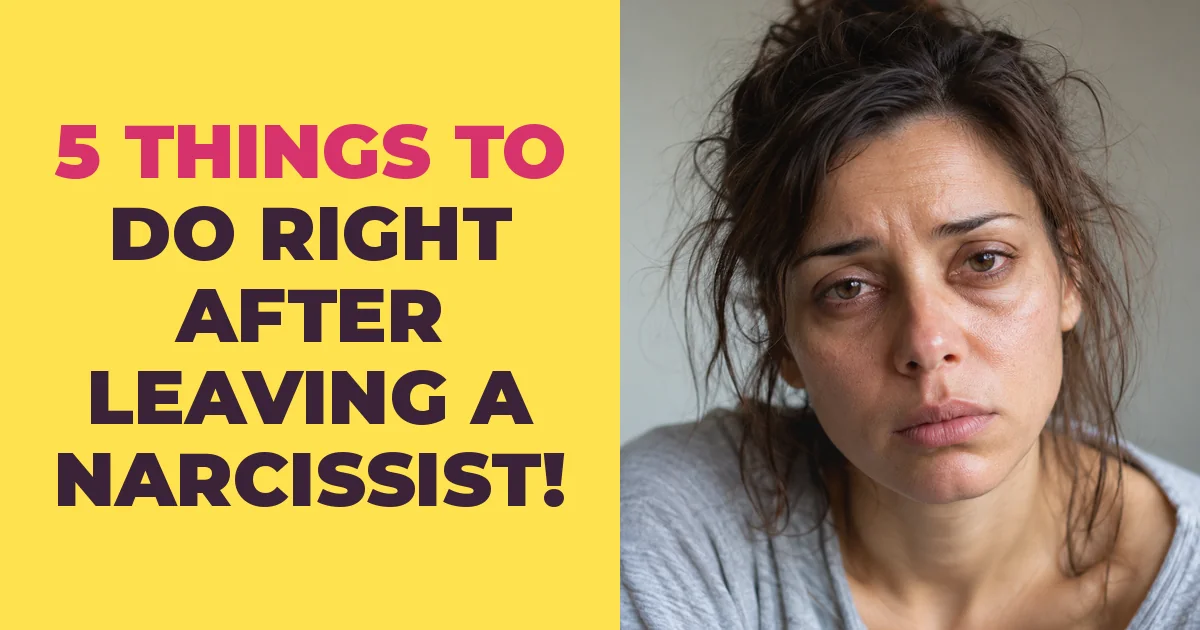
#1 Shut the door before they knock

The fastest way back into that relationship is one text you keep rereading.
It often starts soft. An “I miss you” at 11 p.m. A sudden emergency that only you can help with. Then the big one: “I’ve changed. This time for real.”
Its popular name? Hoovering.
There’s no clinical definition for it. The pattern, though, is familiar. It plays on the bond you built (more on that in #5) and on the hope that the good days will come back. It often shows up when they need something, or feel replaced.
So cut the line first. Block the number. Mute the accounts. Archive the chat you keep opening.
Have to stay in touch over kids or paperwork? Keep replies short, factual and in writing. Every reply, even an angry one, gives them something to work with.
The first weeks can feel a lot like withdrawal. That’s common, and the calm tends to grow over time. If they might escalate, a domestic violence service can help you plan for safety first.
Decide today what you’ll do when that message lands. Not at midnight, with your heart racing.
#2 Write down what really happened
When someone rewrites what happened, put your memory back on paper.
You know the lines. “That never happened.” “You’re too sensitive.” Or the classic: “You always twist things.” Said so calmly, over dinner, that you ended up apologising for being hurt.
Psychologists call this gaslighting: making you doubt your own memory so their version of events wins. It works best when one person holds more power and controls the story.
Maybe you already kept notes, just to prove it.
Now that you’re out, your own mind may pick up where they left off, handing you their excuses. They were stressed. They had a hard childhood. It wasn’t that bad.
Research on cognitive dissonance describes exactly this. Holding “they loved me” and “they hurt me” at once feels so uncomfortable that the mind starts explaining the hurt away.
So write it down while it’s fresh. What was said, what was done, roughly when. Not what it meant. Not why they did it. Just what happened. A notes app works. So does the back of a receipt.
On the days you catch yourself missing them, read it. Your own handwriting won’t gaslight you.
#3 Tell one person the whole story
Isolation helped hold you in place, and reconnection helps you get free.
Maybe your friends drifted while you were busy keeping the peace. Maybe you stopped calling your sister because every visit ended in a cold car ride home.
Maybe you gave everyone the tidy version. “We just grew apart.” Easier than explaining. Lonelier too.
Pick one person. Not the whole group chat. One.
Tell them the full story, including the parts that make you cringe. Talking it through with someone who listens tends to bring two things: less loneliness and clearer decisions. They don’t need to fix anything. They just need to hear it.
Not sure what to ask for? Write it down first. A spare room for a week? Someone to sit with you on the bad nights? Someone who simply believes you?
That person could also be a therapist who understands abuse, a support group, or a hotline you call just to talk. Getting help doesn’t make you weak, and it doesn’t commit you to anything today.
So, who’s the one person you’d call first?
#4 Stop blaming yourself for not seeing it
Missing the signs was your mind protecting a bond you depended on.
Now the clarity hits all at once. The lies about late nights. The friend who looked at you strangely at dinner. The stories that never quite added up. And with it comes the voice: How did I miss this?
Research on betrayal blindness describes how, when you depend on someone, the mind can block out evidence of their betrayal to keep the attachment intact. It’s a protective response.
That shame? It’s aimed at the wrong person.
Grief tends to arrive with the clarity. Grief for who you thought they were, for the plans, for the years. Some of it may be for the version of you who believed every word. Let it come.
Then try talking to yourself the way you’d talk to a friend who’d lived through this. Research on self-compassion links that kind of fairness with less shame and self-blame, two of the heaviest things manipulation leaves behind.
Start small. Rest without apologising. Pick up the hobby they rolled their eyes at. Keep one daily routine that belongs only to you.
Go easy on the woman who didn’t see it. She was surviving.
#5 Missing them doesn’t mean you were wrong

Missing someone who hurt you doesn’t mean leaving was a mistake.
It’s 2 a.m. and you’re scrolling old photos. The beach trip. The one good birthday. Your chest aches, and your brain offers a deal: It wasn’t all bad. Maybe just one message.
Missing someone on its own is normal. But if the relationship ran on a cycle of harm and kindness, psychologists call the attachment it creates a trauma bond. With a power imbalance, that bond can grow stronger than in calm relationships.
Read that again. Stronger.
That’s why leaving can feel physically painful. Why you might catch yourself defending them to friends who saw everything. Why you may have gone back before, and felt ashamed of it.
Your logic says no while your feelings scream yes. If the relationship swung between harm and kindness, this pull is a known reaction, not weakness.
On those nights, reach for someone outside the relationship before you reach for their chat. Text the friend. Call the sister. Say the craving out loud. Make a list of those names now, while you’re steady.
The ache is real. It still isn’t a reason.
You don’t have to do all five by Friday. Blocking one number counts. Writing one page counts. Telling one person counts.
Some nights you’ll stare at their name for an hour. That’s when your notes and your one person come in.
And that strange quiet you’re sitting in right now? That’s room. Room for your own voice to come back.
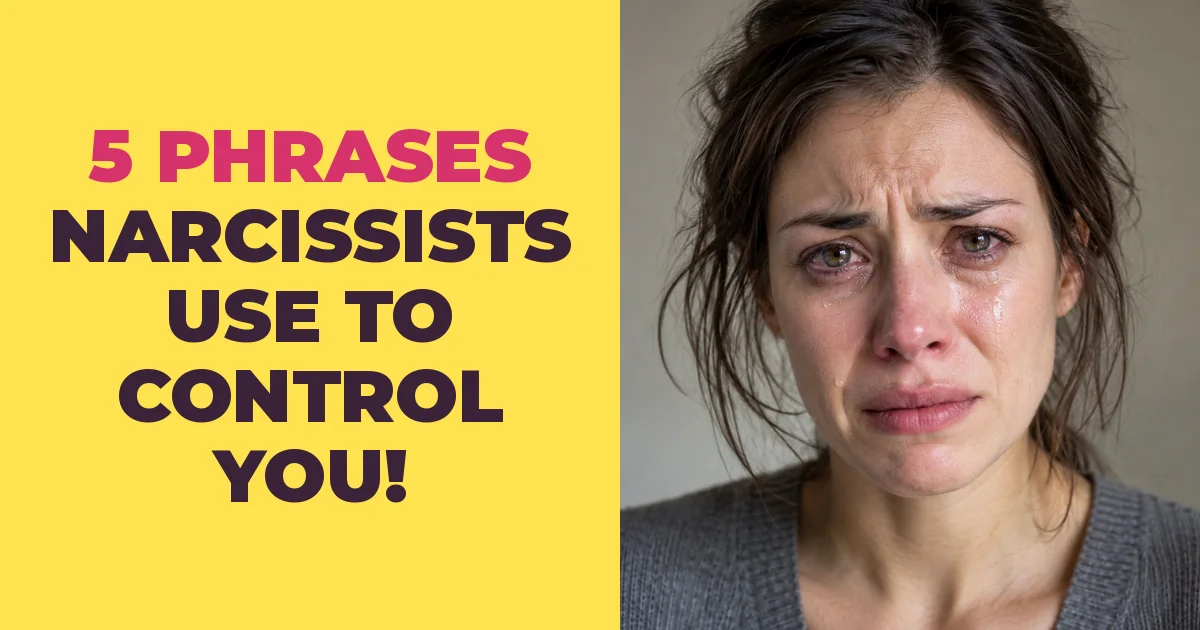
5 Phrases Narcissists Use to Control You

A narcissist’s version of events has to win, even over your own memory.
A few words do it. Said calmly. Repeated until you hear them in your own head.
Maybe you’ve started to wonder if they’re right. If you really are the difficult one. If your memory is the broken part.
It isn’t. Lines like these are designed to make your version of events lose.
Here are 5 phrases narcissists use to control you, and what each one is really doing.
When your needs get in the way
A narcissist’s sense of worth often hangs on outside confirmation. So the people closest to them can get treated as sources of admiration, or as threats to it.
In that setup, your needs are an inconvenience. Each phrase below shows a different way that plays out.
Single moments can fool anyone. A pattern over months is much harder to argue with.
So watch for the repeats, and expect them to come back rather than waiting for them to stop.
#1 Your feelings get turned into the problem
One small sentence can make your hurt vanish from the conversation.
You tell them the joke at dinner stung. Or you cry in the car after a rough day at work. They glance at their phone, sigh, and say it: “You’re too sensitive.”
Now the topic is you. Not the joke.
Research on empathy in narcissism found something telling. Many narcissists can understand what you feel, and their empathy goes up when they’re nudged to see your side. By default, they often just don’t act on it.
They see the hurt. They just shrug it off.
Over time, you stop sharing. You start checking your reactions before you even have them, wondering if you’re simply too much. Saying anything soft starts to feel like a risk.
Here’s one way to tell. Someone awkward with feelings still tries to help. Someone who calls you too sensitive changes the subject and moves straight on to what’s for dinner.
Take your feelings to people who respond to them. Your hurt was real. It was simply easier for them to ignore.
#2 They rewrite what you both saw
Gaslighting works by making your memory the least trusted thing in the room.
They promised to pick your mum up from the station. They didn’t. When you bring it up, they look puzzled. “I never said that.” A minute later, you’re the one apologising.
You were there. You heard it.
Psychologists describe gaslighting as making you doubt your own memory or perception so their version wins. It works best when the power is uneven and you trust them. Who expects the person closest to them to lie about last Tuesday?
So you start keeping notes. Screenshots. A quiet file in your phone, just to prove to yourself what happened.
Two people can remember things differently. That’s normal. Gaslighting means denying what you saw until you stop trusting your own eyes.
Your note-taking instinct is sound. Writing things down when they happen, and checking with someone outside the relationship, keeps you anchored to what’s real.
Your memory works fine. Someone keeps arguing with it.
#3 Your complaint becomes their crisis
Raise one fair complaint, and you’ll often end up comforting them instead.
You mention, calmly, that their comment in front of your friends hurt. You’ve even rehearsed it in the shower so it comes out gently.
“You’re overreacting. I can’t believe you’d accuse me of that, after the week I’ve had.” Then come the tears, the sulk or the cold shoulder.
Psychologists call this DARVO: deny, attack, reverse victim and offender. They deny it, go after you for raising it, and finish as the injured one.
Why does it work so well? Research on DARVO found it makes the person who spoke up blame herself more. Conversation over.
Sounds familiar? You walk away apologising for bringing it up. After enough rounds, you stop bringing anything up.
One thing that helps: name the original issue and go back to it. Skip the counter-attack and the list of your faults. “I hear you. I’m still talking about the comment in front of my friends.”
And who walked in hurt? You did.
#4 They bring in people who aren’t there
Being told everyone agrees with them can make you feel very small.
“Even your sister thinks you’re hard work.” “Ask anyone.”
Suddenly a disagreement between two people has an audience. You against a crowd you can’t even see. Sometimes it’s an ex they mention, just casually, just often enough.
Psychologists call this triangulation: pulling a third person into a two-person issue to stir up jealousy, competition or pressure. Family systems research describes it as a way to handle tension without facing it directly.
Notice the trick. You can’t argue with your sister’s opinion when your sister isn’t in the room. You can’t check it either.
So you end up competing with people you shouldn’t have to. You feel outnumbered in your own kitchen.
What helps is talking only to the person directly involved. If your sister has a view, she can tell you herself. And nobody has to win a contest against an ex for basic attention.
A crowd you can’t see can’t outvote you.
#5 Guilt becomes the leash
Guilt can hold you tighter than any rule ever could.
You say you can’t drive across town on Saturday. You have plans. A pause, a long sigh. “After everything I’ve done for you?”
Then come the receipts. The time they lent you money. The move they helped with. The year they “stood by you.”
There’s a popular name for this: FOG, short for fear, obligation and guilt. It’s a community term with no formal definition, used to describe emotional blackmail.
Reminders of sacrifices, guilt trips and hints about what might happen make no feel more costly than yes. If those hints ever turn into real threats, your safety comes first.
So yes turns automatic. You start feeling responsible for their moods, as if their disappointment is a bill you have to pay.
Try one small thing: pause before you answer. “Let me check and get back to you.” Their feelings are theirs. Your Saturday is yours.
Helping you move once doesn’t buy every Saturday after it.
If you heard a familiar voice in these lines, that says nothing bad about you. It says you trusted someone and took their words seriously.
Pick one phrase. Next time, just notice it.
When it lands again, you’ll know which trick it is, and you’ll know you heard it right.
5 Ways Narcissists Quietly Isolate You

Narcissists rarely lock the door on you. They make leaving the house feel like more trouble than it’s worth.
Then one day you notice. The friends who used to call have gone quiet. You missed your sister’s birthday and can’t quite say why.
Your world got smaller.
You can’t point to the day it shrank. That’s no accident. This kind of control usually arrives in small, reasonable-sounding steps.
Here are 5 ways narcissists quietly isolate you, and how to spot each one while it’s still happening.
Why it’s so hard to see
Researchers describe a pattern called coercive control. Lots of little rules, and little penalties for breaking them, slowly eat away at your freedom.
No single moment looks like much. A comment. A sigh. A rule about who’s “too much drama.”
That’s why it’s so hard to explain.
And isolation is part of how manipulation works. The fewer people close to you, the fewer people you can check things with.
#1 Your friends suddenly aren’t good enough
A narcissist rarely bans your friends; they just make each one feel like a problem.
Your best friend is “a bad influence.” Your mum “always stirs things up.” The coworker you like? “She’s fake. I can see it, even if you can’t.”
Each comment sounds like concern. Some even sound protective.
Research links narcissism, especially its quieter form, with envy. Running down the people you love is one way that envy leaks out. Their jokes, their jobs, their marriages are all fair game.
Researchers who study coercive control describe a related move: quietly choosing your company for you. Your friends become the price of a calm evening.
Nobody says “You can’t go.” But going costs you. The sigh when you grab your coat. The cold shoulder in the car home. The lecture the next day.
So you see them less. It’s easier.
One skipped coffee at a time, the circle shrinks. So ask yourself: does any friend ever pass their test? If none do, the problem was never your friends.
#2 Your time stops being your own
To a narcissist, your free time belongs to them by default.
You mention Saturday lunch with your cousin. Suddenly they need you. The car, the errand, the sulky “I thought we’d finally have one day together.” Funny how that day always lands on yours.
Say no, and watch the mood drop.
Psychologists call this entitlement. Underneath it sits a belief that they’re owed more than anyone else, and that the usual rules don’t apply to them.
So a normal limit from you lands like an insult. Your plan isn’t a plan to them. It’s a slight, and keeping it feels like an attack.
Slowly the balance tips. You hand over more of your week and get less of theirs back. Their plans are fixed. Yours are “flexible.” Even asking for one evening back feels like picking a fight.
So you stop making plans.
One thing helps: don’t say yes in advance. Give your answer when you’re ready, not when they push. Your Saturday was yours first.
#3 They sulk until you stay home

Some narcissists never forbid your plans; they simply sulk until you cancel them.
You’re getting ready for a girls’ night. They’re on the sofa, quiet. “No, go. Have fun. I’ll just be here on my own. Again.”
Keys in hand, you suddenly feel like a monster.
Research describes a quieter side of narcissism. Less showing off, more hurt feelings, grudges and self-pity. When the attention drifts away from them, the moping starts.
Underneath, it’s guarding the same fragile self-image as the loud version. It just does it by feeling hard done by.
Then comes the guilt trip. “After everything I’ve done for you, you’d rather be with them?”
There’s a popular name for this squeeze: FOG, short for fear, obligation and guilt. It isn’t a formal term. It describes how guilt makes “no” feel more expensive than “fine, I’ll stay.” It links to a researched pattern called coercive control.
Try one small pause before you answer. Their mood is real to them. It still isn’t your curfew.
#4 Birthdays somehow always go wrong
Your best days are the ones a narcissist often seems least able to share.
Your promotion dinner. Your best friend’s wedding. Your fortieth. Somehow there’s a fight in the car before you’ve even parked.
Or they come, then sit in a corner with a face like thunder, so everyone spends the evening checking on them instead of you.
Why? Envy.
When you shine, they feel smaller, and that pokes at their need to come out on top. So they dim the moment, take it over or ruin it. A day when everyone’s looking at you is an easy target.
The cost lands on you. Good news starts to feel like something to keep quiet. You downplay the promotion, or skip the party just to dodge the fight.
That’s isolation too. Quieter than a rule.
Pay attention to whose face falls when things go well for you. Then share the next win with someone whose face lights up. You’re allowed to be happy out loud!
#5 They take control of the money

Money can be the quietest wall a narcissist builds around you.
It might start as help. “Let me handle the bills, you’ve got enough on your plate.” Then your card lives in their wallet.
Soon you’re asking for cash to meet a friend for coffee, and explaining why you need it.
Sometimes the answer is no.
Researchers have a name for it: economic abuse. It covers taking over, draining or undermining your money, your income and your independence.
The reason is simple and cold. If every penny runs through them, walking away gets harder. So does a train ticket to see your mum, or a dinner out with your oldest friend.
Maybe you’ve started tucking receipts away. Maybe money feels like a cage. Control over spending is one of the patterns listed under coercive control, a recognised form of domestic abuse.
A little money that’s only yours, copies of your records, and a talk with a domestic abuse service can give you room to think. They worked quietly. So can you.
None of this happened because you’re weak or naive. It happened in small steps that are easy to miss, especially when each one comes wrapped in “I’m only looking out for you.”
The way back can be just as small.
One text to an old friend. One coffee you don’t cancel. Start with one person, and let the world get bigger from there.
Narcissists Blame You for These 9 Things, but It’s Usually Their Own Confession

Narcissists rarely confess. They accuse instead.
You’re selfish. You’re dramatic. You’re the narcissist. You’ve heard the list so often that a part of you has started checking whether it’s true.
That checking says something good about you. It means you still care about being fair.
So here’s another way to read that list.
Here are 9 things narcissists blame you for, and why each one often says more about them than about you.
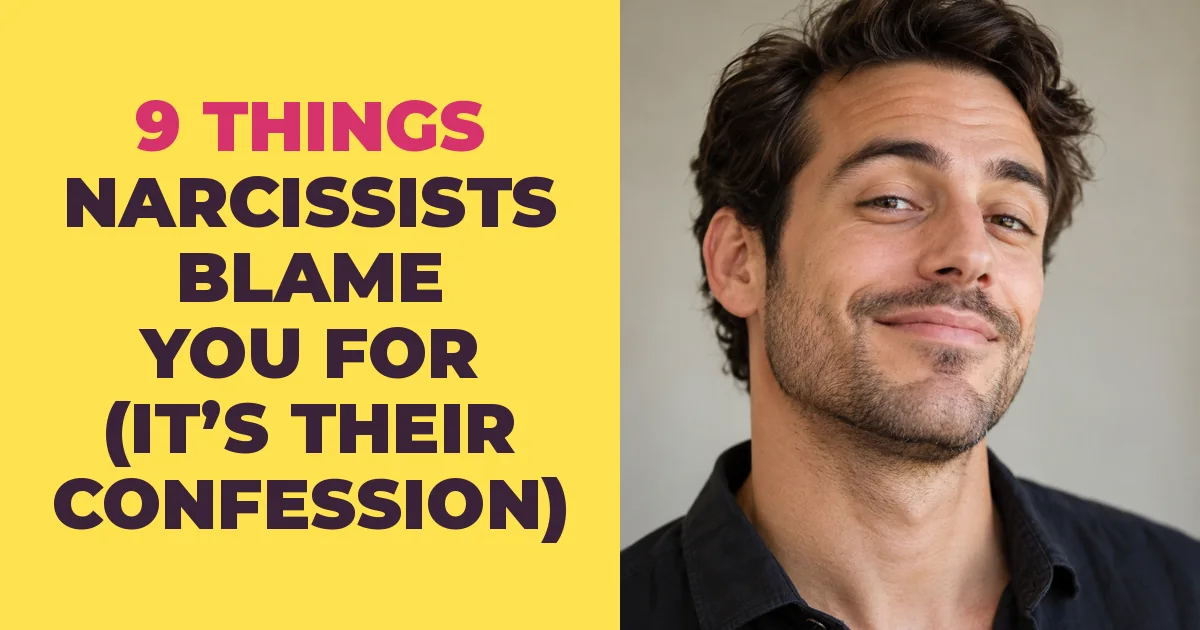
Why the blame keeps landing on you
Psychologists call it projection. A trait they can’t stand in themselves gets pinned on the nearest person, and that’s often you.
So the accusation that gets repeated most is worth a second look. Treat it as information about them.
Fair criticism that stings is different. It comes once and it has a point.
Projection keeps coming back, aimed at the very thing they keep doing.
#1 They call you the narcissist
The person who calls you the narcissist is often describing their own reflection.
You finally say, calmly, that the comment at dinner hurt. Within a minute it’s “I never said that, and how dare you. You make everything about you.”
There’s a name for this pattern: DARVO. They deny it, go on the attack, then flip the roles so they’re the injured one.
Studies of DARVO found it leaves the person who spoke up feeling more to blame. Which explains why the talk ends so quickly, often with your apology.
So go back to the original issue in one sentence. “I’m talking about what you said at dinner.” Skip the counter-charges. You don’t owe each one a defence.
The dinner comment still happened.
#2 Too sensitive means you noticed
Being called too sensitive often just means you noticed what they did.
You flinch at a remark about your weight. They sigh, change the subject, and later tell you, “You’re too sensitive. You always overreact.”
Here’s the twist. In studies, narcissists showed less empathy by default. Asked to picture the other person’s view, they showed more.
So the coldness looks like a choice.
Slowly you go quiet about how you feel. You second-guess every reaction. That’s where gaslighting gets its grip: their story wins once you stop trusting your own.
Jot down what happened the same day. Then run it past a friend who isn’t involved.
Your reaction was information.
#3 The drama starts with them
Exploding over a small question is anger out of proportion, aimed at whoever bruised their image.
You ask, “Did you pay the electric bill?” Ten minutes later you’re hearing about every mistake you’ve made in years, and then: “Why do you always have to start something?”
Researchers studying what they call threatened egotism saw narcissists hit back harder when insulted, and aim it straight at the person they held responsible.
That’s the pattern. A basic question gets turned into a fight.
So you rehearse every sentence before saying it. You say sorry for things that weren’t yours, just to get through the evening.
Keep it brief and stick to facts. If the shouting tips into threats, get yourself out of that room. No bill is worth your safety.
The electric bill was a yes-or-no question.
#4 You can’t talk because they won’t listen
It’s hard to express yourself to someone who walks away mid-sentence.
You try to explain why the weekend upset you. They roll their eyes. They mimic your voice. Then they leave the room, and later say, “You never just say what you mean.”
That’s stonewalling, with a side of contempt.
Researchers who followed couples for years found this pair, the shutting down and the sneering, ranked high among the signs a relationship would fall apart.
Taking a breather is different. A partner who does that comes back and finishes the conversation.
No wonder you’ve gone quiet. No wonder your own kitchen feels like someone else’s.
Say what you see, calmly, one time. Then watch whether any respect returns.
The problem was never your words.
#5 Your jumpiness has a cause
Jumpiness is often learned in a home where anger could come from nowhere.
They laugh when you flinch at a slammed cupboard. “Why are you always so on edge?”
Meanwhile you can read their mood from the sound of keys in the lock.
When anger can flare at any moment, your nervous system learns to keep watch. It also learns to smooth things over fast: agree, apologise, please.
That pleasing reflex has a name, fawning. It comes from fear.
The cost? Exhaustion. And slowly forgetting what you even want.
When you feel that jolt, pause and let it pass before answering. Try tiny no’s with people who can hear them.
Your body wasn’t overreacting. It was paying attention.
#6 Your friends didn’t vanish on their own
Friends who suddenly go cold were often told a story you never got to hear.
“Face it, you don’t have any real friends.” They say it like a fact. Funny how the mutual friends started acting strange right after a long ‘chat’ with them.
Psychologists call this relational aggression. The weapon is your reputation, chipped away by whispers and being left out.
It leaves no bruise. Just a group chat that went quiet.
You end up explaining yourself to everyone. And the support thins out at the worst possible time.
Skip chasing each rumour. Keep being who you are, steadily, and give it time.
Time tends to show who told the truth.
#7 Wanting your own way is their rule
To an entitled partner, even your smallest request can feel like an attack.
You ask to see your sister on Saturday. They’d already planned golf. “Why does everything always have to go your way?”
Notice they never dropped the golf.
Research on entitlement describes people who feel they’re owed more, and who think rules are for other people. So any limit you set lands as an insult.
You hand over more and more. Asking for an even split feels like picking a fight.
Keep a quiet tally of what you give. And stop saying yes before they’ve even asked.
Asking for what you need is allowed. So is Saturday with your sister!
#8 Their games are why you feel jealous

A partner who flirts in front of you doesn’t get to call you jealous.
At the party they lean in close to a coworker, laughing a little too long. In the car home you go quiet, and they say, “God, you’re so jealous. It’s exhausting.”
Research ties narcissism to treating love like a game. Exes stay in the phone, admirers stay close, and commitment stays low.
Keeping you unsure is part of the game.
Now you’re fighting for attention that used to come easily. You feel easy to swap out, then silly for feeling it.
Judge commitment by what they do, week after week, not by what they say in the car.
The laughing at the party came first. Your quiet came after.
#9 Selfish is the word they save for you
Being called selfish after giving everything is one of projection’s clearest tells.
You say no to lending money again. Suddenly it’s “After everything I’ve done for you? You’re so selfish.”
Never mind who paid last time. And the time before.
Many call this FOG, short for fear, obligation and guilt. It’s a popular label, not a diagnosis, for guilt trips and old favours that make saying no feel too expensive. It can overlap with controlling behaviour.
Yes becomes automatic. Their moods become your job.
Pause before you answer. Their disappointment belongs to them.
Guilt after hurting someone is healthy. Guilt used as a lever isn’t yours to carry.
You don’t have to prove anything to anyone. The accusations that keep coming back can simply become information, quietly noted.
You know what you gave. You know what you saw.
The dinner comment, the electric bill, the Saturday with your sister. They happened the way you remember them.
9 Things Narcissists Do When Revenge Is All They Can Think About

You pulled away, or you finally said no, and something in them switched.
The charm has drained out. What’s left feels cold, busy and pointed straight at you.
A bruised narcissist rarely lets it go.
Maybe your phone keeps buzzing with things they’ve told people. Maybe it’s gone eerily quiet. Either way, the pattern you’re sensing is real.
Here are 9 things narcissists do when revenge is all they can think about, and how to spot each one before it knocks you off your feet.
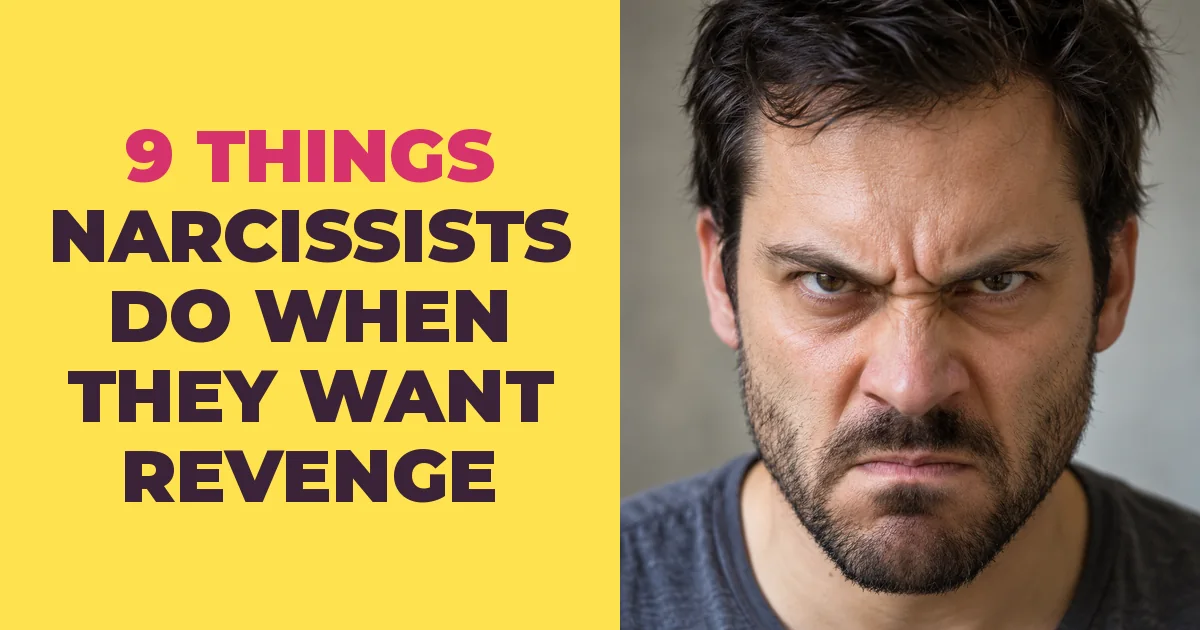
Why your no feels like war to them
There’s a reason the backlash feels so out of scale.
Psychologists studying threatened egotism looked at what happens when a narcissist’s image gets dented by criticism, rejection or being overlooked. The answer: more aggression, pointed at whoever they hold responsible.
Usually, that’s you. Even when your only crime was asking a simple question.
Then there’s entitlement. To someone who believes they deserve more than everyone else, an everyday limit lands as an insult. Your no turns into their motive.
#1 Everyone hears you’re the unstable one
Your good name is often the first target when a narcissist wants payback.
A mutual friend goes oddly quiet in the group chat. Your sister checks on you in that careful voice. Word is you’ve been “really unstable lately.”
Often that story was in motion before you’d even walked out.
The research name for this is relational aggression. It goes after your standing with others, not your body, so it leaves no mark anyone can see.
Suddenly your name needs guarding everywhere, just when support matters most.
You can’t outrun every rumour. Being consistent, week after week, lets time do the arguing. If it touches your work or custody, keep records.
The friends worth keeping will notice.
#2 Silence becomes the punishment
Going silent is one of the coldest ways a narcissist can punish you.
They take their brother’s call, joke with the neighbour, chat to the cashier. You get nothing. For three days.
Then they wander back in like it never happened.
Why does it cut this deep? Studies on ostracism show that being ignored threatens two basic needs: belonging and mattering. The ache can feel almost physical. No wonder caving looks like relief.
So the apology slips out just to end the quiet. Then whole topics become off limits.
One calm sentence is enough: “I’m here when you want to talk.” After that, carry on with your plans. You don’t follow them from room to room.
Their silence isn’t yours to fix.
#3 Every word is aimed to sting

Contempt is how a narcissist shrinks you inside your own home.
You’re halfway through a sentence about the bills and their eyes roll. Or they parrot your voice back, high and whiny. “Oh, here we go again.”
Then the “joke” at dinner. Everyone laughs. You don’t.
Long-term studies of couples put contempt and stonewalling near the top of the list of things that predict a breakup.
Slowly, you feel smaller under your own roof. Which suits them fine.
When it’s safe, say what’s happening one time, in a level voice: “That’s mockery.” Then watch whether any respect comes back.
You already know how that’s gone.
#4 They know exactly where you bruise
A narcissist often knows exactly how you feel and goes there anyway.
You told them about your dad walking out. About the weight thing. About the dread before work meetings.
Now it gets thrown back mid-fight. “No wonder your dad left.”
Research on narcissism and empathy turned up something chilling. Left alone, they show little of it. Asked to picture your side, they show more. That looks a lot like choosing.
They saw your hurt. They saved it for later.
So you’ve stopped sharing what you feel. You even wonder if your reactions make sense.
Keep your soft spots for those who treat them gently.
#5 Your pain seems to please them

Some narcissists seem to enjoy your discomfort, and you can see it on their face.
They drag up your oldest insecurity in front of friends. “She’s always been a bit paranoid, haven’t you, babe?” Then the smirk as you flinch.
They make you wait. They make you worry. They seem to like it.
Researchers call this everyday sadism and added it to the Dark Triad, turning it into a “Dark Tetrad”. For these people, being cruel is a reward all by itself.
Small wonder home starts to feel like being hunted.
One way to tell: does your upset seem to cheer them up? Teasing that ends when you ask is play. This never ends.
The fewer reactions you hand over, the less they get to enjoy.
#6 Payback arrives days later
Payback from a narcissist can land days after a moment you’ve forgotten.
On Tuesday you corrected their story at a friend’s barbecue. Tiny thing. They smiled.
On Friday they blow up over the dishes, then go ice cold all weekend.
The threatened-egotism studies showed a narcissist hit with an insult tends to turn more aggressive, aimed at whoever delivered the blow. A public correction feels like exactly that blow.
Soon you’re editing every sentence before it leaves your mouth. Apologising for things that weren’t your fault.
Criticism, if you give it at all, works best short and factual. When speaking up feels unsafe, skipping it is a valid choice. And if their anger turns to threats, leave the room.
Your safety comes first. Always!
#7 Suddenly there’s someone new around
Few things rattle you faster than a third person suddenly in the picture.
The ex is “just a friend” again. The new coworker comes up four times at dinner. Or, after a breakup, someone new appears on their feed within weeks.
“At least she appreciates me.”
Psychologists call this triangulation: dragging an outsider into something between the two of you to stir jealousy and rivalry. Research also ties narcissism to a game-playing style of love that keeps the doors open.
It’s designed to make you feel easy to swap out.
Suddenly you’re fighting for attention that used to come for free.
Refuse the contest. You never signed up for it.
#8 Threats come dressed as guilt
When revenge is the goal, threats often show up disguised as guilt.
“I gave up my whole life for you.” “Go on then, and see what happens to me.” Then the long, heavy sulk until you cave.
Online, this gets called FOG, which stands for fear, obligation and guilt. It’s a loose label for emotional blackmail, not a diagnosis.
Every line raises the price of saying no until going along feels cheaper. Researchers describe a related pattern called coercive control, where lots of small rules and punishments quietly chip away at your freedom.
Yes starts coming out on autopilot. Their moods become your job.
Let a pause sit between their request and your answer. Their feelings are real, and they’re theirs to manage.
If the threats scare you, that fear matters. Specialist abuse services can talk through safety with you.
#9 Your own people turn on you

Some of the worst payback arrives through the mouths of those you love.
Your aunt rings to say you owe an apology. A friend “just thought you should know” how hurt they are. Someone says you’re “breaking this family.”
Same words. Same script.
There’s a nickname for these messengers: flying monkeys. It’s an internet term, not a clinical one, but research on triangulation describes the same move of drawing outsiders into a fight between two.
Many of them only heard the version where the narcissist was wronged. That’s what makes it so lonely.
Messengers aren’t owed your side. Hold the details close. Your story belongs to you.
The ones who ask what you saw? Those are your people.
If this list sounded like your week, your eyes are working fine.
Revenge like this speaks to their dented ego, not to your worth.
Jot down what happens on the day it happens. Tell one trusted person everything. Let the noise stay theirs.
8 Things Every Narcissist Lies About Without Thinking

A narcissist can look you in the eye and rewrite yesterday.
No pause. No flicker. Just a calm new version of events, delivered so smoothly that you’re the one who walks away unsure.
You replay it in the shower. You scroll back through old texts. You wonder if you’re losing it.
The pattern is real. The same lies show up again and again, at the dinner table, in text threads, on the drive home.
Here are 8 things narcissists commonly lie about, often without a second thought, and what each lie is really doing to you.
Why the lies come so fast
A narcissist’s sense of worth leans on outside confirmation. Your praise. Your agreement. Your silence.
So the people around them get sorted quickly: a source of admiration, or a threat to it.
Research on the loud and quiet sides of narcissism describes both as ways to protect a fragile self-image.
That’s the job many of these lies do: protect the image. From the outside, they can feel automatic.
#1 Your memory is wrong, apparently
A narcissist can edit the past so smoothly that your own memory starts to feel suspect.
You bring up the comment they made at your sister’s dinner. They frown, genuinely puzzled. “That never happened.” Then, softer: “You’re too sensitive.”
Psychologists call this gaslighting. It thrives when one person holds more power, because the more you trust them, the more they get to decide the story.
Soon you’re saving screenshots just to feel sane. You say sorry for a hurt that landed on you.
One way to tell: couples recall the same night differently all the time. Gaslighting goes further. It denies what you saw so your own eyes stop counting.
Jot down the date and what was said, then run it past a friend who isn’t part of it.
Paper doesn’t gaslight.
#2 They’re better than everyone else

In the narcissist’s version of life, they’re the smartest person in every room.
The promotion they missed becomes the one they turned down. The boss is jealous. The neighbours are jealous. Everyone, somehow, is jealous of them.
Inflated wins are a big part of the pattern. If their worth rests on applause, a plain story won’t do. It has to shine.
Now watch what happens when you shine.
Research on narcissistic admiration and rivalry describes them guarding their status by cutting others down. Your raise gets a shrug. Your idea gets picked apart in the car.
Bit by bit, your good news feels risky to say out loud.
Your raise deserves a cheer, not a shrug. Tell someone who’ll give it.
#3 Everyone is on their side
“Everyone thinks you’re overreacting” is a sentence built to make you feel outnumbered.
Who is everyone? Their mother. A coworker you’ve never met. An ex who, apparently, “always understood” them in a way you never could.
This is triangulation: dragging a third person into a problem that belongs to two. Family systems research sees it as a way to ease tension without ever dealing with it head-on.
So instead of sorting things out between you, you’re suddenly competing. With their sister. With a stranger. With a ghost from years ago.
It starts to feel like three against one at your own table.
Venting to a friend you trust is normal, and it’s support. Recruiting people to lean on you isn’t.
Raise the problem with them directly. And refuse to compete with the third person.
#4 The future is always next year

The house, the trip, the wedding: the plans are just real enough to keep you holding on.
“After this busy patch, I promise.” The busy patch never ends. The trip gets moved and never rebooked. The ring stays a conversation.
Online, this has a name: future faking. It’s a popular label, not a clinical one, for big detailed promises with no follow-through.
It links to research on sunk cost. Planning together builds commitment, and once you’ve poured yourself into that future, leaving feels like losing it.
So you wait. And when you ask, you feel unreasonable.
Sometimes the promise gets denied later, too.
Judge by what has actually happened so far. Then set a timeline of your own. If theirs keeps slipping, don’t wait on it.
#5 Sorry comes with a catch
A narcissist’s apology often arrives with a tail attached.
“I’m sorry you feel that way.” “I’m sorry, but you pushed me to it.” “Fine. I’m sorry. Happy now?”
Many are hypersensitive to criticism while acting like it can’t touch them. Push back, and the roles flip. Suddenly they’re the one who’s been hurt.
The quieter type often keeps score of slights, yours included, ready to pull out the moment you complain.
So you tiptoe. You plan your words before you even raise it.
One way to tell: notice whether a sorry ever comes with no conditions attached.
No “but”. No “you made me”. Just sorry.
#6 The charming one at the party

The person everyone else meets is not the person who comes home with you.
At the party they’re funny, generous, attentive. They top up your drink and laugh at your stories. Then the car door shuts and the silence starts.
Everyone shapes how they come across. Narcissists pour extra effort into it, because admiration props up their self-worth.
Sure, plenty of us are more polite in public. The gap here is bigger: kind out there, cruel in here.
Your friends say, “You’re so lucky.” You smile and say nothing, because who would believe you?
Slowly, you start second-guessing what you live through every day.
Believe the version you live with. That’s the real one.
#7 Somehow it’s always your fault
Bring up one problem and somehow you’ll walk away saying sorry for three.
You mention the cancelled plans, again. “I never did that. How dare you?” Minutes later you’re hearing everything wrong with you. Then come the tears, or the sulk, until you’re the one doing the comforting.
There’s a research name for this: DARVO. They deny it, attack you, then swap places so they’re the victim and you’re the offender.
Research found it leaves the person who spoke up blaming herself more. That’s what ends the conversation.
Over time, you quit bringing things up.
If you do speak up, don’t chase every jab they throw back. Return to your first point, calmly, and stay there.
It didn’t vanish just because they cried.
#8 Their accusations tell on them
The thing a narcissist accuses you of most is often the thing they’re doing.
They’re shouting, and you’re “so angry”. They took everything, and you’re “selfish”.
Psychologists call this projection. Pinning a trait on you saves them from noticing it in the mirror.
Meanwhile you’re busy fighting charges that were never true, and the real issue quietly slips away.
Fair feedback can sting and still be fair. The tell is the same accusation, over and over, that just doesn’t fit you.
Don’t over-defend. State the facts once, then stop explaining.
Their accusation is information. About them.
Pick the one lie on this list you recognise most. The next time it happens, write down the date and the exact words.
Then show it to one person who’s firmly in your corner.
When the story gets rewritten, you’ll still have the original.