
Month: October 2026
Strange Ways Narcissists Watch You Without Saying a Word

The narcissist doesn’t need to ask where you’ve been.
They already know. Or they act like they do, with one long look across the kitchen.
Nobody shouted. No rule was ever said out loud. And still, you feel watched in your own home.
That feeling isn’t paranoia. Quiet watching is one of the ways control works, one small check at a time.
Here are 8 strange ways narcissists watch you without saying a word.
#1 Your phone is never really private

A narcissist may treat your phone like shared property and your location like their business.
It starts small.
They glance at the screen every time it buzzes. They ask, all casual, who’s texting you this late.
Then comes location sharing. “If you’ve got nothing to hide, why would you mind?”
Researchers who study coercive control describe exactly this: checks on your phone and your whereabouts, stacked up rule by quiet rule. No single moment looks big enough to complain about.
But it adds up. The places you go shrink. Soon you’re running a coffee with a friend past them first, like a teenager asking to stay out. Holding on to a few contacts and a bit of cash that’s only yours keeps a door open.
Whose phone is it, really?
#2 They memorise where it hurts
The narcissist often notices exactly what hurts you, then chooses to use it.
You told them once about your weight, or your dad, or the job you lost.
They didn’t comfort you. They changed the subject.
Months later, mid-argument, it comes back word for word.
Research on empathy in narcissism found something chilling. Asked to imagine your side, many narcissists can feel for you just fine. Left to themselves, they mostly don’t bother. That makes the cruelty look less like a blind spot and more like a decision.
So you go quiet about how you feel. You second-guess every reaction, and “You’re too sensitive” lands like a verdict.
Your pain belongs with people who answer it. Not with someone collecting it.
#3 Every secret gets filed away
Some manipulators play the long game, quietly saving what you tell them for the right moment.
They’re great listeners. Suspiciously great.
They remember the friend you fell out with, the thing your sister said, the time you cried at work. They nod. They store it.
Psychologists call this style Machiavellianism. Think charm on the surface, patient scheming underneath, and a spotless reputation the whole time.
Then one day it comes out. To your mum. To your boss. In front of friends who have only ever met the calm, reasonable version.
That’s what makes it so disorienting. By the time the scheme shows, it’s already done, and the people around you take their side.
Sharing less personal detail can feel cold at first. It’s also protection.
#4 Other people do the watching
Sometimes the watching gets handed to friends and family who report back.
Your aunt texts out of nowhere. “Just checking you’re okay.” A mutual friend asks where you were on Saturday night.
Then the narcissist knows things you never told them.
Online, these messengers get called “flying monkeys.” It’s a popular term, not a clinical one. It describes people who end up doing a manipulator’s pushing for them, usually with only half the story.
It overlaps with what family researchers call triangulation, where a third person gets dragged into a problem between two.
Usually the messengers have been told a tale where the narcissist is the injured party, and good-hearted relatives believe it. Suddenly the people closest to you feel like strangers.
You don’t owe messengers a defence. Keep the details private.
#5 Your spending gets studied
Your bank statement can become a report card the narcissist grades in silence.
They don’t yell about the coffee. They just leave the statement open on the counter, that one line circled.
Message received.
Keeping a tight grip on money is a classic part of coercive control. Research on financial abuse explains why it matters: when every penny runs through them, walking away gets much harder.
So you start sneaking little things. Paying cash. Binning receipts before you get home.
“I’m just trying to keep us on budget.” Planning money together is normal. One person holding every key is different.
Your own account and your own records are allowed. Does buying a coffee feel like a crime?
#6 They watch for you to flinch

For some manipulators, your discomfort is the entertainment.
They tease you about your laugh in front of friends. Then they watch. When your face drops, there’s that smirk.
“God, it was a joke.”
Researchers call this everyday sadism. They added it to the Dark Triad, turning three dark traits into four. Hurting you is the payoff, all by itself.
Living with that, you can feel more like prey than a partner, braced for the next jab. You learn to keep your face blank.
One way to tell: real teasing ends the moment you say stop. This doesn’t.
Fewer reactions give them less to enjoy. Watch whether your hurt seems to please them. That tells you plenty.
#7 Good news gets a cold stare

Your good news gets watched closely, and the narcissist’s reaction often tells you everything.
You got the promotion and blurt it out at dinner, buzzing. They keep scrolling their phone.
“Good for you. Shame about the commute.”
Research links narcissism, especially the quieter, more fragile kind, with envy. Your win makes them feel smaller, so they cut it down to size, take credit for it, or ruin the moment.
A flash of envy is human. Starting a row on your birthday to drag you down is something else.
Over time, joy starts to feel dangerous. You keep good news to yourself before you’ve even enjoyed it.
Pay attention to who falls silent when things go your way. Then take your wins to people who cheer.
#8 You end up watching yourself
The strangest part is how quickly you start watching yourself on their behalf.
You hear the keys in the door and already know the mood. You check your face in the hallway mirror. You tidy the thing they might mention.
Nobody asked you to.
Research on trauma describes this. When anger can blow up at any moment, your body learns to stay switched on, scanning for trouble, and to settle things by giving in.
That’s why yes comes out before you’ve thought. Why you apologise for things that weren’t wrong. Why you’re exhausted by noon.
Being considerate comes from care. This comes from fear.
Next time the alarm goes off, slow down for one breath. Practise one tiny no with someone harmless. What would you say if nobody was watching?
Being watched this closely says a lot about their need for control. It says nothing bad about you.
You noticed it. That counts for more than you think.
Start with one trusted person and tell them what you’ve seen. Someone outside the house can help you trust your own eyes again.
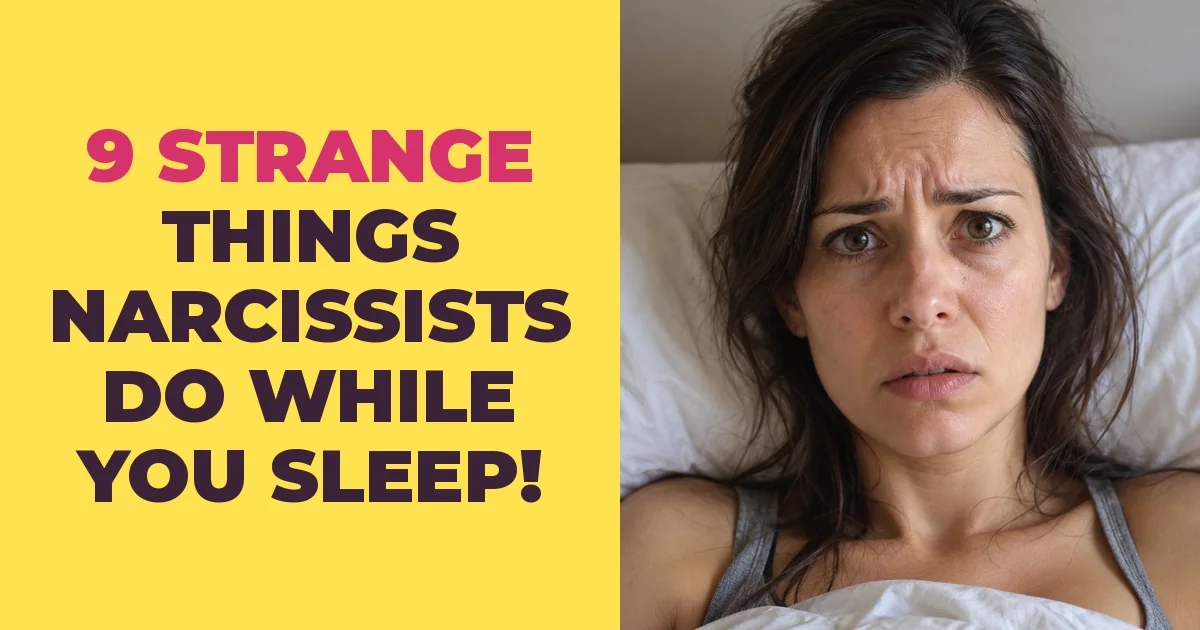
Strange Things Narcissists Do When They Believe You’re Asleep

The house goes quiet. Your eyes are closed. And beside you, the narcissist is wide awake.
The charming version the world sees can look very different behind closed doors.
Maybe you’ve heard the soft click of your phone at 2am. The bathroom tap running far too long. A drawer sliding shut in the dark.
You told yourself you dreamed it.
You didn’t. Here are 9 strange things narcissists do when they believe you’re asleep, and what each one is really about.
#1 Your phone gets a midnight inspection
A phone check while you sleep is control at its quietest.
You wake to find it face down when you left it face up. Or it’s charging on their side of the bed now.
Then, over breakfast, casually: “Who’s Mark? Why is he sending you smiley faces?”
Psychologists call this pattern coercive control. Tiny checks and unwritten rules pile up until your freedom has shrunk, with no single big moment to point at.
Before long, you’re wiping harmless chats and clearing it with them before seeing a friend.
Having a little cash and a couple of numbers that are only yours can help.
Your phone is yours. Even at 2am.
#2 Loud sulking under the covers
A narcissist who feels unnoticed can sulk loudly, even in the dark.
You’re just drifting off. Then comes the huge exhale. The yank of the duvet. The pillow punched into shape, twice, for good measure.
You ask what’s wrong. “Nothing. Just go to sleep.”
Research on the quiet, touchy form of narcissism describes this exact mix. They sulk when they go unnoticed, then act as if they don’t care.
So the sighing carries on, while they insist it’s nothing at all.
Then you lie there, tiptoeing around their mood in your own bed, replaying the day for what you got wrong.
Nobody should need eggshells to fall asleep.
#3 Your sleep is an inconvenience to them
Once they think you’re asleep, a narcissist may stop caring about your rest.
Cupboards bang at midnight. The TV blares in the next room. The big light flicks on while they hunt for a charger they could have found yesterday.
When you stir and ask them to keep it down, you get, “Oh, so I can’t even move in my own house now?”
Psychologists call it entitlement. To them, a limit feels like an insult, so your simple request comes across as a strike against them.
And behind that sits an old habit of treating what you need as a nuisance.
You start whispering requests. Then you stop.
Wanting to sleep isn’t too much to ask.
#4 They scroll through exes and admirers
Late-night scrolling can be how a narcissist keeps old flames warm.
You half wake to blue light on the ceiling. Their thumb freezes. The phone goes dark. You pretend to be asleep too.
Later you spot a like on an ex’s beach photo. A new follower they swear is “just a work thing.”
Research ties narcissism to treating love like a game. Options stay open, real closeness gets dodged, and old flames never quite go out.
Soon you’re fighting for the attention that used to come without asking.
No wonder you feel so easy to swap out.
Watch what they keep doing, month after month. Promises are cheap, and “just a work thing” is cheaper.
#5 Whispered calls behind the bathroom door
Your body may notice the whispered bathroom calls before your mind lets itself.
The fan goes on. The tap runs. Low murmuring, then a soft laugh you haven’t heard in months. Ten minutes. Twenty.
In the morning: “I was watching videos. Why are you being weird?”
Psychologists describe something called betrayal blindness. When you lean on someone, your mind can quietly hide the evidence of their betrayal, to protect the bond you need.
That’s how your stomach can churn while your head insists everything’s fine.
That’s your mind shielding you. Not foolishness.
When something feels off, check it with a friend outside the relationship. You don’t have to sort the night out on your own.
#6 Even your purse gets searched

A quiet trip through your purse can be about who holds the money.
Your wallet sits differently in the morning. A receipt you tucked away is now lying on the kitchen counter, smoothed flat.
“Forty dollars on coffee this month? Interesting.”
Psychologists call this financial or economic abuse: taking charge of, using or wrecking your money. The less money you have of your own, the harder walking away becomes.
Before long, the little things you buy get tucked out of sight. Every receipt feels like a leash.
A bank account in your name, with paperwork kept somewhere safe, gives you footing. Specialist abuse services can talk through money and safety with you.
Your coffee is not a confession.
#7 They type their version of you

While you sleep, a narcissist may be writing the story others hear about you.
You notice it later. Your sister goes oddly quiet. A friend asks if you’re “doing okay, really.”
Somewhere in a midnight message, you became “unstable” or “impossible to live with.”
Research on relational aggression describes this. It damages you through rumours and being left out, hitting your place in the group rather than your body, so there are no bruises to show anyone.
You end up explaining yourself to everyone, right when you most need people in your corner.
There’s no need to chase each whisper. Stay the same person, day after day, and time tends to sort the truth out.
Let them type. You live.
#8 Private pages become ammunition

Your private journal can become their file on you.
The bookmark has moved. The page with your worst fears is creased open, just slightly.
Weeks later, mid-argument, it lands: “Well, you already think you’re a terrible mother.”
Research on Machiavellian traits describes people who gather details and save them for later, all while looking calm and sensible in public.
Try to explain, and others see a level-headed partner. Not the one reading your diary at midnight.
Keeping more to yourself is fair. A notebook that stays with you, or a notes app with a passcode, can help.
Your inner life belongs to you.
#9 Things move, then it ‘never happened’
Moving your things and then denying it can make you doubt your own mind.
Your keys aren’t in the bowl. Your glasses turn up in the freezer drawer. The note you left on the fridge is simply gone.
“That never happened. You’ve been so forgetful lately.”
Psychologists call this gaslighting. It thrives when one person holds more power and gets to tell the official version of events.
So you begin jotting things down, just to prove to yourself you’re not losing it.
A quick note on the spot, with the date and time, really helps. So does a reality check with someone who doesn’t live under your roof.
Your memory isn’t the problem.
If your nights showed up in this list, you weren’t imagining things. You were noticing.
Isolation is part of how this kind of manipulation works, and getting close to people again is part of how it unravels. One trusted person, hearing everything, is a strong start.
And tonight, speak to yourself as gently as you would to a friend who had just read this. Keep one thing that’s only yours: a notebook, an account, a passcode. Small, quiet, and yours.
Loving a Narcissist Comes at a Cost You Never Signed Up For

The narcissist never shows you the price tag.
It comes later. You pay in the energy you spend guessing their mood, the good news you keep to yourself, and the version of you that slowly went quiet.
And because it arrived in small payments, you might not have noticed how much you’ve already paid.
You’re not imagining it.
Here are 6 costs of loving a narcissist that nobody asked you to agree to.
Why the bill keeps growing
Many narcissists can’t feel good about themselves on their own. They need it fed from outside. So the people around them get sorted into fans or threats.
That’s a hard role to be loved in.
Your needs land as a nuisance. Your feelings count mostly when they make them look good. And this isn’t a bad day. It’s how things go, month after month.
So the cost keeps adding up.
#1 You fell for a version built to hook you
The start felt like destiny because it was moving too fast to question.
Think back. Messages from the moment you woke up. Gifts for no reason. Talk of trips and a shared future within weeks. “I’ve never felt this way about anyone.”
Psychologists call this love bombing: a flood of attention, presents and big promises right at the start.
Why does it work so well? All that speed ties you to them long before you get to watch them handle a bad day.
By the time the first cold moment comes, you’re attached. And you spend the rest of the relationship trying to get that rush back.
Later, you may decide the change was your fault, as if you broke something. You didn’t. Intensity was never the same thing as closeness.
One way to tell: think about how they reacted the first time you said “not yet”. Hurt? Sulky? Pushy?
Enthusiasm waits for you. Pressure never does.
#2 Your love starts to bore them

Once a narcissist feels they’ve won you, the chase often loses its thrill.
It shows up quietly. Texts that used to arrive in seconds now take hours. They’re glued to their phone at dinner, laughing at something they won’t show you.
An ex is suddenly back in their messages. “We’re just friends. Why are you so jealous?”
Research ties narcissism to treating love like a game. Leave the door open for others. Keep real closeness at arm’s length. Commit less.
Studies of admiration and rivalry fill in the rest. In the beginning, charm does the work. Later, the urge to cut you down gets louder. That’s why the person you met and the person you live with feel like strangers.
So you end up fighting for scraps of attention that used to come easily. And wondering how easily you could be swapped out.
Watch what they do week after week. Words are cheap.
Notice the rhythm. Does every warm stretch come just before they pull away?
#3 Your good news becomes their problem
A narcissist may treat your happiest moments as a threat.
You get the promotion and rush home to tell them. They glance up from the TV, say “Good for you,” and ask what’s for dinner. That’s it.
Or your birthday dinner turns into a fight about how you spoke to the waiter. Again.
Why? Research finds envy shows up a lot in narcissism, most of all in its quieter, touchier form. Your win makes it harder for them to feel above you. So they make it smaller, take the credit, or ruin the moment.
That’s rivalry. Wanting to do well is normal. Rivalry is when every step forward you take counts as a step back for them.
Over time, you stop sharing. Good days start to feel dangerous, so you shrink them yourself before anyone else can.
Watch who falls silent when something goes right for you. Then take your wins to the people who light up.
Your joy was never too loud.
#4 You start living on high alert

Loving someone with unpredictable moods slowly trains your body to stay on guard.
You hear the keys in the door and already know what kind of evening it’ll be from the way they’re dropped on the counter.
You say yes before you’ve thought about it. You apologise for things that weren’t your fault. “Sorry, sorry, I’ll fix it.”
Psychologists describe this as fawning and hypervigilance: keeping yourself safe by keeping them pleased, and never quite stopping watching for the next storm.
When anger could come out of nowhere, your body learns two lessons. Never fully relax. And agree fast to keep things calm.
It’s exhausting. Somewhere along the way, what you want gets blurry.
Being considerate is a kindness. Fawning comes from fear.
Next time the alarm goes off inside you, slow down. Try one small no somewhere safe, like a coworker’s extra request. Where could you start?
#5 The years you gave become the trap
The more you’ve given, the harder it feels to stop giving.
“Ten years. You’re going to throw all that away?” Sometimes they say it. Sometimes it’s your own voice at 2 a.m.
You catch yourself making excuses. They had a hard childhood. Work is stressful. They didn’t mean it like that.
Psychologists call this cognitive dissonance: that sick, tugging feeling of holding two thoughts that can’t both fit. “They love me.” “They hurt me.”
To quiet it, your mind starts making the bad stuff smaller. Then sunk cost joins in, and any change starts to look like tossing out everything you’ve put in.
That’s why decisions feel impossible. You go round in circles with yourself, and loving and fearing one person at once makes you feel like you’re losing it.
One thing that helps: write down the plain facts of what happened, and leave out what you told yourself it meant. Then ask what more of the same will cost from here.
The past is already paid. The future isn’t.
#6 That pull you feel is a hook, not love
The bond that feels unbreakable may have been built by the hurt itself.
One day they’re cold and cutting. Two days later they bring your favourite takeaway and say, “You know I love you, right?”
That sweet moment feels like a jackpot!
And that’s exactly how it works. Warmth you can’t predict, dropped in between the cold spells, grips tighter than warmth you can count on. Slot machines run on the very same trick.
Researchers call the result trauma bonding. When one person holds more power and the mood flips between hurt and tenderness, the attachment can end up tighter than anything a calm relationship builds.
So you ache for them right after they’ve wounded you. You stick up for them when friends frown. Logic says one thing, your chest says another.
None of this makes you weak.
Try this: count the good days against the bad ones this month. Look at the typical day, not the highlight. Which one have you been living on?
None of this was in the deal when you fell in love. Nobody would sign up for it.
Seeing the cost clearly is a start. You don’t have to decide anything today.
If one line here felt like your life, tell one trusted person the full story. Being cut off is how this keeps its grip, and being heard is how it starts to loosen. Then talk to yourself like a friend who lived it.
This Is How Narcissists Wipe Out the Life You Had Before Them

A narcissist rarely takes your old life all at once.
It goes quietly. A friend you stop seeing. A hobby you drop. A laugh that doesn’t sound like yours anymore.
Then one morning you look around and can’t find the woman who used to live here.
If that’s where you are right now, your mind isn’t failing you. It happened one small step at a time.
Here are 8 ways narcissists wipe out the life you had before them, and how to spot each one.
Why your old life is a threat
A narcissist needs other people to keep telling them they matter.
That makes the people closest to them either a mirror that praises them or a danger to that praise.
Anything that makes you feel good without them can start to look like danger.
Psychologists who study narcissistic admiration and rivalry describe two sides. The charming side shows up first. The cutting side arrives later and stays.
#1 It starts with a flood of attention

Love bombing gets you attached before you’ve seen who they really are.
Good morning texts before you’re awake. Flowers at work. Talk of trips and a shared future by week three.
“I’ve never felt like this. You’re my soulmate.”
Psychologists use the term love bombing for this rush of gifts, messages and big promises. It ties you to them fast, before you’ve had a chance to see them on a bad day.
So you drop your guard. Of course you do.
Later, those first weeks become the version of them you keep trying to get back, and many women blame themselves when it fades.
One way to tell: watch what happens when you say “not yet”. Excitement is fine. Pressure you can’t slow down is something else.
Did they let you slow down?
#2 Your days start to orbit their moods
When their mood could flip any minute, your body learns to stay braced.
You hear the keys in the door and already know what kind of evening it’ll be.
Silence in the car? You start talking, fixing, offering to cook their favourite.
Your plans move. Your friends wait. Your needs become a nuisance.
Psychologists call it hypervigilance and fawning. You watch for the next flare-up, then try to soothe it by saying yes.
It’s exhausting. Nobody can live on standby forever.
Before long, it can feel like your only job is to be their mirror.
When your chest tightens, pause. Count to five before you agree to anything.
Who is your day actually for?
#3 The praise turns into put-downs
The same person who adored you starts cutting you down.
First it’s a joke. “Relax, I’m only teasing.” Then an eye-roll while you talk at dinner.
A sigh when you tell a story. A smirk at your outfit.
Researchers who study admiration and rivalry describe this shift. Charm is how they win people. Once they have you, the competing and belittling side moves in. That’s why the start felt so warm and now feels so cold.
Psychologists list mimicking your voice, eye-rolls and sneering “jokes” as signs of contempt.
Your own kitchen starts to feel like enemy ground.
And still, you wait for the person from the first date to come back.
Watch the weeks, not the moments. Does the respect ever return?
Does it?
#4 Your people slowly disappear
Your friends usually don’t vanish in one fight. They fade, one sulk at a time.
“Your sister’s a bad influence.” A mood when you see your friends. Questions about who just texted you.
So you go out less. It’s easier.
Psychologists call this coercive control. It means running someone’s daily life, friendships and freedom, often with no violence at all. Each little rule looks harmless alone. Together they take your independence, with no single moment to point at.
You catch yourself asking if you’re allowed coffee with a friend.
If this sounds like home, hold on to a little money and a few phone numbers that are only yours. Domestic abuse services can talk safety through with you, even if you’re not planning anything.
You’re allowed to have people.
#5 They sour the things you love
Your joy can quietly become something the narcissist needs to spoil.
You finish your first 10k and they say, “Shame about your time.” You show them the painting you spent weeks on. They check their phone.
Envy shows up a lot in narcissism. Your success can feel like a threat to their need to be on top. So they shrink it, take credit for it, or wreck the moment.
Some even pick a fight on your birthday.
So you hide good news. You stop mentioning the class, the run, the side project.
Happy moments start to feel risky.
Everyone feels a pang of jealousy sometimes. Acting on it, again and again, to knock you down is different.
Watch whose face falls when you share news, and whose lights up. Take your wins to the second group.
They’re out there.
#6 You stop trusting your own memory
Gaslighting is designed to make your memory lose to their story.
“That never happened.” “You’re too sensitive.” “You’ve got it wrong again.”
You know what you saw. But they say it so calmly.
Research on gaslighting says it thrives when one partner holds more power. You trust them, they control the story, and the past gets rewritten.
Before long you’re keeping notes on your phone to prove a conversation took place.
Or apologising when you were the one who got hurt.
Remembering a night differently is ordinary. Being told, over and over, that you didn’t see what you saw is something else.
Jot down what happened the same day. Then run it past a friend who isn’t involved.
Your memory still works.
#7 You edit yourself before you speak
Bruise a narcissist’s image, and someone usually pays. Often it’s you.
You ask, “Did you pay the electric bill?” Two hours of fury follow.
Or it’s quieter. Cold silence after you correct them at a friend’s dinner. A punishment three days later for a remark you’d forgotten.
Psychologists studying threatened egotism saw narcissists hit back harder after a put-down, and point it straight at the person they held responsible.
Even a basic question can count.
So you learn. You rehearse sentences in your head. You say sorry for things that weren’t your fault.
Opinions, jokes, stories: quietly filed away.
If the anger ever tips into threats, get out of the room and contact someone who can help.
Your silence was never agreement. It was survival.
#8 One day you don’t recognise yourself
Clarity often arrives suddenly, and it can hurt as much as it helps.
You’re folding laundry and realise you haven’t laughed with a friend in a year. You can’t name a song you love anymore.
Who even are you now?
Psychologists call it betrayal blindness. If you rely on someone, your mind may hide the signs of their betrayal so the bond survives. When it all lands at once, grief comes with it.
And shame for “missing” it. Please don’t carry that. Your mind was protecting you. That isn’t foolishness.
Research on self-compassion, speaking to yourself as kindly as you would to a friend, finds it eases shame and self-blame.
Start small. Pick up one old interest. Keep one daily routine that’s only yours.
She’s still in there.
Your old life didn’t vanish. It got buried under months of managing someone else.
Pieces of it are still where you left them: the friend who’d love a call, the hobby in the cupboard, your own voice.
You don’t have to dig it all up today. One piece is enough to start.
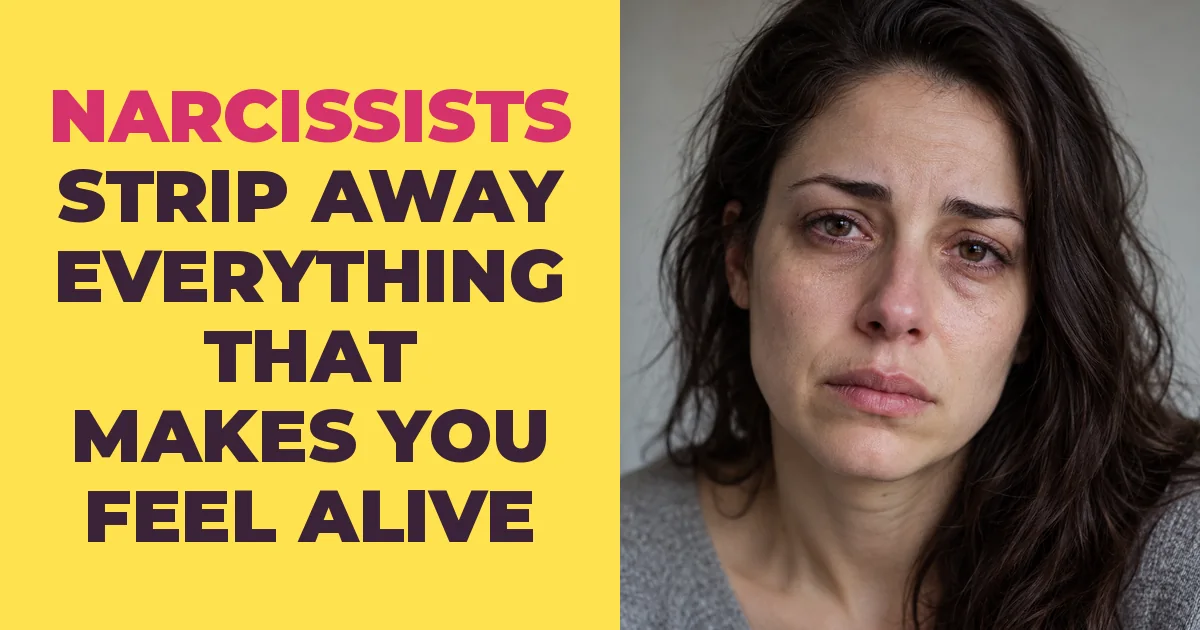
Narcissists Don’t Crush You — They Strip Away Everything That Makes You Feel Alive

Narcissists rarely destroy you in one big blow.
They take things one at a time. Your laugh. Your friends. Your plans. The way you used to light up over small, silly things.
Then one morning you catch yourself in the mirror, and the woman looking back seems faded. Tired. Careful.
Nothing dramatic happened. That’s exactly why it’s so hard to explain, even to yourself.
Here are 7 things narcissists quietly strip away, and how to tell it’s happening to you.
Why your spark is a threat
Start with what keeps a narcissist going.
In the pattern described as narcissistic personality disorder, self-worth isn’t built on the inside. It’s borrowed, moment by moment, from how others see them. So the people close by get sorted into two boxes. Fans. Or threats.
Your joy, your opinions, your little private world? None of it is about them. To a mind like that, it can look like competition.
That’s why nothing gets smashed. It gets turned down slowly, like a dimmer switch, until the room goes dark and you can’t say when it happened.
#1 Your good news becomes their bad day

To a narcissist, your happiness can land like a personal insult.
You get the promotion and rush home with the news. They barely look up from the phone: “Good for you. Did you pick up milk?”
Or your birthday dinner somehow ends in a fight about nothing.
Researchers who study narcissism describe envy as a frequent part of it, more so in the quiet, thin-skinned version. When you rise, they feel smaller. So your moment gets shrunk, soured or quietly claimed as theirs.
Before long, you edit your own good news. The raise becomes “a small bump.” The compliment stays untold. Happy moments start to feel like something to hide.
Here’s a simple test: who goes silent every time things go well for you?
Joy shouldn’t come with a hangover.
#2 The perfect start was the hook

That dreamy beginning felt like a movie because it ran at double speed.
Good morning texts before your alarm went off. Flowers delivered to your desk. Three weeks in: “I’ve never felt this way. You’re my soulmate.”
It felt like being seen for the first time.
Psychologists call this love bombing. The rush ties you to them before you’ve watched them handle stress, a bad day, or the word no.
All that heat is easy to read as true closeness. So when it cools, you assume you must have broken something.
Look back at one moment: what happened the first time you asked to slow down?
You didn’t break anything. The speed was the point.
#3 They start competing with you

The charm that won you over was only ever the first act.
Research on narcissistic admiration and rivalry describes two sides. At first, the dazzling side does the work: flattery, big stories, a warm glow. Later, the side that cuts others down moves to the front.
So the early version and the later version can feel like two different humans.
Now your wins get a tight smile. Your boss praises you and they shrug, “They say that to everyone.” You sign up for a painting class, and suddenly they’re taking one too.
In their eyes, anything you gain is something they lose. Meanwhile you keep hunting for that first sweet version, sure it’s your job to bring it back.
Compare how they treat new faces with how they treat you at home. Then tell your good news to the friends whose eyes light up.
You never signed up for a race.
#4 They treat your pain as drama
A narcissist often knows exactly how you feel and decides it isn’t their problem.
You’re crying at the kitchen counter after an awful day. They sigh, glance at the clock: “You’re too sensitive. Can we not do this tonight?”
Then they talk about their day instead.
Studies here point in a telling direction. Narcissists showed little empathy on their own, yet more of it when asked to imagine the other person’s side. The care can be switched on. They just don’t bother.
That’s how they can be lovely to a stranger and frosty with you.
Over time you stop telling them how you feel. Worse, you start wondering if your reactions are even reasonable.
Bring your hurt to the ones who actually show up for it. Your pain was never too much. It just landed in the wrong hands.
#5 You start editing every word
Around a narcissist, one honest sentence can cost you a whole weekend.
You mention, softly, that they missed the call. The answer is a slammed cupboard. Or a chill that lasts until Thursday, when you get punished for a comment you can’t even recall.
Psychologists studying what’s called threatened egotism saw a clear pattern. A bruised ego in a narcissist tends to turn into aggression, pointed straight at the person they blame. Being corrected or ignored can be enough to cause that bruise.
A simple question turns into a war. A small comment turns into a crime.
So you rehearse each line before it leaves your mouth. You apologise for things that were never yours.
If something has to be said, make it short and factual. If it doesn’t feel safe, skipping it is allowed. And when the anger turns into threats, walk out of the room.
Your voice didn’t get quieter by accident.
#6 Your world quietly shrinks
Control rarely arrives as one big moment. It arrives as a hundred small rules.
“Do you really need to see your sister again?” A sigh when you wear that dress. Questions about what you spent. A look through your phone, “just because.”
Alone, each one seems almost silly to complain about.
Psychologists call this pattern coercive control. Rule by rule, punishment by punishment, your independence drains away, and there’s no single dramatic day you can name.
Your world gets smaller. Soon you’re checking with them before ordinary things, like coffee with a friend.
If this is your life, hold on to a little cash and a few phone numbers that are only yours. Specialist domestic abuse services talk women through safety plans every day, quietly and at your pace.
Who used to be your first call?
#7 You forget what you even want
The quietest thing they take is the part of you that knows what you want.
You can tell their mood from the sound of the keys in the door. You agree before they finish the sentence. You say sorry to the furniture.
A friend asks what you fancy for dinner, and you honestly have no idea.
Psychologists describe this as fawning and hypervigilance. When anger could come out of nowhere, your body learns to stay on guard and keep the peace by giving in. This isn’t simple politeness. It grows out of fear.
Exhaustion follows. So does losing touch with your tastes, your opinions, your own self.
Start tiny. When your chest tightens, pause before you answer. Try small no’s in safe places, like turning down a coffee you don’t want.
The woman who wanted things is still in there.
None of this means you’re broken. You adapted to someone who kept turning your lights down.
Try talking to yourself the way you’d talk to a friend who told you all this. Research on self-compassion ties that kind of gentleness to less shame and less blaming yourself.
Then pick one small thing that used to make you feel alive. A song. A walk. One friend’s number. That part of you is still there.
10 Parts of Yourself You Lose When You’re With a Narcissist

You don’t lose yourself in one big moment.
It happens in crumbs. A joke you didn’t make. A view you kept to yourself. A friend whose texts you left on read.
Then one day you catch your reflection in a shop window and wonder where she went.
This isn’t you overreacting. A narcissist often treats your needs as a nuisance, so bits of you quietly drop away.
Here are 10 parts of yourself you lose when you’re with a narcissist, and why each one goes missing.
#1 Your memory becomes their version
Gaslighting can turn your own memory into the thing you trust least.
You mention the snide remark they made at the family lunch. They shrug. “That never happened. You’re too sensitive.”
It works because you trust them and they hold the pen on the story. Bit by bit, their account overwrites yours.
Soon there’s a secret folder on your phone. Screenshots, dates, times. Evidence for a trial nobody is holding.
And somehow you’re the one saying sorry, even though they hurt you.
Jot down what happened the same day, in plain facts. Then run it past a friend who isn’t caught in the middle.
Your mind isn’t broken.
#2 Speaking up starts to feel dangerous
You start running every sentence past an inner censor before you say it.
You say the hotel was a little noisy. An hour later they’re icy, muttering that nothing is ever good enough for you.
Research on threatened egotism explains it. When a narcissist’s self-image takes a hit, even a tiny one, they’re more likely to strike back at the person they blame.
So your opinions go quiet. Films, politics, where to park. You nod along to stay safe.
You even say sorry for things you didn’t do.
If their anger ever becomes threats, get out of the room.
Being safe matters more than winning.
#3 What you want gets buried
Unpredictable anger teaches your body to say yes before your mind catches up.
Your colleague asks which café you prefer. “Whatever’s easiest!” pops out, and you honestly couldn’t say what you’d pick.
Psychologists describe this as fawning. Your body stays on alert and tries to calm the threat by going along with things.
You can tell what kind of evening it’ll be from the way the front door closes.
The price is exhaustion. And a blank spot where your own wishes should be.
Practise tiny no’s where it’s safe. Choose the takeaway. Order the cake you actually like.
So what do you want?
#4 Someday turns into never

Your goals end up parked in a future that keeps sliding out of reach.
The kitchen redo. The holiday. The ring. Your course. “Once work calms down, babe. Promise.”
Many call this future faking. It’s a popular label rather than a diagnosis, and it lines up with research tying narcissism to keeping options open and lower commitment.
Shared plans hook you in. After years invested in a life together, leaving feels like throwing that whole life away.
So you hold on. And bringing it up makes you sound demanding.
Judge by what has actually happened, not by what was promised. Then set your own timeline.
Pick one plan and write a date beside it tonight.
#5 Money stops being yours
Money you can’t touch makes leaving harder, and that dependence keeps you stuck.
First they offer to “handle” the bills. Then your salary goes into an account you can’t even log into.
Next comes the borrowed money that never comes back. A credit card you didn’t open, in your name.
Soon you’re stuffing a lunch receipt into your coat pocket like it’s a secret.
Economic abuse means controlling, exploiting or sabotaging your money or independence. Couples budgeting together is fine. One person holding every key isn’t.
A domestic abuse service can help you think through money and safety.
Your own account. Your own records.
#6 Your world shrinks to their size
Friends, hobbies and freedom can vanish without a single dramatic row.
Choir is “a bit sad, honestly.” Your best friend “stirs things.” Saturday swims mean a sulky weekend, so you quit.
Psychologists call this coercive control. Small rules and small punishments pile up until your independence is gone.
No wonder it’s hard to describe to anyone. There’s no one big moment to point at.
Then you hear yourself asking if you’re allowed to see your cousin.
Hold on to a few contacts that are only yours. They matter more than they seem.
How did your life get this narrow?
#7 Happy moments start to feel risky
A narcissist may treat your happiness like a threat to their place above you.
You pass your driving test. They say “Finally,” and turn the TV back up.
Your big day becomes a row. Every year.
Envy is common in narcissism. Your good luck threatens their need to feel superior, so they shrink it or spoil it.
So good news stays inside. You play down the praise at work and quietly skip the drinks.
Watch who goes silent when things go well for you. Take the next bit of good news to someone who’ll cheer!
Being happy was never your mistake.
#8 They compete with your dreams
To a narcissist, your win can feel like their loss.
You join a pottery class. Within a month they’ve bought a wheel, and their bowls are “just more natural, no offence.”
Research on narcissistic admiration and rivalry describes the shift. First comes charm and showing off. Later, cutting you down takes over.
Cheering you on would mean someone else in the spotlight. So they compete instead.
Every new interest turns into a contest you never entered. So you stop starting things.
Ambition is normal. The warning sign is when your success lands as an insult to them.
Get the clay back out. Show someone kind.
#9 Rest starts to feel like a crime
Looking after yourself starts to feel selfish when every day orbits their moods.
You put your feet up for ten minutes and hear it from the hallway. “Alright for some.”
So you’re up again. Their errands first. Your haircut, maybe next month.
Codependency is a popular term, not a diagnosis, for building your life around someone else’s needs at your own expense. It’s closely tied to fawning.
A self-focused partner rewards it. What’s left is burnout and resentment you can’t voice.
Tonight, check what you need before you check on them.
Rest isn’t a prize for good behaviour.
#10 You forget who you were before
A narcissist can leave you feeling like a mirror instead of a person.
Your taste in music, your plans, even your sense of humour slowly bend toward theirs.
An old friend says “You’re so quiet now,” and you can’t argue. You just can’t put a finger on what went.
It fits a lasting pattern where their sense of worth depends on outside confirmation, so the people closest to them get used to reflect them back.
Self-compassion helps. Research links it with less shame and a steadier sense of self.
Start small. A song from before. The hobby you dropped. Ten minutes each morning that belong only to you.
She’s still in there!
If more than one of these hit home, it doesn’t mean you failed. It shows how slowly and quietly this happens.
These parts are often buried under someone else’s needs, and buried things can be found again.
Choose one to reclaim this week. Then tell someone safe what it felt like.
9 Things Narcissists Steal From You That You Can’t Put Into Words

Narcissists rarely take anything you could photograph.
The losses in this list leave no marks. Just a slow leak you feel every day and still can’t describe, even in your own head.
You used to be someone else. Lighter. Faster to laugh. More sure of your own mind.
Ask yourself what changed, though, and you come up blank.
Here are 9 things narcissists steal from you that you can’t put into words, plus a first step to reclaim each one.
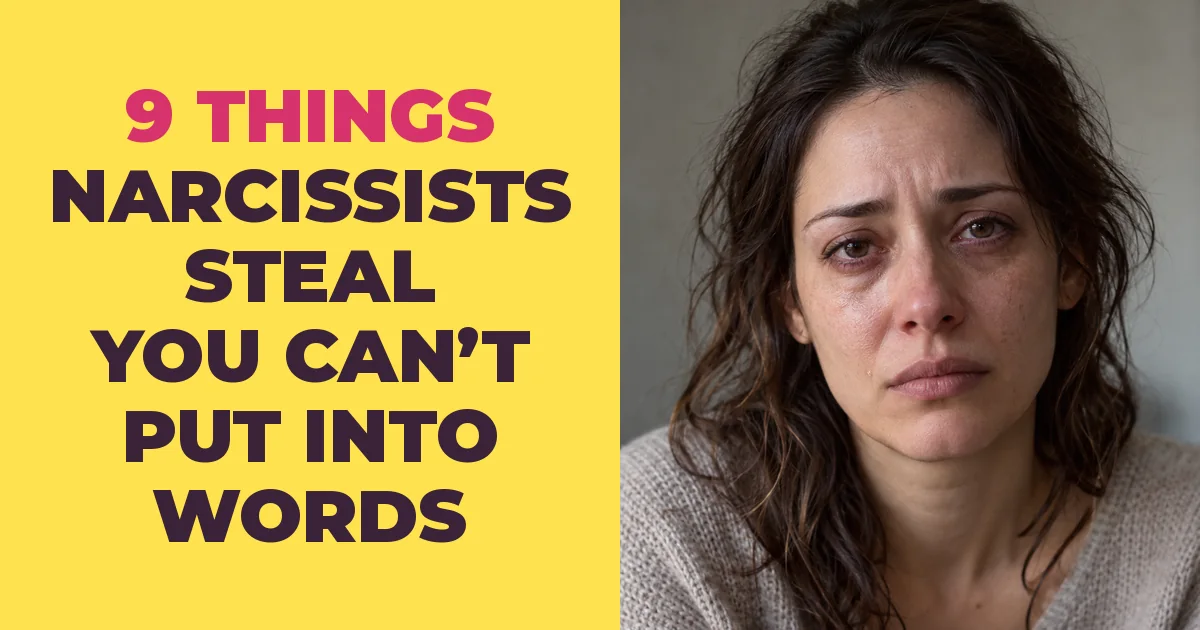
#1 Certainty about what you saw

The first thing to slip is your faith in your own memory.
The argument is still sharp in your head. Every word, the room, the heat in your cheeks.
Then they answer, calm and flat: “That never happened. You’re too sensitive.”
Psychologists call this gaslighting. It works best where one person has more power and controls the version everyone hears. The trust you place in them does the rest.
Soon you’re saving notes. Screenshots. Dates. Evidence, just to reassure yourself.
What helps: write it down while it’s fresh, then check it with someone outside the relationship.
Your memory works fine. It’s just being overruled.
#2 Your joy over your own good news
Narcissists can make your best news feel like a mistake to mention.
The promotion came through. You burst into the kitchen to tell them.
“Huh. Was nobody else applying?”
Or silence. A shrug, then a question about dinner.
Research ties envy closely to narcissism, especially the quiet, touchy form.
Your success threatens their need to feel above you. So the win gets shrunk, spoiled, or drowned in a fight on the exact day you meant to celebrate.
Eventually you swallow good news before you’ve said it. Happiness starts to feel dangerous.
Notice who goes quiet whenever you’re winning.
Your next big moment belongs with people who’ll throw confetti!
#3 Permission to be upset

Your feelings gradually become something you owe an apology for.
A rough day ends in tears, and they switch topics. Or sigh. Or mutter, “Not this again.”
This part hurts. Studies suggest many narcissists understand what you’re feeling. They simply don’t act on it, and their kindness often appears when it suits them.
Less can’t. More won’t.
So you go quiet. You wonder whether your reactions are excessive, too big, too frequent.
They aren’t.
Give your feelings to people who respond with care. And quit offering your hurt to the person who keeps using it as a weapon.
Crying was never your flaw.
#4 Saying what you think without rehearsing
Around a narcissist, every sentence gets a practice run first.
Ask “Did you ring the bank?” and the whole evening goes up in smoke.
Why? Research on threatened egotism found narcissists react to insults with more aggression, aimed at whoever they blame. An ordinary question can feel like an insult to them.
Sometimes the payback arrives days later, for a comment that had slipped your mind entirely.
So you edit in advance. Soften it, trim it, apologise for things that were never your fault.
If the yelling turns into threats, leaving the room is a perfectly reasonable choice.
How long since you just said what you meant?
#5 A simple, guilt-free no
Refusing a narcissist can start to cost more than giving in.
“After everything I’ve done for you?” And just like that, your weekend plans are gone.
People online call this FOG: fear, obligation and guilt that keep you saying yes. It’s a popular label rather than a diagnosis, and it overlaps with what researchers call coercive control.
Old favours dragged up. Sulky disappointment until you fold.
Soon yes comes out automatically. Their moods start to feel like your responsibility.
Build in a pause. “I’ll get back to you” gives you space to check what you really want.
Their feelings matter. Managing them isn’t on you.
#6 Freedom to live your own life
Your world can get smaller so gradually that the change barely registers.
It begins with a remark about your friend. Then a sulk when you head out. Then “Who’s that?” whenever a message pings.
Researchers call it coercive control. Many small rules and small punishments, until your independence has quietly drained away.
It’s hard to describe for that reason. No single dramatic moment stands out.
Just an afternoon you find yourself asking whether you’re allowed to buy shampoo.
Keep a bit of cash and a few contacts that belong only to you. A domestic abuse service can talk safety planning through with you.
There was a time you simply went. When did it end?
#7 Being able to fully relax
Living with a narcissist can keep your body braced even on quiet days.
You can tell their mood by how the front door closes. A hard slam? Your mind is already scripting the conversation.
Unpredictable anger teaches your body to stay alert, and to calm things by agreeing quickly. Psychologists call that appeasing habit fawning.
It wears you out. Small noises make you jump.
You say sorry before anything has happened.
And in all that watching, your own wants get lost.
When the alarm goes off inside, notice it and slow down. Try a small no somewhere low-stakes, like sending back a cold coffee.
Next time the door slams, see if the sorry can wait.
#8 Good days that make the bad ones bearable
Unpredictable kindness can make the bad days feel bearable, and that’s the trap.
Monday brings cruelty. Wednesday brings your favourite pastry and “Sorry, work’s been crazy.”
That pastry feels like a jackpot.
Psychologists call this intermittent reinforcement. Unpredictable kindness hooks you harder than kindness you can rely on. It’s the same pull that keeps gamblers at slot machines.
So you work harder for less, always chasing the next sweet moment.
For a month, tally the good days and the bad ones. Judge by the average week, not the best one.
What does your tally look like?
#9 The person you thought you met

The hardest loss to name is the hope that the original version comes back.
In the beginning they were dazzling. Curious, funny, hanging on your every word.
Then the little digs started.
Then the competing. Your plans got topped instead of supported.
Research on narcissistic admiration and rivalry describes this shift. Charm wins people over first. Over time, rivalry takes over, and that means putting you down.
That’s why the start felt like a film and now feels like a slow puncture.
So you chase the early days, convinced the right move will bring them back.
Notice the gap between who they are in public and who they are at home.
That first version was a preview. You don’t have to keep waiting for it to return.
If much of this matched your own home, your mind is fine. You were noticing the whole time. These losses were real before they had names. Now they do.
Write one moment down while it’s fresh. Try one “I’ll get back to you.” Share one win with someone who cheers.
Begin with the smallest one.
What Loving a Narcissist Ends Up Costing You

Loving a narcissist rarely ends with one big bill.
You pay in small amounts instead. The friend you stopped calling. The plan you let slide. The late nights replaying a fight, hunting for what you did wrong.
Since it’s taken in pieces, it’s easy to miss how much is already gone.
You might still be in it. You might have just left and feel more drained than you ever expected.
Here are 8 costs of loving a narcissist, and why each one happens.
#1 You chase the person you first met

Part of you is still waiting for the version of them you met first.
Those first weeks were dizzying. Texts at breakfast, texts at midnight. Big talk about holidays and being meant for each other, before you’d even met their friends.
Somewhere along the way, the sweetness drained out. The teasing got a sharper edge. A quiet dinner can now end with “Why does everything have to be about you?”
Researchers who study narcissistic admiration and rivalry see this pattern. Charm does the early work. Later, coldness and digs move in.
That rush at the beginning ties you to them before you’ve watched them handle a bad week. So the early version turns into a memory you keep trying to earn back.
What happened the first time you said “not yet”?
#2 Your memory stops feeling like yours
Gaslighting chips away at your trust in what you saw and heard.
At the kitchen table, you mention the dig they made in front of your sister. They look puzzled. “That never happened. You’re way too sensitive.”
Twenty minutes later, you’re saying sorry for being hurt.
Psychologists say it thrives where power is lopsided. Your trust in them, plus their grip on the story, gives them room to edit the past.
Maybe your phone now holds notes about arguments, so you can check later that they really happened.
Keep doing that, but keep them somewhere only you can open, or with a friend you trust. Jot things down on the day, and run them past someone outside the relationship.
Doubting yourself doesn’t mean your memory can’t be trusted.
#3 Your body never gets to rest
When anger can arrive any minute, your body learns to stand guard.
The sound of keys on the counter tells you what kind of evening it’ll be. A door shut slightly too hard, and you flinch.
You agree before they’ve finished asking.
Psychologists call the constant scanning hypervigilance. The pleasing that goes with it is often called fawning. Keeping the peace starts to feel like the only safe move.
It gets you through. It also drains you. Watching for danger all day is exhausting, and slowly your own wants go blurry.
Try this: when the alarm goes off inside, pause and let yourself slow down. Then practise small no’s in safe places, like skipping an extra task at work.
Each small no brings your own wants back into focus.
#4 Good news starts to feel risky
In a narcissist’s world, your good news can feel like a threat.
You land the promotion and ring them first. “Nice,” they say, then ask what’s for dinner.
Your birthday comes, and so does a fight from nowhere.
Research ties envy to narcissism, more so in its quieter form. Seeing you do well can poke at their need to feel above you. So they might shrink your win, spoil it or take the credit.
Before long, you’re editing yourself. Your mum hears first. The raise becomes “just a small bump.”
One way to tell: watch who goes silent when things go well for you.
Then take your wins to the friends who cheer.
#5 Little by little, your world shrinks
Control rarely shows up as one big scene. It builds through tiny rules.
First, a sigh when you mention your friends. Then “Out again? Really?” Then comments about what you buy, what you wear, who’s texting you.
Psychologists call this coercive control. Each rule looks minor on its own. Together they eat away at your freedom, so there’s rarely one moment you can point to.
Your world narrows. Coffee with a friend starts to need a yes from them.
Holding on to a few contacts of your own matters. If you’d like support, a domestic abuse service can help you plan for safety.
When did you last make a plan without checking first?
#6 The life they promise never arrives
Talk of a shared future can keep you hooked on a present that hurts.
The cottage by the sea. The wedding. That trip to Italy, hotels already saved on your phone. “Once work settles down, it’s our turn.”
Work never settles down.
This is often called future faking. It’s a popular label, not a clinical term, and it lines up with research tying narcissism to weaker commitment in love.
Plans pull you in. When you’ve pictured a whole life together, leaving can feel like giving it up.
So go by what’s actually happened. Scroll back through the last year. Which promises came true? Then pick a timeline that’s yours.
How long have you waited for “soon”?
#7 Walking away hurts, and there’s a reason
What keeps you there can feel like love and work like a hook.
Monday, they ignore you. Wednesday, flowers and “I’d be lost without you.” You never know who’ll walk through the door.
Psychologists call this intermittent reinforcement. Warmth that shows up at random, between cold spells, grips harder than steady warmth. Slot machines run on the same pull.
Repeated rounds of hurt and kindness can also build what’s called a trauma bond. You miss them right after they’ve hurt you. You stick up for them with friends. Walking away feels like physical pain.
That isn’t weakness. It’s a well-known human response.
Count the good days against the bad ones for a month. Look at the average, not the best day.
What does your average say?
#8 The shame of not seeing it sooner
Not seeing it sooner wasn’t stupidity, it was your mind guarding a bond you needed.
Once it’s over, everything can come into focus at once. The lies. The late nights. What your friend hinted at over coffee.
Then the shame shows up. “How did I miss this?”
Psychologists call this betrayal blindness. Relying on a person can lead the mind to filter out signs they’re betraying you, so the attachment stays intact.
Shame and blaming yourself weigh heavily after manipulation. Research on self-compassion suggests that treating yourself as kindly as you’d treat a friend can lighten both.
So try it. Speak to yourself the way you’d speak to a friend.
Trusting them was never your mistake.
If more than one of these sounded like your life, be gentle with yourself. The costs pile up quietly, and you’re only now seeing the full receipt.
Pick one person you trust and tell them everything. Or jot down what you’d like help with. Choices tend to feel clearer when you’re not carrying them alone.
What happens next is your call.
11 Things Narcissists Begin Doing After Fifty

Fifty doesn’t soften the pattern. Don’t wait for it to.
If the person in your life shows this pattern, you may see it everywhere. A parent who needs your help but never lets you forget it. A partner still touchy, needy and impossible to please.
Still demanding special treatment. Still furious without it.
That’s what makes it a pattern. It lasts.
Here are 11 things to watch for in narcissists after fifty, why they do it, and what each one does to you.
Same need, new props
Underneath it all, a narcissist’s sense of worth depends on other people confirming it.
That need doesn’t retire. As life changes, the same need can simply show up in new ways.
Fewer colleagues to impress. Grown children busy with their own lives.
So judge by the pattern over months, not single moments. And expect it to stay rather than fade.
#1 The self-pity stays loud

The quiet, wounded act protects a narcissist’s ego just as well as the loud one.
Many narcissists switch between both.
So you may hear a lot of sighing. “Nobody bothers with me now I’m old.” Said the day after you cancelled one visit because you had the flu.
This quieter style keeps score of every slight and feels secretly wronged. So you walk on eggshells, and somehow their disappointment is often your fault.
One way to tell: do their apologies ever come without conditions?
#2 You become their mirror
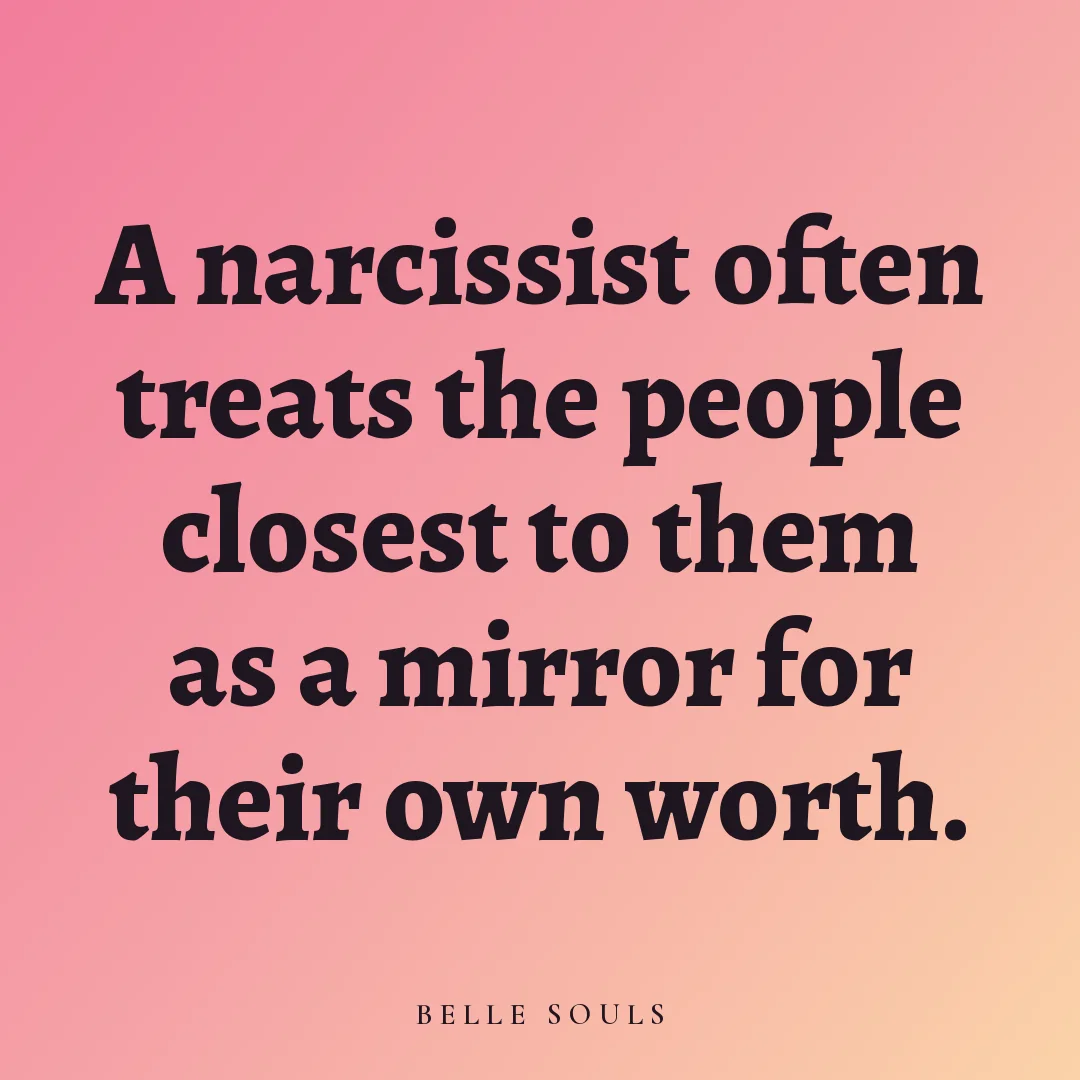
A narcissist often treats the people closest to them as a mirror for their own worth.
They retire, and the colleagues who used to nod along are gone. Now every story, every opinion, every decision lands on you. “Don’t you think I handled that well?”
Their sense of worth depends on outside confirmation. You’re simply the nearest place to get it.
Disagree gently and you go from source to threat.
Slowly, you start to feel you exist only to reflect them back to themselves. When did you last say what you really think?
#3 Your needs come last
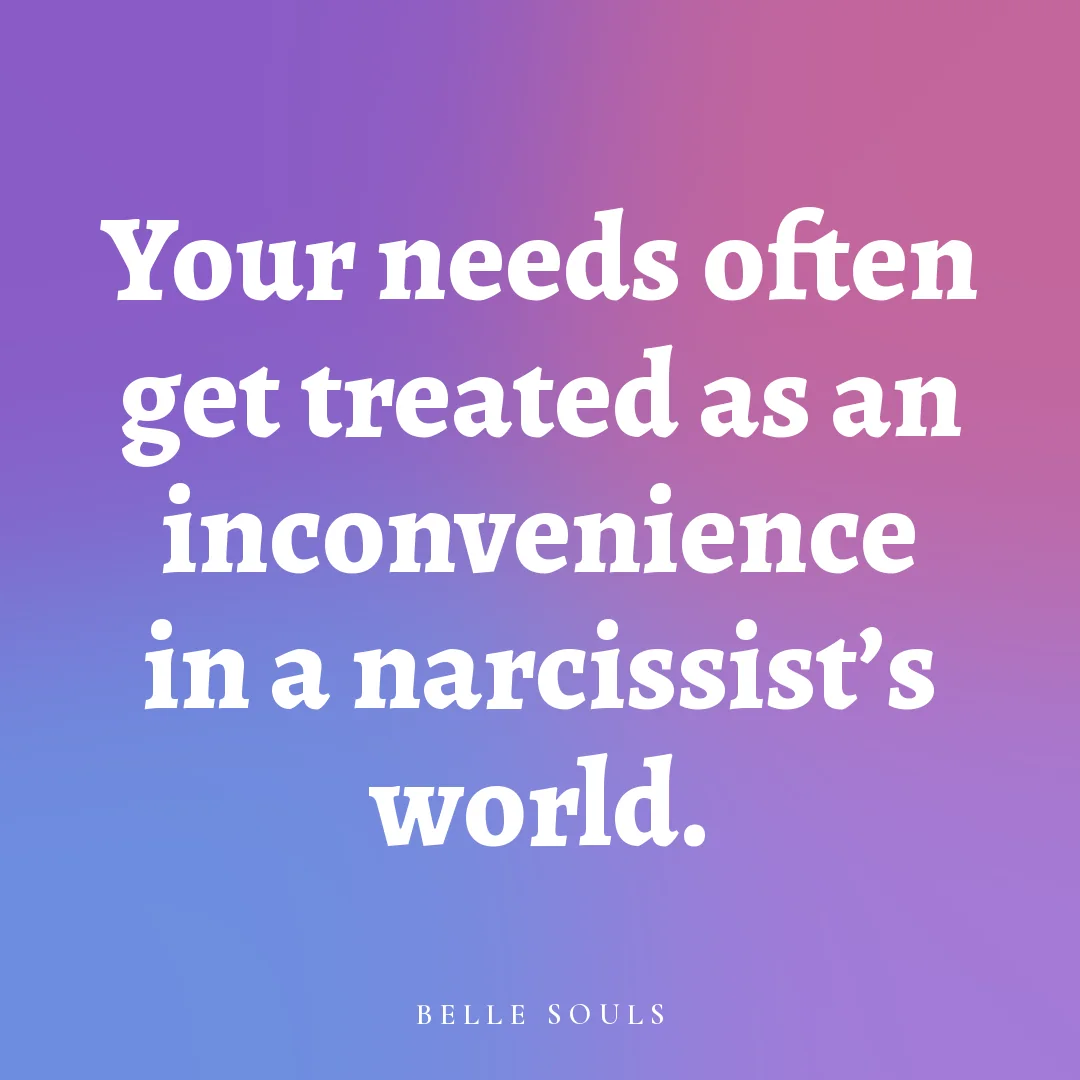
Your needs often get treated as an inconvenience in a narcissist’s world.
You mention your knee surgery next month. Within a minute, the talk is back on their blood pressure, their neighbour, their week.
“Can’t someone else drive you? You know Tuesday is my bridge day.”
A narcissist often shows little interest in how you feel unless it affects them. Your problem only matters once it becomes theirs.
So who’s looking after you?
#4 Rules are for everyone else
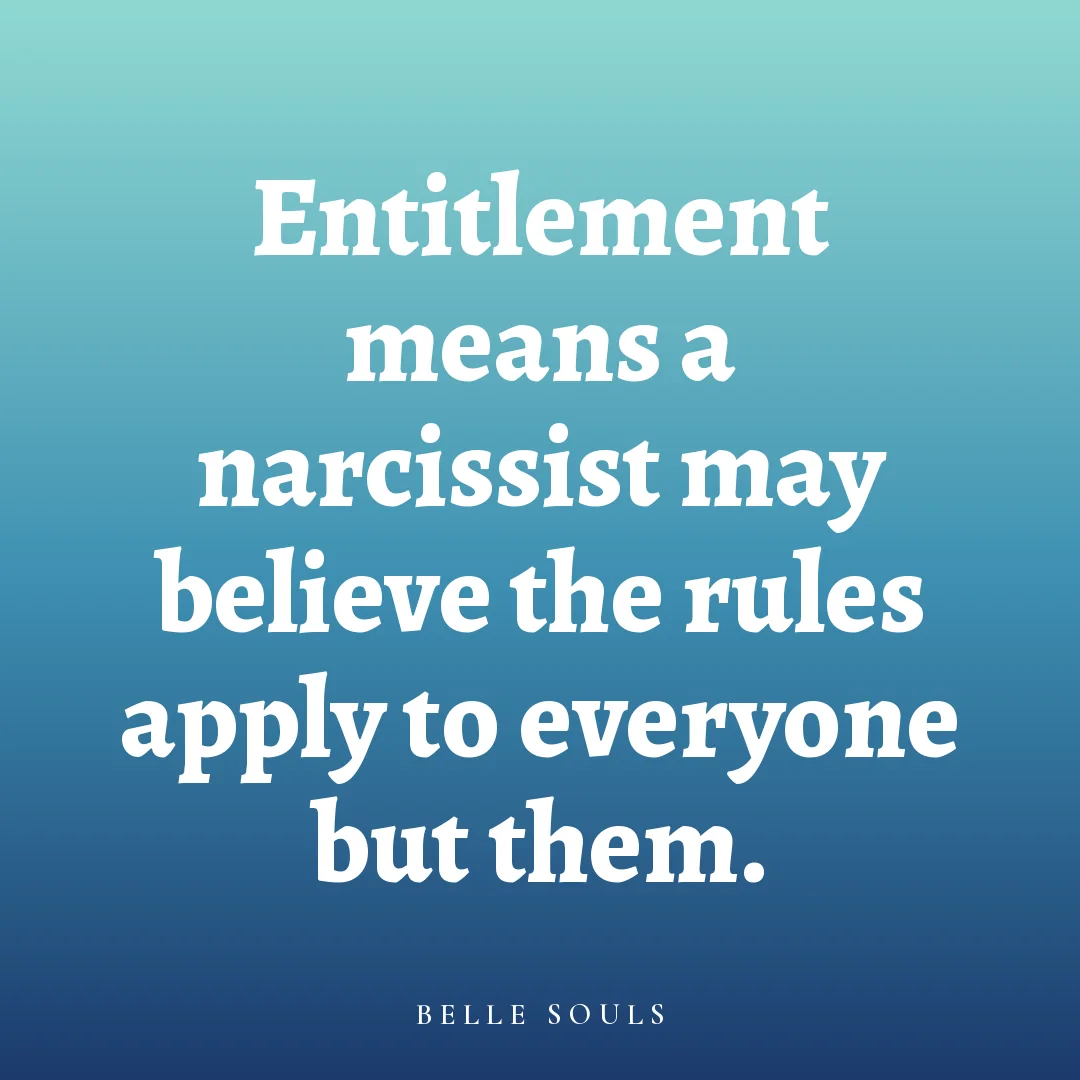
Entitlement means a narcissist may believe the rules apply to everyone but them.
“At my age, I shouldn’t have to wait.” They expect you to drop your plans for their appointment, their errand, their birthday dinner on your only night off.
Ordinary limits feel like insults to them. So your “I can’t do Thursday” lands like an attack.
You’ve driven them to every check-up this year. They forgot your birthday.
Asking for fairness feels like starting a war.
Keep track of what you give. That’s information, not pettiness.
#5 Every old story stars them

Exaggerating achievements is a classic part of the narcissistic pattern.
The promotion they nearly got becomes the company they practically ran. The college team was nearly professional. Every story at Sunday lunch ends with them as the star, and you hear the same ones at every birthday.
Each retelling is a fresh chance at admiration, so the stories get told again and again, a little bigger each time.
And your part in those years? Somehow it shrinks.
You were there. You know what really happened.
#6 Control doesn’t ease
Control can mean deciding who you see, what you spend and where you go.
Why were you twenty minutes late from the shop? They check your phone and call it love: “I just like knowing you’re safe.”
This is called coercive control. Lots of small rules and punishments pile up, so there’s rarely one big moment to point to.
Your world shrinks. You start asking permission for coffee.
If this sounds like home, keep some money and contacts of your own. A domestic abuse service can help you plan for safety.
#7 Reputation becomes everything
A narcissist often puts more care into their public image than into the people closest to them.
What the neighbours think. How the family looks on Facebook with the grandkids. Charm at the party, then cold silence in the car home.
Admiration feeds their self-worth, so the public version gets all the care. The private version gets whatever’s left.
That’s why friends tell you how lucky you are. And why you start doubting what happens behind your own front door.
Trust what you see at home.
#8 Guilt becomes their favourite tool
Fear, obligation and guilt can turn every request into one you can’t refuse.
A new ache shows up the weekend you planned to go away. “Go, enjoy yourself. I’ll manage on my own somehow.”
“After everything I’ve done for you” follows close behind.
This is often called FOG. It’s a popular term, not a diagnosis, and it’s closely tied to the pattern known as coercive control. The aim is to make no feel costlier than giving in.
Pause before you answer. Their feelings aren’t your responsibility.
#9 History gets rewritten in their favour
A narcissist may retell the past so often that their version starts to sound like fact.
“That never happened. You’re making things up again.” The screaming match you still feel in your stomach becomes, in their telling, a little chat you blew out of proportion.
This is called gaslighting. It works best where power is unequal and one person controls the story.
So you apologise for being hurt.
Write things down when they happen. Check them with someone outside the relationship. Your notes don’t age.
#10 Your weak spots become ammunition
A narcissist often understands exactly what hurts you, and uses it anyway.
The thing you confided at 2am, years ago, comes out at the dinner table in front of everyone. Your weight, your divorce, your mother. Then: “God, you’re so sensitive.”
Research on narcissism and empathy found their empathy rises when they’re prompted to take the other person’s view. So it’s less can’t, more won’t.
No wonder you’ve stopped sharing your feelings.
Stop explaining your pain to someone who uses it. Take it to people who actually respond.
#11 Other people’s wins sting them
To a narcissist, someone else’s rise can feel like their own fall.
Your promotion gets a shrug and “Well, it’s all handed to your generation.” The new neighbour is “a know-it-all.” Your friend’s engagement? Suddenly they’ve got a headache.
Envy is common in narcissism. Other people’s success threatens their need to feel superior, so they shrink it, steal it or spoil it.
Over time, you start hiding good news.
Notice who goes quiet when you win. Then go and tell someone who’ll cheer!
None of this happened because you missed something or did something wrong.
You can stop waiting for the years to make them gentler. That frees up energy for the people who are glad when you win, and for you.
Write down what happens. Check it with someone who has seen both sides. Then believe your own notes.
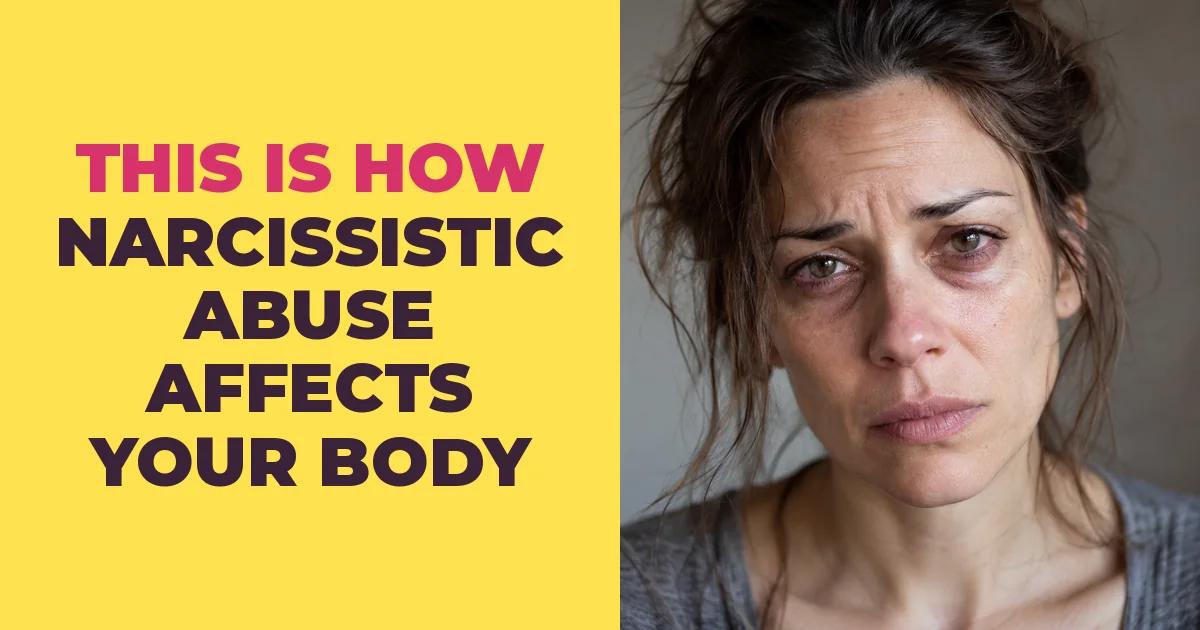
THIS is How Narcissistic Abuse Affects Your Body

The narcissist may never lay a hand on you. Your body still pays.
You jump when a door closes. Your stomach knots when your phone buzzes. You’re tired in a way a weekend of sleep doesn’t touch.
Nobody hit you. So you wonder if it’s real.
You’re not making it up.
Here are 9 ways narcissistic abuse shows up in your body, and why it happens.
Why your body won’t switch off
When the shouting could start at any moment, your nervous system learns to keep one eye open. Psychologists call this hypervigilance.
It also teaches you to calm things down fast. Agree. Smooth it over. Say sorry. That reflex is called fawning.
Add affection that turns up at unpredictable moments, and it hooks you harder than steady kindness would.
Nothing is wrong with your body. It learned.
#1 Your body hears the keys first
Your body learned to read the narcissist’s mood before your mind could catch up.
The keys hit the bowl a little too hard. The car door slams. Before they’ve said a word, your shoulders are up by your ears.
The footsteps tell you what kind of evening it’ll be.
That’s hypervigilance. If anger can land at any time, part of you stays posted at the window, so nothing takes you by surprise.
The cost? You startle easily. A dropped pan makes you jump. And you’re worn out from guarding the house you live in.
Next time you flinch, pause for a beat and simply notice it.
Your body has been working the night shift for years.
#2 The sick feeling knew before you did
Sometimes your stomach spots a betrayal long before your mind lets you see it.
They’re working late again. You text back, “Sure, no problem.” Then you push your dinner around the plate.
You feel sick and can’t say why.
Research on betrayal blindness describes this. If you rely on a person, your mind may quietly hide the evidence that they’re betraying you, so the attachment survives.
Your head explains away the lie. Your body doesn’t.
When it finally comes clear, the shame hits: how did I miss that? That’s not stupidity. It’s protection. If something seems wrong, run it past a friend who isn’t tangled up in it.
Missing it doesn’t make you foolish. Your mind was holding on to someone you depended on.
#3 Being ignored hurts like real pain
Being ignored can hurt like physical pain, and that’s exactly why the silent treatment works.
They chat with your sister at dinner. They laugh at the TV. Not one word to you. Day three.
Getting frozen out hits the part of you that needs to count and to be included. So it stings like an actual wound.
And you cave. You apologise for something you can’t even name, just to make the silence stop.
Then they’re back. “What? I was busy.”
One thing that helps: tell them, one time, that the door’s open if they want to talk. Then carry on with your plans. No chasing. No pleading.
You don’t owe an apology to end someone else’s silence.
#4 That early rush felt like closeness

Love bombing glues you to them long before any hard day reveals who they are.
Messages from morning to midnight. Flowers at your work. “I’ve never felt like this about anyone. You’re my soulmate.” Week three.
It felt like being seen. Your whole body lit up when their name popped up.
But a rush isn’t the same as real closeness. All that speed and heat attaches you before the everyday version of them walks in.
That early high turns into the memory you keep chasing. You can still feel the flutter when you think of week three. When it fades, you assume you broke it.
A useful tell? Watch what happens when you say ‘slow down’.
The change was never your fault.
#5 The good days hit like a jackpot
Affection you can’t predict grips you tighter than affection you can count on.
Tuesday they barely looked at you. Wednesday they cook your favourite dinner and hold your hand on the sofa.
Relief floods your body. Your shoulders drop.
Psychologists call this intermittent reinforcement. When a reward comes at random, it’s very hard to quit chasing it. Slot machines run on the same trick.
So you try harder and get less back. One sweet evening can make a week of coldness seem survivable.
Try a little tick or cross on your phone’s calendar each night for four weeks. Then look at the overall picture, not the one lovely Wednesday.
What does your average look like?
#6 Running on empty becomes normal
When you’re always on guard and always giving, exhaustion stops feeling unusual.
You sort out their problem with their boss. You cover for them at your mum’s birthday. You lie down for ten minutes and feel guilty.
“Must be nice to have time to relax.”
Many call this codependency. It’s a popular term, not a diagnosis, for arranging your whole life around another person’s moods and wants.
It sits right next to fawning. Looking after them feels like the safe option, and a self-absorbed partner happily keeps taking.
Eventually you’re burnt out, and quietly angry with nowhere to put it.
Before you jump in, check what you want first. Let them clean up their own messes for once.
#7 Your body learns their timetable
In the cycle of abuse, your body starts living by their schedule instead of yours.
First the tension. Short answers, slammed cupboards, you tiptoeing around the kitchen.
Then the explosion.
Then the apology. “I’m sorry, I’ve been so stressed. It won’t happen again.” A calm week. Maybe two.
Those quiet weeks bring hope back, and that hope hides the next blow-up until it’s already here. So you start believing again. Over and over.
Jotting down the date each time it happens can reveal a rhythm your body already knows. If the tense stretch ever feels unsafe, your safety comes first.
You’re not imagining the rhythm.
#8 Leaving can physically hurt
A trauma bond can make leaving feel physically painful, even when your head has decided.
You’ve told your friend everything. She’s furious for you. Then you hear yourself say, “They’re not always like that.”
You defend them. You miss them after they hurt you.
Research calls this trauma bonding. When one person holds more power, and hurt keeps alternating with tenderness, the tie can grow tighter than in a peaceful relationship.
Logic pulls one way. Feeling pulls the other. Then the shame about staying piles on top.
This is a known human reaction. Nothing weak about it.
Leaning on friends or family who stand outside it makes a real difference. Who’s one person you could call?
#9 Missing them can feel like withdrawal
Cutting contact often brings cravings that feel a lot like withdrawal at first.
It’s 2am. You’re staring at the number you blocked.
Your chest aches. You reread old messages. You wonder if you overreacted.
No contact, and grey rock when you can’t avoid them, are popular names for strategies, not clinical terms. The less you’re in touch and the less you react, the less fuel the bond gets, and it can weaken.
The opening weeks tend to be the roughest, so plan for them ahead of time.
Grey rock may not be safe in every situation. If they could turn dangerous, talk to a domestic violence service about a safety plan first.
That ache is common in the first weeks. With less contact, many find more calm over time.
Your jumpiness and that reflex to smooth everything over weren’t flaws. They were your body learning to stay safe around anger you couldn’t predict.
You don’t have to fix it all at once. Start with one person who gets to hear the whole story.
Then speak to yourself the way you’d speak to a dear friend who’d lived through this. Kindly.