
Month: October 2026
5 Unsettling Things Narcissists Keep Hidden In Their Home

In front of your family, a narcissist can be the perfect partner. At home, the mask comes off.
You share a home with them. The same sofa, the same bills, the same Sunday mornings.
And still, something feels locked away. A tone they only use when the door is shut. A phone that never leaves their pocket.
You check their mood before you check your own.
Some of it sits in a drawer or a pocket. Some of it sits in what they know about you.
Here are 5 unsettling things narcissists keep hidden in their home, and what each one is really telling you.
Why they need hiding places
A narcissist’s sense of worth often depends on outside confirmation. Other people become sources of admiration, or threats to it.
So the image has to be protected, and anything that could threaten the admiration goes out of sight.
Home is where it all gets hidden.
#1 The real them lives behind closed doors
The person everyone loves at parties often isn’t the one who comes home with you.
At the barbecue, they’re the funny one. They refill drinks, know everyone’s names and compliment your mum’s potato salad.
Then the car door shuts. Silence. Or a cold little remark about how loud you were all evening, delivered without looking at you. Your stomach knows the ride home before your head does.
Why the switch? Psychologists who study impression management describe how all of us shape the picture others get. Many narcissists invest heavily in theirs, because admiration feeds their sense of worth.
Home is backstage. No audience, no performance.
Then a friend says, “You’re so lucky to have them.” Your sister says it too. Slowly, you start doubting what you live through every day.
Everyone is a bit more polite in public. That’s normal. The red flag is a gap between kind out there and cruel in here, so notice which version shows up when the door closes.
Trust your own front door. You were there.
#2 Money you never get to see
Some narcissists keep the household money out of your hands, and it’s no accident.
Maybe they “handle the finances” and you never see a statement. Passwords change without warning. Your card gets declined at the supermarket, and they just shrug.
Or they borrow “just till Friday.”
Research on economic abuse describes exactly this: controlling, exploiting or sabotaging your money, your income or your independence. Running up debt in your name counts. So does quietly undermining your job or your studies.
Without money of your own, leaving gets harder. The dependence is the point.
So you start hiding a new lipstick at the bottom of your bag. You apologise for buying shampoo. You feel trapped by numbers you’re not allowed to see.
Couples who budget together are doing something normal. One person holding every key is a different story.
Your own account, your own records, a look at your credit report. Small steps. Your money is allowed to be yours.
#3 A phone that’s always face down
Many narcissists keep their options open, even while they’re sharing your bed.
The phone lives face down on the kitchen counter. It buzzes at midnight. It goes with them to the bathroom, every single time.
Ask who’s messaging: “God, you’re so paranoid.”
Research links narcissism with a game-playing love style. Keep exes and admirers close. Avoid real closeness. Lose interest once the game feels won. Fast starts, cooling off, wandering eyes.
An ex still gets a birthday message. A coworker gets winky faces. You end up competing for attention you once got freely, and feeling replaceable.
Maybe you’re kicking yourself for not seeing it sooner. Psychologists describe betrayal blindness: when you depend on someone, your mind can block out evidence of their betrayal to keep the bond intact.
It’s not stupidity. It’s protection.
Be gentle with yourself about what you didn’t see. When something feels off, talk it through with a friend outside the relationship. Your gut noticed for a reason.
#4 Rules they never say out loud
In a narcissist’s home, many of the rules are never said out loud.
Nobody tells you dinner has to be on the table at seven. Or that one friend is a problem. You find out by breaking the rule.
“Forty minutes to buy milk?”
They pick up your phone “to check the time” and start scrolling. They know where you’ve been before you’ve said a word.
Researchers call the wider pattern coercive control. It includes checking your phone and location, controlling money, deciding who you see, and setting rules about clothes, food or time.
No single moment looks huge, so it’s hard to name. But many small rules and punishments add up. Your world gets smaller, and you start asking permission for coffee with a friend.
It’s a recognised form of domestic abuse. Keeping some money and contacts of your own matters, and a domestic abuse service can help you plan for safety.
Since when do you need a permission slip?
#5 A file of everything you’ve told them
Every secret you’ve ever trusted them with may be filed away for later.
The thing you cried about on your third date. The fight with your sister. The debt you were ashamed of. The thing your dad said when you were twelve.
Months later, it comes out at dinner with friends. Calm voice. Perfect timing. “I’m only saying this because I care about you.”
Psychologists describe a trait called Machiavellianism: a cynical, strategic way of dealing with people, built on flattery, deception and long-term planning. Collecting information to use later is part of it.
Researchers group it with narcissism in the Dark Triad, and many difficult people score high on more than one of these traits.
This style rarely loses its temper in public. It keeps a clean reputation while working against you, so when you finally speak up, others see someone perfectly reasonable.
You only see the plan once it’s finished.
Share less. Keep it in writing. Your story is yours.
If you’ve found any of this in your own home, it doesn’t mean you were careless. Hiding things well is the whole skill.
Noticing the locked drawer is not paranoia.
Start small. Tell one person you trust the full story, out loud. Isolation is how this works, so reconnection is how it starts to stop working.
If you feel unsafe: in the US, call the National Domestic Violence Hotline at 1-800-799-7233 (thehotline.org). In the UK, call the National Domestic Abuse Helpline on 0808 2000 247. If you are in immediate danger, call your local emergency number.
Sources
- Goffman, E. (1959). The Presentation of Self in Everyday Life. Doubleday.
- Herman, J. L. (1992). Trauma and Recovery. Basic Books.
- Bancroft, L. (2002). Why Does He Do That? Inside the Minds of Angry and Controlling Men. Berkley.
- American Psychiatric Association. (2022). Diagnostic and Statistical Manual of Mental Disorders (5th ed., text rev.).
- Pincus, A. L., & Lukowitsky, M. R. (2010). Pathological narcissism and narcissistic personality disorder. Annual Review of Clinical Psychology, 6, 421-446.
- Postmus, J. L., Plummer, S.-B., McMahon, S., Murshid, N. S., & Kim, M. S. (2012). Understanding economic abuse in the lives of survivors. Journal of Interpersonal Violence, 27(3), 411-430.
- Campbell, W. K., Foster, C. A., & Finkel, E. J. (2002). Does self-love lead to love for others? A story of narcissistic game playing. Journal of Personality and Social Psychology, 83(2), 340-354.
- Freyd, J. J. (1996). Betrayal Trauma: The Logic of Forgetting Childhood Abuse. Harvard University Press.
- Stark, E. (2007). Coercive Control: How Men Entrap Women in Personal Life. Oxford University Press.
- Christie, R., & Geis, F. L. (1970). Studies in Machiavellianism. Academic Press.
- Jones, D. N., & Paulhus, D. L. (2014). Introducing the Short Dark Triad (SD3). Assessment, 21(1), 28-41.
- Paulhus, D. L., & Williams, K. M. (2002). The Dark Triad of personality: Narcissism, Machiavellianism, and psychopathy. Journal of Research in Personality, 36(6), 556-563.
Belle Souls articles explain patterns described in psychology research and recovery writing. They are not a diagnosis and not a substitute for help from a qualified professional.
7 Hobbies That Tell You Right Away You Are Dealing With a Narcissist

You watch them spend all Saturday on the front hedge while the dripping tap in your kitchen waits another month.
For a narcissist, a hobby is often a stage.
The garden, the gym, the poker table, even the things you love. Any of them can become one more place to be admired, to win, or to keep you off balance.
That’s why it’s so hard to say what’s wrong.
On paper, it’s just a pastime.
Here are 7 hobbies that tell you right away you’re dealing with a narcissist, and what each one is really doing to you.
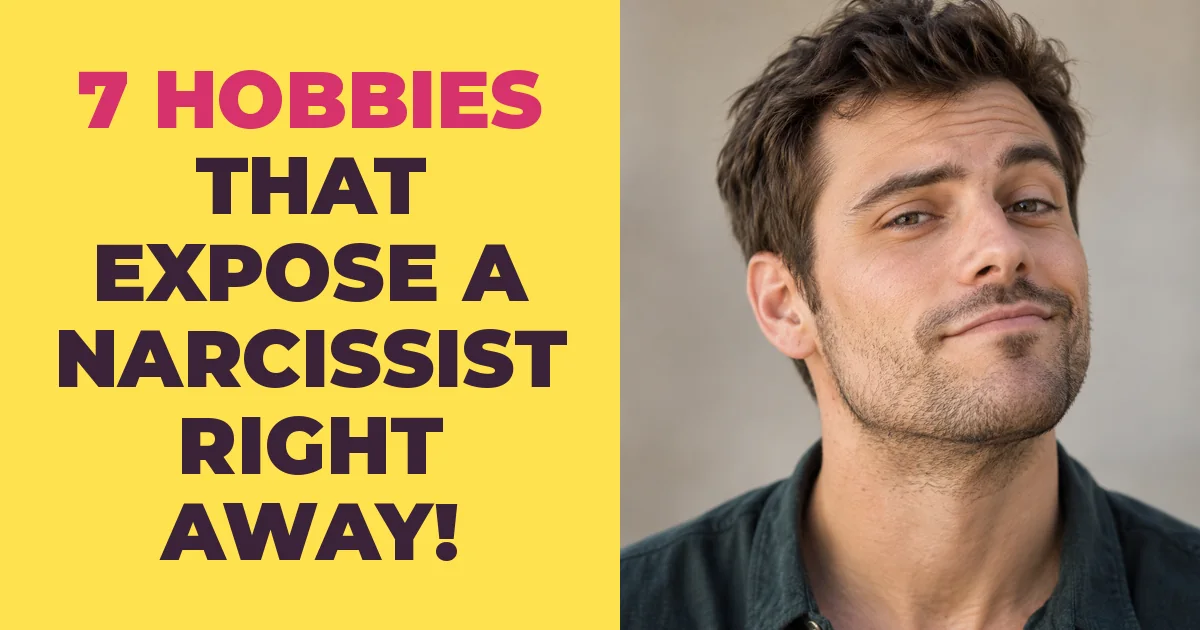
Why a pastime can give them away
Plenty of kind people garden, lift weights or go big on Christmas lights. A hobby on its own proves nothing.
What can give a narcissist away is what the hobby is for. Their sense of worth often depends on outside admiration, so a pastime turns into a way to collect it.
Only a clinician can diagnose anyone. What you can do is watch the pattern over months, not one weekend.
Who is the hobby for? What does it cost you?
#1 They take over whatever you love
A narcissist may not have a passion of their own until you find one.
You sign up for a pottery class. Within a month, they’ve bought a better wheel, watched every video, and they’re correcting how you hold the clay in front of the teacher.
At dinner with friends, it’s suddenly their hobby. “I got her into it, really.”
Why? Your success can threaten their need to feel superior, so they shrink it, copy it or take it. Psychologists call this side of it narcissistic rivalry: your gain is treated as their loss.
Slowly, the thing that was yours stops feeling like yours. Your wins start to feel dangerous to share.
Share them with people who are glad for you. Then watch who goes quiet when you shine.
That silence tells you plenty.
#2 The house is for the neighbours
The front of the house often gets more care than the people living inside it.
A new stone path. Fresh paint on the porch. Little lights along the drive, so everyone passing at night can see.
Meanwhile, the bathroom fan has been broken since spring. Ask about it and you get a sigh. “Can’t you see how much I’m doing for this house?”
Research on impression management describes how we all shape the picture others see. A narcissist may invest heavily in theirs, because admiration feeds their sense of worth.
The neighbour’s compliment lands. Your request feels like a nuisance.
And when a friend says how lucky you are? You smile, and quietly wonder if you’re the one who has it wrong.
You don’t. Trust what happens behind the front door.
#3 Every holiday becomes their show
A narcissist may need every celebration to be about them, even the ones that are yours.
December means three trips for more lights, a themed tree and a table set like a magazine. Everyone has to say it’s the best one yet.
Then it’s your birthday. Or the dinner for your promotion. And somehow a fight starts in the car on the way there.
“Why is it always about you?” On your day.
Research on narcissism describes a loud, grandiose style that needs the spotlight. When that spotlight swings toward you, envy often takes over, and your good moment gets spoiled.
No wonder happy days start to feel risky. You brace for your own birthday like it’s a storm.
Sounds familiar?
#4 The mirror gets more love than you
For some narcissists, working out is one more way to be looked at.
Two hours at the gym, every single day, even the day you were sick in bed. Twenty selfies to get one right. Checking the likes between sets.
Their new personal best comes up at every dinner, and it gets a little heavier each time they tell it.
Miss a compliment and watch the sulk start. “You didn’t even notice, did you?”
Why does it matter so much? Their worth leans on outside confirmation, and the quieter side of narcissism tends to sulk and keep score when it goes unnoticed.
You start to feel like a mirror with a pulse.
When did they last ask about your day?
#5 Your money is their poker chip
When a narcissist gambles, it’s often your money on the table too.
The poker night that runs until three. The betting app they close when you walk in. The “sure thing” that just needs a quick loan from you.
“I’ll pay you back Friday.” Friday comes. The money doesn’t. A narcissist may even run up debt in your name.
Research on entitlement describes a steady belief that rules apply to everyone else. Ordinary limits feel like insults, so asking for your own money back can feel like an attack to them.
Bit by bit, you start hiding small purchases. You feel trapped by money that was partly yours to begin with.
Keep track of what you give. If money is being taken or controlled, a domestic abuse service can help with money and safety.
You’re not being petty. You’re keeping count because they won’t.
#6 Their dating apps are “just for fun”
A narcissist may keep a dating profile live long after meeting you.
Their phone lights up on the sofa. They laugh it off. “It’s just for fun. I like seeing who’s out there.”
Then there are the exes who still get late-night replies, and the flirty comments under a stranger’s photo, right in front of you.
Research links narcissism with a game-playing love style and lower commitment. Love becomes something to win, options stay open, and real closeness stays at arm’s length.
So you compete for attention you once had freely. And you start to feel replaceable.
Taking time to commit isn’t the problem. Keeping you unsure on purpose is. Judge by what they do, again and again, rather than sweet words after another match pops up.
Just for fun? Fun for who, exactly?
#7 Your pain is their favourite pastime

Some people enjoy your discomfort in small everyday ways, and they treat it like a hobby.
The joke about your weight in front of their friends. The smirk when your voice cracks. “God, you can’t take a joke.”
Making you wait days for an answer on something big. Letting you worry, then smiling when you ask what’s wrong.
Researchers call this everyday sadism. They added it to the Dark Triad, a trio of dark traits that includes narcissism, to make a “Dark Tetrad.” For these people, cruelty is rewarding in itself.
You learn to hide every reaction. Some days you feel hunted rather than loved.
One way to tell: playful teasing stops when you ask. This doesn’t, and your distress seems to please them. Fewer reactions give them less to enjoy.
Your hurt was never their entertainment.
You don’t need a diagnosis to trust what you’ve seen with your own eyes.
Pick the one that made your stomach drop. Next time it happens, write it down: what was said, what was done. Then tell one person you trust.
Their hobbies belong to them. Your evenings, your money and your joy belong to you.
If you feel unsafe: in the US, call the National Domestic Violence Hotline at 1-800-799-7233 (thehotline.org). In the UK, call the National Domestic Abuse Helpline on 0808 2000 247. If you are in immediate danger, call your local emergency number.
Sources
- American Psychiatric Association. (2022). Diagnostic and Statistical Manual of Mental Disorders (5th ed., text rev.).
- Pincus, A. L., & Lukowitsky, M. R. (2010). Pathological narcissism and narcissistic personality disorder. Annual Review of Clinical Psychology, 6, 421-446.
- Back, M. D., Kufner, A. C. P., Dufner, M., Gerlach, T. M., Rauthmann, J. F., & Denissen, J. J. A. (2013). Narcissistic admiration and rivalry. Journal of Personality and Social Psychology, 105(6), 1013-1037.
- Buckels, E. E., Jones, D. N., & Paulhus, D. L. (2013). Behavioral confirmation of everyday sadism. Psychological Science, 24(11), 2201-2209.
- Sweet, P. L. (2019). The sociology of gaslighting. American Sociological Review, 84(5), 851-875.
- Stern, R. (2007). The Gaslight Effect. Morgan Road Books.
- Herman, J. L. (1992). Trauma and Recovery. Basic Books.
- Bancroft, L. (2002). Why Does He Do That? Inside the Minds of Angry and Controlling Men. Berkley.
- Krizan, Z., & Johar, O. (2012). Envy divides the two faces of narcissism. Journal of Personality, 80(5), 1415-1451.
- Goffman, E. (1959). The Presentation of Self in Everyday Life. Doubleday.
- Wink, P. (1991). Two faces of narcissism. Journal of Personality and Social Psychology, 61(4), 590-597.
- Miller, J. D., Lynam, D. R., Hyatt, C. S., & Campbell, W. K. (2017). Controversies in narcissism. Annual Review of Clinical Psychology, 13, 291-315.
- Campbell, W. K., Bonacci, A. M., Shelton, J., Exline, J. J., & Bushman, B. J. (2004). Psychological entitlement: Interpersonal consequences and validation of a self-report measure. Journal of Personality Assessment, 83(1), 29-45.
- Postmus, J. L., Plummer, S.-B., McMahon, S., Murshid, N. S., & Kim, M. S. (2012). Understanding economic abuse in the lives of survivors. Journal of Interpersonal Violence, 27(3), 411-430.
- Campbell, W. K., Foster, C. A., & Finkel, E. J. (2002). Does self-love lead to love for others? A story of narcissistic game playing. Journal of Personality and Social Psychology, 83(2), 340-354.
- Paulhus, D. L., & Williams, K. M. (2002). The Dark Triad of personality: Narcissism, Machiavellianism, and psychopathy. Journal of Research in Personality, 36(6), 556-563.
- Jones, D. N., & Paulhus, D. L. (2014). Introducing the Short Dark Triad (SD3). Assessment, 21(1), 28-41.
Belle Souls articles explain patterns described in psychology research and recovery writing. They are not a diagnosis and not a substitute for help from a qualified professional.
4 Cruel Things Narcissists Do Just Before They Leave You

Narcissists rarely leave quietly.
First the warmth drains out of the house. Then the little digs start.
Then the people you love begin looking at you differently, and you can’t work out why.
You can feel something coming. Nobody will say what.
And when it finally ends, you’re left replaying it all, wondering how it got so ugly, so fast.
It wasn’t random. There’s a pattern, and once you see it, it’s hard to unsee. Here are 4 cruel things narcissists often do just before they leave you, so you can spot each one while it’s happening.
Why it gets so ugly at the end
There’s a popular name for the arc you may be living through: idealise, devalue, discard.
Pedestal. Criticism. Then you’re dropped or replaced.
The name comes from the internet rather than a textbook, though research backs up its shape. Studies on narcissistic admiration and rivalry, and on game-playing in love, describe the same arc: charm first, then rivalry and boredom later.
That’s why the start felt like a film and the end feels like a war. Same person, different phase. The four cruel things below belong to that last stretch. Once you see them, the ending makes sense.
#1 Everything you do is suddenly wrong
Near the end, contempt often replaces the charm that once made you feel chosen.
You tell a story at dinner and they roll their eyes. You ask about the weekend and they walk off mid-sentence. Your cooking, your clothes, your laugh, even how you load the dishwasher: all of it is a problem now.
On the drive home from your sister’s, they say nothing for twenty minutes. Then they mimic your laugh in a silly, high voice. “Relax, it’s a joke. You used to be fun. What happened to you?”
Why the switch?
Research on narcissistic admiration and rivalry describes charm that wins people over early, then a cold, cutting side once they know you well. In long-term couples studies, contempt and stonewalling were among the strongest predictors of a relationship breaking down.
So you start to feel small in your own home. You stop bringing things up, because every topic ends in a sneer. And you keep chasing the warm, funny person you met at the start, as if they’re still in there.
One way to tell: name it calmly, once. Then watch whether respect ever comes back.
That chill in the room? It’s real.
#2 They tell their story before you can
A narcissist often starts the story about you before the relationship is even over.
You notice it in small ways. A friend’s replies get short. Your mum asks, a little too carefully, whether you’ve been “feeling okay” lately. Someone you both know stops liking your posts.
Behind your back, the script is already out. You’re unstable. You’re impossible. They’ve tried everything. “I didn’t want to say anything, but I’m really worried about her. She hasn’t been herself for months.”
Psychologists call this relational aggression. It hits your name and friendships, not your body. No bruises to show.
And it works, because of who they are in public: calm, reasonable, concerned. Research on Machiavellian traits describes exactly this, a clean reputation kept spotless while they quietly work against you behind the scenes.
So when the break comes, support dries up right when you need it most. People don’t believe you, because they only ever saw someone reasonable. You end up defending your name everywhere, to everyone, again and again.
What helps? Behave consistently and let time show the truth. If it touches your work or custody, keep records.
Your calm is the one thing their story can’t explain.
#3 Your people get turned against you
Some of the cruelest messages come from people you trusted, carrying words that aren’t theirs.
Your aunt texts out of nowhere: “Whatever happened, be the bigger person and apologise.” A mutual friend passes on a message you never asked for. Someone checks in on you, sweetly, and somehow it all gets reported back.
There’s a popular, internet-born name for these messengers: flying monkeys. It isn’t a clinical term. It means people who carry out a manipulator’s pressure for them, often without knowing the full story.
How are they recruited? The narcissist tells a version where they’re the wronged one, and kind, loyal people act on it. Family systems research calls the wider pattern triangulation: pulling in a third person instead of dealing with a problem directly.
Suddenly you feel outnumbered in your own circle.
You might even hear that you’re “tearing the family apart”. You. The one being left.
Here’s the difference: people who truly worry about you aren’t flying monkeys. The sign is that the messengers often repeat the narcissist’s script. You don’t owe them a defence, and you can keep the details private.
Losing some of them will hurt. That grief is real, and it isn’t proof you did anything wrong.
#4 Your replacement is already waiting
Often a new person appears very quickly, and admirers were being kept close all along.
Looking back, the signs were there. The ex who never quite went away. The coworker they texted at midnight. The admirer they flirted with right in front of you, at your own friend’s party, while you stood there smiling.
And if you asked? “She’s just a friend. Why are you always so jealous?”
Research links narcissism with a game-playing love style: keeping options open, avoiding real closeness, and losing interest once they feel they’ve won. Commitment tends to run lower, too.
That’s why the end can feel so brutal. First the sudden coldness. Then a new partner appears very quickly, sometimes before you’ve even worked out what happened. It’s the last step of the arc: pedestal, criticism, replacement.
It lands right on your sense of worth.
You feel replaceable. You compete for attention you once had freely, then blame yourself for losing it. From here, judge commitment by steady actions, not words, and notice if closeness always came right before distance.
The speed of the swap says a lot about them. It says nothing about your worth.
If your stomach dropped reading this, that isn’t weakness. The eye-rolls, the careful questions from family, the new partner so soon: they fit a pattern.
The ending can feel like your fault. It isn’t.
Start with one person who has seen both sides of them, and tell them what really happened. Telling it to someone like that can leave you less alone, and clearer about what comes next.
If you feel unsafe: in the US, call the National Domestic Violence Hotline at 1-800-799-7233 (thehotline.org). In the UK, call the National Domestic Abuse Helpline on 0808 2000 247. If you are in immediate danger, call your local emergency number.
Sources
- Back, M. D., et al. (2013). Narcissistic admiration and rivalry. Journal of Personality and Social Psychology, 105(6), 1013-1037.
- Campbell, W. K., Foster, C. A., & Finkel, E. J. (2002). Journal of Personality and Social Psychology, 83(2), 340-354.
- Crick, N. R., & Grotpeter, J. K. (1995). Relational aggression, gender, and social-psychological adjustment. Child Development, 66(3), 710-722.
- Herman, J. L. (1992). Trauma and Recovery. Basic Books.
- Bancroft, L. (2002). Why Does He Do That? Inside the Minds of Angry and Controlling Men. Berkley.
- Goffman, E. (1959). The Presentation of Self in Everyday Life. Doubleday.
- Back, M. D., Kufner, A. C. P., Dufner, M., Gerlach, T. M., Rauthmann, J. F., & Denissen, J. J. A. (2013). Narcissistic admiration and rivalry. Journal of Personality and Social Psychology, 105(6), 1013-1037.
- Campbell, W. K., Foster, C. A., & Finkel, E. J. (2002). Does self-love lead to love for others? A story of narcissistic game playing. Journal of Personality and Social Psychology, 83(2), 340-354.
- Gottman, J. M. (1994). What Predicts Divorce? The Relationship Between Marital Processes and Marital Outcomes. Lawrence Erlbaum.
- Christie, R., & Geis, F. L. (1970). Studies in Machiavellianism. Academic Press.
- Jones, D. N., & Paulhus, D. L. (2014). Introducing the Short Dark Triad (SD3). Assessment, 21(1), 28-41.
- Bowen, M. (1978). Family Therapy in Clinical Practice. Jason Aronson.
Belle Souls articles explain patterns described in psychology research and recovery writing. They are not a diagnosis and not a substitute for help from a qualified professional.
Why Saying Sorry to a Narcissist Is the Worst Thing You Can Do

You said sorry again last night. Still not sure what for.
Maybe you snapped back once. Maybe you only asked a simple question. Either way, it ended with you apologising, and somehow everything got worse.
A narcissist may not hear ‘sorry’ like you mean it.
You mean let’s fix this. They may hear something else.
Here are 7 reasons why saying sorry to a narcissist is the worst thing you can do, and what to try instead.
Why sorry works differently here
In a healthy relationship, an apology is a bridge. One person owns their part, the other meets them halfway, and you both move on.
With a narcissist, there’s often no halfway. Their sense of worth leans on outside confirmation, so other people tend to be either sources of praise or threats to it.
That can change what your apology does. Instead of opening a door to repair, it can feed their need to be proven right.
One bad night proves nothing. Watch the pattern over months.
#1 Your sorry flips who the victim is
The moment you say sorry, the fight stops being about what they did.
You bring up the comment they made at dinner. Calmly, even. Within two minutes, you’re hearing about the time you forgot to call their mother.
“I never said that, and I can’t believe you’d accuse me.” Then the sulking starts, and somehow you’re the one comforting them.
Psychologists call this DARVO: deny, attack, then reverse victim and offender. Research found it makes the one who raised the problem blame herself more.
So you apologise. And that sorry seals the swap. Their comment from dinner? Never mentioned again.
Next time, keep it short and factual: name the original issue and return to it. Skip the counter-attacks. And if raising it doesn’t feel safe, you don’t have to raise it at all.
The dinner comment still happened. Sorry doesn’t erase it.
#2 They hear sorry as a confession
To a narcissist, your apology is evidence that their version of events was true.
“That never happened.” “You’re too sensitive.” You heard them shout. You know you did. But after an hour of this, you say sorry just so it stops.
Then doubt creeps in. Did you overreact?
Gaslighting means making you doubt your own memory so their story wins. It works best when one person holds more power and controls the story.
Each sorry for something that didn’t happen makes their story a little firmer and yours a little shakier. That’s how you end up apologising when you were the one who got hurt.
Write things down when they happen. Check them with someone outside the relationship.
A dated note on your phone can outlast an hour of “that never happened.”
#3 Silence teaches you to say sorry
The silent treatment is built to make you apologise first.
Three days of nothing. They laugh on the phone with their sister, chat to the neighbour, and look straight through you in the kitchen.
Research on being ignored says it threatens the basic need to belong and to matter. That’s why it can hurt like physical pain, and why it pushes you to give in.
So you say sorry. For what? You’re not even sure.
Then they come back as if nothing happened. The lesson sticks for both of you: silence works.
Soon you’re steering clear of any topic that might start the next round.
Try saying once that you’re open to talking, then get on with your day. No chasing. No begging. Let the silence be theirs to carry.
#4 Your sorry doesn’t wipe the slate clean
With a narcissist who keeps score, an apology doesn’t settle the account.
You said sorry for being short with them on Tuesday. They nodded. Then on Saturday, in front of friends: “Well, she can be pretty nasty when she wants.”
Research on narcissism describes a quiet, touchy side that keeps score of slights and plays the victim when challenged.
Then there’s what psychologists call threatened egotism: when their image is bruised, they’re more likely to lash out at whoever they blame, sometimes days later.
So don’t expect the slate to be clean. A slight you’ve long forgotten can come back days later, in front of an audience, with interest added.
One way to tell: watch whether their apologies ever come without a condition attached. “I’m sorry you feel that way” doesn’t count.
Has theirs ever been free?
#5 Soft spots become their ammunition
A heartfelt apology shows a narcissist exactly where you’re soft.
You don’t just say sorry. You explain. You were stressed, your dad’s been ill, and lately you’ve felt like a failure at work.
Two weeks later, mid-argument: “No wonder you’re failing at work.”
Studies on narcissism found empathy is low by default but rises when they’re prompted to take your view. That points to a choice more than an inability.
They often understand what you feel. They just don’t act on it, unless it serves them.
The details you offered to explain yourself become the details they aim at. Soon you stop sharing feelings at all, and start doubting the ones you have.
Stop explaining your pain to the person who uses it. Save it for people who hold it gently.
#6 Sorry becomes your automatic setting
After enough time with a narcissist, sorry stops being a choice and becomes a reflex.
You apologise to the waiter for his mistake. You say sorry to a chair you bumped into. You hear keys in the door and your shoulders rise.
Psychologists describe this as fawning and hypervigilance. Living with unpredictable anger trains your body to stay on alert and to calm the threat by agreeing.
That reflex was protecting you.
It’s also exhausting. It buries what you actually want, until you lose track of it completely.
Start small. When the sorry rises in your throat, notice the alarm and slow down. Try a tiny no somewhere safe, like turning down a coffee you didn’t want.
The chair you bumped into will be fine without one.
#7 You end up apologising for having needs
With a narcissist, even asking for something basic can end with you saying sorry.
You ask them to text if they’ll be late. Or to pay back the money from last month. Suddenly you’re “nagging” and “making everything about you.”
“Fine. I guess my life revolves around you now.”
There’s a name for this: entitlement, the steady belief that rules are for everyone else. It makes ordinary limits feel like insults, so your normal request lands like an attack.
So you apologise for asking. And they learn that your needs can be talked down, one sorry at a time.
Over time, you give more and get less. Asking for fairness starts to feel like starting a war.
Stop pre-forgiving, pre-agreeing and pre-paying. Keep track of what you give. Your request was fair the first time.
Saying sorry was never the problem. It’s a good instinct, and it shows you care about the people in your life.
It just belongs with people who can say it back.
So the next time the word jumps out before you’ve even thought, pause. Ask yourself one quiet question: did I actually do something wrong?
If you feel unsafe: in the US, call the National Domestic Violence Hotline at 1-800-799-7233 (thehotline.org). In the UK, call the National Domestic Abuse Helpline on 0808 2000 247. If you are in immediate danger, call your local emergency number.
Sources
- American Psychiatric Association. (2022). Diagnostic and Statistical Manual of Mental Disorders (5th ed., text rev.).
- Pincus, A. L., & Lukowitsky, M. R. (2010). Pathological narcissism and narcissistic personality disorder. Annual Review of Clinical Psychology, 6, 421-446.
- Freyd, J. J. (1997). Violations of power, adaptive blindness, and betrayal trauma theory. Feminism & Psychology, 7(1), 22-32.
- Harsey, S. J., Zurbriggen, E. L., & Freyd, J. J. (2017). Perpetrator responses to victim confrontation: DARVO and victim self-blame. Journal of Aggression, Maltreatment & Trauma, 26(6), 644-663.
- Bushman, B. J., & Baumeister, R. F. (1998). Threatened egotism, narcissism, self-esteem, and direct and displaced aggression. Journal of Personality and Social Psychology, 75(1), 219-229.
- Sweet, P. L. (2019). The sociology of gaslighting. American Sociological Review, 84(5), 851-875.
- Stern, R. (2007). The Gaslight Effect. Morgan Road Books.
- Williams, K. D. (2009). Ostracism: A temporal need-threat model. Advances in Experimental Social Psychology, 41, 275-314.
- Wink, P. (1991). Two faces of narcissism. Journal of Personality and Social Psychology, 61(4), 590-597.
- Miller, J. D., Lynam, D. R., Hyatt, C. S., & Campbell, W. K. (2017). Controversies in narcissism. Annual Review of Clinical Psychology, 13, 291-315.
- Hepper, E. G., Hart, C. M., & Sedikides, C. (2014). Moving Narcissus: Can narcissists be empathic? Personality and Social Psychology Bulletin, 40(9), 1079-1091.
- Walker, P. (2013). Complex PTSD: From Surviving to Thriving. Azure Coyote.
- Herman, J. L. (1992). Trauma and Recovery. Basic Books.
- Campbell, W. K., Bonacci, A. M., Shelton, J., Exline, J. J., & Bushman, B. J. (2004). Psychological entitlement: Interpersonal consequences and validation of a self-report measure. Journal of Personality Assessment, 83(1), 29-45.
Belle Souls articles explain patterns described in psychology research and recovery writing. They are not a diagnosis and not a substitute for help from a qualified professional.